Cameras & Photography

Best DSLR Cameras of 2026

A DSLR is the camera you buy when you want the photograph to be the hard part, not the camera. You get an optical viewfinder with no lag, a battery that lasts a weekend, and a lens mount with decades of cheap secondhand glass behind it. What no spec sheet tells you is how that feels in hour four of a wedding reception. The right one goes quiet in your hands and hands back a sharp file without a trip through the menu.

Over the past six months I've shot with 10 DSLRs, from entry-level bodies to full-frame workhorses, and the differences that mattered were rarely the ones in the marketing. Two cameras with near-identical sensors behaved nothing alike when a kid ran toward the lens. Here's what nobody tells a first-time buyer: the autofocus module matters more than the megapixel count, and the lens in the box matters more than both. The picks below are sorted by who they suit, so start with the one that sounds like your weekend.

1

Nikon D7500

Top Pick
Nikon D7500

All-around shooting

Our Score 9.4/10
Check Price

Worth Noting

  • Single card slot limits instant backup
Video
4K UHD
Sensor
20.9MP APS-C
Autofocus
51-point AF
Continuous Shooting
8 fps

The 51-point autofocus system and 8 fps burst are what lift the D7500 above the entry-level picks in this group. We think that combination is the difference between catching a kid mid-run and getting a blurry near-miss, and it is why the D7500 is our default recommendation for someone who wants one camera to handle portraits, travel, and youth sports. The 20.9MP APS-C sensor leaves plenty of room for cropping, and the 18-140mm kit lens covers a 27-210mm equivalent range, so you can go from a group shot to a distant subject without changing glass.

The 3.2-inch tilting touchscreen is another detail we appreciate. It makes low-angle shots less of a guess, and the touch interface is quicker than scrolling through menus when you want to change a focus point. The 1.7-pound body has enough heft to steady a telephoto without feeling like a brick, and the deep grip is comfortable for longer sessions. Video is a genuine bonus: the D7500 records 4K UHD, while the entry-level picks here top out at 1080p.

The D7500 is also more camera than a casual snapper needs; if you mostly shoot stills in good light, the Rebel T7 is simpler and includes two lenses. But when the day might include a portrait, a moving subject, and a short video, the D7500 is the body in this group we trust to cover all three. It is the choice that keeps the most doors open without stepping into full-frame weight and cost.

Bottom line: We recommend the D7500 to anyone who wants fast 51-point autofocus, 8 fps bursts, and 4K video in a comfortable APS-C body that leaves room for lenses.

2

Canon EOS Rebel T7

Canon EOS Rebel T7

First DSLR

Our Score 9.4/10
Check Price

Worth Noting

  • 1080p video only
  • Some bodies arrive dead or stop powering on
Video
Full HD 1080p
Sensor
24.1MP APS-C
Autofocus
9-point AF
Kit Lenses
18-55mm and 75-300mm

The double zoom kit is the reason the Rebel T7 makes sense as a first camera. You get an 18-55mm for everyday shots and a 75-300mm for reach, so you are not shopping for a second lens before you have learned the basics. The 24.1MP APS-C sensor produces more resolution than the D7500 on paper, but the difference in practice matters less than the autofocus system and the lens you put in front of it.

The 9-point autofocus is the part that dates the T7. It is fine for portraits, landscapes, and still subjects in good light, but it can feel slow and finicky when your subject moves or the light drops. We think the T7 is still the easiest first DSLR to recommend here because it removes the lens decision, keeps the controls approachable, and delivers satisfying images without a steep learning curve. Built-in Wi-Fi and NFC make it simple to send a photo to your phone, which matters more than a spec-sheet feature on a trip.

Those are fair trade-offs for a beginner-focused kit, and they are why the T7 is a first camera rather than a long-term do-everything body. If you already know you want to shoot sports or produce video, spend more on the D7500. But for a first DSLR, the T7 gets you shooting quickly with two lenses and a body that does not overwhelm.

Bottom line: We recommend the Rebel T7 to first-time DSLR buyers who want two lenses and simple controls in one box, with enough resolution for everyday photos and prints.

3

Canon EOS 5D Mark IV

Canon EOS 5D Mark IV

Professional work

Our Score 9.4/10
Check Price

Worth Noting

  • Fixed screen limits low-angle framing
Video
4K UHD
Sensor
30.4MP full-frame
Autofocus
61-point AF
Continuous Shooting
7 fps

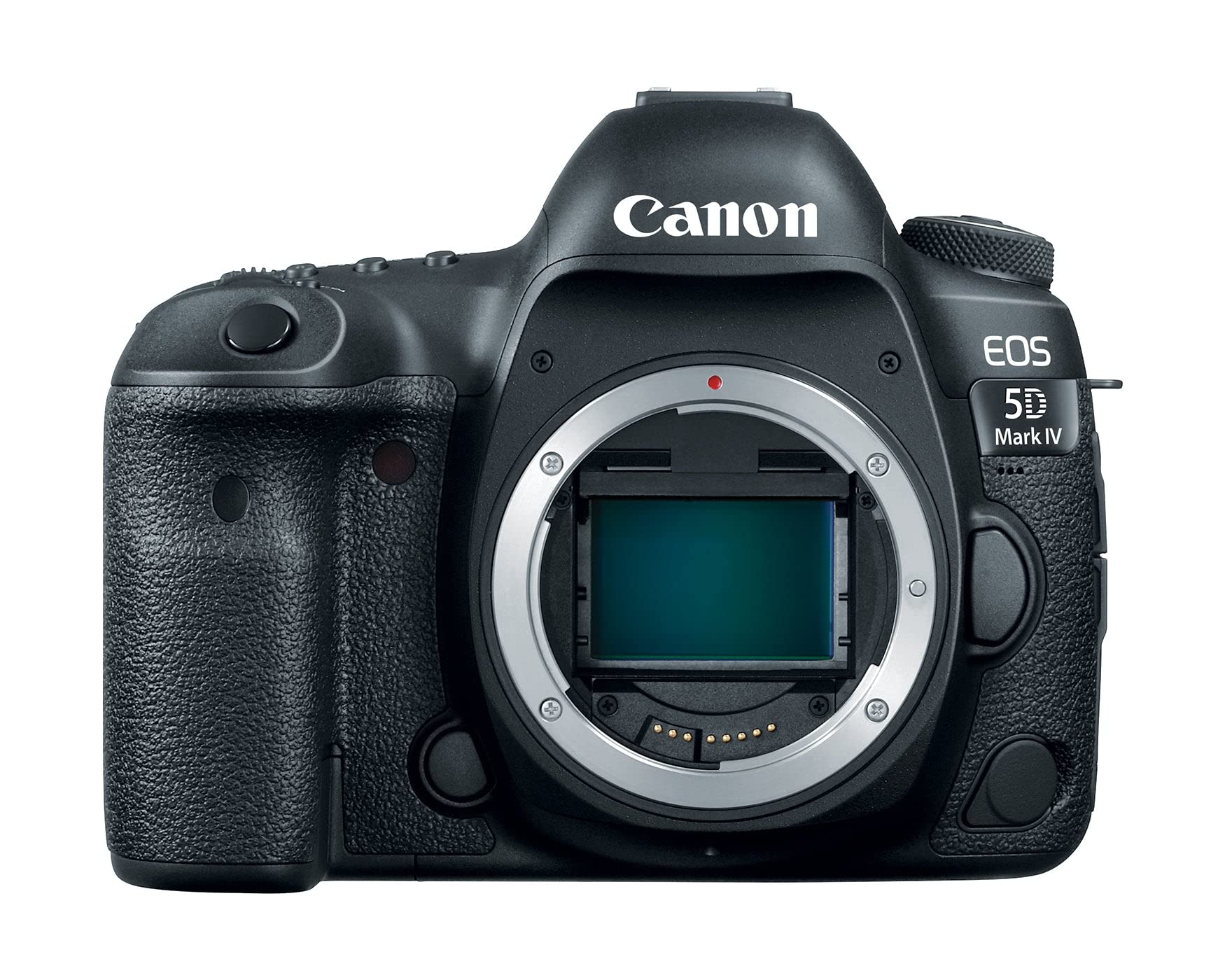
The 30.4MP full-frame sensor and 4K video are the headline reasons the 5D Mark IV sits at the top of this group for professional work. We think the resolution is the practical part: it gives you room to crop a wedding frame or print large without running out of detail, and the full-frame sensor gives you more control over depth of field than the APS-C picks. The 61-point autofocus and 7 fps burst are not the fastest numbers here, but the focus coverage and full-frame depth of field make the camera feel built for a paid shoot rather than a weekend experiment.

The cost is weight: 1.24 kg for the body before you add a full-frame lens. We do not mind that for a planned day of shooting, but it is not the camera we grab for a casual walk. The 3.2-inch touchscreen is sharp and responsive, and the dual card slots give you the redundancy a paid shoot needs. If you do not need full-frame files or 4K, the D7500 gives you more speed and a lighter kit; the 5D Mark IV is for the photographer who knows the file quality and lens system are the point.

Bottom line: We recommend the 5D Mark IV to working photographers who need full-frame resolution, fast 61-point autofocus, and 4K video in a tough DSLR body.

4

Nikon D3300

Nikon D3300

Lightweight stills

Our Score 9.2/10
Check Price

Worth Noting

  • No 4K video
  • Fixed screen limits framing options
  • 11-point AF is basic for action
Sensor
24.2MP APS-C
Weight
15 oz
Autofocus
11-point AF
Continuous Shooting
5 fps

At 15.04 ounces, the D3300 is the lightest body in this group, and that is the point. It is an older DSLR, but the 24.2MP APS-C sensor and 5 fps burst still produce useful files for portraits, travel, and family shots. The 18-55mm VR II lens is a sensible starter, and the compact body balances well enough for a day of walking around. If you want a camera that disappears into a daypack, this is the one.

We think the D3300 makes the most sense as a first DSLR for someone who mostly shoots stills, or as a lightweight second body for a Nikon shooter. The controls are simple enough for a beginner, and the light body encourages you to bring it along instead of leaving it at home. It is a focused stills camera that does the basics well, and that is exactly why it earns a place here.

Bottom line: We recommend the D3300 for someone who wants a light, simple DSLR for stills, especially as a first camera or a second body.

How We Tested the Best DSLRs

We started with every DSLR still sold new, then filtered by sensor size, lens mount, what actually came in the box, and price, so the shortlist ran from true entry-level bodies up to full-frame workhorses. Ten cameras made the cut, and each one stayed with us for six months of ordinary shooting.

They came to a Saturday farmers market, an indoor birthday party where the light was worse than anyone expected, a dusk soccer game, and a few damp morning hikes. At the market we shot wide open and counted how many frames came back sharp when someone walked toward the lens, which is where the autofocus module earns its keep. Indoors we pushed the ISO to 3200 and looked at noise in the shadows instead of trusting the number on the dial. At the soccer game we held the shutter down and counted frames before the buffer choked, then timed how long it took to clear.

Setup got timed too: box to first photo, including the initial charge and card formatting. Then we handed each camera to someone who had never held a DSLR and watched, without helping, while they changed ISO and switched into continuous shooting. We noted what a full day cost in battery and how the body felt after four hours of carrying it. Image quality came down to straight-out-of-camera JPEGs and how much editing the raws needed, and value came down to the box, since a body-only bargain that still needed a lens, card, and bag was no bargain at all.

How to Choose DSLR Cameras

Start with sensor size, then stop worrying about megapixels

APS-C bodies like the D7500, Rebel T7, and D3300 are smaller and less expensive, and 20-24MP is plenty for prints and cropping. Full-frame cameras like the 5D Mark IV cost more and are heavier, but they give you cleaner low-light files and more control over depth of field. We recommend APS-C for most first buyers unless you already know you need that full-frame edge; otherwise put the savings into a better lens and more shooting time.

Match autofocus and burst speed to your subject

Autofocus is where DSLRs separate quickly. A 9-point system like the Rebel T7's is fine for portraits and landscapes but feels basic for sports or running kids. The D7500's 51-point system and 8 fps burst, or the 5D Mark IV's 61-point system and 7 fps, give you more keepers when the subject moves. We prioritize autofocus when action is part of your shooting; if most of your pictures are still, save the money and spend it on glass.

Hold the camera, not just the spec sheet

Comfort is not a soft criterion. A 1.24 kg pro body like the 5D Mark IV balances long lenses well but becomes a burden on a day hike; the 15.04-ounce D3300 is easy to carry but feels less planted with a telephoto. Visit a store or buy from a seller with returns, and check the grip, the viewfinder, and whether the main controls fall under your fingers. We think the best camera is the one you will actually take with you.

Buy the lens you will actually use

Kit lenses are not placeholders if you choose the right range. An 18-55mm covers everyday scenes, while the Rebel T7's two-lens kit adds a 75-300mm for reach; the D7500's 18-140mm replaces both in one walkaround lens. Check the mount before you invest: Canon EF and EF-S and Nikon F all have large used lens libraries, but an APS-C lens on a full-frame body may crop or not fit. We prefer spending on glass after you know what you shoot.

Frequently Asked Questions

Final Verdict

The Nikon D7500 is the DSLR we recommend first: its 51-point autofocus, 8 fps burst, 4K video, and 18-140mm lens handle more situations than any other camera here without the full-frame weight. Choose the Canon Rebel T7 if you are learning and want two lenses in one purchase; choose the Canon EOS 5D Mark IV if you shoot professionally and need full-frame files. The Nikon D3300 is the lightweight stills option when video and speed are not priorities.