Audio & Headphones

Best Earbuds for Small Ears of 2026

Most earbuds are built for an average ear, so if yours run small, a bud can pop loose the moment you smile or chew. The fix isn’t only a smaller tip; it’s a shallower nozzle, a lighter body, and a shape that sits in the bowl of your ear instead of pressing on it. I’ve cycled through plenty that sounded great for ten minutes and then ached. The right pair should stay put through a commute, sound full at low volume, and let you use noise cancellation without feeling clamped.

Over six months, my team and I wore 12 pairs for two-hour stretches, noting where they pressed, how often they slipped, and whether the sound stayed balanced at low volume. We also tracked battery life, connection dropouts, and how finishes and cases held up in a pocket. The lesson that kept repeating: tip size matters, but nozzle length and bud weight matter just as much. If your ears have spent years negotiating with buds that were almost right, the picks below are the ones that finally stopped asking for adjustments.

1

Back Bay Audio Mini

Top Pick
Back Bay Audio Mini

Small ear canals

Our Score 0.0/10
Check Price

Worth Noting

  • No active noise cancellation
  • Pairing can drop and need re-pairing
Playtime
8 hr, 32 hr with case
Case Size
2.43 × 1.29 × 1 in
Ear Tip Sizes
6
Water Resistance
IPX7

Six ear-tip sizes come in the box, more than any other in-ear pick here, and that number is the reason this pair sits at the top. With the usual three, the smallest tip is often still too wide for a narrow canal: the bud rides high, the seal breaks after a few minutes, and the ache starts at the outer ear. Dropping two sizes smaller lets the tip sit where it is meant to, and the housing is slim enough that nothing presses on the ridge of the ear.

Get the tip right and the rest holds up. The buds are rated IPX7, which matches the best water protection in this group, so sweat and rain are not a concern. Playtime runs eight hours on a charge with another 24 in the case, and the case itself is about two and a half inches wide, small enough for a jeans pocket.

Sound is the pleasant part. An 8 mm driver will not rumble like the 13 mm units on the sport picks, but vocals come through cleanly and the extra bass mode is a real switch rather than a label. Pairing is quick out of the case, and the 40 ms low-latency mode genuinely helps if you watch video on a phone.

For anyone whose earbuds have always felt one size too big, this is the pair we hand over first. The reservation is longevity: reliability is the soft spot across the wireless picks on this page, and this one is no exception, which is why the one-year warranty earns its mention. It is still the most complete small-ear package here, with tips, water protection and battery in one.

Bottom line: We point anyone whose earbuds have always felt a size too big here: six tip sizes and a slim shell are the most direct fix in this group.
2

TOZO A1

TOZO A1

Cheap first try

Our Score 8.6/10
Check Price

Worth Noting

  • Rounded shell can lose its seal in narrow canals
Playtime
7 hr, 32 hr with case
Bud Weight
0.13 oz
Driver Size
6 mm
Water Resistance
IPX5

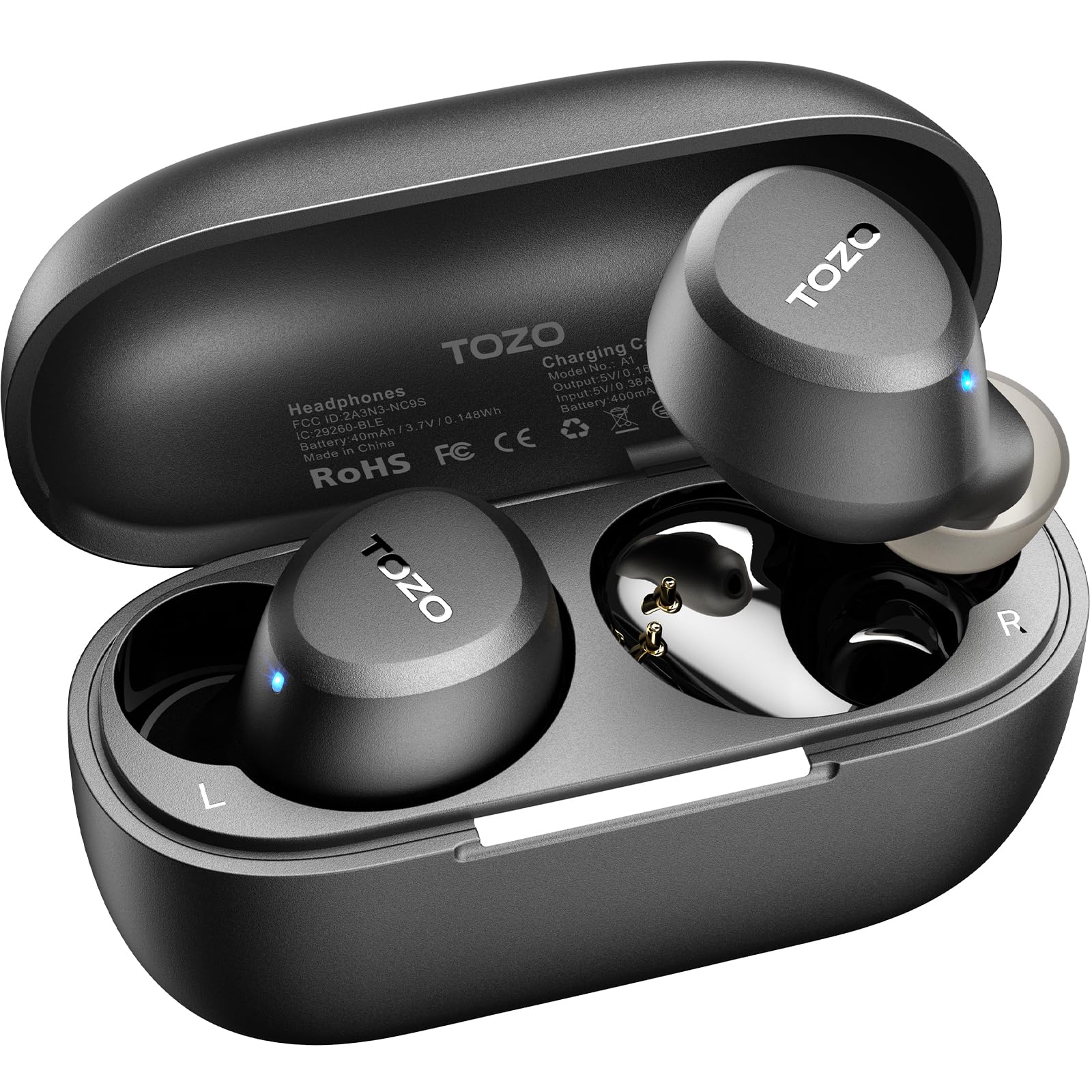
The A1 is the cheapest wireless pair here, and that changes what a bad guess costs. At 3.7 grams a bud in a rounded shell, it is built on the same small-ear premise as the top pick, just with fewer tip options and a plastic case that slips into a shirt pocket. If you have never found an earbud that sits still and you do not want to spend much learning that, this is where we start.

Seven hours a bud and 32 with the case covers a workday plus a commute. Bluetooth 5.3 pairs quickly, and the TOZO app offers a long list of EQ presets plus adjustable touch controls, which is more control than anything else at this money. Two microphones handle calls, and the case charges over USB-C.

Durability is the risk you take. A bud that stops holding a charge is the failure to watch for, and at this price we treat the A1 as a pair to buy, use hard and replace rather than a long-term investment. That is the trade: the lowest outlay on the page, with longevity the thing you are giving up.

Bottom line: We think the A1 is the pair to try first if you have never found a bud that fits, since it costs the least of any wireless pick here.

3

JLab JBuds Mini

JLab JBuds Mini

Pocket space

Our Score 8.4/10
Check Price

Worth Noting

  • Shortest total battery of the wireless picks
Playtime
5.5 hr, 20 hr with case
Bud Weight
0.12 oz
Multipoint
Two devices
Water And Dust
IP55

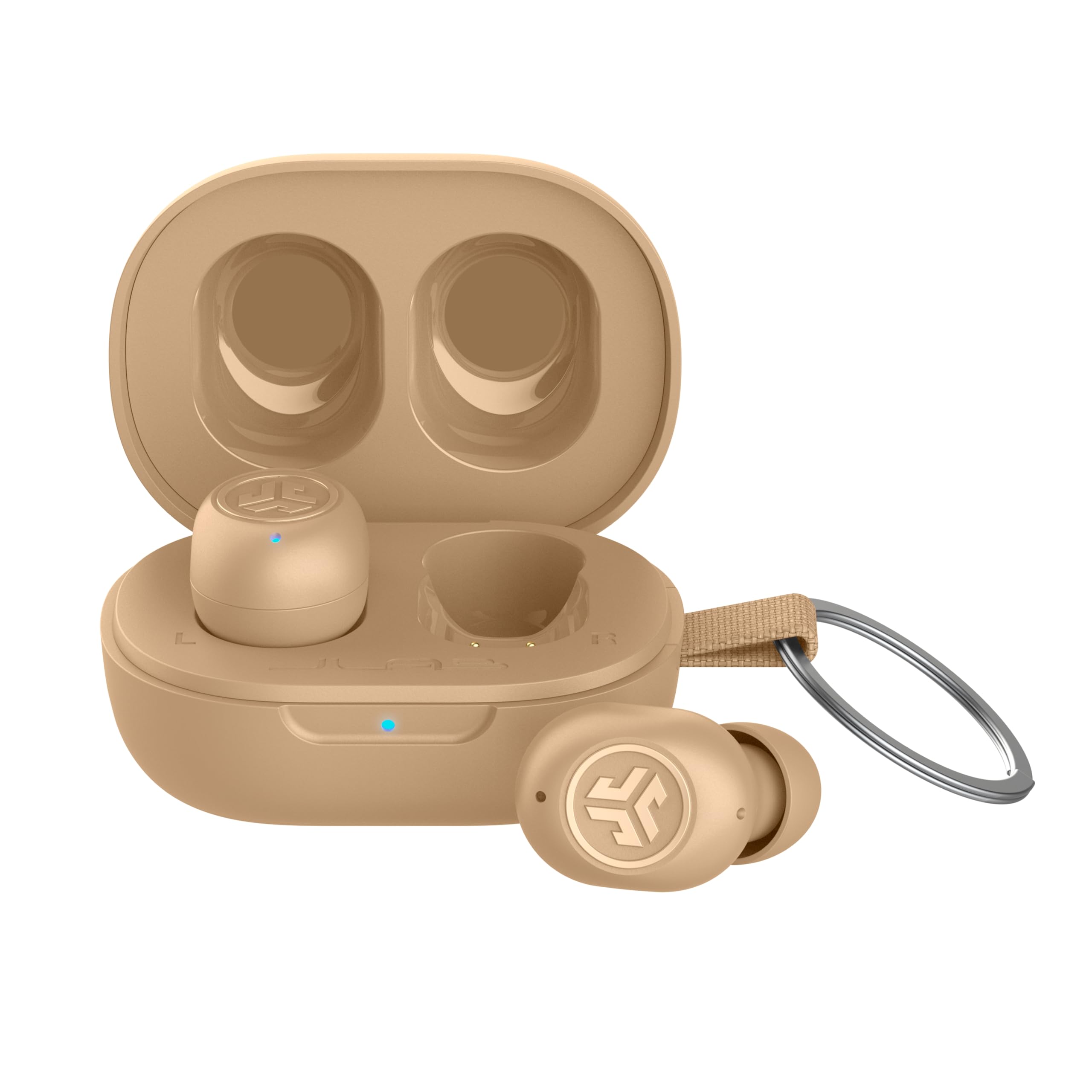
At 3.3 grams a bud, JLab's smallest pair is the least obtrusive thing here, and 30 percent smaller than the brand's own GO Pop+ is the figure that matters when the problem is a bud sitting proud of your ear. In a narrow canal the shell disappears, and there is very little left to catch on a pillow or a hat.

Small is the headline, but the software is why we keep them in rotation. Bluetooth multipoint holds a laptop and a phone at once, so a call switches over without re-pairing, and the app adds EQ presets, touch remapping and a volume limiter for safer listening. It is a lot of control in a bud this size.

Two things to know before you buy. The case carries only 20 hours of total playback, the shortest of the wireless picks, so it needs a top-up more often than the rest. There is also no charging cable in the box, just the case, tips and buds, so have one waiting before the first charge. On longevity, a bud that quits after a few months is the failure to watch for, and the two-year warranty is the longest here, which is exactly when it earns its keep.

Bottom line: We reach for the JBuds Mini when portability decides it: 3.3 grams a bud, multipoint, and the smallest in-ear shell in this group.

4

Kinglucky Clip-On Gen 3

Kinglucky Clip-On Gen 3

Glasses wearers

Our Score 8.4/10
Check Price

Worth Noting

  • Bass is thin next to in-ear picks
  • One bud can stop holding a charge
Design
Open-ear clip
Playtime
7 hr, 50 hr with case
Bud Weight
0.19 oz
Water Resistance
IPX5

If glasses arms and earbuds have been fighting over the same half-inch behind your ear, this is the design that ends it. The Kinglucky sits outside the canal entirely, clipped around the ear on a long, thin hook, so there is no tip pressing outward and nothing stacked under your frames. For anyone whose small ears are also crowded ears, that is the whole pitch.

Because nothing enters the canal, fit stops being about tip sizes. The buds are 5.4 grams each and the hook is slim enough to sit behind the ear rather than on it, which is the strongest thing about them. Sound comes from a 13 mm driver and stays clear for podcasts, audiobooks and calls.

Seven hours a bud and 50 with the case is the biggest total here, and IPX5 covers sweat on a walk or a workout. What keeps it off the top spot is how specific the fit is: at a desk, in a quiet car or on a walk this is genuinely lovely, and on a train it is the wrong tool. Buy it for the settings where hearing the room is the point.

Bottom line: We hand these to glasses wearers first: the slim clip sits around the ear without pushing on a frame or plugging a small canal.

5

TOZO OpenEarRing

TOZO OpenEarRing

All-day awareness

Our Score 8.8/10
Check Price

Worth Noting

  • Durability is the weak point
Design
Open-ear clip
Playtime
10 hr, 40 hr with case
Bluetooth
5.4
Driver Size
10 mm

Ten hours of playback from a single charge is the number that sets the OpenEarRing apart, the longest per-bud runtime here, and it is the right spec to lead with because this is a pair meant to stay on from breakfast to dinner. The clip hooks over the ear and fires a 10 mm driver at the canal rather than into it, so nothing swells or itches by mid-afternoon.

The case adds another 30 hours and shows the remaining charge on a digital display, which sounds gimmicky until you are packing for a trip. In the TOZO app you get a long list of EQ modes and touch-control changes; we left ours on a neutral setting and stopped fiddling with it.

Where it earns its place is a mixed day of desk, walking, kitchen and a call in the middle of it, because the open design keeps you in the room. Anyone who needs to hear a doorbell, a kid or traffic gets the point immediately. This is not a plane pair and not a loud-cafe pair.

For all-day wear this is our pick of the open-ear designs: the longest single-charge runtime, the more comfortable clip of the two, and the better sound. Durability is where it wobbles, since a clip that stops charging is the failure to watch for, and that is why it sits below the in-ear picks rather than above them.

Bottom line: We keep the OpenEarRing for long days at a desk: 10 hours a charge and nothing sitting in a small ear canal to ache.

6

WUYI Q61

WUYI Q61

Running

Our Score 8.6/10
Check Price

Worth Noting

  • Longevity is the open question
Design
Silicone earhook
Playtime
7 hr, 48 hr with case
Driver Size
13.4 mm
Water Resistance
IP7

Small ears and a run are a bad combination: the canal never gives a bud enough grip, sweat finishes the job, and you spend the second mile pushing it back in. That is the problem the Q61 solves. A soft silicone hook wraps behind the ear and takes the load off the tip entirely, so the bud stays where you put it whether or not the seal is perfect.

The hardware is more than you would expect at this price. A 13.4 mm graphene driver gives it more low end than the in-ear picks here, the case carries 48 hours in total, and IP7 matches the best water rating in the group. The LED readout on the case is genuinely handy when you are heading out the door.

As a training pair, this is the one we reach for. What you accept is uncertainty about how long it lasts, since a bud that fades or quits is the failure to watch for, plus a few seconds of fiddling each time you seat the hooks. Neither matters much when the alternative is a bud on the pavement.

Bottom line: For running with small ears we start here: the silicone hook carries the bud so the canal does not have to.

7

JVC Gumy

JVC Gumy

Wired backup

Our Score 8.6/10
Check Price

Worth Noting

  • Needs a dongle on most current phones
  • Stiff cord tangles easily
Weight
1.12 oz
Connection
3.5 mm wired
Cord Length
3.3 ft
Ear Tip Sizes
S/M/L

No battery, no pairing, no case: the Gumy is a small silicone bud on a 3.3-foot cord, and it solves the small-ear problem the old way, with an actual small tip on a nozzle slim enough to sit in a narrow canal. It is the pair we leave in a bag for a machine with a headphone jack, and at just over an ounce it is the lightest thing here. Comfort holds up better than the price suggests, and you can lie down with these in.

The limits are the wire and everything that comes with it. There is no meaningful water protection, the cord is stiff enough to tangle and hold a kink, and on a phone without a jack you will need a dongle. For the money, though, a pair that fits is a pair that fits, and if one dies you replace it without thinking about it.

Bottom line: We keep a pair of Gumys for the laptop with a headphone jack: three tip sizes, no charging, and the least complicated fit here.

8

WUYUEGE M106

WUYUEGE M106

Style

Our Score 8.8/10
Check Price

Worth Noting

  • Long-term reliability is unproven
Design
Open-ear clip
Playtime
40 hr with case
Warranty
548 days
Bluetooth
6.0

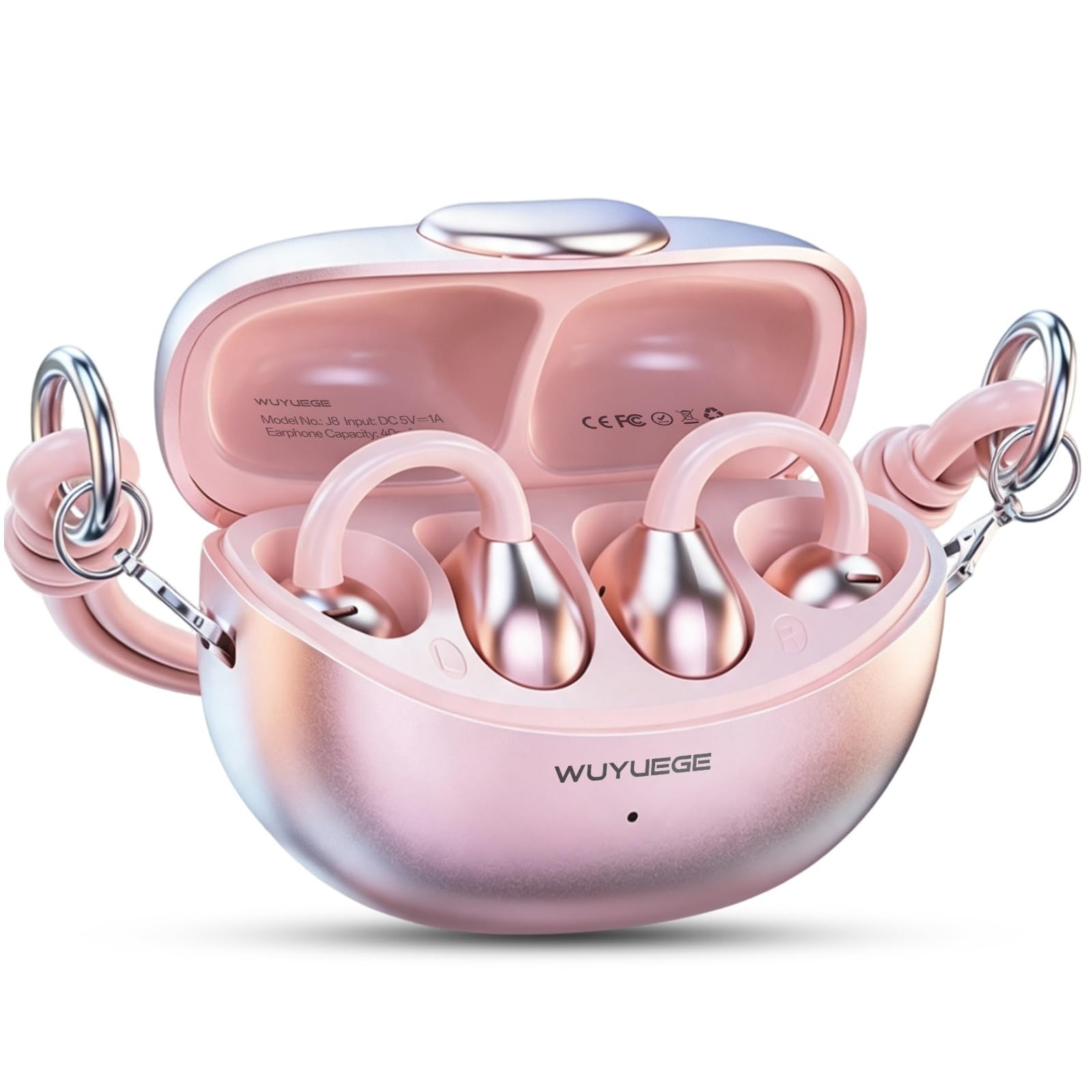
These arrive as a set: the clip-on buds in rose gold, plus a matching bracelet. It sounds like a gimmick until you see them on, because the C-shaped clip sits where an ear cuff would. It is the one pair here you could wear to a wedding without thinking about it, and for small ears that have never tolerated a tip, the appeal is obvious.

The fit story is the same as the other clips. Nothing enters the canal, so a narrow ear is no obstacle, and the 10 mm driver fires at the ear from outside. Forty hours total from the case and USB-C charging cover the practical side, and pairing has been quick on the phones we tried.

What gives us pause is track record. This is the least-established name in the group and the long-term picture is genuinely unproven, which is why the 548-day warranty, far longer than the standard year, is the thing we lean on. Buy it for the look and the open-ear comfort, and treat the warranty as the safety net rather than the selling point.

Bottom line: We choose these when the earbuds are also the accessory: a clip that reads as jewelry, with a 548-day warranty behind it.

How We Tested the Best Earbuds for Small Ears

I started with a shortlist of models sold with multiple ear-tip sizes, then filtered by nozzle length, bud weight, and whether the charging case fit a jeans pocket without a bulge. Price mattered, but so did what came in the box: spare tips, a short cable, and an app that didn’t hide basic controls. From that list, we tested 12 pairs over six months.

Each pair went into a real rotation: desk work, phone calls on a windy walk, a noisy café, and a weekly gym session. I tried every included tip, then did a smile-yawn-chew test and a ten-minute head-shake walk to see what shifted. I noted where pressure landed after 30, 60, and 120 minutes, whether the buds loosened when I talked, and if I had to push them back in after a flight of stairs.

For sound, I moved through podcasts, acoustic tracks, and bass-heavy playlists at low and high volume, and I compared call quality on the same recorded voicemail. Noise cancellation was judged on a bus and in a coffee shop, while ambient mode got checked for hiss. Battery life was timed from full charge to shutdown, and I paired each set with a phone and laptop, walking room to room to catch dropouts. Durability meant a waist-high drop onto hardwood, a week loose in a bag, and a check of case hinges and finish scratches; color got its own pass, with neutral and brighter options ordered where available to see whether the finish matched the photos and showed smudges.

How to Choose Earbuds for Small Ears

Tip sizes, not the word mini

Mini usually describes the charging case, not the bud. A case the size of a matchbox tells you it will fit a pocket; it says nothing about whether the housing will sit inside a narrow ear canal. Two figures do: the number of tip sizes included, and the listed weight of a single bud.

Six sizes, as on the Back Bay Audio Mini, gives you two attempts below the usual small. Around 3.3 to 3.7 grams a bud, as on the JLab and the TOZO A1, is where a shell starts to disappear in a small ear. Check both before anything else on the page.

In-ear seal or open-ear clip

An in-ear bud seals the canal, and the seal is what buys bass and quiet. An open-ear clip bypasses the canal completely and fires at the ear from outside: nothing to press or itch, and you keep hearing the room. The two solve different problems, and neither is an upgrade on the other.

The trap is assuming a bigger driver compensates for a poor seal. In a narrow canal, a sealed 6 mm driver delivers more low end than a 13 mm one leaking air around the tip. If pressure is why you gave up on earbuds, go clip; if you want quiet, stay in-ear and spend your attention on tips.

Keeping them in while you move

Small canals offer less grip, so movement and jaw action loosen a seal that felt fine at your desk. Three designs answer it: wing tips that press into the ridge of the ear, earhooks that carry the bud's weight on a loop behind the ear, and clips that hold the whole thing outside the canal.

For running, the hook is the most secure of the three, which is why the WUYI Q61 leads that section. If you wear glasses, look for a thin hook or clip: a thick one and a frame arm compete for the same strip of skin behind the ear.

Battery, case and water ratings

Judge runtime per bud, not the total on the box — the case figure only matters if you remember to charge it. Five and a half hours a bud is a workday with a top-up; ten hours, as on the TOZO OpenEarRing, is a full day plus an evening.

On water, IPX5 shrugs off sweat and rain, IPX7 survives a dropped bud in the sink, and IP55 adds dust protection but less water resistance. For running or gym use, IPX5 is the floor worth accepting.

What the extra money buys

Spending more here buys tip variety, better water ratings and longer warranties rather than a different league of audio. The cheapest wireless pick here runs a 6 mm driver against the top pick's 8 mm, and both are tuned for everyday listening rather than analysis.

So buy the fit first. If you have never found a bud that sits still, start at the bottom of the price range and learn what your ear does with a small tip. Once you know, paying for six sizes and IPX7 is money well spent.

Frequently Asked Questions

Final Verdict

Our pick is the Back Bay Audio Mini: six tip sizes, IPX7 and eight hours a charge make it the most complete small-ear package here, and the one-year warranty covers the reliability question that hangs over every budget wireless bud.

Change the brief and the answer changes. If pressure in the canal is what you are escaping, take the Kinglucky clip or the TOZO OpenEarRing. If the case has to disappear in a pocket, take the JLab JBuds Mini.