Car & GPS

Best Police Scanners of 2026

A police scanner is a radio that skips the small talk — it moves from channel to channel on its own and stops whenever someone is talking. The catch is that the systems it has to follow change from town to town. Some departments still run conventional analog frequencies, others have moved to digital trunked networks, and a few transmit in a way that turns a cheaper radio into a stuttering mess. The real question isn't which scanner is best overall — it's which one can hear the agencies you care about, clearly, wherever you set it up.

I've listened to local dispatch for years, and the pattern I keep running into is that people give up on a scanner long before it wears out, usually mid-programming. Over the past eight months, my team and I worked through 11 of them, from bare-bones handhelds to trunking desktop units, and the ones that earned a spot here were easy to set up and easy to hear. Sound quality, reception, and compatibility with the systems near you matter far more than a long feature list. Here's what held up.

1

Uniden SDS200

Top Pick
Uniden SDS200

Simulcast digital

Our Score 9.0/10
Check Price

Worth Noting

  • Large base/mobile chassis
  • Custom favorites take time to learn
Digital
True I/Q TrunkTracker X
Display
3.5 in. color
Database
US and Canada
Location Setup
ZIP code or GPS

The hardest part of buying a police scanner in 2026 is not finding one; it is finding one that can hold a simulcast digital system without chopping voices into dropouts. That is where the SDS200 earns its keep. Uniden’s True I/Q receiver and TrunkTracker X design are aimed at exactly that modern problem, and the 3.5-inch color display gives you room to see system, channel, and favorites information without squinting. We came away convinced that the display is not just decoration: it makes a complex receiver easier to live with.

The HomePatrol database covers the US and Canada, and location-based scanning by ZIP code or GPS gets you listening quickly. We like that because it lowers the setup barrier without removing the deeper controls. Favorites lists let you organize the systems you actually care about, then scan them alongside the full database. For a base or vehicle installation, that combination is the most complete setup here.

Performance is the reason to pay attention. The SDS200’s digital decoding is the most convincing digital decoder here, and it is the one we reach for when simulcast traffic is the worry. The receiver stays composed when lesser radios start to stutter, and the audio is clear enough to follow a conversation rather than guess at it. If your local system is conventional analog, this is more scanner than you need; the BCD996P2 or a simple analog handheld makes more sense.

Bottom line: We recommend the SDS200 as the default for anyone facing modern trunked or simulcast police systems; its digital reception is the most convincing here.
2

Uniden BCD996P2

Uniden BCD996P2

P25 base/mobile

Our Score 8.6/10
Check Price

Worth Noting

  • DMR and NXDN need paid upgrades
Mount
Base/mobile
Weather
S.A.M.E. alerts
Channels
25,000
Trunking
P25 Phase 1 and 2

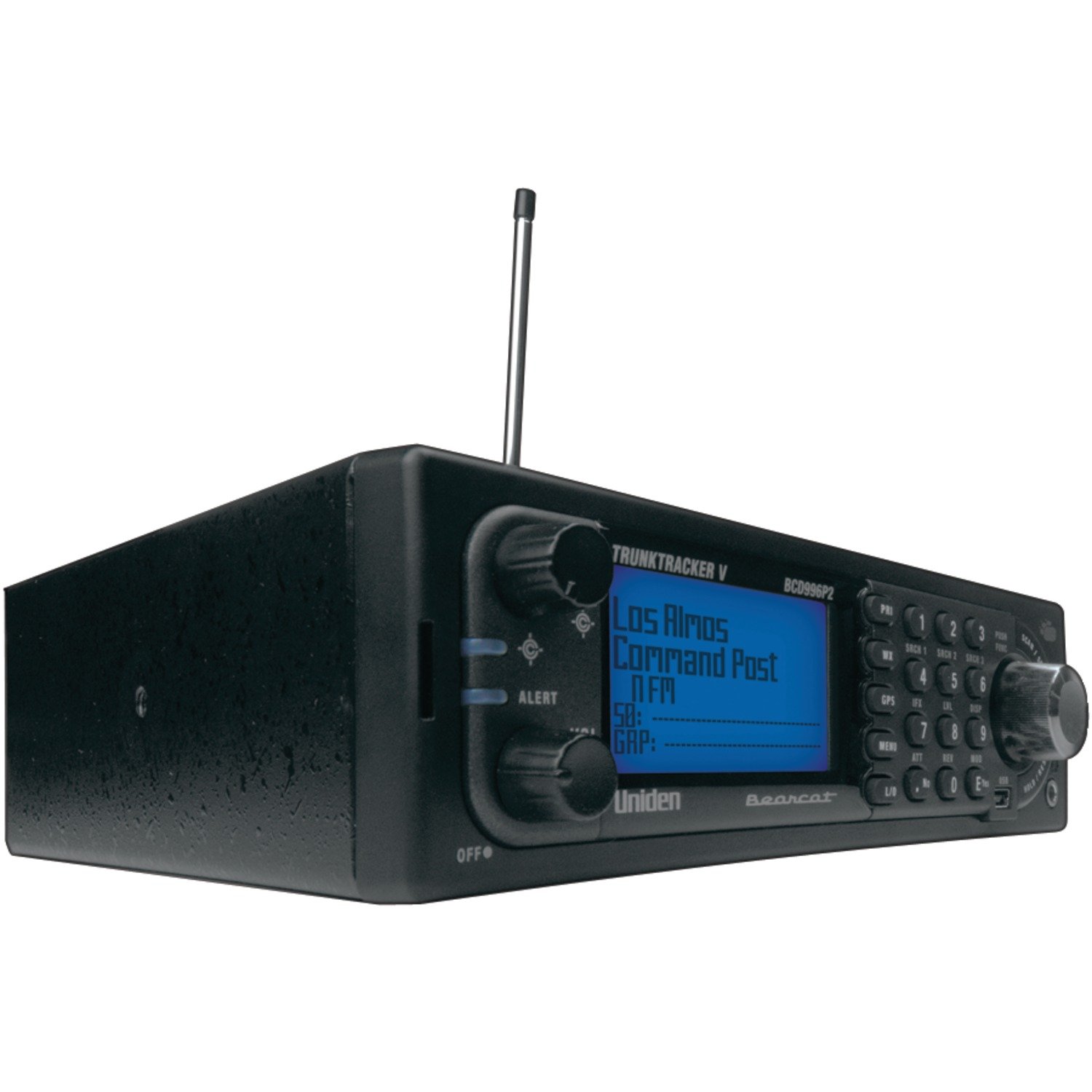
The BCD996P2 makes its case by refusing to be the most expensive digital scanner on the page. It covers APCO P25 Phase 1 and Phase 2, Motorola, EDACS, and LTR trunked systems, plus conventional analog and P25 digital channels, in a base/mobile chassis that can sit on a desk or be wired into a vehicle. For a listener who knows the local system is P25 and does not need the SDS200’s simulcast-focused receiver, that is a lot of capability in a less rarefied package.

We think the value is in the receiver and channel flexibility, not the interface. The 25,000 dynamically allocated channels give you room to build a large listening list, Close Call picks up nearby transmissions, and S.A.M.E. weather alerts are there for storm season. In our use, reception and audio were solid, and the base/mobile format made it easy to move between desk and vehicle. This is the digital step-up we point to when the SDS200 is more radio than the budget can justify.

The catch is programming. This is not a scanner you unbox and instantly understand, and the menu system assumes you will use software and a frequency database. Budget an evening before the first real listening session, especially if you are new to trunking. Once it is set up, though, it is a capable P25 workhorse that does not ask for premium money.

Bottom line: Buy this if you want P25 Phase 2 base/mobile scanning and can live with a programming session before the first listen.

3

Whistler WS1065

Whistler WS1065

Digital desktop

Our Score 8.4/10
Check Price

Worth Noting

  • Manual is too technical for beginners
Alerts
8-color LED
Digital
P25 trunking
Channels
1,800
Programming
USB

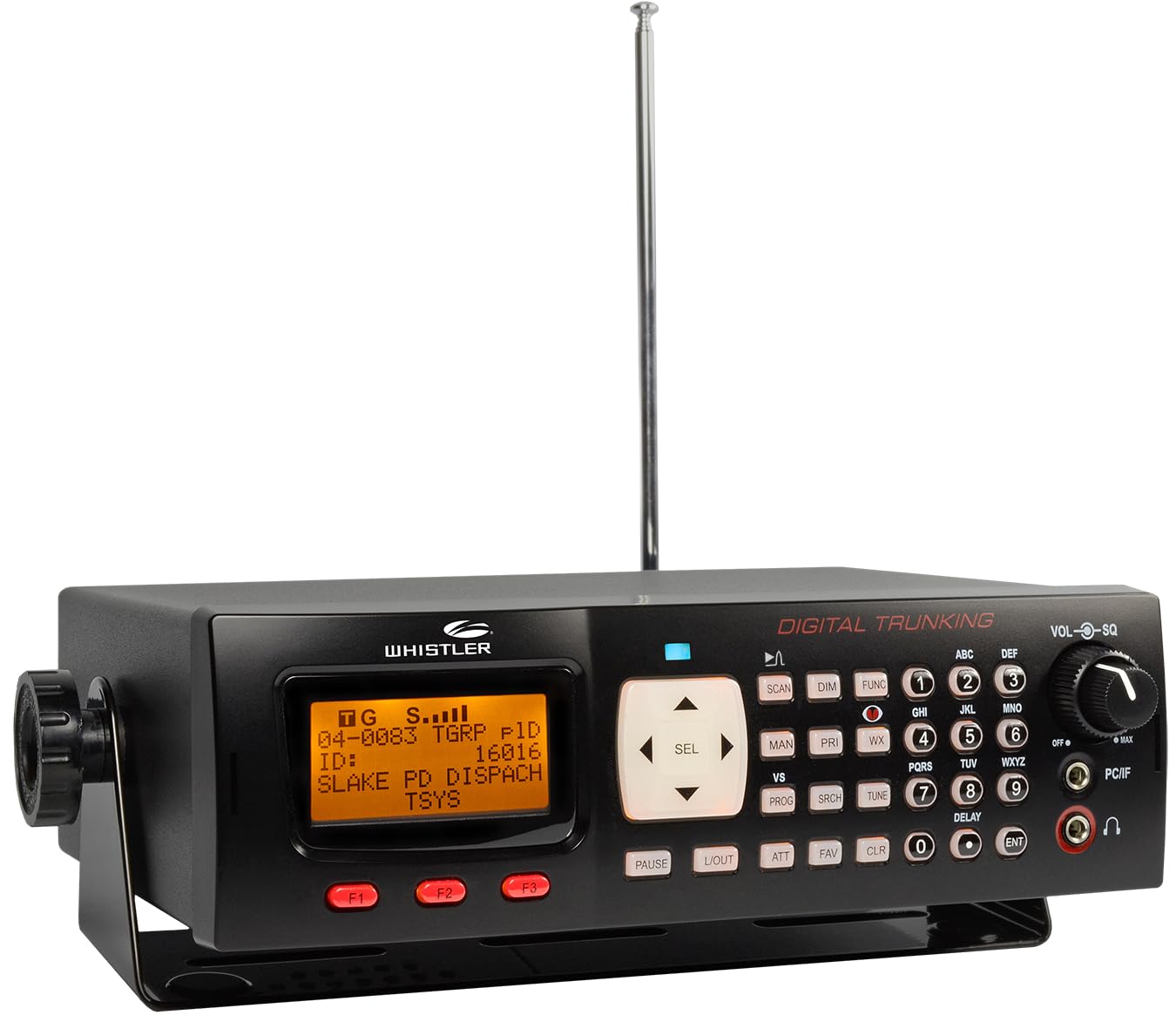
Menu-driven programming with built-in help text is the detail that makes the WS1065 worth a look. We appreciate that Whistler put an explanation on screen for each option; it does not make the scanner simple, but it shortens the trial-and-error phase that makes so many digital scanners feel hostile. The 8-color LED alerts are a nice touch too, especially if you want a visual cue for a priority channel without staring at the display.

The headline is automatic adaptive digital tracking, which adjusts to P25 signals as they shift, and the scanner covers 1,800 channels with USB programming and cloning. For a desk-bound listener who wants P25 trunking without moving into the top price tier, that is a sensible combination. We think it fits a home setup where the scanner stays put and the antenna can be placed for the best signal.

Reception is the place to be careful. Digital P25 can still break up in hilly terrain or at the edge of a system, and this desktop is not the strongest in this group on simulcast. If your county is simulcast-heavy, the SDS200 is the better bet; the WS1065 makes more sense where the signal is strong and the desk is fixed. The on-screen help is useful, but this is still a scanner that rewards patience.

Bottom line: A sensible digital desktop for listeners who want P25 trunking without premium pricing, provided they are comfortable with menus.

4

Whistler WS1010

Whistler WS1010

Analog monitoring

Our Score 8.4/10
Check Price

Worth Noting

  • Stock antenna limits weak-signal reception
Banks
10
Weather
SAME and Skywarn
Channels
400
PC Programming
Optional cable and software

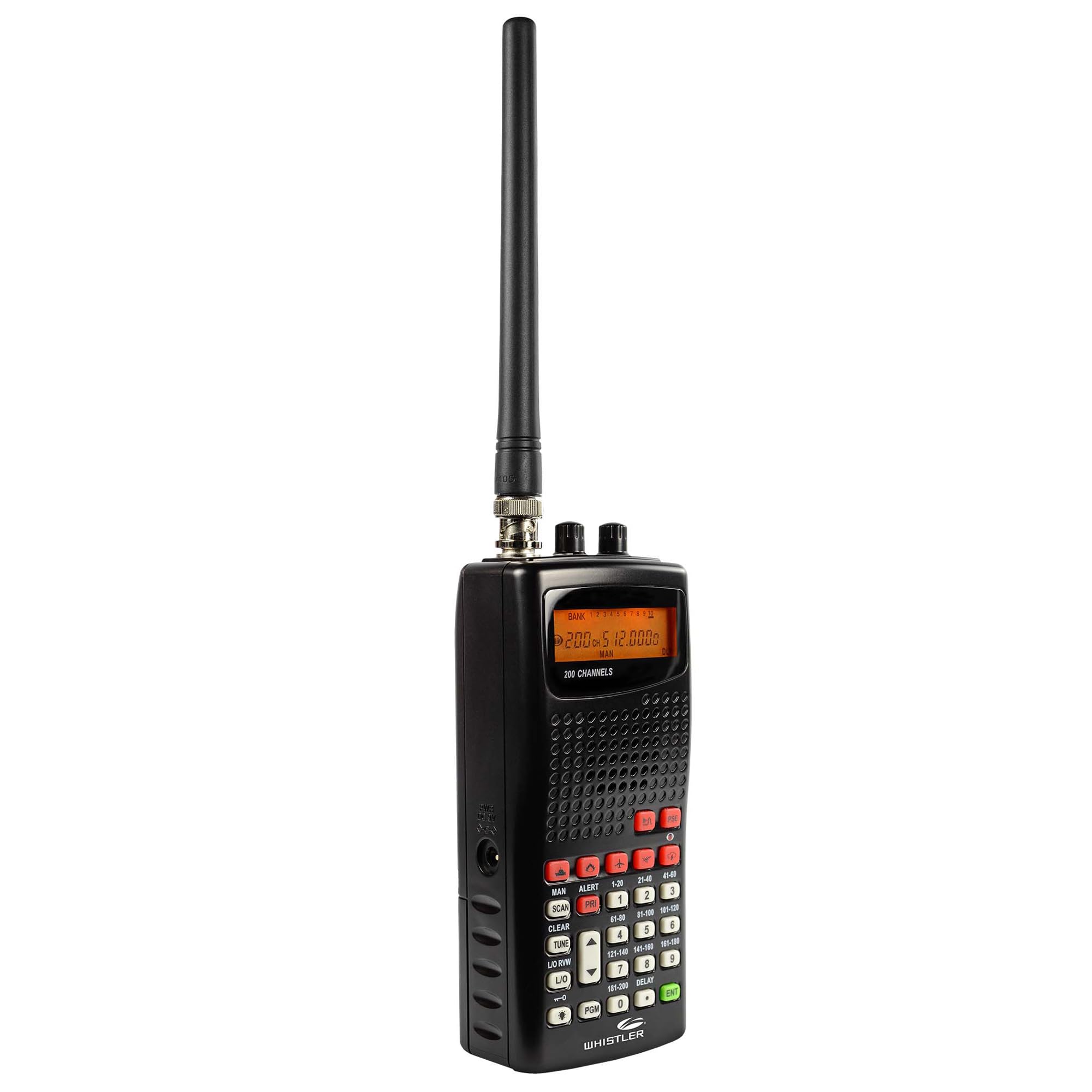
A handheld scanner earns its place at the county fair, the race track, or a storm-watch night when you want weather and local fire traffic in your pocket. The WS1010 is built for that kind of listening: 400 channels in 10 banks, Skywarn and SAME weather alerts, and a Spectrum Sweeper that hunts nearby transmissions. We found the size easy to live with, and the dedicated weather access is the feature we used most.

This is an analog scanner, and that is the whole decision. It is a good fit for conventional fire, weather, rail, marine, air, and amateur radio, but it will not decode a digital trunked police system. If your police department has moved to P25, this is not the fix. We think it makes the most sense as a second scanner, a gift for a race fan, or a low-cost way to listen to the non-police traffic that is still analog.

The controls are straightforward enough for keypad entry, and the included battery holder makes it easy to run on AA cells or the AC adapter. PC programming is possible, but it needs an optional cable and third-party software, so do not count on computer setup out of the box. For the money, it is a useful analog handheld rather than a do-everything digital unit.

Bottom line: Choose it for analog fire, weather, rail, and air monitoring, not as a fix for a digital police system.

What Eight Months of Listening Taught Us

We started by gathering the scanners that come up again and again in enthusiast forums and dealer catalogs, then cross-checked each one against the digital and trunked systems public safety agencies actually run. Anything that couldn't handle both analog and digital trunked traffic was cut, and we kept price in view, since a scanner that costs as much as a used car isn't a realistic first buy. That left 11 units, which we lived with for eight months.

Every scanner got the same first job: I programmed it from scratch for a real zip code using only the manual and whatever software came in the box, and I timed how long it took and how many times I had to start over. Then I compared reception on equal footing — same dispatch channel, same windowsill, same antenna height — and listened for whether digital transmissions arrived whole or broke into the machine-gun garble that simulcast is famous for. Sound quality got checked twice, once at low volume with a dishwasher running and once through headphones on a drive.

From there they went into ordinary use: a week on the kitchen counter, a stretch in a car console on commutes, a windowsill through a storm that killed the power. We paid attention to scanning performance in the boring sense — how quickly it stepped past quiet channels, whether it locked onto a weak signal or skipped it, how fast it recovered after a transmission ended. We tracked battery life on the handhelds, noted which ones needed a different antenna or cable to match the systems nearby, and kept a tally of what came in the box versus what was sold separately.

How to Choose Police Scanners

Start with your local radio system

The first question is whether your local public-safety agencies use analog conventional channels or a digital trunked system. P25 Phase 1 and Phase 2 are the common digital formats, and an analog-only scanner cannot decode them. Look up your county before buying, then match the scanner to that system. The SDS200 and BCD996P2 cover P25; the WS1010 is an analog handheld for conventional fire, weather, rail, air, and marine traffic. A product called a police scanner is not automatically a match for your police department.

Simulcast is the reception trap

Simulcast is the reception trap. Several towers broadcast the same digital signal, and where those signals overlap the audio can break up even when the signal meter looks strong. The SDS200’s True I/Q receiver is designed for that condition; the BCD996P2 and WS1065 are more conventional digital receivers. If your county is simulcast-heavy, put the receiver first and the feature list second. If you are close to one strong tower, a less expensive digital model can be enough.

Programming is part of the purchase

Programming is part of the purchase, not a one-time chore you can ignore. Database-driven scanners can start from a ZIP code, but favorites lists, lockouts, and updates still take software and patience. Traditional models need frequencies entered by hand or through a computer cable. The practical choice is between a scanner that helps you build a listenable list and one that assumes you already know what you want. Thin manuals are common, so plan on the manufacturer’s software or a programming service if menu-heavy setup is not your idea of a good evening.

Pick the shape before the features

Decide where the scanner will live before you compare features. A handheld is for carrying around the house, the yard, or a vehicle; a base/mobile unit is for a desk, shelf, or permanent vehicle install. Handhelds trade speaker size and battery life for portability, while base units usually run from wall or vehicle power and are easier to live with for long sessions. The SDS200 and BCD996P2 are base/mobile, the WS1065 is a desktop, and the WS1010 is a handheld. The right shape often settles the choice faster than a specification sheet.

Antenna and location beat channel count

Reception depends on the antenna and the location as much as the radio. An external antenna can pull in weak signals, but it can also expose simulcast distortion; moving the scanner a few feet or trying a different antenna often changes results more than adding features. Put the radio near a window or use an outdoor antenna if you can, and keep the stock antenna as a backup rather than the final answer. A quiet scanner is usually a placement problem before it is a broken radio.

Frequently Asked Questions

Final Verdict

The SDS200 is the scanner we point to when local police and fire traffic has gone digital and trunked. Its True I/Q receiver is the difference on simulcast systems, and the HomePatrol database makes a premium base/mobile unit feel less intimidating. If that price tier is too much, the BCD996P2 is the value digital base/mobile, the WS1065 suits a desk-bound listener, and the WS1010 covers analog fire, weather, rail, and air. Start with your local system; the right answer follows from there.