TVs & Video

Best Projector of 2026

A projector promises a huge picture for the price of a much smaller TV, but the reality is fussier: get the brightness wrong and your movie looks like it's being projected through a fogged window. I've set up projectors on coffee tables, bookshelves, and one picnic table that never stayed level, and the difference between a great image and a disappointing one comes down to unglamorous details. A good one fixes the size compromise—big screen, no wall-mounted rectangle—as long as the picture holds up with a lamp on.

Brightness is the spec shoppers ask about most and the one most exaggerated on the box. Over six months, my team and I tested 10 projectors at prices from budget to premium, watching the same movie scenes and running setup drills in a dark basement, a living room with blinds, and a backyard after sunset. The models that earned a spot got the basics right: a sharp, colorful image, connections that didn't fight us, and menus we could navigate without the manual. Some looked brighter than their stated lumens; others dimmer—the picks ahead are the ones we'd happily set up again.

1

TOPTRO X9 Pro

Top Pick
TOPTRO X9 Pro

Home theater

Our Score 9.4/10
Check Price

Worth Noting

  • Premium price for the top-tier package
Speakers
2 x 20W Dolby Audio
Brightness
920 ANSI lumens
Smart Platform
VIDAA smart OS
Native Resolution
1920 x 1080

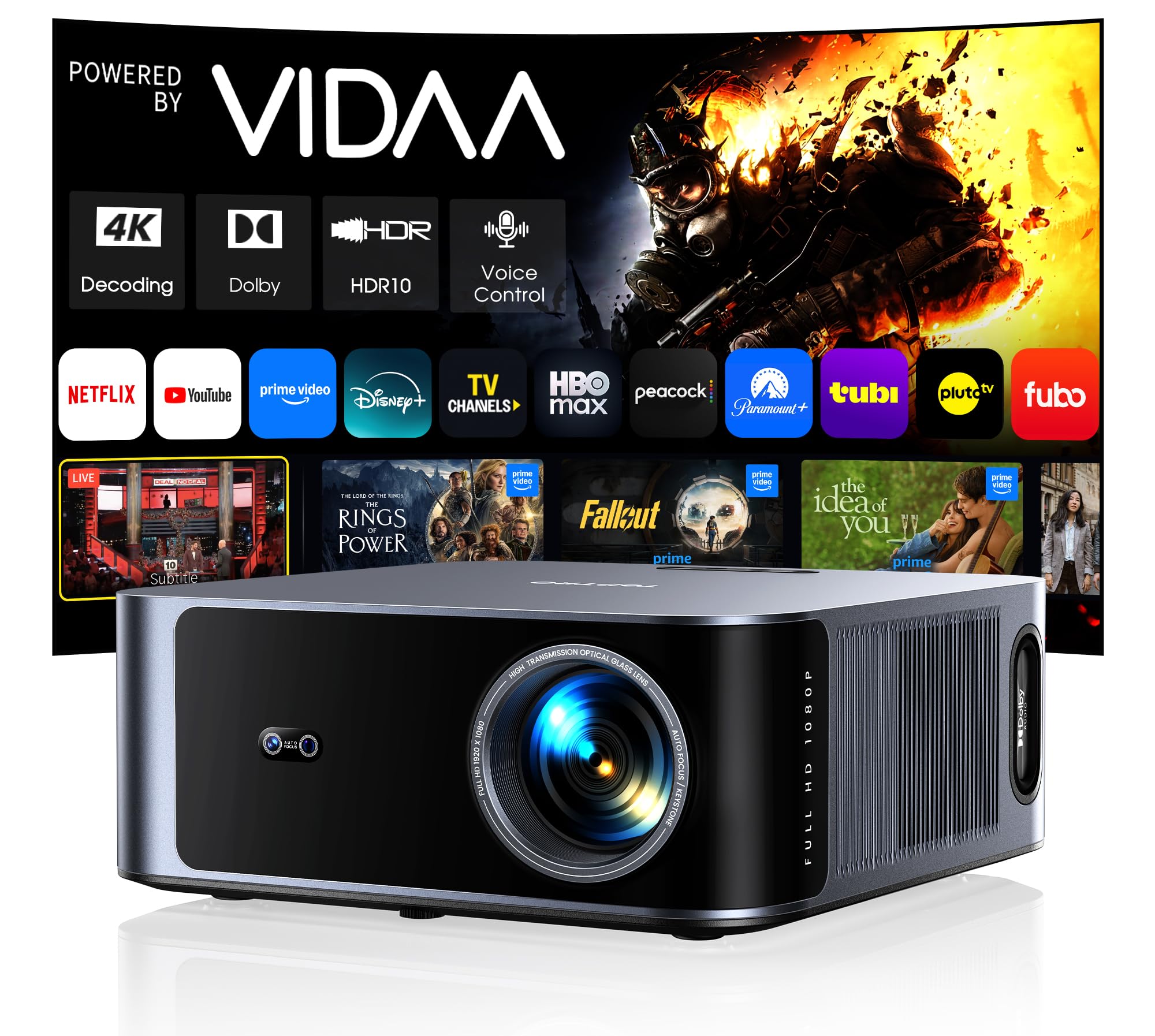
At 920 ANSI lumens, the X9 Pro is the brightest projector in this group, and that figure is the reason it earns our top spot. The 40W Dolby speaker system matters just as much: we didn't need to add a soundbar to fill a living room, and HDMI ARC means one remote can handle the volume when we do. The native 1080p image is crisp, and the 4K label refers to decoding and input support, not a native 4K panel.

Setup is where this one pulls ahead of the cheaper picks. Auto focus, auto keystone, obstacle avoidance, and screen alignment do the fiddly work, so moving from a wall to a projection screen doesn't turn into a long calibration session. The 1.3:1 throw ratio gives you a big image without pushing the projector to the back of the room, and the VIDAA interface has Netflix, YouTube, Prime Video, and Disney+ ready without a stick.

The X9 Pro is built to stay put: the 6.6-pound body and desktop form factor make it a shelf or patio projector rather than a backpack one. If you want the brightest, most complete picture in this set, that is a fair trade; if you need something you can carry every weekend, the compact picks are the better fit.

Bottom line: We recommend the X9 Pro when you want one projector for a dark-room theater and backyard nights, because its 920 ANSI brightness and 40W speakers do the heavy lifting.
2

Vamvo VF340

Vamvo VF340

Bright rooms

Our Score 8.6/10
Check Price

Worth Noting

  • Needs light control for daytime viewing
Setup
Auto focus and auto keystone
Brightness
600 ANSI lumens
Lens Offset
100% offset
Native Resolution
1920 x 1080

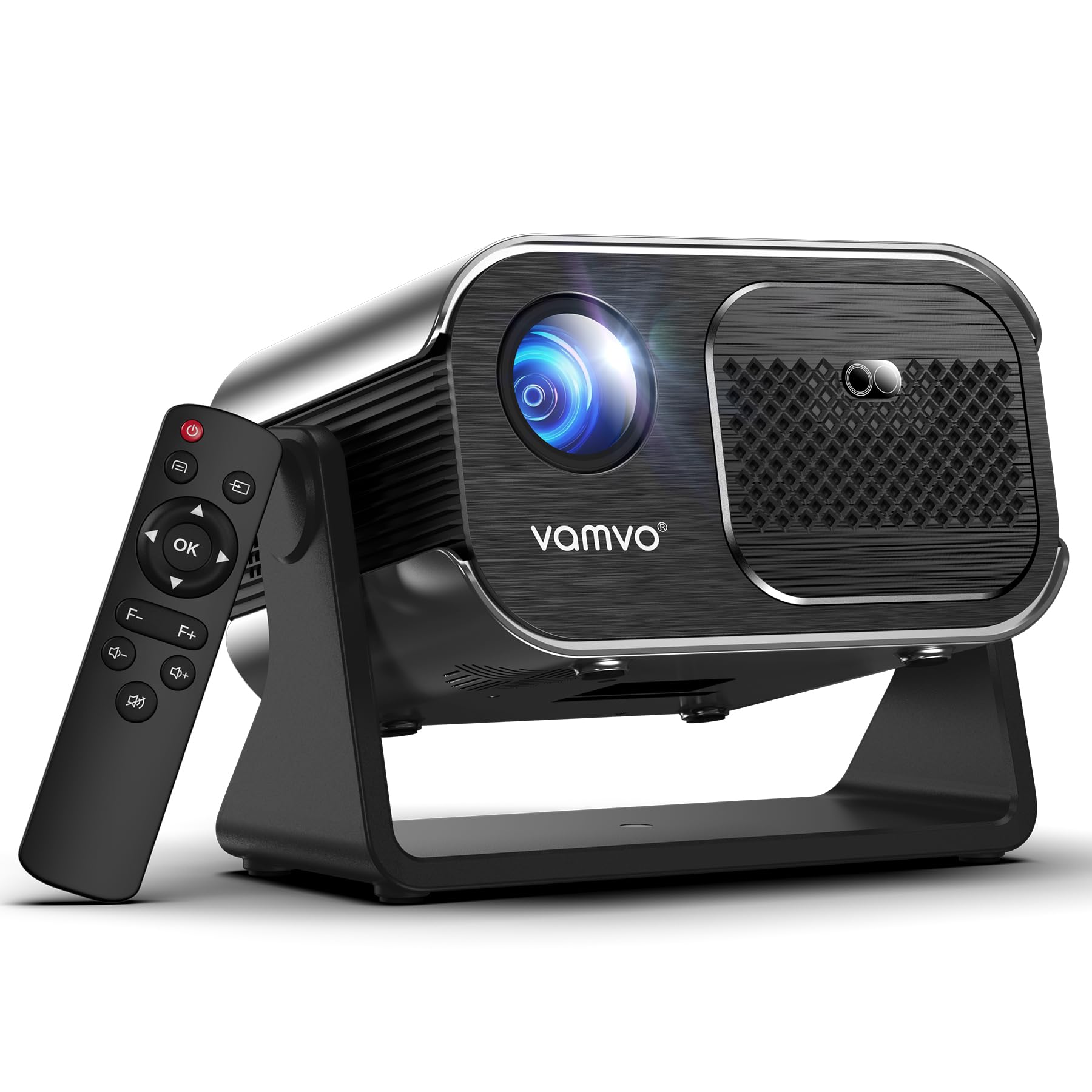
The VF340's 100% offset design is the detail that makes it easy to live with. The lens can sit off to the side of the image rather than dead center, so the projector isn't planted in your sightline when you're watching from the couch. Add 600 ANSI lumens and native 1080p, and this is the value pick for a living room or covered patio where you want a bright picture without paying top-tier money.

We were impressed by how much of the setup is automatic. Motorized focus and automatic keystone get a rectangular image in seconds, and Wi-Fi 6 plus Bluetooth 5.2 cover screen mirroring and a wireless speaker or soundbar. The 4K support is for input and decoding; the panel is 1080p, which is the right trade at this level.

Streaming is the one place it asks you to supply the brain. This is an HDMI-first projector, so a TV stick or console is the path to apps; the Wi-Fi is there for mirroring rather than a built-in channel guide. If you already own a stick, that's no burden, and the picture is better for the money than a smart projector with half the brightness.

Bottom line: We think the VF340 is the value pick for a bright-ish living room: 600 ANSI and native 1080p, with a 100% offset design that keeps the lens out of your sightline.

3

ONOAYO ONO3Pro 2.0

ONOAYO ONO3Pro 2.0

Backyard movies

Our Score 8.8/10
Check Price

Worth Noting

  • Premium price for a portable 1080p
Speakers
Dual 50W Dolby Audio
Brightness
310 ANSI lumens
Smart Platform
Smart TV OS 2.0
Native Resolution
1920 x 1080

The ONO3Pro 2.0 is the streaming-first pick: it boots into a smart TV interface with Netflix, Prime Video, YouTube, and live channels already there, so there's no stick hanging out of the HDMI port. The 50W Dolby speaker system is the bigger surprise: it has enough headroom that we didn't feel the need to add a soundbar for a living-room movie.

The automatic setup is just as useful when you move it. Auto focus, keystone, obstacle avoidance, and screen fit handle the geometry in seconds, and the sealed optical engine is a practical detail in a room with dust or a patio with pollen. At 1 kilogram, it's easy to carry from the living room to the yard.

The 310 ANSI brightness is the boundary: this is an after-dark projector, not one that fights a sunny room. For movie nights, though, the picture is sharp and the sound is the best in this set. If you want one box for streaming and audio, this is the one we choose; if you need daylight brightness, the TOPTRO and Vamvo picks are stronger.

Bottom line: We choose the ONO3Pro 2.0 for streaming-first outdoor nights: built-in apps, 50W Dolby sound, and automatic setup cut the accessory count.

4

WiMiUS P67

WiMiUS P67

Tight rooms

Our Score 10.0/10
Check Price

Worth Noting

  • Costs more than the budget 1080p picks
Weight
1.94 lb
Throw Ratio
1.0:1
Smart Platform
Whale TV smart OS
Native Resolution
1920 x 1080

A 1.0:1 throw ratio is the reason to look at the P67 before the other 1080p projectors here. It throws a big image from much closer to the wall than a standard projector, which is exactly what a bedroom, dorm, or narrow apartment needs. The 270-degree rotating stand is the second useful trick: swivel the lens upward and you can put a picture on the ceiling without buying a mount.

At 1.94 pounds, it's light enough to move between rooms, and the 50 to 100 percent zoom helps you fit the image once the projector is in place. Native 1080p, auto focus, and auto keystone do the basics well, and the Whale TV interface brings Netflix, live channels, and other apps without an extra stick.

The 45-inch minimum and 130-inch maximum image tell you where it belongs: a bedroom or small living room, not a big home theater. The rotating stand also makes it more flexible than a fixed ceiling mount, since you can aim it at a wall or ceiling and then put it away.

The P67 is the compact specialist we reach for when the room is tight. It won't replace a big-room projector for a crowd, but the short throw and rotating stand solve a problem the standard-throw picks can't. If your wall is close, this is the one that fits.

Bottom line: We reach for the P67 when the room is small: its 1.0:1 short throw and rotating stand put a 1080p picture on a wall without a long cable run.

5

YGSKK Mini Projector

YGSKK Mini Projector

Bedroom and dorm

Our Score 9.0/10
Check Price

Worth Noting

  • Built-in sound is better with a Bluetooth speaker
  • Minimum 50-inch image limits tiny rooms
Weight
1.7 lb
Brightness
300 ANSI lumens
Smart Platform
Built-in apps
Native Resolution
1920 x 1080

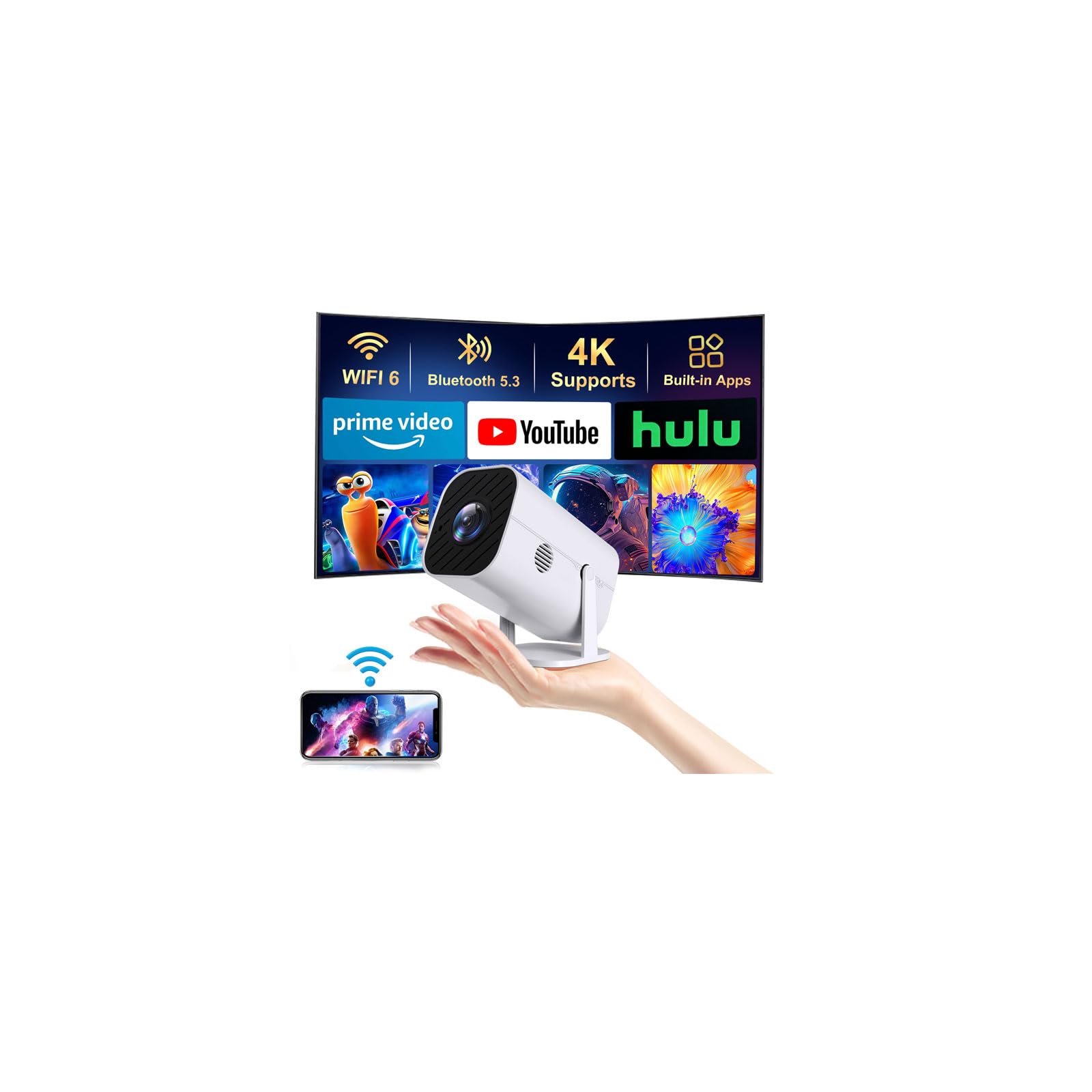
At 1.7 pounds with apps already built in, the YGSKK is the least fuss in the budget group. It's easy to move from room to room, and there's no streaming stick to lose. Native 1080p and 300 ANSI are the right specs for a dark bedroom, and the fan noise stayed out of the way during quiet scenes.

Setup is simple: Wi-Fi 6 and Bluetooth 5.3, HDMI and USB inputs, and an included HDMI cable. In a dark bedroom, the picture is clear and the built-in apps cover the basics. The 50-inch minimum at 4.92 feet is worth checking before you commit, because this isn't an ultra-short-throw projector; it wants a little space behind it.

The 300 ANSI output is a lights-down figure, not a living-room-with-curtains-open one. If that fits your room, it's a strong first projector; if you need daylight brightness, spend more. The sound is fine for a sitcom, but a Bluetooth speaker makes a real difference for movies, and the projector makes that easy.

Bottom line: We recommend the YGSKK mini for a first bedroom projector, since built-in apps, native 1080p, and a 1.7-pound body make it easy to live with.

6

TMY V08

TMY V08

Starter kit

Our Score 8.6/10
Check Price

Worth Noting

  • Bluetooth pairing can be finicky
Bluetooth
Two-way Bluetooth
Brightness
300 ANSI lumens
Included Screen
80-inch foldable screen
Native Resolution
1920 x 1080

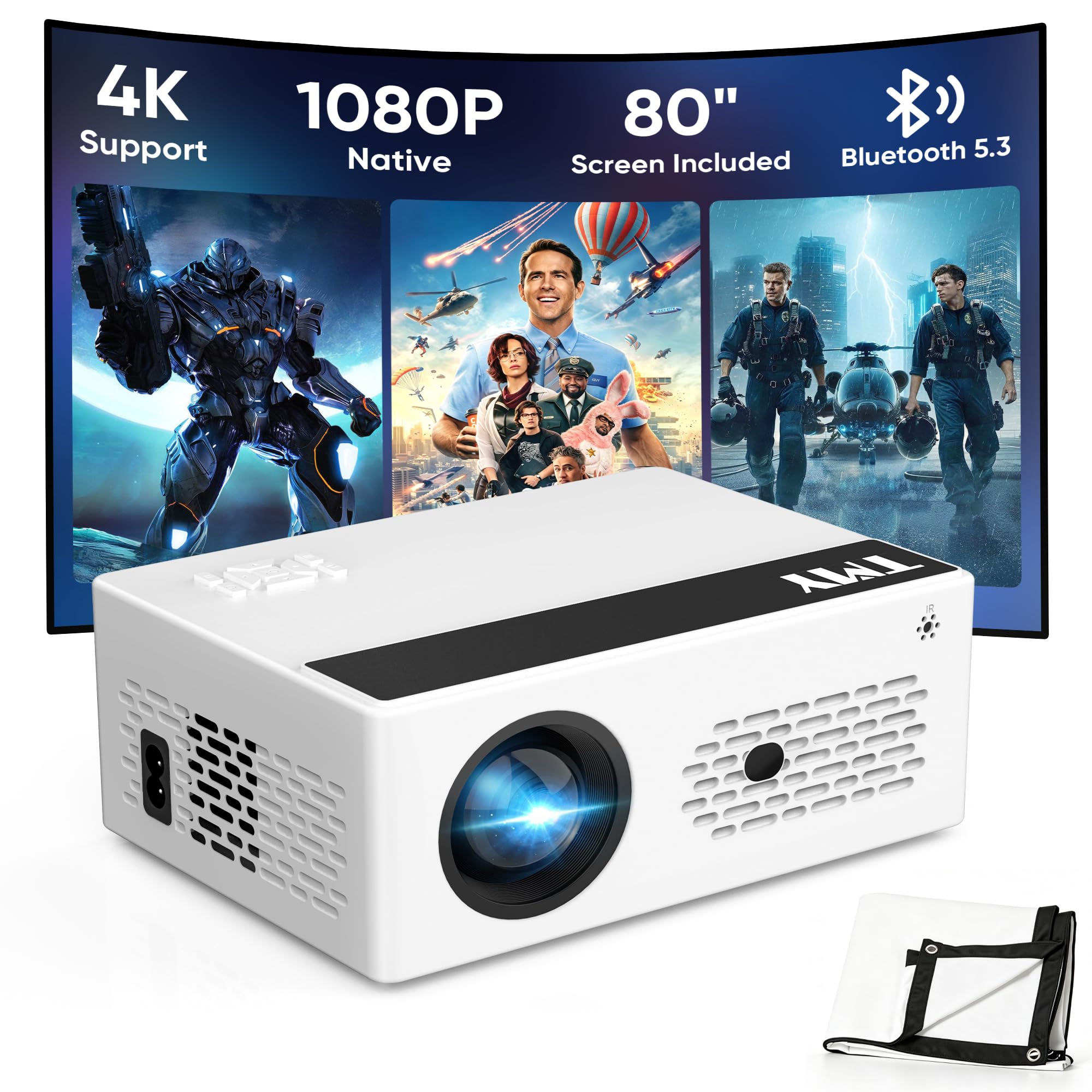
The V08's 80-inch screen is the reason to look at it first: it's the only pick here that includes the surface you project on. That turns the box into a complete starter kit for a dorm, spare room, or backyard. Add native 1080p and 300 ANSI, and you have the basics covered without a separate screen purchase.

Setup is plug-and-play in the old-fashioned sense: HDMI and USB inputs, a remote, and an included HDMI cable. There's no built-in streaming platform, so a TV stick or console is the source, but that also means you're not waiting on a smart interface to update. Bluetooth pairs a soundbar or speaker, and the built-in 15W speaker is fine for casual viewing.

The 300 ANSI output is a lights-down figure, so plan on a dark room or after sunset outdoors. That's the trade for the bundle. If you already own a streaming stick and want the shortest path from box to picture, the V08 is the budget bundle we recommend; if you want built-in apps, the YGSKK is the easier buy.

Bottom line: We like the V08 as a starter kit because it includes an 80-inch screen and still delivers native 1080p without turning movie night into a shopping list.

7

ELEPHAS H211

ELEPHAS H211

Roku streaming

Our Score 8.8/10
Check Price

Worth Noting

  • Manual focus and keystone take extra adjustment
  • No HDMI cable in the box
Weight
1.3 lb
Brightness
150 ANSI lumens
Smart Platform
Roku TV built in
Native Resolution
1280 x 720

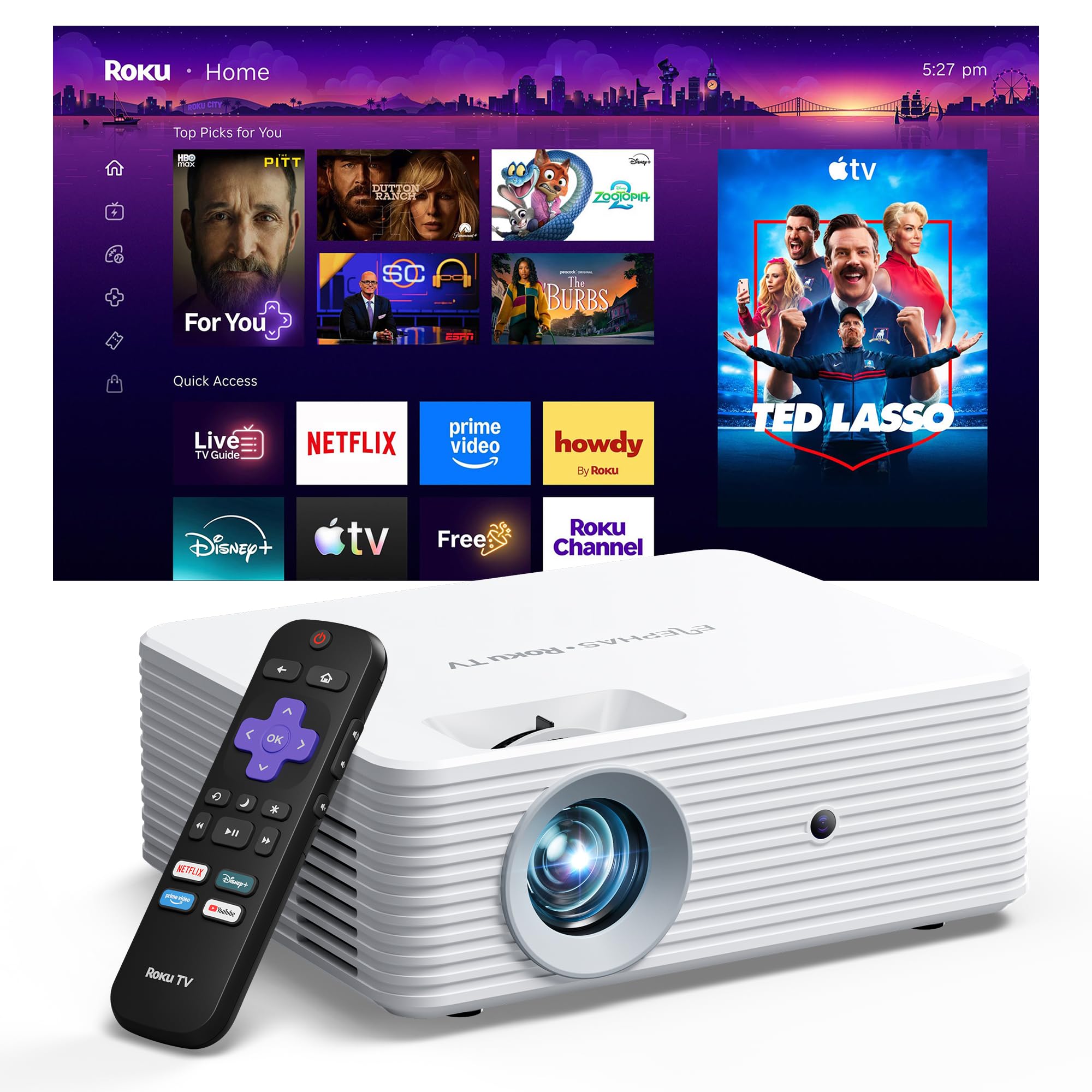
The H211 is the projector we hand to someone who already lives inside Roku. It boots straight into the Roku home screen, with the same apps and live channels as a Roku TV, and there's no stick hanging out of the back. AirPlay and voice control through Siri, Alexa, or Google Assistant make it feel more modern than its panel suggests.

At 1.3 pounds, it's small enough to sit on a nightstand or carry to a friend's place, and the built-in Dolby Audio is decent for a bedroom. The compact body is the appeal here: it disappears on a shelf and sets up in minutes, which is what a secondary screen should do.

The H211 is a secondary-screen projector, not a main living-room one: it's happiest in a dark bedroom with a modest image. If you want a sharper picture or more brightness, the YGSKK or Vamvo is the better fit. For Roku streaming in a small room, though, the built-in platform is the reason to choose it.

Bottom line: For Roku households that want a tiny second screen, we point to the H211, whose built-in Roku, AirPlay, and voice control do more than its 720p panel suggests.

8

Alwtniet HY300 Pro

Alwtniet HY300 Pro

Small bedrooms

Our Score 8.4/10
Check Price

Worth Noting

  • Wi-Fi and Bluetooth can be inconsistent
Weight
12.3 oz
Brightness
200 ANSI lumens
Throw Ratio
0.9:1 ultra-short throw
Native Resolution
1280 x 720

The HY300 Pro's 0.9:1 ultra-short throw is the reason it stands out among the budget minis. It can sit close to the wall and still fill it with a 35- to 135-inch image, which is the difference between a projector that works in a small bedroom and one that needs a long empty wall.

The 180-degree swivel is the feature we appreciate most: point it at the ceiling for bedtime viewing, then swing it back to the wall. Android 14, Wi-Fi 6, and Bluetooth 5.4 give it built-in apps and casting without a stick, and the 12.32-ounce body is easy to move.

The 200 ANSI, 720p picture is the catch. It's fine for a dark bedroom and casual cartoons, but it won't hold up in a bright room or at a huge size. The built-in speaker is also strictly backup; a Bluetooth speaker is the better way to watch a movie.

For a tight room where the projector has to sit close to the wall, the HY300 Pro solves a problem the standard-throw budget picks don't. It's not the one for a living room with daylight, but it's the budget short-throw pick we recommend for a bedroom.

Bottom line: We pick the HY300 Pro for tight bedrooms where the projector must sit close to the wall; its 0.9:1 ultra-short throw is the reason to choose it over the other budget minis.

How We Picked and Tested the Best Projectors

We started by pulling together a shortlist of current projectors—portable pico models, 1080p and 4K home-theater units, and a couple of ultra-short-throw options—filtering by price, throw distance, and the connections each offered. We left out anything that required a ceiling mount just to get a decent image, since most people we know set a projector on a shelf or coffee table. That left 10 units, which we used for six months.

Each projector was unboxed and set up by one person, timed, in four spots: a dark basement, a living room with blinds closed and then half-open, a bedroom with a white wall, and a backyard after sunset. We noted how long it took to get a level, focused picture, whether the auto-keystone needed babysitting, and how loud the fan got during quiet scenes. We connected a laptop over HDMI, cast from a phone, and ran the built-in streaming apps, keeping track of which ones needed a dongle or dropped Wi-Fi.

For picture quality, we watched the same three scenes—a dark, shadowy chase, a bright animated musical number, and a fast-moving sports clip—and noted sharpness at the edges, color, and motion blur. We measured brightness with a lux meter at the center and corners of a 100-inch image, then compared the readings with the manufacturer's lumen claims. We also weighed value: a projector that cost twice as much had to look twice as good in a dim room, not just on paper. Build quality, remote layout, and how easy it was to carry from room to room rounded out the notes.

How to Choose the Right Projector

Start With Brightness and Room Light

ANSI lumens tells you how much room light a projector can handle. A 150 to 300 ANSI model is for a dark bedroom or an after-sunset patio; 600 ANSI gives you more margin for a living room with lamps on; 920 ANSI is the brightest class here and the one to choose for a multi-use room. Be careful with 4K support: on most of these projectors it means the input accepts and decodes a 4K signal while the panel is native 1080p or 720p. That is fine for streaming, but do not pay extra expecting a native 4K image.

Match Throw Distance to the Wall

Throw distance is the quiet dealbreaker. A standard projector needs several feet behind it; a short-throw model can sit close to the wall, and an ultra-short-throw model like the Alwtniet HY300 Pro can fill a small bedroom from about 0.75 meters. Measure from your intended shelf to the wall before you buy, then check the minimum and maximum image size. If the projector has to go on a side table, 100% offset, as on the Vamvo VF340, can keep it out of your sightline.

Choose Built-In Apps or a Streaming Stick

Built-in apps are the difference between one remote and three. Roku, VIDAA, Android, and Whale TV models here boot into a streaming home screen, so you can start a show without adding a stick. The trade is upgrade flexibility: a TV stick can be replaced when apps change, while a projector's smart platform is fixed. If you already own a stick or a console, an HDMI-first projector can put more of the budget into brightness and lens quality. We treat built-in apps as a convenience, not a picture-quality feature.

Plan for Sound and Placement

Every projector here has a speaker, but only the larger models have one that can stand in for a soundbar. If you watch action movies or host a backyard crowd, look for Bluetooth audio or HDMI ARC so you can add a speaker without a pile of adapters. Placement matters too: leave room for ventilation, and keep the projector out of the seating sightline. Fan noise is easy to ignore in an action scene and much less so in a quiet dialogue scene.

Decide How Portable It Needs to Be

Weight is the spec that separates a shelf projector from a grab-and-go one. The 6.6-pound TOPTRO is a planned-movie-night machine; the 1.7-pound YGSKK and 12.32-ounce Alwtniet are the ones you can move without a second trip. If the projector will live on a ceiling mount, prioritize auto keystone and a short throw instead; if it will travel, prioritize weight and automatic setup. The right answer depends on whether it stays put or comes out for occasions.

Frequently Asked Questions

Final Verdict

Buy the TOPTRO X9 Pro if you want the brightest picture here, plus 40W sound and automatic setup that makes a big-screen night feel easy. The Vamvo VF340 is the value alternative when you already own a streaming stick and want strong 1080p brightness for less. For a tight room, the WiMiUS P67's short throw is worth the step up from the budget picks; for a bedroom mini, the YGSKK is the easier first buy.