Home Appliances & Robots

Best Robot Vacuum for Pet Hair of 2026

Every dog owner knows the ritual: you finish vacuuming the living room, turn around, and a fresh tumbleweed of fur is already drifting across the kitchen floor. Pet hair doesn't sit on carpet like crumbs; it weaves into the fibers and wraps around brush rolls, which is where a lot of robots quietly give up. The right one pulls that hair out instead of pushing it around — and doesn't spend half its charge stuck under the couch.

Over six months, my team and I ran eight of the most-recommended models through our own homes — one with a heavy-shedding shepherd mix, one with two cats. None are silent, but a few were quiet enough to run during a call, and the honest battery ratings finished a whole floor without a mid-run trip back to the dock. The ones that didn't make this list failed in predictable ways: fine for a week, then stuck on a rug fringe or throwing an error code by month two. The keepers lift the hair, schedule easily, and are worth the money.

1

Dreame L40 Ultra Gen 2

Top Pick
Dreame L40 Ultra Gen 2

Heavy pet hair

Our Score 8.8/10
Check Price

Worth Noting

  • Premium price
Dock
Self-empty, mop wash, hot-air dry
Suction
25,000Pa
Mop Lift
10.5 mm
Battery Life
231 min

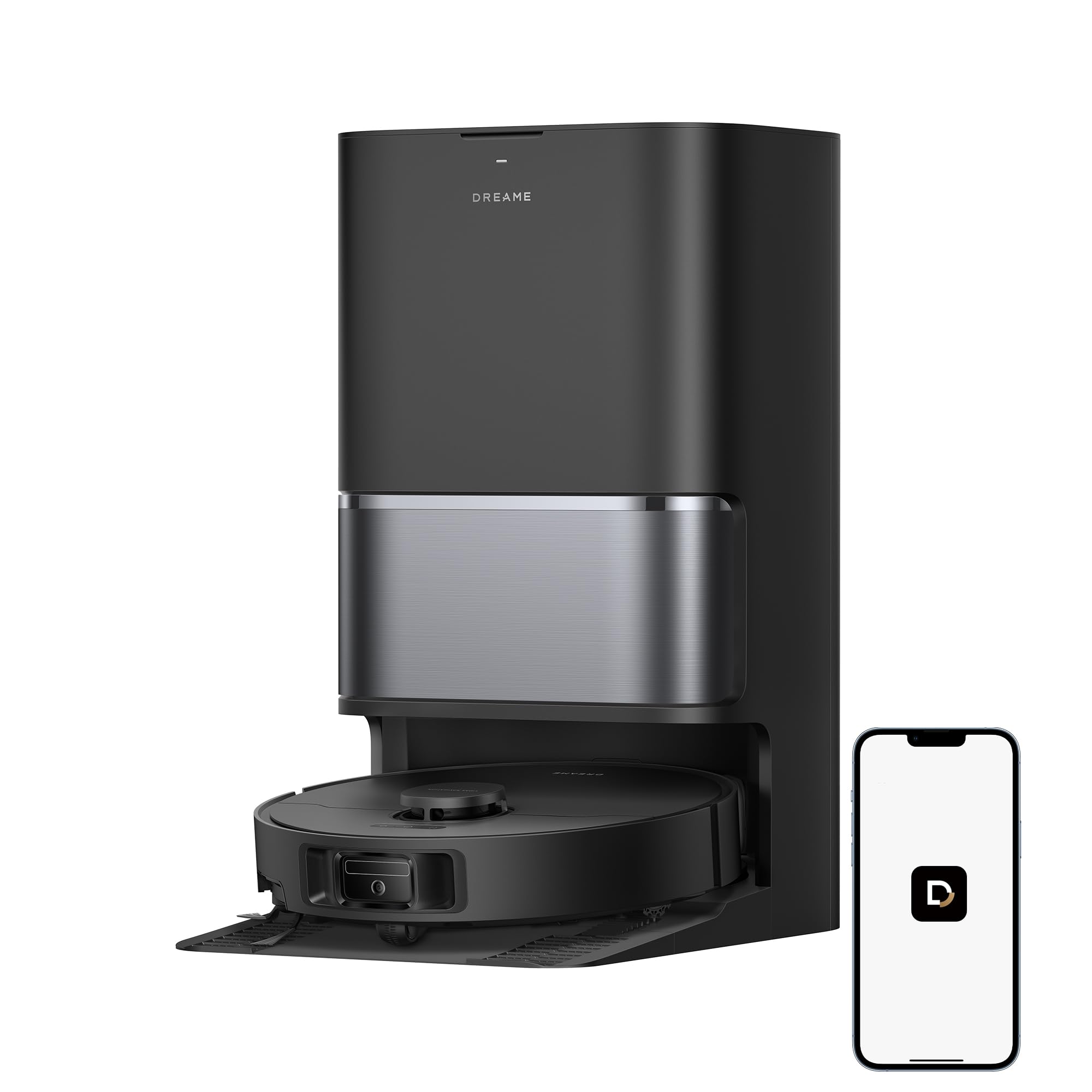
The figure that matters on the L40 Ultra Gen 2 isn't the 25,000Pa headline, it's the side brush and mop that slide outward past the edge of the robot. Pet hair collects where a round vacuum can't reach: along baseboards, under the toe kick, in the corner behind the food bowl. An arm that extends on purpose is the most useful idea in this group, and it's why this is our pick for a home where pet hair is a daily problem rather than a weekly one.

Suction is the highest here, and it's put to work with four carpet modes: lift the mop and boost suction for rugs, or route around them altogether. On hard floor the airflow plus the rubber brush lifted what our broom left behind. The dock finishes the job by emptying into a bag, washing the mop pads and drying them with hot air, so nothing sits damp in a bucket between runs.

Obstacle avoidance is the part we care about most with animals in the house. A robot that nudges a full water bowl across the kitchen, or finds an accident at two in the morning, creates work instead of removing it; this one steers around shoes, bowls and cables rather than plowing through them. Battery is rated at 231 minutes, the longest in this group, and the map holds more than one floor.

What you give up is space. The dock is a tall unit, listed at just over two feet for the whole assembly, so measure the gap before you plan to tuck it under a counter, and in a small apartment it will be the biggest object in the room. If the dock has a home and your floors are hard or low pile, there is very little to argue with.

Bottom line: If pet hair is the reason you're shopping, this is the machine we hand people: the strongest suction here, a brush that reaches into corners, and a dock that washes and dries its own mop.
2

wrydao H6 Pro

wrydao H6 Pro

Hands-off daily cleaning

Our Score 10.0/10
Check Price

Worth Noting

  • Mop pad must be rinsed by hand
  • Little long-term reliability history
Height
3.6 in
Suction
6,000Pa
Dust Bag
3 L
Battery Life
150 min

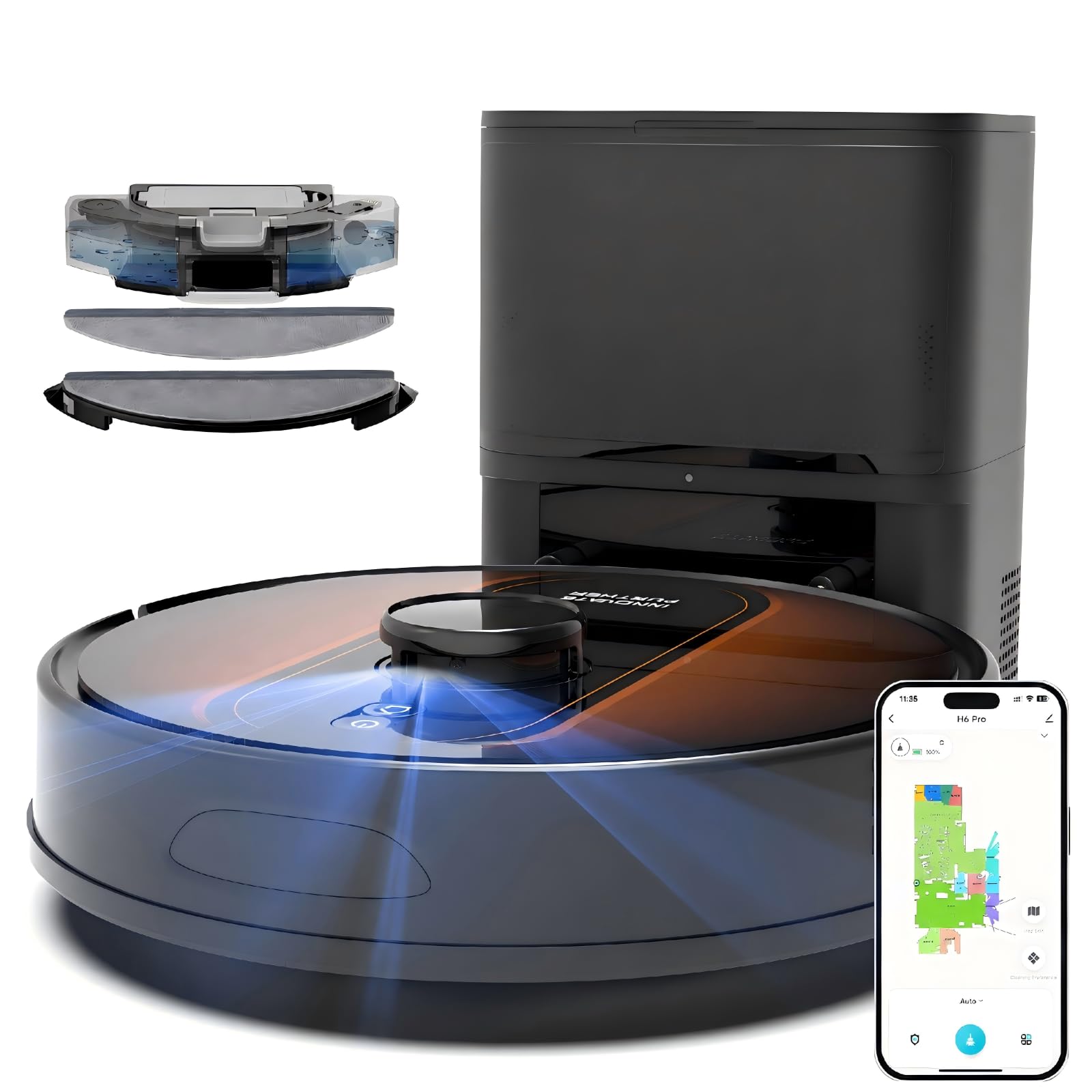
A self-emptying dock used to be the line between a budget robot and a serious one. The H6 Pro crosses it: for midrange money you get a sealed 3-liter bag, a LiDAR map, and a machine that sweeps, vacuums and mops in one pass.

We were struck by the bag in particular. Three liters is larger than the docks on machines costing twice as much here, and it's rated at about 90 days of dust, which in a shedding household is the difference between a chore and a habit. The 6,000Pa of suction is mid-pack on paper and perfectly adequate on hard floor and low pile, and the mop is a damp cloth that lifts paw prints and dust rather than something that scrubs a dried stain.

At 3.6 inches it slips under a sofa that stops most robots, and 150 minutes covers a normal floor plan on one charge. Two things to know going in: the dock empties dust but doesn't wash the pad, so the cloth comes off for a rinse, and this is a newer name, which means you're buying on design and a strong first impression rather than a long repair record.

Bottom line: The pick for anyone who wants a self-emptying dock and a real map without flagship money, as long as you accept rinsing the mop pad by hand.

3

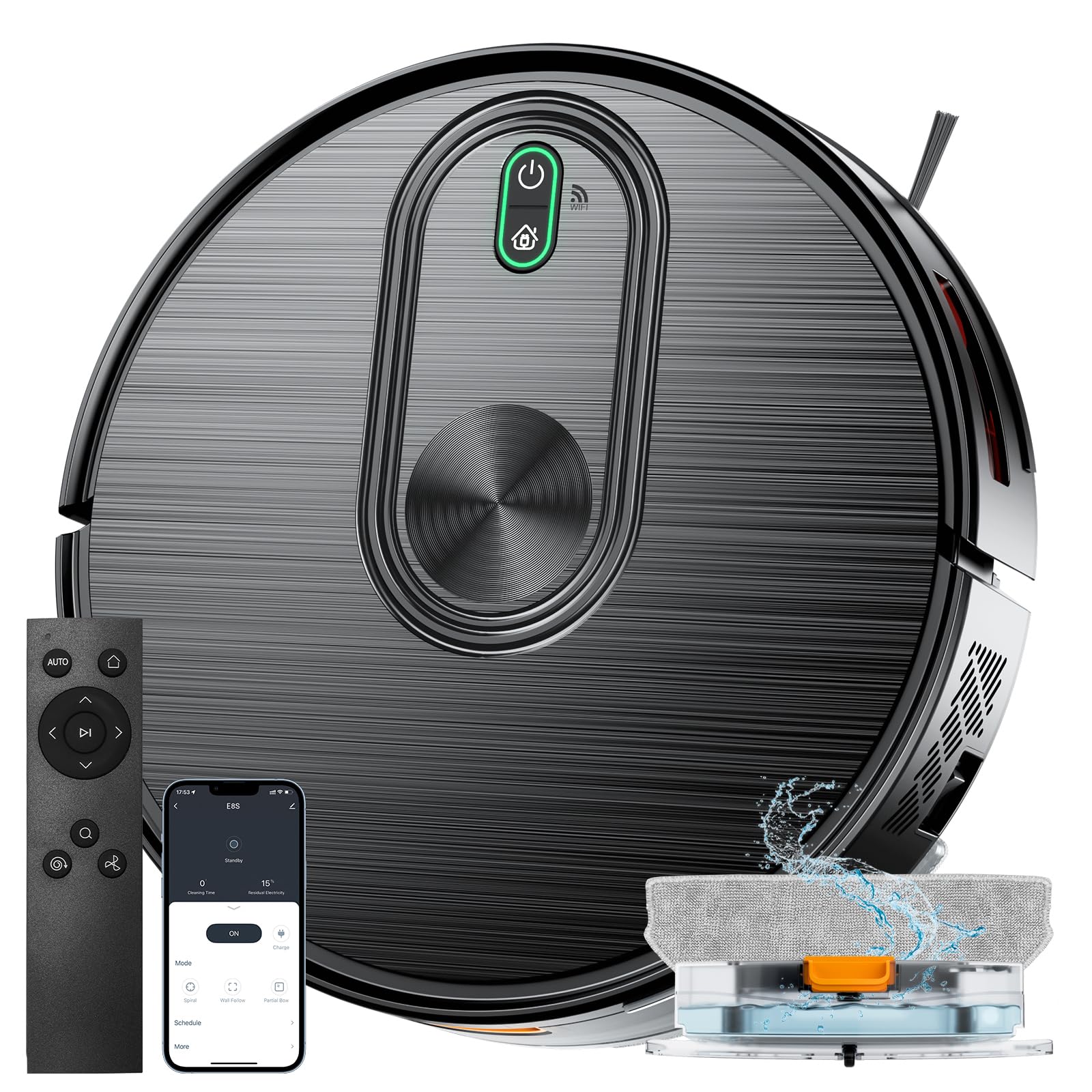
XIEBro E8S

XIEBro E8S

Hard floors, low cost

Our Score 8.6/10
Check Price

Worth Noting

  • No mapping or no-go zones
  • Charge can stop holding after a few months
Height
2.95 in
Dustbin
560 ml
Suction
6,500Pa
Battery Life
200 min

Step down from the flagship picks and the first thing to go is the map. The E8S keeps the suction, 6,500Pa, more than either of the other budget machines here, and spends the savings on a gyroscope instead of LiDAR, so it cleans in deliberate zigzag passes across a room rather than following a floor plan you can edit.

That trade suits a small flat or one open living space better than a rambling house. Hair on hard floor is where it earns its keep: the suction lifts what a broom leaves, the side brush pulls it out of corners, and the 560ml bin means a whole-floor run finishes without a stop to empty. Two hundred minutes in eco mode is the longest run here after the Dreame, and the 2.95-inch body clears most bed frames.

Where we cooled on it is the app and the charge. Tuya is the platform rather than a first-party one, so you get modes and a schedule rather than room-by-room control, and there's no map to draw a no-go zone on. The 200 minutes is a genuine eco-mode figure, but charge is what lets budget robots down over time, so buy it where returns are easy. On hard floors with a small footprint, it does the job.

Bottom line: Buy it for hard floors on a small budget: more suction than the other cheap machines here, and a long run on one charge.

4

Tikom G8000 Max

Tikom G8000 Max

Quiet households

Our Score 8.6/10
Check Price

Worth Noting

  • No map or no-go zones
  • 450ml bin fills quickly with pet hair
Dustbin
450 ml
Suction
5,000Pa
Noise Level
45 dB
Battery Life
150 min

Forty-five decibels is not a figure we expect to see on a robot vacuum, and it's the reason this one is here. The G8000 Max is the quietest machine in this roundup by a clear margin, quiet enough that a nervous cat stays in the room and quiet enough to run while someone is on a call in the next one.

Quiet usually means weak. Not here: 5,000Pa is mid-pack, and on hard floor and low pile it lifted dust, litter and hair without complaint. It mops from a 300ml tank while it vacuums, which is more useful than it sounds in a kitchen where the bowls live, and there are four ways to start it, including a plain remote on top of the app, voice and button, so nobody in the house is locked out of using it.

The compromise is navigation. There's no map and no no-go zone; it works a room by pattern and sensors, so a five-room house takes longer than it would with a LiDAR machine, and you can't tell it to skip the corner where the cat's bowl sits. The 450ml bin also fills quickly in a shedding house, so plan on emptying it after most runs.

Bottom line: For a house where noise is the deal-breaker, this is the one: 45dB, a working mop, and enough suction for hard floors.

5

Lefant M210

Lefant M210

Under low furniture

Our Score 8.2/10
Check Price

Worth Noting

  • Random navigation with no map
  • Charge can stop holding over time
Height
2.8 in
Dustbin
500 ml
Noise Level
52 dB
Battery Life
120 min

Eleven inches across and 2.8 inches tall, the M210 is the smallest machine here, and that is most of its argument. It reaches under a low sofa, a shallow bed frame and the gap beneath a kitchen cabinet, places the taller robots here bounce off, because nothing on top adds height.

The suction port is the other good idea, and it's why we kept this one in the roundup. Instead of a bristle roller that hair wraps around, the M210 pulls debris through an opening, so there's no brush to cut free at the end of a run; in a two-cat house that is worth more than a suction number on a box. It's also rated at 52dB with a 500ml bin, so it's quiet and doesn't need emptying constantly.

Where it falls down is finding its way. The M210 cleans by pattern and sensor rather than a map, so it covers a floor eventually rather than efficiently, and it will revisit the patch you're watching while missing the corner behind the door. Battery is the other soft spot, since charge can stop holding over time. Two rooms and a hallway is its natural scale.

Bottom line: Its low body and brushless port earn the place; its wandering navigation is the price you pay for a cheap machine.

6

ROPVACNIC S1

ROPVACNIC S1

Small flats

Our Score 8.4/10
Check Price

Worth Noting

  • Gets stuck on rugs and between furniture
Height
2.99 in
Suction
5,200Pa
Mop Control
Electric, 3 levels
Battery Life
120 min

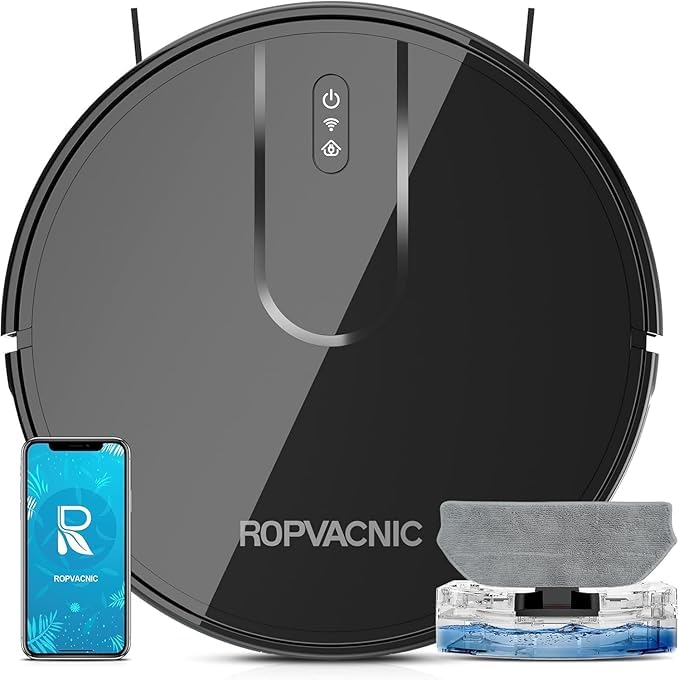
Most budget mops are gravity-fed: water seeps out of the tank at whatever rate it feels like. The S1's tank is electrically controlled with three levels, so you can run it properly damp after a wet walk and barely wet on a dry day. In a cheap machine, that's a real difference in how the floor feels underfoot.

The rest is sensible budget engineering: 5,200Pa, a 2.99-inch body, 120 minutes, and app, remote and voice control, with four side brushes and a spare filter in the box. In a small flat on hard floor it does what it promises. On a low-pile rug it's fine; anything deeper and you'll be back with the upright.

Furniture is where it loses ground. The S1 gets stuck between rugs and end tables and under low furniture, and with no map there's no no-go zone to fence off the spot it keeps climbing. Open rooms with clear edges suit it; a maze of chair legs is where we stop recommending it. Treat it as the mop-first budget pick for a small, hard-floored flat.

Bottom line: Worth it in a small, hard-floored flat where the electric mop control matters more than having a map.

7

Roborock Qrevo S Pro

Roborock Qrevo S Pro

Mop-first hard floors

Our Score 8.2/10
Check Price

Worth Noting

  • Premium price
Suction
18,500Pa
Dust Bag
2.7 L
Mop Wash
167°F
Battery Life
180 min

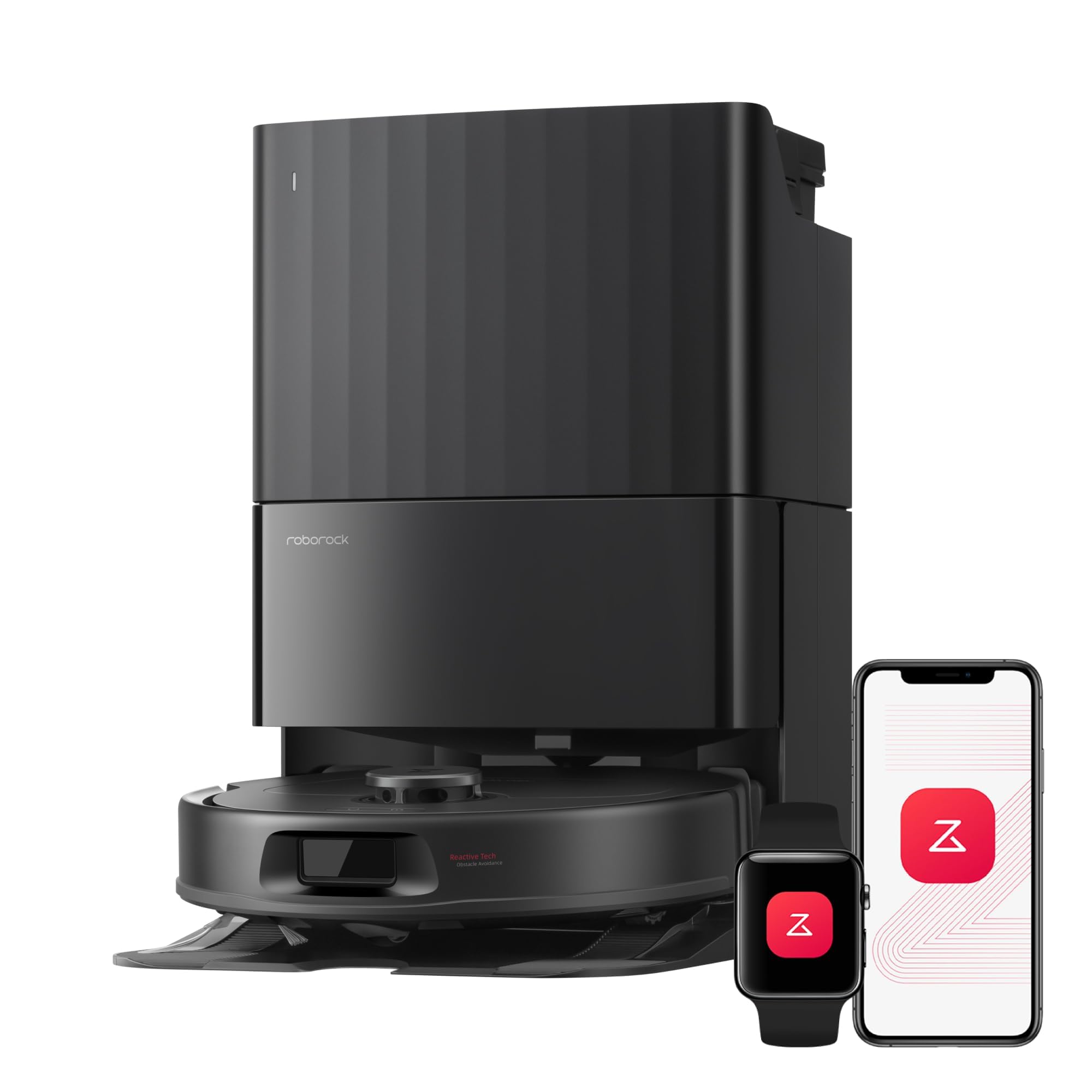
The dock is the whole pitch. It empties dust into a 2.7-liter sealed bag, washes the spinning mop pads with 167°F water, refills the tank, and dries the pads with hot air. You come home to a clean floor and a machine that cleaned itself, which is a better feeling than the spec sheet suggests.

As a vacuum it's strong: 18,500Pa, an all-rubber main brush, and a zero-tangle side brush aimed at long hair. On tile and hardwood it left nothing behind, and at a rated 60dB it's the quietest of the premium machines here, so you can run it in the kitchen and watch television in the next room. A 180-minute battery covers a large floor, and the dual pads lift for carpet.

Pet hair on carpet is where we found it uneven. Dust and dirt go up without complaint, but hair sitting in a rug, and hair the wet mop meets on the way, can be pushed rather than lifted. On hard floor that rarely matters; in a carpeted bedroom it does.

So this is a mop machine that vacuums, not a pet-hair specialist. If your home is mostly tile and hardwood with a couple of low-pile rugs, and the thing you actually want is a dock that washes its own pads, it's the most complete package on this page. If a carpeted house and a heavy shedder are the brief, the Dreame is the better use of the same money.

Bottom line: The most complete dock here, with hot-water pad washing, self-refilling and hot-air drying, for a home where mopping matters more than carpet.

How We Tested Robot Vacuums for Pet Hair

We started with roughly 30 models — budget bots alongside the flagships people swear by in dog-owner forums — and filtered for what actually matters with pet hair: rubber rollers instead of bristle brushes, sealed filtration, and bins large enough that we weren't emptying them twice a day. Eight made the cut, and each one ran in a real home for six months on a normal schedule.

Testing looked like ordinary life, deliberately. Each vacuum ran daily over the same mix of surfaces — low-pile carpet, two area rugs, tile, and the hallway where the litter box sits — with a set amount of collected dog and cat hair scattered beforehand. After every run we opened the bin, weighed what came out, and cut the hair off the brush roll to see how much had wrapped around it. We also logged where each robot got stuck: rug tassels, chair legs, the lip of a transition strip.

Ease of use was judged over whole weeks — whether we could build a schedule in under five minutes, whether the map made sense, whether emptying the bin left hair on the kitchen floor. We measured noise at three feet and asked the more useful question: could we take a call in the same room? Battery life got tested on the largest floor plan and in the two-cat apartment, where obstacles eat a charge faster than square footage does.

Reliability meant six months without an error code, and the disappointing units announced themselves early, usually by stalling in the same spot three days running. Value came down to whether the extra money bought a visibly cleaner floor rather than a nicer app. Anything that needed rescuing more than twice a week didn't stand a chance.

How to Choose the Right Robot Vacuum for Pet Hair

The brushroll is where the fight happens

In a shedding house the brushroll is where hair goes to live. Bristle rollers comb hair off carpet and then hold onto it; rubber blades and anti-tangle combs shed it into the bin instead, and a suction-only port skips the roller question entirely. The Dreame and the Roborock both use rubber-and-comb designs, while the Lefant pulls debris through an opening with no roller at all. Whatever you choose, check the brush lifts out without a screwdriver, because you will be doing it monthly either way.

What a suction figure can and can't tell you

Pascal ratings aren't measured the same way from brand to brand, so 6,000Pa from one maker and 6,000Pa from another are not the same claim. What shifts hair is agitation at the carpet combined with airflow through the head, which is why a rubber brush matters more on low pile than the biggest number on the box.

Deep pile is the honest limit. These machines are built for hard floors and low-pile carpet, and none of them dig embedded hair out of a shag rug. A short-pile rug is fine; a deep shag is a different tool's job.

Mapping, no-go zones and the pet-accident problem

A map buys three things: the same coverage twice, one room on demand, and a no-go zone around the water bowl or the corner where the puppy has accidents. LiDAR and camera machines cost more and deliver all three; gyroscope and random-pattern robots are cheaper and still clean a small flat. The trap is the accident itself, because a robot without obstacle avoidance will find one at two in the morning and spread it. If your pet is unreliable, pay for the map and draw a keep-out zone before the first scheduled run.

What the dock saves, and what it doesn't

Self-emptying is the feature that changes ownership: a sealed bag holds weeks of hair, where a dockless bin in a shedding house needs emptying after most runs. Mop care splits the field. Some docks wash the pads with hot water and dry them, others empty the dust and leave the cloth for you to rinse, and a damp pad left on the machine is a smell waiting to happen. Measure the dock, too, since these are tall units and one that doesn't fit under the counter ends up living in the middle of the room.

Frequently Asked Questions

Final Verdict

For a house with pets, the Dreame L40 Ultra Gen 2 is the pick that needs the fewest excuses: the strongest suction in this group, a brush that reaches past its own edge, and a dock that washes and dries its own mop.

If that's more machine than you need, the wrydao H6 Pro keeps the self-emptying dock and the LiDAR map for midrange money, and you rinse the pad yourself. On hard floors with a tight budget, the XIEBro E8S does the hair-lifting part convincingly.