Phone & Tablet Accessories

Best Bluetooth Trackers of 2026

The worst thing a Bluetooth tracker can do is tell you your keys were last seen somewhere you already looked. That gap between where the app says your stuff is and where it actually is — that's the whole product. Lose a wallet once in a parking garage and you'll understand why people get picky about these little discs. A good one turns a frantic twenty-minute search into a thirty-second walk toward a beeping sound; a mediocre one just relocates the panic.

I've been clipping trackers to keys, a work bag, and a forgettable umbrella for years, and the ones I stick with all share one trait: they answer fast. Over the past three months we've run 16 trackers through everyday life, paying as much attention to a two-minute setup as to whether the signal held up in a crowded parking deck. Two things the spec sheet won't tell you: the phone you carry decides half of what a tracker can do, and a battery you can't replace quietly turns one into e-waste. The picks below are the ones we'd spend our own money on.

1

Apple AirTag (2nd Gen) 4 Pack

Top Pick
Apple AirTag (2nd Gen) 4 Pack

iPhone owners

Our Score 9.2/10
Check Price

Worth Noting

  • Works only with iPhone and iPad
Finding
Precision Finding with UWB
Sharing
Contacts and 50+ airlines
Speaker
50% louder with new chime
Works With
iPhone and iPad (Find My)

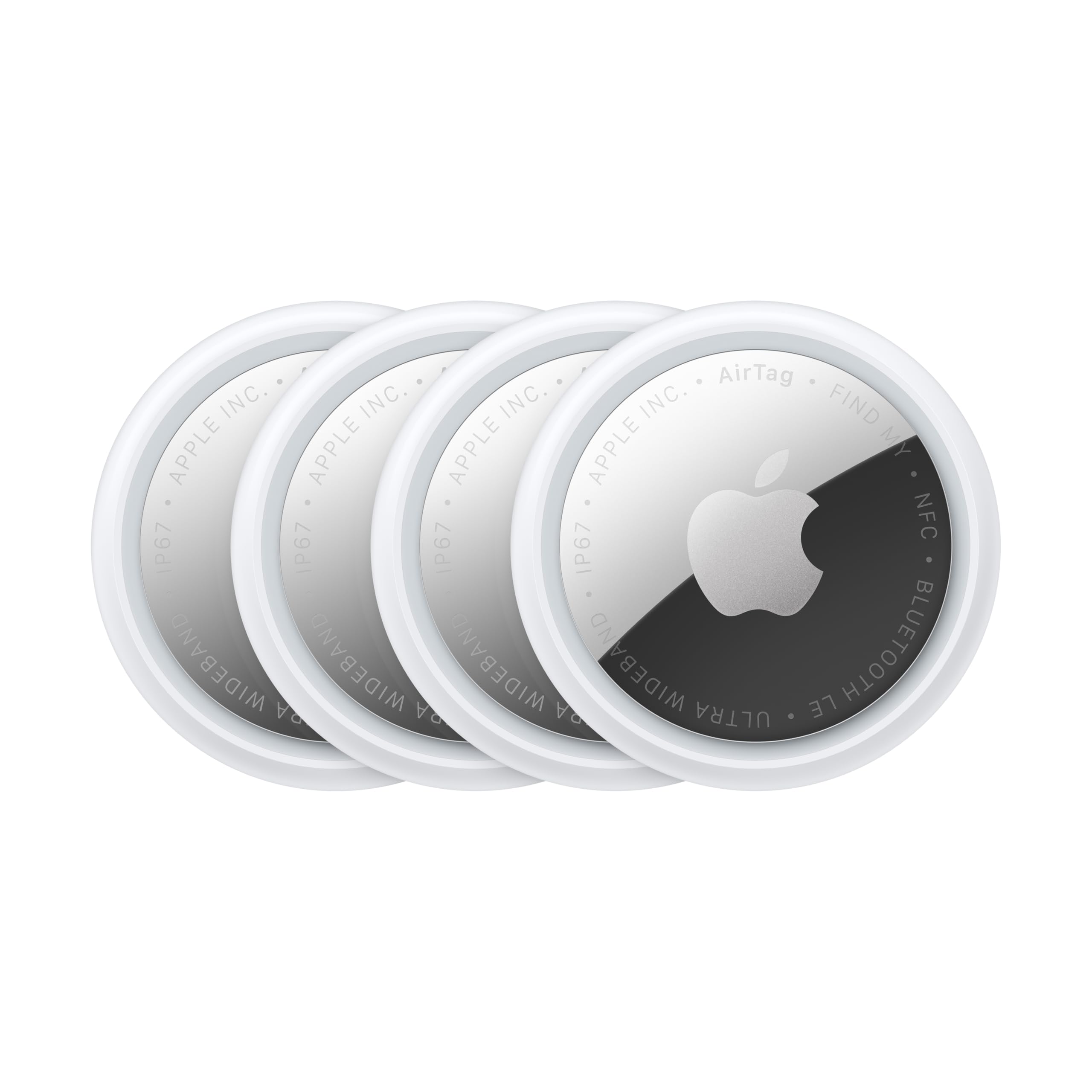
The first time we used Precision Finding in anger, the arrow walked us across the room and the chime finished the job under a jacket. That is the whole case for the second-generation AirTag, and the reason it is our top pick. Ultra Wideband gives you direction and distance rather than a signal-strength guess, and the directions now appear on an Apple Watch as well as an iPhone, so the phone can stay in your pocket while you walk.

The speaker is the upgrade that matters more than it sounds on paper. Apple rates it 50 percent louder with a new chime, and a tag buried in a bag, under a car seat, or in a coat pocket has to compete with a room. Upgraded Bluetooth and Ultra Wideband chips stretch the range a little further too, though walls and floors still blunt any Bluetooth signal — a tag two rooms away is a map problem rather than an arrow problem.

Sharing is what we point travelers to. You can hand temporary location access to a contact, and Apple has agreements with more than 50 airlines, so a delayed bag can be traced by the airline's own desk while you are still standing at a carousel. Hand it over and keep watching is a combination none of the other picks here offers.

The price is the one caveat worth flagging: this is the priciest set on the page, and you are paying for the ecosystem and the Ultra Wideband hardware rather than a fancier shell. In exchange you get the shortest search in this group — the kind where you stop hunting and start walking.

Bottom line: If you carry an iPhone, this is the tag to buy: Precision Finding walks you to the item, the speaker is louder, and it's the only one here you can hand to an airline.

2

Samsung Galaxy SmartTag2

Samsung Galaxy SmartTag2

Galaxy phones

Our Score 8.8/10
Check Price

Worth Noting

  • Battery gauge can warn early
Range
120 meters
Battery
Replaceable CR2032, up to 500 days
Works With
Android 11 and later (SmartThings Find)
Water Resistance
IP67

Samsung lists the SmartTag2 as working with Android 11 and later, but pairing is not equally smooth across brands: Galaxy phones connect in seconds, while some other Android handsets refuse to connect at all. That single fact decides the purchase. In a Samsung household this is a well-built, long-lived tag; outside one, the same outlay is better spent on a dual-protocol set.

What we like most is the battery arrangement. A replaceable CR2032 rated at up to 500 days, with a non-power-saving mode that stretches it further, is the difference between a tag you maintain and a tag you throw away. IP67 sealing covers rain and a drop into a puddle, and the 120-meter listed range is the most generous of these picks.

Search Nearby is the feature we reach for in unfamiliar rooms — it points the phone toward the tag instead of showing a bare dot, though it only helps once you are already close. The bigger limitation is the network behind it: SmartThings Find relies on other Samsung devices to report a lost tag, a thinner crowd than Apple's, so a bag left in a restaurant takes longer to surface. Buy this for a phone you carry daily, not for a suitcase that travels without it.

Bottom line: The Android tag we recommend to anyone carrying a Galaxy: 500 days on a replaceable battery, IP67, and compass guidance to the item.

3

UGREEN Finder Duo 4 Pack

UGREEN Finder Duo 4 Pack

Mixed phone homes

Our Score 8.6/10
Check Price

Worth Noting

  • Android pairing can fail on newer versions
Range
100 meters
Volume
80 dB
Battery
USB-C rechargeable, up to 365 days
Works With
iOS and Android (Find My, Find Hub)

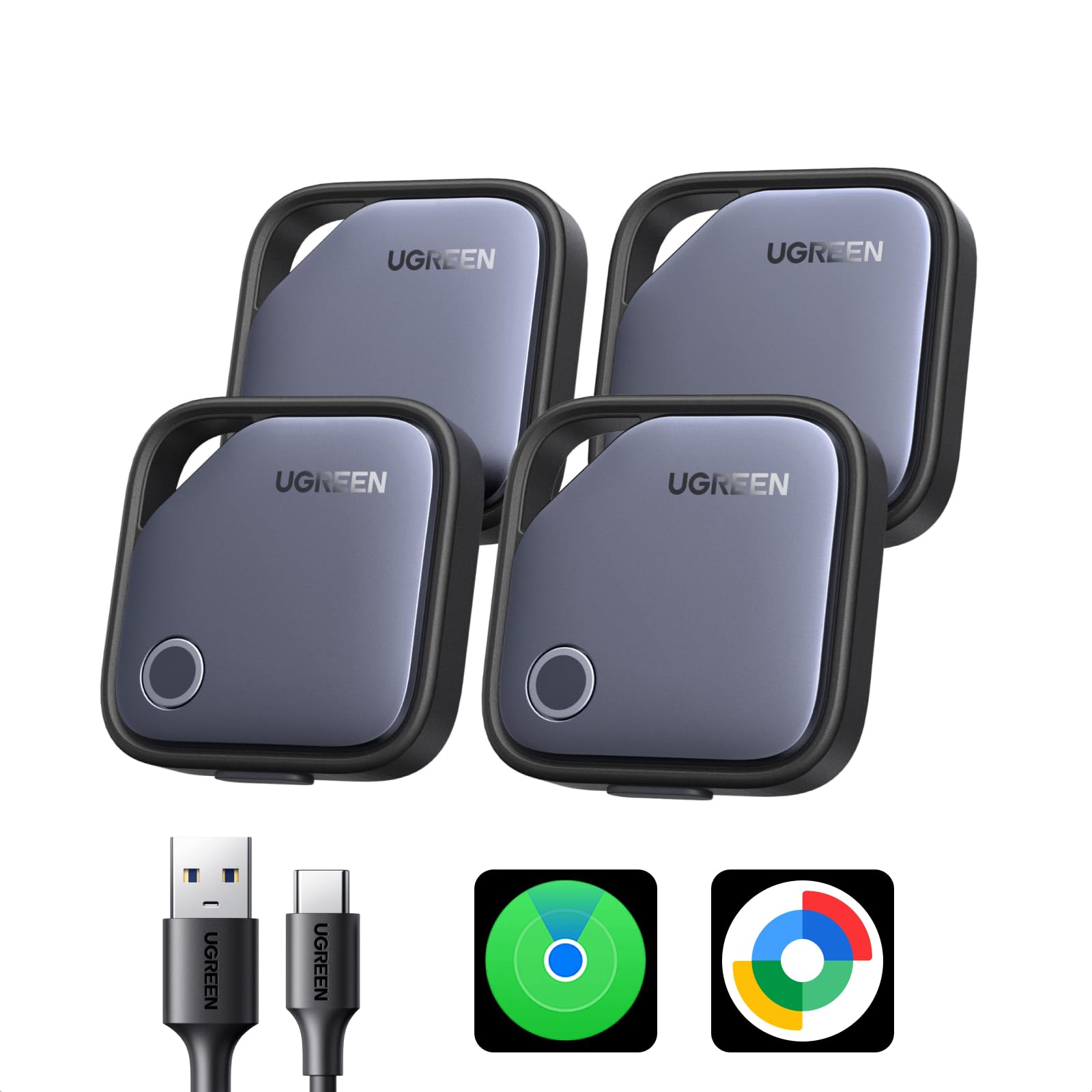
A USB-C port on each tag is the detail that makes this four-pack the one we recommend for households with mixed phones. There is no coin cell to buy, no magnetic charger to lose, and no reason to bin the tag when the battery ages — you plug it in, wait, and put it back on your keys. UGREEN rates the charge at up to 365 days.

The other half of the pitch is dual-protocol support: each tag pairs with Apple Find My on an iPhone or Google Find Hub on an Android phone, so one pack covers everybody. The 80 dB speaker is loud enough to place from another room, the listed range runs to 100 meters, and the tags arrive in their own attachable case rather than needing a holder. What you do not get is an Ultra Wideband arrow; a chime and a map pin is the trade every third-party tag makes.

Pairing reliability on newer Android versions is the risk. Recent releases are where connections fail, and a tag that will not pair is a small plastic brick. Set all four up the day the box arrives, at the kitchen table, while a return is still simple — an all-iPhone household will never run into it, which is exactly why this pack suits a split household best.

Bottom line: The pack we recommend to mixed iPhone and Android households: one set, both networks, and a USB-C charge once a year.

4

Ultrbeka Air Tag Tracker 4 Pack

Ultrbeka Air Tag Tracker 4 Pack

Cheap iPhone tracking

Our Score 9.0/10
Check Price

Worth Noting

  • Too large for AirTag-sized holders
Battery
Replaceable CR2032, up to 18 months
Works With
iPhone and iPad (Find My)
Certification
MFi certified
Water Resistance
IP67

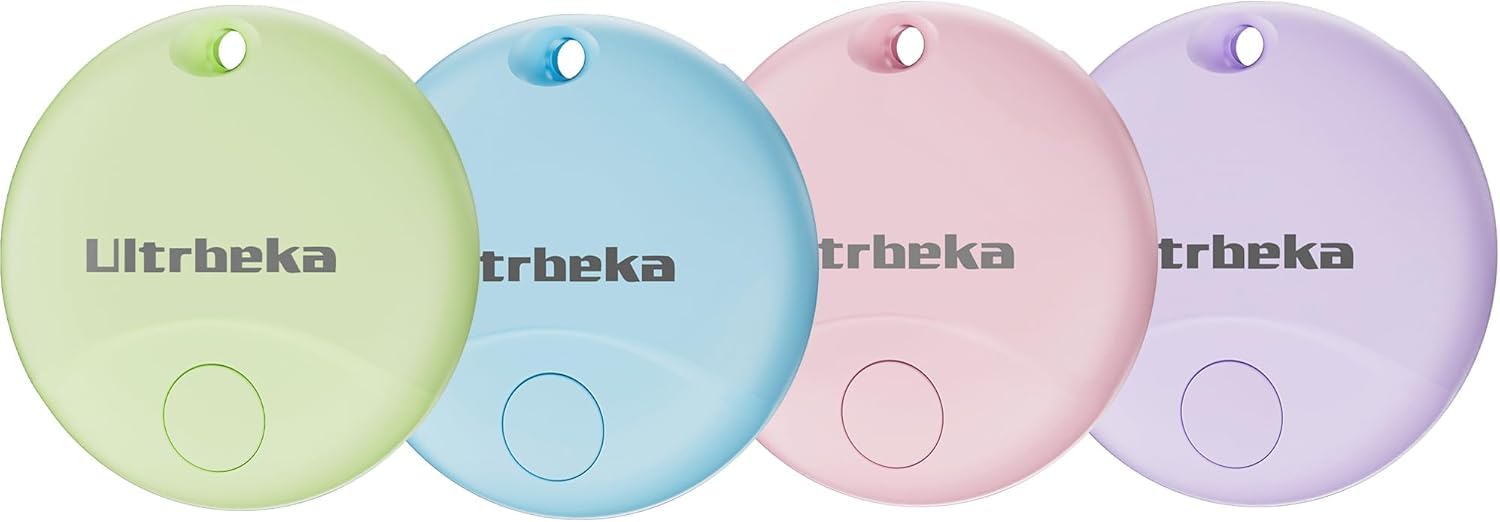
Cheapest of the iPhone packs here is the headline, but what earns this one a place is the sealing that comes with it: MFi certification, IP67 dust and water resistance, and a replaceable CR2032 rated at up to 18 months. The tags also arrive in colors with a string loop in the box, which sounds like a gimmick until you are standing in a hallway working out which of four identical discs belongs on the dog's collar.

Setup is the part that impressed us. Add the tag in Find My, give it a name, and the connection holds — no repeated attempts, no dropping out a week later. The sound is clear without being shrill, which matters more than volume when you are ringing a tag in a quiet house early in the morning. At 8.5 grams it disappears on a key ring.

The compromise is size. These run slightly larger than an AirTag and will not fit holders cut for one, so plan on the included loop or a plain key ring rather than a leather fob. Everything else is honest budget work: a shorter rated battery than the UGREEN packs, no precision finding, and a location circle rather than a point. For keys, a backpack, and a bike, none of that changes the decision.

Bottom line: The cheapest way to put four Find My tags on your things, and the only budget pack here sealed to IP67.

5

UGREEN FineTrack 4 Pack

UGREEN FineTrack 4 Pack

Bulk Find My tags

Our Score 8.8/10
Check Price

Worth Noting

  • Chirp instead of a continuous ring
  • Pairing can take a few attempts
Battery
Replaceable 225 mAh, up to 2 years
Dimensions
1.42 x 0.29 x 1.42 inches
Works With
iPhone and iPad (Find My)
Certification
Apple MFi

Third-party Find My tags are not cut-price AirTags, and this pack shows exactly where the line falls. It pairs with the same app and appears on the same map, but there is no Ultra Wideband inside, so once you are in the right room the tag gives you a beep and a signal rather than an arrow pointing at the cushion.

Two things to plan around. The sound is a short chirp rather than a sustained ring, and hunting a tag along a shelf by repeated chirps is slower than following a continuous tone. Pairing is the other one: a tag in the pack can take a couple of attempts before it registers, and the ones that struggle tend to be the ones you set up in a hurry. Do all four at the kitchen table before a trip, not in an airport queue.

Where it earns its place is coverage. You get four MFi-certified tags, a replaceable 225 mAh cell rated at up to two years, and a 1.42-inch square that hangs on a key ring without a holder. Between this and the Ultrbeka pack, the difference is battery rating here and water resistance there; for dry indoor duty — spare keys, a toolbox, a desk drawer — the longer-rated cell is the better trade.

Bottom line: Four Find My tags with a two-year replaceable battery make this the sensible bulk buy for iPhone owners who don't need precision finding.

6

Vodyfu Android Tracker 4 Pack

Vodyfu Android Tracker 4 Pack

Budget Android

Our Score 8.0/10
Check Price

Worth Noting

  • Connection can fail on some units
Volume
85 dB
Battery
Replaceable CR2032, up to 2 years
Works With
Android 9 and later (Google Find Hub)
Water Resistance
IP65

If there is an iPhone anywhere in the house, skip this one: Vodyfu's tags work only with Google's Find Hub on Android 9 and later, and the listing is explicit that Apple and Huawei devices are out. That narrows the audience, but for a household of Android phones it is the least expensive route to four tags on the network.

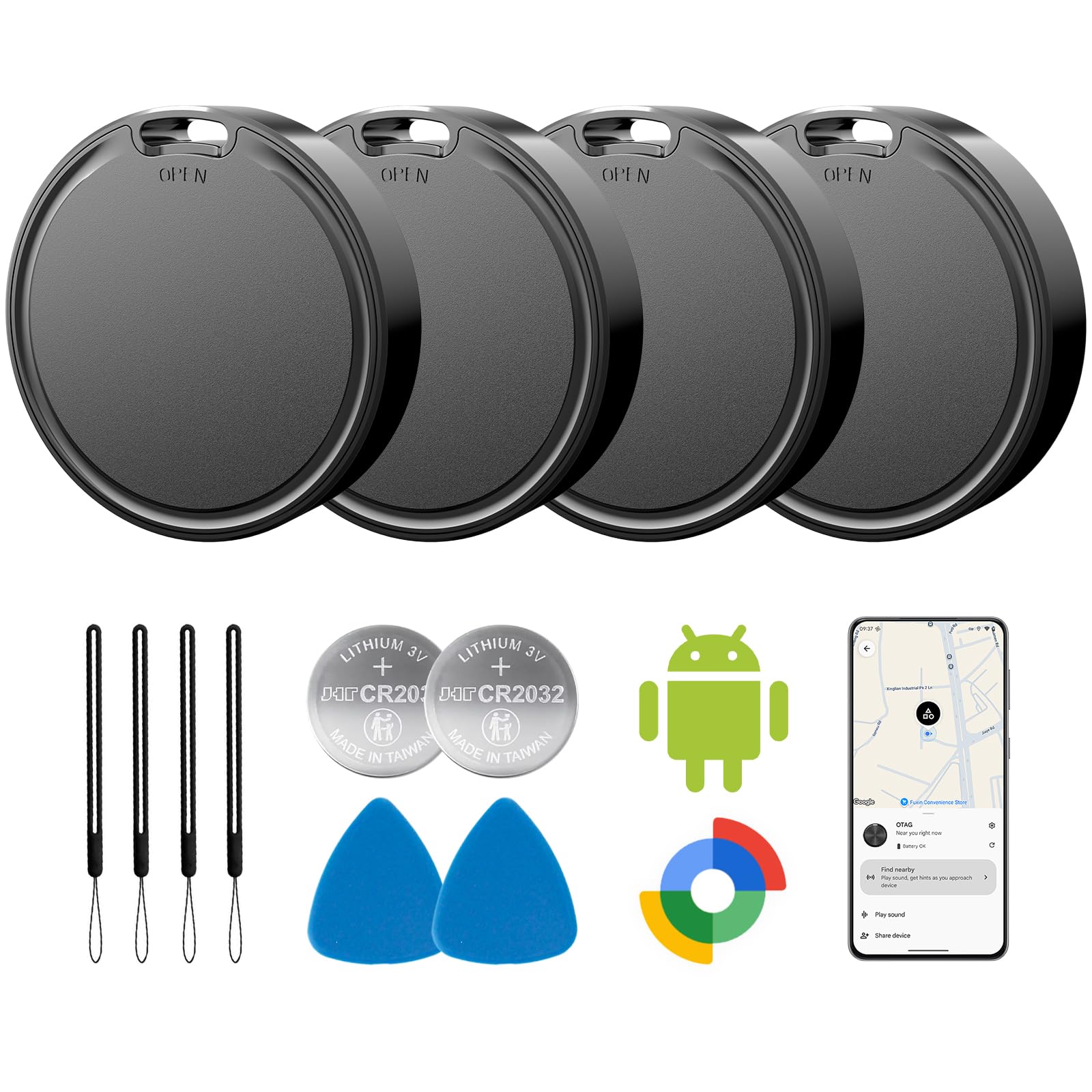
The box is unusually complete. You get the four tags, two spare CR2032 cells, four lanyards, and the little pry tools for opening the shells — more than most packs include, and it means a battery swap never needs a shopping trip. The 85 dB speaker is the loudest rating on this page, IP65 covers rain and splashes without being rated for immersion, and setup through Find Hub runs quickly.

Where we hesitate is freshness. The map works, but updates lag, and following something in motion — a bag on a bus, a bike mid-ride — gives you where it was rather than where it is. For keys in the apartment or a suitcase on a carousel, that is enough, and the spare batteries in the box mean the tags stay alive long enough to be worth setting up.

Bottom line: The Android four-pack to start with on Google Find Hub, as long as your losses happen where a lagging pin still gets you there.

How We Tested 16 Bluetooth Trackers

We started by gathering every tracker we could find from the major accessory makers — roughly 40 models — then cut that list to 16 based on price, whether the battery could be replaced by hand, and which phones each one officially supported. Anything that required a paid subscription for basic locating, or that quietly dropped features on one phone platform, came off the list early.

For three months, those 16 went wherever keys and bags actually go: on a morning commute, into a crowded grocery store, through a long-term parking garage, and inside a checked suitcase for a week. We timed setup with a stopwatch from unboxing to the first successful ring, and wrote down every permission screen and account prompt we had to get through to get there.

Accuracy got tested the way you'd really use it. We left bags behind on purpose and recorded how long the separation alert took to arrive, walked toward hidden trackers to see whether the direction arrow pointed true or wandered, and stepped away in ten-foot increments until the link dropped to see how the advertised range held up in a building full of Wi-Fi. Each tracker was rung in a quiet room and in a noisy garage to compare how easy it was to hear, paired with both an iPhone and an Android phone to log what disappeared on one or the other, and monitored for battery type and how fast the percentage fell.

How to Choose Bluetooth Trackers

Start With the Phone, Not the Tag

Trackers are ecosystem hardware. An iPhone pairs with Apple Find My, most Android phones pair with Google Find Hub, and Samsung phones can also use SmartThings Find. Buy outside your phone's network and you own a plastic disc. The second half of the decision is how crowded that network is: Find My leans on the largest crowd of passing iPhones, Find Hub is growing quickly, and SmartThings Find needs other Samsung devices nearby — which matters most when a bag goes missing a thousand miles from home.

If your household is split, one dual-protocol pack such as the UGREEN Finder Duo beats two half-used sets. We prefer that to saving a little on a pack that half the family cannot use.

Decide Whether You Want an Arrow or a Beep

Bluetooth alone gives you a chime, a signal meter, and a pin on a map. That is enough in your own apartment and close to useless in a hotel room you have never seen. Ultra Wideband adds direction and a rough sense of distance, which is what turns a search into a short walk: the AirTag sells it as Precision Finding, and the SmartTag2 offers a compass version on Samsung phones.

Pay for that if your things go missing in unfamiliar places. If your keys only ever vanish between the kitchen and the bedroom, a loud beep does the job and the cheaper tags do it well.

Check What Happens When the Battery Dies

A replaceable coin cell or a USB-C port keeps a tag in service for years. A sealed battery makes the whole tag disposable the moment it runs out, which is a bad trade for something whose entire job is to sit quietly on your keys until you need it. That single design choice is why a couple of otherwise appealing packs did not make this list.

Read the rated life as a best case, too. Figures like 500 days or two years assume ordinary use, and ringing a tag every morning drains it faster than the number suggests.

Match the Tag to the Thing It Lives On

Look for a hole or a loop that takes a standard key ring. Several third-party tags are slightly larger than an AirTag and will not fit holders cut for one, so order the tag first and the leather fob second. Sealing matters on dog collars, bikes, and luggage: IP67 shrugs off rain and a splash, IP65 handles rain but not a soaking.

And buy only as many tags as you have things worth finding. Four is the sweet spot for most people — keys, wallet, bag, and one to spare — but a single tag on the item you actually lose beats a drawer of unused ones.

Frequently Asked Questions

Final Verdict

The AirTag (2nd generation) is what we hand to an iPhone owner who asks which tracker to buy. The Ultra Wideband arrow ends a search instead of starting a guessing game, the louder speaker finishes the job, and airline sharing covers the one trip where a tag genuinely earns its keep.

On Android, buy the Galaxy SmartTag2 if your phone is a Samsung — the 500-day replaceable cell and IP67 body are the best long-term value of the Android picks. If your household spans both platforms, the UGREEN Finder Duo is the one pack that serves everybody.