Phone & Tablet Accessories

Best Portable Power Banks of 2026

The moment your phone drops to 1 percent in an airport, a power bank stops being an accessory and becomes the thing between you and a dead boarding pass. I have watched a cheap bank die halfway through a charge, so I know the appeal is not just extra juice—it's reliability when you are away from a wall. The best models balance battery life and charging capability against weight and size, because a brick only helps if you are willing to carry it.

Over six months, my team and I cycled 14 portable power banks through commutes, flights, camping trips, and a two-day home outage. We noted how fast each one charged a phone, how many charges it delivered, whether it ran hot, and how the casing held up in a tote. Price mattered, but only next to performance—a bargain that cannot hold a charge is not a bargain. The picks below are the ones we kept reaching for.

1

INIU 20000mAh Power Bank

Top Pick
INIU 20000mAh Power Bank

Everyday carry

Our Score 9.2/10
Check Price

Worth Noting

  • Heavy for its footprint in a pocket
  • Roughly 5.4 hours to refill
Extras
Built-in USB-C lanyard cable, digital display
Dimensions
4.1 × 2.8 × 1.1 in
Max Output
22.5W
Battery Capacity
20,000mAh

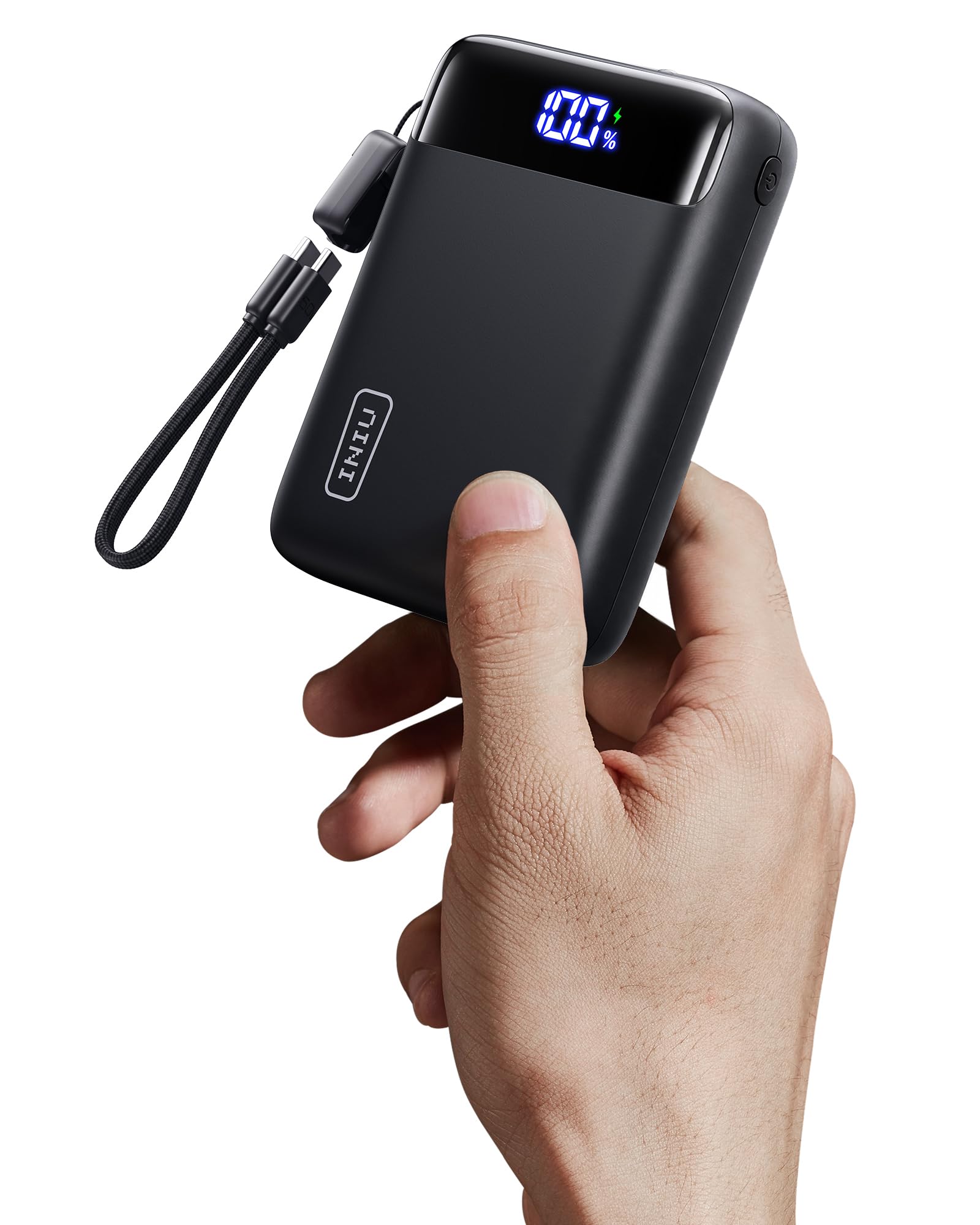
Twenty thousand milliamp-hours in a body measuring 4.1 by 2.8 by 1.1 inches is what earns this pack the top spot. Most banks holding this much are the size of a paperback; this one slides into a jacket pocket or the front pocket of a messenger bag and stops being something you have to plan around. For a normal day out — phone, tablet, a pair of earbuds — it's more capacity than you'll finish.

The USB-C cable is built into a nylon lanyard, so it travels attached to the pack instead of loose in a bag, and there's a standard USB-C port as well for your own cable. We were surprised by how much we used the percentage readout: knowing you're leaving at 62% is a different feeling from guessing at four dots. Double-tap the power button and a flashlight comes on, which sounds like filler until you're in a parking lot at night.

Dense cuts both ways. The pack is heavier in the hand than its footprint suggests, and the listed charge time is 5.4 hours, so refilling it is an overnight job rather than a lunch-break one. We minded the refill more than the weight. And 22.5W is a phone-and-tablet number: it will nudge a laptop along, but it won't charge one.

At roughly 74Wh it sits comfortably under the airline carry-on line, which the big packs here cannot say, and the warranty runs three years. Small enough to carry, powerful enough for a day, covered long enough that the purchase doesn't feel like a gamble — that's the whole case for it.

Bottom line: Our pick for most people: a genuinely pocketable 20,000mAh pack with a built-in cable, a percentage readout, and enough output for a phone or tablet.

2

Anker 25000mAh 165W

Anker 25000mAh 165W

Laptop days

Our Score 8.8/10
Check Price

Worth Noting

  • Nearly two inches thick; bag-only, not pocket
  • The priciest pack in this group by a wide margin
Dimensions
6.18 × 2.13 × 1.93 in
Total Output
165W
Built-in Cables
Two USB-C, one retractable to 2.3 ft
Battery Capacity
25,000mAh

Charging a laptop from a battery is the one job a phone pack can't fake, and this is the pack here built for it. Anker rates it at 165W total with 100W on a single USB-C port, which is enough to run and recharge a 13-inch ultraportable rather than just slow its drain. If your version of portable power means a MacBook and a deadline, this is the shortlist of one.

Two USB-C cables are built in: one retractable to about 2.3 feet, the other short and doubling as a carrying strap. The retractable one is the smarter of the two, we found — it removes the small ritual of digging a cable out of a bag — and the strap means the pack arrives at a café with everything it needs already attached. Both are moving parts, so treat the retraction mechanism gently and it should outlast the trip.

It is not a pocket pack. At 6.18 by 2.13 by 1.93 inches it's a block that rides in a laptop bag or a backpack, and you notice it on your shoulder. The payoff is capacity: 25,000mAh works out to about 92.5Wh, just under the airline carry-on ceiling, which makes this the largest pack in this group that a laptop user can still fly with.

The catch is price — the highest here, several times what a 10,000mAh pack costs — and the failure mode that comes with any pack this expensive. Some quit inside the first year, and a retractable cable can be the first thing to go; the 18-month warranty is the backstop. If your workday leaves the house with you, that's the cost of not hunting for an outlet at three in the afternoon.

Bottom line: We hand this to anyone who works from a laptop away from an outlet: 165W, 25,000mAh, and two cables you can't leave behind.

3

IAPOS 60000mAh

IAPOS 60000mAh

Camping and outages

Our Score 9.2/10
Check Price

Worth Noting

  • About 222Wh
  • Over 15.5 ounces; a bag or trunk pack
Weight
15.5 oz
Max Output
22.5W
Built-in Cable
3-in-1 (USB-C, Lightning, micro-USB)
Battery Capacity
60,000mAh

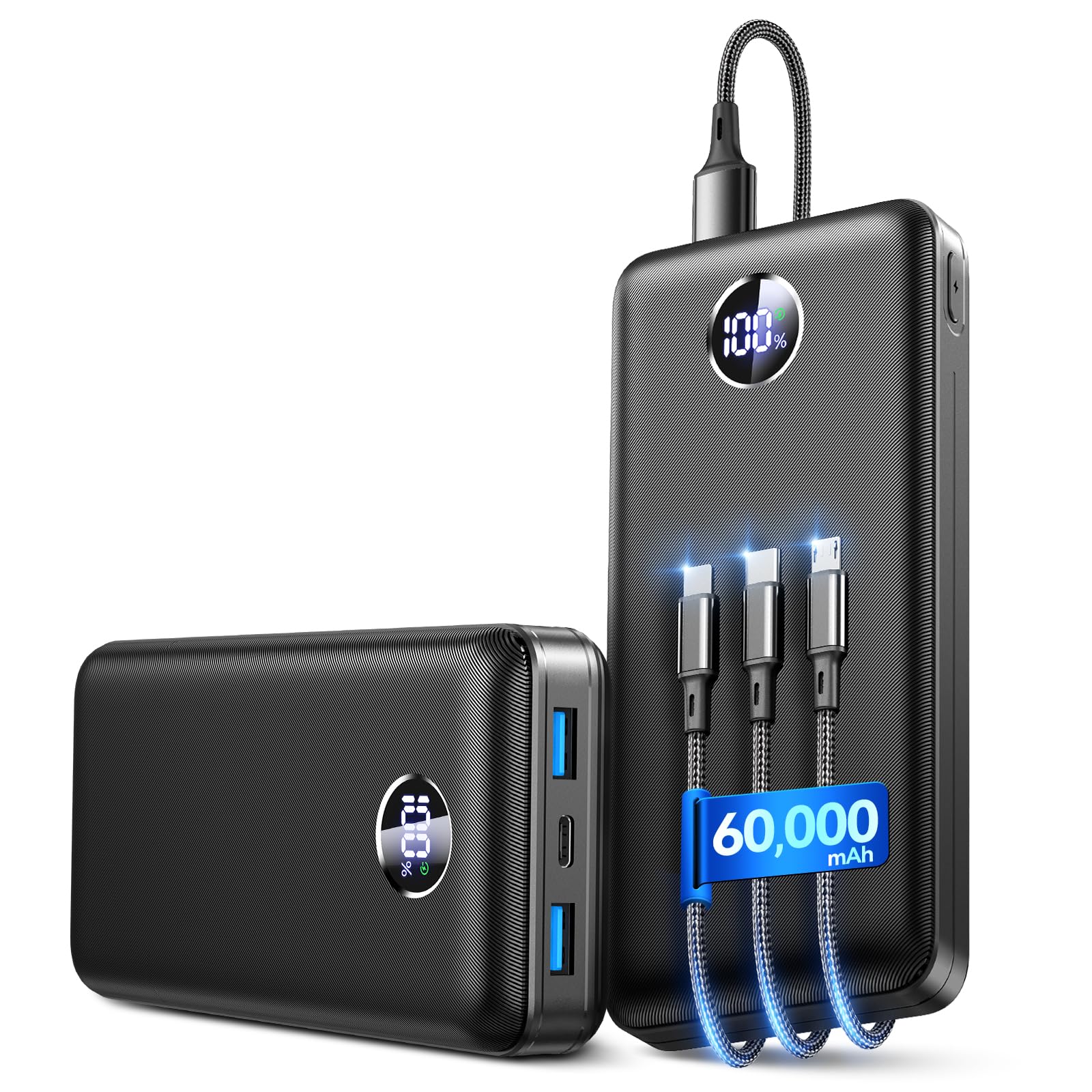
At 60,000mAh this pack works out to roughly 222Wh, which puts it well past the airline carry-on limit of 100Wh — and past the 160Wh ceiling that needs special approval. That's a real limitation if you're shopping for a travel pack, but it's also the wrong frame. This is a car-camping, road-trip, storm-season pack, and judged that way the capacity is the point.

Five devices charge at once from two USB-A ports, a USB-C port and a built-in 3-in-1 cable covering USB-C, Lightning and micro-USB, all fed by 22.5W. The digital display reads out an exact percentage, which we appreciated more on a pack this size than on a pocket one — you want to know whether you're leaving with 100% or 40%. It refills a phone several times over and still has room for a tablet.

It earns its place in a hallway cupboard or a trunk rather than a backpack. At just over 15.5 ounces it's a two-hand lift, and a full refill takes most of a night, so it's a pack you plug in on Sunday and take camping on Friday. One caution: 60,000mAh in a case 5.9 inches long and 1.1 inches thick is dense even by current standards, so judge it by the charges it actually delivers rather than by the badge. Treated that way, it's a lot of backup for the money.

Bottom line: For camping, outages, and long days in the car, this is the pack we want in the trunk — it keeps five devices fed for days at a time.

4

Anker MagGo 10K

Anker MagGo 10K

iPhone wireless

Our Score 8.8/10
Check Price

Worth Noting

  • Designed for iPhone; not for Android phones
  • Runs warm in wireless use
Dimensions
4.09 × 2.78 × 0.56 in
USB-C Output
30W
Wireless Output
15W Qi2
Battery Capacity
10,000mAh

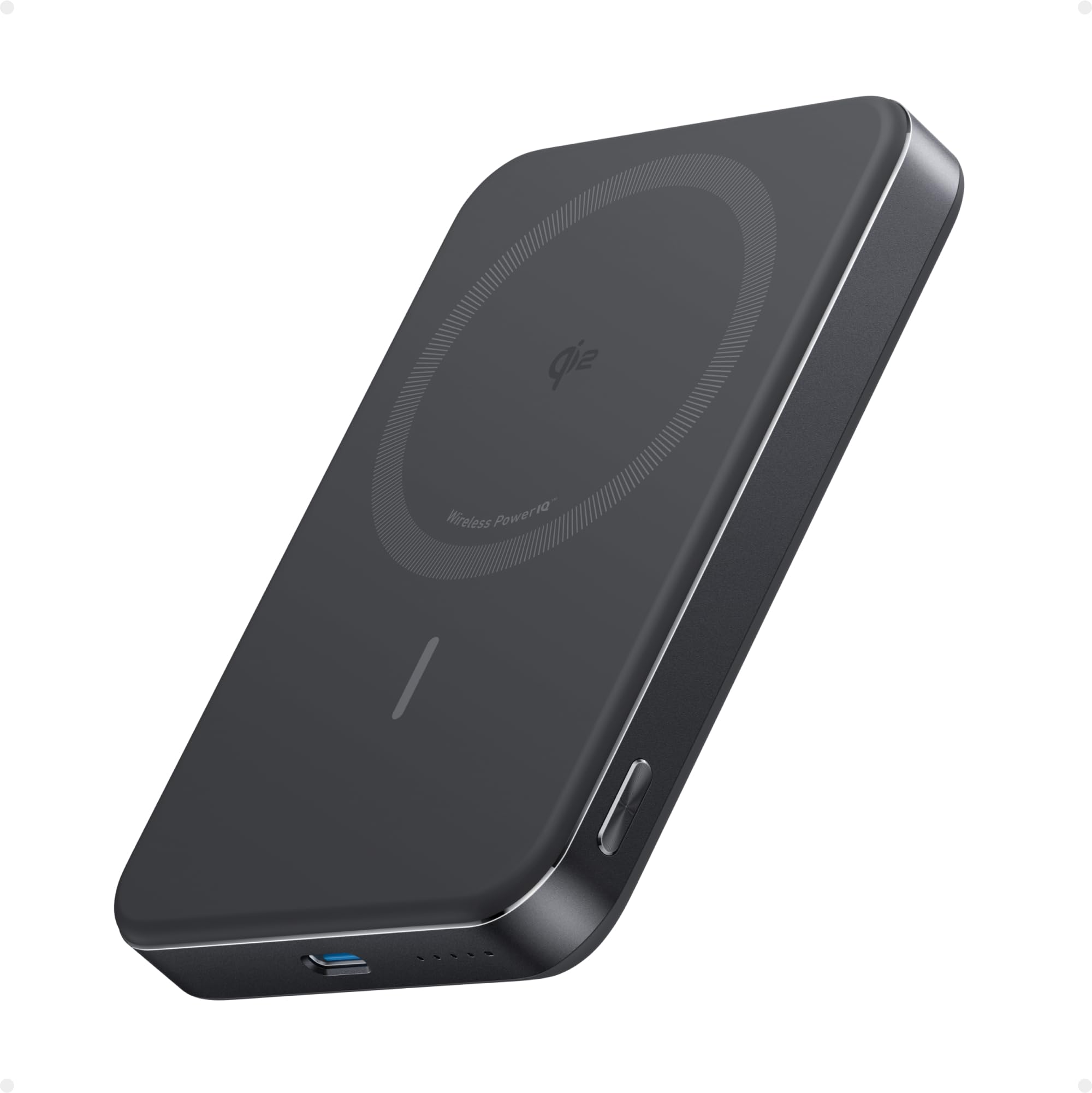
The appeal is a small physical habit: you put the pack against the back of an iPhone, the magnets grab, and the phone starts charging with no cable involved. At 0.56 inches thick and 7.6 ounces, it adds less bulk to a phone in the hand than we expected, and the matte finish and metal frame make it feel like part of the phone rather than something clipped to it.

Underneath the magnetic pad it's a 10,000mAh pack with a 30W USB-C port, so a tablet or a second phone can charge by cable while the iPhone sits on the back. The wireless pad tops out at 15W — Qi2-certified fast for wireless, still slower than a cable into the same phone. For top-ups between meetings that's fine; for a full refill before a flight, use the port.

Two limits worth knowing. It's built around the iPhone's magnet array and Anker doesn't recommend it for Android phones, so it's a poor fit for a mixed household. And wireless charging runs warm; this pack is no exception. That's the standard rather than a defect, but you'll notice it against your ear on a long call.

At the highest price of any 10,000mAh pack here, you're paying for a habit rather than for capacity, and more milliamp-hours are available for less. It's worth the premium for the person who charges in short bursts all day and never wants to think about a cable, and it isn't for anyone who mostly charges a phone inside a bag.

Bottom line: For an iPhone owner who wants a pack that lives on the back of the phone, this is the neatest execution here — expect slower charging and a warm handset.

5

OHOVIV 50000mAh

OHOVIV 50000mAh

Group charging

Our Score 8.8/10
Check Price

Worth Noting

  • Heavy and brick-shaped; not a pocket pack
  • 12-month warranty, the shortest here
Max Output
22.5W
Built-in Cables
Four (Lightning, USB-C, micro-USB, USB-A)
Devices At Once
6
Battery Capacity
50,000mAh

Four built-in cables — Lightning, USB-C, micro-USB and USB-A — sounds like overkill until you're the person everyone hands a dead phone to. Add the three ports and this pack will run six devices at once, which is a family-car feature more than a solo one: phones, earbuds and a tablet all charging from one brick, with the cables stowed in the body instead of tangled in a glovebox.

We like it for exactly that job. 50,000mAh hands out charges across a long weekend, the digital display tells you when to stop sharing, and 22.5W is quick enough that nobody complains. What it isn't is portable in the pocket sense: it measures 5.82 by 2.83 by 1.18 inches and you know it's in the bag. Charge it the night before you leave, not the morning of — a pack this size takes the better part of a day to refill.

The warranty is the bit to weigh: 12 months, the shortest of any pack here, on the device most likely to be lent out and dropped. That's the trade for the price and the cable count, and for a pack that stays in a car or a cupboard it's a trade worth making. Just don't expect it to be the one you slip into a jacket.

Bottom line: The pack we hand to the group: four built-in cables, six devices at once, and enough capacity for a weekend without an outlet.

6

Baseus Picogo 10000mAh

Baseus Picogo 10000mAh

Tight pockets

Our Score 8.6/10
Check Price

Worth Noting

  • Costs more than any other 10,000mAh pack here
Ports
2 × USB-C, 1 × USB-A
Dimensions
4 × 2.6 × 0.5 in
Max Output
45W
Battery Capacity
10,000mAh

Ten thousand milliamp-hours usually means a slab in your bag. This one measures 4 by 2.6 by 0.5 inches — the smallest 10,000mAh pack in this group — and it disappears into a jeans pocket or a small purse in a way none of the 20,000mAh packs here can. We kept forgetting it was there, which is the highest compliment a daily pack can get.

It isn't slow, either. 45W on USB-C is enough to fast-charge a phone at its own maximum and to give a tablet or a thin laptop a useful top-up, and the built-in USB-C cable is two-way: it charges your phone or refills the pack, so the cable you'd otherwise forget is the one you need. A small LED display shows the remaining percentage, and two USB-C ports plus a USB-A let three devices share it.

The price is the sticking point. It costs more than any other 10,000mAh pack here, for something that stores half of what a 20,000mAh pack holds for less money. What you're buying is the footprint and the wattage. If your bag is already full — a small purse, a running belt, tight jacket pockets — that trade makes sense; if it isn't, buy capacity instead.

Bottom line: For the smallest possible pack that still fast-charges, this is the one we recommend — 45W and a two-way cable in a card-holder footprint.

7

Charmast 10000mAh

Charmast 10000mAh

Budget backup

Our Score 8.8/10
Check Price

Worth Noting

  • Slow to recharge itself
  • Short built-in cables limit reach while charging
Weight
9.2 oz
Built-in Cables
Four
Devices At Once
6
Battery Capacity
10,000mAh

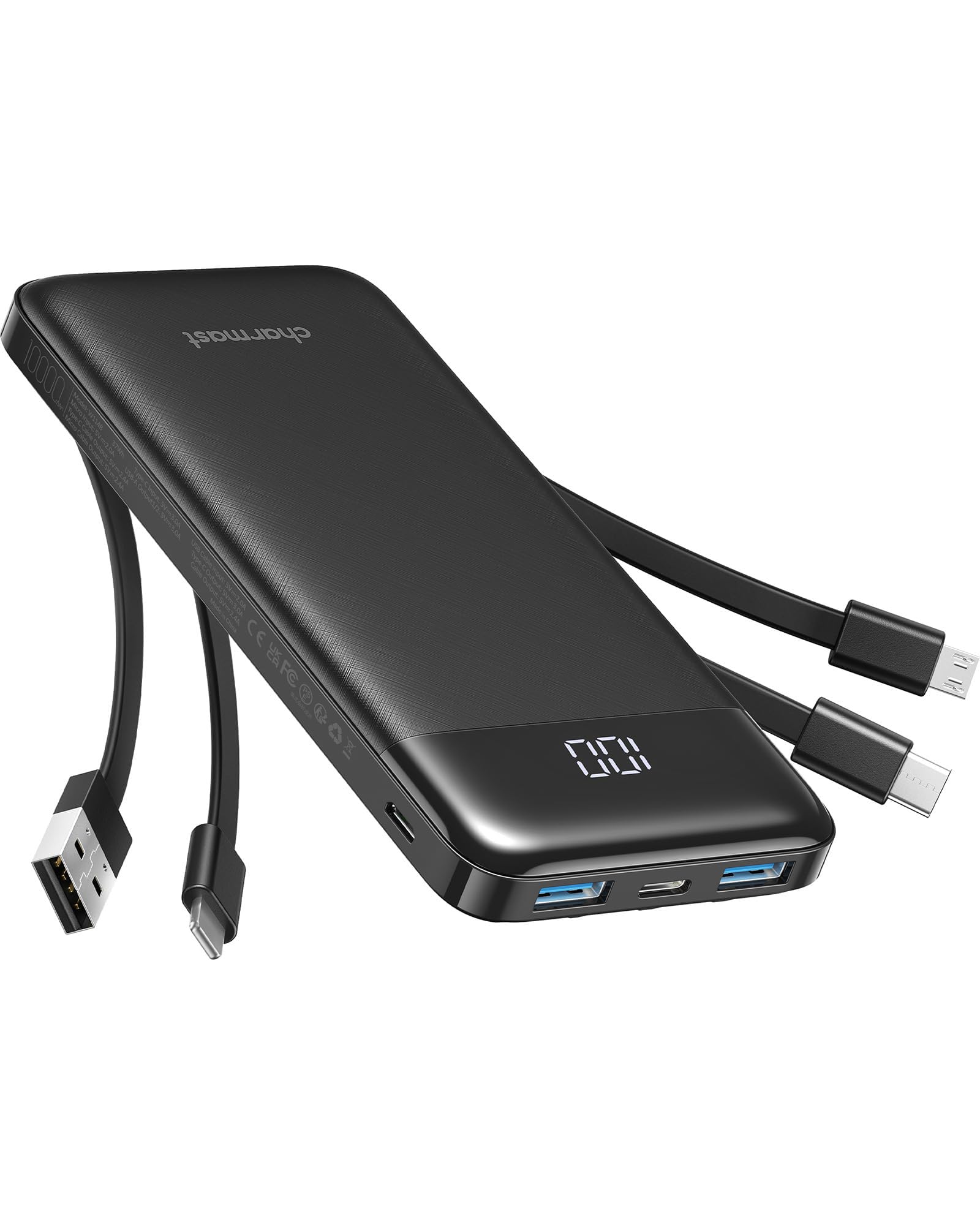
For the least money here you get four built-in cables — USB-C, Lightning, micro-USB and USB-A — plus three ports, six devices charging at once, and three separate ways to refill the pack itself. The cables are short, tucked into the body and reinforced where they fold, which is the part that usually fails on packs like this.

It's 10,000mAh, 9.2 ounces and slimmer than an iPhone 14, so it goes into a bag without a second thought. Because the cables are short, a phone hangs close to the pack rather than swinging from a long lead — handy on a train with no table, less handy if you want to keep using the phone at arm's length while it charges.

The compromise is on the inside. Refilling this pack is slow, so plan an evening on a charger rather than a quick top-up before you leave, and some units stop working within months, which is why the three-year warranty carries more weight here than on the pricier picks. We keep coming back to it for the glovebox and the school bag: cheap enough to own two, good enough to get a phone through an evening.

Bottom line: Cheapest here, and still the most flexible: four built-in cables, six devices at once, and three ways to recharge it.

How We Tested Portable Power Banks

We started by building a shortlist from the power banks that show up again and again in owner reviews and retailer best-seller lists, then narrowed it by capacity, port size, stated wattage, and price so we were comparing models that suit similar bags and budgets. Over six months, we tested 14 of them, not just on a desk but on commutes, in airport terminals, on weekend camping trips, during a two-day home power outage, and through the usual weekday shuffle between coffee shop, office, and train. Every bank went into a real bag, next to keys and a laptop, and came back out scratched or not.

We timed how long each one took to bring a dead phone to 50 percent and then to full, and noted whether the phone charged at the speed the bank promised or slowed down after the first few minutes. To judge battery life, we recorded how many full phone charges each bank delivered before it needed a recharge, and we watched the indicator lights for surprises at the end of a long day. We also weighed each model after packing it, compared its footprint against a phone and a small wallet, and noted whether it fit a jacket pocket or demanded its own pouch.

Charging capability got a separate round: two phones at once, a tablet, and a pair of earbuds, with attention to whether ports shared power or one device stalled. We checked heat by feeling the casing after 30 minutes of charging and again at the end, and we looked at build quality by opening and closing each port cover, tugging the cable ends, and inspecting the seams after the bag toss. Value was never just the sticker—it was what the bank delivered per dollar in speed, capacity, and durability.

How to Choose Portable Power Banks

Read watt-hours, not just milliamp-hours

Capacity is quoted at the cell's 3.7 volts, so convert before you compare: 10,000mAh is about 37Wh, 20,000mAh about 74Wh, and 25,000mAh about 92.5Wh. The carry-on ceiling for lithium power banks is 100Wh, with some airlines allowing up to 160Wh on approval — which is why the 50,000 and 60,000mAh packs here are road-trip tools rather than flight kit, despite what any badge on the box suggests.

Then discount for reality. Expect roughly two-thirds of the rated energy to reach your phone once conversion losses are counted, so a 10,000mAh pack is one solid charge rather than two. If you fly and carry a phone, a 20,000mAh pack is the sweet spot; if you don't fly, take the capacity you'll actually use.

Match output wattage to the hungriest device you carry

Phones top out low — most take 18 to 30W, and a 100W pack won't fill one any faster than a 30W pack will. Tablets and thin laptops want around 45W, and a full laptop wants 65 to 100W over USB-C PD. That is the real dividing line in this group: the 22.5W packs are phone-and-tablet tools, while the 165W Anker is the one that runs a workday.

Two small compatibility notes worth checking before you buy: Samsung phones reach their fastest speeds with PPS support, and iPhones need plain USB-C PD and nothing more exotic. Buying output you can't use costs money and adds heat, so size the pack to the biggest thing you actually plug in.

Decide pocket or bag before you compare capacity

Most weight complaints in this category come from buying capacity to carry rather than capacity to use. A 10,000mAh pack runs 7 to 9 ounces and genuinely disappears into a pocket; 20,000mAh is a jacket or bag item; 50,000mAh and up belongs in a trunk. The trick is that dense packs can be small and heavy at the same time — the 20,000mAh INIU here is pocket-sized but not pocket-light.

So pick the spot first, then take as much capacity as that spot allows. A pack that lives in a bag can be twice the size of one that lives in your jeans, and you'll only resent the wrong choice in the first week.

Count cables, ports, and the pack's own refill time

Built-in cables are the most appreciated feature in this category and also the first component to fail, so the configuration that ages best is built-in cables plus at least one standard port as a fallback. Count the devices you charge simultaneously — usually two, occasionally six if you're the family charging station.

Then look at the input side, which almost nobody checks. A 20,000mAh pack on an old 10W charger takes the better part of a day to fill, while USB-C PD input at 18W or more turns it into an overnight job. Keep one 30W charger reserved for the pack and the refill stops being something you dread.

Frequently Asked Questions

Final Verdict

Most people should buy the INIU 20,000mAh. It covers a normal day without becoming a bag item, the cable is attached so there's nothing to forget, and at roughly 74Wh it still walks onto a plane. That combination is why it sits at the top of this list rather than the bigger or faster packs.

If your laptop leaves the house with you, the Anker 25,000mAh is the one worth the premium: 100W on a single port, two cables that are always attached, and just under the airline ceiling. Buy the INIU for the day; buy the Anker for the workday.