Home Appliances & Robots

Best Smart Sprinkler Controllers of 2026

The old way was a plastic dial in the garage and a schedule set once, years ago, then never touched again. A smart sprinkler controller fixes exactly that: it pulls the forecast, bends the schedule when a cool front rolls in, and lets you see from the couch whether zone 3 actually came on. I've had one on my own lawn for a few seasons now, and I've mostly stopped thinking about watering, which is the point.

What surprised me is where the differences show up. Every controller here can be programmed from your phone; the ones that earned a spot also held a signal at the far corner of the yard, worked with the valves already in the box, and didn't make me relearn everything every spring. We spent the past seven months with 10 of them, through spring start-up, a dry July, and one downpour that had me pausing a schedule from the driveway. The picks below are the ones that held up.

1

ImoLaza 8-Zone

Top Pick
ImoLaza 8-Zone

Most yards

Our Score 9.0/10
Check Price

Worth Noting

  • Wi-Fi pairing can be fussy at weak signal
Zones
8
Subscription
None
Weather Logic
Real-time ET
Operating Range
-13°F to 140°F

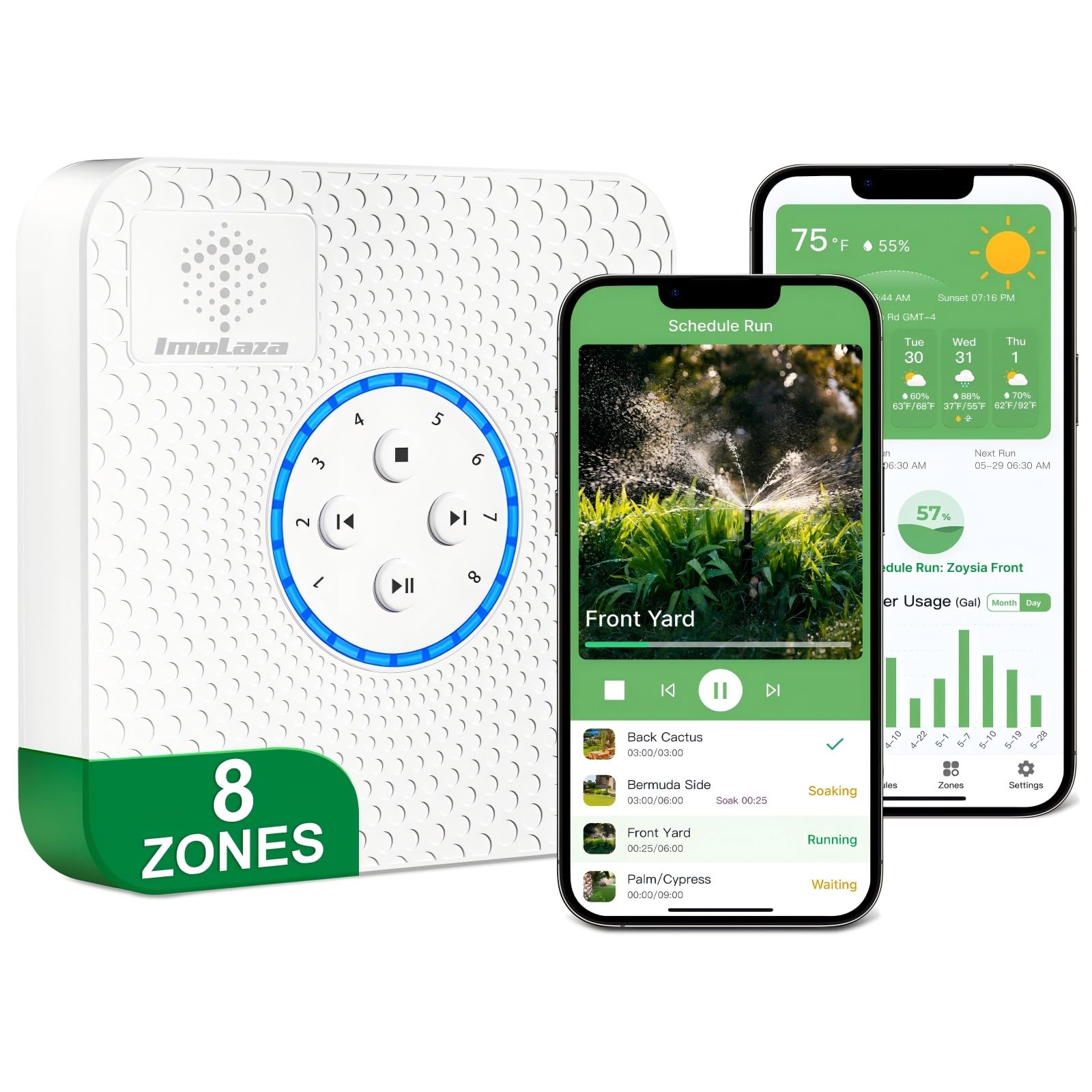
Eight zones, real-time evapotranspiration, and no monthly fee is the combination that puts the ImoLaza at the top of this group. We recommend it for the typical house with a full in-ground system because it adjusts watering from local weather and soil conditions rather than just canceling a cycle when rain is in the forecast. The Smart ET, Fixed Cycle, and New Grass schedules cover established lawns and a renovation, and the New Grass mode can run up to 24 short start times a day to keep seed damp without flooding it.

The box is compact, about 6.3 inches square, and rated for indoor or outdoor mounting with an operating range from -13°F to 140°F. Wiring is aimed at standard in-ground systems, and the package includes a screwdriver, screws, and wire labels. We appreciate the fault detection most: it watches for open or short circuits, a controller that has gone offline, stale weather data, and continuous low or abnormal flow. That last alert can point to a broken head or a leaking valve before the water bill does.

The weak point is the radio. Pairing and disconnections are the recurring issue around this model, and a weak 2.4GHz signal at the valve box is the usual culprit. Check the signal where the controller will live before you mount it; a mesh node in the garage is cheaper than a controller that only works from the driveway. The app is also deep enough that the first schedule takes a sitting, not a minute.

For a yard with eight zones or fewer and solid Wi-Fi, this is the controller we point to first. If you want physical buttons at the panel, the Rain Bird is the better fit. The included screwdriver is a small thing, but it means you can finish the swap without walking back to the toolbox.

Bottom line: We recommend the ImoLaza 8-Zone for most in-ground yards: real ET weather logic, eight zones, and leak alerts without a subscription.

2

Orbit B-hyve 6-Zone

Orbit B-hyve 6-Zone

Tight budgets

Our Score 9.0/10
Check Price

Worth Noting

  • Six-zone ceiling
  • Wi-Fi can drop at weak signal
Zones
6
Control
App and Alexa
Mounting
Indoor/outdoor
Warranty
2 years

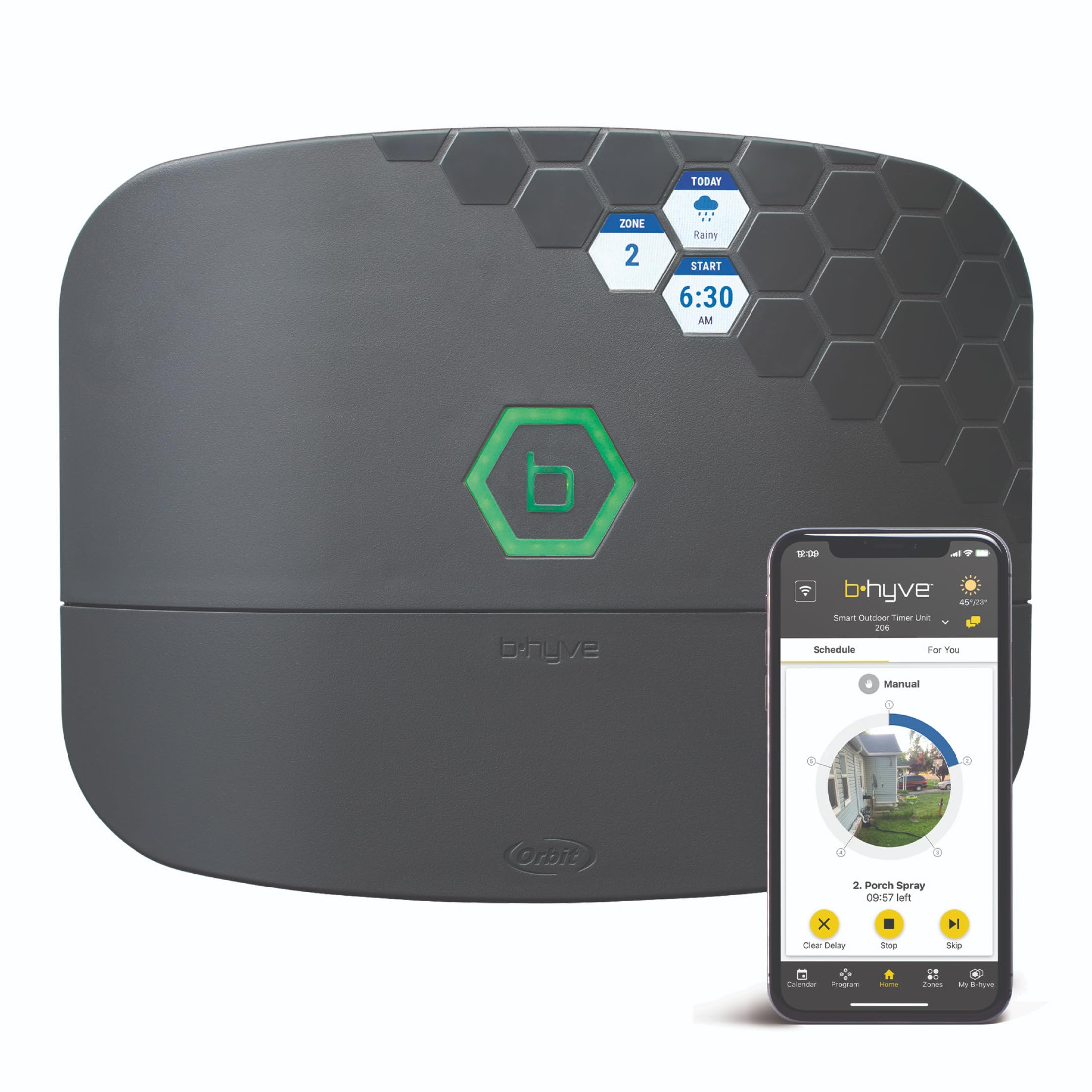
Six zones and a weatherproof case are the two facts that define the B-hyve 6-Zone. It is the budget pick here, aimed at a yard that needs a straightforward front-and-back schedule rather than a lot of customization.

We recommend it for a first smart controller because the wiring is a straight swap from an old unit and the app walks you through zones and run times. The display is there for at-a-glance checks, and Alexa handles quick voice commands. The app is the main control surface, but you are not entirely dependent on a phone for status.

The Wi-Fi is the part to watch. The B-hyve connects on 2.4GHz, and a weak signal at the valve box can make the app feel unreliable, so check that signal before you mount it. For a six-zone yard with a good router, it is the value pick in this group. If you have a seventh valve, the XR or Rain Bird is the better buy.

Bottom line: For a six-zone yard, the Orbit B-hyve 6-Zone delivers app control, weather skips, and a weatherproof case on a tight budget.

3

Orbit B-hyve XR 8-Zone

Orbit B-hyve XR 8-Zone

Outdoor panels

Our Score 8.6/10
Check Price

Worth Noting

  • Bulkier case needs more wall room
Zones
8
Control
App and Alexa
Display
Digital
Mounting
Indoor/outdoor

A weatherproof case, a digital display, and eight zones define the B-hyve XR. It is the larger, more outdoor-ready sibling of the six-zone B-hyve, and it is aimed at a yard that wants app control without giving up a panel you can read in the sun.

Installation is the same basic low-voltage swap: label the old wires, move them to the new terminal block, and let the app guide the zone setup. The display is the part we appreciate most. When a head is stuck or a zone needs a quick check, you can stand at the box and see what is running instead of opening the app and waiting for it to connect.

We prefer this XR to the six-zone B-hyve for an outdoor install because the extra zones and display make it easier to live with. The trade-off is connectivity: the radio is the weak point, and a weak signal at the valve box can make setup and remote control frustrating. If your router is close and you want a panel outside, it is a good fit; if not, the panel-first Rain Bird is steadier.

Bottom line: The Orbit B-hyve XR 8-Zone suits an outdoor install where you want a readable panel, eight zones, and app control, provided Wi-Fi reaches the box.

4

Rain Bird ESP-TM2 8-Zone

Rain Bird ESP-TM2 8-Zone

Panel-first setups

Our Score 9.2/10
Check Price

Worth Noting

  • Premium price for eight zones
Zones
8
Display
Backlit LCD
Power Cord
6 ft outdoor-rated
Weather Adjustment
Automatic

A backlit LCD, a three-step programming sequence, and a six-foot outdoor-rated power cord define the Rain Bird ESP-TM2. It is an eight-zone panel-first controller with a Wi-Fi module for app control, and it is aimed at the person who wants to program at the wall.

The panel is the part that makes it different here. The display is readable in low light and direct sun, and the three-step schedule is easy to follow without the app. Rain Bird also includes a contractor default that saves and restores your schedule, plus a delay of up to 14 days for temporary shutdowns. The app is a remote control and weather adjuster, not a full ET brain.

We recommend the ESP-TM2 for a household that wants a physical panel and a known name, but its weather logic is simpler than the ET-based ImoLaza. The Wi-Fi module is the fussy part; if the signal at the box is weak, the app experience suffers. The 6-foot cord gives you more placement freedom than a short pigtail, and the backlit display is the reason to choose this over an app-only box.

Bottom line: The Rain Bird ESP-TM2 is for the buyer who wants a familiar, readable panel and eight zones, with app control as a bonus rather than the whole point.

5

Hunter HPC400 4-Zone

Hunter HPC400 4-Zone

Growing systems

Our Score 8.8/10
Check Price

Worth Noting

  • Four zones before expansion
Control
Hydrawise app
Mounting
Outdoor rated
Expansion
Up to 32 zones
Zones Included
4

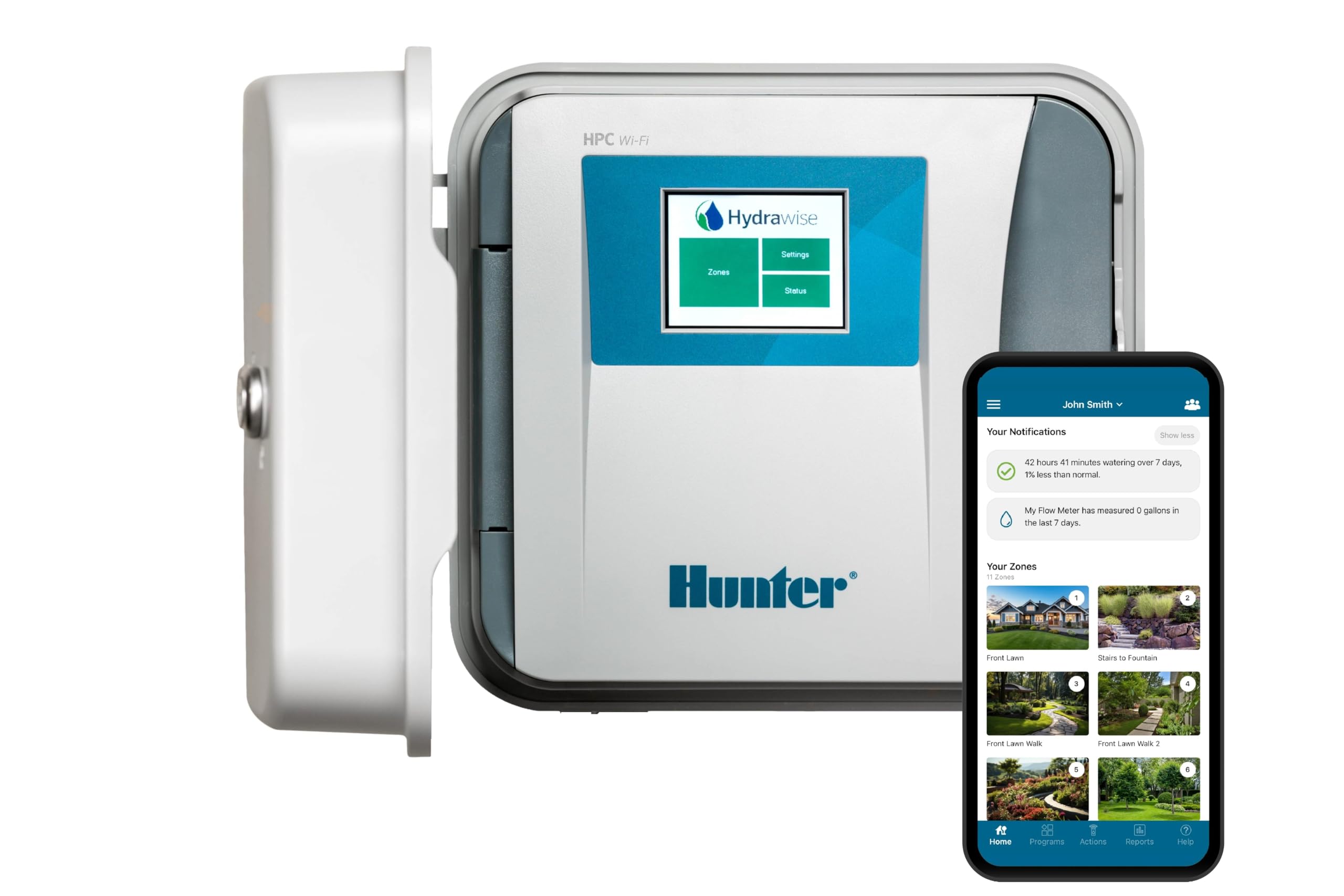
The Hunter HPC400 starts with four zones and expands to 32 with add-on modules. It runs the Hydrawise app, has a touchscreen at the panel, and comes in a weather-resistant enclosure for outdoor mounting.

We recommend it for a yard that is still taking shape. Start with four zones, add a module when the new beds go in, and keep the same controller and app. The touchscreen and labeled wiring make the panel setup easier than a phone-only box, and Hydrawise uses local weather data to adjust schedules.

The expansion path is the point. Four zones will not cover a typical six- or eight-zone yard without a module, so price the whole package before you commit. For a four-zone yard that may grow, that is the most sensible long-term route here. For a yard that already has eight valves, the simpler eight-zone controllers are the better value.

Bottom line: The Hunter HPC400 is the pick for a small yard with a growth plan: four zones now, up to 32 later, with Hydrawise scheduling and a touchscreen panel.

6

HiOazo 4-Zone

HiOazo 4-Zone

Small yards

Our Score 8.4/10
Check Price

Worth Noting

  • Four-zone ceiling
Wi-Fi
2.4GHz
Zones
4
Warranty
3-year care
Watering Plans
16

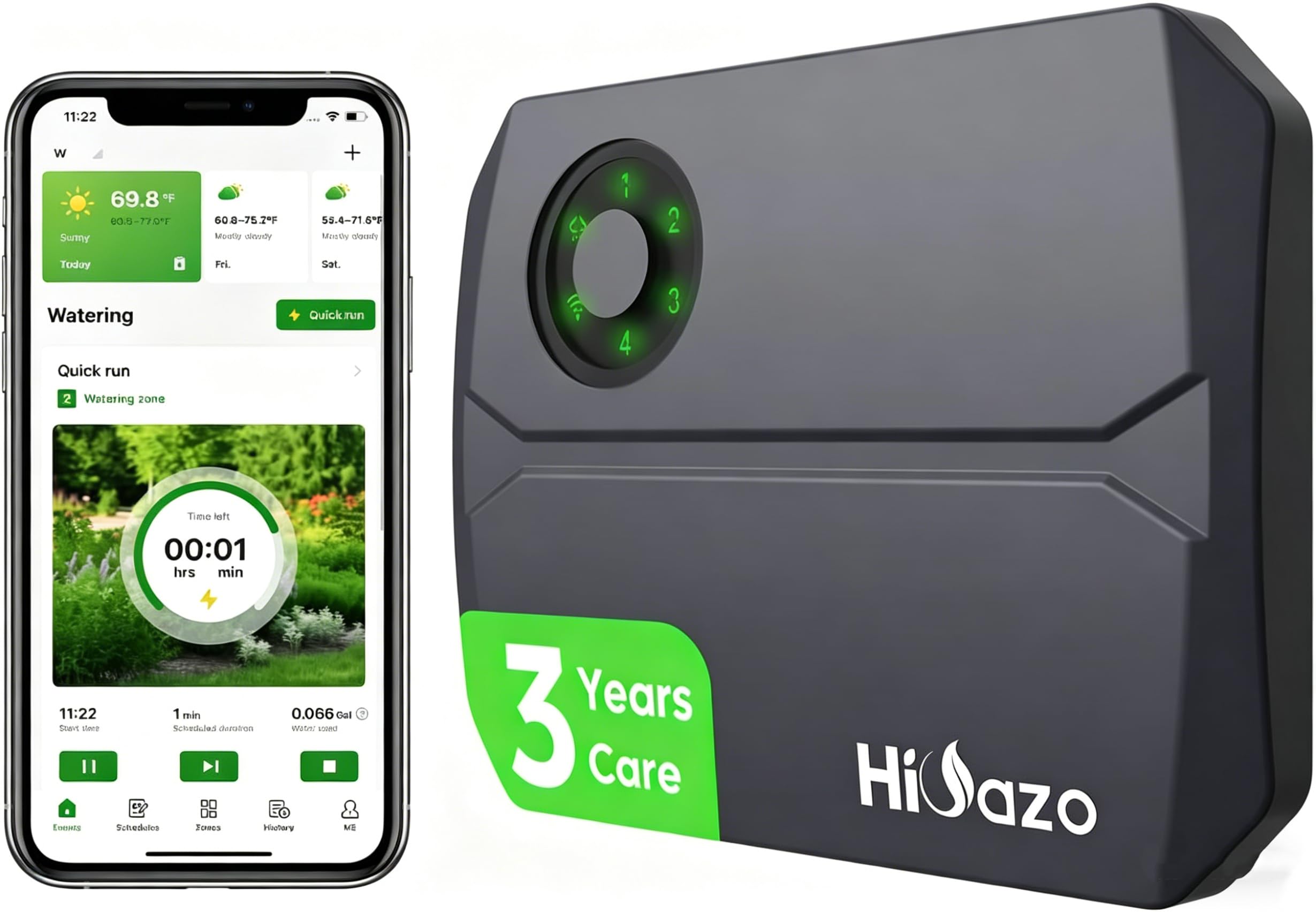
The HiOazo is the controller for a small yard that does not need a premium brain. Four zones, sixteen watering plans, and a price that sits at the bottom of this group make it the obvious first look for a front-yard-only system or a rental property. It is also small enough to fit where a bulky old box was.

We like the soak mode more than the usual rain-skip checkbox. It waters in cycles so the soil can absorb what you put down, which is the setting that matters on clay or a slope. Rain, freeze, and wind skips are here too, along with standard and soak irrigation modes. Installation is aimed at ten minutes, and the package includes wire connectors and labels.

The limitations are real but predictable: the radio is 2.4GHz only, and the printed guide is thin enough that the app has to carry setup. Pairing can be fussy if the signal at the valve box is weak, so check that before you mount it. The three-year care plan is longer than most here, which takes some of the sting out of buying from a smaller brand.

Bottom line: For a four-zone yard on a tight budget, the HiOazo covers the basics: app scheduling, rain skips, and soak cycles without a premium price.

7

Netro Sprite 12-Zone

Netro Sprite 12-Zone

Many zones

Our Score 8.6/10
Check Price

Worth Noting

  • Indoor-only housing
  • App and Wi-Fi can be finicky
Power
24V AC
Zones
12
Control
App and Alexa
Mounting
Indoor

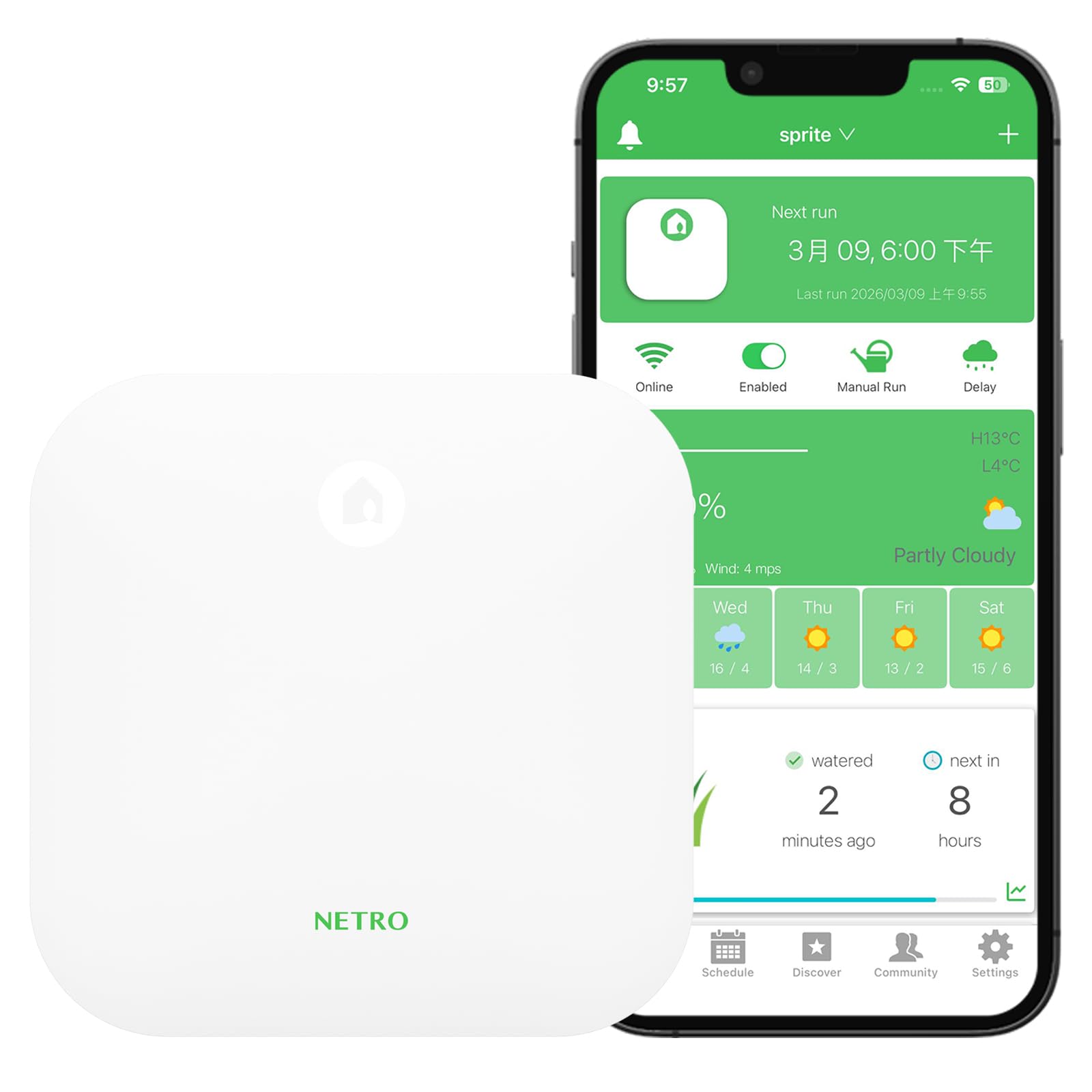
The Netro Sprite 12-Zone is an indoor controller with twelve zones, a plant library, local weather data, and a cyclic schedule. It is aimed at a house with a lot of valves and a garage or utility room to mount it in. The built-in level is a small touch that makes a one-person install easier.

The app is where the system lives. You can set schedules by area, choose execution months, and let Netro pull local forecasts to skip watering. The plant library is useful if you have mixed beds and want different watering profiles without building every schedule from scratch. The controller is 24V AC and comes with a power adapter, screws, and a manual.

The app is not the most intuitive here, and the Wi-Fi connection can be flaky. A lost connection can leave a zone running past its stop time, so watch the first few cycles and check the history after an outage. That is a lot of controller for a large property, but it asks for a patient setup.

We recommend the Sprite for a large zone count and a patient installer, not for someone who wants a set-and-forget box. If you have twelve zones and a strong signal, it covers a lot for the money; if you have six zones, the simpler Orbit or ImoLaza is the easier owner experience. The built-in level and screw-mounted case still make it a tidy install.

Bottom line: The Netro Sprite 12-Zone is for a large indoor installation where twelve zones and plant-specific schedules matter more than app polish.

How We Tested 10 Smart Sprinkler Controllers

We started by pulling every controller sold for standard 24-volt systems, then comparing zone counts, price, and how the companion apps handled basic scheduling. Anything that locked everyday watering behind a subscription, or hadn't been meaningfully updated in years, came off the list before we installed a single unit. That left 10 controllers, which we ran on real lawns for seven months, from spring start-up through the first fall shutdown.

Installation was timed with a stopwatch: how long the swap from an old controller took, whether the terminal labels made sense without the manual, and how many tries it took to get the unit onto the home network from the valve box, which is usually the worst wifi spot on the property. We also rebooted the router on purpose and noted which controllers came back online on their own.

Once paired, we built a schedule from scratch on each one, some from the panel and some from the app, and counted how many taps it took to add a zone, set a start time, and push a rain delay. Then we let them run for a full week and checked whether each zone got the minutes we asked for, whether the weather skip actually fired during rain, and how easily we could override a schedule remotely from a parking lot.

Over those seven months we kept a running log of dropouts, schedules forgotten after power blips, and stuck valves the app did or didn't flag. Reliability is the thing a spec sheet can't tell you, and it's where these controllers separated the most.

How to Choose Smart Sprinkler Controllers

Count Zones Before You Compare Apps

A four-zone controller is not a bargain if you have six valves. Count every zone on the old panel, then add one or two for future beds. Six zones covers many front-and-back yards; eight gives more headroom; twelve suits a large property with separate beds and drip lines. Expansion is the other half of the decision: the Hunter HPC400 starts at four zones and grows to 32 with modules, but the modules add cost, so price the whole system before you commit.

Treat Wi-Fi as a Specification

Wi-Fi is the part of a smart controller that decides whether the smart features feel smart. The radio usually works on 2.4GHz, and a signal that is fine in the kitchen can be marginal at a valve box on the far side of the garage. Check the signal where the controller will live before you mount anything. If it is weak, add a mesh node, or choose a controller with full panel controls, such as the Rain Bird ESP-TM2, so the yard still runs when the app does not.

Rain Skip or ET?

Rain skip is the basic feature: the controller cancels a cycle when rain is forecast or a freeze or high wind is expected. ET scheduling goes further, using local weather and plant and soil conditions to adjust run times through the season. For a set-and-forget yard, ET is worth paying for. The ImoLaza includes real-time ET with no subscription; that matters, because a weather service that charges a monthly fee changes the long-term cost. If you like to tinker, a simpler rain-skip schedule may be enough.

Indoor, Outdoor, and the Box You Already Have

An outdoor-rated case is the difference between mounting at the valve box and running wires into the garage. The Orbit B-hyve models, Rain Bird, Hunter, and ImoLaza are rated for indoor or outdoor use; the Netro Sprite is indoor-only. Outdoor rating is not a license to mount a controller in a sprinkler spray or below a downspout. Keep it under an eave or in a sheltered spot, and check that the power cord reaches the outlet before you choose the location.

Panel Controls Are Not Obsolete

An app is convenient until your phone is dead, a guest needs to run a zone, or the cloud service is down. A backlit LCD, a digital display, or a touchscreen lets you solve a stuck valve at the box. The Rain Bird ESP-TM2 and Orbit B-hyve XR are the panel-first picks here; the Hunter uses a touchscreen; the HiOazo is app-led. If more than one person manages the yard, choose a controller they can operate without your phone.

Frequently Asked Questions

Final Verdict

The ImoLaza 8-Zone is our pick for most yards because it combines real ET weather logic, eight zones, leak and fault alerts, and no subscription in a compact indoor/outdoor case. If the Wi-Fi signal at your valve box is weak, choose the Rain Bird ESP-TM2 for panel-first control. If you have six zones or fewer and a tight budget, the Orbit B-hyve 6-Zone is the better spend.