Home Appliances & Robots

Best Smart Bird Feeders of 2026

A smart bird feeder is a bird feeder with a camera built into it, and that camera turns every chickadee stop into a notification, a clip, and sometimes a name. The catch is that two feeders with near-identical specs can differ wildly in whether the app names the bird on your railing or just calls it a small brown bird. I hung my first one outside the kitchen window to settle a family argument about a sparrow, and over the next eight months my team and I put 10 feeders through rain, snow, squirrels, and patchy Wi-Fi.

The surprise was that a great camera doesn't guarantee a great feeder, because birds have to want to land on it: perch shape, seed tray depth, and how much the housing sways in the wind decide your traffic. Setup is the other divider, since the ones that need three tries to join a 2.4GHz network tend to end up in the garage. The picks below favor easy filling, honest battery life, and footage you'll actually want to open with your coffee.

1

Humbirdy SH66

Top Pick
Humbirdy SH66

Most backyards

Our Score 9.2/10
Check Price

Worth Noting

  • Premium price against the rest of this group
  • Mounting hardware is the plainest part of the kit
Wi-Fi
2.4 and 5 GHz
Seed Capacity
1.8 L
Video Resolution
4K at 30 fps
AI Identification
Included, no subscription

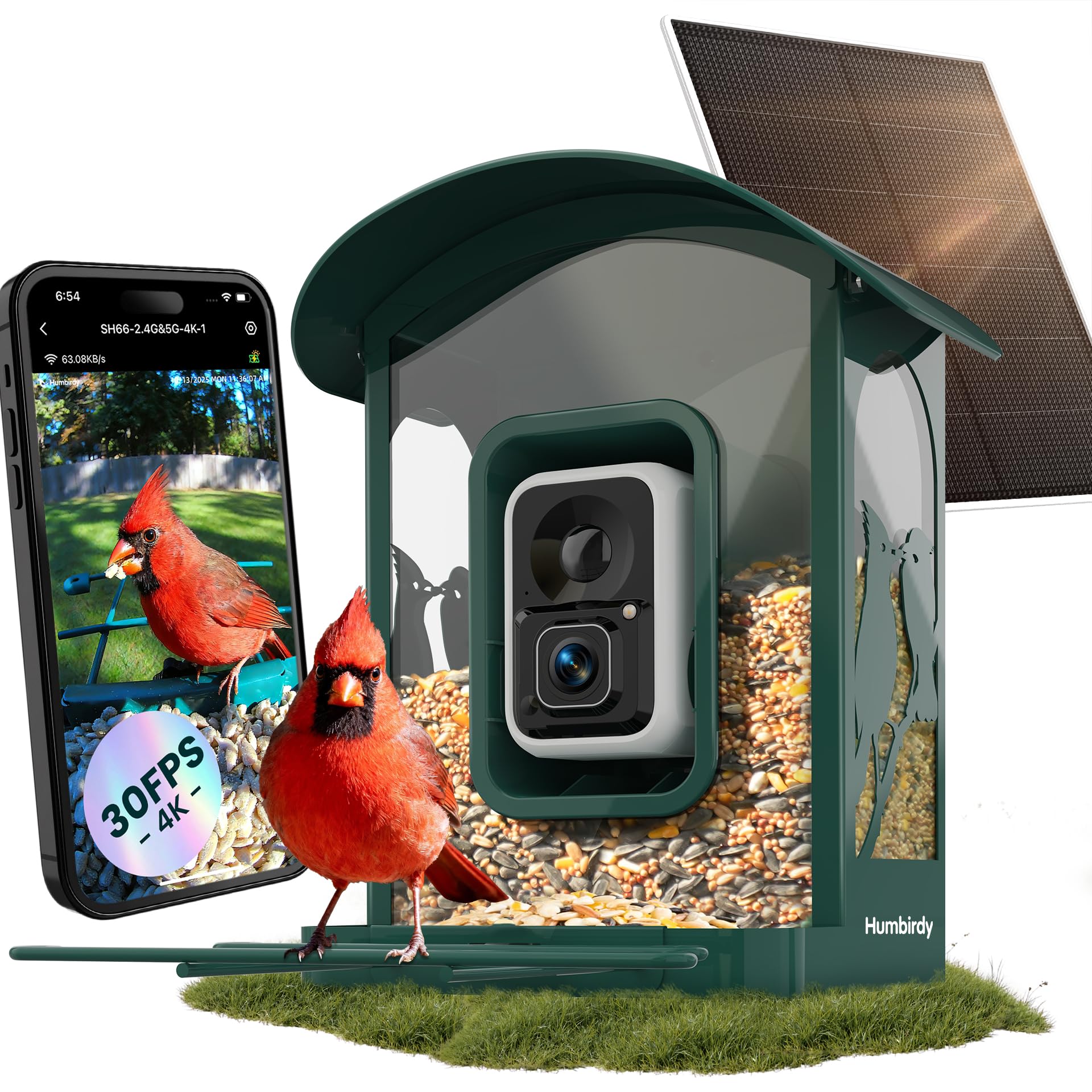
The camera on the Humbirdy is a small module that unclips from the feeder body, and that one design decision does more for daily ownership than the 4K sensor it carries. Charging a camera feeder usually means unmounting the whole house, seed and all, and running a cable out to it; here you carry in something the size of a deck of cards. The stream is detailed enough to pick out markings at perch distance, and the 8MP stills are worth keeping.

Then there is the bill you do not get. Species identification is included rather than rented: the app labels visitors from a 10,000-plus species database with no monthly fee, and it flags squirrels too. Compare that with the feeders here that hand you a free month and then charge. It is also the only pick in this group that lists 5 GHz alongside 2.4 GHz, which is the difference between a stream that holds up at the far end of a yard and one that keeps reconnecting.

The body is metal rather than the molded plastic most of these use, with a 1.8-liter hopper and a 32GB card in the box, so you can record without touching the cloud. Two things we noted. Identification is good but not infallible — a bird facing away or backlit can come back labelled wrong, so treat the species name as a strong hint and the photo as the record. And on grey weeks the 3W panel does not keep up with heavy live viewing; the removable camera turns that into a small chore rather than a project.

It sits at the top of this group on price, and it is the feeder we point to when someone wants to install once and stop thinking about it. If the money is better spent elsewhere, the Harymor holds more seed for less, and the Kiwibit gets you 4K footage for a smaller premium.

Bottom line: We recommend the Humbirdy to most people: the camera lifts off for charging, species identification is included rather than rented, and it works on both Wi-Fi bands.

2

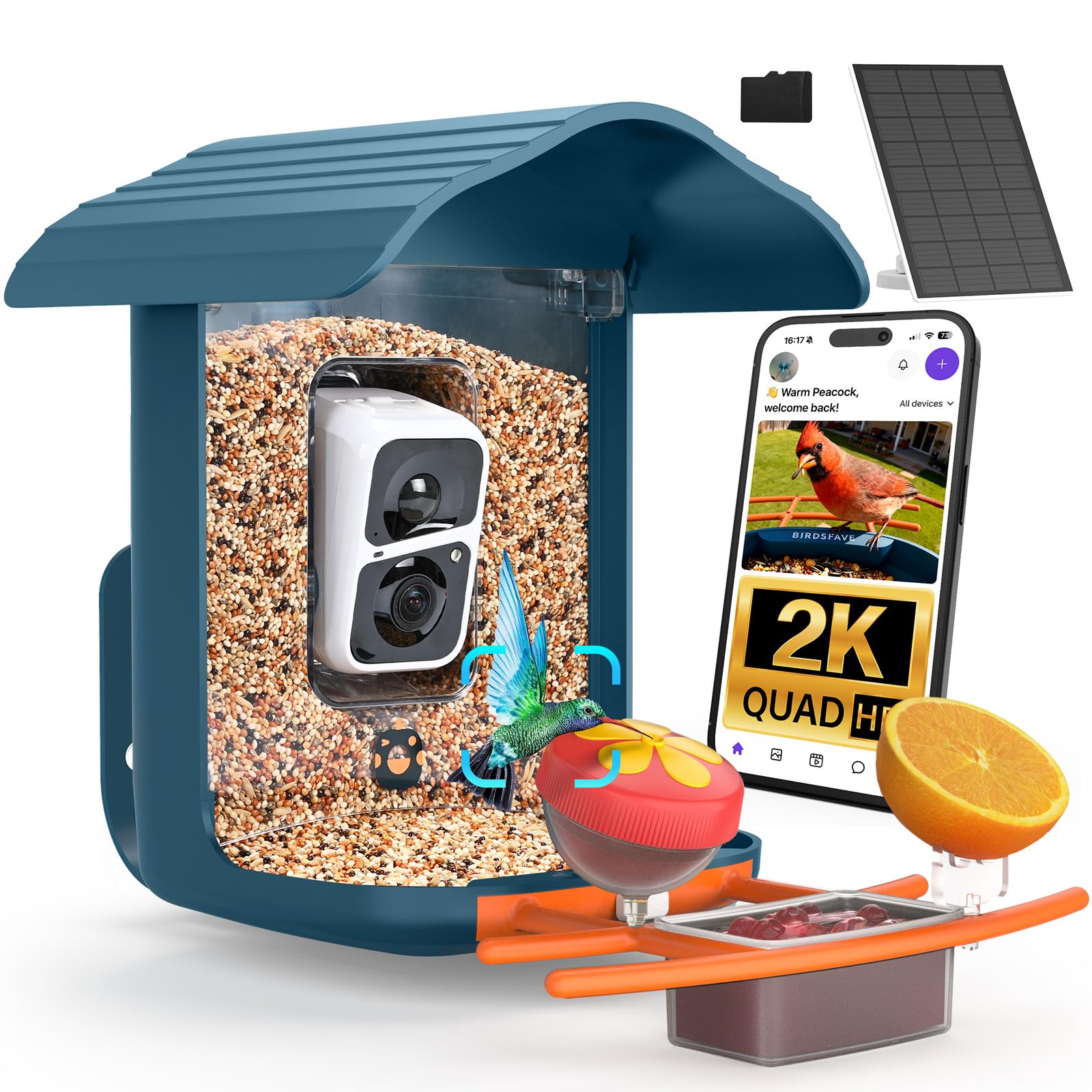
HARYMOR Q8

HARYMOR Q8

Busy feeders

Our Score 9.0/10
Check Price

Worth Noting

  • AI species ID requires an app subscription
Solar
3 W built-in plus 3 W external panel
Field Of View
120°
Seed Capacity
2 L
Video Resolution
2K

Two liters of seed is the largest hopper in this roundup, and the Harymor pairs it with not one solar panel but two: a 3W panel built into the roof and a second 3W panel on a cable that you can hang where the sun actually reaches. In a yard with trees, that second panel is the difference between a feeder that keeps itself charged and one you take down every few weeks.

The 2K camera covers a 120-degree view, the tightest lens here, so you get a close, clear look at the perch and not much of the approach behind it. Footage is crisp, arrival alerts come through promptly, and recordings go to a microSD card of up to 128GB (not included) or to cloud loop storage.

Where it earns its place is the combination: more seed, more panel, less money than the premium picks, and a setup we had running in minutes rather than an afternoon. Solar is the part to watch, though. Charging is where this one gives ground — the panel can stop feeding the battery, and a shaded mount will have you running a cable. Sit it in real sun and check the battery level in the app for the first couple of weeks.

Bottom line: For value, this is the one: the biggest hopper in the group and a second solar panel you can aim at the sun.

3

Kiwibit BW511

Kiwibit BW511

Video quality

Our Score 9.0/10
Check Price

Worth Noting

  • AI ID is a subscription after 30 days
  • 2.4 GHz Wi-Fi only
Solar
3 W adjustable external panel
Seed Capacity
1.5 L
Weather Rating
IP65
Video Resolution
4K HDR

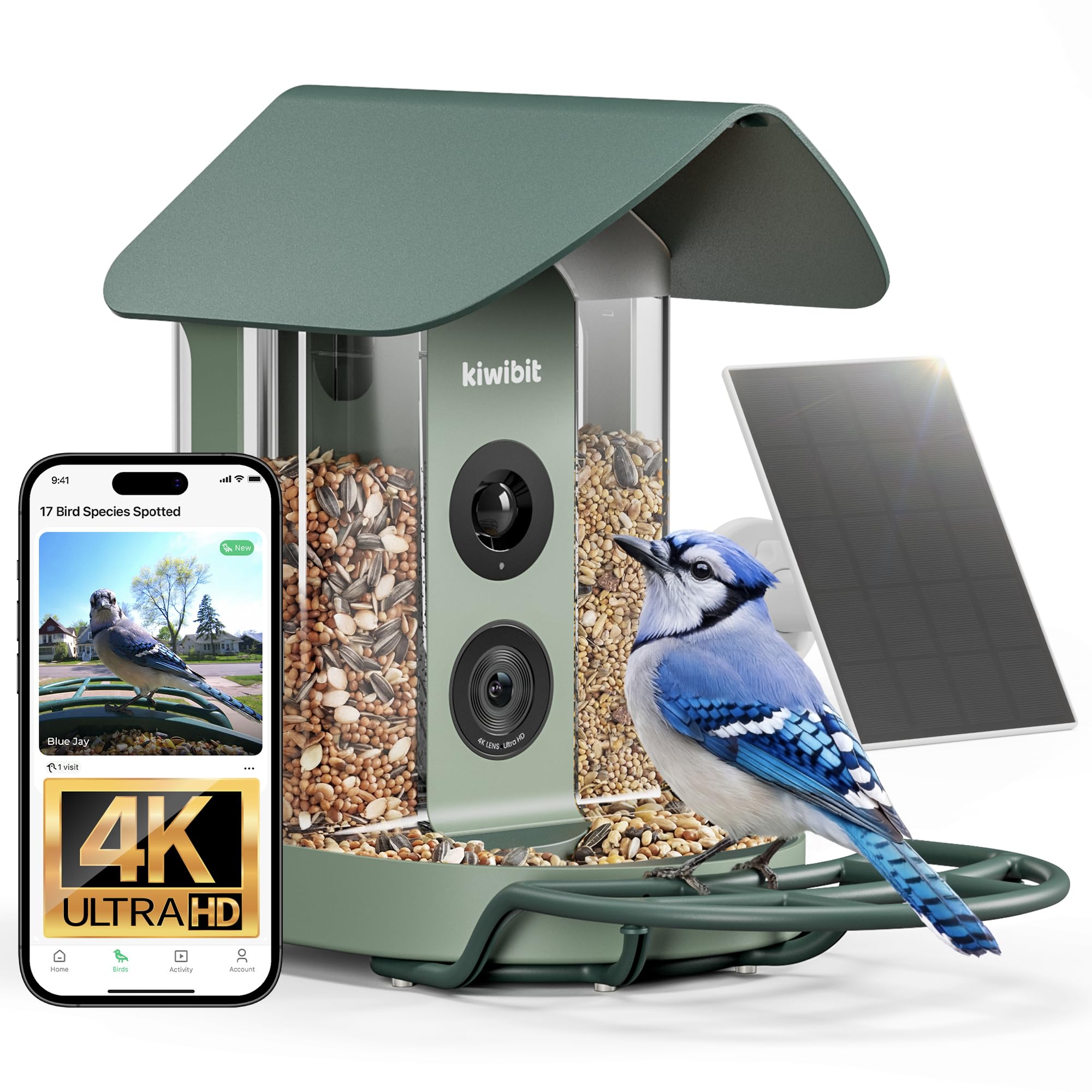
The BW511 is the cheaper route to 4K, and it does not feel like a cut-down version of our top pick: 4K HDR live view, 8MP stills and a 132-degree lens that frames a bird on the perch with room to spare. Video is the strongest thing about it, and of the feeders here it makes the clearest case for paying for resolution.

What we appreciate most is the panel. It is a separate 3W unit on a cable, so the feeder can live in the shade of a branch while the panel sits on a fence rail in full sun — the practical answer to a shaded mount, which is where most solar feeders quietly give up. The 5200mAh battery and IP65 housing round out a package built for a wet winter.

Species identification runs through the FeatherPal app, free for the first month and then by subscription, and the radio is 2.4 GHz only — fine if your yard has coverage, frustrating if the feeder sits at the far corner. Cold, cloudy stretches take a toll on any solar feeder and this one is no exception: watch the battery percentage through a wet week and top it up by cable if it slides.

Twenty people can share the feed, which makes it a good gift for a parent who cannot get out to the garden as often. For less than our top pick you get near-top-tier video and a panel you can put anywhere; that is a trade we are happy to make.

Bottom line: We choose the Kiwibit when picture quality leads: 4K HDR footage and a solar panel that mounts away from the feeder.

4

Birdfy Feeder 1

Birdfy Feeder 1

Shared family feeds

Our Score 9.0/10
Check Price

Worth Noting

  • Species ID is an extra-cost app feature
Power
Solar panel and battery
Dimensions
11.1 x 7.5 x 14.2 in
Seed Capacity
1.5 L
Video Resolution
2K

The Birdfy's radio is 2.4 GHz only, and of the feeders here it is the one that leans hardest on a good signal at the mounting spot. In a small yard with the router a room away that is a non-issue. At the back of a long garden behind a 5 GHz mesh, you need a 2.4 GHz node or a closer post before you hang it.

Get the signal right and the rest is easy to live with. The 2K camera has night vision, the app includes free cloud storage, and one feed can be shared with the whole household and beyond — twenty-plus people on the account, plus Alexa if you want to ask for the bird channel. Seed capacity is 1.5 liters, and the maker claims up to six months of power from the solar panel and battery.

Species identification is the paid part of the app, so budget for it if the labels are why you are buying. Otherwise this is the most conventional feeder here in the best sense: one camera, one app, one shared feed that everyone can open and watch from wherever they are.

Bottom line: We suggest the Birdfy to a household that wants everyone watching the same feed: free cloud storage and room for twenty-odd people.

5

isYoung G11

isYoung G11

Wide views

Our Score 9.0/10
Check Price

Worth Noting

  • 2.4 GHz Wi-Fi only
Solar
5 W panel, 5000 mAh battery
Field Of View
170°
Seed Capacity
1.25 L
Video Resolution
2.5K

A 170-degree lens is the widest view in this group, and it changes what you see: not just the bird on the perch but the ones queuing on the branch and the approach behind them. The trade is scale — a wide frame makes each bird smaller — but for watching behaviour rather than taking portraits, we preferred it.

Around that lens sits a sensible package: 2.5K video, two night-vision modes, a 5W solar panel and a 5000mAh battery, IP65 housing, and identification covering 16,000-plus species. Nothing on the list feels like a corner cut, and setup is the kind you do once in the garden and then forget about.

Expect two things. Identification depends on the bird's posture — a clear side-on view gets labelled, a tail-on blur often does not — and the 1.25-liter hopper empties fast once a flock settles in, so a busy yard means refilling every few days.

Bottom line: Our pick for the widest view: the isYoung shows the whole perch and the approach, with the largest single solar panel here.

6

Fazoxo B1

Fazoxo B1

First camera feeder

Our Score 8.6/10
Check Price

Worth Noting

  • AI ID and cloud storage become subscriptions
  • 2.4 GHz Wi-Fi only
Wi-Fi
2.4 GHz only
Dimensions
9 x 6.5 x 9 in
Seed Capacity
1.3 L
Video Resolution
2K

This is the least expensive way into a camera feeder that still works: a 2K camera, motion alerts, a solar panel feeding the battery, and an app that records and shares clips without much fuss. For a first feeder, that is most of what matters, and the footage is better than the money suggests.

The hopper holds 1.3 liters and the body is plastic, so a squirrel with a plan gets further than it would with the metal Humbirdy. Nothing here is built for a decade, and the mount and the lid are where the savings show.

We kept coming back to how little setup got in the way: mount it, pair it, birds show up. If you want to find out whether camera birdwatching holds your attention before spending properly, start here — and if you already know the identification labels matter to you, put the money into one of the picks above instead.

Bottom line: We point first-time buyers here: the lowest price in this group buys a working 2K camera, solar power and a genuinely simple app.

7

BirdSnap Smart Feeder

BirdSnap Smart Feeder

Species variety

Our Score 8.8/10
Check Price

Worth Noting

  • Solar charging can give out after months
  • Wi-Fi antenna is the fragile part
Included
32GB card and three feeding attachments
Field Of View
155°
Seed Capacity
1.8 L
Video Resolution
2K

Three feeding attachments come in the box: a fruit fork, a jelly box and a hummingbird feeder that clips onto the main body. That is an unusual thing to get, and it changes what you can serve — jelly and fruit pull in species that ignore seed, and the hummingbird attachment earns its keep in late summer.

Species recognition is free, with no subscription and no trial clock, and recording goes to the 32GB card included rather than to a cloud plan. The camera is 2K with a 155-degree view, the housing is IP65, and the 1.8-liter hopper is among the bigger ones here.

It is a bulky thing — roughly a foot across in each direction — which is worth checking against the spot you have in mind, and the 2.4 GHz radio needs coverage where you hang it. Since the jelly went in, this has been the feeder with the most traffic in our yards.

For anyone feeding more than sunflower seed, or who wants identification without a monthly line item, it is the most flexible feeder here. Just plan the mount: it wants a solid post or a wall bracket, not a whippy branch.

Bottom line: The BirdSnap earns its place for anyone feeding fruit and jelly as well as seed, with free AI recognition and a card in the box.

8

HEAPETS G02

HEAPETS G02

Small yards

Our Score 8.6/10
Check Price

Worth Noting

  • Plastic mounting bracket is the weak point
Perch
360° adjustable
Power
Built-in solar panel
Seed Capacity
1.25 L
Video Resolution
2K

A 360-degree adjustable perch and a 1.25-liter hopper make this the compact option: it hangs in less space than the rest and lets you angle the perch so the camera catches a side-on view rather than a bird's back. Small things, but they are the difference between identifiable footage and a blur of feathers.

The camera is 2K and the images are clean, setup is quick, and the app is the same shape as the others here. The solar panel is built into the roof, so there is no second panel to mount, which keeps the install simple — but it also means the panel points wherever the feeder points.

That is the catch with roof-mounted solar: a feeder hung in the shade of a tree will run down, and even in full sun the panel does not always keep pace with heavy live viewing. Species identification runs as a one-month trial and then a subscription.

For a small yard with one feeder and a modest budget it does the job: it disappears against a fence, and the roof panel means one less thing to mount. It just is not the feeder to buy if you expect to hand it down.

Bottom line: We keep the Heapets on the list for small yards and tight budgets, as long as the mount gets a check now and then.

How We Tested the Best Smart Bird Feeders

We started with roughly 30 feeders sold by brands with enough real customer reviews to judge, then filtered out anything with a low-resolution camera, no night vision, or an app that hadn't been updated in a year. That left 10 units, which we hung in backyards, off an apartment balcony, and from a shepherd's hook about six feet from a kitchen window. Each one ran for at least eight months, and several stayed up through a full winter of freezing nights and short days.

I timed setup solo, from unboxing to the first live feed, counting how many attempts it took to connect to a 2.4GHz network and how far from the router the stream stayed stable. For camera quality, we saved clips shot at dawn, midday, and dusk and compared how legible feather markings were, then checked night footage for birds washed out to white blobs. Bird identification got logged bird by bird for two weeks per feeder, so we could see how often the app's guess matched ours and how confidently it committed.

Bird attraction got the least glamorous test: the same seed blend in every tray, weekly counts at the same hour, and a note on whether a cardinal could land without knocking a finch off the perch. Battery and solar went into a spreadsheet covering days between charges, how fast panels recovered after gray stretches, and whether the app warned us before the camera died. Durability came down to weather, including a hailstorm, a few 40-mph gusts, and a raccoon that knocked one feeder down twice, after which we checked seals, cracks, and loosened hardware. Value was the final reckoning: what each feeder cost against how often we opened the app for no reason other than curiosity.

How to Choose Smart Bird Feeders

Check the Wi-Fi before the camera

Almost every feeder here runs on 2.4 GHz Wi-Fi only, and that is the band that actually reaches the back fence — 5 GHz is faster but fades through walls and distance. The practical test is to stand where the feeder will hang and check your phone's signal there, not in the kitchen. If the bars drop, add a mesh node or move the feeder closer before you order.

The Humbirdy is the one pick here that lists both bands, which gives you somewhere to go if your yard is already covered by a 5 GHz mesh.

Find out what the app costs after the trial

Species identification and cloud clip storage are where the recurring cost hides. Several feeders here include a month of both and then charge; others include identification for good and record to a memory card you own. Neither approach is wrong, but the totals diverge fast once you are two years in.

If you want a camera feeder without a monthly bill, look for free identification and a microSD slot. The Humbirdy and the BirdSnap both qualify, and both let you keep clips without a cloud plan.

Treat solar as a siting decision

A panel's wattage matters far less than where it points. A roof-mounted panel on a feeder hung under a branch is decoration; an external panel on a cable can sit on a fence rail in full sun while the feeder stays in the shade. That is why we favour the models that separate the two — the Harymor's second panel and the Kiwibit's adjustable one.

Budget for one cable charge in midwinter, when short days and cold cut into any battery, and pick a mount you can reach without a ladder so topping up is a two-minute job.

Match the lens to what you want to watch

Resolution gets the headlines, but field of view decides what you actually see. A 120-degree lens like the Harymor's gives a tight, detailed portrait of the bird on the perch; a 155- or 170-degree lens like the isYoung's takes in the queue on the branch and the approach, at the cost of making each bird smaller in frame.

Choose wide for behaviour, tight for identification portraits, and do not assume 4K buys detail a fixed-focus lens cannot deliver.

Size the hopper to your traffic

Seed capacity is really a chore-per-week decision. A 1.25-litre hopper is plenty for a quiet yard and a nuisance in a busy one, where a flock can empty it in a few days; 1.8 to 2 litres buys a longer gap, which is what you want if the feeder hangs anywhere awkward.

Think about the refill, too. A top-fill lid you can open one-handed beats a bigger hopper that has to be unclipped from a bracket every time it runs dry.

Frequently Asked Questions

Final Verdict

Most people should buy the Humbirdy. It removes the two things that make camera birdwatching go stale — charging the unit, and paying monthly for labels. The camera lifts off and comes inside, identification is included, and it works on whichever band reaches your yard.

If the budget is tighter, the Harymor's bigger hopper and second panel cover the same ground for less. If footage quality is what you care about most, the Kiwibit gets you 4K HDR and a panel you can put in the sun.