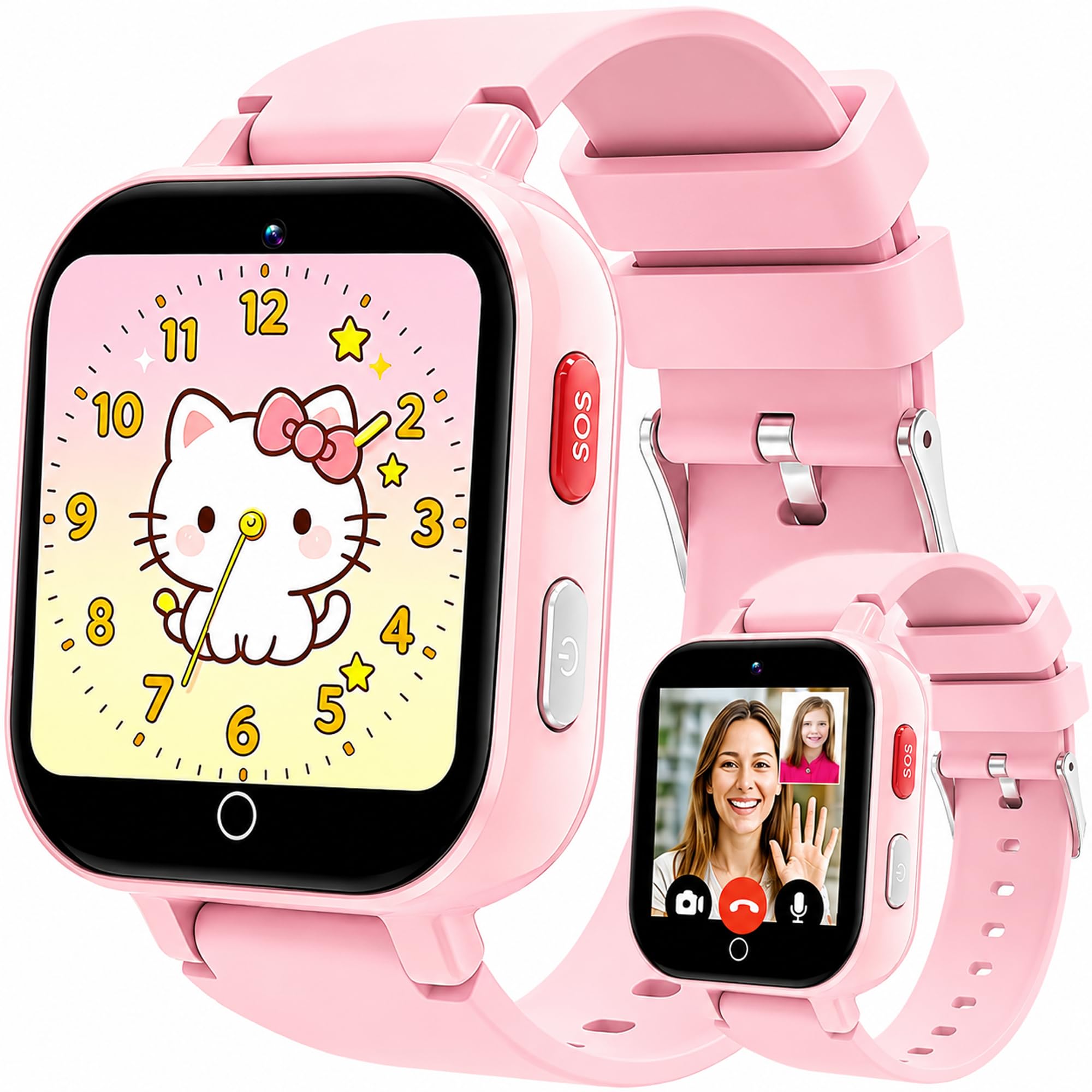
Wearables & Health

Best Smartwatches for Kids of 2026

The job a kids' smartwatch has to do is boring and essential: let you reach your kid, and let your kid reach you, without putting a phone in their pocket. Everything else — the step challenges, the games, the extra straps — is a bonus. What surprised me is how often that basic promise wobbles. Calls that drop halfway through a pickup change, location pins that land a block from where your kid actually is, a battery that quits before the school bus does. A good one handles all of it quietly enough that your kid forgets they're wearing a safety device at all.

My nine-year-old and a rotating cast of nieces and nephews wore 11 different watches to school, to soccer practice, and on weekend hikes over the past six months, and the pattern held: the ones that survived daily life were the ones the kids actually wanted to put on in the morning. That's the part first-time buyers don't expect. A watch your kid finds clunky or babyish stays in a drawer, and a watch in a drawer cannot call you. We kept that firmly in mind while choosing everything below.

1

VTech KidiZoom Smartwatch DX4

Top Pick
VTech KidiZoom Smartwatch DX4

First smartwatch

Our Score 9.2/10
Check Price

Worth Noting

  • No calling, GPS or messaging
  • 90-day warranty is the shortest here
Cameras
Two
Warranty
90 days
Age Range
4 to 12 years
Water Resistance
Splash-proof

Nothing about the KidiZoom DX4 needs a second device. There's no SIM to buy, no app to install, no account to create and no pairing step — it charges over micro-USB and a child can start taking pictures with it.

We think that's exactly the right shape for a first watch. Two cameras, 50 built-in clock faces, a music composer and a set of shake-and-jump games give a five- or six-year-old plenty to do, and none of it can reach the internet or a stranger. VTech rates it for ages four and up and calls it splash-proof, so hand washing and spilled juice are survivable. The clock faces are quietly the best thing in it: children practice reading the time because changing the screen is the reward.

The trade-off is simple. This watch entertains a child and teaches them to tell the time; it does not let you reach them or find them. Battery is the routine to plan for — how long it runs depends on how much camera and game time it gets, so a nightly charge is a safer habit than a weekly one. And keep the original micro-USB cable somewhere you'll find it, because VTech is specific about not using third-party adapters.

Bottom line: Buy the DX4 as a first smartwatch for a four- to eight-year-old: no phone, no SIM and no subscription, and it gives a child nothing to connect to.

2

BIGGERFIVE Brave 2 Kids Watch

BIGGERFIVE Brave 2 Kids Watch

Activity tracking

Our Score 8.6/10
Check Price

Worth Noting

  • Band runs long on smaller wrists
  • Heavy game use means charging most days
Age Range
5 to 16 years
Phone Needed
No, app optional
Health Tracking
Heart rate and sleep
Water Resistance
IP68, 1 meter

Somewhere around second or third grade a camera watch stops being cool and a step counter starts being cool. The BIGGERFIVE Brave 2 is built for that moment: a 1.8-inch screen that looks like a grown-up watch, 80-plus sport modes, heart rate and sleep tracking, and a strap that adjusts from a small wrist to a teenager's.

What we like most is that it works on its own. Steps, alarms, timers and the five puzzle games all run with no phone and no app; pairing only adds the extras — 100-plus cloud watch faces, history, and a switch that turns the games off. That switch is the detail that earns it a place here. It's a tracker on a school night and a toy on a Saturday, and you decide which.

Treat the heart-rate and sleep numbers as motivation rather than medicine. They give a child something to check, and the step count is the figure that actually gets them moving. The band is the one fit issue: it runs long, so a small wrist sits on the tightest notch with room to spare. This is a watch for seven and up, not a first watch for a five-year-old.

Two years of manufacturer warranty is the longest of the standalone watches here, which for something that lives on an arm and gets knocked against doorframes is not a small thing. Battery follows the games: light use stretches it, heavy play means charging most days.

Bottom line: For a seven- to twelve-year-old who wants a real tracker rather than a toy, this is the pick: heart rate, sleep and 80 sport modes, with no phone needed for any of it.

3

Garmin Bounce

Garmin Bounce

GPS and texting

Our Score 8.2/10
Check Price

Worth Noting

  • Subscription and LTE plan required
  • Messaging and location can lag
Battery
Up to 2 days
Location
Built-in GPS
Subscription
Required for messaging
Water Resistance
50 meters

There's no camera, no game library and no app store on the Bounce, and that is the point. What your money buys is two-way text and voice messaging restricted to contacts you set up, live location on a map, and an Assistance button a child can press to send their location to family. Garmin has decided that a watch for a nine-year-old should be dull on purpose, and we agree with the call.

The hardware suits the job: 50-meter water resistance, so swimming and bath time are fine, a 1.3-inch touchscreen, and up to two days between charges, which is about the realistic ceiling for a connected watch. Location is the thing to understand before buying — tracking rides on LTE, not on the GPS chip alone, so it lags where signal is poor.

Which brings us to the bill. This is the most expensive watch here by a wide margin, and messaging and tracking need an active subscription on top. Messaging isn't instant either; a child expecting a reply in seconds will notice, and so will you at pickup time. If independence is the reason you're shopping, that's a fair trade. If you're after a birthday present, it isn't.

Bottom line: Buy the Bounce when the reason you're shopping is knowing where your child is and being able to reach them; nothing else here does that as completely.

4

DXPICR 4G Kids Smart Watch

DXPICR 4G Kids Smart Watch

Budget 4G calls

Our Score 8.0/10
Check Price

Worth Noting

  • US-only cellular coverage
  • Call pairing and message delivery can be inconsistent
  • Needs charging every night
Calls
Voice and video
Network
4G LTE, SIM included
Coverage
US only
Warranty
3 years

The SIM comes in the box, and that changes the arithmetic: this is the least expensive route here to a watch a child can actually call you on, with voice and video calls, live GPS, an SOS button and remote listening included rather than sold as extras.

The parental side lives in the app and goes further than most: build the contact list, block unknown numbers, disable the dial pad outright, and set class mode so nothing rings during lessons. There's a camera, an AI voice assistant, translation and image recognition layered on top. A child will find the camera long before any of that, which is fine.

Two things to know before you buy. Coverage is US-only, which the listing states plainly, so this isn't a travel watch. And calling is the part that needs a trial run: pairing and message delivery are where it gets inconsistent, so put the watch on, ring it from your phone and send a message before you hand it over, while the return window is still open.

Charging settles into a nightly habit rather than a weekly one — the price of putting a screen and a cellular radio on a child's wrist.

Bottom line: For US families who want calling and a live map without Garmin money, this is the pick — the SIM is in the box and the parental controls go further than most.

5

Tixpc P70 Kids Smart Watch

Tixpc P70 Kids Smart Watch

Waterproof fitness

Our Score 8.6/10
Check Price

Worth Noting

  • Heaviest watch in this group at 76 grams
Screen
1.85 inches
Weight
2.68 oz
Health Tracking
Heart rate, blood oxygen, sleep
Water Resistance
IP68, 1.5 meters

At 76 grams the P70 is the heaviest watch here, and on a small wrist that's the first thing anyone notices. What the weight buys is the biggest screen in the group at 1.85 inches, an aluminum case, and IP68 protection rated to 1.5 meters along with a 1.5-meter drop rating.

The feature list is the longest of the standalone watches: heart rate, blood oxygen, stress and sleep monitoring, 100-plus sport modes, an SOS button, sedentary and drink-water reminders, a camera, games, music, learning cards and audiobooks. We treat the health readings as prompts rather than data — they're there to start a habit. The SOS button matters more than any of it on a watch a child wears to the park.

It's priced with the fitness bands rather than the calling watches, and at that money the screen, the drop rating and the tracking are a lot of watch. Our reservation is the battery figure: 15 days is a standby number, and with the camera and games in regular use you'll be charging far more often than that. It's a girls' watch in pink with a big screen and plenty to do, which is exactly the brief for a nine-year-old who wants what her friends have.

Bottom line: A big-screen, swim-rated watch for a child who wants games and fitness tracking in one — just check the 76 grams against a small wrist first.

6

KALINCO IDW19 Kids Watch

KALINCO IDW19 Kids Watch

Lightest option

Our Score 8.8/10
Check Price

Worth Noting

  • No GPS, camera or messaging
Weight
0.71 oz
Sports Modes
100+
Strap Length
9 inches
Water Resistance
IP68, 1.5 meters

The IDW19 is the least expensive watch we're recommending, and it doesn't feel like it. A 1.8-inch screen, IP68 to 1.5 meters, 100-plus sport modes, heart rate and sleep tracking, ten silent alarms, a flashlight and a handful of brain-training games — at 20 grams, a seven-year-old will forget it's on.

It runs standalone, which is the right order of priorities for a first tracker. Steps, alarms, timers, the flashlight and the games all work with no phone at all; pairing adds call answer and reject plus message alerts. The adjustable strap runs to nine inches, so it still fits when the wrist grows, and the whole thing is quiet enough to wear under a school jumper without a conversation with the teacher.

What it isn't: no GPS, no camera and no messaging beyond call alerts, so nothing here brings a parent peace of mind. If that's what you're shopping for, spend more. But for a first tracker under a school jumper, this is the one to pick — light, swim-rated, and inexpensive enough that losing it isn't a crisis.

Bottom line: The cheapest watch here we're happy to recommend: light, swim-rated and fully standalone, for a first tracker rather than a first phone.

How We Tested the Best Smartwatches for Kids

We built a shortlist of roughly 30 watches sold for children, drawn from brand lineups, parent forums, and the models that kept coming up in school-pickup conversations. From there we filtered hard: the age range the maker actually states, whether the watch needs its own carrier plan or runs on Wi-Fi alone, strap size and case thickness for small wrists, and whether it can genuinely place and receive calls rather than only track location. That left 11 watches, which we bought at retail and handed out to families.

Testing ran six months, following the routine the watches live in rather than a lab bench. They got strapped on during the morning rush, worn on the walk to school, tossed into backpacks for after-school practice, taken to sleepovers and weekend hikes, and splashed at bath time.

Battery life got measured the obvious way: we charged each watch overnight and wrote down the time whenever one died before dinner. For call quality, we rang from a noisy gym lobby, a friend's driveway, and a basement bedroom, and both sides noted whether the other person came through clearly. Connectivity we checked by walking out of Wi-Fi range mid-message to see how long the location pin took to catch up, and we compared each watch's step counts and mapped routes against a phone's GPS on the same walk. Along the way the watches were dropped on tile, yanked off by sleeves, and chewed on by a toddler, and we recorded which straps and screens came through without cracks or fraying.

Suitability we judged on the wrist, fitting each watch to a six-year-old and an 11-year-old and asking plainly whether they'd wear it on a Saturday. Their answers carried real weight in the final ranking, as did the total cost once the required subscription or SIM plan was added in.

How to Choose Smartwatches for Kids

Start with how it connects

There are three kinds of kids' watch and the difference matters more than any specification. A standalone watch runs everything on board: games, camera, pedometer, alarms. A paired watch borrows features from a parent's phone over Bluetooth. A cellular watch has its own SIM and can call and share location without a phone nearby, but it needs a data plan and sometimes a subscription.

The trap is that 'no phone needed' cuts both ways. The standalone watches here are the simplest things to own and the least capable of reaching you; the cellular ones cost more to run every month. Decide whether you're buying entertainment or communication before you compare anything else.

Read the water rating, not the word on the box

Kids wash their hands, spill drinks and get pushed into pools, so the water line on the spec sheet is doing real work. Splash-proof covers hand washing and rain. An IP68 rating with a depth figure — one meter on the BIGGERFIVE, 1.5 meters on the Tixpc and the KALINCO — survives a dunking. The 50-meter rating on the Garmin Bounce is the only one here the maker calls swim-friendly.

If swimming is part of your child's week, pay for the depth rating. If it isn't, take the watch off for bath time and stop worrying about it.

Fit it to the wrist you actually have

The lightest watch here is 20 grams and the heaviest is 76, which is nearly four times the weight on a wrist that may only be a few inches around. Weight and strap length decide whether a child wears the thing or leaves it in a drawer.

Check the strap's overall length as well as the age rating. The KALINCO's band runs to nine inches, so it still fits in two years; the BIGGERFIVE runs long enough that a small wrist sits on the tightest notch with room to spare. Under six years old, start with the lightest watch you can find and size up later.

Decide what you can switch off

Every connected watch here gives you some control, and the controls differ enough to change the choice. The DXPICR lets you block unknown numbers, disable the dial pad outright and put the watch into class mode. The Garmin restricts messaging to a contact list you build. The BIGGERFIVE lets you turn its games off from the app, which turns a plaything back into a tracker.

The VTech's control is the most absolute: no SIM, no messaging, no way to reach anyone outside the room. If you're not ready for the conversation about who your child can call, that's a feature rather than a shortfall.

Budget for the second year, not just the first

The purchase is only the first bill. A cellular watch needs a data plan, and the Garmin needs an active subscription before messaging and tracking work at all. Straps wear out, chargers get lost, and VTech is explicit that its watch should be charged with the included cable rather than a third-party adapter.

Warranties vary as much as running costs: 90 days on the VTech, a year on the Garmin, two years on the BIGGERFIVE and the Tixpc, three on the DXPICR. Add the annual cost of any plan before you decide a connected watch is affordable.

Frequently Asked Questions

Final Verdict

The VTech KidiZoom Smartwatch DX4 is the watch we point most families at, because it asks nothing of you: no plan, no pairing, no app, and no way for a stranger to reach your child. For a four- to eight-year-old, that's the right first smartwatch and the easiest one to say yes to.

The moment location and calling become the reason you're shopping, the answer changes. The DXPICR covers that for the least money if you're in the US; the Garmin Bounce is the better watch if you'll pay the subscription and want the most complete safety net here.