Office Electronics

Best Walking Pads of 2026

A walking pad promises something almost no other fitness gear can: movement without leaving your desk. The catch is that the category is crowded with decks that wobble at a brisk walk, belts that drift sideways, and remotes that only work if you point them at exactly the right spot. I've spent six months logging miles on 11 of them, and the difference between a pad you'll use daily and one that becomes an expensive floor mat comes down to a handful of things.

Two things matter most. Stability underfoot beats deck width every time: a narrow pad that stays put feels safer than a roomy one that creeps across the floor. The remote is the other, and it's usually the difference between a pad you keep using and one you stop noticing — good ones respond from across the room, bad ones need a second press and a hard stare. Value for money rarely tracks price the way you'd hope. The picks below run from slim under-desk models to sturdier decks with incline.

1

Vhorilix XM-A1

Top Pick
Vhorilix XM-A1

Under-desk walking

Our Score 9.0/10
Check Price

Worth Noting

  • 264 lb capacity is the lowest here
  • No incline at any setting
Top Speed
4 mph
Deck Height
4.3 in
Unit Weight
36.4 lb
Max User Weight
264 lb

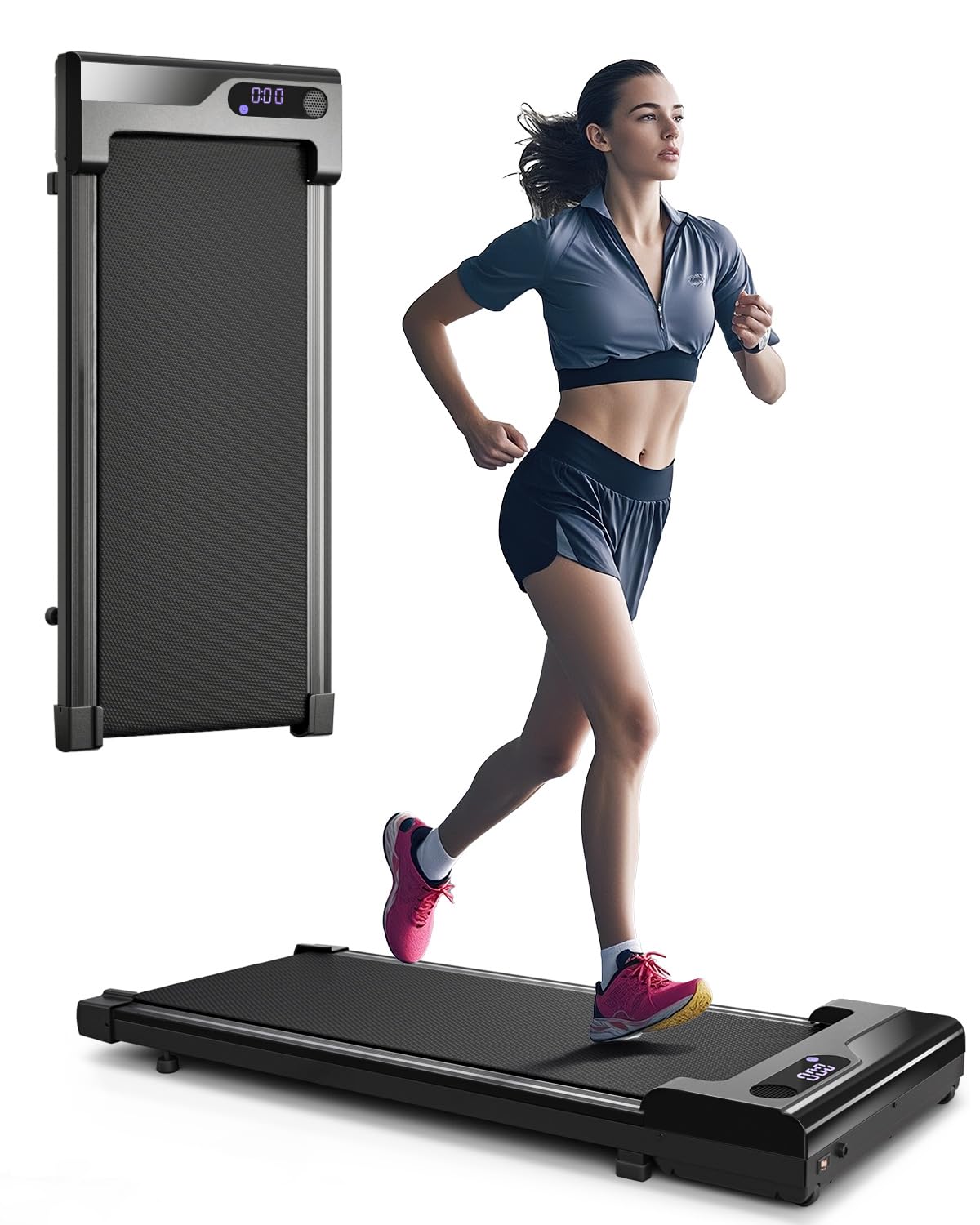
The least expensive pad in this group is the one we point most people toward. The Vhorilix walks between 0.6 and 4 mph, sits 4.3 inches off the floor, and rolls under a bed or a couch on its own wheels, which is most of what anyone actually wants from a walking pad.

What we noticed first is how little there is to do. It arrives assembled, so the first walk happens minutes after the box opens, and control is a remote plus a small LED readout rather than an app you have to pair. The remote takes two AAA batteries, so keep a spare pair in a drawer; it's the one small thing that can end a walk. Underfoot, the five-layer belt has a diamond texture and silicone absorbers, and it feels like a firm rubber track rather than a cushioned one — fine in thick socks, better in shoes.

We think the simplicity is the recommendation. Nothing here is pretending to be a treadmill: no programs, no app, no settings to learn. What you get instead is a low hum that stays under the sound of your own footsteps, and a footprint that disappears the moment you're done. That combination is what makes a pad get used in a small apartment instead of becoming a shelf.

The other thing to know is that it doesn't grow with you. Four miles per hour is a brisk walk and not a jog, and with nothing to hold, it's a pad you balance on rather than lean against. That's the trade for the size and the quiet, and for a lot of buyers it isn't a trade at all.

Bottom line: This is the pad we hand to most people: quiet, light, assembled out of the box, and the least expensive here.

2

Trailviber X01

Trailviber X01

Incline walking

Our Score 9.4/10
Check Price

Worth Noting

  • 4 mph ceiling caps it at walking
  • Premium price for the incline motor
Belt Size
41 x 16.5 in
Auto Incline
Up to 12%
Max User Weight
450 lb
Folded Thickness
6 in

The control we reached for most on the Trailviber is the one that tilts the deck. Nine steps of automatic incline, up to 12%, changed from the remote without breaking stride — a different experience from the manual pads here, where you stop, set the slope by hand, and start again.

That, plus a 450-pound capacity nothing else in this group comes close to, is why this is the pick for heavier walkers and for anyone who wants hill work without buying a full treadmill. It stays a walking pad: a 4 mph ceiling, 44 pounds, and a fold that leaves it six inches tall and easy to wheel under a sofa.

The extras are uneven. The FitYo app syncs workouts to Apple Health and Google Fit, and there's a Bluetooth speaker in the frame that we could live without; the 41-by-16.5-inch belt and the three-year warranty we couldn't. What you're really paying for is the incline motor and the steel under it, and both feel like the money went to the right places.

Bottom line: Our pick for heavier walkers and hill work — the auto incline changes mid-stride, and nothing else here carries 450 pounds.

3

Wellfit TM037PRO

Wellfit TM037PRO

Handrail support

Our Score 9.6/10
Check Price

Worth Noting

  • 57 lb
  • About 50 inches long even folded
Belt Size
40 x 16 in
Top Speed
7.6 mph
Auto Incline
Up to 12%
Max User Weight
375 lb

If you want something to hold on to, this is the one. The Wellfit is built like a small treadmill rather than a plank — dual handrails, a 12% automatic incline, and a 3.5HP motor that runs to 7.6 mph — and it's what we point to when someone says they don't feel steady on a flat deck at speed.

It folds, which is the surprise. The handrails come down with the deck and the whole thing collapses to about five and a half inches, so it can be wheeled out of the way between uses; the 40-by-16-inch belt is wide enough to jog on without watching your feet. Between the console, the remote, the app and the buttons on the rails, there are four ways to change speed, and that matters more than it sounds when you're mid-stride.

What you accept is the mass. At 57 pounds it stays where you put it, and even folded it runs about 50 inches long, so it wants a wall or a bed with genuine room underneath. In exchange you get a three-year warranty and a machine that handles a 1 mph work walk and a 6 mph jog without changing character.

Bottom line: We keep it for the handrail crowd: 12% auto incline, 7.6 mph, and something to hold the whole way.

4

Viamotion Incline Pad

Viamotion Incline Pad

Budget handle bar

Our Score 8.2/10
Check Price

Worth Noting

  • Handle bar sits low for taller walkers
  • 3.8 mph ceiling rules out jogging
Incline
4% manual
Top Speed
3.8 mph
Handle Bar
Folding
Max User Weight
265 lb

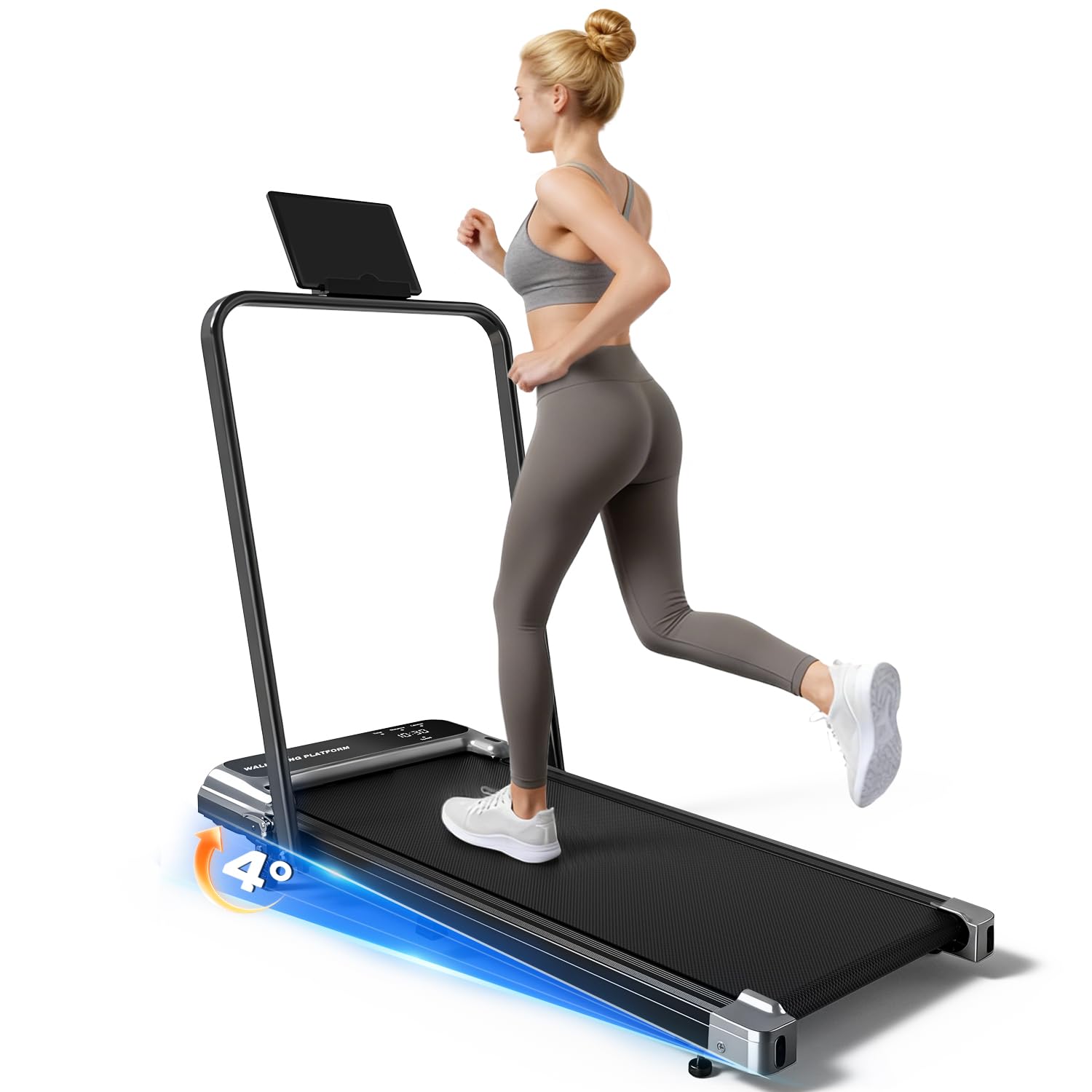
Stepping on with a handle in front of you changes the first minute. The Viamotion's bar rises at the front of the deck, and the 4% incline gives you something to lean into — a pairing nothing else in this group offers at the budget end.

It isn't the best-loved pad here, and the reservations are specific rather than vague. The belt can drift off-centre and wants re-centering following the manual, a two-minute job you'll do a few times. The bar also sits low — noticeable if you're around 5'7 — so treat it as a steadying point rather than a handrail. For everyone else it's the cheapest way here to get a handle and an incline in one machine.

The rest is sensible. It folds upright against a wall or slides under a sofa, the brushless motor is rated at 45 dB, and 3.8 mph covers both a working walk and a brisk one. The motor warranty runs a year, so register the pad when it arrives and keep the email.

Bottom line: A handle bar and a small incline for the least money here, and we think it's worth it if the bar height suits you.

5

Wilpkracy B01

Wilpkracy B01

Cheap incline walking

Our Score 9.6/10
Check Price

Worth Noting

  • Manual incline needs setting before you walk
  • 3.7 mph top speed
Top Speed
3.7 mph
Deck Height
10.5 cm or less
Unit Weight
37.5 lb
Manual Incline
5%

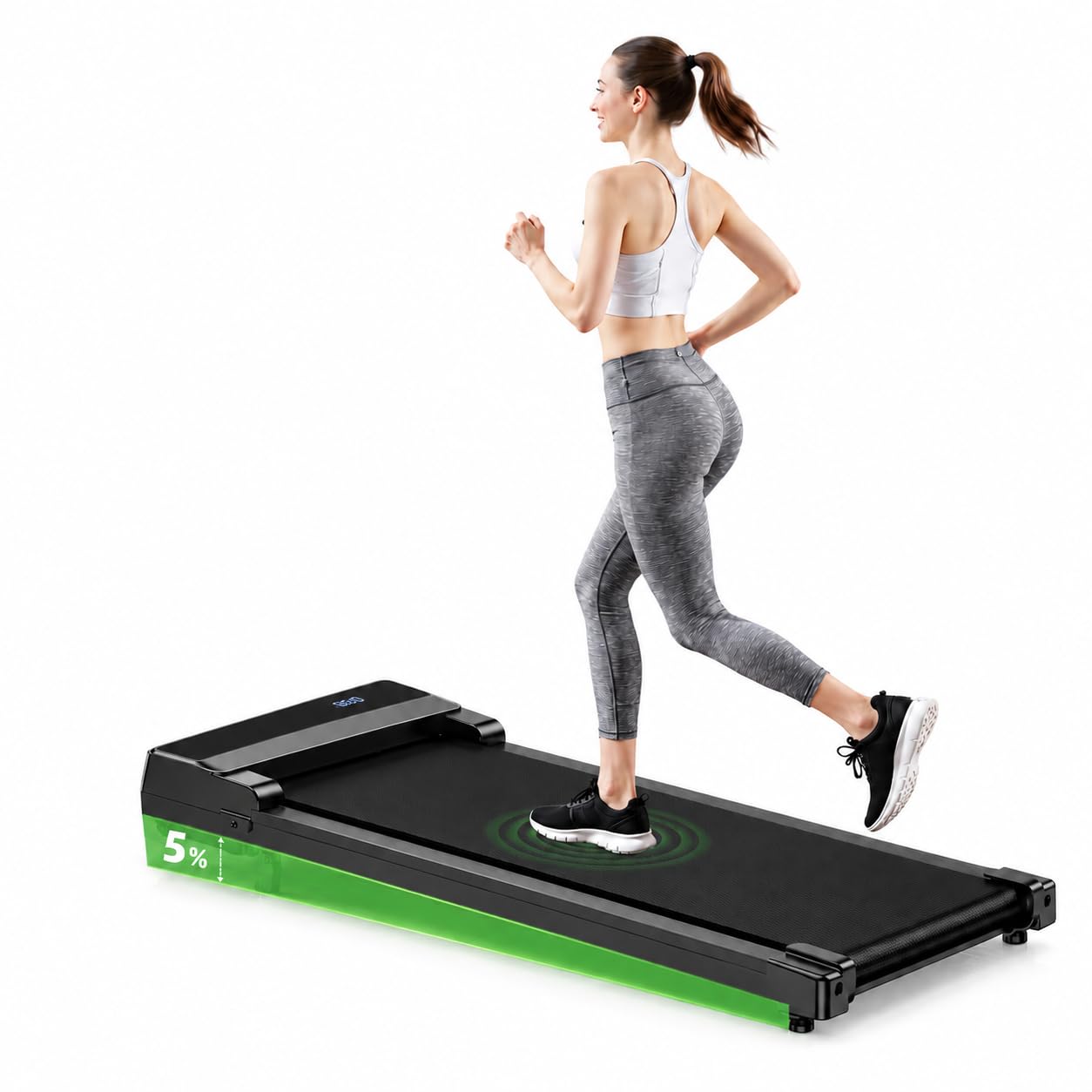
Just over four inches of deck is the number that matters here. At 10.5 cm tall the Wilpkracy slides under a sofa and doesn't feel like a step up when you get on, and it's the least expensive pad in this group that gives you any incline at all — a 5% slope you set before you start walking.

The rest of the package is basic in a good way. It arrives assembled, walks from 1 to 6 km/h, and the five-layer diamond belt is the same style of cushioned, non-slip surface the pricier pads use. At 17 kg it lifts and leans against a wall without a second thought, which is the whole point of owning one of these instead of a treadmill.

The power cord runs short, so choose your spot with the outlet in mind rather than the other way round. Otherwise there's little to plan around: it walks smoothly, sits flat on the floor, and never asks you to open an app.

Bottom line: We recommend it to anyone who wants a slope without the price: 5% manual incline, a four-inch deck, and it tucks under a sofa.

6

Kalwol X394A

Kalwol X394A

Jogging indoors

Our Score 9.4/10
Check Price

Worth Noting

  • Manual incline
Top Speed
6.2 mph
Unit Weight
42.9 lb
Manual Incline
10%
Max User Weight
350 lb

At 6.2 mph the Kalwol is faster than every pad here except the Wellfit, and it pairs that with a 10% manual incline and a 350-pound capacity — a combination the budget pads can't match at any setting.

The incline is the old-fashioned kind: ten percent, set by hand before you start walking, adjusted in about a second while you're standing still. The 2.75HP brushless motor is rated under 40 dB, the LED panel carries calories, distance, speed and time, and there are 12 preset programs for people who like a plan. The frame is a double-deck steel build, which is where the weight goes.

We think it's the right middle for someone who wants to jog indoors without a full treadmill's footprint or price. It's 42.9 pounds and about 46 inches long, so it wants a corner of its own rather than a daily lift, and the 350-pound limit means it will take a heavier walker than most pads here.

Bottom line: The middle of this group for good reason, and our pick if you want to jog: 6.2 mph, a 10% incline and 350 pounds.

7

Ulfario LF-X2DF

Ulfario LF-X2DF

Shared rooms

Our Score 9.6/10
Check Price

Worth Noting

  • 6 km/h ceiling
  • 120 kg capacity limits heavier walkers
Belt Size
90 x 38 cm
Handle Bar
Removable
Folded Size
104 x 47 x 10.5 cm
Max User Weight
264.6 lb

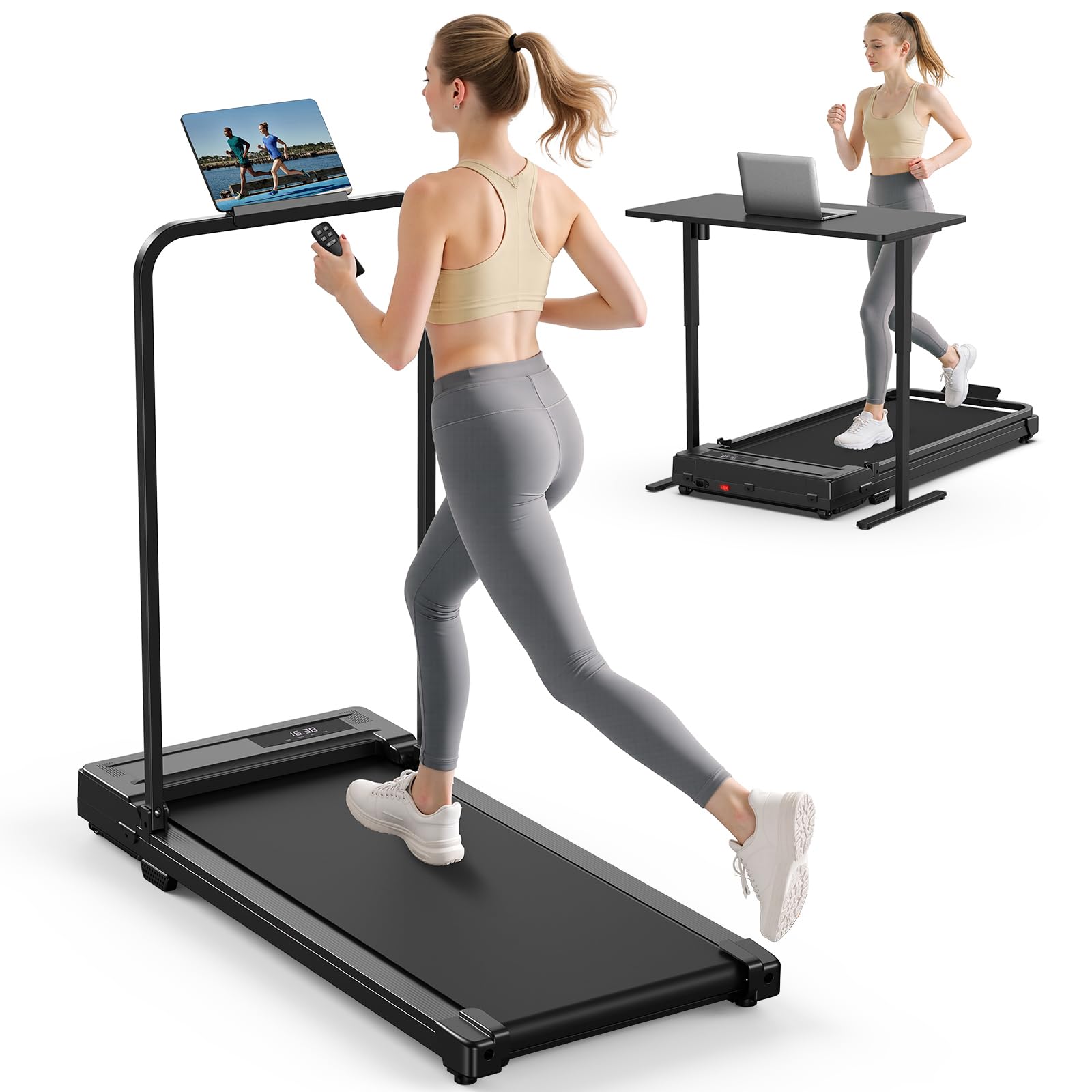
The handle bar on the Ulfario comes off. Loosen the securing bolts and the upright lifts away, turning a supported pad into a flat one you can slide under a bed — and back again when someone in the house wants a hand to hold.

That flexibility is the reason to pick it. The belt is 90 by 38 cm, roomy for the footprint, and the 440W motor walks from 1 to 6 km/h with speed, time, distance and calories on the LED. Speed comes from a remote, and with the bar off the whole thing is 10.5 cm tall.

At 38.5 pounds it's light enough to tip onto its wheels one-handed, and the low deck means it slips under furniture that stops taller pads. Nothing about it feels clever; it just gets out of the way, which is the job.

We like this one for a shared house, where one person wants support and another wants the floor back, and for anyone who isn't sure yet which they'd prefer.

Bottom line: We like that the bar unbolts when you want the floor back, and it's the least expensive bar-equipped pad here.

8

Cybergoing T10

Cybergoing T10

Tight spaces

Our Score 9.0/10
Check Price

Worth Noting

  • 36-inch belt is short for long strides
  • 7% slope is set before you walk
Incline
Fixed 7%
Belt Size
36 x 15 in
Top Speed
4 mph
Max User Weight
300 lb

Thirty-six inches of belt is short. The Cybergoing's deck is several inches shorter than the 40- and 41-inch belts on the bigger incline pads here, so if your stride runs long you'll meet the front roller sooner than you'd like. It's a pad for a compact corner and a moderate pace.

The incline is 7% and set before you walk, not dialled mid-stride. A Bosch motor carries up to 300 pounds from 0.6 to 4 mph, and app control sits alongside the remote — worth knowing, because pairing the remote follows a sequence: switch the pad on at the side, then pair within about five seconds.

At 36.4 pounds it's among the lighter pads here, and it slides away against a wall or under a bed without a fight. The deck is slim enough to leave out between meetings, which is the only storage plan that survives a busy week.

We think it earns a look when floor space is the binding constraint and you like the idea of a permanent slope. The remote is the weak point — pairing can take a few tries — so treat the app as the primary control and the remote as the spare.

Bottom line: Our pick for tight corners and a permanent slope — use the app, and keep the remote as a backup.

How We Picked and Tested 11 Walking Pads

Not every pad on the market was worth bringing home, so I started by reading through hundreds of customer reviews and pulling out the complaints that repeated: belts that wandered toward one edge, motors that whined through video calls, remotes that quit after a month. From there we filtered by deck length and width, motor rating, weight capacity, and whether the whole thing cleared the underside of a standing desk, then ordered 11 across the price range — slim pads with no incline as well as heavier decks that raise to a slope.

Each pad spent six months in a real home office rather than on a lab bench. We walked on them through morning email and afternoon calls, usually 20 to 30 minutes at a stretch, on bare hardwood and on a low-pile rug, and lifted each one in and out of storage to see how it handled being moved around. We also timed setup out of the box and weighed the footprint against the floor space it actually ate up.

The observations told us more than the spec sheets did. We noted whether the deck shifted under a fast walk or the belt drifted to one side; whether the remote answered from across the room or needed a press-and-hold; and how much the incline changed the feel of walking versus merely tilting the deck. For sturdiness, we checked for frame flex at the edges and whether the belt stayed flush at higher speeds. Noise got judged the blunt way, by taking a call on the thing. Value we settled at the end, once a month of daily use had shown us which features we actually touched.

How to Choose Walking Pads

Measure the gap before the deck

Every pad here is roughly four to six inches tall when folded, and that height, not the length, decides whether it slides under a bed, a sofa, or nothing at all. Measure the clearance first; a four-inch pad fits gaps a six-inch one won't. Beds with drawers or low center rails are the usual disappointment.

Then remember the deck lifts you as you walk. Your standing desk has to rise by those same few inches, which is why a low deck is worth paying attention to even if you never move the pad. Compact in a listing means it stows in a tight spot, not that it fits under a desk with your feet in it.

Manual incline or automatic

Manual incline means you stop, set the slope by hand, and start again — five, seven, eight, or ten percent depending on the pad. Automatic incline, the 12% kind on the two bigger machines here, is changed from the remote while you keep walking.

If you'll genuinely vary the slope mid-walk, an automatic pad earns its premium. If you'll set a slope once and forget it, a manual pad gives you most of the benefit for far less, and the difference in effort is about four seconds.

Speed ceiling and belt length

Walking is three to four miles per hour; jogging starts around five. A pad that tops out at 3.7 or 4 mph is a walking pad in the strict sense, and 6.2 to 7.6 mph buys you a jog along with a heavier frame to go with it.

Belt length matters as much as speed. Thirty-six inches suits shorter strides, 40 to 41 inches is more forgiving, and anyone tall should err long — catching the front roller with a toe is the most common way these feel wrong. Width, usually 15 to 16.5 inches, is rarely the problem.

Quiet is the whole point

Motor ratings in this group run from under 40 dB to about 45 dB, and they are worth comparing only against each other. The figure on a listing is a best case, recorded without a person on the belt. What you actually hear is motor hum plus your own footsteps plus the floor.

A thin mat under the pad on a hard floor does more for the room below than any motor number, and a level surface matters more than a soft one. If you take calls while you walk, judge the pad at two miles per hour, not at its top speed.

Handles, remotes and weight limits

A handle bar helps most when it's the right height, so check the numbers rather than the photo — one bar here is short enough to notice if you're around 5'7. Height is fixed on these pads; there's no adjustment.

Control is the other thing to inspect. Several pads run on a remote alone, and a remote that won't pair takes the whole machine with it, so look for on-unit buttons or an app as a second route. Capacities here run from 264 to 450 pounds; if you're near the top of a pad's limit, step up a tier rather than hoping.

Frequently Asked Questions

Final Verdict

The Vhorilix is the walking pad we point most people toward: quiet, light, assembled out of the box, and the least expensive here. It is a walking machine and nothing more, which is exactly why it stows easily and why nobody on your call will hear it.
If you want incline you can change mid-walk, or you weigh more than 264 pounds, the Trailviber is the better buy. If you want handrails and jogging speed, it's the Wellfit.