Home Appliances & Robots

Best Cordless Pool Vacuums of 2026

A pool is supposed to make summer easier, but the cleaning part can feel like a second job. The appeal of a cordless pool vacuum is simple: no hose to drag across the deck, no cord to untangle, just drop it in and steer. What that freedom costs you is usually battery life—and a weak battery can turn a ten-minute tidy-up into a two-hour project.

Over the past seven months, my team and I have lived with eight cordless pool vacuums, from compact models for quick skims to larger units built for weekly cleanups. We used them the way you would: after rain, before guests arrived, and on ordinary Tuesday afternoons when the water looked fine until you saw the bottom. The pattern was clear—the best ones didn't just have strong suction; they also charged predictably, stayed comfortable to steer, and felt worth the money after repeated use. The picks below are the ones I'd hand to a neighbor without a caveat.

1

WYBOT C1

Top Pick
WYBOT C1

In-ground pools

Our Score 8.0/10
Check Price

Worth Noting

  • Runtime can need two passes in very large pools
Battery
99.34 Wh lithium-ion
Runtime
Up to 160 min
Coverage
Floor and walls
App Control
Yes, with OTA updates

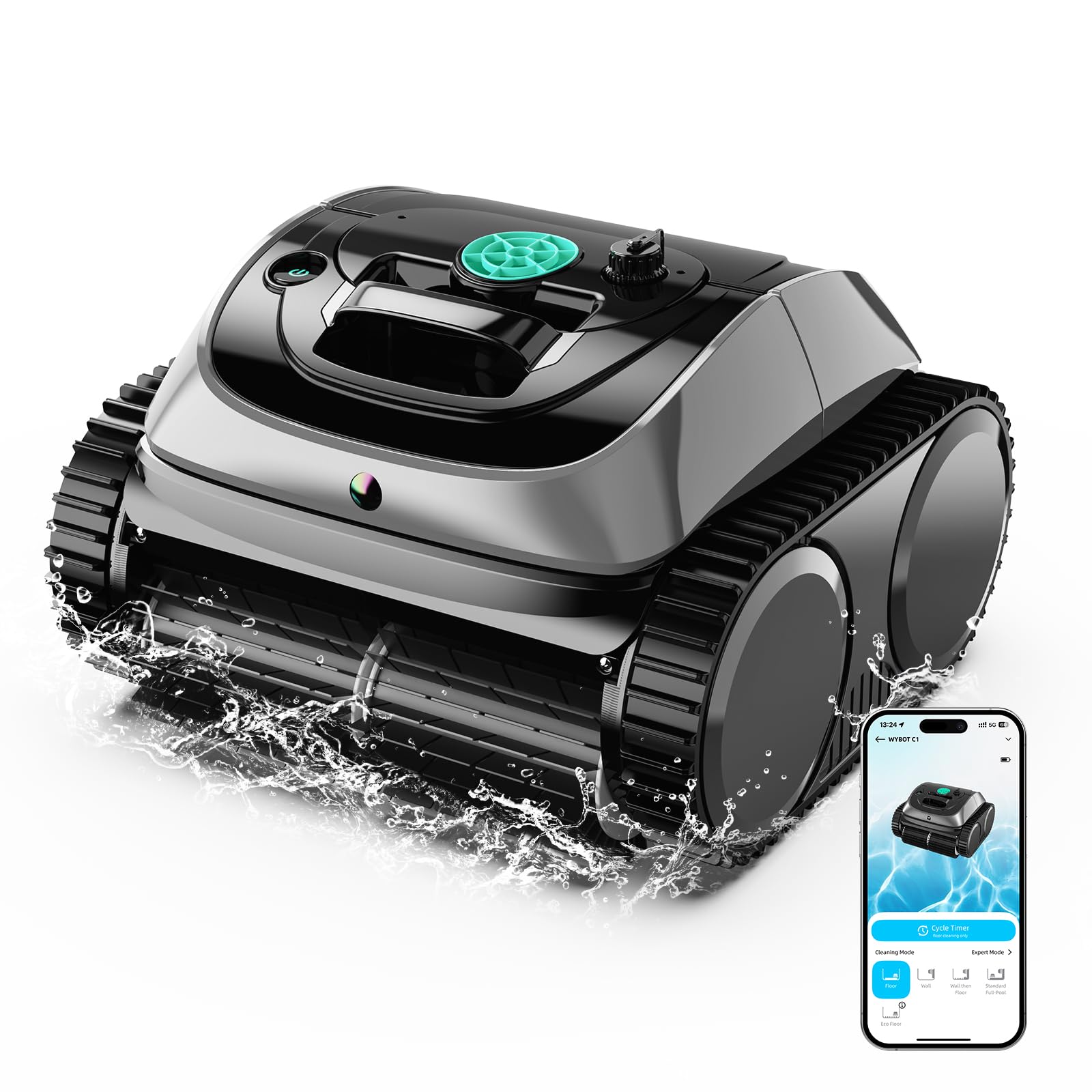
The 160-minute runtime and four-in-one cleaning plan are why the WYBOT C1 is the first one we reach for in an in-ground pool. It is a cordless robot that handles the floor and walls, uses gyroscope navigation to follow ordered paths instead of wandering, and connects to the WYBOT app for scheduling and mode changes. The 99.34 Wh lithium battery and 160-minute charge time are the numbers to plan around, and the two-year manufacturer warranty is a useful backstop.

We recommend it as the default for in-ground pools where wall cleaning matters. The ordered navigation is a real advantage in a rectangular pool: it makes the coverage pattern easier to trust than a random bounce, and the app lets you schedule a cycle without standing over the machine. The runtime is generous, though a very large pool may still need two passes, and the battery and long-term durability are the areas we watch most closely on a machine this complex.

Where it earns its keep is convenience. A cordless robot that climbs the wall and follows a planned route turns a weekly chore into a background task, and the filter basket is simple to rinse. We treat the battery as the wear item: charge it fully, keep the charging port dry, and do not leave the unit in the pool between cleanings. The filter basket rinses clean, and the two-year warranty gives the complexity a useful backstop.

Bottom line: We recommend the C1 as the default cordless robot for in-ground pools: it cleans floors and walls, follows a planned route, and has enough runtime for routine maintenance.
2

Beatbot Sora 10

Beatbot Sora 10

Large pools

Our Score 9.2/10
Check Price

Worth Noting

  • Heavy to lift at 10.5 kg
  • Wall climbs can be slow
Weight
23.1 lb
Runtime
Up to 300 min
Suction
6,800 GPH
Debris Capacity
5 liters

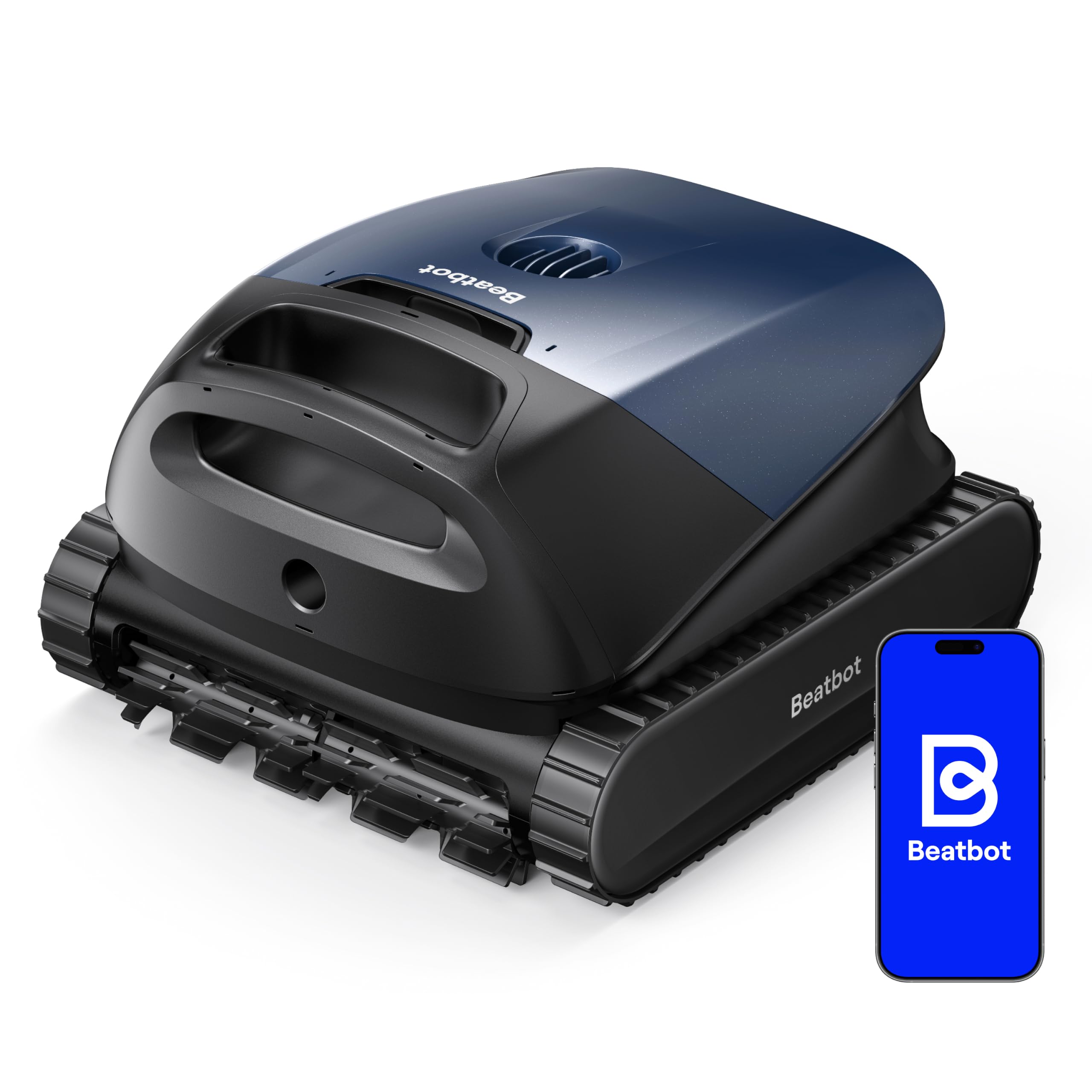
With up to 300 minutes of runtime and 6,800 GPH of suction, the Beatbot Sora 10 is the long-haul robot in this group, and it is the one we point to when the pool is large enough that a one-hour handheld session becomes a project. It cleans floors, walls, and the waterline, reaches shallow areas as low as 12 inches, and carries a 5-liter debris basket. The waterline parking is a small convenience that makes a real difference at the end of a cycle: the cleaner stays at the edge instead of leaving you to fish it off the bottom.

The practical case is coverage. A 300-minute run covers a lot of square footage in one session, and the big basket means fewer stops to empty it. We like the waterline cleaning for the scum line, and the 6,800 GPH figure is strong for a cordless unit this size. The shallow-area claim down to 12 inches matters on tanning ledges and sun shelves, where a full-size robot can miss.

If your pool is on the bigger side and you want one robot to handle floor, wall, and waterline work, the Sora 10 is the better long-runner than the C1. The C1 remains the easier all-around default; the Sora 10 is the pick when runtime and suction headroom matter more than a lighter lift.

Bottom line: Our pick for larger pools is the Sora 10, whose 300-minute runtime, 6,800 GPH suction, and 5-liter basket make it the long-haul robot in this group.

3

Enhulk PC10

Enhulk PC10

Above-ground pools

Our Score 8.2/10
Check Price

Worth Noting

  • Runtime is limited to 60 minutes
  • Long-term durability is uneven
Weight
6.4 lb
Runtime
Up to 60 min
Suction
18.5 gal/min
Pole Reach
3 to 7.3 ft

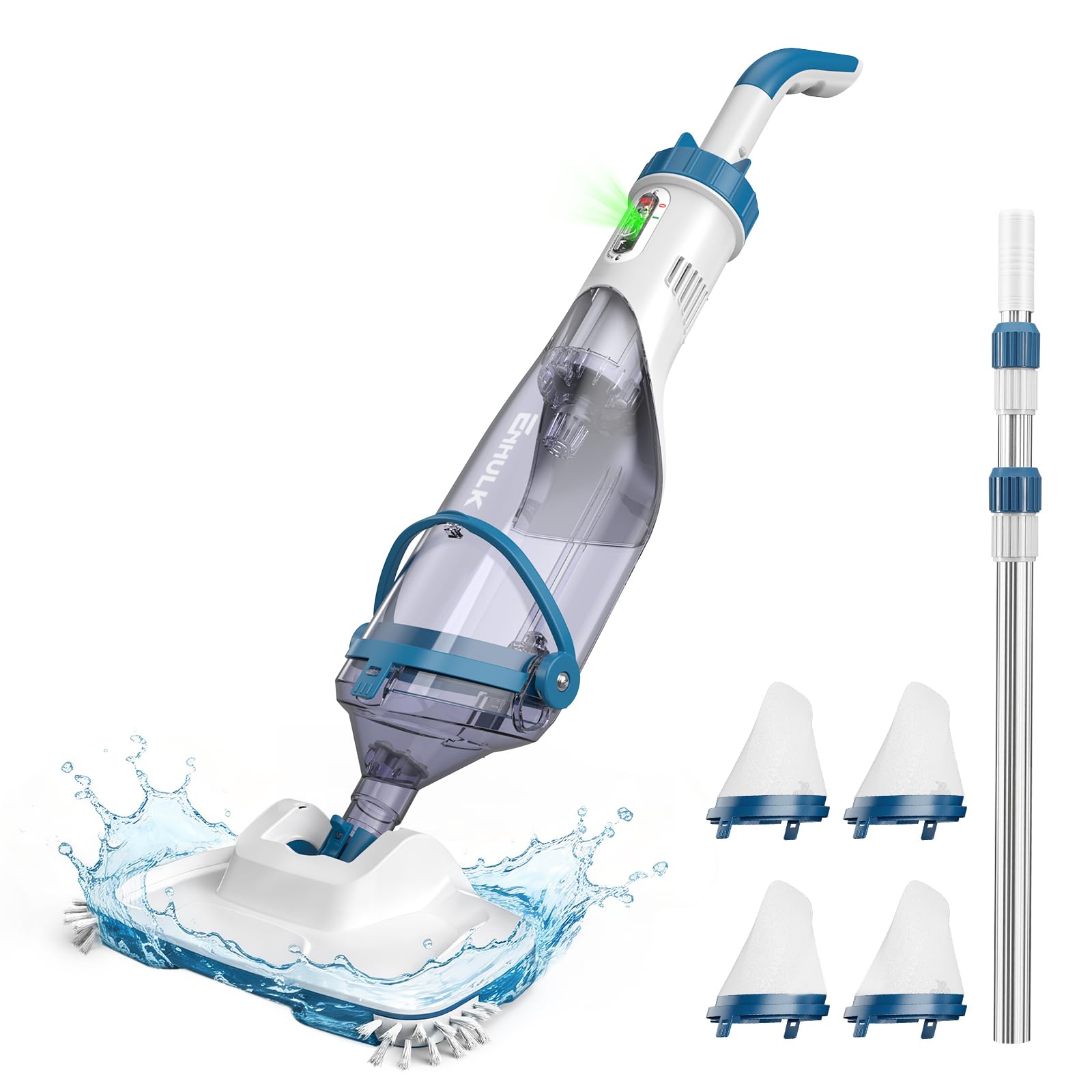
The 7.3-foot telescopic pole is the clue to what the Enhulk PC10 is for: above-ground pools, quick touch-ups, and the corners a robot cannot reach. It is a handheld, battery-powered vacuum with a 20-volt motor, 18.5 gallons-per-minute suction, and up to 60 minutes of runtime. The kit includes four reusable filter bags in two mesh grades, so you can switch between coarse debris and finer dirt without buying a separate filter.

For above-ground pools and spot cleaning, this is the budget handheld we recommend first. The pole extends from 3 to 7.3 feet, which lets you work from the deck instead of leaning over the rail, and the 6.4-pound body is light enough to move around the pool edge. As a cleaner, it is effective on sand, leaves, and the sort of grit that settles after a storm; the 180- and 500-mesh bags give it more flexibility than a single-bag design.

The one care instruction we keep repeating: never run it out of the water. The motor is designed to be submerged, and dry running is the quickest way to shorten its life. We also rinse the filter bags after every use; the two mesh grades are only useful if they are clean. The two mesh grades are the kind of small flexibility that makes a budget tool feel less compromised.

Bottom line: For above-ground pools and quick touch-ups, we reach for the PC10: a light handheld with a 7.3-foot pole, strong suction, and a sensible budget price tier.

4

Pool Blaster Max 2026

Pool Blaster Max 2026

Quick cleanups

Our Score 8.0/10
Check Price

Worth Noting

  • Four-hour recharge is slow
Weight
5.3 lb
Runtime
Up to 60 min
Head Width
10.5 in
Debris Capacity
865 ml

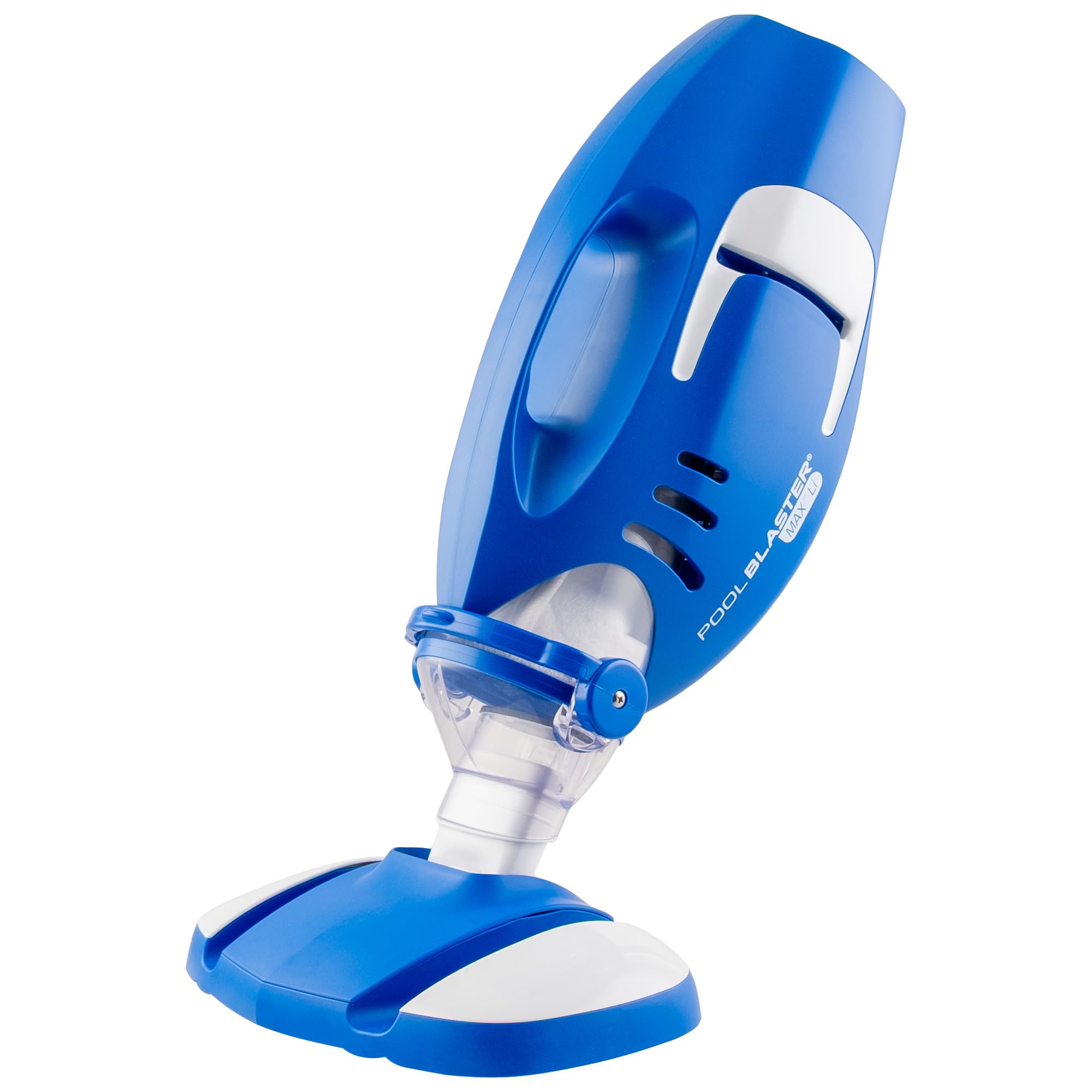
The 10.5-inch head on the Pool Blaster Max is bigger than a typical handheld, but the 865 ml basket is the number that decides whether it fits your pool. It is a cordless, hoseless vacuum with a 60-minute runtime, a four-hour recharge, and omni-directional rollers that let the head move forward, backward, and sideways without constant repositioning. At 5.3 pounds, it is easy to carry to the pool and easy to lift out.

The Max is at its best on light, scattered debris: pollen, sand, grit, and a few leaves on the floor or in corners. The high-flow intake and rollers make it more maneuverable than a fixed-head handheld, and the one-touch power is simple. The small basket is the trade-off. It fills quickly in a leaf drop, and it needs emptying more often than the larger canisters here. That is not a flaw for a quick pass; it is a reason to choose a different tool for a full cleanup.

We recommend the Max as a second cleaner for a pool that already has a robot or a full vacuum setup, not as the only cleaner for a messy in-ground pool. It is the one we reach for when a few leaves land after a storm and we do not want to drag out the hose. The omni-directional rollers are the detail that makes it useful around steps and corners, where a fixed head just scrapes.

Bottom line: We like the Pool Blaster Max as a light, maneuverable second cleaner for spot work, not as the only vacuum for a leaf-heavy in-ground pool.

5

Enhulk PC15

Enhulk PC15

Wide debris pickup

Our Score 8.2/10
Check Price

Worth Noting

  • Pole may be short for very wide pools
Runtime
Up to 60 min
Suction
18.5 gal/min
Head Width
13.4 in
Pole Reach
Up to 87.5 in

The 13.4-inch head is the reason to choose the Enhulk PC15 over the smaller PC10. It covers more floor per pass, and the side brushes help it pull debris away from edges instead of leaving a strip behind. We think that width is the most useful upgrade in the handheld group: the battery and suction are familiar, but the head changes how long a pass takes on a broad above-ground floor.

The PC15 uses an 18.5 gallons-per-minute motor and up to 60 minutes of runtime, with four filter bags for coarse and fine debris. The telescopic pole extends to 87.5 inches, so you can work from the deck on many above-ground pools. We like the wide head for sand and fine silt because it lets you overlap passes less; the trade-off is that a wide head is harder to push into tight corners, where a smaller vacuum or a brush head does better.

For a medium above-ground pool with a flat floor and a lot of open space, the PC15 is the faster handheld. If your pool has steps, tight corners, or a lot of leaf litter, the smaller PC10 is easier to place. The wide head is the upgrade you feel on open floor; tight corners are where it asks for a second tool.

Bottom line: The PC15 is our pick when floor coverage speed matters: its 13.4-inch head and side brushes cut down passes on medium above-ground pools.

6

Beatbot Sora 70

Beatbot Sora 70

Full pool coverage

Our Score 8.6/10
Check Price

Worth Noting

  • Premium price tier
Weight
22.9 lb
Runtime
Up to 5 hr floor
Suction
6,800 GPH
Debris Capacity
6 liters

The JetPulse system is what makes the Beatbot Sora 70 more than a floor robot. Dual water jets create four streams that guide surface leaves toward the intake, so the machine can work the surface, waterline, floor, walls, and shallow areas as low as 8 inches. It is a full-coverage cleaner in a way most cordless robots here are not, and the 6-liter basket means it can hold a real debris load between empties.

The rest of the hardware is premium too: 6,800 GPH suction, up to 5 hours of floor runtime from a 10,000 mAh battery, app control, and a surface-parking routine that drains internal water and waits at the edge for retrieval. We like the parking and tap-to-retrieve because a 22.9-pound robot is not something you want to haul up from the deep end by hand. The three-year protection is also the longest warranty in this set.

We recommend the Sora 70 for a pool owner who wants the robot to handle everything, including the surface skim. The C1 and Sora 10 are the floor-and-wall specialists; the Sora 70 is the one that also takes the leaves off the top. That surface work is the difference, and it is a genuine convenience in a pool surrounded by trees.

The limits are physical. It is heavy, and the app and parking routine add complexity that a simple handheld does not have. Neither changes what the machine is for. If you want full coverage and do not mind the weight, this is the most complete robot here.

Bottom line: We recommend the Sora 70 for pool owners who want full coverage, including surface skimming, and will accept the premium price and heavy lift.

7

Teguy V40

Teguy V40

Fast charging

Our Score 8.6/10
Check Price

Worth Noting

  • One-year warranty only
  • Assembly can come apart in the pool
Suction
18.5 gal/min
Filtration
4 x 500-mesh bags
Pole Reach
Up to 7 ft
Charge Time
1.5 hr

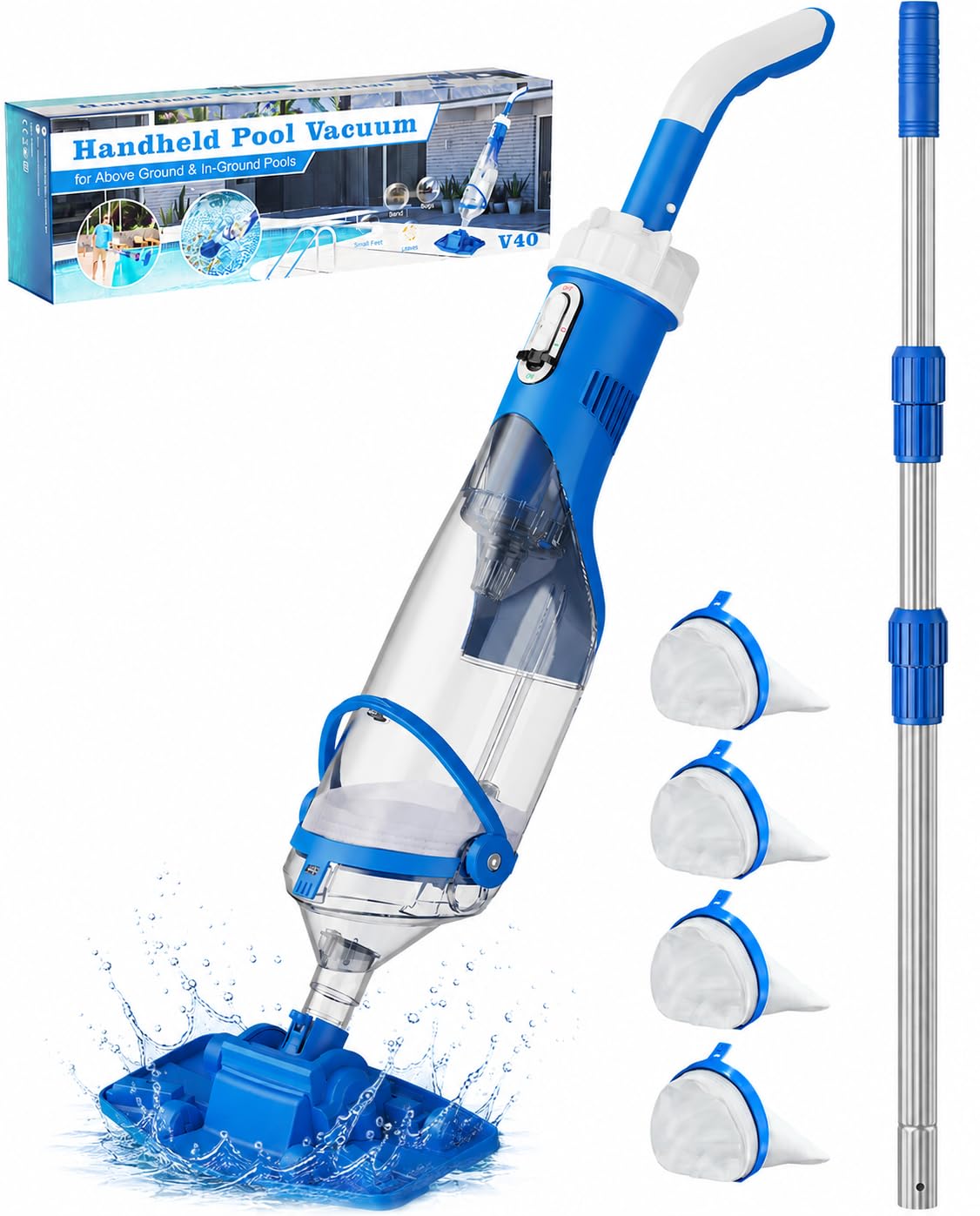
A 1.5-hour charge is the reason the Teguy V40 stands out in a group of handhelds that often ask for a full afternoon. The five 2,000 mAh cells top up quickly, and the 40-watt motor delivers up to 18.5 gallons per minute of suction. It comes with a 7-foot telescopic pole, four 500-mesh filter bags, and an IPX8 waterproof rating.

The fast charge changes the rhythm of cleaning. Instead of planning the whole pool around one battery window, you can run a pass, rinse the bag, and top up before the next one. The pole extends to 7 feet, which is enough for most above-ground pools and hot tubs, and the four bags mean you are not stuck cleaning one wet bag between passes.

We also appreciate the sealed body around spas and steps, where a vacuum is often half-submerged and angled. The 6-pound weight is light enough to move around the edge, and the filter bags rinse clean without a lot of fuss. The 500-mesh bags are fine enough for silt but still easy to hose out, which is the balance we want in a handheld.

For a small pool or spa where you clean in short bursts, the V40 is a sensible alternative to the PC10. The faster charge is the reason to pick it; the shorter warranty and the assembly check are the reasons to think twice. We reach for it when the pool needs a quick pass before guests arrive.

Bottom line: The V40 is our fast-charging handheld pick for small pools and spas, with a 1.5-hour charge that makes short cleaning bursts easy.

8

WYBOT B1

WYBOT B1

Edge cleaning

Our Score 8.0/10
Check Price

Worth Noting

  • Small 1.5-liter debris basket
  • One-year warranty only
Weight
19 lb
Runtime
Up to 125 min
Coverage
Floor, wall, waterline
Debris Capacity
1.5 liters

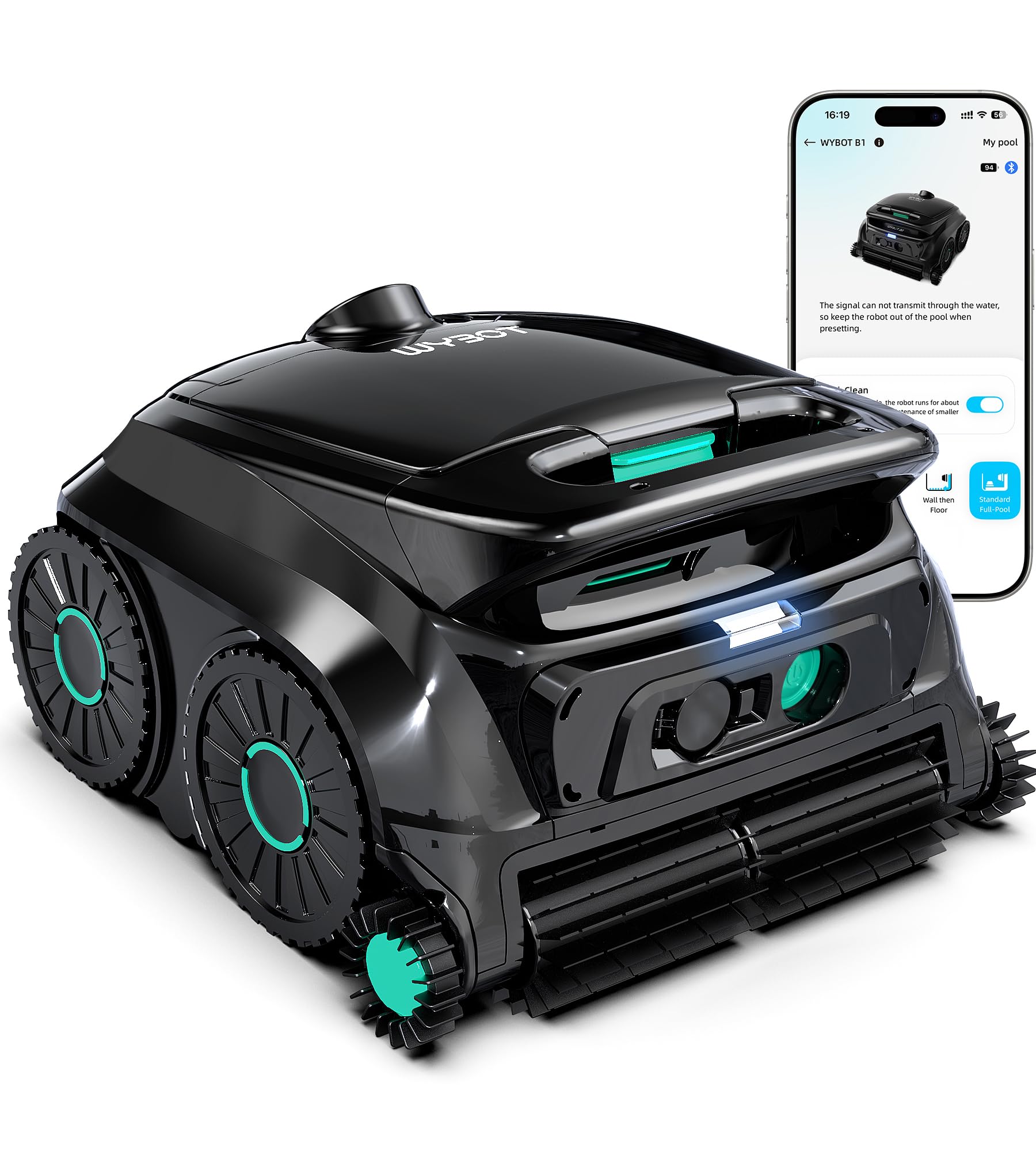
The six-roller brush setup is the first thing that stands out on the WYBOT B1. Dual main rollers, side brushes, and bottom brushes are aimed at the edge where a wall meets the floor, and the 125-minute runtime is enough for a smaller above-ground pool without a mid-cycle charge. It is a cordless robot with app control, floor/wall/waterline/combo modes, and a 1.5-liter debris basket.

The edge cleaning is the useful part. A single roller tends to leave a line of dirt along the wall base; the extra side brushes are designed to sweep that material into the suction path. The 125-minute run and 3-hour charge are a practical combination for a pool that does not need a five-hour marathon. At 19 pounds, it is manageable to lift out, though not as easy as a handheld.

The app control and OTA updates are there if you want scheduling, and the combo mode is the one to start with. The 3-hour charge is quicker than the C1's, which makes it easier to run a second cycle. The six-roller arrangement is also a better fit for a rectangular above-ground pool than a random-bounce robot, because it spends more time working the perimeter.

For an above-ground pool with square corners and a lot of edge debris, the B1 is a good step down from the C1 in size and price. It is not the robot for a large in-ground pool, but it is the one we like for tighter layouts where edge cleaning matters more than raw coverage.

Bottom line: We like the B1 for smaller above-ground pools with edge debris, where its six-roller brush setup and 125-minute runtime earn their keep.

9

PoolMr Catfish

PoolMr Catfish

Hot tubs

Our Score 8.8/10
Check Price

Worth Noting

Runtime
Up to 90 min
Suction
13.2 gal/min
Filtration
120 microns
Brush Heads
Two included

A 90-minute runtime is unusually long for a vacuum this small, and that is the first thing we noticed about the PoolMr Catfish. It is a handheld spa and hot-tub vacuum with a 2.5 Ah lithium battery, a 20-watt motor, and a maximum flow of 13.2 gallons per minute. The 120-micron filter is aimed at sand and fine grit, not big leaves.

The Catfish is built for the places a robot misses: hot-tub seats, steps, the corners of a spa, and the tight edge of a small pool. The 90-minute run means you can work slowly without watching the battery, and the low-noise motor is a nice detail in a backyard setting.

Two brush heads come in the box: a triangular head for corners and a regular floor brush for flat surfaces. That is a practical pair. The triangular head gets into the right-angle corners where grit collects, and the regular head covers the floor without scratching.

It works alongside a robotic cleaner rather than replacing one. The 13.2 GPM flow is enough for spa grit and small debris, but it is not a full-size pool vacuum, and the 120-micron filter is not the tool for a leaf drop. The 27.54 Wh battery and 90-minute runtime are matched to small jobs.

For a hot-tub owner who is tired of chasing grit with a hand-vac, the Catfish is the practical add-on. It is also a good companion for a robot that cannot get into the spa or the steps. We like it for the corners and the quiet run, not as the only cleaner for a pool.

Bottom line: The Catfish is our spa and hot-tub pick: 90 minutes of runtime, two brush heads, and a quiet motor for the corners a robot misses.

How We Tested Cordless Pool Vacuums

We began by narrowing a field of about 30 cordless pool vacuums down to eight, filtering for pool type, claimed runtime, pole length, and the kind of debris each was built to handle. For seven months, those eight lived by our pools—not in a lab. They did weekly cleanups, post-storm leaf patrols, and quick skims before weekend swims, in both in-ground and above-ground pools, chasing leaves, sand, pollen film, and the gray dust that settles on steps and corners.

On each run, we timed how long the vacuum actually worked from a full charge and watched whether suction held steady or faded as the battery drained. We charged them from empty, noted how long it took, and paid attention to whether the plug or dock was fiddly, because a charger that fights you makes the whole tool feel cheaper. We also timed a full cleanup—floor, steps, waterline—and compared it with the hose-and-cord vacuum we keep on hand, which is where the time-saving claim either holds up or doesn't.

We carried each unit from shed to deck, extended the pole to reach the deep end, and steered around corners and ladders, noting when a model got heavy or the pole flexed. After each session, we emptied the filter, rinsed the body, and stored it; over seven months we looked for cracks, clogged filters, and fading suction. We also checked whether the head switched between floor and wall cleaning without a wrestling match. To judge value, we compared what came in the box—filters, brushes, wall hooks—against what the vacuum could actually do, because a cheaper model that needs a second filter in month two isn't much of a bargain.

How to Choose Cordless Pool Vacuums

Robotic or Handheld

A robotic cleaner is the better fit for an in-ground pool with a floor, walls, and waterline you want handled on a schedule. It moves itself, carries its own debris basket, and usually sits in a higher price tier. A handheld is the better fit for an above-ground pool, a spa, or quick spot work; you guide it, so it rewards a light body and a long pole. The WYBOT C1 and Beatbot Sora 10 are the robotic default picks here; the Enhulk PC10 and PC15 show what a good handheld buys you. If you want one machine for everything, start with a robot and add a handheld later.

The exception is a small above-ground pool or a hot tub. There, a robot can be overkill and a handheld gets into corners a robot cannot reach. Match the tool to the pool's shape before you compare specs.

Match Runtime to Pool Size

Runtime is the number that decides whether a cordless vacuum finishes the job or leaves you waiting. A 60-minute handheld is fine for a small above-ground pool or a targeted pass; a large in-ground pool needs a robot with two hours or more, and even then a second cycle may be necessary. Charge time matters just as much: a fast top-up makes a handheld easier to live with, while a four-hour recharge on a robot means planning around the battery. The Sora 10's 300-minute run and the C1's 160 minutes are the two benchmarks here.

Suction, Debris Type, and Filtration

Suction figures are not directly comparable across designs, but they tell you what a machine is built to move. A high-flow handheld with a wide head is good for sand and grit on a flat floor; a robot with a large basket and multi-layer filter is better for leaves and mixed debris. Filter mesh matters: coarse bags handle leaves, fine mesh handles silt, and a small basket fills fast in a leaf drop. The Pool Blaster Max's 865 ml basket is the clearest example of a quick-clean tool, while the Sora 70's 6-liter basket is built for a full cleanup.

Handling, Retrieval, and Storage

A cordless vacuum is only convenient if you can get it in and out of the pool without a struggle. Check the weight and the retrieval system: waterline parking and a drain cycle make a heavy robot easier to lift, and a telescopic pole saves your back on a handheld. A 19-pound robot and a 5-pound handheld feel very different at the pool edge. Rinse the filter after every use, dry the unit before storage, and keep the charging port clean; those habits matter more than a slightly higher suction number.

Durability and Battery Care

Pool vacuums live in a harsh environment, and the battery is usually the first part to show it. Look for a warranty you can live with, keep the charger and port dry, and never run a handheld motor out of water. A robot with a two- or three-year warranty is a safer bet than one with a one-year term. We also treat runtime claims as a ceiling, not a guarantee: a battery that runs 60 minutes when new may not after a season of heavy use.

Frequently Asked Questions

Final Verdict

For most in-ground pool owners, the WYBOT C1 is the cordless vacuum we recommend first: it cleans the floor and walls, follows a planned route, and has enough runtime for routine maintenance without a cord. If your pool is large or you want the longest run between charges, the Beatbot Sora 10 is the better long-haul robot. For an above-ground pool, the Enhulk PC10 is the simpler, lighter choice. Start with the job your pool actually gives you, not the biggest suction number.