Home Appliances & Robots

Best Robot Vacuums of 2026

The dream of a robot vacuum is a floor that stays clean without you thinking about it. The wrong one wedges under the sofa, chews a charging cable, and dies halfway through the living room. A good one fixes the daily grind—crumbs, pet hair, the dust line along baseboards—without turning floor care into a babysitting job. I’ve lived with these machines for years, and over the past six months our team ran eight models side by side in real homes.

The surprise is that price and performance don’t always line up. A midrange model with a tangle-resistant brush roll and steady navigation can beat a fancier one on pet hair and daily crumbs. We also paid attention to the stuff you notice after week two: how loud it is on a conference call, whether the app makes scheduling obvious, and whether it returns to the dock without a rescue. Every pick below earned its spot by cleaning well, staying unstuck, and feeling worth the money—not just by having the longest feature list.

1

dreame L40 Ultra Gen 2

Top Pick
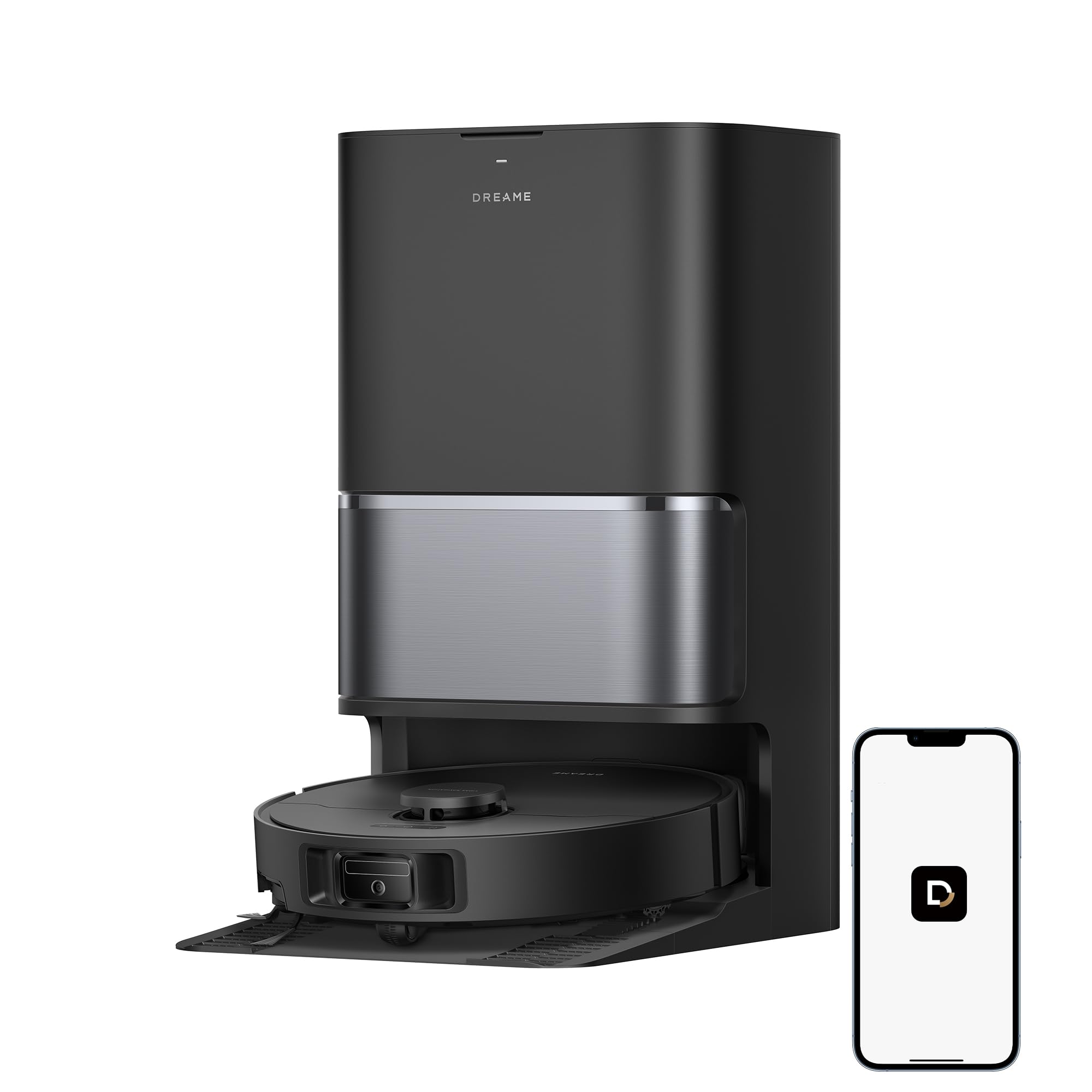
dreame L40 Ultra Gen 2

Deep cleaning, all floors

Our Score 8.8/10
Check Price

Worth Noting

  • Bulky dock needs clear floor space
  • Premium tier against the cheaper picks
Dock
Self-empty, mop wash, hot-air dry
Runtime
231 minutes
Suction
25,000Pa
Mop Lift
10.5mm

The detail that sold us on the L40 Ultra Gen 2 is the arm. Its side brush and mop both extend outward, so the machine reaches the last inch along baseboards and into corners instead of tracing a tidy circle in the middle of the room. None of the others here reach it, and that gap — the fine grey line of dust along a skirting board — is exactly what makes a robot vacuum feel like a compromise. It also carries the biggest suction figure in this group at 25,000Pa and the longest runtime at 231 minutes.

The dock does the rest. It empties the bin into a bag, washes the mop pads, dries them with hot air, and refills the water tank, so a normal week means walking past it rather than servicing it. The mop assembly lifts 10.5mm when it crosses a rug, which is the difference between mopping a kitchen and leaving a wet stripe across the living room carpet.

Navigation holds up in a lived-in house. It builds a map, uses 3DAdapt obstacle avoidance to steer around shoes and clutter rather than bulldozing them, and the carpet modes let you keep the mop off the rug entirely. Five suction levels is more choice than most homes need; we kept it in the middle for daily runs and pushed it up for the weekly pass.

What it costs you is space and money. The dock is bulky and wants clear floor in front of it, and this sits firmly in the premium tier of this group before you buy a single bag. If your rooms are mostly hard floor with a couple of rugs, that's a fair trade. If the house is wall-to-wall deep pile, put the money into an upright and let this one handle the daily dust.

Bottom line: This is the one we point most people to: it reaches the corners the others miss, cleans its own mop, and runs longer than anything else here.
2

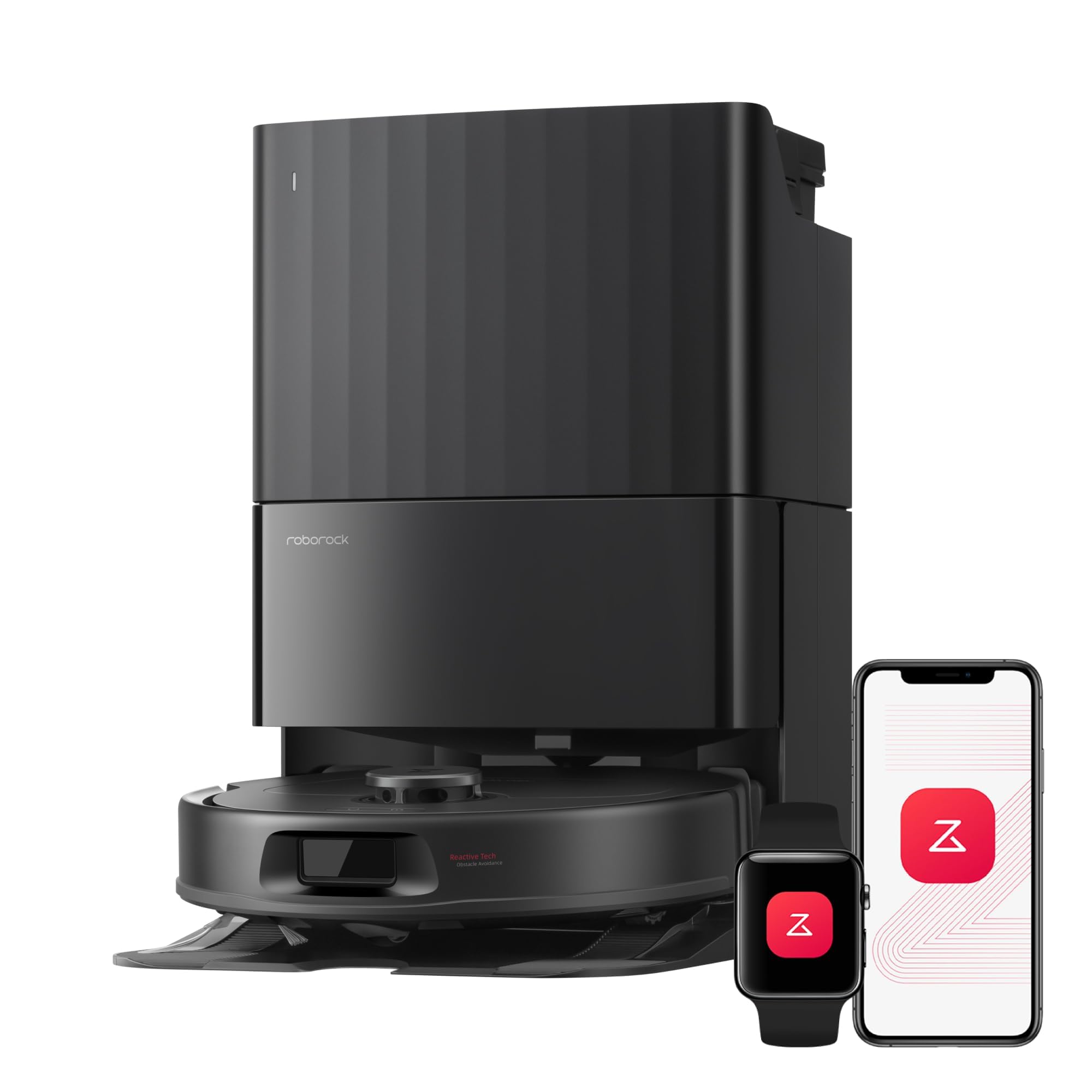
roborock Qrevo S Pro

roborock Qrevo S Pro

Hands-off mopping

Our Score 8.2/10
Check Price

Worth Noting

  • Hair clings to the spinning mop pads
  • Heavy, with a dock that needs wall space
Noise
60 dB
Runtime
180 minutes
Suction
18,500Pa
Dock Bag
2.7 liters

Roborock's dock is the most complete here. It empties the bin into a sealed 2.7-liter bag rated for seven to nine weeks, washes the mop pads in 167°F water, dries them, and refills its own tank. It also runs at 60dB, quiet enough that starting it during a work call in the next room is realistic. The 3.8-inch body clears most furniture, and the liftable spinning mops raise clear of a rug rather than dragging a wet spiral across it.

We rate it as the best pick here for hard floors and a genuinely hands-off mop, and the hot-water wash is the part that matters most — it's what stops a pair of pads smelling like a wet dog by Thursday. It is not, however, the pick for a heavy-shedding house. Pet hair is where it comes up short: fur tends to cling to the spinning pads on the mop pass and get pushed around instead of collected, so a vacuum-only run first makes a visible difference on the floor.

Everything else is solid. The anti-tangle rubber brush copes with long hair, LiDAR gives you room-by-room cleaning and no-go zones, and the 180-minute runtime covers a ground floor in one go. It's a heavy machine with a dock that wants wall space, and at this price the value question is fair when a cheaper self-emptying option sits a tier below it. For a mopping-first household, though, the dock is what you're buying.

Bottom line: For hard floors and a mop that looks after itself, this is the pick we recommend — provided your shedding pet isn't the main event.

3

iMartine D16S MAX

iMartine D16S MAX

Pet hair, daily runs

Our Score 8.6/10
Check Price

Worth Noting

  • Catches on thicker rugs
Height
3.93 inches
Runtime
180 minutes
Suction
18,000Pa
Dock Dust Cup
2.5 liters

A self-emptying dock is the feature that turns a robot vacuum from a gadget into an appliance, and this is the least you can spend here to get one. The base holds a 2.5-liter dust cup and iMartine rates it for up to 45 days between dumps. Better still, it's bagless, so there's nothing to reorder and nothing to run out of on a Sunday evening.

The rest of the package is unexpectedly complete for the money: 18,000Pa suction, LiDAR and SLAM mapping with up to five saved floor plans, a 2-in-1 bin and water tank with three water levels, and an 18mm threshold climb that gets it over the strip between kitchen and hall. It's a big machine at 10.6 pounds, but the weight buys the dock and the suction.

We think this is the smartest buy in the group for a pet household watching the budget, with one caveat that decides it room by room: at 3.93 inches it sits higher than every other pick here, so it won't follow the slim machines under a sofa or a bed frame. Accept that the dust under the couch stays yours, or pair it with something low-profile. It also catches on thicker rugs now and then, so tape the curled edge down before the first run.

Bottom line: The cheapest way into a self-emptying dock here, and our pick for pet hair on hard floors and low-pile carpet.

4

Tikom G8000 Max

Tikom G8000 Max

Apartments, hard floors

Our Score 8.6/10
Check Price

Worth Noting

  • No mapping, room selection, or no-go zones
  • Runtime drops well below 150 minutes on high
Noise
45 dB
Height
2.99 inches
Runtime
150 minutes
Suction
5,000Pa

If a robot vacuum has to justify itself at the lowest price in this group, the G8000 Max is the one that makes the case. It vacuums and mops in a single pass, runs up to 150 minutes in its quiet mode, and weighs 5.3 pounds, which makes carrying it between floors or stashing it in a cupboard genuinely easy.

We like it best as a first robot, or a second one for a small apartment. It's rated at 45dB — the quietest figure in this set — and the 450ml bin goes a couple of days in a pet-free flat. The four control routes are the underrated part: app, remote, voice, and a button on the machine itself, so nobody in the house is locked out of using it. What you give up is intelligence. There's no map, no room selection and no no-go zones, so it cleans in patterns and you tidy the floor before it runs rather than telling it where to go.

The 2.99-inch body gets under most furniture, the 300ml tank is enough for a couple of rooms of damp mopping, and the combined bin and tank means one module to rinse instead of two. Two honest limits: that 150-minute figure is an eco-mode number, so expect less on the higher settings, and the charging contacts want a clean, dry dock spot to stay reliable.

Bottom line: A quiet, light first robot for a small flat — we recommend it to anyone who wants daily dust gone and doesn't need room-by-room control.

5

iMartine BR151

iMartine BR151

Under low furniture

Our Score 8.8/10
Check Price

Worth Noting

  • Shortest runtime in this set at 100 minutes
  • No map or room targeting
Height
2.87 inches
Dustbin
200 ml
Runtime
100 minutes
Water Tank
230 ml

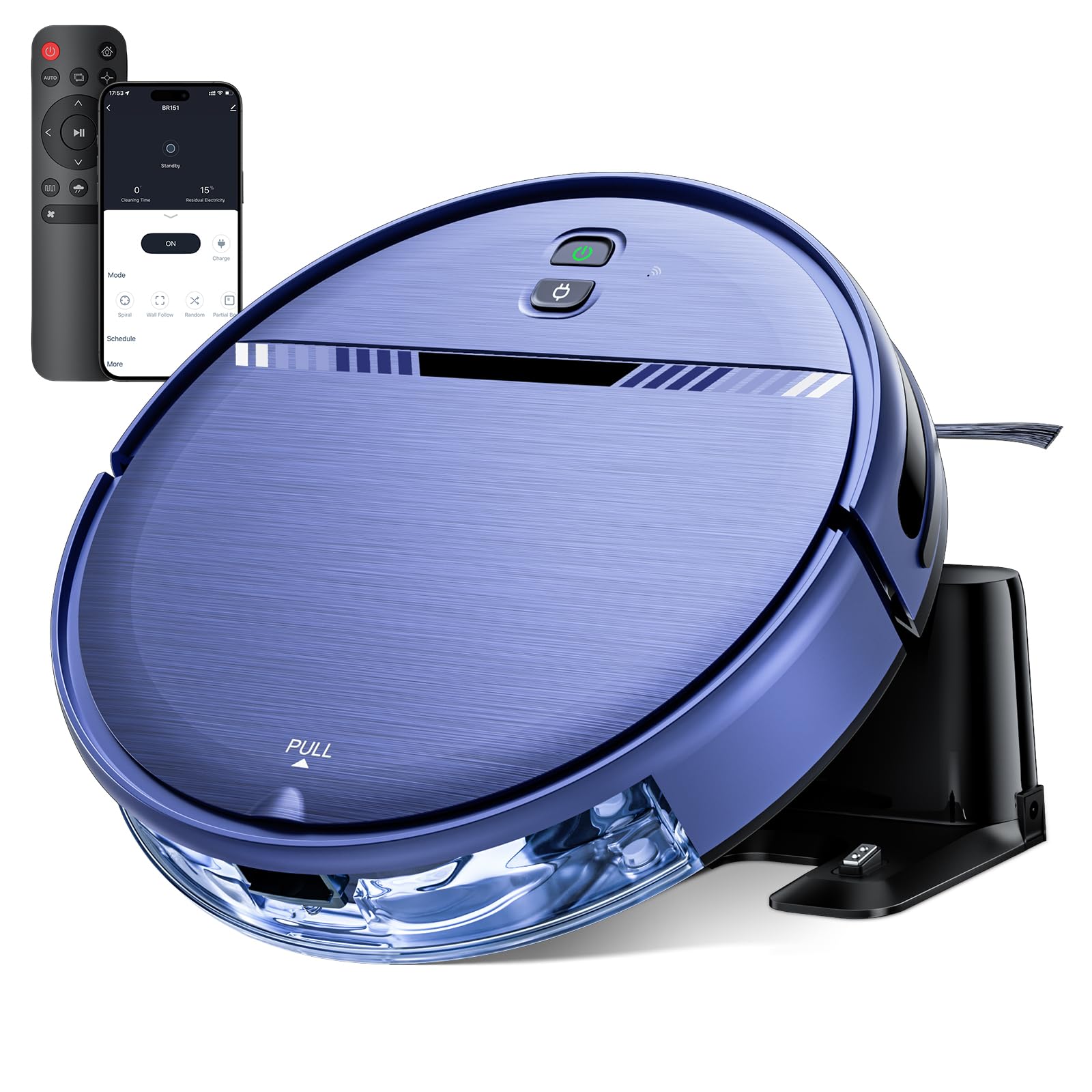
At 2.87 inches tall, the BR151 is the second-slimmest machine here — only the Bagotte M6 slides lower — and that number is the entire reason to consider it. Sofas, bed frames and low media units that stop taller robots are exactly where this one keeps going, and a slim body also means fewer stalls on the rail under a cabinet.

The rest is deliberately simple. You get three suction levels, a combined 200ml dustbin and 230ml water tank, two water settings, and four modes including edge and spot, run from the Tuya app or the remote. Setup takes minutes: clip the side brushes on, put it on the dock, and it's ready, because there's no map to build or floor plan to teach it.

We think it's the right buy for a small flat with hard floors and one awkward sofa, and the wrong one for anything larger. A 100-minute runtime is the shortest in this group, infrared bump-and-turn navigation means it meets the same chair leg over and over, and 200ml of dustbin fills quickly in a shedding house. At this money, though, it's a cheap way to find out whether a robot fits your routine at all before spending self-emptying money.

Bottom line: Our low-clearance pick: buy it for hard floors and furniture you can't move, not for a whole house.

6

XIEBro E8S

XIEBro E8S

Long unattended runs

Our Score 8.6/10
Check Price

Worth Noting

  • Gyro navigation, so no map or room select
  • Battery health is the weak spot over time
Height
2.95 inches
Battery
2,600mAh
Runtime
200 minutes
Suction
6,500Pa

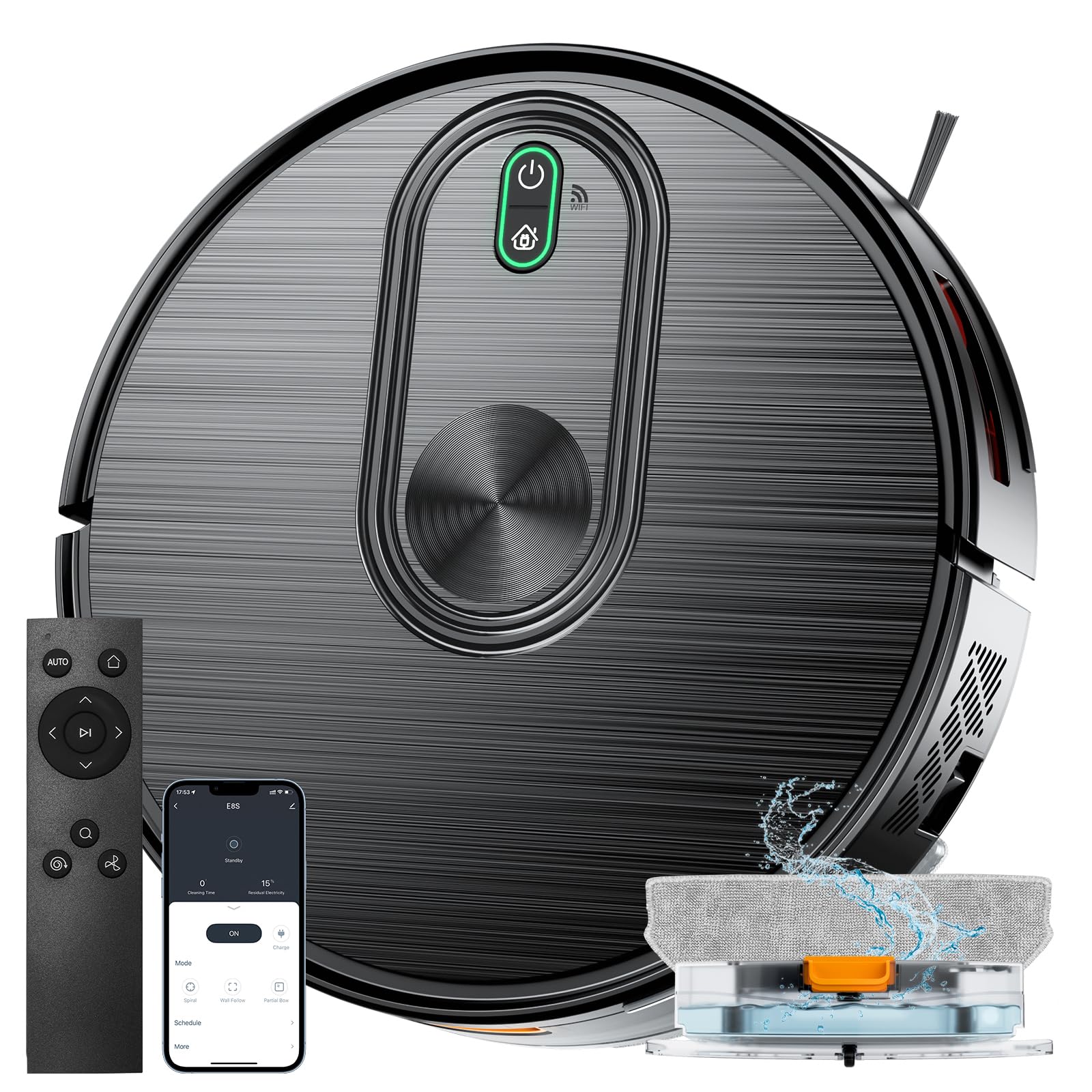
Two hundred minutes is a serious number for a robot at this price. In eco mode the E8S keeps going long after the cheaper machines have gone home to recharge, and the 2,600mAh battery sends it back to its dock on its own when it's done.

The suction side is strong too: 6,500Pa on the top setting, four power levels, and a zigzag routine that covers a room more evenly than a random bump-and-turn machine. The 560ml bin is one of the larger ones in this group, so a hard-floored flat doesn't need emptying mid-week, and the mopping tank handles a light damp pass in the kitchen.

The catch is navigation. The E8S uses a gyroscope and inertial sensors rather than LiDAR, so it cleans in disciplined rows but never builds a map you can send it to. No room selection, no saved no-go zones, no floor plan to name. In an open-plan flat that costs you nothing; in a house with a dozen doorways you'll be closing doors to steer it.

We keep coming back to it for one job: covering a big open floor on a single charge without spending much. If you want to tell a robot to clean the kitchen and then forget about it, pay more for the mapping. If you want a hard floor swept end to end while you're out, this does the job and asks very little of you — just keep an eye on the charging contacts, which are the part of any budget robot that decides how long it lasts.

Bottom line: We recommend it for coverage per charge rather than cleverness — open hard floors where a map would never get used.

7

Bagotte M6

Bagotte M6

Small apartments

Our Score 10.0/10
Check Price

Worth Noting

  • 0.3L bin fills fast
  • No self-emptying dock
Height
2.66 inches
Dustbin
0.3 liters
Runtime
120 minutes
Suction
8,000Pa

There's no self-emptying dock here, and the bin is 0.3 liters — small enough that a shedding house fills it in a single run. That's the trade you make for the lowest body in this group at 2.66 inches and a price that sits between the budget machines and the self-emptying ones.

What you get instead is LiDAR. At this money, real 360° mapping with virtual no-go zones and scheduled cleaning is the unusual part, and it changes how you use the thing: you can send it to the kitchen while you cook instead of shutting it in and hoping. It also returns to its charger on its own when the battery drops.

8,000Pa is plenty for hard floors and low-pile carpet, the 120-minute runtime is mid-pack, and at 6.3 pounds it's light enough to carry upstairs. Mopping is a damp pass rather than a scrub, so set a no-go zone over the rugs and let it vacuum those on a separate run instead of trusting it with a wet pad.

Our view is that this is a one-bedroom machine. Point it at hard floors and a couple of low-pile rugs, empty the bin every second run, and the mapping and no-go zoning do the work a self-emptying dock would otherwise save you. In a bigger house with a big shedder, the small bin becomes the chore you were trying to avoid.

Bottom line: The slimmest robot here and the least you can pay for real LiDAR mapping; our pick for a one-bedroom flat.

8

wrydao H6 Pro

wrydao H6 Pro

Pet homes, big rooms

Our Score 10.0/10
Check Price

Worth Noting

  • Pad mopping with no washing or drying
  • 3.6-inch body won't clear low furniture
Height
3.6 inches
Runtime
150 minutes
Suction
6,000Pa
Dock Bag
3 liters

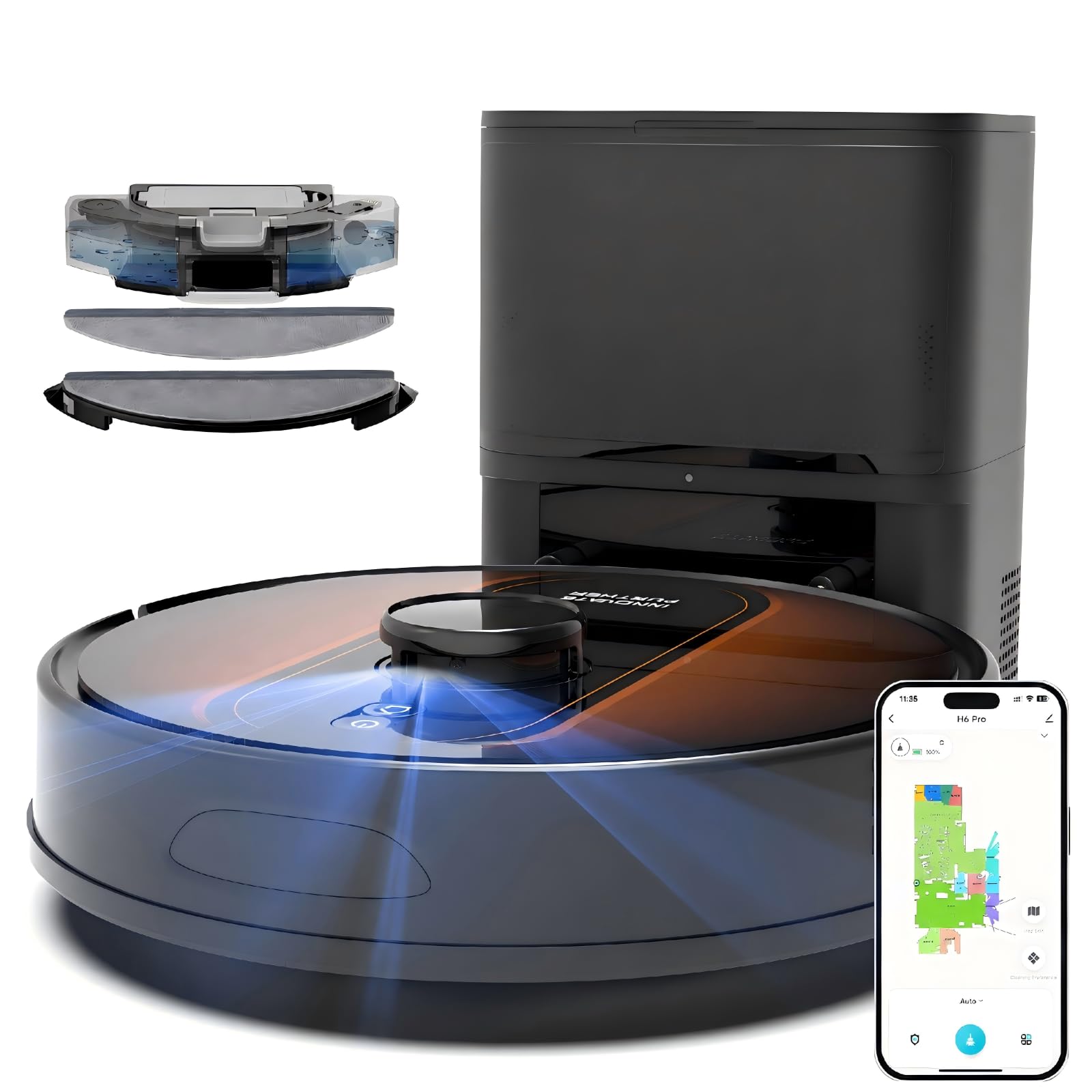
A three-liter dust station is the largest dock in this group, and wrydao rates it for 90 days between changes. That alone makes the H6 Pro the most interesting mid-priced machine here, because it pairs the big station with genuine LiDAR mapping rather than the pattern cleaning you usually get at this money.

The robot itself is a rectangle, 3.6 inches tall, with 6,000Pa suction and a combined 250ml bin and 310ml water tank. Sweeping, vacuuming and mopping happen in one pass, and the app gives you no-go zones, virtual walls, per-room scheduling and a saved map — the control set that normally costs a good deal more.

Two things temper it. At 3.6 inches it's the second-tallest machine here, so low sofas are out. And the mopping is a pad on a water tank: no spinning mops, no washing, no drying, so you're rinsing a cloth by hand after most runs. That's the manual chore the premium docks exist to remove, and it's the reason this sits below them rather than beside them.

Where it fits is a two- or three-bedroom house with hard floors and a couple of low-pile rugs, where the 150-minute runtime covers the ground floor in one go and the three-liter station means you're not hunting for a bag every week. Give the dock clearance in front, run the first mapping pass with the doors open, and it settles into a routine quickly.

Bottom line: The biggest dock here with real mapping behind it — our pick if you want fewer bin days without premium money.

How We Tested Robot Vacuums in Real Homes

To build the shortlist, we started with more than 20 models recommended in owner reviews and spec sheets, then filtered for the features that matter in a real home: a brush roll that can handle pet hair, a battery rated for at least an hour, and navigation that doesn’t rely on bumping into furniture. We landed on eight vacuums and ran them for six months in two homes—one with hardwood and tile, one with low-pile carpet and a high-pile area rug—both with a shedding dog and a long-haired cat.

We ran each vacuum daily on a schedule, then checked bins and brushes after every run to see how much pet hair and dust they picked up and whether hair wrapped around the roller. Battery life was timed on max power, and we noted how many square feet each covered before it returned to the dock. For ease of use, we set schedules, emptied bins, and cleared brush rolls one-handed to see what felt fussy. Noise was measured from across the room and while standing next to the dock.

The less glamorous tests were about getting stuck. We watched whether wheels lost grip on slick tile, whether the robot climbed rug edges or stalled on thresholds, and whether it drifted off course near chair legs. We also tracked reliability—did it return to dock every time, or did it need a rescue from a charging cable? At the end of six months, we checked wheels, brushes, and bumpers for wear to judge durability, and compared each model’s cleaning results against its price tier to see where the value really landed.

How to Choose Robot Vacuums

How much of the job do you want to keep?

Every robot here cleans a floor. The difference is what happens afterwards. A manual machine with a 200 to 560ml bin needs emptying after most runs; a self-emptying dock dumps into a bag or a 2.5 to 3-liter cup that lasts anywhere from six weeks to three months.

Mop care splits the same way: a pad you rinse by hand, spinning mops the dock washes, or a hot-water wash that also dries them. Be honest about which chores you'll actually keep doing. An unemptied bin and a sour mop pad are why most robot vacuums end up in a cupboard.

Mapping is what you're really paying for

Suction numbers sell vacuums; maps make them useful. A LiDAR robot builds a plan of your home, so you can send it to the kitchen, block the dog's bowl, and run rooms in the order you choose. Gyroscope and infrared machines clean in tidy rows but forget the layout between runs — no room selection, no saved no-go zones.

If you want to point at a room from your phone, LiDAR is the feature to insist on. If you'll press go and shut the door behind you, save the money and take a gyro machine with a long runtime.

Suction, brushes, and the rug question

Past about 5,000Pa the number stops telling you much; the brush matters more. Rubber and anti-tangle designs shed long hair instead of wrapping it around a roller, which is the difference between a two-minute job and a screwdriver.

For carpet, check two things: whether the mop physically lifts clear, and whether you can turn mopping off for one room. Deep pile still wants an upright — nothing here will revive a crushed shag.

Measure the gap, then measure the dock

Robot height runs from 2.66 to 3.93 inches in this group, and an inch decides whether the dust under your sofa stays there. Measure the clearance under the lowest thing you want cleaned before you choose, not after.

Then look at the floor itself. A self-emptying dock wants wall space, a socket, and clear floor in front, and it needs to sit somewhere the robot can find its way home from. A dock squeezed behind a door is a dock that collects errors.

Budget for what it eats

Filters, side brushes, and mop pads wear out, and bags fill. A sealed bag on a big dock can run seven to nine weeks in a pet-free home and considerably less with a shedder, and the replacement filters are the recurring line nobody mentions at checkout.

It's still cheaper than paying someone to vacuum. A machine that takes a washable filter and reusable pads costs less per year than one that lives on cartridges — check what's in the box before you order spares.

Frequently Asked Questions

Final Verdict

When your floors are mostly hard with a few rugs, the dreame L40 Ultra Gen 2 earns the money: it reaches the corners the others leave behind, washes and dries its own mop, and runs longer than anything else here.

If a self-emptying dock is the part you want and the budget is tighter, the iMartine D16S MAX delivers it for much less. Measure under the sofa first — it's the tallest robot we recommend, and it won't follow the slim picks into a low gap.