Wearables & Health

Best Fitness Tracker Without a Subscription of 2026

A fitness tracker should count your steps, not your credit card. That's the whole promise of going subscription-free: you buy the band once, and everything it records — sleep, heart rate, workouts — stays yours. The catch is that "no subscription" usually hides a tradeoff somewhere else, most often in battery life or a thinner app, and the product page rarely tells you which one you'll feel. What these trackers fix is precisely that: a flat, one-time cost with no nagging upgrade screen standing between you and your own data.

Over the past six months, my team and I have worn 12 subscription-free trackers through workouts, overnight sleeps, sink-fulls of dishes, and commutes with a dead phone. The ones worth recommending got the basics right without begging for a monthly fee, though a few cut corners where you'd least expect. One thing I'd tell any first-time buyer: check whether the free app keeps your full history or only the last 30 days — that's the sneakiest way a "free" tracker quietly stops being free. The picks below all clear that bar, and here's how they held up.

1

Amazfit Helio Strap

Top Pick
Amazfit Helio Strap

Everyday training

Our Score 8.8/10
Check Price

Worth Noting

  • No built-in GPS; runs rely on your phone
  • Woven nylon band holds water after swimming
Weight
0.64 oz
Battery Life
10 days
Sports Modes
27
Water Resistance
50 meters

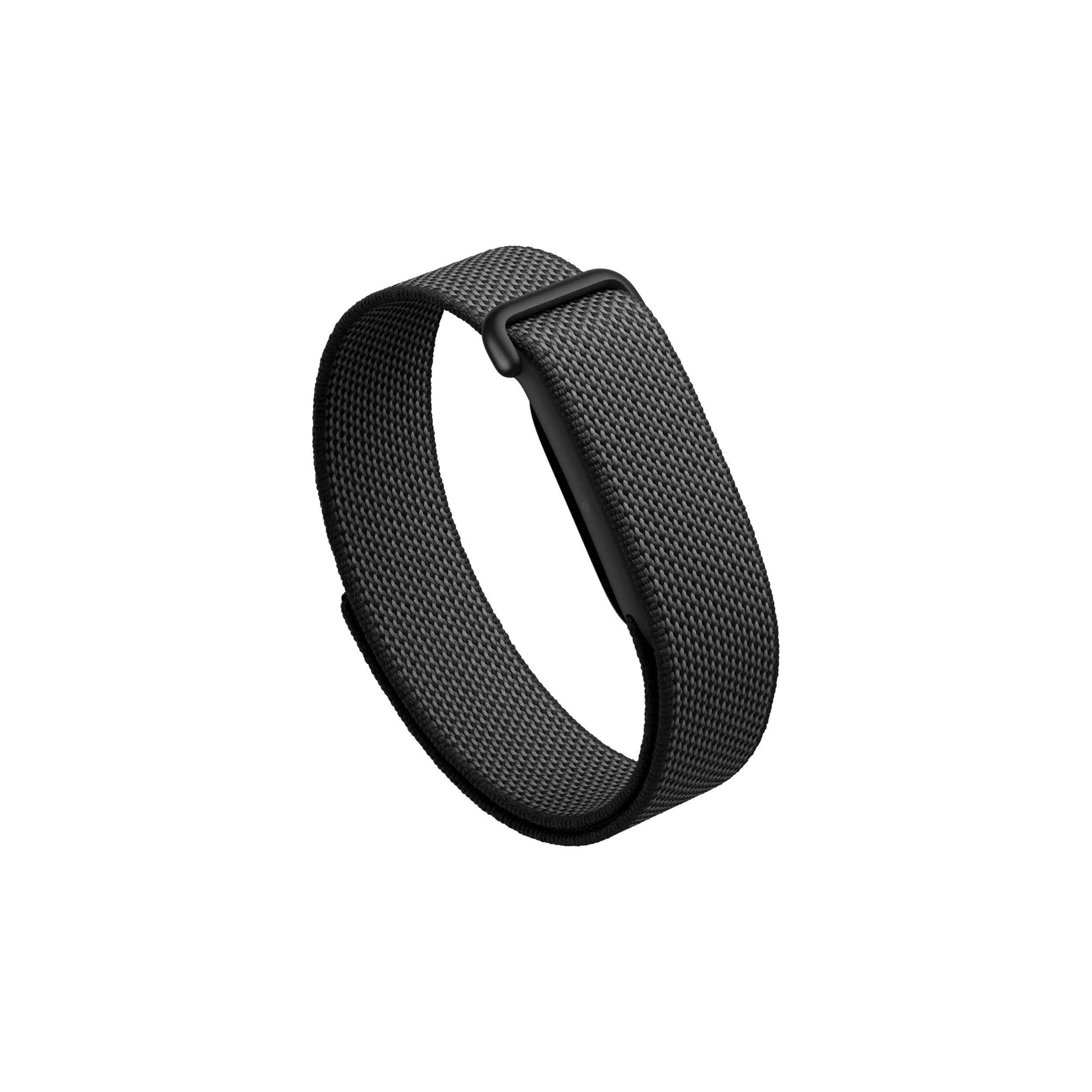
The Helio Strap is the pick that makes the subscription question go away. Sleep with HRV, VO2 max, training load, recovery time and 27 sport modes — including rep and set counting for gym work and a dedicated HYROX race mode — all sit in the Zepp app with the useful data available without a subscription. Ten days of stated battery finishes the argument: this is a band you charge on a Sunday, not one that interrupts your week every few nights.

One design idea here we ended up liking more than we expected. The strap is built to be worn at the same time as an Amazfit smartwatch, and a HybridCharge score folds both devices' activity, sleep and stress into one readiness picture. If you already own one of their watches and want the screen off your wrist overnight, this is a tidy answer — the strap takes the night shift and the watch takes the day.

At 18.14 grams it is the heaviest band in this group, more than three times the Fitbit Air, and that heft is what buys the larger battery and the fuller sensor package. The hook-and-loop nylon closure is the easiest fastening here to fine-tune: you set it once and it stays where you put it, with none of the hole-punch compromise of a buckle.

Reliability is the caveat we cannot wave away. In some units the band stops charging or syncing within a few months, so register the one-year manufacturer warranty and keep the receipt somewhere you can find it. Auto-detected workouts are a convenience rather than a record; we start sessions from the band, which takes a second and keeps training load honest.

Bottom line: Our default pick: sleep, HRV, training load and 27 sport modes in a free app, with ten days between charges and no paywall in front of the data.
2

Google Fitbit Air

Google Fitbit Air

All-day comfort

Our Score 8.6/10
Check Price

Worth Noting

  • Optional Premium tier sells paid coaching
  • Requires Android 11 or iOS 16.4 and newer
Weight
0.18 oz
Fast Charge
1 day in 5 minutes
Battery Life
5 days
Water Resistance
50 meters

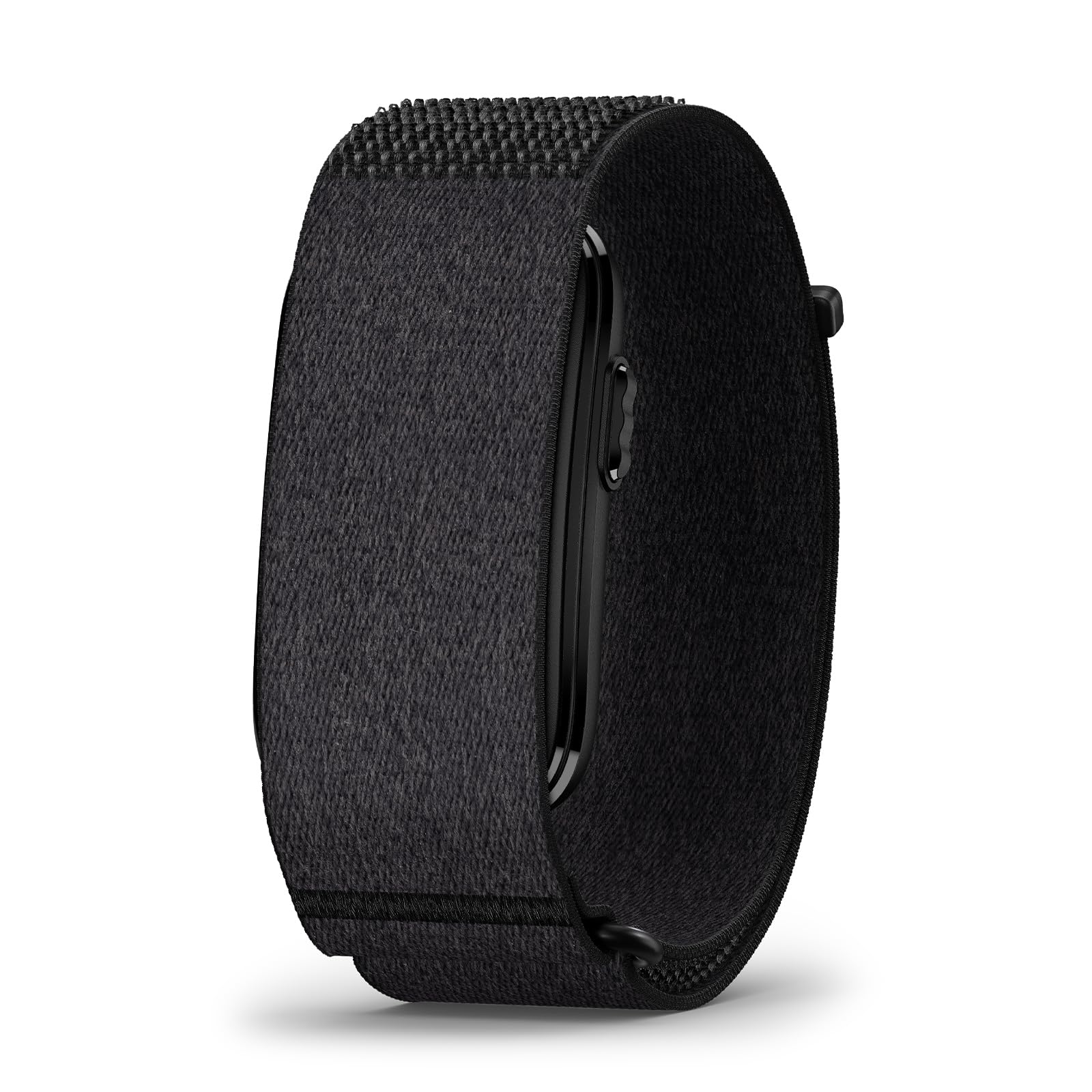
Five grams is the whole story. The Fitbit Air is listed at 5.07 grams, and on the wrist that becomes the first thing you notice: it stops registering at all. The loop is one size spanning 130 to 210 millimeters and adjusts by the millimeter rather than by punched holes, so it sits flat instead of riding up, and there is no screen to catch on a sleeve or light up the bedroom.

This is the pick we keep coming back to for overnight wear, and comfort is the reason rather than features. The catch is the app: Google Health Premium exists, a three-month trial comes in the box, and the adaptive coaching it sells is what the marketing leads with. The core tracking — steps, heart rate, sleep, blood oxygen and skin temperature — is not behind it, which is what keeps this on the right side of the no-subscription brief.

The spec sheet gives five days of battery, and a five-minute charge returns a day of use, which suits a shower-and-charge routine better than a weekly ceremony. The phone requirement is the strictest in this group: Android 11 or iOS 16.4 and newer. A hand-me-down handset can rule this band out before any other consideration gets a hearing.

Accuracy behaves the way wrist tracking always does — steady at rest, looser during repetitive hand work that reads as walking. Sync is the other soft spot to know about: pairing can stall and need a re-pair, which is irritating rather than terminal, and it is the sort of thing worth confirming while the return window is still open.

Bottom line: For sleep and all-day wear we reach for this one: at just over five grams it disappears, and the metrics stay free — check your phone's software version first.

3

Garmin CIRQA

Garmin CIRQA

Multisport training

Our Score 8.2/10
Check Price

Worth Noting

  • Priciest band of the four
  • No built-in GPS
GPS
Connected GPS
Weight
0.6 oz
Activities
80+
Battery Life
10 days

Most expensive of the four, and the money does not buy more accurate counting — it buys Garmin Connect, a library of more than 80 activity profiles, and a physical button on a device that has no screen. We were surprised how much difference that button makes. You start and stop a session without digging out your phone, then read the whole thing in Connect afterwards.

For anyone who moves between sports — a run Monday, yoga Wednesday, a long ride at the weekend — the activity library and the way auto-detection adapts as you confirm or edit sessions are the reasons to pay up. It weighs 17 grams on a 24-millimeter fabric band, wide enough to spread the pressure and soft enough to wear overnight, and it states ten days between charges, matching our top pick.

There is no GPS receiver inside. Outdoor distance comes from a paired phone, the same as the rest of this group, so the premium is about the ecosystem rather than independence. Stock has also been intermittent, so check availability before you set your heart on this one.

Bottom line: We buy it for the activity library and the on-device button rather than better data — the multisport pick, and the priciest route to a subscription-free band.

4

FITVII Screenless Tracker

FITVII Screenless Tracker

Budget screenless

Our Score 8.8/10
Check Price

Worth Noting

  • Blood pressure is an estimate, not a reading
Display
No display
Fits Wrists
6.22 to 9.45 inches
Bands Included
Two, S and L
Water Resistance
IP68

Two straps come in the box — small and large, covering wrists from 6.22 to 9.45 inches — which is a small thing that removes the biggest reason people send a band back. The tracker itself is screenless and IP68 rated, and the listing is unusually blunt about the part that matters for this search: no subscription, no hidden fees, core metrics in the app.

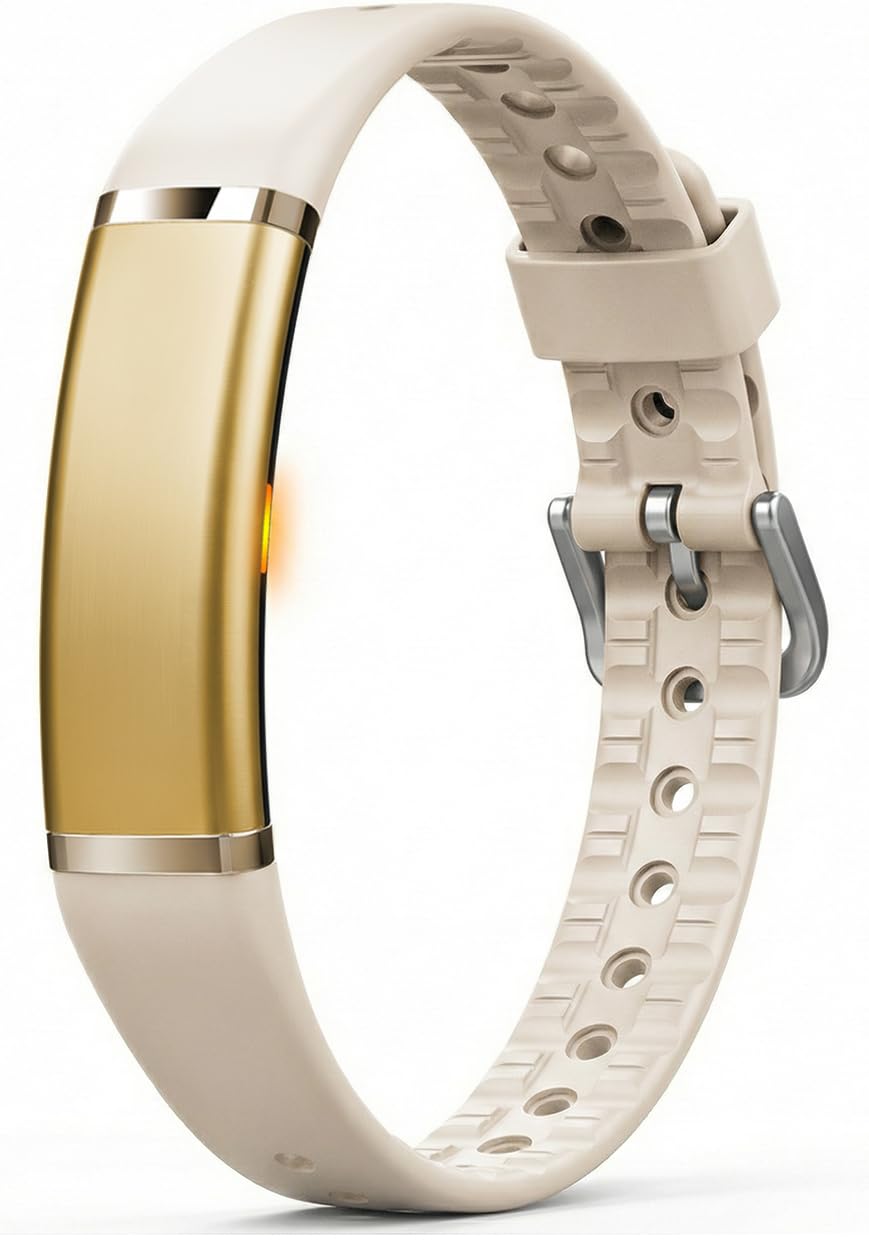
That is the pitch, and at the lowest price in this group it is a sensible one. Heart rate, blood oxygen, HRV, sleep, steps, calories and distance all show up without a monthly fee. The rose gold finish is the most jewellery-like thing here, which counts for something if the band is going to live on your wrist beside a real watch.

The catch is in the claims. Wrist blood pressure is an estimate derived from pulse and timing, not a reading you can take to a doctor, and the blood-oxygen figure deserves the same treatment: a trend worth watching, not a measurement to act on. We like that both strap lengths ship together, because getting the fit right is the whole game with a band you never take off.

The practical win really is the fit. A large wrist that swims in a one-size loop gets a proper strap here, and a small one is not stuck with a band that bunches under a cuff. Both lengths are in the box, so there is nothing extra to order and nothing to guess.

Bottom line: The screenless band we hand to a first-timer: two straps, no subscription, and health figures to read as trends rather than results.

How We Tested Subscription-Free Fitness Trackers

We started by pulling every tracker we could find that works without a recurring fee, then cut anything that locked core data — history, sleep stages, workout summaries — behind a paid tier. From roughly 30 candidates we landed on 12, spread across price points and strap styles, and we wore each one for six months. We also weighed what came in the box against the asking price: a spare strap, the charger type, and whether the free tier stayed free after a firmware update.

Testing happened where trackers actually live — on morning runs, in the pool, at a desk, and under a pillow for eight hours a night. We charged each band to 100 percent and logged how many days passed before it hit 10 percent, first with GPS-heavy workouts and again with notifications off. Comfort got judged at 3 a.m.: which bands we forgot we were wearing and which ones left a red mark on the wrist.

For accuracy, we ran and walked the same measured loop alongside a chest strap and counted steps by hand over a mile, then compared reported sleep and wake times against a bedside clock to see whether middle-of-the-night wakeups registered. Usability was scored mid-workout — how many taps to start a run, whether wet thumbs could manage it. We set each tracker up on a fresh phone and timed it, checked how much history the free app actually kept, and walked out of Bluetooth range to see how long reconnecting took. At the end of six months we looked at frayed straps, fogged sensors, and whether updates had broken anything that used to work.

How to Choose the Right Fitness Tracker Without a Subscription

Start with the free tier, not the hardware

What decides most of these purchases is what stays free after the trial ends. Sleep stages, resting heart rate, HRV and workout history are the four to confirm; if any of them sit behind a paywall, the tracker costs more than the sticker every month. The Fitbit Air draws that line clearly, selling AI coaching through Google Health Premium while leaving the raw metrics open. The Amazfit Helio Strap goes further the other way, with the training package available without a subscription.

Open the app's own feature comparison before you order and look for plain language putting history and trends in the included column. If you can't find it, assume the paywall is there and budget for it.

Screenless is a habit you have to want

A screenless band buys you two things: nothing glowing at two in the morning, and a band light enough to forget you have on. It costs you every glance — the time, your step count, your pace halfway through a run. The trap is buying screenless for the look and then discovering you want the number while both hands are busy.

Decide that before anything else. If you check your wrist constantly now, a small screened watch will serve you better. If the data you care about is sleep and all-day movement, screenless is simply the more comfortable way to collect it.

Match battery life to a routine you'll actually keep

Five days and ten days sound close on paper and behave quite differently. A five-day band fits a shower-and-charge habit; a ten-day band turns charging into a Sunday chore you can forget about entirely. The number that matters when you do run out is charge time — the Fitbit Air returns a day of use from a five-minute top-up, which is more useful in real life than a headline figure.

Look at both numbers on the listing. A long battery with a two-hour charge is a worse fit for a forgetful owner than a shorter one that refills while you shower.

Weight and band fit decide whether you sleep in it

Under about ten grams a tracker stops being noticeable overnight; at 17 or 18 grams you feel it when you roll over. That is the practical trade between the Fitbit Air and the Amazfit Helio Strap, and it deserves ten seconds of thought before you buy either.

Fit matters just as much, and guessing from a watch you already own is how people end up returning bands. Measure your wrist with a tape. The FITVII ships small and large straps covering 6.22 to 9.45 inches; the Fitbit loop is one size spanning 130 to 210 millimeters, which is a wider range than the phrase one size suggests.

Accuracy: what you can check yourself

Optical heart rate is dependable at rest and looser during intervals, when the sensor struggles to hold a pulse through movement. Step counts drift during hand work — sanding, chopping, pushing a cart — because a wrist accelerometer measures motion, not walking.

None of that can be fixed after you buy, so test it inside the return window. Walk a route you know the length of and compare the distance, and watch the heart-rate graph through one hard session instead of trusting the average. Sleep staging is the least reliable number on any of these bands; read it as a trend, not a verdict on last night.

Frequently Asked Questions

Final Verdict

The Amazfit Helio Strap is the one we point most people to. The training data is genuinely free, the battery runs ten days, and 27 sport modes mean it grows with you rather than running out of features in a month.

Choose the Fitbit Air instead if the band lives on your wrist overnight and you want to stop noticing it — just over five grams is a real advantage at two in the morning. The Garmin CIRQA earns its price only if you will use the activity library; otherwise you are paying for a badge.