Wearables & Health

Best Fitness Trackers of 2026

A fitness tracker that lasts a week on a charge usually cuts corners on GPS, and the ones with every sensor tend to spend more time on the charger than on your wrist. That trade-off is the first thing I look at now, because a tracker only works if you actually wear it—through workouts, sleepless nights, and the shower. The right one fixes that: reliable step counts, heart rate, and sleep data without turning charging into a daily chore.

Over the past six months, my team and I have worn 12 different fitness trackers—on runs, at desk jobs, and overnight—and the differences in accuracy, comfort, and battery life are bigger than the spec sheets suggest. A tracker that feels fine for a 20-minute walk can turn into a nuisance by day three, and a sleep score is only useful if the band doesn't wake you up. We kept notes on all of it, from how often we recharged to whether the app synced without a fight. The picks below are the ones that got the basics right.

1

Fitbit Air

Top Pick
Fitbit Air

Everyday tracking

Our Score 8.6/10
Check Price

Worth Noting

  • Sleep tracking is less consistent than step data
  • Sync can be slow or need retries
Display
No display
Battery Life
5 days
Compatibility
Android 11+/iOS 16.4+
Water Resistance
50 meters

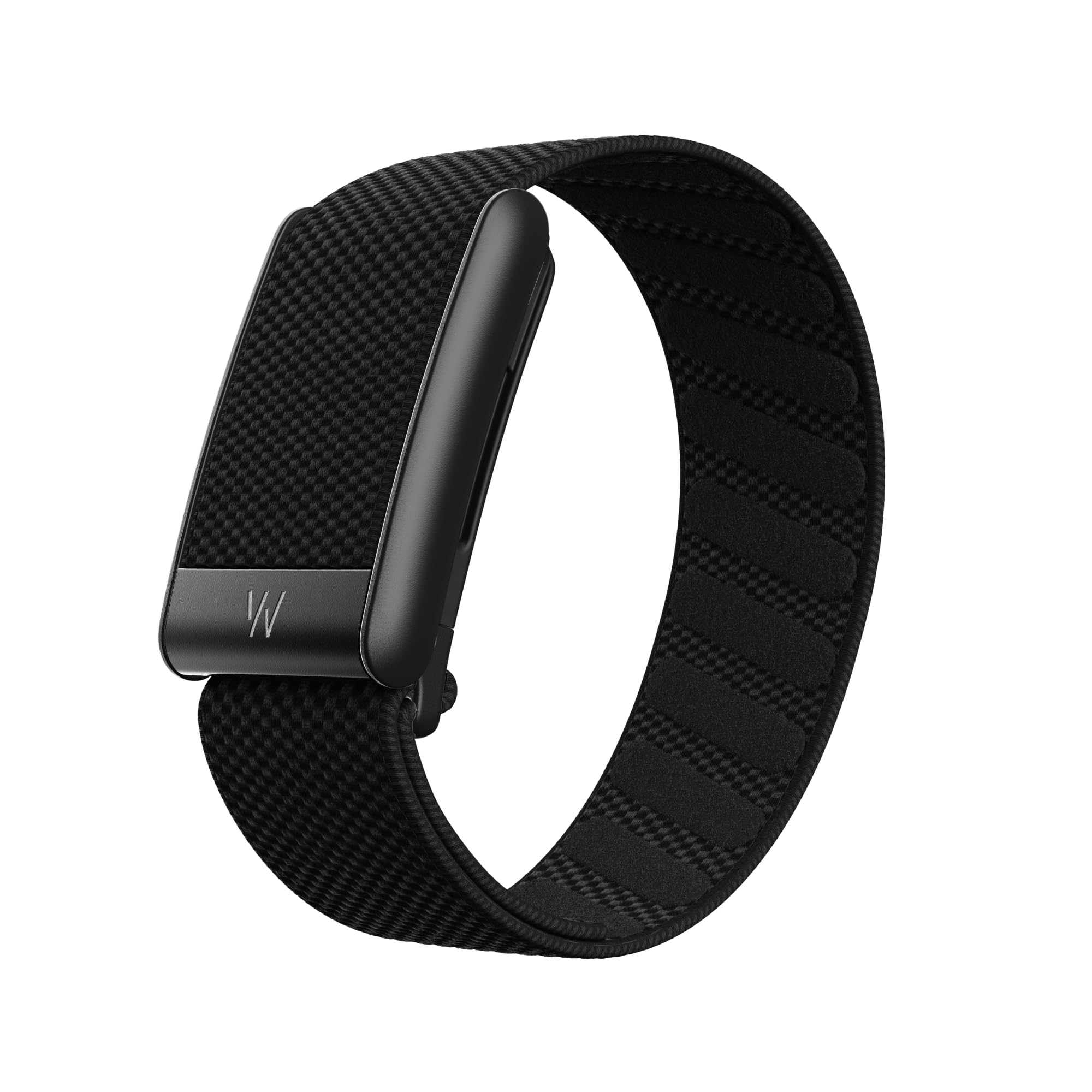
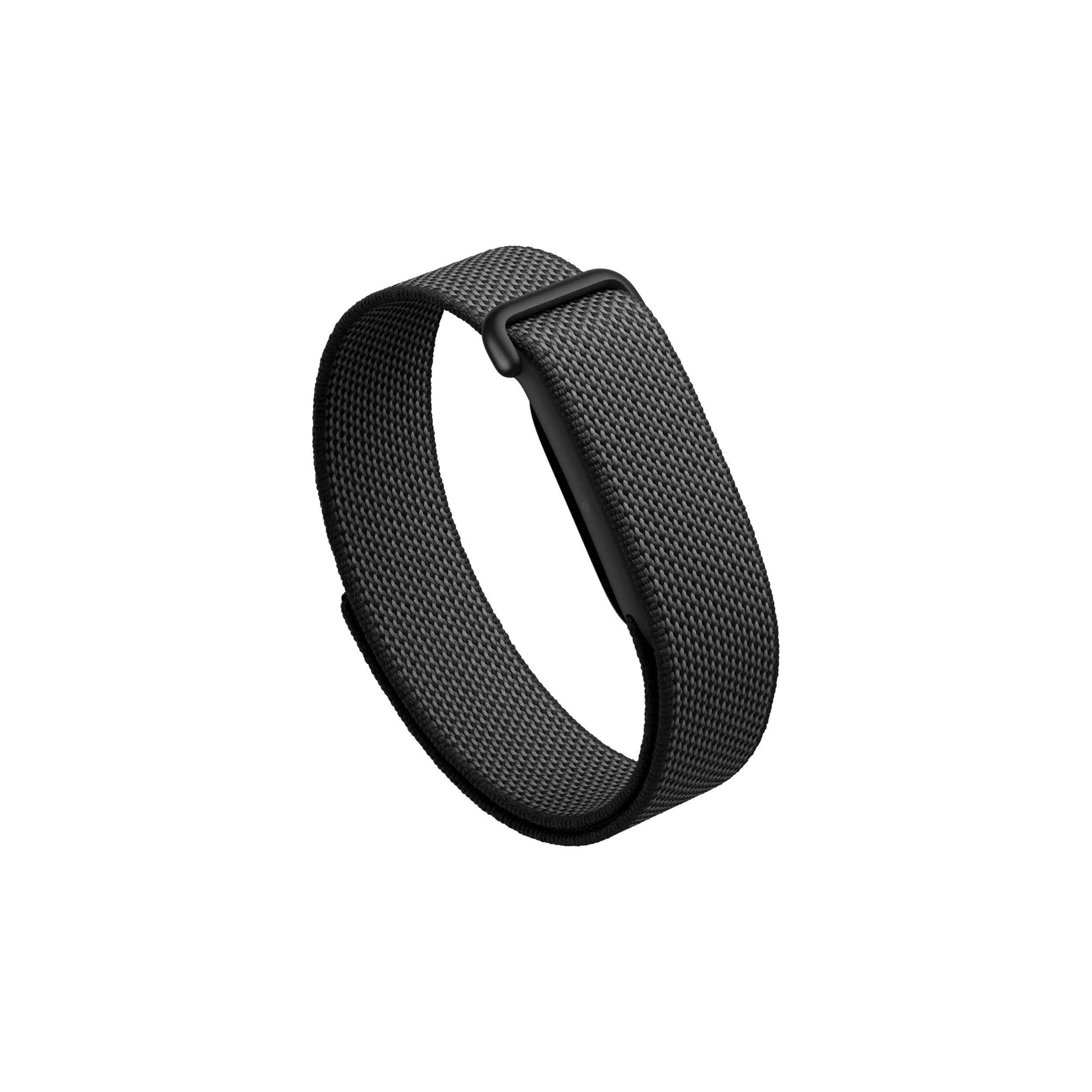
The first thing we noticed about the Fitbit Air is what it leaves out: there's no screen. That sounds like a sacrifice until you wear it for a day, when the point becomes obvious. At just over five grams, the tracker disappears on the wrist, and the micro-adjustable band stays put without pinching. We like that it moves from a workout band to a sleep band without feeling like a gadget. The app fills in the stats, so you trade the glanceable display for a calmer, less distracting kind of tracking.

Fitbit's software is the real center of the experience. Step and heart-rate data are the strongest part of the package, and the app pulls them into daily readiness, active-zone minutes, and sleep scores without a lot of fuss. We found the no-screen design especially easy to live with overnight, which is where a lot of trackers become annoying. The 50-meter water resistance means you can keep it on for showers and pool laps, and the five-minute top-up for a day of use is a useful safety net when the battery catches you out.

The Air makes the most sense for someone who wants continuous tracking without notifications or a screen to manage. If you like seeing your pace mid-run or checking a text from your wrist, this isn't the tracker for that; the Garmin Forerunner 165 or Samsung Fit 3 serves those habits better. For everyone else, the light build and five-day battery are the appeal. Just know that the app experience matters more here than on a screen-based band, because every number lives on your phone.

Bottom line: We recommend the Fitbit Air for anyone who wants a light, screenless tracker that covers steps, heart rate, and sleep without turning their wrist into another phone.
2

Xiaomi Smart Band 10

Xiaomi Smart Band 10

Battery life

Our Score 8.6/10
Check Price

Worth Noting

  • Metric-only units, no imperial switch
  • Bluetooth connection can drop
GPS
No GPS
Display
1.72 in AMOLED
Battery Life
21 days
Water Resistance
5ATM

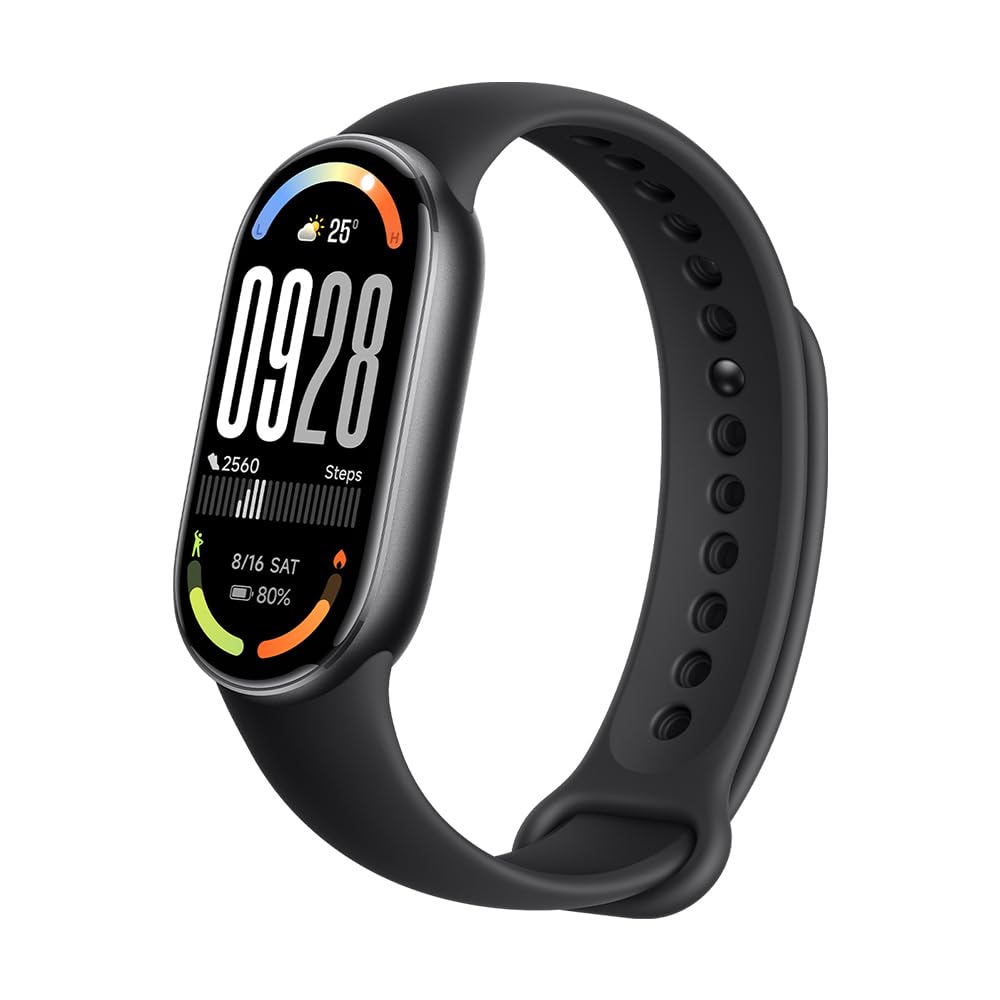
Twenty-one days is the number that changes how you live with the Xiaomi Smart Band 10. We stopped thinking about charging it, which is a bigger upgrade than any extra widget or watch face. The 1.72-inch AMOLED screen is bright enough to read in direct sun, and the 5ATM rating means pool sessions and showers aren't a problem. At this size, it sits closer to a classic fitness band than a smartwatch, which is exactly what we want from a tracker.

The battery claim holds up because Xiaomi keeps the feature set focused. This is a tracker for steps, heart rate, sleep, and workouts, not a wrist phone, and we appreciate that discipline. The display is easy to navigate, and the band is light enough to wear overnight. The catch is that GPS comes from your phone, so outdoor runs mean carrying it. If you mostly walk, train indoors, or leave the phone in a pocket, that trade-off is easy to accept.

We also like the value story: you get a bright display, long battery, and a comfortable band for less than the Fitbit Air. For a U.S. buyer, the Fitbit Air is the easier recommendation if you want a more polished app and don't mind charging more often. But if you want the least maintenance from a fitness band, this is the one we reach for.

Bottom line: We recommend the Xiaomi Smart Band 10 for anyone who wants the longest battery life here and a bright screen without paying premium prices.

3

Samsung Galaxy Fit 3

Samsung Galaxy Fit 3

Android users

Our Score 8.8/10
Check Price

Worth Noting

  • Android-only, no iPhone support
  • No U.S. warranty on import model
Display
1.6 in AMOLED
Battery Life
Up to 14 days
Compatibility
Android only
Water Resistance
5ATM/IP68

The Galaxy Fit 3's 1.6-inch AMOLED screen is the reason to pick it over a plain band. It's big enough to show a workout summary or a sleep score without squinting, and the aluminum case makes it feel more substantial than the price suggests. We found the band comfortable enough for overnight wear, and the 5ATM/IP68 rating covers sweat, rain, and pool laps. Battery life is rated at up to 14 days, which puts it in the charge-it-every-couple-of-weeks category rather than the nightly-chore category.

For Samsung phone owners, the integration is the draw: pairing is straightforward, and the Samsung Health app keeps the data in one place. The screen is large for a band, which makes it easy to read but may feel oversized on a very small wrist; if you prefer a slim profile, the Xiaomi Band 10 is the easier fit. We also like that the battery estimate is realistic for lighter use, though brightness and workout tracking will pull it down. If you want a simple, bright Android band, this is the most polished one in the group.

Bottom line: We recommend the Samsung Galaxy Fit 3 for Android users who want a big, bright display and nearly two weeks of battery in a comfortable band.

4

Garmin Forerunner 165

Garmin Forerunner 165

Runners

Our Score 9.2/10
Check Price

Worth Noting

  • Sync can occasionally be finicky
  • Premium price for a running-first watch
GPS
Built-in GPS
Weight
1.38 oz
Display
1.2 in AMOLED
Battery Life
Up to 11 days

The Forerunner 165 is the first tracker here that feels like a coach rather than a counter. Built-in GPS means you can leave your phone at home and still get pace and distance after the run. The AMOLED display is crisp and bright enough to read in sunlight, and the physical buttons are a welcome backup when your fingers are sweaty. Garmin also includes daily suggested workouts and race-adaptive plans, which is a lot of training structure for a watch at this level.

We think the Forerunner earns its premium for anyone who runs regularly. The morning report pulls sleep, recovery, and training outlook into one glance, and the suggested workouts adapt when you've had a hard week. Battery life is rated at up to 11 days in smartwatch mode, with 19 hours in GPS mode, so it handles a week of training without nightly charging. The watch is light enough to wear overnight, although the running-first focus means gym rats may not use half of what they paid for.

If you mostly walk, do studio classes, or want a simpler band for sleep, the Fitbit Air or Xiaomi Band 10 is easier to live with. The Forerunner makes more sense when pace, distance, and structured training are the point. We also appreciate that it works with both iPhone and Android, so switching phones doesn't strand your data. This is a running watch that happens to be a solid all-day tracker, not the other way around.

Bottom line: We recommend the Garmin Forerunner 165 for runners who want built-in GPS, adaptive workouts, and a bright AMOLED screen in a watch that still lasts for days.

5

WHOOP 5.0

WHOOP 5.0

Recovery

Our Score 8.4/10
Check Price

Worth Noting

  • Membership is the real cost
  • Accuracy varies by metric
Weight
4 oz
Membership
12-month Peak
Battery Life
14 days
Water Resistance
IP68

WHOOP sells the 5.0 as a membership, not a one-time gadget. The 12-month Peak plan includes the screenless tracker, a SuperKnit band, and a waterproof PowerPack that lets you charge while you wear it. That last detail matters more than it sounds: you can top up during a workout or overnight without creating a gap in your recovery data. The band itself is light and unobtrusive, and the lack of a screen keeps the focus on the app's coaching.

The app is where WHOOP earns its keep. It turns strain, sleep, and recovery into a daily picture, and the AI coach gives you something to act on rather than a pile of raw numbers. We like the healthspan view as a long-term motivator, and the sleep tracking is detailed enough to be useful if you're working on consistency. Setup takes some patience, and the amount of data can feel like a lot at first. Once you settle into the routine, the screenless format makes sense.

We recommend the WHOOP for someone who already trains consistently and wants recovery to be the main event. If you want a simple step counter or a watch you can glance at, the Fitbit Air is easier and the Garmin Forerunner 165 is more useful for pace-based runs. WHOOP's value comes from the coaching layer, and that only pays off if you'll engage with it. The screenless design is the point, not a compromise.

Bottom line: We recommend the WHOOP 5.0 for athletes who want screenless recovery and sleep coaching and are comfortable with a membership-based tracker.

6

Garmin vivoactive 5

Garmin vivoactive 5

All-round fitness

Our Score 8.6/10
Check Price

Worth Noting

  • Sleep tracking is inconsistent
  • Premium price for an all-round watch
GPS
Built-in GPS
Weight
1.3 oz
Display
1.2 in AMOLED
Battery Life
Up to 11 days

The vivoactive 5's wheelchair mode is the detail we keep coming back to. Instead of counting steps, it tracks pushes and includes handcycle activities, which makes it one of the few mainstream fitness watches that doesn't assume everyone is on foot. That's not a niche checkbox; it changes how the watch counts movement and how the training data reads. The rest of the package is similarly broad, with more than 30 indoor and GPS sports and a bright AMOLED display.

Body Battery is the other feature that earns its place. It uses sleep, naps, stress, and workouts to estimate when you're charged up or running low, and we found it more useful as a pacing tool than as a gimmick. The watch is light enough for overnight wear, and the 11-day smartwatch battery means you're not charging it every night. Built-in GPS makes it a genuine outdoor training tool, not just a gym companion.

We think the vivoactive 5 is the better all-rounder if you split your time between running, cycling, strength, and everyday movement. It's more versatile than the Forerunner 165 for mixed training, though the Forerunner has the edge for pure running structure. The Garmin app is deep, and that depth can feel like a lot at first. If you want a simpler band, the Fitbit Air is easier; if you want a running coach, the Forerunner is more focused.

The case is fiber-reinforced polymer, so it's light rather than luxurious, and the silicone band is comfortable for long wear. We like that Garmin kept physical buttons alongside the touchscreen, which makes starting a workout with wet hands much less annoying. It's a practical watch for people who want one device to cover a lot of ground.

Bottom line: We recommend the Garmin vivoactive 5 for anyone who wants one GPS watch for running, cycling, strength, and wheelchair pushes without a running-first focus.

7

Bakoor Fitness Tracker

Bakoor Fitness Tracker

Budget starter

Our Score 8.0/10
Check Price

Worth Noting

  • No warranty coverage included
Display
1.1 in AMOLED
Warranty
No warranty
Sports Modes
25
Water Resistance
IP68

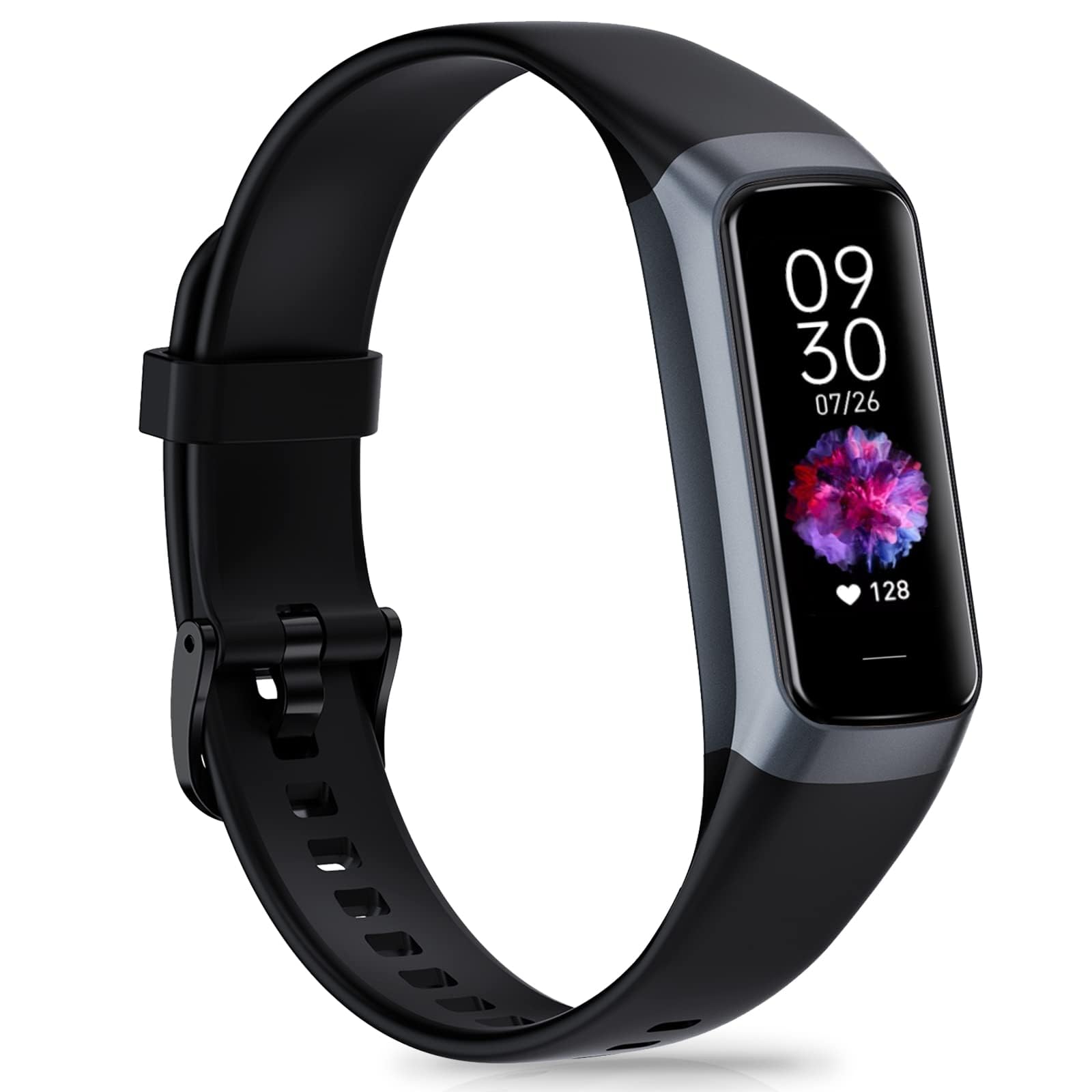
The Bakoor Fitness Tracker is the cheapest way into an AMOLED screen in this group. That sounds like a small thing until you compare it with the dim, washed-out displays on other budget bands. The 1.1-inch panel is sharp enough for notifications and workout stats, and the IP68 rating means sweat and rain aren't a concern. It also packs 25 sport modes into a case that looks more expensive than it is.

As a daily step and sleep tracker, it covers the basics. The app is simple to set up, and the band is comfortable enough for all-day wear. We treat the heart-rate and blood-pressure readouts as directional rather than medical, which is the right approach for any budget tracker. If you want a device to nudge you to move and give you a rough sense of sleep, it does that job.

The compromises show up when you ask more of it. Step counts can drift during arm-heavy work, and the charging connection can be fussy. Those are the kinds of quirks that make a budget tracker feel like a budget tracker. The 25 modes are useful for variety, but we don't trust this one for serious training or heart-rate zones.

We think the Bakoor makes sense as a first tracker or a spare for travel, not as a long-term training partner. If you want better accuracy and app polish, the Xiaomi Band 10 is worth the step up. If you want a screenless tracker that disappears on your wrist, the Fitbit Air is the better default. The Bakoor is a way to try the category without committing much, and that's a legitimate role.

Bottom line: We recommend the Bakoor Fitness Tracker as a low-cost starter band for steps, sleep, and basic workouts, provided you treat its readings as estimates.

How We Chose and Tested the Best Fitness Trackers

We started by gathering every fitness tracker we could find from the major brands, then narrowed the list by price, sensor array, and phone compatibility. Anything with a battery life under three days, a strap that couldn't fit both small and large wrists, or a history of connectivity complaints got cut. That left us with 12 trackers, which we wore for six months.

Each tracker lived on our wrists for at least two weeks—through morning runs, strength sessions, desk work, showers, and overnight sleep. We compared step counts to a manual count on a measured mile, checked heart rate against a chest strap during intervals, and timed how long a full charge actually lasted with GPS on and off. For sleep tracking, we noted whether the app caught our wake-ups and how the morning report matched how we felt. Comfort got equal attention: we noted strap irritation, weight on the wrist, and whether the band slid during sweaty workouts or felt bulky under a shirt cuff.

We also lived with the apps: pairing each tracker to both an iPhone and an Android phone, setting up notifications, and logging workouts. We checked whether syncing happened without a fight, how easy it was to read stats mid-run, and whether the extra features—SpO2, stress scores, recovery metrics—were useful or just noise. Reliability meant no dropped signals and no dead batteries mid-workout; value came down to whether the tracker delivered the basics without charging a premium for gimmicks.

How to Choose Fitness Trackers

Start With the Data You'll Actually Use

The feature list is the least useful part of the box. What matters is whether the tracker gets steps, heart rate, and sleep close enough to be useful day to day, and whether you'll actually look at the app. We treat blood-pressure and blood-oxygen readouts on inexpensive bands as extras, not medical measurements. If you mainly want step counts, a basic band is enough; if you're training, prioritize heart-rate consistency, GPS, and recovery metrics. Don't pay for a feature you can't interpret or won't check.

Match the Form to Your Wrist and Your Bed

Screenless trackers like the Fitbit Air and WHOOP are the easiest to forget about, especially overnight, because there's no glowing display against your face. A small band with a screen gives you glanceable stats, but it can be more distracting at night. If you wear a tracker to sleep, comfort and a low profile matter more than screen size. Check the band's adjustment range and water-resistance rating before you commit; a track that feels fine for a walk can become irritating by morning.

Choose Battery Life Around Your Routine

Battery life is a convenience feature until it isn't. A week is enough for most people, but a two- or three-week band saves you from packing a charger for a short trip. Built-in GPS and always-on displays cut run time, so compare the number that matches how you'll use it. If you swim or shower in your tracker, a magnetic charger you can top up quickly is more useful than a slightly larger battery. The right choice is the one that fits your charging habits, not the biggest claim on the box.

Check Phone Compatibility and GPS

Compatibility is where a good tracker can become the wrong one. Samsung's Galaxy Fit 3 is Android-only, while the Fitbit, Xiaomi, and Garmin models here work with both iPhone and Android. If you run or ride outdoors, built-in GPS is the difference between leaving your phone at home and carrying it for distance. Phone-connected GPS is fine for casual walks, but it drains the phone and can lose the route when the connection drops. Decide which you need before you compare prices.

Budget for the Whole Purchase

The sticker on the device is only part of the cost. Most trackers here work without a subscription, but WHOOP is sold as a membership that includes the hardware, so the ongoing cost belongs in the decision. Imported models can also save money upfront while leaving you without local warranty coverage. We think a one-time purchase with a clear warranty is the safer default unless you specifically want WHOOP's coaching model.

Frequently Asked Questions

Final Verdict

We recommend the Fitbit Air as the default fitness tracker for most people: it's light enough to wear overnight, works with either phone platform, and keeps the focus on steps, heart rate, and sleep rather than notifications. If battery life is your top priority, the Xiaomi Smart Band 10 goes weeks between charges. If you run with your phone left at home, the Garmin Forerunner 165 is the stronger training tool. Match the tracker to the job, and the choice gets simple.