Home Appliances & Robots

Best GPS Wireless Dog Fences of 2026

The morning my dog slipped the gate and came back wearing a neighbor's leash, I stopped trusting a fence I couldn't see. A GPS wireless fence fixes that exact problem: no trenching, no wire stapled along the property line, and a boundary you redraw from your phone as a puppy grows or a shrub goes in. What you're actually buying is a radius, a collar that stays on a neck, and a correction schedule a dog can learn from — get those wrong and the fence exists only on your phone.

My team and I have spent eight months with nine systems, on dogs from a 22-pound terrier to a 90-pound shepherd mix, and the split between good and bad had almost nothing to do with the app. Every GPS fence is only as honest as its view of the sky; under tree cover or beside a metal roof, the line you drew on a screen shifts a few feet in real life. The picks below are judged on how they behave in the yard, not on the map.

1

VAQELI GPS Wireless Dog Fence

Top Pick
VAQELI GPS Wireless Dog Fence

Most yards

Our Score 8.2/10
Check Price

Worth Noting

  • No phone map or live location
Fence Modes
Circular and custom multi-point
Subscription
None; no app required
Water Resistance
IPX7

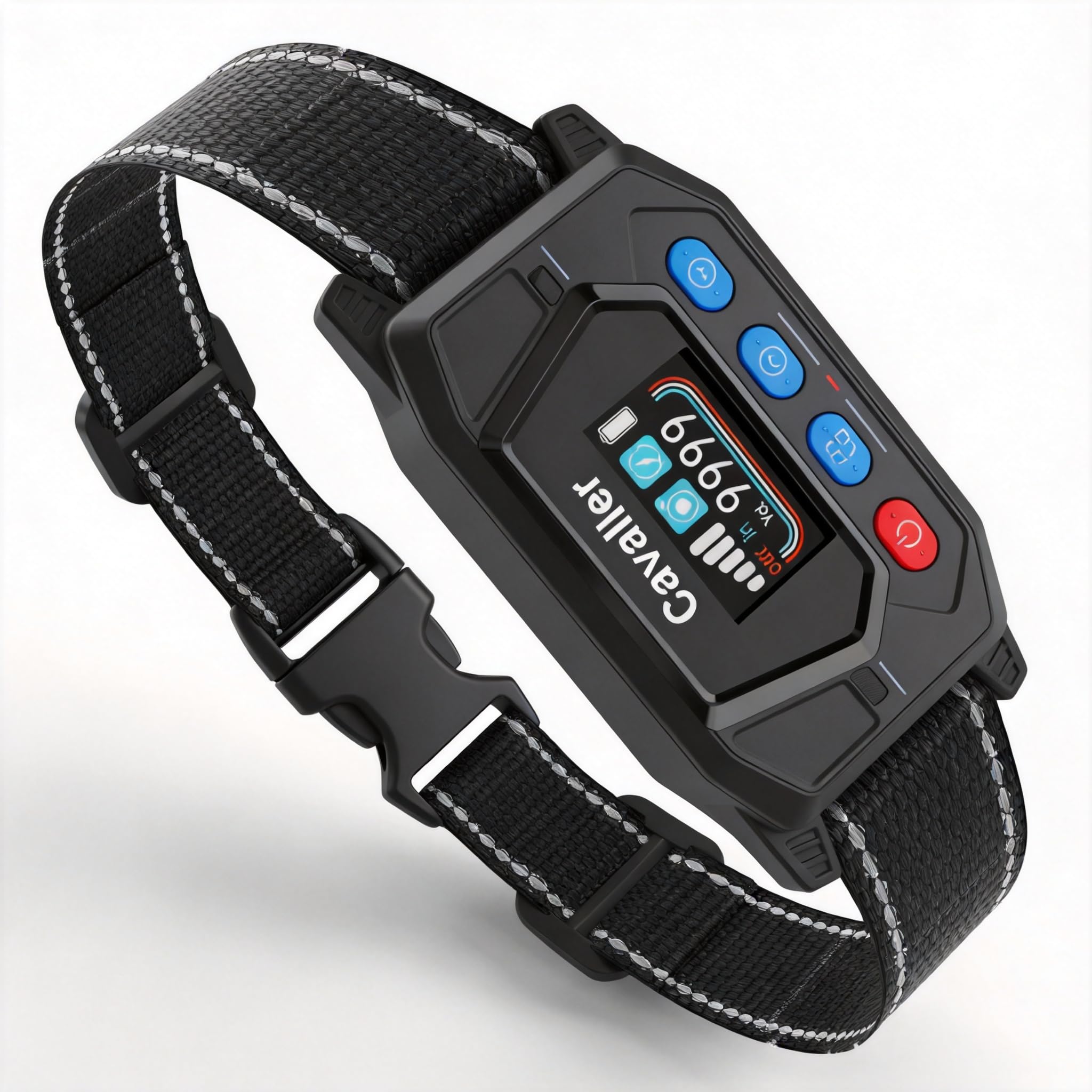
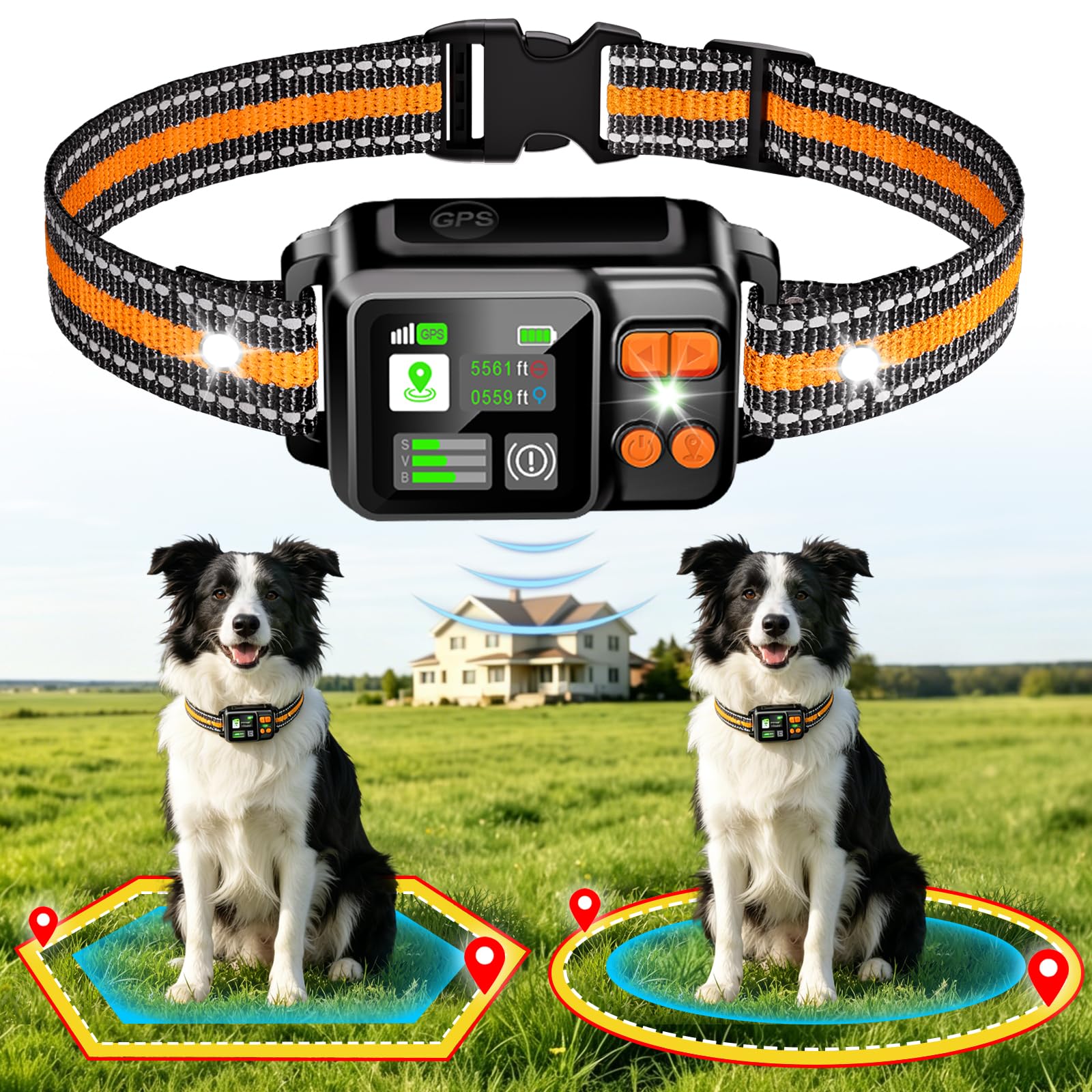
Two boundary modes on one collar is what puts the VAQELI at the top of this list. Circular mode is the fast path: you set a radius on the collar, walk the line once to check it, and you're finished. Custom mode pulls the boundary out of a perfect circle and closer to the shape of a real yard.

What we like most is how little there is to manage. No app, no account, no monthly fee. The whole system is a collar, a charger and a set of buttons, which is exactly what you want from a fence you'll think about twice a week. The catch sits in the custom mode: it builds the shape from a limited number of waypoints, around 16 of them spaced roughly 16 feet apart, so the perimeter it can trace runs a few hundred feet rather than a few thousand. On a small lot that's plenty. On anything bigger, set a wide circle and leave it there.

That independence costs precision in the worst spots. A collar working from satellites alone settles more slowly under heavy canopy than the dual-band premium pick below, so a heavily wooded lot is where this one loses its edge. Under open suburban sky it's the easiest system on this page to live with.

Bottom line: For most yards this is the fence we point people to: two boundary modes, no app to fight with, no monthly fee, and a waterproof collar that keeps working through a wet spring.
2

Safehalo 2-Dog GPS Fence

Safehalo 2-Dog GPS Fence

Two dogs

Our Score 9.6/10
Check Price

Worth Noting

  • Built for dogs from 15 to 120 pounds
Circular Range
65-9,840 ft
Boundary Shapes
Circular and custom, per collar
Collars Included
2, independent
Water Resistance
IPX7

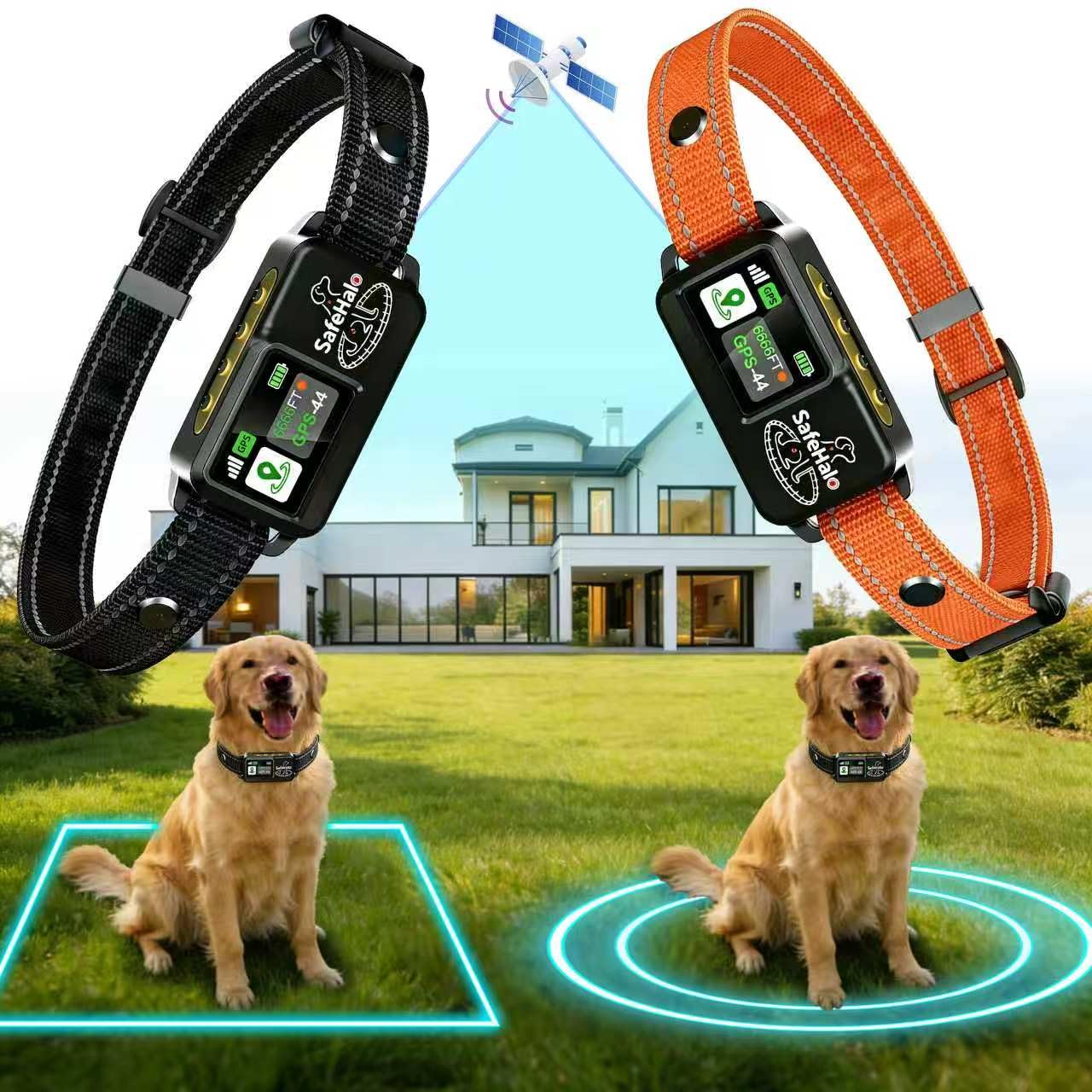
Two collars arrive in the box, and each carries its own boundary, its own warning levels and its own saved fence. That's the entire argument for the Safehalo: two dogs with different ranges and different nerves stop being a compromise, and you can restore one dog's fence without touching the other's.

The numbers back it up. Circular boundaries run from 65 feet to 9,840 feet, so the same kit covers a courtyard and a back forty, and custom shapes are there when a circle won't fit. Both collars use GPS, GLONASS and Galileo together, which is the kind of redundancy that matters when your yard has a tree line down one side. Battery is rated at up to 48 hours per collar, and both are IPX7.

The small touches are what we appreciate here. The beep can be switched off entirely and the vibration dialed down to nothing, so a nervous dog can run a quieter ladder than its housemate instead of sharing one setting for the sake of simplicity.

Bottom line: If you're fencing two dogs with different habits, this is the only system here that ships both collars with a separate boundary for each, plus a two-day battery.

3

Holercoco F11 GPS Fence

Holercoco F11 GPS Fence

Tight budgets

Our Score 9.8/10
Check Price

Worth Noting

  • No map or location history on a phone
Fence Modes
Circular and multi-point
Subscription
None; no app or Wi-Fi
Water Resistance
IPX7
Adjustable Radius
49-6,561 ft in 3 ft steps

No base station, no transmitter, no app and no Wi-Fi. The Holercoco F11 is a collar and a set of buttons, and that's the whole installation: charge it, set a distance, put it on the dog.

The range is the surprise. The radius adjusts anywhere from 49 feet to 6,561 feet in three-foot steps, fine enough to hug a driveway edge and wide enough to cover a small farm. Two layouts handle most yards, a plain circle or a multi-point boundary you walk and mark, and the feedback ladder runs from a beep across five levels through vibration and static at 0 to 9.

At 11.3 ounces the receiver is on the substantial side for a small dog and unremarkable on a retriever, so measure the neck before you commit; a collar that slides around won't deliver a consistent warning.

What keeps the F11 on our list is the value. It's the least expensive system here, and nothing about the design reads as a corner cut: the wide adjustable radius, the IPX7 sealing and the three correction modes are exactly what the mid-priced systems ask more for. If your yard is a simple shape and your dog is past the chewing stage, this does the job.

Bottom line: The cheapest sensible way into a no-app fence: a wide, finely adjustable radius and IPX7 sealing, with nothing to pair and nothing to subscribe to.

4

SpotOn Nova GPS Fence

SpotOn Nova GPS Fence

Complex layouts

Our Score 8.0/10
Check Price

Worth Noting

  • Most expensive system in this group
Neck Fit
10-26 in
Fence Shapes
Unlimited, any shape
Collar Weight
13.4 oz
Keep-out Zones
Yes, with correction-free areas

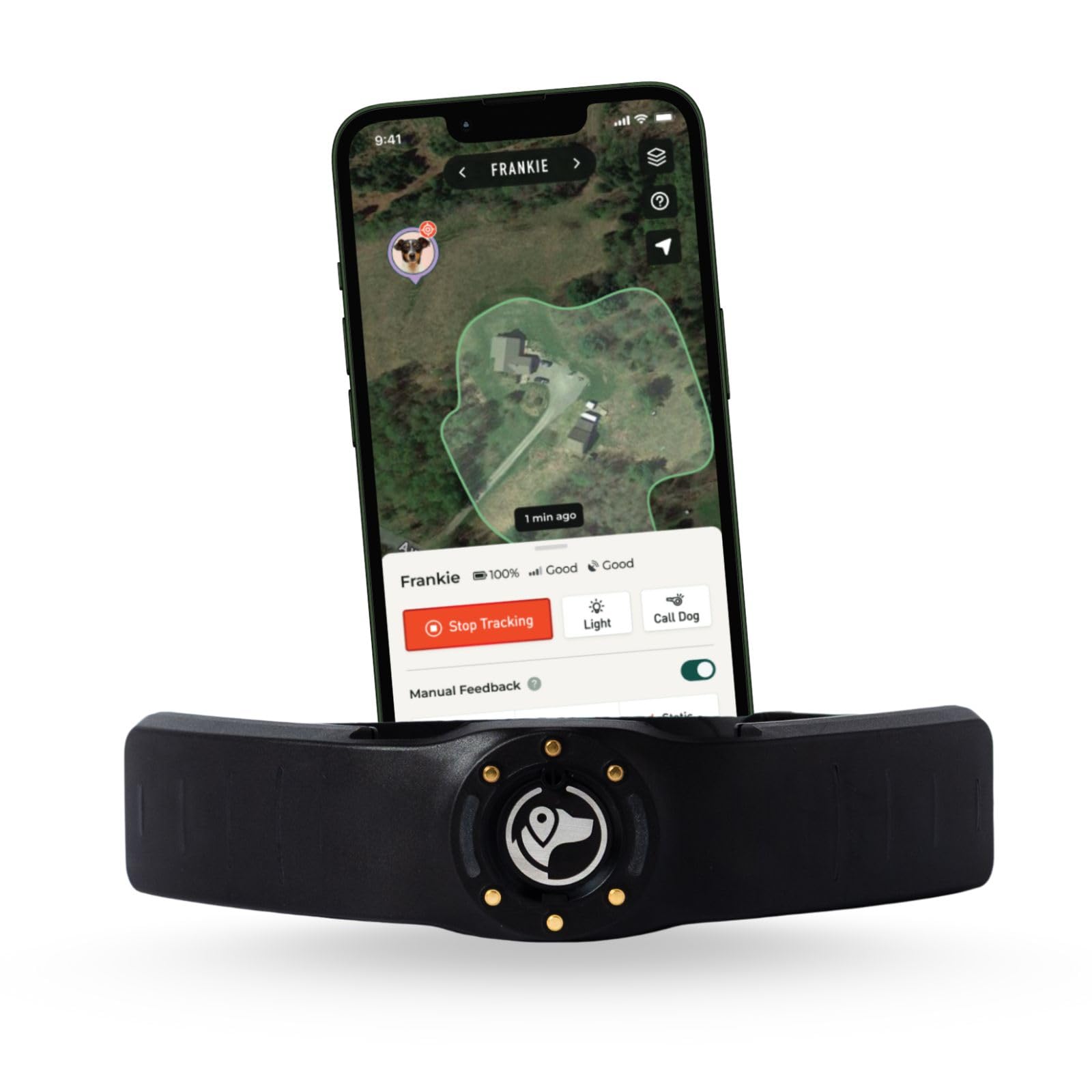
This is the only system here that lets you draw a fence instead of measuring a radius. You open the app, trace the line around the yard on a map, and the collar holds it, which sounds like a small thing until you've tried to fit a circle around a pool, a driveway and a barn.

The app is where everything lives: unlimited fences of any shape and size, keep-out zones for the pool or the chicken run, and areas the dog can cross without a correction. The collar runs dual-band, dual-feed GPS aimed squarely at the conditions that make cheaper collars wander, and its 13.4 ounces on a 10-to-26-inch neck puts it in medium-and-large-dog territory.

Where it earns the money is terrain that defeats a circle. When the no-go zones on your property aren't round, drawing the fence is worth more than any amount of radius, and the correction-free corridor is the detail we appreciate most: the dog can cross to the front yard without a zap for doing it.

The catch is dependence. Everything runs through the app, from drawing the fence to seeing where the dog is, so a dead phone or a sluggish session sits between you and your boundary. Lose the phone and you've lost the map until you find it again.

Bottom line: We recommend it for property with awkward no-go zones a circle can't handle; if a round boundary would do, the price is hard to justify.

5

Zigpet GC05 GPS Fence

Zigpet GC05 GPS Fence

Odd-shaped yards

Our Score 9.0/10
Check Price

Worth Noting

  • About 20 hours of runtime with GPS on
Battery
Up to 60 days standby, 20 hours with GPS
Fence Range
82-7,000 ft
Boundary Shapes
Circular and polygonal via app
Water Resistance
IP67

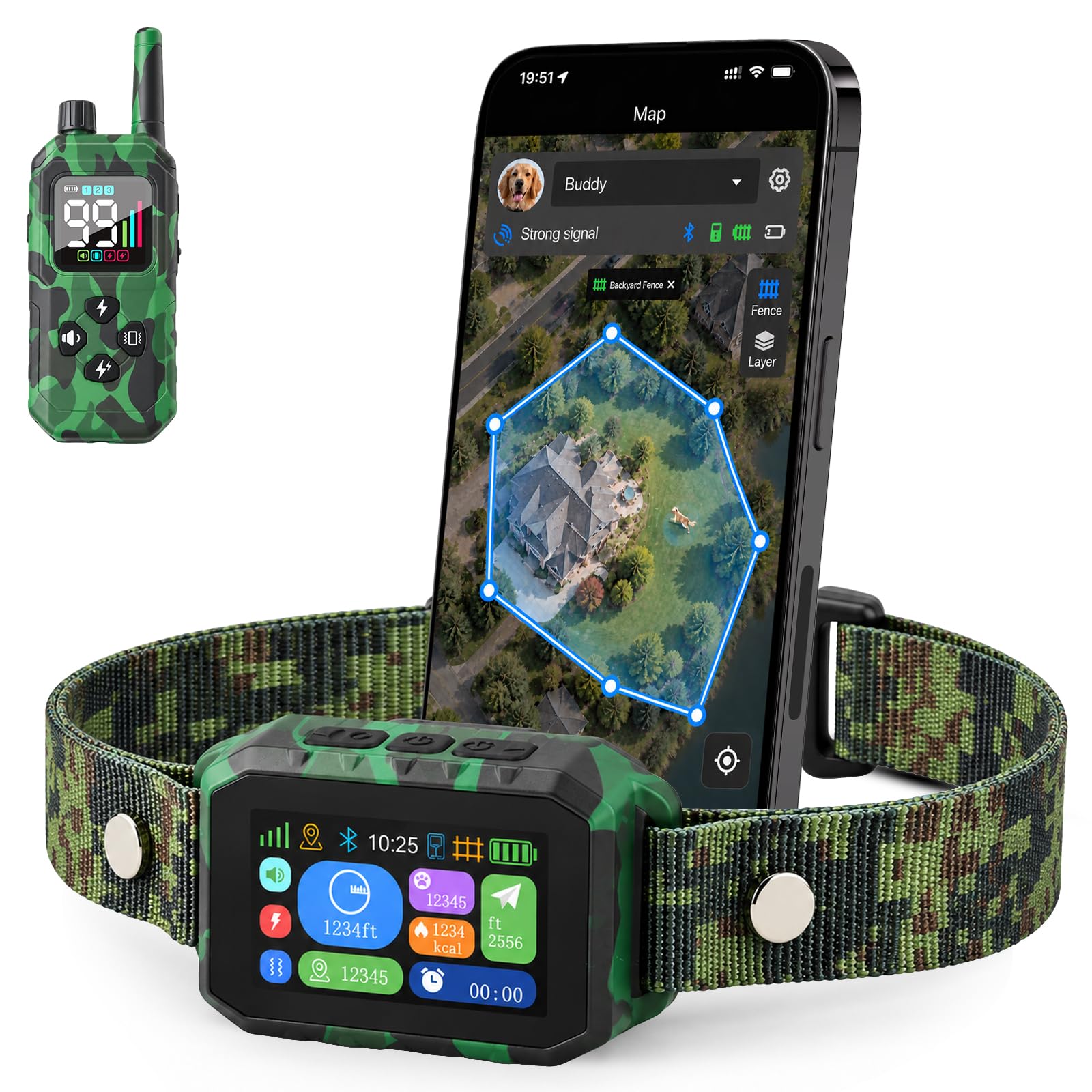
Zigpet's GC05 is the cheaper route to boundaries you draw on a phone: circular fences out to 7,000 feet, or a polygon you trace around the odd shape of your lot. If your yard has a dogleg in it and you'd rather not pay premium money for the privilege, this is the compromise that doesn't feel like one.

The warning design is the part worth knowing about. The collar starts vibrating about 16 feet before the line, which gives a dog room to turn rather than a jolt out of nowhere, and there are four feedback modes to choose from. An LCD shows fence status and location, the receiver is IP67, and a handheld remote reaches 1,640 feet for recall and general training.

The remote is a bonus rather than the reason to buy; containment is what you're paying for, and the polygon mode only exists inside the app, so your fence is only as available as your phone. That suits a phone-first household and irritates anyone who wants a boundary set once and never revisited.

Bottom line: For an awkwardly shaped yard without premium money, this is the pick we hand people: a free app, drawn fences and a trainer in the same collar.

6

PATPET GF400 GPS Fence

PATPET GF400 GPS Fence

Farms and acreage

Our Score 8.4/10
Check Price

Worth Noting

  • Circular boundary only, no custom shapes
App Requirement
None; no app needed
Boundary Radius
Up to 9,999 yards
Correction Modes
No-shock, small dog, large dog
Water Resistance
IP67

A 9,999-yard radius is an odd number to print on a dog collar, and it tells you exactly who this is for: farms, acreage, and dogs that work a fence line rather than a lawn. PATPET built this one for open country, and the collar is happiest when the boundary is measured in acres.

Three modes do the training work: a no-shock setting that uses tone and vibration only, a small-dog static level and a large-dog level, so you can start gentle and stay there if the dog responds. The receiver is IP67, sealed against rain, puddles and a quick dunk, and it remembers your distance setting after the power goes off, which saves re-measuring every time the battery runs down.

On open land the range and the simplicity make a good case, and this is the system we point at when someone has a few acres and a hard-headed dog. What holds it back is how it holds up: some collars quit charging within a few months, which is the kind of failure that leaves a dog uncontained rather than merely inconvenienced. Check the charger every few weeks, and keep a spare collar if the dog is out alone.

Bottom line: For acreage and a dog that needs room to work, nothing here covers more ground for less, and the no-shock mode suits a sensitive dog.

7

CQWKZU Wireless Dog Fence

CQWKZU Wireless Dog Fence

Rectangular lots

Our Score 9.6/10
Check Price

Worth Noting

  • No free-form boundary shape
Dog Fit
15-120 lb, 15-26 in neck
Charge Time
About 2 hours
Boundary Shapes
Circular and rectangular
Water Resistance
IPX7

Rectangular is the boundary shape nobody else here offers, and for a lot of suburban yards it's the right one: a driveway down one side, a neighbor's fence down the other, and a line that runs straight between them instead of bulging into the flower beds.

For a corner lot with straight edges, that makes it the tidiest fit in this group. You get circular and rectangular layouts, IPX7 sealing on the receiver, and a magnetic charging cable that fills the collar in about two hours, quick enough that a midweek top-up isn't a chore. Static and vibration both step from 1 to 9, and the collar is sized for dogs from 15 to 120 pounds on necks of 15 to 26 inches.

Two things to check before you order. A rectangle is only as good as the measurement you feed it, so pace the long sides twice rather than once. And at 13.4 ounces the receiver is a serious piece of hardware, fine on a collie and a lot on anything under about 20 pounds.

Bottom line: For a genuinely rectangular yard, this is the cleanest fit we found here, with a two-hour charge and a receiver that shrugs off rain.

How We Tested GPS Wireless Dog Fences in Real Yards

We started with every GPS fence system we could find and cut anything that couldn't hold at least half an acre, fit a 15-pound dog, or redraw a boundary without a subscription. That left nine systems, and we ran them for eight months across three yards: my own half acre that backs onto a wooded slope, a flat suburban lot with an open view of the sky, and a rented cabin where we had to build a boundary in twenty minutes with nothing but a phone.

Setup was timed from the moment the box opened to the moment a collar held a boundary, with one person working alone. We flagged the drawn line at eight points, then walked it with a handheld GPS morning and evening through the first week to see how far the warning zone drifted. Systems that held within a couple of feet in open sky still wandered near the tree line, and one lost its boundary entirely whenever the dog went behind the shed.

Each collar went on both a short-coated terrier and a thick-necked shepherd mix, and we checked the contact prongs after a full-speed run to see whether the housing had spun or loosened. Before setting a working level, I ran each static correction against my own forearm so I knew how sharp the jump between levels really was, then watched whether the dogs hung back from the edge, blew straight through the warning zone, or refused to leave the porch. We logged battery drain day by day, hosed the collars off after a muddy week, and added up two years of subscription costs against the sticker price.

How to Choose GPS Wireless Dog Fences

Match the boundary shape to your yard

Walk your property line before you compare numbers. A circle is the easiest boundary to set and the easiest for a dog to understand, and most lots of a quarter acre or less sit inside one comfortably. Custom shapes earn their keep on awkward ground, and the Safehalo and the SpotOn will trace almost anything.

The trap is that cheap custom modes are capped. The VAQELI's free-form layout is built from a limited set of waypoints, so its perimeter tops out at a few hundred feet, which is smaller than plenty of suburban yards. If your lot is bigger than that, a circle set wide is the better answer.

Decide whether you want an app in the loop

App-free collars, like the VAQELI, the Holercoco and the PATPET, set the fence with buttons on the receiver. Nothing to pair, nothing to update, and a system that works when your phone doesn't. App-based systems buy you drawn fences, keep-out zones and a live location map, and they ask you to keep a phone charged and a connection handy.

Neither is better in the abstract. If you only ever need a circle, the app is one more thing to go wrong. If your dog's no-go zones are genuinely complicated, it is the whole point of the purchase.

Check the minimum radius, the battery and the collar's weight

The headline range is usually the least useful figure in the listing. What matters more is the smallest boundary a system can set: anything that can't shrink below 65 feet is awkward on a small lot, while the Holercoco goes down to 49 feet in three-foot steps.

Battery follows the same logic. Twenty hours with GPS running means a nightly charge; 48 hours means every other night. And weigh the receiver against your dog: at 13.4 ounces, the SpotOn and the CQWKZU are a lot of hardware for a small neck.

Train the dog before you trust the fence

A GPS fence is a training tool with a boundary attached, not a wall. Every system here layers the warning, tone then vibration then static, and the good ones start warning well before the line, as the Zigpet does at about 16 feet. That gap is what gives a dog time to turn rather than get corrected for wandering.

Run short leashed sessions for the first week or two, keep the static at the lowest level that gets a reaction, and don't leave a dog unattended in a new boundary until it has turned away from the warning on its own several times.

Frequently Asked Questions

Final Verdict

For most yards, the VAQELI is the one to buy: two boundary modes, no app to fight with, no monthly fee, and a collar that handles rain. Choose the Safehalo if you're fencing two dogs and want each to carry its own line, or the Holercoco if you'd rather spend less and set the radius with a button.

The SpotOn justifies its price only on property where the no-go zones refuse to be a circle. Everywhere else, a well-set circle does the job.