Power & Charging

Best Home Backup Battery of 2026

A home backup battery is a purchase you hope will bore you: you park it, keep it charged, and forget it until the lights flicker. The trouble is that the category is crowded with big capacity claims while the details that shape daily ownership—recharge speed, weight, fan noise, app connectivity, how power is distributed, and whether the battery can be expanded later—get buried. What you're really buying is a calmer evening when the grid drops, not a spec sheet.

Over the past nine months, I’ve tested six home backup batteries through planned outages, weekend projects, and everyday top-ups. The best earned their floor space with quick charging, sensible power distribution, solid build quality, and controls that worked without a manual; the fussy ones made me appreciate honest value and reliable behavior. One thing first-time buyers should know: usable output rarely matches the headline capacity, and port layout can matter as much as watt-hours. The picks below are the ones I’d trust when the power actually goes out.

1

Anker SOLIX S2000

Top Pick
Anker SOLIX S2000

Most home outages

Our Score 9.4/10
Check Price

Worth Noting

  • No parallel cable for linking units
  • Fan noise rises under heavy charging
Weight
35.7 lb
Capacity
2,010Wh
Battery Cycles
10,000 cycles
Continuous Output
1,500W

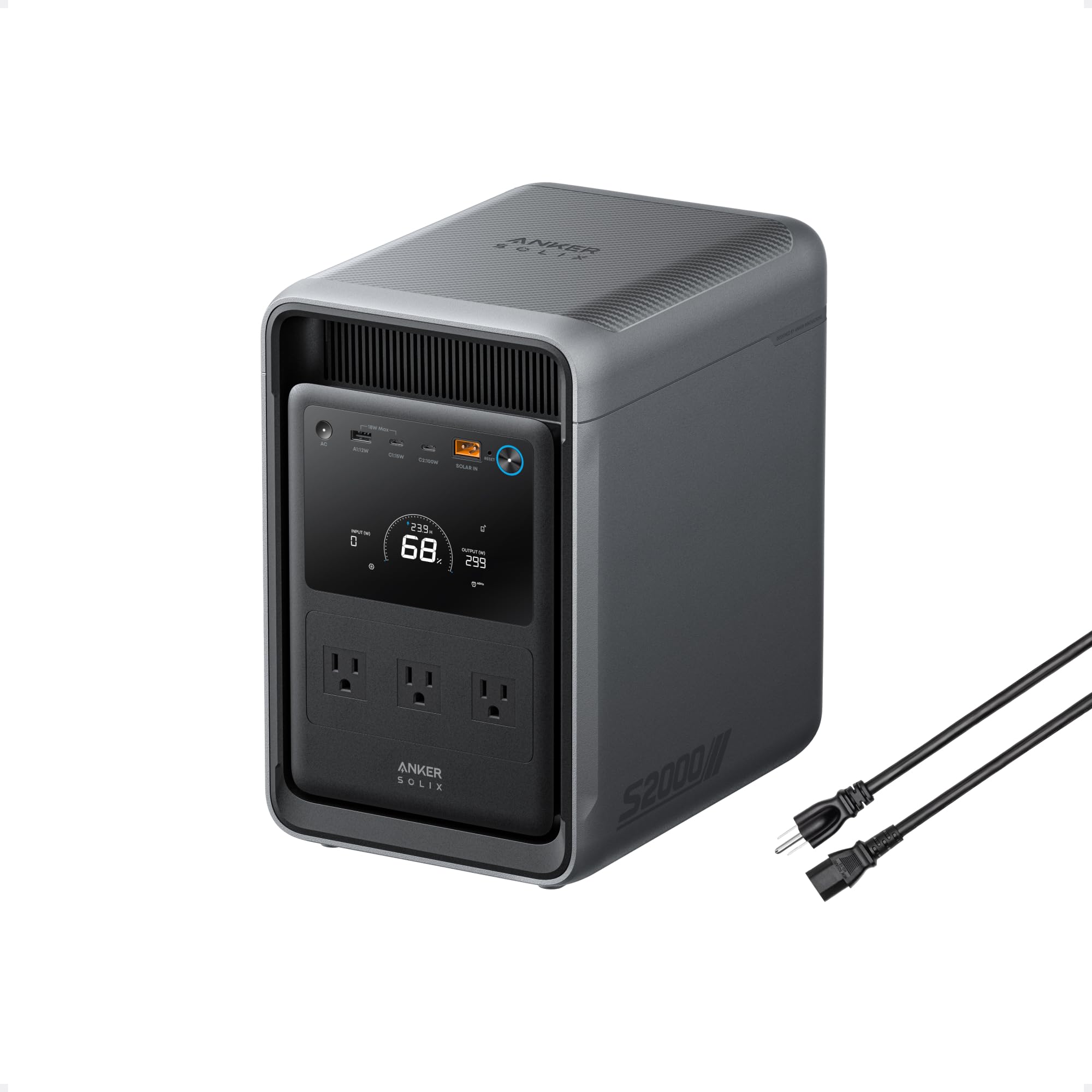
Two thousand watt-hours used to mean a box that stayed in the garage. The SOLIX S2000 is 35.7 pounds and roughly a foot tall, so we can carry it from the hall closet to the kitchen while the lights are still on. That matters more than another hundred watt-hours on the label.

That balance is why it is our top pick for most homes. The 2,010Wh LFP battery gives a fridge, router, lights, and a fan room to run without making you choose between them, and the 1,500W continuous output with 3,000W surge handles the startup draw of a fridge or a small pump. We also like the 10,000-cycle rating and five-year warranty; those are the numbers that make a backup battery worth keeping charged.

Recharging is flexible: wall, solar up to 400W, car, generator, or AC plus solar. We treat it as a closet appliance and top it up every few months; the six input paths mean you are not locked into one cable. The eight outlets give you room for a fridge, a lamp, a router, and a phone charger without a strip.

The 1,500W ceiling is the line to respect: a fridge and a few essentials, yes; a space heater, a kettle, and a microwave at once, no. If that is your outage plan, step up to a 3,600W unit. For everyone else, the S2000 is the rare battery that is both big enough to matter and small enough to move.

Bottom line: We think the SOLIX S2000 is the right default for most homes: 2,010Wh in a 35.7-pound body, with enough surge for a fridge and a five-year LFP warranty.

2

Jackery HomePower 3600 Plus

Jackery HomePower 3600 Plus

Whole-home essentials

Our Score 9.2/10
Check Price

Worth Noting

  • Transfer switch not included for home wiring
Weight
77.2 lb
Capacity
3,584Wh
Recharge Time
2 hours AC+DC
Continuous Output
3,600W

A 77.2-pound power station sounds like a two-person job until you tilt it onto its wheels. The HomePower 3600 Plus has a pull handle and a footprint that lets it live in a garage or utility room, and that mobility is exactly what makes it our pick for whole-home essentials. With 3,584Wh and 3,600W continuous, it is built to carry a fridge, a freezer, and a furnace fan through an outage; the 7,200W parallel output and dual-voltage capability are for the bigger loads a standard portable cannot touch.

The 3600 Plus is not a whole-house generator. It is a plug-and-play reserve for the circuits you care about, and Jackery's MTS path is the part we appreciate: you still need an electrician for the transfer switch, but the unit itself does not require a complex install. Four charging options, including a two-hour hybrid AC+DC recharge, make it easier to keep ready between storms. The ceramic-membrane cells and five-year warranty are there for the long haul.

At 77.2 pounds it is still a deliberate move, not a grab-and-go battery; the wheels help on smooth floors, not stairs. We also like that the unit can sit quietly in a utility room without demanding a dedicated pad. If your outage plan stops at a fridge and a router, a smaller unit will do; if it includes a well pump or a furnace blower, this is the Jackery we point to.

Bottom line: If your outage plan includes a furnace fan, a fridge, and a well pump, the HomePower 3600 Plus is the one we point to.

3

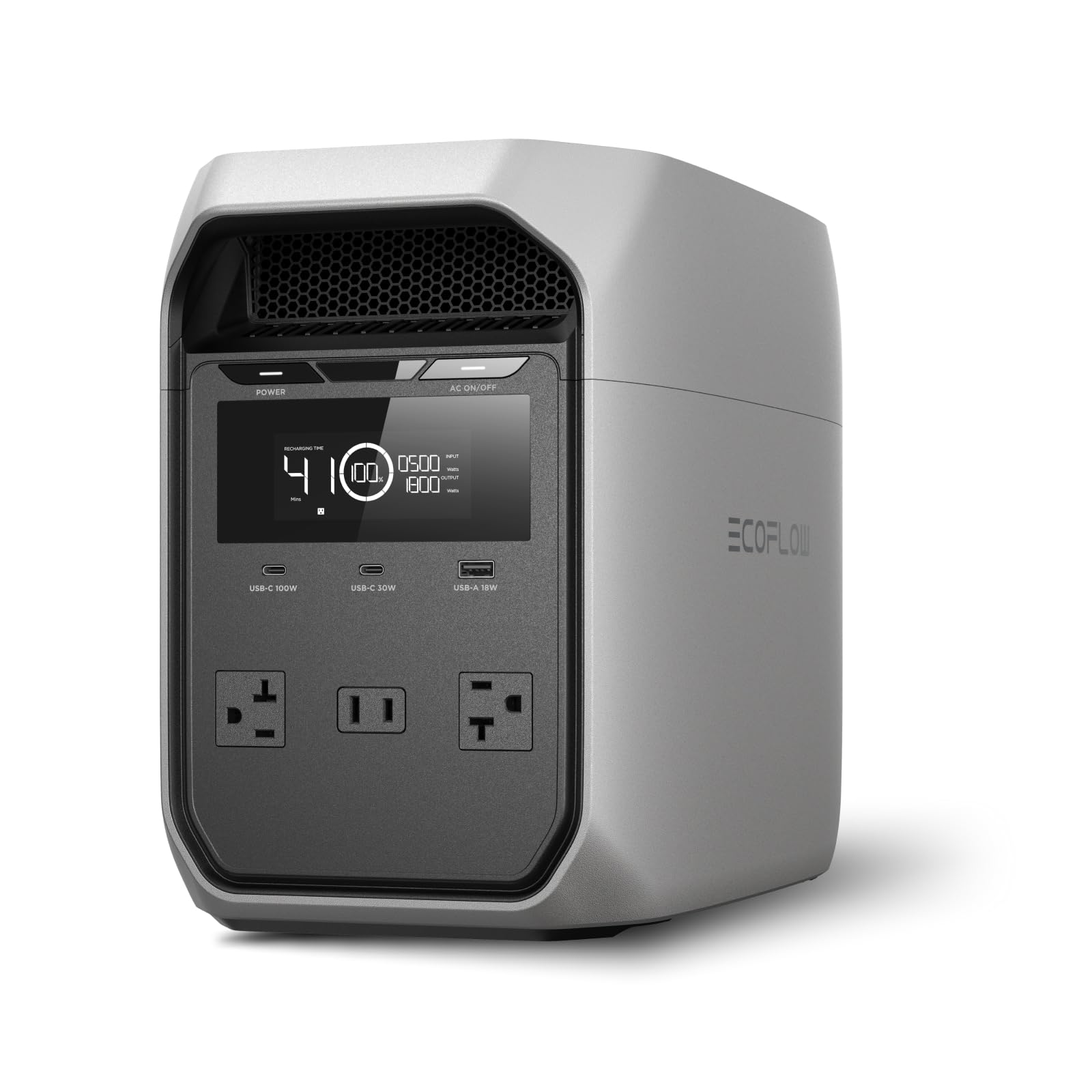
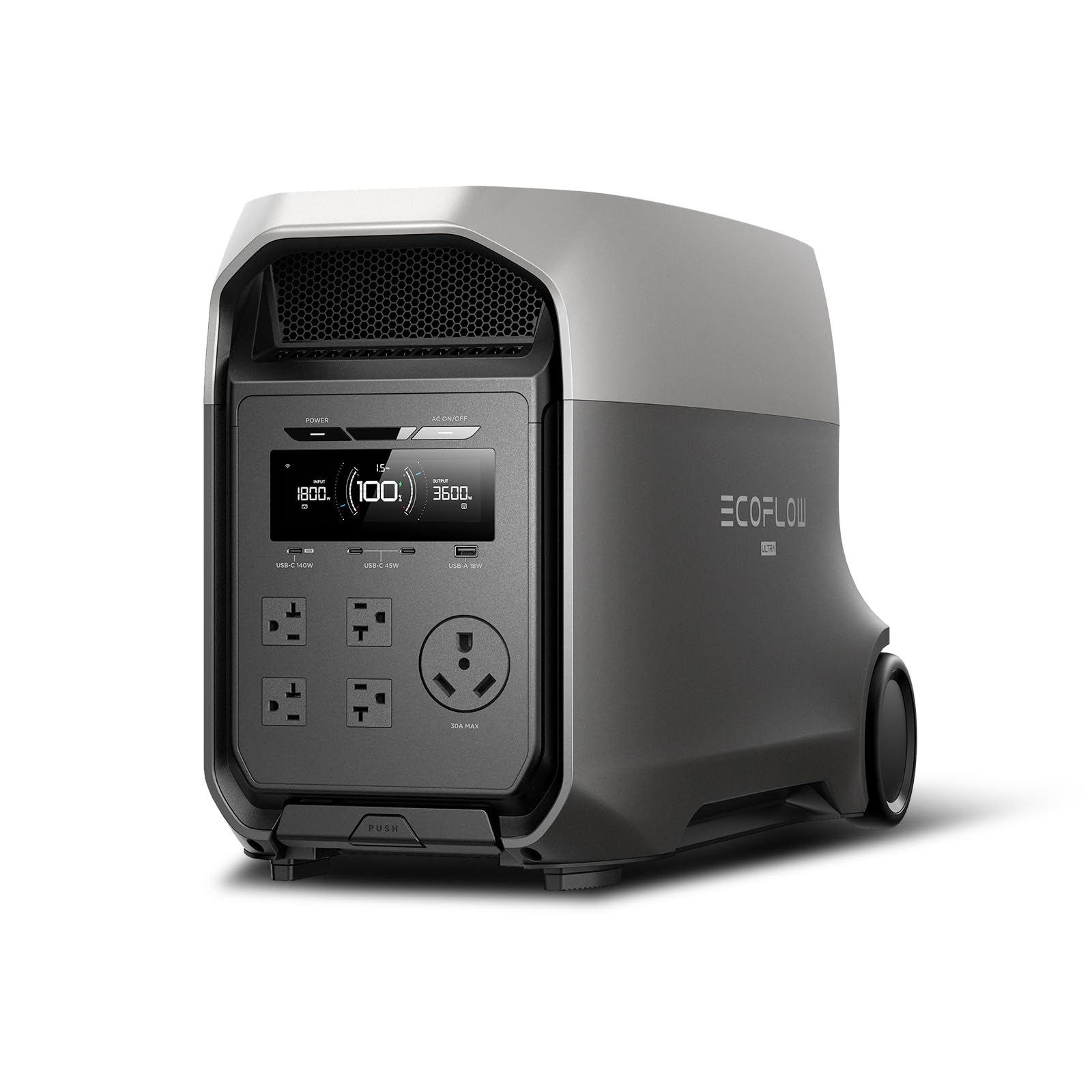
EcoFlow Delta 3 Ultra

EcoFlow Delta 3 Ultra

Quiet large backup

Our Score 9.2/10
Check Price

Worth Noting

  • Not expandable with add-on batteries
Weight
72.1 lb
Capacity
3,072Wh
Noise Under Load
25dB
Continuous Output
3,600W

The first thing we check on a large home battery is not the watt-hour rating; it is whether we can hear it from the next room. The Delta 3 Ultra is rated at 25dB under load, which is quieter than a fridge, and its sub-10ms UPS switchover means a desktop or router does not even blink when the grid drops.

The 3,072Wh LFP battery and 3,600W continuous output put it in the same class as the bigger Jackery, while the 7,200W surge gives motor loads room to start. We like the four charging paths and the app control, but what makes it useful in a house is the pass-through design: it can sit on utility power and take over only when needed.

For a quiet, large backup that protects sensitive electronics, this is the pick we recommend. It is not the cheapest way to get 3kWh, and it is not the lightest at 72.1 pounds, but the combination of low noise and fast UPS transfer is worth paying for if the unit lives near a bedroom or office.

At 72.1 pounds, it is an appliance that stays in one place; we treat it as a utility-room fixture rather than something you carry to a campsite. For a house, that is a reasonable trade for the quiet operation and the clean transfer.

Bottom line: We recommend the Delta 3 Ultra when the battery lives near people: 3,072Wh, 3,600W, and a 25dB, 10ms UPS that keeps the office quiet.

4

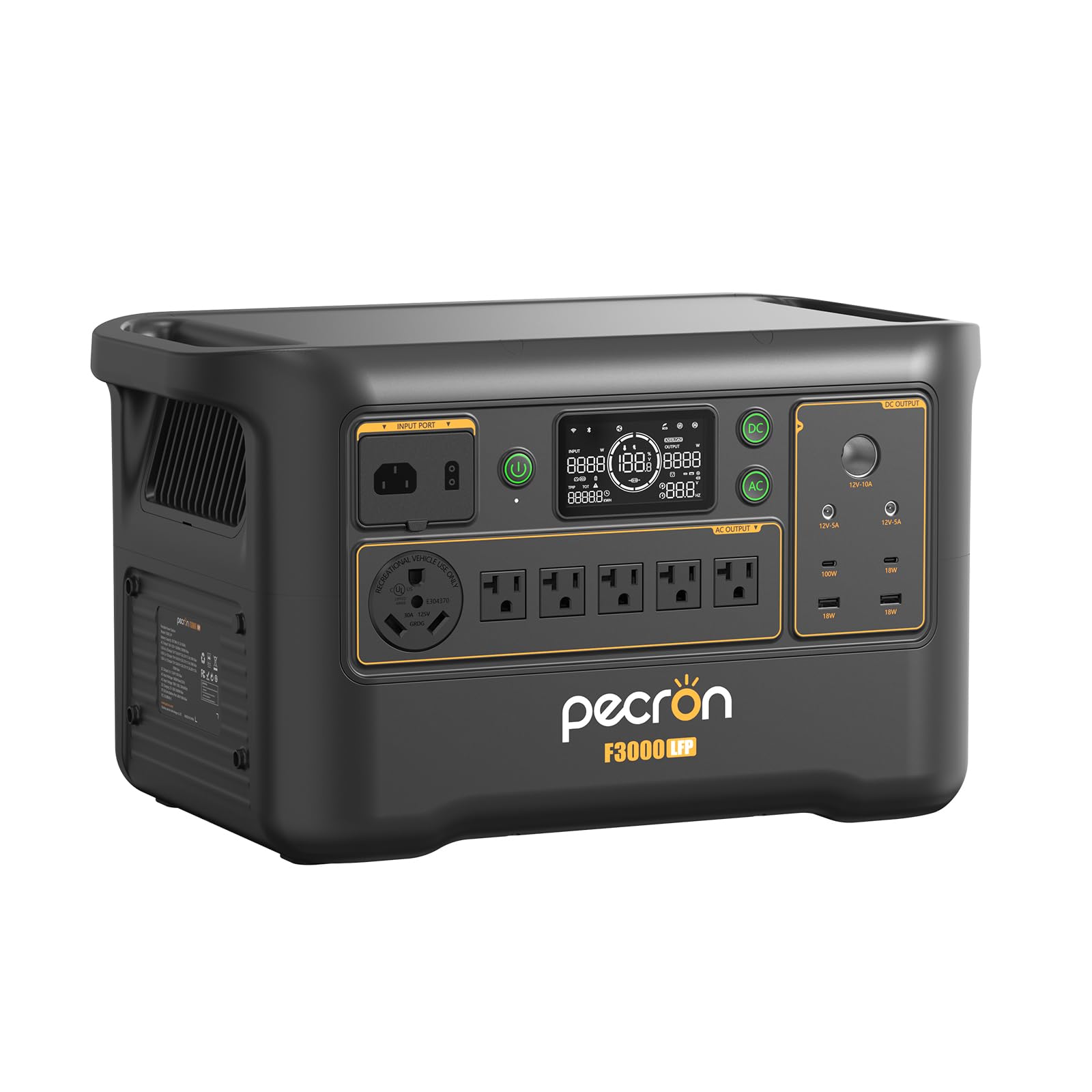
PECRON F3000LFP

PECRON F3000LFP

Value large capacity

Our Score 9.0/10
Check Price

Worth Noting

  • App pairing can take several tries
  • 63.3 pounds is a two-person lift
Weight
63.3 lb
Capacity
3,072Wh
Expansion
Up to 10,752Wh
Continuous Output
3,600W

The PECRON F3000LFP is the unit that makes the premium-priced 3kWh picks here look expensive. It pairs a 3,072Wh LFP battery with 3,600W continuous output and a 63.3-pound body, and it does that at a midrange price rather than a premium one. On paper, the gap between this and the bigger names is smaller than the gap in cost.

The port count is the practical advantage: six AC outlets, two 100W USB-C ports, two USB-A, a car port, and two DC outputs mean we can leave the power strip in the drawer. The 1,800W AC input recharges it in about two hours, and the expansion path to 10,752Wh is the reason to pick it over a sealed 3kWh unit.

The fan is the main compromise. Under a sustained heavy load it is audible enough that we keep it out of a bedroom, but in a garage or utility room it fades into the background. That is the price of a 3.6kW inverter in a value package.

For a large-capacity system on a tighter budget, this is the one we recommend. The 3,072Wh reserve and 3,600W output are the parts that matter, and the expansion path keeps it useful if one outage turns into three.

Bottom line: The F3000LFP is our large-capacity value pick: 3,072Wh, 3,600W, and expansion to 10,752Wh without the premium price of the other 3kWh picks here.

5

Jackery Explorer 1000 v2

Jackery Explorer 1000 v2

Light apartment backup

Our Score 9.4/10
Check Price

Worth Noting

  • 42-minute runtime at full 1,500W output
Weight
23.8 lb
Capacity
1,070Wh
Recharge Time
1 hour with app
Continuous Output
1,500W

The Explorer 1000 v2 is the unit we reach for when the power goes out and we do not want to rearrange the furniture. At 23.8 pounds, it is light enough to carry from a closet to the kitchen with one hand, and the 1,070Wh LFP battery is enough to keep a router, a few lights, a fan, and a CPAP running through a short outage. For an apartment or a first backup kit, that combination is the best balance here.

The 1,500W output and 3,000W surge cover a fridge or a small AC unit, and the one-hour recharge in emergency mode is the feature that makes it easy to live with. We also like the 4,000-cycle LFP rating and the seven ports; it is not a whole-home battery, but it is a very capable bridge. The foldable handle and 23.8-pound body mean it can go on a shelf, in a car trunk, or into a closet without a cart.

The limits are the same ones that make it portable: 1,070Wh will not carry a furnace fan or a well pump, and 1,500W is not enough for big heating loads. If those are in your outage plan, the larger Jackery or PECRON is the better fit. If you need something you can move without a cart, this is the one. We also appreciate that the one-hour mode is optional; you can charge more quietly overnight when speed does not matter.

Bottom line: For an apartment outage or a first backup kit, the Explorer 1000 v2 is the light, simple unit we recommend.

6

EcoFlow Delta 3 Classic

EcoFlow Delta 3 Classic

Home-office UPS

Our Score 9.4/10
Check Price

Worth Noting

  • No 12V output or alternator input
  • 1,024Wh is a short outage reserve
Weight
26.7 lb
Capacity
1,024Wh
UPS Switchover
<10ms
Continuous Output
1,800W

A home office does not need a whole-house battery. It needs the router, the desktop, and the monitor to keep running while the grid sorts itself out. The Delta 3 Classic is built around that job: 1,024Wh, 1,800W, and a sub-10ms UPS switchover in a 26.7-pound case. It is small enough to tuck under a desk and powerful enough to run a fridge or a space heater if the outage widens.

That makes it the small UPS replacement we recommend over a dedicated computer battery. It has more output headroom than the 1,500W units here, and the 0-to-80% charge in about 45 minutes is fast enough that a lunch break covers most of a recharge. The app lets you cap charging or check load, which is the sort of control we want when the unit lives in a workroom.

The six outlets cover a desk, a lamp, and a router, and the LiFePO4 battery is rated for a long service life. For a small home office, it is a neater solution than a rack-mounted UPS and a separate power station. It is also a better fit for an apartment than a 70-pound unit, because you can move it without clearing the floor.

Bottom line: If you want a router, desktop, and CPAP to ride through an outage, the Delta 3 Classic is the small UPS we recommend.

7

BLUETTI FridgePower

BLUETTI FridgePower

Fridge backup

Our Score 8.2/10
Check Price

Worth Noting

  • Premium price for a fridge-specific design
Depth
2.95 in
Capacity
2,016Wh
Standby Draw
4W
Continuous Output
1,800W

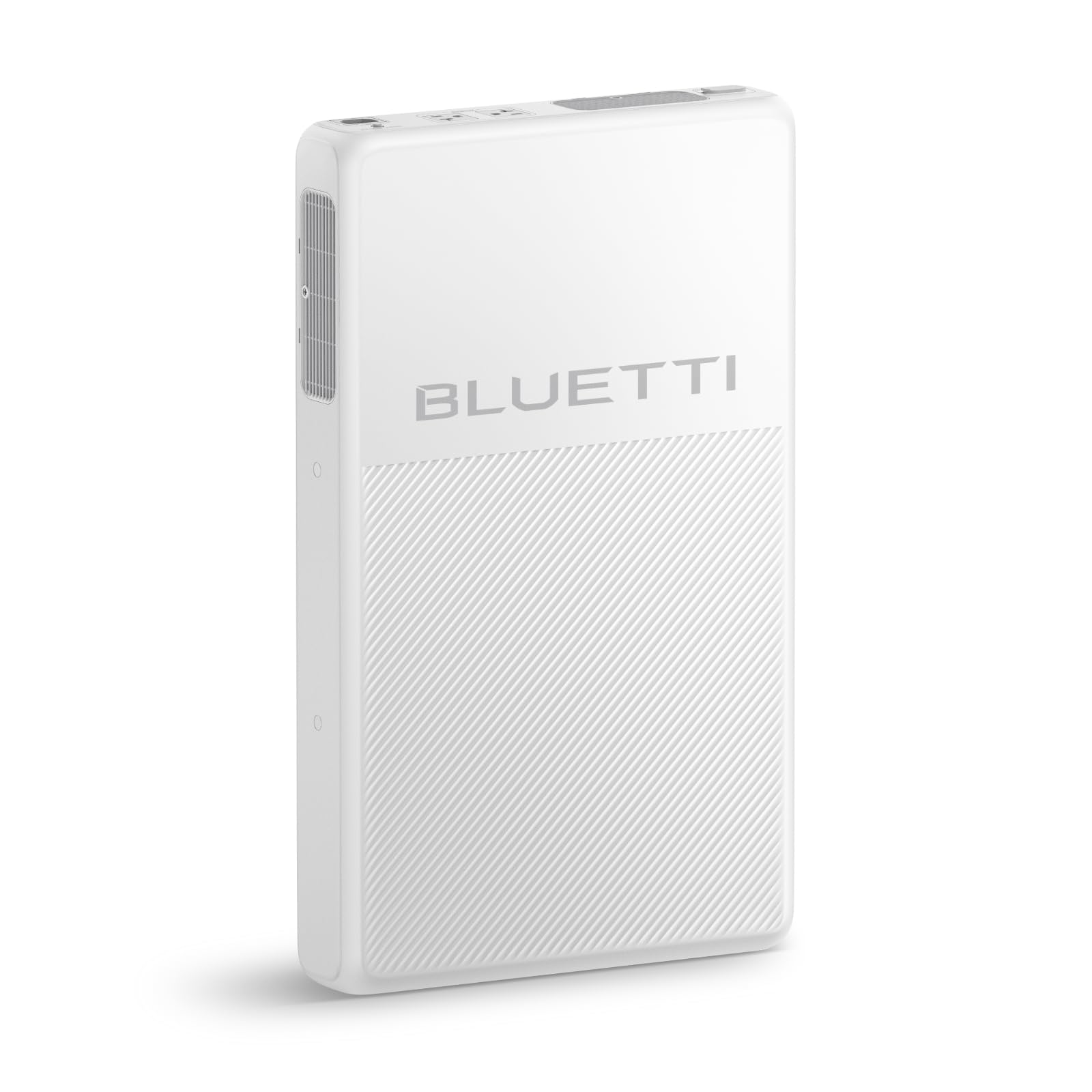
Most power stations are designed to sit on the floor. The FridgePower is designed to sit above the thing it is protecting. Its case is 2.95 inches deep, so it can go on top of a fridge or in a narrow gap beside one, and the 4W standby draw means it is not draining a meaningful amount of its 2,016Wh just waiting for an outage. That is a smarter shape for a kitchen-first backup plan.

The 1,800W output and 10ms UPS are enough for a fridge, a freezer, or a sump pump, and the app can push storm alerts and start a fast charge before the weather hits. We like the voice-control option more than we expected, because checking the battery from across the kitchen is easier than opening an app with wet hands. It is a more focused product than a general-purpose battery, and that focus is the point.

For a fridge-first outage plan, this is the most purposeful unit here, and the one we recommend if the battery will live in the kitchen. The trade-offs are real: 41.9 pounds is awkward to lift onto a fridge, and the fan is noticeable when it runs hard. But if you can place it once and leave it, the slim shape and low standby draw make more sense than a bigger box on the floor.

Bottom line: For a fridge-first outage plan, the FridgePower is the purpose-built pick we recommend, with a slim shape and low standby draw that general-purpose batteries cannot match.

How We Tested Home Backup Batteries

We started by narrowing a long list of home backup batteries by capacity, outlet types, expansion options, warranty terms, and price bracket—then bought six that represented the range of what shoppers actually compare. Testing ran for nine months, with each unit spending time as our primary backup in a home office and kitchen. We flipped the main breaker on Saturday mornings to simulate an outage, then plugged in a fridge, router, modem, work laptop, two lamps, and a phone charger, noting what started cleanly, what had to be unplugged, and how much of the load each unit could carry without complaint.

Charging speed got timed from 20 to 80 percent on wall power and on a partly cloudy afternoon with solar panels, and we watched whether the fan became distracting in the same room. For weight, I rolled each unit over a door threshold and up a short ramp, then tried lifting it onto a low shelf alone; for connectivity, we set up the app, turned outputs on and off remotely, and watched for alerts and dropouts during those outage drills. We also checked battery expansion by adding an extra battery where the system allowed it, then confirming the app reported the new capacity correctly.

Quality and durability showed up in the small stuff: port covers, handle flex, wheel play, and whether anything rattled after nine months of moving between the garage and kitchen. To judge value and functionality, we compared what each unit could run at once against its price bracket and how many everyday devices it handled without a tangle of adapters. Reliability came down to repetition—we ran the same outage sequence again and again, and noted which units started the fridge every time and which needed a second try.

How to Choose the Right Home Backup Battery

Size the Battery Around the Outage You Expect

A 1kWh battery is a bridge: it keeps the router, lights, phone chargers, and a CPAP going, and it may run a fridge for a short stretch. A 2kWh unit is the more comfortable minimum for an overnight fridge-and-fan plan, while 3kWh and up is where you can add a furnace fan, a well pump, or a window AC. We prefer 2kWh we can move to 4kWh that stays in the garage, so match capacity to the circuits you will actually plug in.

Check Continuous Output and Surge, Not Just Watts

A fridge may run on a few hundred watts but draw a surge when the compressor starts; a well pump or furnace blower is worse. That is why a 1,500W unit with 3,000W surge can be fine for essentials, while a 3,600W unit is the safer choice for whole-home loads. Add up the running watts of everything you plan to run at once, then leave headroom for startup. If two big motor loads overlap, neither a 2kWh nor a 3kWh battery is the right answer.

Treat Weight and Placement as Buying Decisions

A home battery is only useful if it is in the right place when the power fails. Under 40 pounds is genuinely portable for most adults; 60 pounds and up wants a cart, a lift, or a permanent spot. Before you choose, pick the outlet and the shelf, measure the door and stair path, and think about whether the unit will sit near bedrooms. The slim BLUETTI FridgePower is a different kind of placement decision: it is built to live above a fridge, not to be carried around.

Recharge Speed, UPS, and Expansion Change the Plan

A one-hour recharge is a convenience between storms; a 10ms UPS is what keeps a desktop from rebooting during a brownout. If you have sensitive electronics, look for a sub-20ms transfer and an app that reports load. For long outages, check solar input and whether the battery accepts add-on packs: the PECRON F3000LFP expands to 10,752Wh, while the Delta 3 Ultra does not expand at all. Buy the recharge path you can actually use, not the one on the spec sheet.

Frequently Asked Questions

Final Verdict

Our default is the Anker SOLIX S2000. It puts 2,010Wh and 1,500W into a 35.7-pound package, with 3,000W of surge and a 10,000-cycle LFP battery, which is the balance most homes need for a fridge, router, lights, and a fan. If your plan includes a furnace fan or a well pump, choose the Jackery HomePower 3600 Plus instead; if the battery will sit near a desk or bedroom, the EcoFlow Delta 3 Ultra is the quieter large backup. For an apartment kit, the Explorer 1000 v2 is the lightest sensible starting point here.