TVs & Video

Best Outdoor Projector Screens of 2026

A backyard movie night is one of those ideas that sounds effortless—until the screen starts flapping in the breeze or the image looks like it's been ironed with a rake. I've hosted enough driveway double features to know that the right outdoor projector screen fixes two things at once: it gives you a big, bright picture after sunset, and it keeps its shape when the wind picks up. What you're really shopping for is a screen that goes up without a fight, stays put, and looks smooth from the first scene to the last.

Over the past eight months, my team and I have set up, taken down, and lived with 12 outdoor projector screens—from simple pull-up styles to framed and inflatable designs. We paid attention to the stuff that annoys people later: wobbly bases, missing stakes, creases that won't relax, and blowers loud enough to drown out dialogue. The shortlist below is what survived backyard breezes, solo setups, and a lot of late-night testing.

1

JWSIT 120-Inch Projector Screen

Top Pick
JWSIT 120-Inch Projector Screen

Backyard movie nights

Our Score 9.2/10
Check Price

Worth Noting

  • Snap-on screen takes hand strength
Frame
Aluminum
Weight
24 lb
Surface
3-Layers PVC
Screen Size
120 inches

A three-layer PVC surface and a snap-together aluminum frame are what push the JWSIT to the front of this group. The 120-inch 16:9 screen has a 160-degree viewing angle, a matte finish, and enough tension in the frame to stay flat once the screen is fastened. It is a more substantial kit than the fabric-and-poles screens at the budget end of this group.

The picture is the reason we rank it first. In a dark yard, the PVC surface holds color and contrast better than the thinner polyester screens here, and the matte finish keeps a projector's hotspot from turning into a glare patch. The 120-inch size is generous without demanding a commercial wall; a patio or a garage door is enough. We noticed the difference most in dark scenes, where cheaper screens go flat and this one keeps some depth.

Setup is a two-stage job: build the aluminum frame, then snap the PVC screen around it. The snaps are tight by design, so the last few take hand strength, and the frame has enough mass that we moved it in two pieces rather than one. The payoff is a taut surface with no sag across the top. The carry case makes storage manageable, though this is not a screen one person hikes into a campsite.

For a backyard that hosts movie nights regularly, that is the right trade. The JWSIT is the screen we choose when the picture matters and the setup can live outdoors for an evening. If you need something that folds into a backpack or inflates in minutes, the lighter picks here serve that job better.

Bottom line: We recommend the JWSIT to anyone who wants the best picture and the most solid stand in this group; it earns its premium for a backyard that hosts often.

2

XHYCPY 16ft Inflatable Movie Screen

XHYCPY 16ft Inflatable Movie Screen

Large backyard crowds

Our Score 9.2/10
Check Price

Worth Noting

  • Noticeable blower noise in quiet scenes
Blower
110 volts, 180 watts
Material
Polyester
Projection
Front and rear
Screen Size
16 feet

A 16-foot inflatable screen changes the scale of a backyard night. The XHYCPY's frame rises into a black-edged theater wall around a removable white polyester screen, with front and rear projection and a 160-degree viewing angle. We like it best for a crowd: kids can sit behind it in a pool or on the grass and still see the picture, which is not something a rigid front-only screen can match.

The supplied 110-volt, 180-watt blower gets the frame up in a couple of minutes and has to stay plugged in all evening. That is the trade for the size. The blower noise sits under dialogue rather than over it, though it is always there in quiet scenes. Tie-downs and stakes matter more than with a rigid stand because the whole thing becomes a sail once inflated.

The removable screen zips off for cleaning, and the whole kit packs into a carry bag. It is a party screen, not a leave-it-out fixture. Plan on an outdoor outlet near the setup and a calm evening rather than a gusty one. For a family movie night or a neighborhood event, that scale is worth the fuss.

Bottom line: We recommend the XHYCPY when the guest list is the point: its 16-foot inflatable frame delivers the biggest shared-screen experience here, provided you have power and calm weather.

3

STWUI 120-Inch Projector Screen

STWUI 120-Inch Projector Screen

Value stand kit

Our Score 8.6/10
Check Price

Worth Noting

  • Bottom edge needs even tensioning
Frame
Steel
Setup
Tool-free
Material
Woven milk silk
Screen Size
120 inches

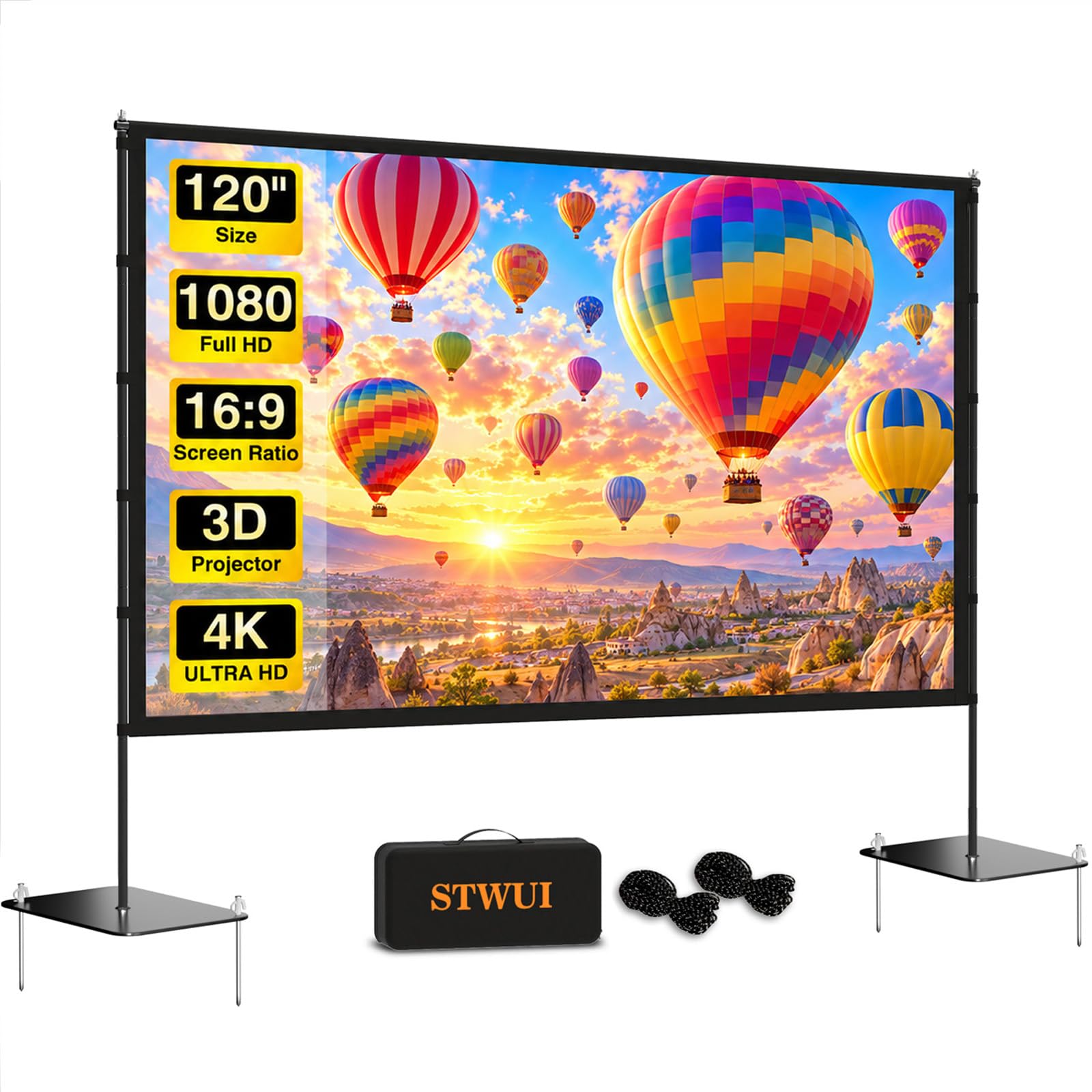
The STWUI's pitch is simple: a 120-inch stand screen you can put together without tools and stake down when the wind picks up. The frame uses modular steel tubes, the base plates widen out for stability, and the woven milk-silk screen fastens with Velcro. We assembled it alone on the first try, which is the test that matters for a screen you will put up and take down often.

The picture is the pleasant surprise at this price. The 16:9 surface has a matte finish and a 160-degree viewing angle, and in a dark yard it holds color better than the thin polyester screens that cost less. Rear projection is supported, but the Velcro straps cross the back, so a rear setup is less clean than a front one. Front projection is the better use of this screen.

For a first outdoor screen, that is an easy trade. It packs into a carry bag, the stake-down base handles a light breeze better than a plain tripod, and the whole thing feels less fragile than the budget materials suggest. We kept reaching for it for casual weeknight movies because setup is short and the picture is good enough to stop noticing the frame.

Bottom line: We recommend the STWUI as the best-value stand screen here: it sets up without tools, anchors better than most budget kits, and looks sharp after dark.

4

ZUVMITG 120-Inch Projector Screen

ZUVMITG 120-Inch Projector Screen

Camping and tailgates

Our Score 8.6/10
Check Price

Worth Noting

  • Frame flexes more than rigid stands
Frame
Metal
Material
Washable milk silk
Anchoring
Stakes, sandbags, and strings
Screen Size
120 inches

Four stakes, sandbags, tie strings, and a carry bag all arrive in the same box as the ZUVMITG's 120-inch screen, and that complete anchoring kit is the reason it earns a place. For camping or a tailgate, having the windproof pieces included matters more than a few extra inches of fabric. The 12.5-pound kit is light enough to move with one person and complete enough to set up without raiding the garage.

We found the 160-degree surface easy to live with in a dark campsite. The washable milk-silk fabric stretches flat enough, and front or rear projection gives you flexibility when the only open wall is the side of a tent or RV. The reinforced base helps, but this is still a freestanding screen: on open ground, use the stakes and sandbags rather than trusting the frame's own footprint.

The trade is weight versus heft. It is light enough for one person to carry and quick enough to justify setting up for a single movie, but the frame wants its stakes and sandbags in any real breeze. We liked it most when the screen had to travel, not when it stayed in one backyard all summer.

Bottom line: We recommend the ZUVMITG for campers and tailgaters who want a complete 120-inch kit with stakes, sandbags, and a carry bag in one box.

5

Mdbebbron 120-Inch Projector Screen

Mdbebbron 120-Inch Projector Screen

Budget hanging screen

Our Score 9.0/10
Check Price

Worth Noting

  • No stand or mounting frame
Weight
1.7 lb
Material
Polyester
Screen Size
120 inches
Viewing Area
104 x 58 inches

At 1.7 pounds, the Mdbebbron is less a screen than a piece of gear you stop thinking about. It folds into a backpack, hangs from hooks, rope, nails, or tape, and stretches to a 120-inch 16:9 surface with a 104-by-58-inch viewing area. There is no frame to build and no blower to plug in.

The polyester fabric is anti-crease, and it does most of its work under tension. Pull it taut and the fold lines soften; leave it loose and they show. The screen is also thin enough to pass light, so we like it best after dark or against a solid, dark surface. Double-sided projection is a real convenience when you want people on both sides of a fence or wall.

The included hanging hardware is the weak spot. Hooks and adhesive tabs are fine for a smooth wall, but they are not what we trust on a windy night or a rough fence. Plan on your own rope, bungees, or screws if the screen has to stay put outdoors. That caveat is easy to accept at this size and weight, because the Mdbebbron gives you a huge picture without asking for a frame, a blower, or a second person.

Bottom line: We recommend the Mdbebbron to anyone with a wall, fence, or frame to hang it from: it is the lightest way here to get a 120-inch outdoor picture.

6

FvcDmik 150-Inch Projector Screen

FvcDmik 150-Inch Projector Screen

Huge 150-inch picture

Our Score 8.6/10
Check Price

Worth Noting

  • Frame flexes when moved assembled
Frame
Iron
Material
Anti-crease polyester
Anchoring
Ground nails and ropes
Screen Size
150 inches

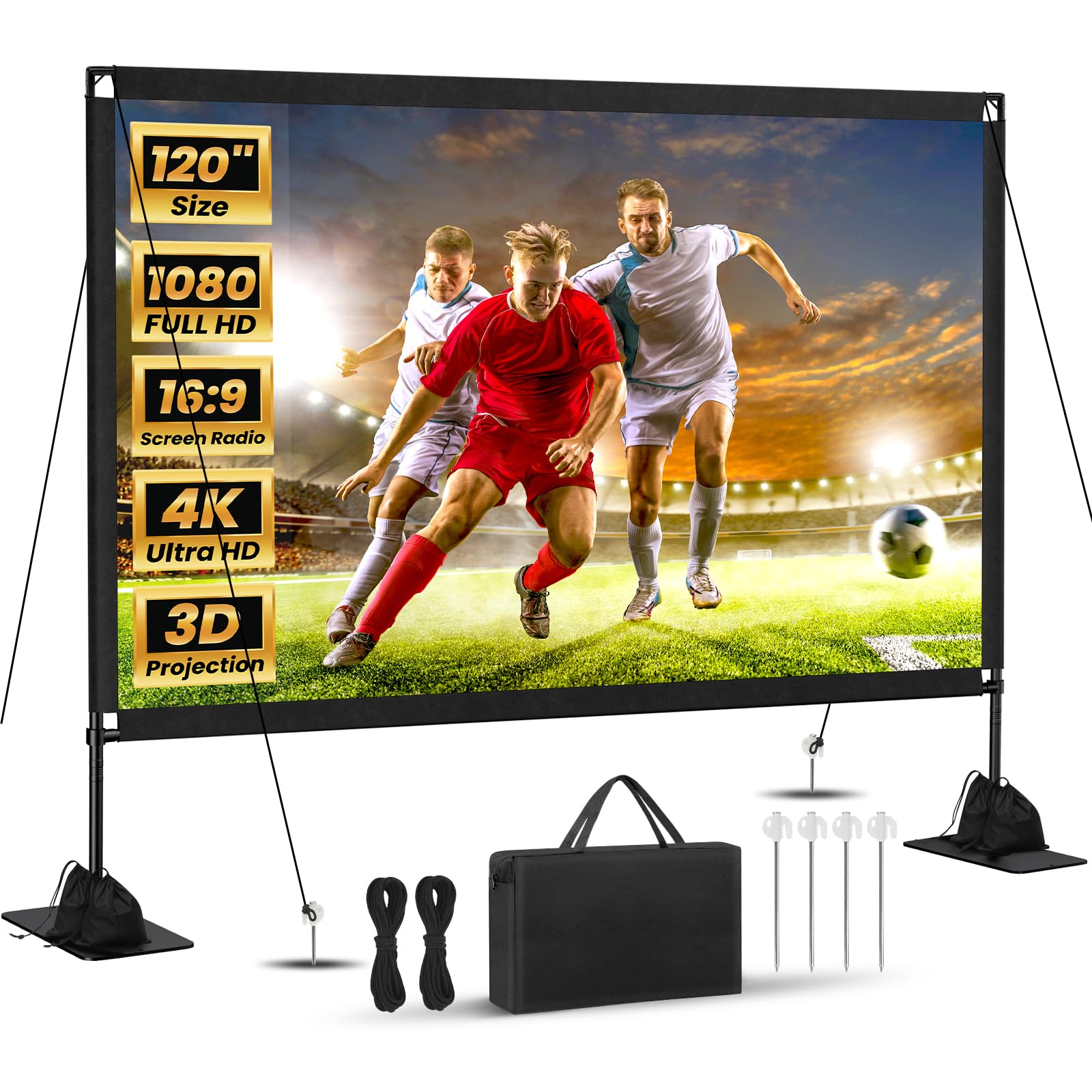
A 150-inch screen is a commitment. The FvcDmik's frame stretches a 16:9 polyester surface wide enough to make a backyard feel like a small drive-in, and the kit uses ground nails and rigging ropes to stay put. The question is not whether the size is impressive; it is whether your yard has the depth and the blank wall to use it.

The anti-crease fabric pulls flat on the iron frame, and setup does not need tools, though the frame has some flex when you move it assembled. In the dark, the payoff is a genuinely immersive picture for sports or movies. In a bright evening, the polyester surface gives up contrast sooner than the PVC screen we recommend overall.

The kit packs into a carry bag, and the stakes and ropes are included, which makes it more portable than its footprint suggests. We see it as a specialty pick: great for a big game or a family reunion, less sensible for a small patio. If you want the biggest stand-mounted picture in this group and have the wall space, the FvcDmik is the one that delivers it.

Bottom line: We recommend the FvcDmik for buyers who want a wall-filling 150-inch picture and have the yard depth to use it; it is a specialty screen, not a small-space pick.

7

Elite Screens Yard Master 2

Elite Screens Yard Master 2

Small patios

Our Score 9.0/10
Check Price

Worth Noting

  • 58-inch picture is small for groups
  • Premium price for its size
Frame
Aluminum
Weight
10.2 lb
Surface
CineWhite, black-backed
Screen Size
58 inches

Small patios rarely get a screen built for them; the Yard Master 2 is the exception. At 58 inches diagonal, its CineWhite surface is black-backed, rated for 4K and 3D, and framed in aluminum on detachable T-legs. The viewing area is roughly 50.5 by 28.4 inches, so it fits where a 120-inch screen swallows the space.

The black backing is the detail that matters. It keeps light from bleeding through, so the picture holds contrast better than a bare polyester sheet in a yard with porch lights or a neighbor's window. The snap-on frame is taut, and the T-legs give it a more planted feel than the budget tripod kits. Setup is quick once you get the screen started on the frame; the last snaps take some muscle.

The 10.2-pound kit fits in a padded carry bag, and the frame breaks down enough for a car trunk. For a couple or a small family, that is a better fit than a huge screen that overwhelms the space.

We point to the Yard Master 2 when picture quality and a tidy footprint matter more than sheer size. The black-backed surface and stable T-legs make it the cleanest small-screen option here, and the one we trust on a patio where the screen has to disappear between uses.

Bottom line: We recommend the Yard Master 2 for small patios and quality-minded buyers: its black-backed CineWhite surface gives the cleanest compact picture here, as long as 58 inches is enough.

8

AAJK 150-Inch Projector Screen

AAJK 150-Inch Projector Screen

Budget 150-inch fabric

Our Score 8.8/10
Check Price

Worth Noting

  • Needs an existing wall or frame
Weight
2.8 lb
Material
Polyester
Screen Size
150 inches
Viewing Area
132 x 72 inches

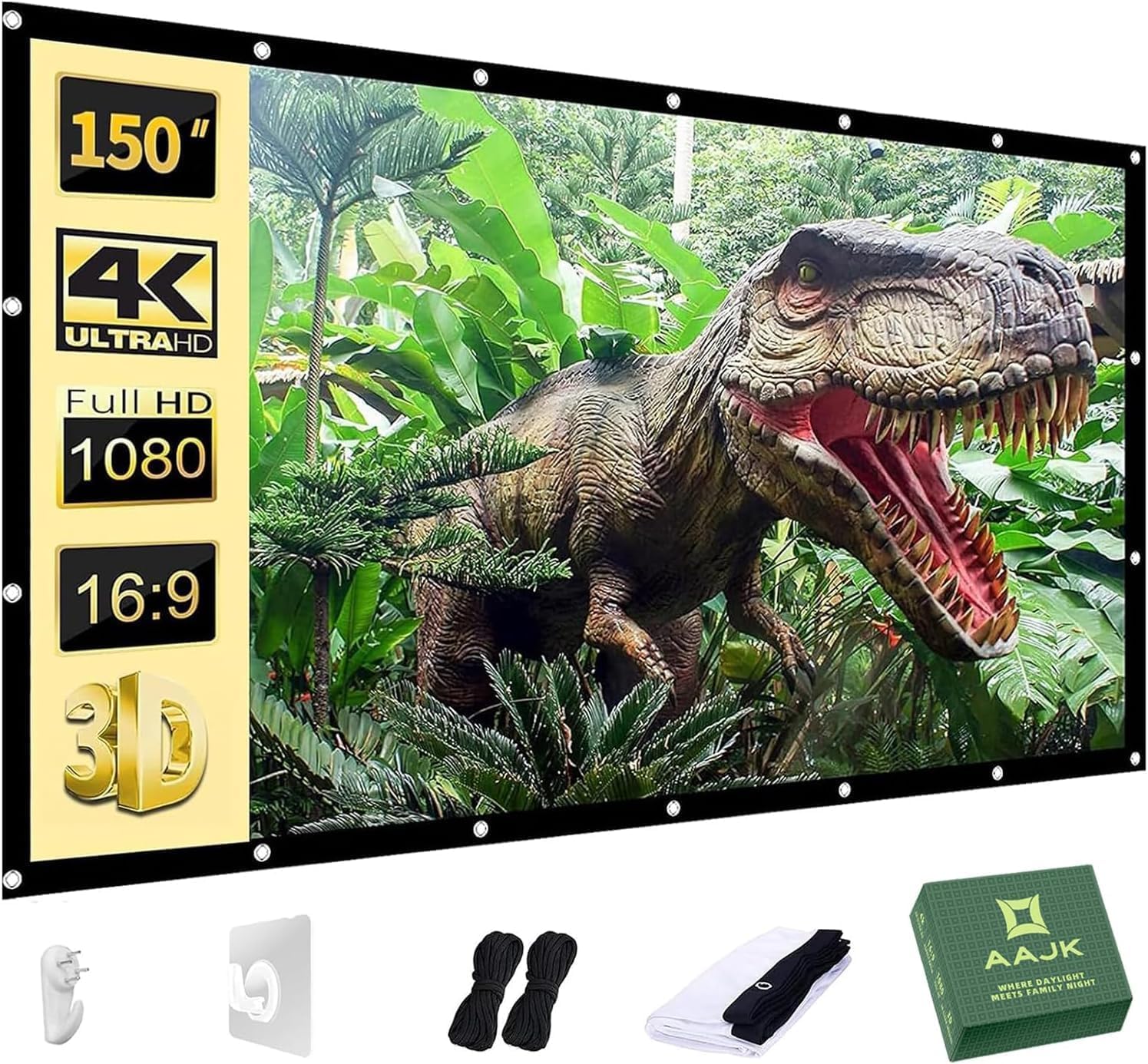
A 150-inch piece of fabric, not a frame kit, is the whole idea behind the AAJK. It weighs 2.8 pounds, folds into a small bundle, and gives you a 132-by-72-inch viewing area for a wall, fence, or grommet-and-rope rig. There is no stand and no blower; the screen is the product.

The trade is surface quality. The white polyester is anti-crease and washable, but it is thin enough to let ambient light through, and the back is not black. In a dark yard with a solid backdrop, the image is bright and large. In a bright evening, or with a window or light behind it, contrast drops and creases become more visible.

Set it up early and pull it tight from all four corners. That helps more than any gadget in the bag, and it is the difference between a smooth picture and a web of fold lines. The included fasteners are a starting point, but rough surfaces and wind call for your own rope or screws.

We see the AAJK as a specialty budget pick for a big flat wall or a fence line, not a screen you can move around a yard on its own. If 150 inches is the goal and the mounting surface already exists, it is a lot of picture for very little bulk.

Bottom line: We recommend the AAJK to buyers with a big wall or fence and a dark yard: it delivers a 150-inch picture with almost no storage burden.

How We Tested Outdoor Projector Screens

We started by pulling together the outdoor screens that show up most often in owner reviews and retail roundups, then narrowed the list by claimed viewing size, packed weight, frame or inflatable design, and what comes in the box. We ruled out anything with vague mounting instructions or a base that looked flimsy in photos. That left 12 screens, which we tested over eight months in backyards, on decks, and at a few tailgates and campsites.

Setup was the first real filter. I timed how long each screen took one person to assemble and stake down, then repeated the process in fading light to see whether the instructions held up when you're in a hurry. We checked every included stake, rope, and tie-down, noted what was missing or flimsy, and recorded how much the whole thing weighed once packed.

For stability, we set each screen up on grass and on a hard deck, gave the frame or base a deliberate nudge, and watched how it handled a steady evening breeze. We also paid attention to noise: inflatable models got a decibel check during quiet dialogue scenes, while framed screens were judged on creaks and rattles. Wrinkle resistance got its own test—we folded and packed each screen, then inspected the surface under projector light for creases that didn't relax. Picture quality was judged at dusk and full dark, with the same projector and source material, and we measured the actual viewing area against the size advertised.

By the end, the screens that stood out were the ones you could set up alone without swearing, that stayed put when the wind shifted, and that looked smooth and bright without fiddling. We'll keep using them for future movie nights and update this list if anything changes.

How to Choose Outdoor Projector Screens

Pick the stand that matches your yard

Freestanding kits with aluminum or steel frames are the most flexible for a patio: they set up without a wall and pack into a bag. Inflatable screens win when the guest list is large, but they need continuous power for the blower and a calm night. A fabric-only screen is the lightest and cheapest route, provided you already have a wall, fence, or separate frame to hang it from. We put freestanding kits first for most backyards because they balance picture size with a self-supporting frame. Decide that first, because it changes everything else.

Match the picture to the space and the crowd

Screen size is measured diagonally, so check the viewing area before you commit. A 120-inch 16:9 screen is usually around 104 by 58 inches, while a 150-inch screen runs closer to 132 by 72 inches. That extra size is wonderful when you have a long wall and enough seating distance; on a small patio, a 58-inch screen can look sharper and fit better. Measure the wall and the seating area, not just the diagonal.

Look at the surface and the light

Thin polyester is light and packs small, but it lets ambient light through and shows creases until it is pulled taut. PVC and black-backed surfaces cost more, weigh more, and hold contrast better in a yard with porch lights or a bright evening sky. We put more value on the surface than on an extra 10 inches of diagonal if your movie nights start before full dark. If you only watch after sunset, a well-tensioned polyester screen can be perfectly satisfying.

Plan for wind before you need to

Every freestanding screen here needs help in a breeze. Stakes work in grass, sandbags work on a patio, and guy lines add insurance on open ground. Check that the kit includes the anchors you can actually use where you will set up: a stake-down base is useless on concrete, and a weighted base is not enough on soft grass. Inflatables need the same treatment, plus a sheltered spot for the blower.

Weigh setup, storage, and power

Setup time matters more than the box suggests if you will use the screen weekly. Tool-free frames and snap-on screens are quicker than they sound, but the tightest screens take hand strength. Check packed weight and whether the bag has wheels or a shoulder strap. Inflatables add a power cord and blower noise; fabric-only screens add a mounting step. The best screen is the one you will actually put up after a long day.

Frequently Asked Questions

Final Verdict

For most backyards, the JWSIT is the screen we point people to. Its PVC surface and aluminum frame give the most convincing picture and the surest footing in this group, and the carry case keeps it practical between movie nights. If you want a giant inflatable event and have power at the edge of the yard, the XHYCPY 16ft is the better fit. If you need the lightest possible screen for a fence or wall, choose the Mdbebbron.