Smart Home & Security

Best Outdoor Security Cameras of 2026

The box of birthday presents vanished off my front steps somewhere between the delivery photo and the moment I got home, and the camera pointed at them gave me a gray blur and nothing else. That's what people actually buy an outdoor security camera for — not footage, but answers. A good one tells you what happened and who did it in a few seconds flat, clear enough to hand to a neighbor or an officer. A bad one just gives you one more thing to worry about.

I've spent the past six months with 12 outdoor cameras: battery models you mount in ten minutes, wired ones that need a ladder and a plan, a couple with solar panels bolted to a shed roof. The differences rarely show up on the spec sheet. They show up at 2 a.m. when something trips the motion sensor, and in whether the feed holds when a camera sits at the back fence where the Wi-Fi is thin. The picks below are the ones that earned their spot.

1

eufy eufyCam C37 4-Cam Kit

Top Pick
eufy eufyCam C37 4-Cam Kit

Whole-property coverage

Our Score 8.6/10
Check Price

Worth Noting

  • Wi-Fi is 2.4GHz only
  • Footage runs at 15 frames per second
Storage
64GB built-in
Coverage
360° pan and tilt
Resolution
2K
Weather Rating
IP65

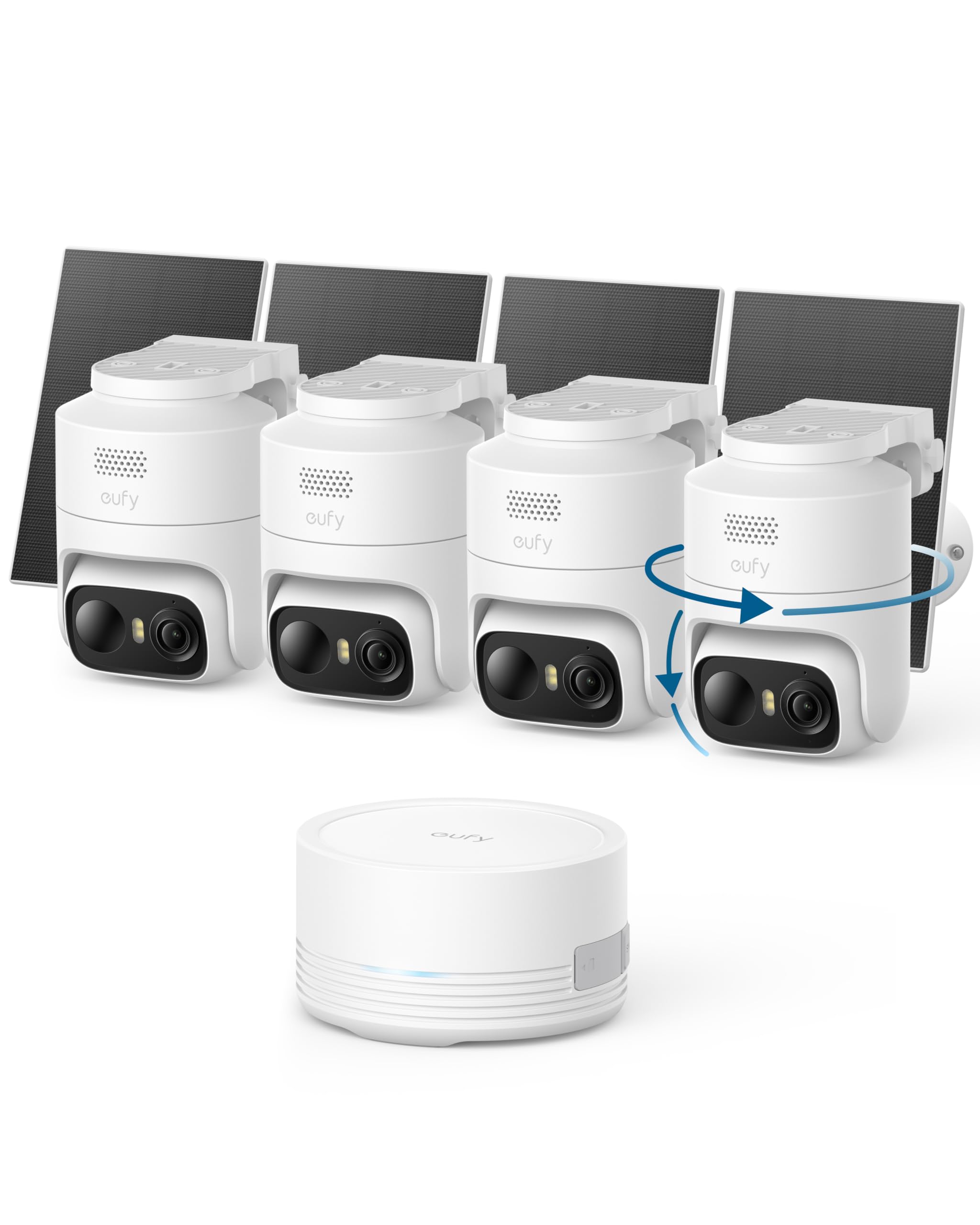
Four cameras, four solar panels, and a hub with 64GB inside it — the eufyCam C37 kit settles the two things that make people give up on outdoor cameras, which are remembering to charge them and paying a monthly bill to watch the footage. It arrives complete: brackets, panels, and the HomeBase Mini in the box, one app for the lot, no add-on module to buy.

What we appreciate most is how little it asks after installation. Each camera pans and tilts through a full 360 degrees and follows movement, so one unit covers a side yard that would otherwise need two fixed cameras, and the 2K color night vision with the built-in spotlight is good enough to describe a face at the door rather than just confirm that something moved. Local storage on the hub means a clip is still there three weeks later when you want it, with no plan standing between you and it.

The compromises are small but worth knowing. This is a premium outlay built around four cameras, so if you only need to watch a front door you are paying for coverage you will never mount. Software is the variable: a camera can drop offline and need a restart in the app before it rejoins, and the hub is the piece everything else depends on.

Bottom line: We recommend the C37 kit to anyone covering a whole property: four solar cameras, a hub with local storage, and nothing to renew.
2

Ring Floodlight Cam Wired Plus

Ring Floodlight Cam Wired Plus

Driveways and yards

Our Score 9.4/10
Check Price

Worth Noting

  • Needs an existing wired light fixture
  • Recorded clips need a Ring plan
Power
Hardwired
Resolution
1080p
Floodlights
2,000 lumens

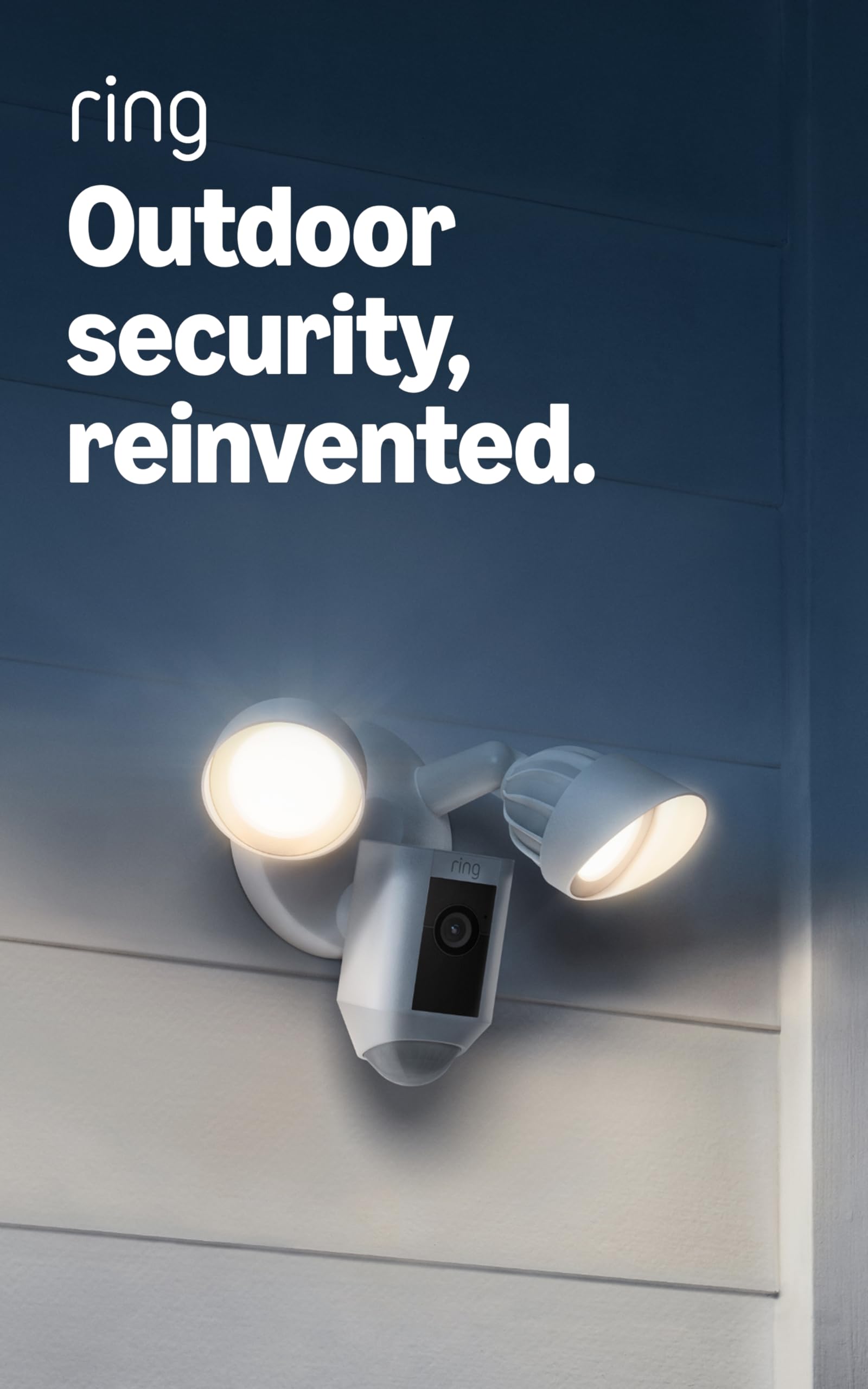
Two thousand lumens aimed down a driveway changes how a house feels at night, and that happens before the camera does anything. No other pick here puts out light like this, and light is what stops someone walking up a drive — the 1080p video and the app siren are the backup rather than the main event. For a garage wall or a back door that already has a fixture, we think it is the most useful camera in this group.

Living with it is mostly about the light. Brightness is adjustable in the app, motion zones keep the sweep off the sidewalk, and the picture is clear enough, day and night, to describe someone afterwards. The siren fires from a tap and it is genuinely loud — loud enough that you will think twice about testing it at midnight.

One thing is worth flagging: the floodlights can stay on when they should have switched off, which is hard to miss and annoying to live with. It is the kind of fault that quietly turns a security light into a porch light nobody asked for.

Bottom line: For a driveway or back door with an existing light fixture, we think this is the most useful camera in the group: bright, clear, and loud when it needs to be.

3

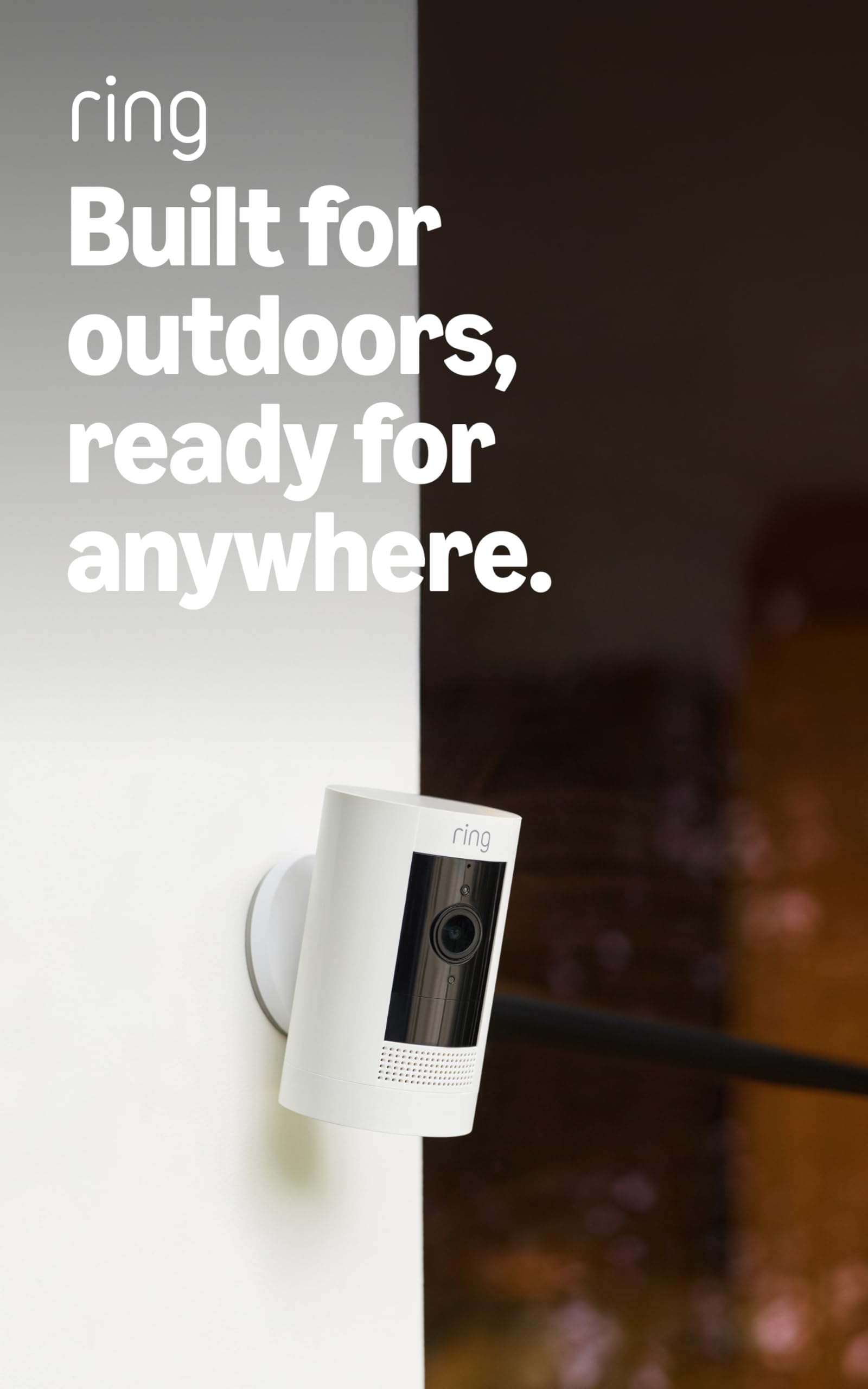
Ring Outdoor Cam Battery

Ring Outdoor Cam Battery

Alexa households

Our Score 9.0/10
Check Price

Worth Noting

  • Recorded clips need a Ring subscription
  • Battery drains fast on busy paths
Power
Rechargeable battery
Mounting
Wall or flat surface
Night Vision
Color

If there is already a Ring doorbell on the front of the house, the Stick Up Cam Battery is less a purchase than an extension: one app, one alert list, one place to look when something thumps outside at two in the morning. The battery pack clicks in, the bracket screws to a wall or sits flat on a shelf, and the whole camera moves to the back fence when you redo the yard. It suits anyone who has not decided where coverage belongs yet.

The camera itself is straightforward — color night vision, two-way talk, live view in the app, and enough clarity to recognize a face at door distance. It does not watch all the time, though. Like every battery camera here it sleeps between events, so its record of a night is a set of clips rather than a film.

The soft spot is motion. It can miss a person walking up the path and then alert on a passing car until you tune sensitivity and zones down, and those controls sit a couple of menus deep in the app. That is the character of the whole battery-camera group rather than a defect unique to this one, but it is the reason we do not treat it as a set-and-forget camera. Set your zones first, then judge whether the alerts are working.

Bottom line: We keep the Stick Up Cam in the roundup for Ring and Alexa households that want one flexible camera and will tune the alerts.

4

TP-Link Tapo C500

TP-Link Tapo C500

Budget pan-tilt

Our Score 9.0/10
Check Price

Worth Noting

  • 1080p at 15 fps trails the 2K picks
  • Person detection is easily fooled
Power
Corded electric
Coverage
360° horizontal, 130° vertical
Resolution
1080p
Night Vision
Up to 98 ft

Ninety-eight feet of night vision and a head that sweeps a full 360 degrees — the Tapo C500 is the value argument in this group, and for a lot of people it is the right first outdoor camera. Point it once and the motor does the rest: person detection starts the tracking, the housing physically blocks the lens when you want privacy, and footage goes to a card of up to 512GB so there is no plan in the way.

The cord is the whole catch — an outdoor outlet has to reach the mount, and a spot without one means an extension run or a different camera. A unit that stops waking up after a few weeks is the other failure to watch for, so a straightforward return window matters more here than it usually does.

Bottom line: Our pick for a first outdoor camera is the Tapo C500, as long as an outlet reaches the mount and the return window is generous.

5

eufy SoloCam S340

eufy SoloCam S340

Faces and plates

Our Score 8.2/10
Check Price

Worth Noting

  • Won't tilt above the horizon
  • Solar needs direct sun to keep up
Zoom
8x hybrid
Power
Solar + 10,000mAh
Storage
8GB built-in
Resolution
3K

Most outdoor cameras give you one wide view and hope. The SoloCam S340 adds a second, telephoto lens with 8x hybrid zoom, so the same unit that watches a driveway can also punch in on a face or a plate without turning the frame to mush. If your problem is identification rather than detection — a gate at the end of a lot, a car door 40 feet away — this is the most capable camera here at that job.

The detachable solar panel matters more than it sounds. You can point the camera where the view is and the panel where the sun is, instead of compromising both, and 8GB of built-in storage keeps the monthly fee at nothing. Pan and tilt cover a full 360 degrees with auto-tracking, color night vision is genuinely colorful rather than a grey smear, and the mount is small enough to tuck under an eave.

Tracking is the feature people buy it for and the one that needs the right site. On open ground it follows a person smoothly; on a cluttered porch it loses the subject behind a post. Give it a clear arc and a mount with some height and it behaves.

Our reservation is consistency at the price. A unit that stops working is the risk you take here, and for this money we want fewer surprises. Buy it for the zoom and the fee-free storage; do not buy it expecting the most dependable camera in the group.

Bottom line: What sells us on the SoloCam S340 is the zoom — the only camera here that reads a face or a plate at distance, with solar keeping it alive.

6

GMK 4-Pack Camera System

GMK 4-Pack Camera System

Cheap full coverage

Our Score 8.6/10
Check Price

Worth Noting

  • Four batteries to keep charged, and often
Cameras
4
Storage
microSD to 128GB
Resolution
2K
Weather Rating
IP65

Four cameras for less than most of the single units in this guide is the whole pitch, and GMK does not dress it up. Each camera is 2K with color night vision, a 110-degree view, IP65 sealing, and a microSD slot that takes up to 128GB. If your problem is that a house has four sides and you have been watching one of them, this kit fixes the arithmetic.

Setup is quick — screw the bracket in, hold the pairing button until the app confirms, and the camera appears in Vicohome. Alerts land fast and the daytime picture is sharp. Pet immunity is by weight, which is worth knowing before you blame the camera: a cat slips past, a small dog slips past, and a big dog sets it off every time.

We recommend this kit to anyone who wants blanket coverage and can live with the upkeep. The cameras lose Wi-Fi every few days when the signal is weak, and moving the router to the same side of the house fixes that more often than not. Otherwise the trade is simple: four angles of decent 2K, and you give up the finer image processing of the pricier single cameras.

Bottom line: We point budget buyers at the GMK four-pack: four 2K angles for the price of one good camera, plus a charging routine to keep up with.

7

HITELLARCAM CB54W

HITELLARCAM CB54W

First camera

Our Score 8.4/10
Check Price

Worth Noting

  • Battery falls well short of six months
Wi-Fi
2.4GHz and 5GHz
Storage
Free cloud + SD card
Resolution
2K
Weather Rating
IP66

Free cloud storage is the phrase that gets a listing clicked, and here it is not a trial that expires in a fortnight — recordings go to the cloud without a subscription, and there is a card slot if you prefer to keep your own copy. For a first camera, a shed, or a rental you would rather not wire, removing the recurring fee is the whole argument.

The hardware is more than the money suggests: 2K video, color night vision, a 5,200mAh battery, IP66 sealing, and both 2.4GHz and 5GHz Wi-Fi. At 3.3 inches tall it tucks under an eave and disappears, the spotlight and siren work from the app, and two-way talk is clear enough to tell a courier where to leave a parcel.

Two things are worth testing in the first week. Signal, because the app says plainly when the mount point is too far from the router, and 5GHz is there for spots where 2.4GHz is crowded. And alerts, because motion detection this eager needs zones drawn before you stop hearing about leaves.

We recommend it as the cheapest way into 2K with storage that does not bill you monthly. What you are accepting is a camera with no ecosystem to grow into — this one unit is the whole system, and there is no hub, no second product line, and no upgrade path behind it.

Bottom line: The HITELLARCAM is the one we suggest when budget decides: 2K and free cloud storage for the least money here, with a battery claim to take lightly.

8

COCOCAM AOV 4G

COCOCAM AOV 4G

No-Wi-Fi sites

Our Score 8.4/10
Check Price

Worth Noting

  • Needs a paid 4G data plan
  • Continuous footage is slow to scrub through
Power
10,000mAh + 9W solar
Connection
4G LTE, SIM included
Resolution
2K
Weather Rating
IP66

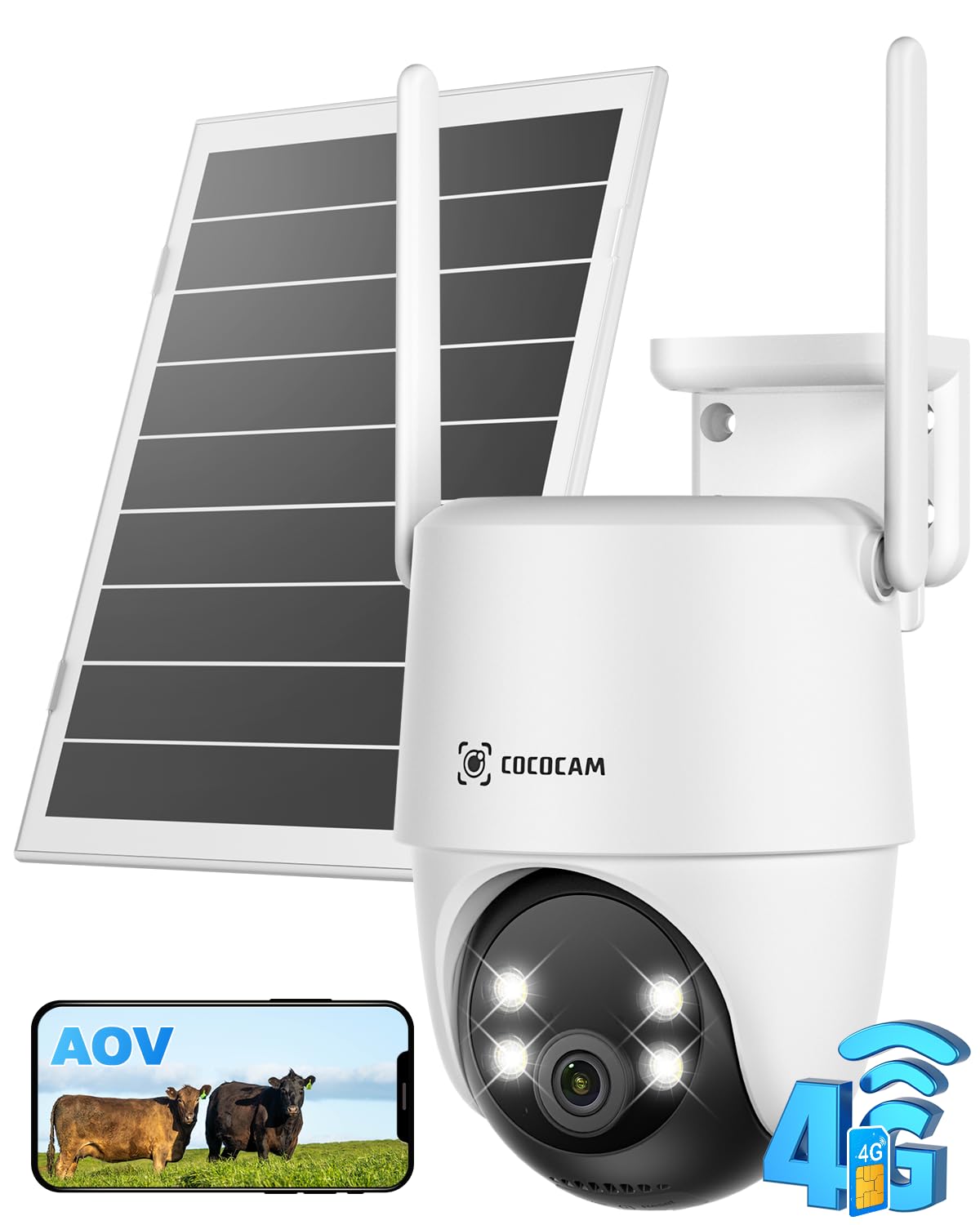
There is a whole class of place where Wi-Fi does not reach — a barn, a back lot, a gate at the end of a long drive — and the COCOCAM is the only camera here built for it. It runs on 4G with a SIM in the box, records around the clock rather than in motion clips, and pairs a 10,000mAh battery with a 9W solar panel so it needs no outlet either. Night vision reaches 30 meters with the spotlight, and the housing is IP66.

We recommend it for exactly that job and not much else. The 2K picture is decent, the pan-tilt head covers ground, and continuous recording means you have the minutes before an event as well as after. For a normal suburban yard with Wi-Fi in range, though, a cheaper camera does more for less, and this one's data bill never goes away.

Bottom line: We recommend the COCOCAM when there is no Wi-Fi to join — a barn, a lot, a gate — and the data plan is the price of that coverage.

What Six Months of Porch Traffic Taught Us

We started with roughly 40 cameras sold at the major retailers and filtered hard on the things that decide whether one is livable: how it gets power, whether it records locally or leans on a subscription, whether the weather rating would survive an actual winter, and whether the resolution claim held up outside a marketing page. Twelve made the cut, from budget plug-in models to multi-lens units.

I installed every one myself with a phone stopwatch running, from cracking the box to the first push alert, and noted whether the mount needed a drill, whether the right screws were actually in the bag, and whether the app demanded a subscription before it would show me live video. Then the part that matters most: reading a license plate at 30 feet in daylight, picking a face out at the front door, and comparing color night footage under a porch light against the same scene in total darkness. Ease of setup and ease of install turned out to be different skills, and plenty of cameras were good at one and bad at the other.

For motion detection and reliability, we walked the driveway at dusk, had a neighbor cross the porch at random hours, and let real delivery drivers drop real boxes, logging every alert that turned out to be a moth, a branch, or rain on the lens. We pulled up live view from the far fence to time how long the feed took to load, tracked battery percentage weekly, and watched whether the solar panels kept up through a stretch of gray days. Value came down to arithmetic: what the camera costs plus a year of cloud storage, weighed against what it actually captured.

How to Choose Outdoor Security Cameras

Power Decides Where It Can Go

Three options, three different jobs. Battery cameras mount anywhere and sleep between events, so they never give you continuous footage; solar panels stretch the runtime but need real sun rather than a shaded eave. Corded models record nonstop and never need charging, but only where an outlet reaches. Floodlight cameras are a fourth case — they borrow the wiring of the light fixture they replace. Choose the power source before the camera, because a brilliant 2K sensor on a fence post with no socket and no sun is a paperweight with a lens.

Storage, and Whether You Will Pay Monthly

Almost everything here records to a card or built-in memory, and some add cloud clips on top. The trap is reading free cloud as free forever: a plan usually buys history length, smarter detection, or the ability to download a clip, and it is the cost that outlives the camera. Decide before you choose a brand, because switching later means switching apps and often the hardware. A card is the cheapest archive; a hub indoors or a cloud copy survives the camera being taken off the wall.

One Tracker or Several Fixed Cameras

A 360-degree pan-and-tilt camera is seductive — one unit, no blind spots — but it can only look at one thing at a time, and a camera busy following a car is not watching the door. Fixed cameras are duller and more dependable: each holds its frame, so two of them covering a door and a drive usually beat one clever one. Count the angles that actually matter before you shop. For most houses that is three: front door, driveway, back gate.

Weather Ratings and Signal at the Mount

IP65 and IP66 cover rain and dust; neither covers a loose cable gland or a bracket that lets water pool. More cameras fail on signal than on water. Wi-Fi weakens at the end of a garden, 5GHz falls away faster than 2.4GHz through brick, and a camera that drops offline every few days is usually just too far from the router. Before you drill, stand at the mount with your phone and watch the signal bar. If it is marginal, plan a mesh node or choose the cellular camera.

Motion Alerts You Can Live With

Sensitivity at maximum feels like security and behaves like spam. Headlights, cats, and moving branches all become notifications, and on a battery camera each one costs runtime. Draw motion zones first, then raise sensitivity until it catches someone walking to the door, then stop. On-device person detection is worth paying a little for; person detection that only works with a subscription is a subscription you are buying. Twenty alerts a night is a zone-map problem, not a reason to replace the camera.

Frequently Asked Questions

Final Verdict

If you want one purchase that covers a house and never asks for a subscription, the eufy C37 kit is the one we point to: four solar 2K cameras, a hub with 64GB inside, and nothing to renew.

If there is already a light fixture over the driveway, the Ring Floodlight Cam is the better buy — less coverage, more deterrence, and that 2,000-lumen wall of light does what a camera alone cannot. For a site with no Wi-Fi at all, the COCOCAM is the only pick here that works.