Wearables & Health

Best Red Light Therapy Devices of 2026

Red light therapy sounds like a gimmick until you understand the mechanism: LEDs at specific wavelengths — 630 to 660 nanometers for skin, 810 to 850 for deeper tissue — deliver light that cells use for repair. The catch is that the numbers on the box tell you almost nothing about how much of that light reaches your knee or your cheek. That's why two devices at the same price can feel like different purchases: one is solid equipment, the other a plastic shell with LEDs in it.

I've spent a year pointing these at a cranky shoulder and a healing tattoo, and dose per session turns out to matter more than the wattage claim. What I notice is whether the light is bright enough to feel like it's doing something, whether a session fits into a ten-minute gap, and whether a panel stays cool enough to sit under. My team and I put eight devices — panels, a mask, and a wand — through six months of daily use, and the ones below are the ones we kept reaching for.

1

BestQool BQ60 Panel

Top Pick
BestQool BQ60 Panel

Back, face, shoulders

Our Score 9.2/10
Check Price

Worth Noting

  • One area per session, not a full-body panel
Power
105W
Dimensions
8.4 x 2.1 x 13.1 inches
Irradiance
95.6 mW/cm² at 3 inches
Wavelengths
660nm and 850nm

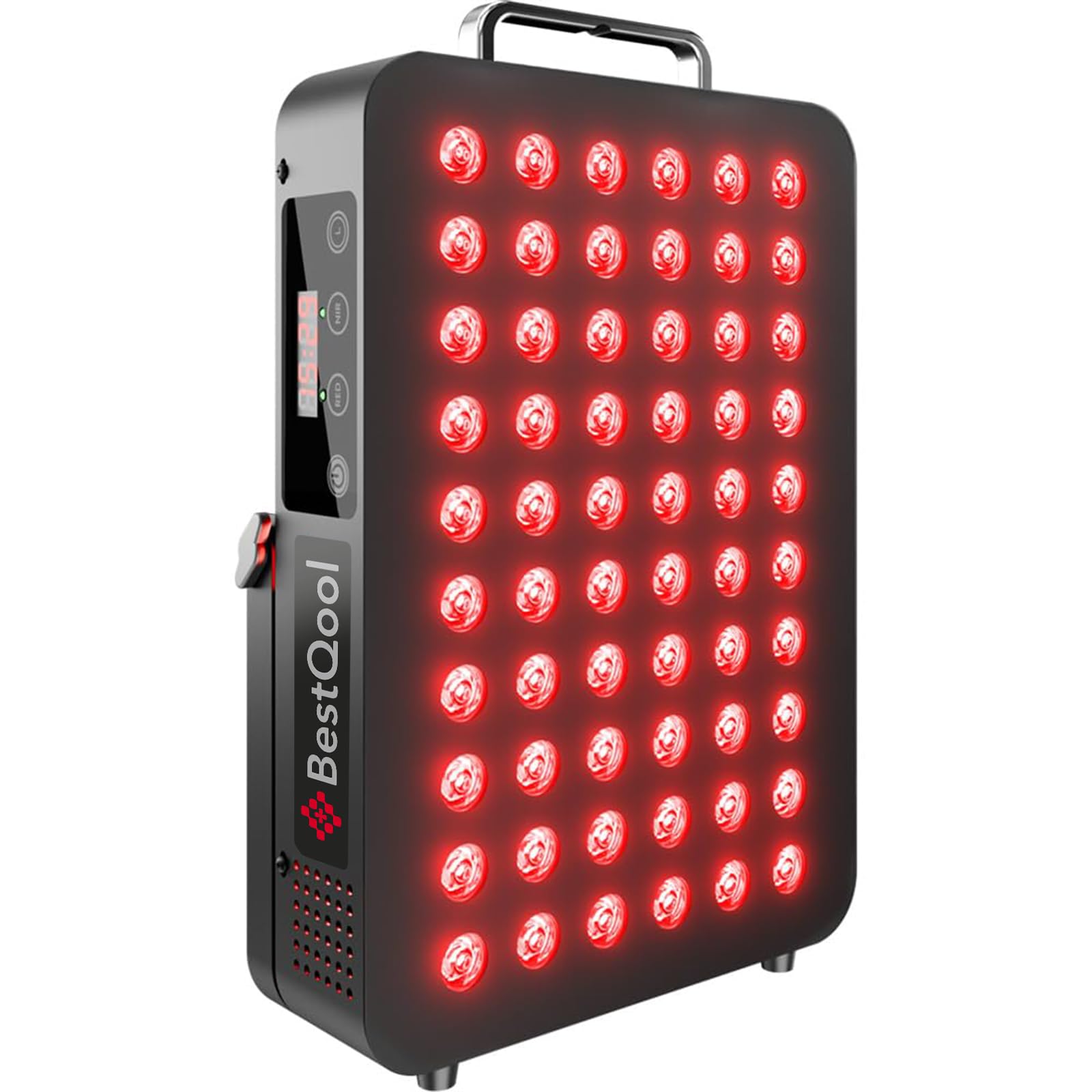
The number that matters on the BQ60 is 95.6 mW/cm² at three inches — a lot of light from a panel roughly eight by thirteen inches. Practically, that means a useful session doesn't have to be a long one: you sit close, let the dual-chip LEDs work, and get on with your evening. It's the device we point most people to first, because it handles the everyday jobs, a shoulder or a back or a face, without claiming a corner of the house.

Every LED carries both 660nm red and 850nm near-infrared, so you don't switch panels to change depth; three modes let you run red alone, infrared alone, or both. The U-shaped stand tilts the panel to whatever you're treating and holds it there hands-free, which matters more than the spec suggests: that output figure is measured at three inches, so you want the light angled in close rather than parked across the room. At 4.8 pounds it moves from nightstand to desk in one hand, and the cooling fan stays in the background.

Where it won is the ritual, or the lack of one. There's nothing to strap on and nothing to assemble — you tilt the head, sit down, and switch it on, which is why the sessions actually happen. Panels with more impressive sheets don't beat that if they stay in the box.

Bottom line: We recommend the BQ60 to anyone who wants one device for a face, a back, and an aching shoulder: strong dual-chip output, a stand that holds its angle, and a size that lives on a nightstand.

2

Hooga PRO300 Panel

Hooga PRO300 Panel

Permanent home setup

Our Score 9.4/10
Check Price

Worth Noting

  • 4.3 kg
LEDs
60 dual-chip
Power
300W
Warranty
3 years
Wavelengths
660nm and 850nm, dual-chip

Spend the extra on the PRO300 and most of what you're buying is headroom. Like the BestQool, it runs 660nm and 850nm from dual-chip LEDs, but Hooga packs 60 of them into a 300W panel with a digital timer, independent red and near-infrared controls, and a three-year warranty — the longest cover in this group.

We think that warranty is the real story. A panel rarely dies at the diode; it's the drivers and fans around them, and three years of cover on something you run most days is worth a good chunk of the difference. The panel is modular, too: it links to other PRO Series units, so a small setup in a spare room can grow into something that covers a whole back without replacing what you already bought.

The build matches the pitch. Iron housing, internal fans that keep the front pleasantly warm rather than hot, and controls that click with intent — this reads as equipment rather than a gadget. On a cold morning the warmth off the front is a small bonus the cheaper panels don't give you.

Bottom line: For a setup that stays in one room and a buyer who wants the longest warranty here, the PRO300 is the panel we put in that corner.

3

iRestore LED Mask

iRestore LED Mask

Face-only skincare

Our Score 9.0/10
Check Price

Worth Noting

  • The priciest device in this guide
LEDs
360
Weight
1.87 lb
Wavelengths
635nm, 830nm, 415nm
Session Length
10 minutes

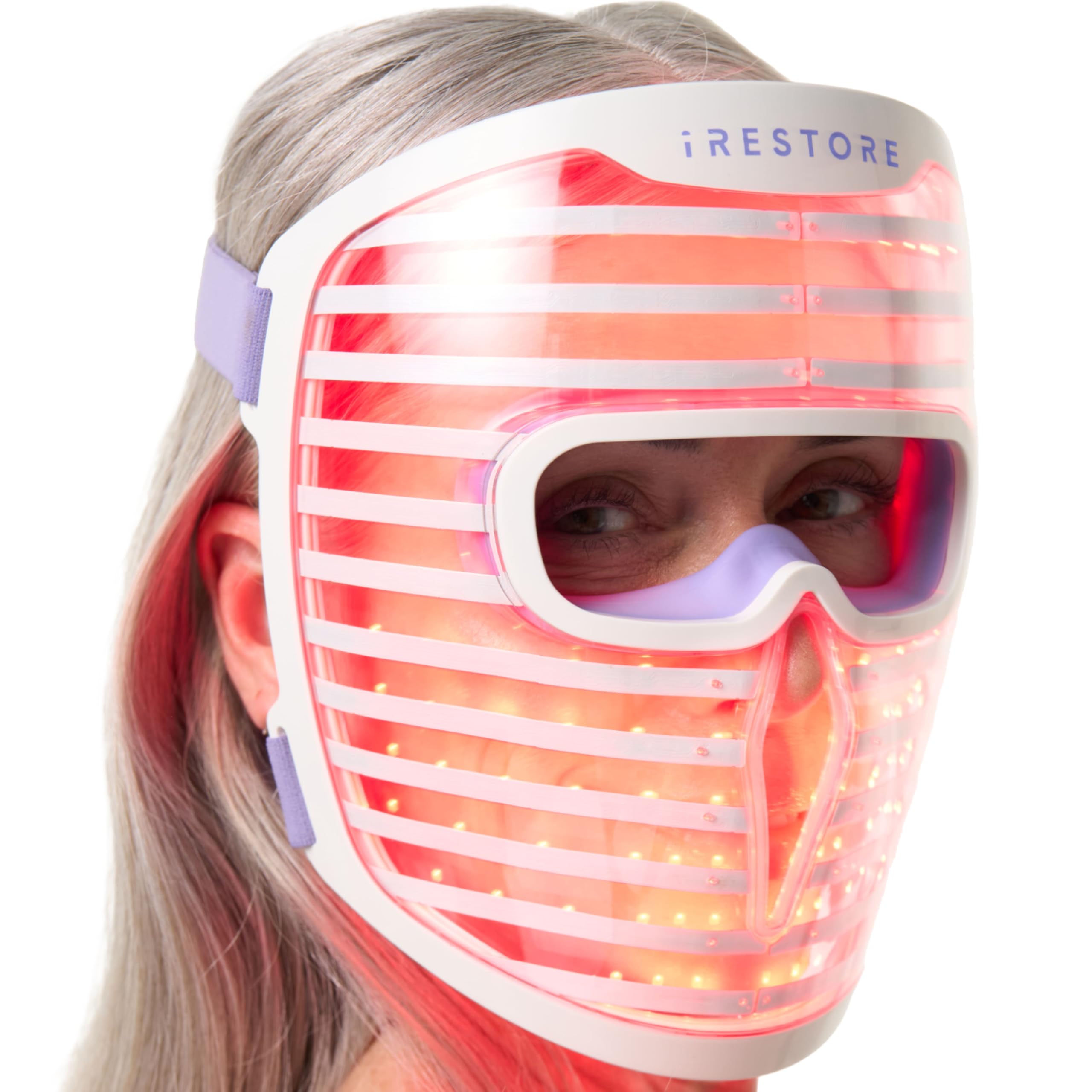
The iRestore does one thing: your face. There's no stand, no belt, no way to aim it at a knee, and after living with it we stopped counting that as a flaw. A mask you strap on for ten minutes is a different habit from a panel you have to sit in front of, and the habit is what makes any of this work.

360 LEDs across three wavelengths — 635nm red, 830nm infrared, and 415nm blue — is a serious array, and the blue gives you a mode for breakouts that the red-only devices here can't match. The dual straps hold the shell hovering just off your skin rather than pressing on your nose, and the design blocks light from your eyes, so a session feels closer to lying back with a warm towel than to staring at a lamp.

You're paying for the LED count, the third wavelength, and a fit that lets you answer email while it runs, and for the right buyer that's a fair trade. If your concerns are lines, tone, and breakouts, and you know you won't stand in front of a panel every night, this is the one that gets used instead of admired.

Bottom line: If your goal is skin and you want the session to disappear into your evening, the iRestore is the mask we suggest to people who won't stick with a panel.

4

INTEO Wireless Mask

INTEO Wireless Mask

Face and neck

Our Score 9.4/10
Check Price

Worth Noting

  • Fit runs large on smaller faces
LEDs
680 beads
Modes
4
Battery
2000mAh, rechargeable
Wavelengths
630nm, 460nm, 605nm, 850nm

Six hundred and eighty light beads, four wavelengths, face and neck coverage, and no cord: the INTEO reads like a spec sheet written to win an argument, and at mid-range mask money it mostly does. It's the mask value of this group, largely because of the neck piece — the area under your chin is the one most masks leave out.

The four modes are 630nm red, 460nm blue, 605nm amber, and 850nm near-infrared, which covers breakouts, tone, and a deeper setting in one device. You control it from a rechargeable remote with a timer, so you're not tapping a button beside your eye, and the maker claims 120 minutes of running per charge — a week of sessions for most people. Soft silicone and a strap you assemble once make it easy to forget you're wearing it.

It's a bigger, softer thing than the iRestore: less a ritual, more something you wear while you fold laundry. That's the trade for neck coverage at this price, and we make it happily — a mask you'd wear on a Tuesday night beats a better one that stays in its case.

Bottom line: If you want face and neck covered without flagship mask money, the INTEO is the cordless pick we recommend.

5

Comfytemp Red Light Belt

Comfytemp Red Light Belt

Lower-back relief

Our Score 8.8/10
Check Price

Worth Noting

  • Some units fail within months of use
LEDs
126
Power
22W, corded
Coverage
22 x 8 inches
Wavelengths
660nm and 850nm

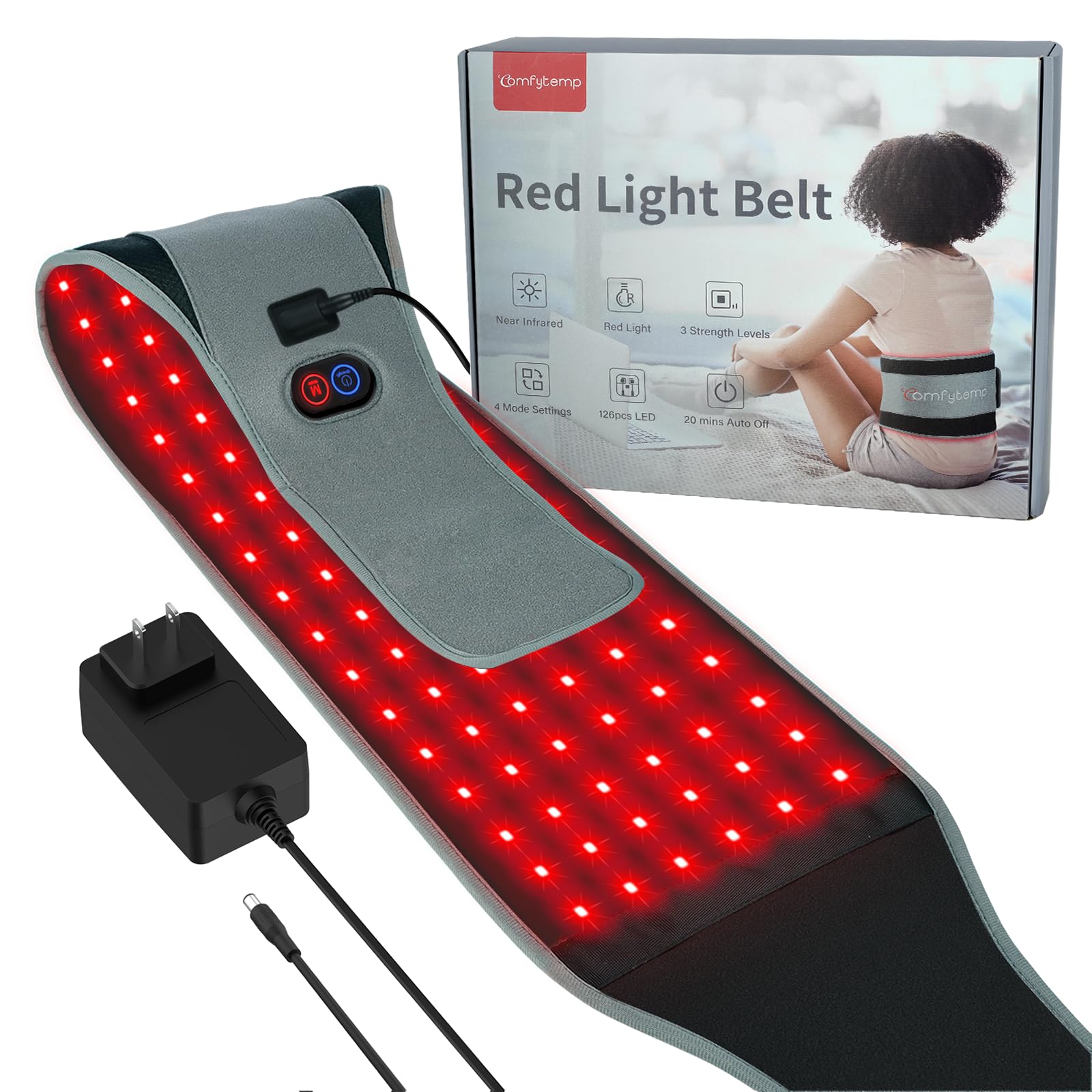
The Comfytemp belt is the device that gets used on the sofa. Strap it around your lower back, press the button on the belt itself, and sit through a session with your hands free — no stand to angle, no reason to stop what you're doing. For a back that flares when you sit, that's the whole argument.

It's also the cheapest way into a real dose of light here. 126 dual-chip LEDs across a 22 by 8 inch treatment area is genuine coverage for the money, and four modes with three brightness levels let you start low and work up. We were struck by how much the warmth does: it behaves like a heating pad that happens to run 660nm and 850nm through your back, and for muscular aches that's an honest description.

What it isn't is a whole-body device. The lit area is a strip sized for a back or a hip, there's no way to use it on your face, and the cord ties you to a chair near an outlet. Treat it as the tool for the joint bothering you tonight and it makes sense; expect a full-body session and you'll want a panel.

Bottom line: For a sore lower back or a stubborn joint, the Comfytemp belt is the least expensive and most comfortable way here to get light on it.

6

Lifepro LumiCure Wand

Lifepro LumiCure Wand

Spot treatment

Our Score 8.8/10
Check Price

Worth Noting

  • Small head
  • Some units stop working within weeks
Weight
6.35 oz
Dimensions
9.06 x 5.91 x 1.97 inches
Wavelengths
3, red and near-infrared

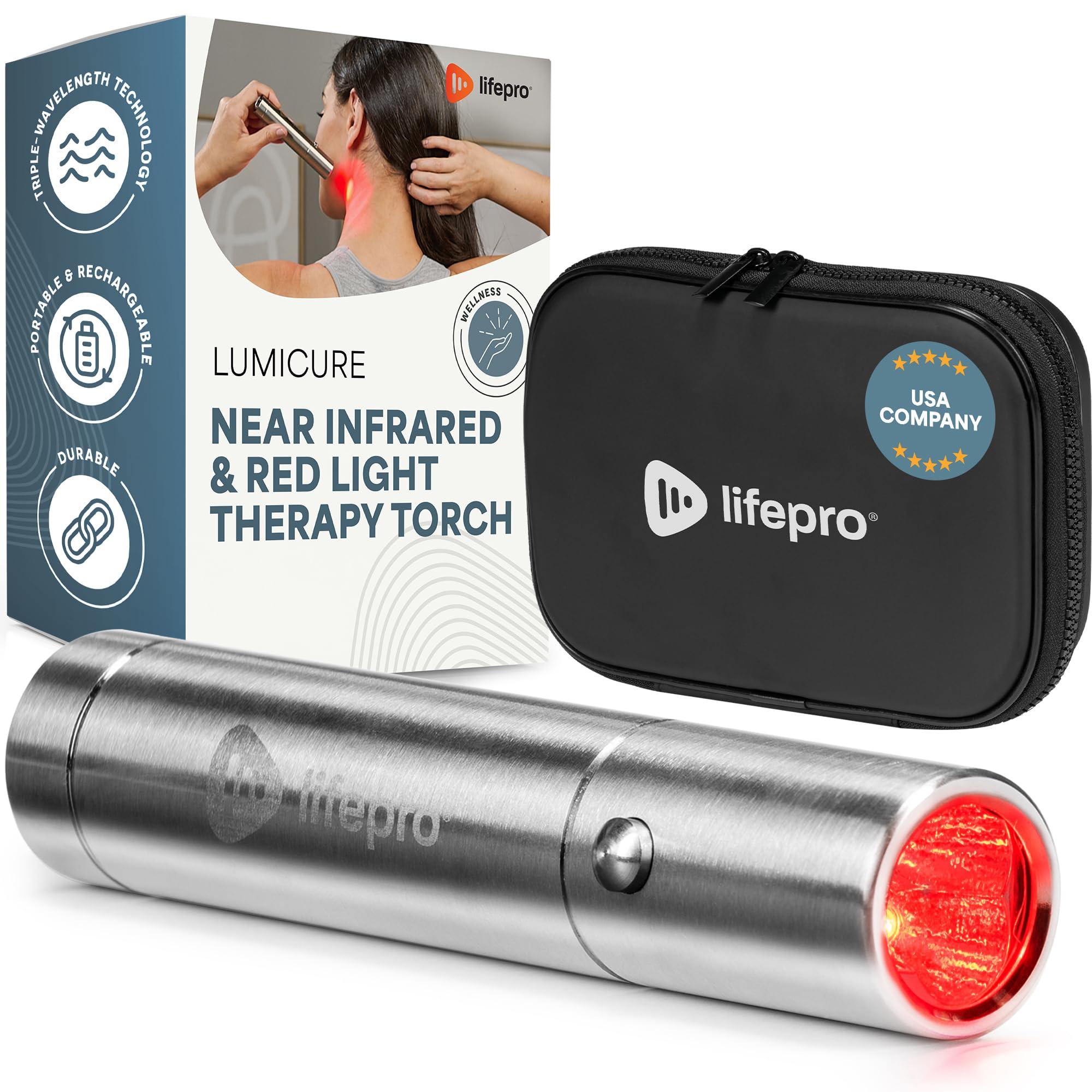
Six ounces and about nine inches long, the LumiCure is the device that ends up in a bag rather than on a shelf. There's a wrist strap and a zippered case, and nothing about it needs a dedicated surface — which is the point, because the moment light therapy requires setting something up, it stops happening.

The specification is thinner than the panels': three wavelengths, described as red and near-infrared, without the nanometer figures the rest of this group prints. That's not fatal for a spot device, but if you're comparing it against a 660/850 panel, you're taking the wavelengths on trust.

It runs on rechargeable batteries rather than a built-in cell, so a session doesn't end because the pack is flat, and at six ounces your arm doesn't give out before the timer does. That last part matters more than it sounds: a handheld device is only useful if you'll hold it.

What it does better than anything else here is travel. A panel stays home; a belt needs a chair and an outlet; the LumiCure goes in the case with your charger and works in a hotel room on a foot you've been walking on all day. That's a narrow brief, and it fills it completely.

Bottom line: For one sore joint and a life that involves packing a bag, the LumiCure is the handheld we recommend; it goes where a panel can't.

7

Hooga HG24 Bulb

Hooga HG24 Bulb

First device

Our Score 9.0/10
Check Price

Worth Noting

  • Gets hot to the touch after a few minutes
  • Some bulbs fail within weeks
LEDs
12 dual-chip
Power
24W
Irradiance
About 120 mW/cm² at surface
Wavelengths
660nm and 850nm

The HG24 is the least device-like thing in this guide: a 24-watt bulb with twelve dual-chip LEDs, a socket base, a braided cord, and a switch. It sits on a desk and looks like a lamp, which is exactly why it ends up being used rather than stored.

The output claim is about 120 mW/cm² at the surface, and surface is the operative word — move it a foot away and you're getting a small fraction of that. Used close, on a knee, a wrist, or a face at a careful distance, it does the job the panels do at a fraction of the footprint. It's also bright at close range, so you angle it at a cheek rather than stare into it.

Where it earns its place is the desk. A bulb on a base is the difference between owning a red light device and using one every day, because there's nothing to assemble and nothing to put away — and if you've been circling a panel without committing, it's the lowest-stakes way to find out whether the routine sticks.

Bottom line: If you want to find out whether a light routine sticks before committing to a panel, the HG24 is the small, simple way to start.

8

Viconor Red Light Panel

Viconor Red Light Panel

Budget full panel

Our Score 8.8/10
Check Price

Worth Noting

  • Top-heavy tripod tips on an uneven floor
  • Corded only, with no battery option
LEDs
120
Weight
7.12 lb
Wavelengths
660nm and 850nm

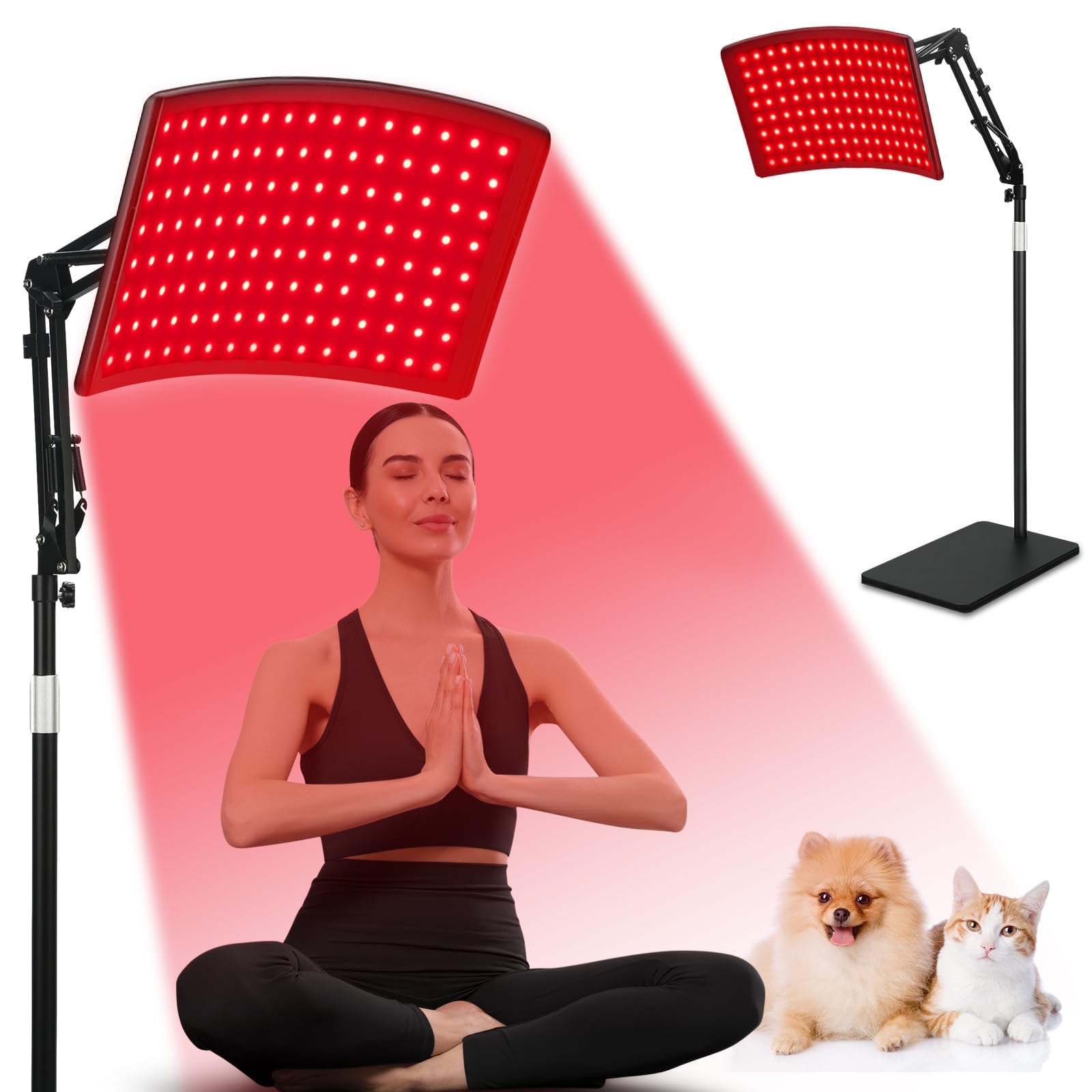
The tripod announces itself immediately: a light stand under a seven-pound head that tips if you nudge it. Find a corner where it sits level, stop moving it, and the Viconor settles into being a lot of light for very little money.

120 LEDs, each with one 660nm red chip and two 850nm infrared chips, set into a curved face that throws light forward instead of scattering it. The curve isn't marketing: on a face or a chest the light lands more evenly than a flat panel at this price has any right to.

The adjustable mast takes the head from standing face height down to chair height for a shoulder, and the controls sit on the cord rather than the panel, so you're not reaching around the light to change a setting. Assembly took us longer than the fixed-stand panels, and the tripod is the reason.

The honest read is that this is a second device, or a first one on a tight budget. It's the least expensive full-size panel here by a wide margin, and it delivers the light — what it doesn't deliver is a stand you can trust around kids or a cat. Give it a stable corner and it earns its place; treat it as something to move around and it won't.

Bottom line: If you want a full-size panel on the smallest budget here and can give it a stable corner, the Viconor delivers the light and asks you to mind the stand.

What Six Months of Daily Sessions Looked Like

We started by pulling every device we could find that published its wavelengths and irradiance, because a brand that won't say what it emits or how much is asking you to buy a mood light. From there we filtered by price, footprint, and whether the thing could be used hands-free, which left a shortlist of eight: five panels, two masks, and one handheld wand. Then we used them every day for six months.

Sessions happened where they'd actually happen at home — a panel angled at my shoulder on the living room floor while I answered email, a mask on during a ten-minute scroll before bed, the wand pressed to a sore knee after a run. We timed setup from unboxing to light-on for each device, then did it again in a dim room, since fumbling for a remote in the dark is part of the real experience. We rated shoulder and knee discomfort on a 0-to-10 scale each morning, which is crude but was the only way to see whether the good weeks lined up with the devices we were using.

Brightness we checked with a light meter at the distances each manual recommends, since a panel that's dim at arm's length isn't doing much at the distance you'll actually sit. Heat got an infrared thermometer reading at the ten- and twenty-minute marks, plus the honest test of whether I flinched away. For stability, we nudged panels on their stands and rolled over mid-session in a mask to see if it shifted. Durability was six months of daily handling: stretched straps, frayed cords, loosened hinges, buttons that stopped responding. And value was price divided by sessions we actually finished — a cheap device you avoid is the most expensive thing in the category.

How to Choose Red Light Therapy Devices

Match the Format to the Body Part

A panel on a stand covers a back, a chest, or a whole face and leaves your hands free; a mask covers your face and nothing else but lets you walk around while it runs; a belt wraps a lower back or a hip and is the most comfortable way to sit through a session; a wand is for one joint; a bulb is for a desk. Decide which body part you're actually treating before you compare anything else. A mask can't reach a knee, and a panel you have to hold in place is a panel that ends up in a cupboard.

Wavelengths, and Why Distance Beats Wattage

660nm red works near the surface; 850nm near-infrared goes deeper and is invisible, which is why a device can feel warm without looking bright. Dual-chip panels emit both from every LED, so coverage doesn't alternate between red and invisible patches the way some single-chip arrays do.

Wattage is input power, not delivered dose. What matters is irradiance at the distance you'll sit, and it drops off fast — a 24W bulb six inches from a knee can beat a big panel across the room. Before you buy, check that the output figure is quoted at a distance you can actually hold for ten minutes.

Stands, Cords, and Where It Will Live

Sessions only stick if the device is already set up. A tilting tabletop stand is worth more than an extra row of LEDs, because you want to sit down, angle the light, and go. Check the stand against the weight of the head: a heavy panel on a light tripod tips, and one that tips gets moved to a cupboard. Corded devices need an outlet where you actually sit; cordless masks and belts need a charging routine. Pick the spot before you buy, not after.

Warranty, Durability, and the Routine

LEDs are rated for tens of thousands of hours; the parts that fail are the drivers, fans, and switches around them, which is exactly what a warranty tells you about. Three years of cover on a premium panel is worth real money on a device you run daily. Then there's the routine: ten minutes most days beats an hour once a month. A device that fits your evening — on the sofa, at the desk, in bed — will outperform a stronger one you keep meaning to use.

Frequently Asked Questions

Final Verdict

The device we recommend to most people is the BestQool BQ60. It has the output to do something in a short session, a stand that holds its angle, and a size that sits on a nightstand instead of taking over a room — and it treats a back, a shoulder, and a face without a second purchase.

Change one requirement and the answer changes with it. A permanent setup and the longest warranty point to the Hooga PRO300. Skin-only concerns you want to handle while doing something else point to the iRestore mask, with the INTEO as the value version that adds your neck. A sore lower back points to the Comfytemp belt, the least expensive and least fussy device here.