Wearables & Health

Best Smart Glasses of 2026

Smart glasses cram a display, a speaker, and a camera into a pair of frames, and the best ones make you forget all three are there. What separates a pair you'll wear daily from one that ends up in a drawer rarely shows up on a spec sheet: whether the screen stays readable in sunlight, whether the arms dig into your temples after an hour, whether the software sends you back to your phone constantly. You're buying glasses that happen to be smart, and no amount of tech rescues frames that fit badly or look strange.

I've worn these on the train, on dog walks, and at my desk, and the pattern holds: the pairs people keep are the ones that disappear on your face. My team and I spent six months with eight pairs, from camera-and-audio frames to full display models, living with them the way you would. Here's the thing that trips up first-time buyers — the battery number quoted is almost always audio-only, and the display drains it fast. Below are the pairs worth buying, sorted by what each does best.

1

Ray-Ban Meta Gen 2

Top Pick
Ray-Ban Meta Gen 2

Everyday AI capture

Our Score 8.4/10
Check Price

Worth Noting

  • Electronics can fail after months of daily wear
  • Voice commands do not always land first time
Frame
Matte black, square
Camera
Photo and video capture
Lenses
Clear, tinted, blue light
Battery
Up to 8 hours

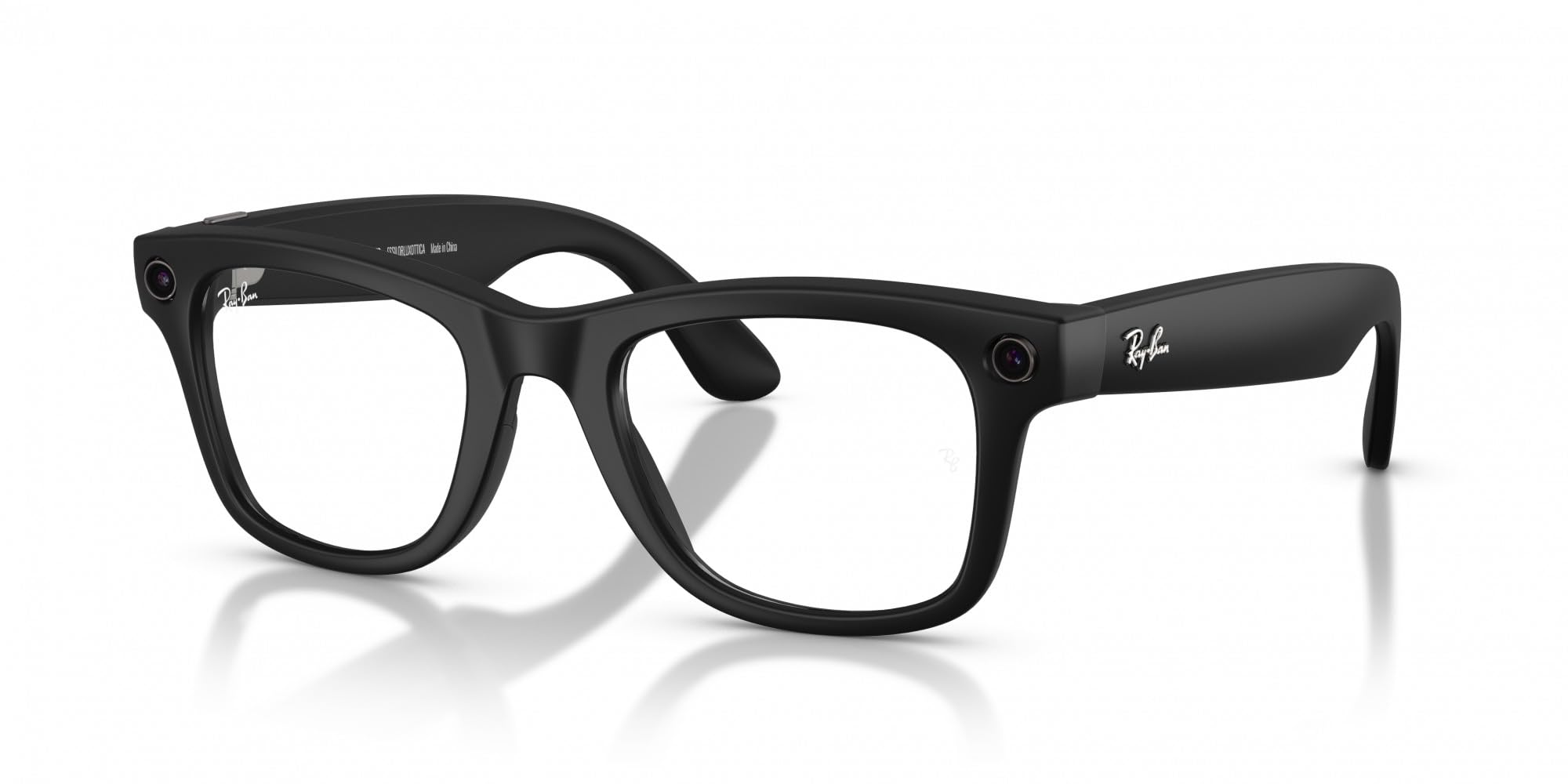
Put the Gen 2 Wayfarer on and the first thing you notice is how little there is to notice. It is a matte black square frame with clear lenses, and the camera, the open-ear speakers and the Meta AI controls disappear into a shape people have been wearing for decades. We wore them through ordinary days — errands, calls, a walk — and nobody asked what was on our face.

That camouflage is why they are our top pick. Of everything in this roundup, this is the only pair that covers capturing, listening, AI and everyday looks without asking you to choose between them. Ask Meta AI to translate a menu or tell you what you are looking at, and the answer arrives through speakers that leave your ears open, so traffic and conversation still come through. Photos and video come out clear enough to share without editing, and the lens options — clear, tinted or blue light — let the same frame go from office to beach.

Battery is where the everyday compromise sits. The eight-hour figure assumes moderate use, so a long afternoon of recording falls short of it; our days ended with charge left when we used them the way they are built to be used, in short bursts rather than as a live stream.

The habit we picked up says more than the spec list: these live by the door with the keys, not in a charging drawer. That is the difference between a gadget you own and a pair of glasses you wear.

Bottom line: We think the Gen 2 Wayfarer is the smart glasses to buy if you want camera, AI and audio in a frame that passes as ordinary eyewear.
2

VITURE Pro 2

VITURE Pro 2

Gaming and travel

Our Score 8.0/10
Check Price

Worth Noting

  • Needs a cabled USB-C DisplayPort source
  • Not water resistant
Weight
2.22 oz
Resolution
1920 × 1080
Virtual Screen
146 inches
Focus Adjustment
0 to -5.00D per eye

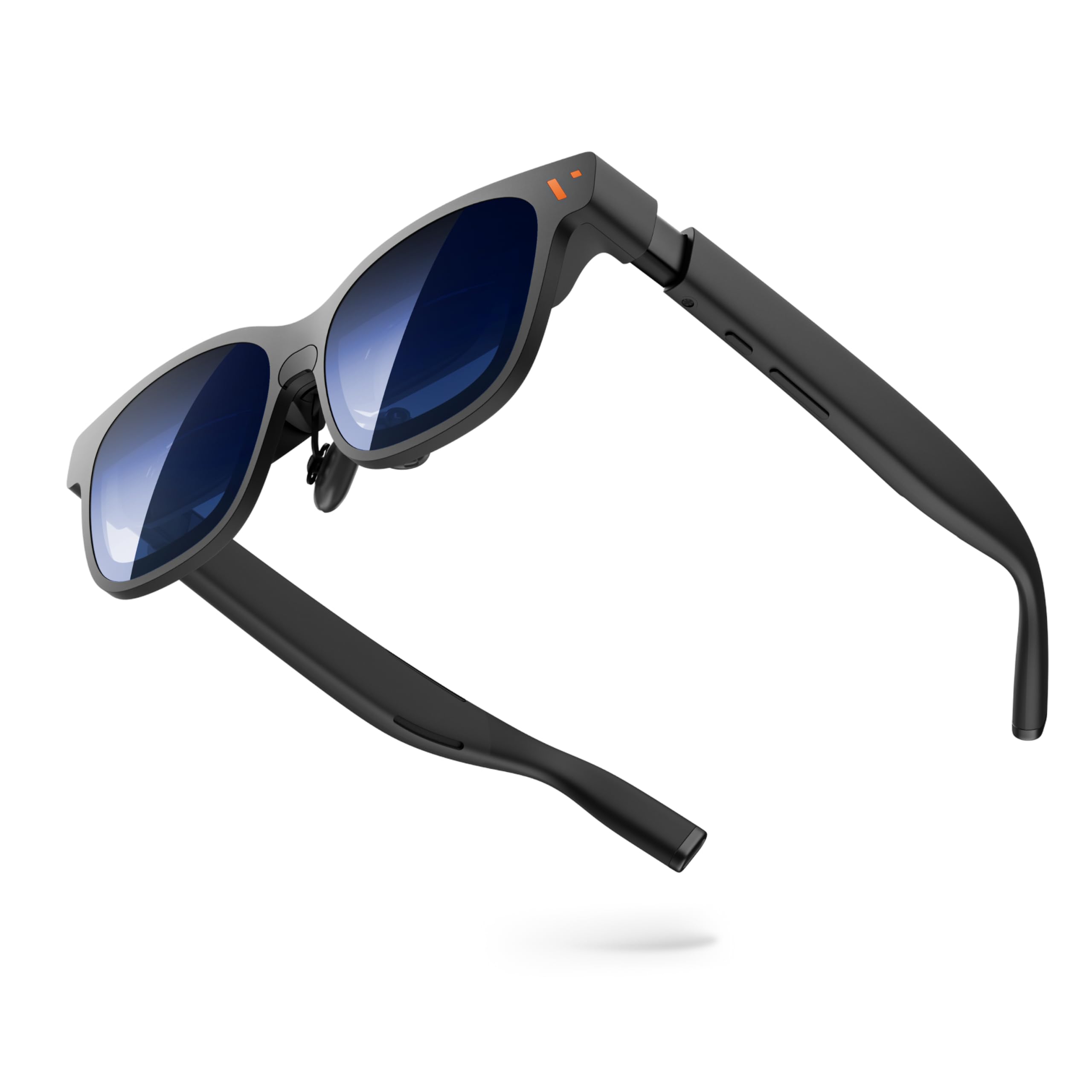
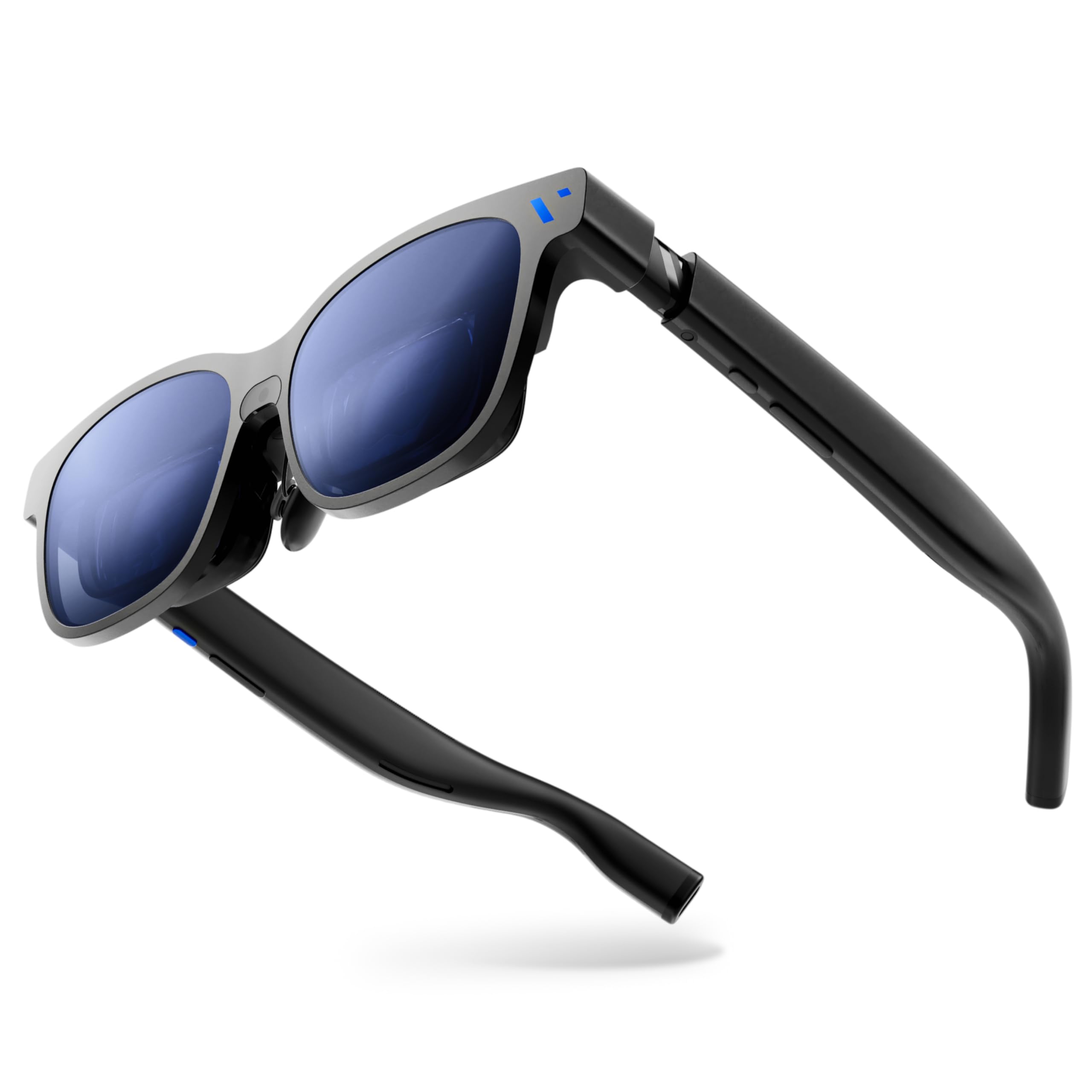
At 63 grams, the Pro 2 is the lightest pair of display glasses here, and that number matters more than any resolution figure once you are three hours into a flight.

What those grams buy is a 146-inch virtual screen at 1920 × 1080 and 120Hz, from Sony Micro-OLED panels with 1600 nits of peak brightness. Plug in a handheld, a laptop or a recent iPhone and the picture lands in front of you, with 3DoF tracking keeping it steady when you shift in your seat.

The feature that sold us is the pair of dials that focus each eye separately, from 0 to -5.00D. If you are nearsighted in that range, your glasses can stay in the case, and two independent dials mean an uneven prescription is not a problem. It sounds like a small thing until you realize it decides whether these are usable or a return.

Check the port before you order. The listed compatibility runs from Android phones with DisplayPort over USB-C to MacBooks, Windows laptops and iPhone 15 and later, excluding the iPhone 16e and iPhone Air, and a source without video output will not drive the screen at all. Expect the occasional reconnect when you switch devices. For a train seat, a plane or a hotel room, nothing else here is this light or this sharp.

Bottom line: For flights, handhelds and late-night movies, the Pro 2 is the pair we hand people: a sharp private screen that weighs less than most sunglasses.

3

VITURE Beast

VITURE Beast

Big-screen movies

Our Score 8.2/10
Check Price

Worth Noting

  • 88 g gets tiring over a long film
Weight
3.1 oz
Resolution
1920 × 1200
Virtual Screen
174 inches
Peak Brightness
1250 nits

The Beast throws the biggest virtual picture in this set — 174 inches of it — and, usefully, nobody sitting next to you can see a thing. On a packed train that privacy is worth as much as the size.

The numbers behind it: a 58-degree field of view, Sony Micro-OLED panels at 1920 × 1200, and 1250 nits of peak brightness. The part we liked most is the built-in VisionPair 3DoF, which lets you pin, resize and lock the screen in mid-air without installing anything on the laptop or handheld feeding it.

Audio is the surprise. Harman AudioEFX tuning gives these the fullest sound of the display models here, which matters when the whole point is watching something without headphones. Nine levels of dimming and an auto-transparency mode take the picture from see-through to near-black with a tap; in a bright room you will still catch reflections along the bottom of the view, so raise the tint and sit away from the window.

Real-time 2D-to-3D conversion is here if you want it. We tried it, went back to the flat picture, and did not miss it — the straightforward use, a laptop screen pinned above your lap on a flight, is the one that stuck.

Bottom line: For the biggest private picture here, with the fullest sound of the display models, the Beast is the pick — it turns a hotel room into a cinema.

4

Meta Oakley Vanguard

Meta Oakley Vanguard

Outdoor sports

Our Score 8.6/10
Check Price

Worth Noting

  • Runs tight on larger heads
Camera
Video capture
Lenses
Tinted sunglass
AI Assistant
Meta AI

The Vanguard is the Meta pair for people who spend their weekends outside rather than at a desk, and that is how we judge it: it is the frame we take on a ride or a hike, where the camera is already pointed at whatever is happening.

Video is the strongest thing about it. Footage comes out crisp, the kind of hands-free clip that used to need a mount, and it keeps working in light rain — weather that ends most camera sessions. It is also the best-looking frame in the Meta lineup here, and the styling is the reason it does not feel like a compromise.

The tint is the compromise worth knowing about. It is lighter than a proper sunglass lens and there is no polarized option yet, so for glare off water or a windshield this is not the pair. Meta AI is the other quirk: it does not always answer on the first ask, a small friction in the feature you are paying for.

Where it loses to the Wayfarer is range. This is a frame with a job and it looks like one, which is exactly the trade you make for a pair that stays put outdoors.

Bottom line: Buy the Vanguard if most of your wearing happens outdoors and you want Meta's camera on a frame built for movement.

5

BooaBei W610

BooaBei W610

Wet-weather shooting

Our Score 8.0/10
Check Price

Worth Noting

  • AI and file transfer depend on the app
Camera
8MP, 4K video
Weight
1.23 oz
Storage
32 GB
Water Resistance
IP67

The W610 is the pair we hand anyone who wants camera glasses without flagship money, and the list of what survives at its price is longer than we expected: 8MP stills, 4K video, 32 GB of storage and a 35-gram frame.

Water is where it separates itself. IP67 is the highest rating in this roundup, and combined with the weight it is the pair that goes hiking, fishing or into a downpour without a second thought. The kit includes a photochromic lens and a spare blue-light lens, so the same frame covers a bright trail and an evening indoors, and Wi-Fi transfer gets footage onto your phone without hunting for a cable.

The 8MP sensor records 4K video with electronic stabilization, and clips hold up on a phone screen, though this is a camera for moments rather than cinematography. Calls over the dual microphones are usable outdoors, which is more than we expected from a frame this light.

Where the price shows is the app. Translation, object recognition and file transfers all live there, and each one is only as good as the connection between phone and glasses. We treated the AI as a bonus and the camera and IP67 rating as the reasons to buy, which is the right frame of mind for this pair.

Bottom line: For rain, sweat and travel, the W610 is the camera pair we point to: the highest water rating here at a fraction of flagship money.

6

Bapick AI Glasses

Bapick AI Glasses

Cheap camera pair

Our Score 9.6/10
Check Price

Worth Noting

  • 1080p video where rivals record 4K
Camera
8MP, 1080p video
Battery
30 hours
Storage
32 GB
Translation
139 languages

Two sets of lenses in the box — polarized sunglasses and a blue-light pair — tells you what the Bapick is: a kit for trying camera glasses without committing flagship money. At the budget end of this roundup, it is the first pair we point people to.

The hardware list runs longer than the price suggests: an 8MP camera shooting 1080p at 30fps, 32 GB of storage, four speakers in the arms for calls and music, and an assistant that wakes to 'Hey Lens', with ChatGPT and DeepSeek behind 139-language translation.

The translation is the part to test early. It sounds transformative until you are in a noisy station with an accent the model has not met, so treat the assistant as a convenience and the camera, speakers and second lens set as what you are really buying. Swapping lenses takes seconds, and the blue-light pair turns the same frame into something you can wear indoors.

Calls are the sleeper feature. With speakers in both arms and a microphone in the frame, we took calls while walking and never reached for a headset.

Bottom line: If you want to try camera glasses cheaply, the Bapick is the low-risk way in: 1080p video, real speakers and two lens sets without a flagship outlay.

7

OhO Elite A8 Pro

OhO Elite A8 Pro

Running and cycling

Our Score 8.2/10
Check Price

Worth Noting

  • Sound gets lost in noisy places
  • Electronics can fail within months of daily use
Lenses
UV400, ANSI Z87.1
Weight
1.2 oz
Playback
Up to 10 hours
Water Resistance
Water resistant

Ten hours of playback is the claim that sells the A8 Pro, and it is why these end up in a gym bag rather than a drawer: a run, a ride or an afternoon of yard work fits inside one charge.

They are audio glasses, not camera glasses — open-ear speakers, a microphone in the frame, Siri and Google Assistant on tap, and nothing to look at. At 34 grams they are the lightest thing here, and the ANSI Z87.1 lenses with UV400 protection make them a sensible pair for cycling and mowing.

What we appreciated is how little they ask of you: no app gymnastics beyond pairing, no screen to manage, and a price that makes them easy to treat as a second pair of sunglasses. Sound is the compromise. In a park or on a quiet street the audio is clear enough for podcasts and calls; in a noisy place it disappears under the environment, and turning it up only shares your playlist with everyone nearby.

We made these a yard-work pair and stopped expecting more, and that is the honest way to buy them. Even flat, they are a decent pair of sunglasses, which is more than the display pairs can claim.

Bottom line: For running, cycling and yard work, the A8 Pro is the cheap pair we keep reaching for: ten hours of audio, safety-rated lenses and almost no weight.

8

OICIIDO Translation Glasses

OICIIDO Translation Glasses

Travel translation

Our Score 8.0/10
Check Price

Worth Noting

  • A 6+ hour ceiling means charging most nights
Battery
6+ hours
Translation
164 languages
Subscription
None required
Water Resistance
IP65

Ordering dinner in a language you do not speak is where the OICIIDO earns its keep: 164 languages, two-way, spoken through the frame and translated back, with no subscription attached.

Strip that away and they are ordinary audio glasses — music, calls, two 85 mAh batteries and Bluetooth 5.4. That is the right way to judge them: the translation is the reason to buy, and the absence of a subscription is the difference between a travel tool and a recurring bill.

Translation runs through the Ear Dance app, and that is the part that decides whether this works for you. The spec claims 98% coverage of mainstream languages, which is a big claim to test on your own accent at home before you rely on it at a station counter.

Our verdict is narrow and firm: as everyday glasses they are ordinary, and as a travel tool they are the least expensive way here to carry 164 languages. The lenses change with the light, which matters more than it sounds — the pair you wore on the street is the pair you walk into a museum with.

Bottom line: For travelers who keep meeting languages they do not speak, the OICIIDO is the pair to pack: 164 languages, two-way, and no subscription to maintain.

How We Picked and Tested Smart Glasses

We started with every model we could buy at retail and narrowed by the things a shopper can actually check before spending: frame shape and size, whether prescription lenses are supported, what kind of display it uses, and price against features. That left eight pairs, from camera-and-audio frames to full augmented-reality displays. One editor wore them as her daily glasses for six months, and three testers with different face widths and prescriptions each cycled through the whole set for a week.

Fit and appearance came first. We wore each pair for a full workday, photographed the marks left on temples and noses, and asked every tester whether they'd walk into a meeting or a bar wearing it without comment. Each person adjusted the nose pads and arms themselves, and we checked a week later whether the hinges had loosened. For the display, I read a message and a map at noon outdoors, in a dim kitchen, and on a moving train, judging legibility rather than brightness.

Audio and calls: I played a podcast at moderate volume on a busy sidewalk, then had a colleague rate how I sounded on three calls, one of them outdoors in wind. On battery, we logged percentage hourly with the display running and again with audio only. We ran each pair's companion app for a week to set up notifications, push firmware updates, and switch between devices, counting how often it demanded the phone. Durability meant riding loose in a bag, a splash at the kitchen sink, and a waist-high drop onto wood; reliability showed up later, in whether pairing still worked in month five and whether the price still felt fair against what the glasses actually did.

How to Choose Smart Glasses

Start with the job you want done

Smart glasses are three different products sharing one shape. Camera and AI pairs take photos, answer questions and play audio; audio pairs do nothing but sound and calls; display pairs put a private screen in front of your eyes. Decide which one you are shopping for before you compare anything else, because a brilliant display pair makes a poor camera and a cheap audio pair has no camera at all.

The trap is the shelf name. A listing called smart glasses may have no camera, no storage and no screen. If capture matters, look for a camera and on-board storage; if a screen matters, look for resolution and a supported source device.

Check compatibility before you fall for the display

Display glasses are monitors, not computers. They need a device with USB-C video output — VITURE lists Android phones with DisplayPort over USB-C, MacBooks, Windows laptops and iPhone 15 and later, excluding the iPhone 16e and iPhone Air. A phone that only charges through its port will not drive them.

Camera and audio pairs are far easier: Bluetooth and a companion app are the whole requirement. Confirm the port on the device you will actually use, not the one in the review.

Weight decides how long they stay on your face

The weights in this set run from 34 grams to 88, and that range is the difference between glasses and equipment. Under about 40 grams you forget you are wearing them; past 80 you are aware of them by the end of a film.

Fit matters as much as the number. Swappable nose pads and adjustable temples, both on the VITURE Pro 2, keep a virtual screen aligned to your eyes, while a fixed sport frame that grips hard can press after an hour at a desk.

Sort out your vision before you order

If you are nearsighted, focus dials can save you a prescription. The VITURE Pro 2 adjusts each eye separately from 0 to -5.00D, and the Beast is adjustable too. Dials correct nearsightedness, not astigmatism, so a cylinder correction still means inserts or a prescription frame.

For camera glasses, confirm that the specific frame you want accepts prescription lenses before ordering. Lens options listed as clear, tinted or blue light tell you nothing about whether your optician can fill them.

Read battery claims for what they measure

Battery figures describe whatever the maker chose to measure. Eight hours on the Ray-Ban Meta assumes moderate use, not eight hours of recording; ten hours on the OhO Elite is audio playback; the Bapick's 30-hour figure is an average across mixed use, not filming time.

Recording, AI queries and translation drain a small cell fastest. If you plan to capture anything, treat the headline number as a ceiling, charge at lunch and keep a cable in the bag.

Frequently Asked Questions

Final Verdict

Buy the Ray-Ban Meta Gen 2 if you want one pair that handles photos, calls and AI while looking like eyewear. It is the most complete everyday package here, and the only one we wear to a meeting without explaining ourselves.

If your goal is a screen rather than a camera, the VITURE Pro 2 is the better buy: 63 grams, a 146-inch picture and focus dials that cover most nearsighted prescriptions without an insert. And if rain, sweat or a tight budget decides it, the BooaBei W610 gets wet without complaint.