Wearables & Health

Best Smart Rings of 2026

At 2 a.m., the watch on my wrist is the loudest thing in the room: the strap digs in, the screen flares when I roll over, and I take it off, losing the night I meant to measure. A smart ring is the fix — the same heart rate and sleep data in something the width of a wedding band, with no screen and nothing to charge every day. What it doesn't fix is the guessing at checkout, since fit, battery life, and accuracy vary far more than the spec sheets admit.

I've worn one on my right hand nearly every night, and my team spent seven months with seven rings — to bed, to the gym, in the shower. What surprised us was how much the accuracy and battery drain differed. Here's what first-time buyers miss: fingers swell overnight, so a ring that fits at noon can spin loose at 3 a.m., right when the sensors need contact most. The picks below are the ones we kept wearing.

1

Oura Ring 5

Top Pick
Oura Ring 5

Sleep and recovery

Our Score 8.8/10
Check Price

Worth Noting

  • Monthly membership after the first month
Material
Titanium
Membership
Required after first month
Charge Time
80 minutes
Battery Life
6 days

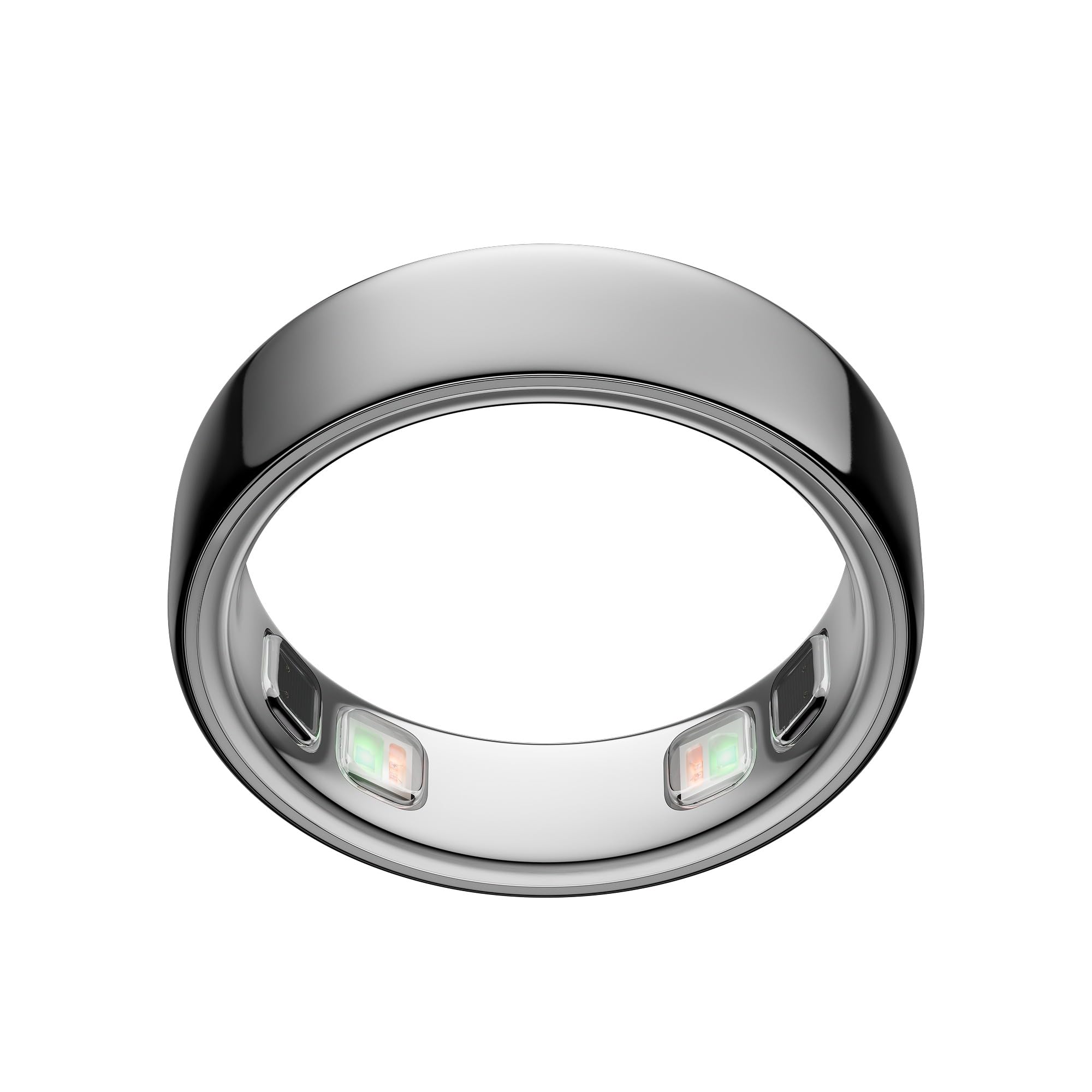
The membership is the first thing we mention when someone asks about the Oura Ring 5, and then we tell them to buy it anyway. What the monthly fee buys is the deepest sleep and recovery picture in this group: stages, heart rate variability, temperature trends and a morning readiness score that's easier to act on than a wall of charts. The first month is included, so the trial is genuine rather than a formality.

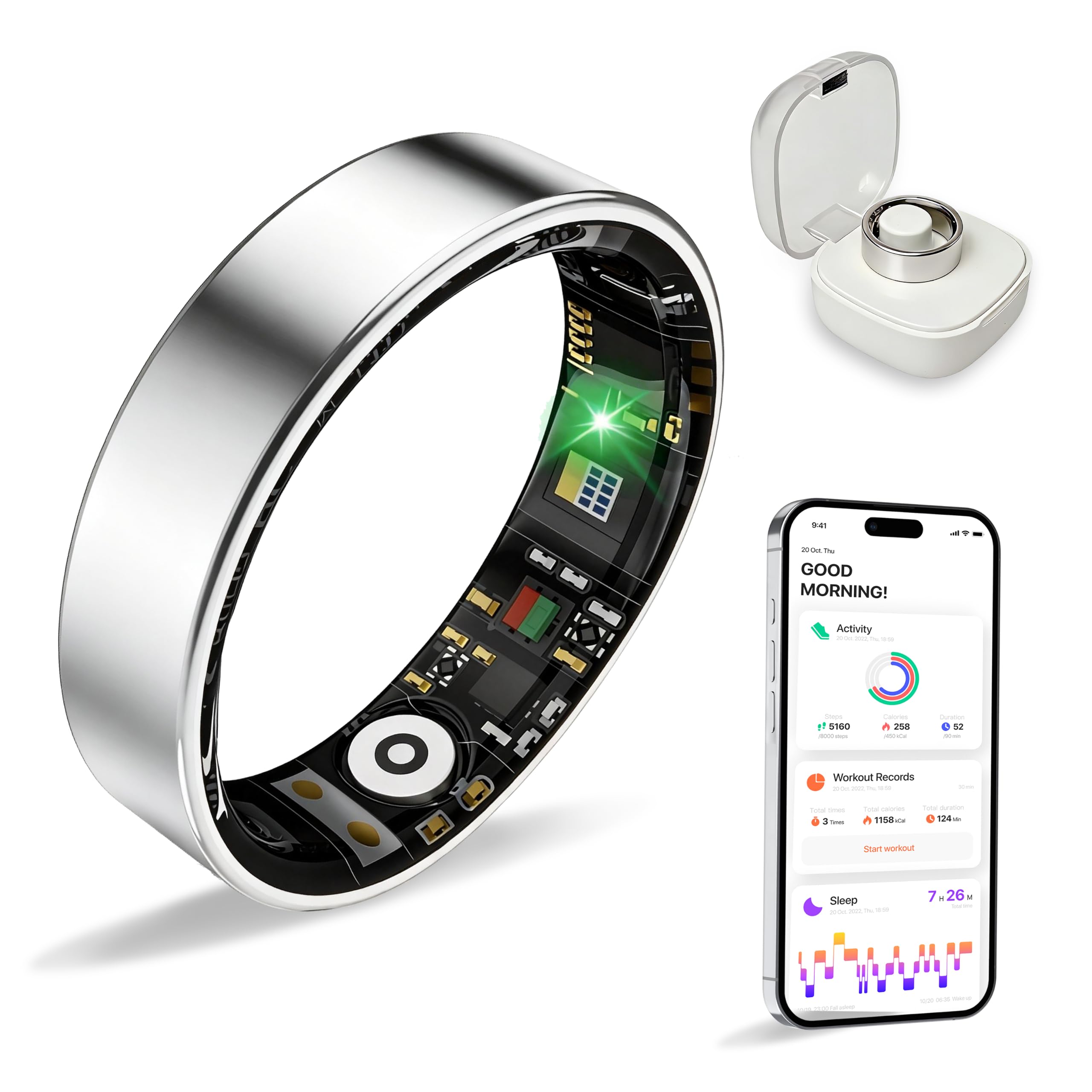
The hardware has caught up with the software. This generation is roughly 40 percent smaller than the one before it, and the all-titanium shell is the best finish in this group — it reads as a plain band, which is the entire point. It's rated IP68 down to 100 meters, so showers and swims are a non-event, and the listed six days of battery with an 80-minute charge means topping up while you get ready is enough.

Sizing is the part that catches people out. Oura's sizing is specific to this ring, doesn't match jewelry sizes or earlier generations, and the range skips half sizes — order the sizing kit, wear the sample through a full day and night, and check it in the evening when your fingers are at their widest.

None of that matters if you won't read the numbers. This is a ring for someone who likes a morning score, a weekly trend and a nudge when their resting heart rate drifts. If that sounds like homework, the sensing is wasted and a plain fitness band logs your steps for a fraction of the outlay.

Bottom line: The most complete sleep and recovery tracking you can wear on a finger, in the smallest titanium body here — priced like a service, and worth it only if you use it.

2

RingConn Gen 2 Air

RingConn Gen 2 Air

No subscription

Our Score 8.4/10
Check Price

Worth Noting

  • Battery capacity can fade within the first year
  • Data does not move easily into other apps
Weight
0.09 oz
Thickness
2 mm
Battery Life
Up to 10 days
Subscription
None for standard features

Two and a half grams, two millimeters thick. Those two figures are why the RingConn Gen 2 Air disappears on the hand faster than anything else here, and why we point anyone who found smart rings lumpy under a glove or uncomfortable at night toward this one.

Then there's the money, which is where it makes its real case: standard tracking works without a subscription, so what you pay up front is close to what you pay over five years. Up to ten days on a charge, refilled in about 90 minutes, turns charging into a fortnightly chore instead of a nightly one — that's the difference between a tracker you keep wearing and one that lives in a drawer.

Sizing runs small and RingConn's own kit doesn't line up with standard ring sizes, so order the kit and go up rather than down when you're between. Register the one-year warranty on day one, because the failure to watch for is the battery losing capacity inside the first year rather than anything dramatic happening to the shell.

It's titanium, rated IP68 to 100 meters, and it tracks sleep, heart rate, stress and blood oxygen without asking you to learn a new vocabulary. What you're buying is hardware and a lifetime of basic tracking rather than an evolving service — and for a lot of people, that's the better trade.

Bottom line: Our pick if you refuse a subscription: 2.5 grams of titanium, up to ten days between charges and no monthly bill — order the kit, and buy where returns are easy.

3

BIEMHA Smart Ring

BIEMHA Smart Ring

Budget first ring

Our Score 9.2/10
Check Price

Worth Noting

  • Heart rate sampled every 30 minutes
  • No stated warranty
Heart Rate
Every 30 minutes
Battery Life
2 to 3 days
Subscription
None
Water Resistance
80 m

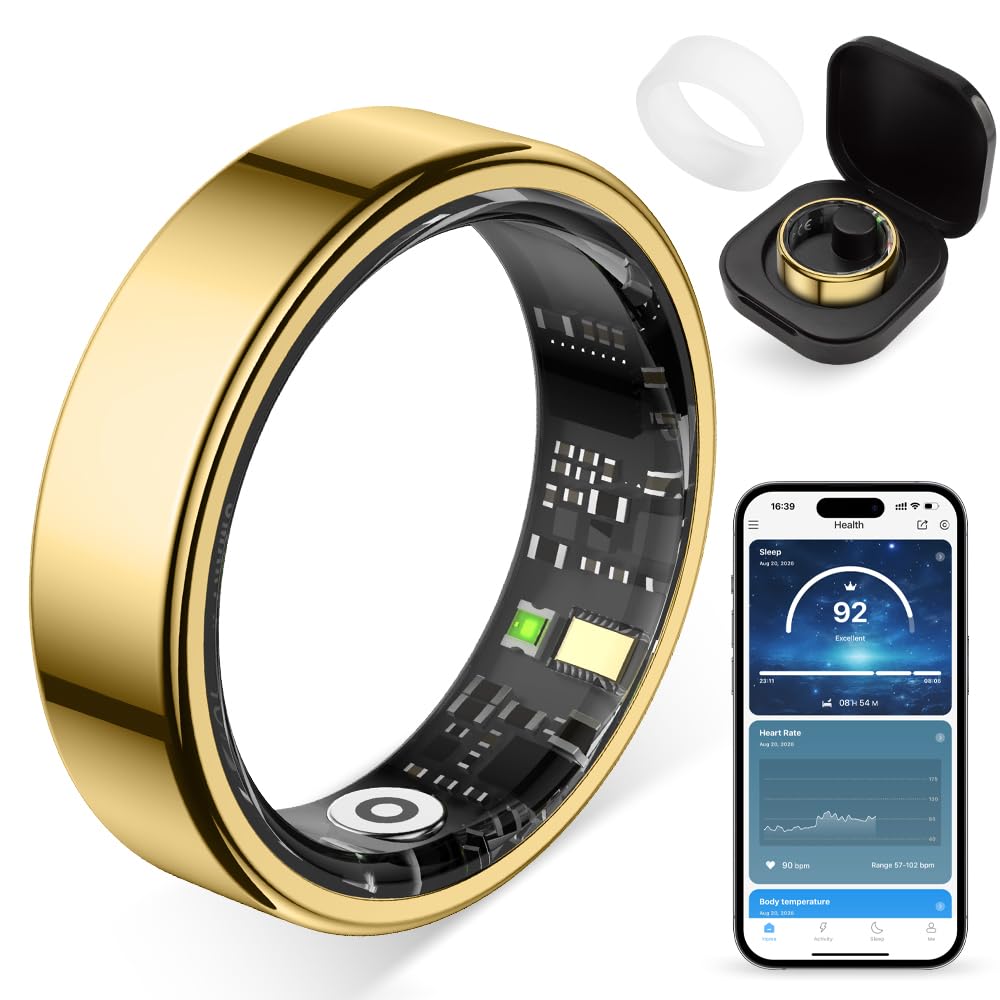
This is the budget ring we hand to most people first. The BIEMHA sits near the bottom of the price range in this group, asks for no subscription, and covers the basics — sleep, heart rate, steps, blood oxygen — through an app that runs on both iPhone and Android. Nothing about it feels expensive, and at this end of the market that's the honest trade rather than a disappointment.

Battery is listed at two to three days, and the charging case in the box stretches that considerably, which matters more than the headline figure suggests: a ring you're meant to sleep in is a ring you don't want tethered to a cable every night. It's rated to 80 meters, so showers and pools are fine, and heart rate is sampled every half hour — enough for a weekly trend, not enough for interval training.

Fit is the thing to get right. The size chart is the only guide you get, and a ring that spins on your finger reads worse than one that sits snug — measure in the evening and pick the size that needs a little soap to slide off, not the one that drops over your knuckle. Beyond that it's a quiet, competent tracker that tells you what happened last night without asking for a fee.

Bottom line: The budget ring we hand to most people first: no subscription, a charging case that stretches a short battery, and honest basics if you want a morning summary rather than live workout data.

4

COLMI R02

COLMI R02

Wearing as jewelry

Our Score 8.0/10
Check Price

Worth Noting

  • Short battery life next to the rest of this group
Heart Rate
Continuous
Subscription
None
Sleep Tracking
Nighttime only
Skin Temperature
Timed measurement

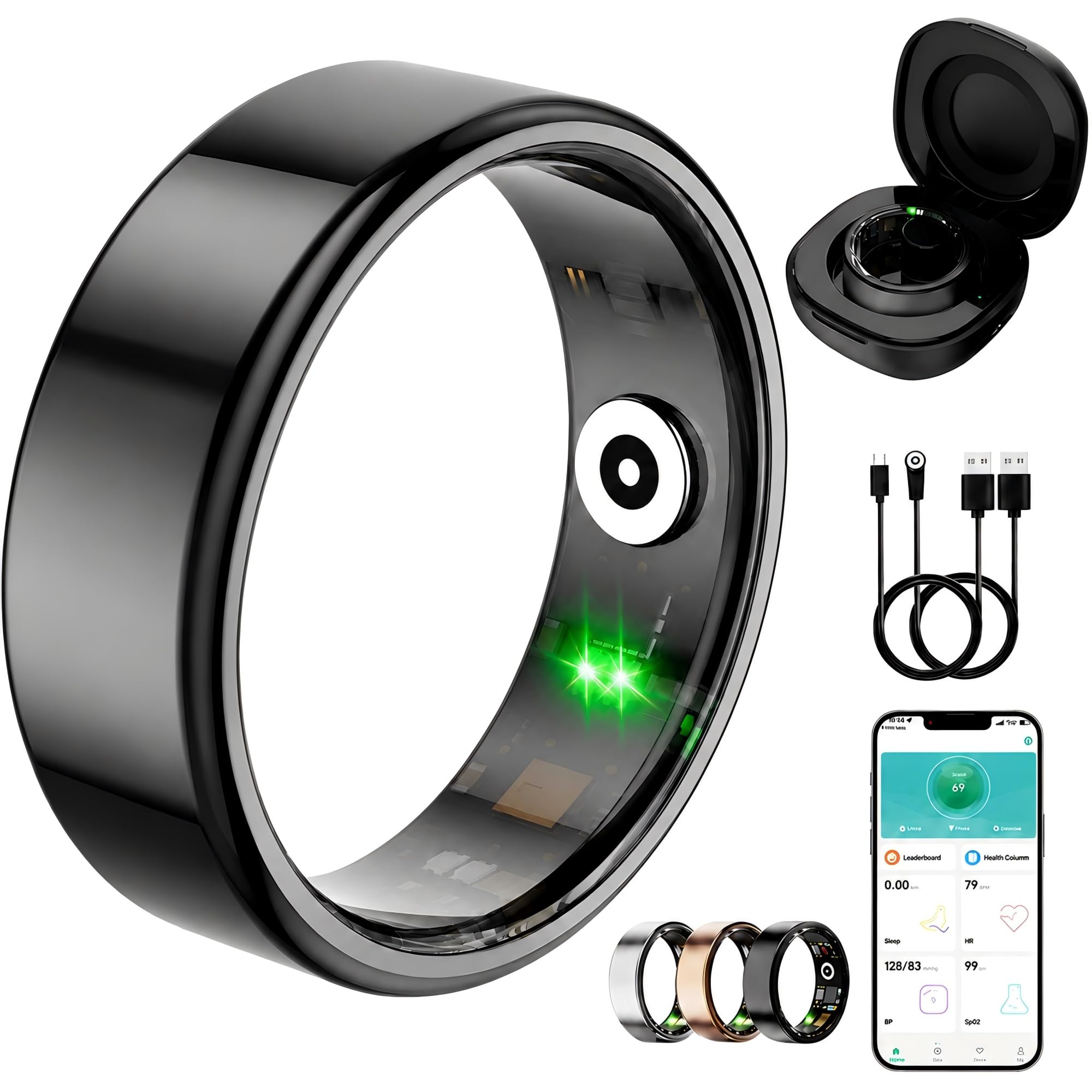
The R02 is the one here that gets worn for how it looks. In gold it reads as a plain metallic band rather than a gadget, and that is the whole argument for a ring over a watch — nobody wants a fitness tracker on their ring finger at a wedding. It's the pick for someone who wants the look first and the tracking second, and it never asks for a subscription.

What it tracks is real, if narrower than the price implies. Heart rate runs continuously, skin temperature can be taken on a timer, and sleep is broken into stages — but the algorithm is calibrated for nighttime only, so an afternoon nap simply won't appear. That's a deliberate limitation rather than a bug, and we think it's fine if your nights are regular.

Two compromises to know about. Battery life is the shortest sort here — this isn't a ring you leave on for a week — and reliability is the risk: a ring that stops working outright is the failure to plan for, so keep the box, register the warranty and buy somewhere the return process is simple. The finish is lovely; the internals are where the savings were made.

Bottom line: The best-looking budget ring here and the one with no app fee at all — buy it for the gold finish and everyday tracking, not for the battery.

5

ZBNMY Smart Ring

ZBNMY Smart Ring

Free app tracking

Our Score 9.4/10
Check Price

Worth Noting

  • Basic dashboard app with no coaching
Battery Life
7 days claimed
Subscription
None
Compatibility
Android and iOS
Water Resistance
IP68, 80 m

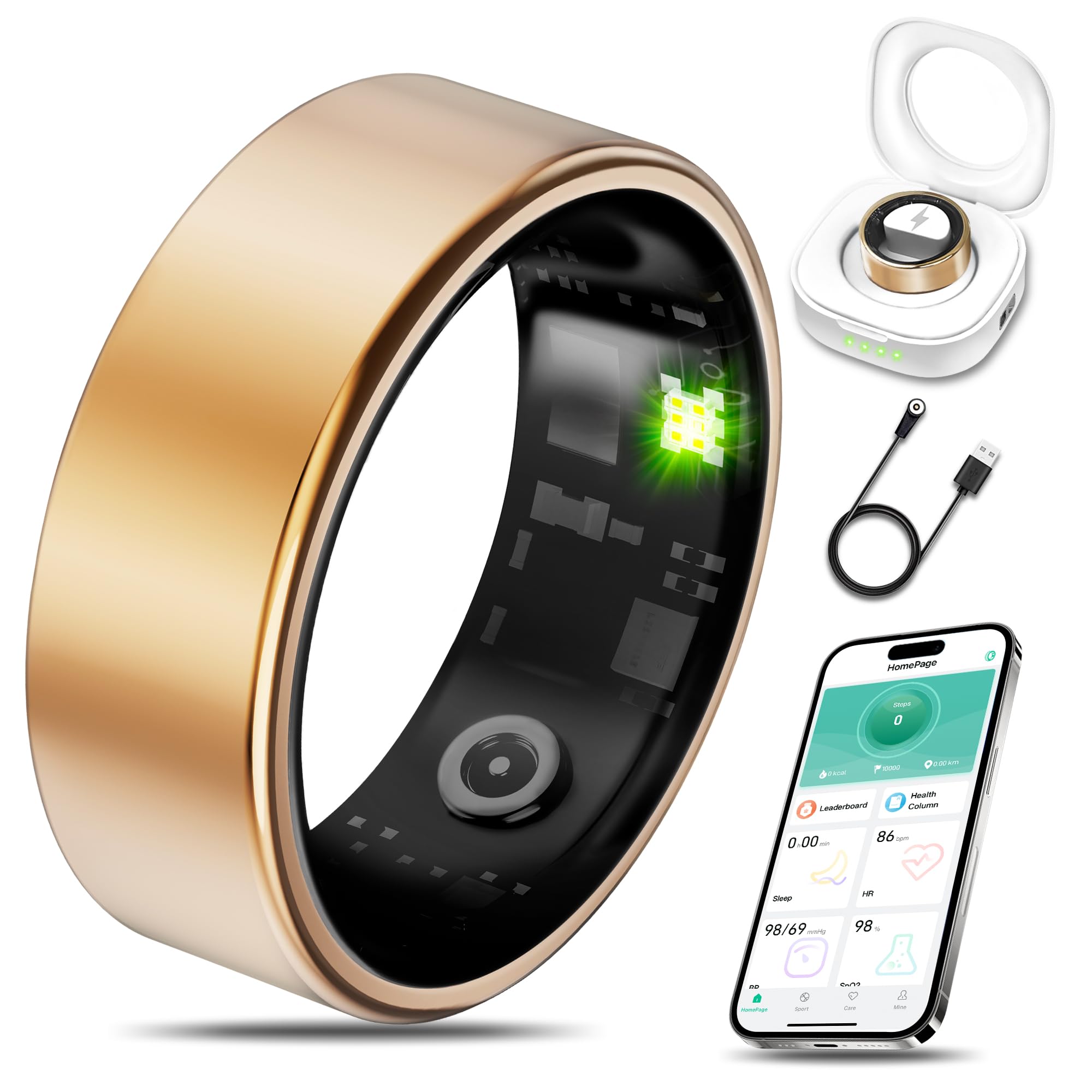
A free app with no subscription is the pitch, and ZBNMY delivers it: buy the ring, install the app, and sleep stages, heart rate, blood oxygen and daily activity stay free for as long as you keep the ring. In a category where the best-known name bills monthly, that isn't a small thing.

The hardware holds up its end for the money. The body is rated IP68 to 80 meters, battery life is claimed at seven days, and sleep is split into deep, light, REM and awake time rather than one vague score. It pairs with both Android and iOS, and the whole thing is aimed at people who want a number in the morning without a second app bill.

Our one caution is the app: it's a clean dashboard, not a coach. You get the numbers and the trends without the readiness scores and guided breathing that justify a monthly fee elsewhere, and how the finish holds up over a year is the open question. At the low end of the price range, that's a small bet to place.

Bottom line: A genuinely subscription-free budget ring: sleep stages, heart rate and blood oxygen at the low end of the price range, with a straightforward app and no monthly bill.

6

Milavan Smart Ring

Milavan Smart Ring

Trying a ring

Our Score 10.0/10
Check Price

Worth Noting

  • Heart rate sampled every 30 minutes
Profile
2 mm
Heart Rate
Every 30 minutes
Sport Modes
8
Battery Life
3 days

Every half hour, not every second. That's how the Milavan samples heart rate, and it's the specification that decides whether this ring suits you. For a resting-rate baseline, a weekly trend or a rough sleep picture, a reading every 30 minutes is enough. For intervals, HRV work, or anything where you want to watch a spike as it happens, it isn't.

The rest of the package is built for all-day wear. The band is 2 mm across with a polished inner face, thin enough to sit beside a wedding ring or under a glove, and the eight sport modes cover the usual ground — running, cycling, walking, hiking, yoga, dance, golf and jump rope. Sleep is split into deep, light, REM and awake.

Battery is listed at three days with a one-hour charge, the short end of this group, though a ring you top up while you shower rarely runs flat. Water resistance is IP68 to 50 meters, which covers the pool, and the sizing chart matters more than usual here because a ring that shifts during sport reads badly.

Where it earns its place for us is as a first ring. There's a one-year warranty, the app is straightforward, and the outlay is small enough that finding out whether you'll wear a ring overnight costs very little. It's not a runner's ring. It's for someone curious.

Bottom line: A thin, cheap first smart ring for someone who wants to find out whether they'll wear one at all — the half-hourly heart rate is the trade you're making.

7

UniJethro R11M

UniJethro R11M

Feature list

Our Score 8.2/10
Check Price

Worth Noting

  • Pairing can be unreliable, especially with iOS
Warranty
2 years
Heart Rate
Continuous
Battery Life
5 days
Water Resistance
IP67

On paper the R11M does more than rings costing several times as much: heart rate, blood oxygen, blood pressure, HRV, skin temperature, sleep stages, steps — plus a remote camera shutter and a family-sharing mode that lets someone else see your readings. That list is why it gets bought, and it's why the next two paragraphs matter.

More metrics is not the same as more insight. We treat blood pressure from a finger as a novelty rather than a measurement — a cuff is the tool for that, and no ring here changes it. Sleep staging and step counts are the other two to check against something you already trust for a week before you draw conclusions from them.

Where the ring does earn its keep is as a cheap way into the category. There's a two-year manufacturer warranty, a silicone protector in the box to keep the finish alive, and a charging case, and the remote shutter is a genuinely handy extra once it's paired. It's rated IP67, which covers splashes and rain rather than swimming.

The catch is pairing. This is the ring in the group where Bluetooth is the thing to test on day one, particularly with an iPhone, and it's worth doing the setup while the return window is still open rather than three weeks later. Get past that and you have a lot of tracking for very little money.

Bottom line: The most features per dollar here, including blood pressure and HRV — treat the readings as trends rather than measurements, and test the pairing before the return window closes.

How We Tested the Best Smart Rings

We started with a list of more than 20 rings on the market and cut it down by reading spec sheets and return policies: sensor types, whether the company sold a sizing kit, subscription requirements, and the real monthly cost once fees were tallied in. Seven made the cut, and we bought every one at full price so nothing but the ring itself was on trial.

Each ring lived on a finger for at least three weeks. We wore them overnight, to workouts, in the shower, and through long days of desk work and dishwashing. To check tracking, we compared heart rate against a chest strap during interval runs and counted steps by hand on a measured walk, then held the numbers up against the morning report. Sleep was the hardest to judge, so we logged our own bedtimes in a notebook and checked the app's read on nights we knew had been restless. Every morning we recorded the remaining battery percentage, timed a full charge from dead, and noted whether the charger demanded fussy, exact placement.

Fit and appearance got equal weight. We ordered sizing kits first, then wore the plastic sizers overnight before committing, watching for spinning, red marks, and that tight-after-a-salty-dinner feeling. Over weeks we knocked the rings against door frames, washed our hands dozens of times, and checked the finish for scuffs and dulling. Value came last: we added up a year of subscription costs and weighed that against what each ring could still do without one.

How to Choose Smart Rings

Continuous Sensing or Every Half Hour

The biggest difference between a cheap smart ring and an expensive one isn't the sensor count, it's the schedule. Premium rings sample heart rate continuously, which is what lets them flag a stressful afternoon or a resting rate that drifted overnight. Budget rings often take a reading every 30 minutes — plenty for a weekly trend, useless for intervals.

The trap: sport modes on an interval-sampling ring still record steps and duration, so the workout screen looks complete. It just won't show what your heart did in the middle of a set. If you train seriously, check this before anything else.

What the Subscription Actually Buys

One ring here bills a monthly membership after an included first month; the rest charge nothing. The fee isn't a trick — it pays for the analysis layered on top of raw sensor data, and it's the main reason that app behaves more like a coach than a dashboard. If you will open the app most mornings, the fee is easier to justify than a pricier ring you stop reading.

Watch the wording on the free ones, though. "No subscription for standard features" means some insights aren't standard. Find out what sits behind that line before you count on the whole app being free forever.

Sizing Is Where Rings Get Returned

Every ring here uses sizing that doesn't match jewelry sizes, and at least one major name skips half sizes entirely. Order the maker's sizing kit instead of guessing, wear the sample for a full day and night, and measure in the evening when fingers are at their largest.

The trap: a sample that feels right at breakfast can be tight by dinner, and the finished ring isn't always identical to the kit. Pick the size that needs a little soap to slide off, not the one that drops over your knuckle. A loose ring reads badly; a tight one gets taken off and never put back on.

Battery Life Is a Routine, Not a Headline

Rated days assume default settings. Switch on continuous heart rate and overnight blood oxygen and the real figure drops, which is why charge time matters as much as capacity: an 80- or 90-minute refill fits into a shower and breakfast, a three-hour one doesn't.

A charging case changes the maths on the shortest-lived rings by letting you top up away from a socket. Decide where the charger will live before you buy. A ring that dies on Tuesday night is a ring that misses Tuesday's sleep.

More Metrics Is Not More Insight

A finger is a good place for pulse and motion and a poor place for anything that needs a cuff or a chest strap. Blood pressure is the clearest example: some rings here display it, none of them replace a validated monitor, and a number that wanders is worse than no number at all.

Apply the same caution to sleep stages and step counts — compare a week against a device you already trust before changing anything based on them. The useful question isn't how many metrics a ring lists, it's which three you will actually act on.

Frequently Asked Questions

Final Verdict

Across this set, the Oura Ring 5 is the one we recommend. It has the deepest sleep and recovery data here, the smallest titanium body, and a battery routine that fits a normal week. The monthly membership is the price of that depth, and it's worth paying only if you will actually read the app.

If a subscription is out of the question, take the RingConn Gen 2 Air: no fees for standard tracking, 2.5 grams on the finger, and the longest battery in the group. And if you want to spend as little as possible on a real ring, the BIEMHA covers the basics without a monthly bill.