Home Appliances & Robots

Best Robot Vacuum and Mop Combos of 2026

A robot that mops as well as it vacuums is quietly making a compromise: a smaller tank, a gentler brush, a little more weight, and a lot more that can go wrong. None of that is a dealbreaker — it just means the gap between a good combo and a frustrating one is wider than it is for a plain vacuum. Get it right and you stop thinking about your floors entirely, which was the whole point of buying one.

Battery life is the part nobody warns you about. Suction, a water pump, and a lifting mop pad all pull from the same cell, so the runtime printed on the box rarely survives a full run with the mop on — and a vacuum that dies mid-kitchen, or one loud enough to end a phone call, is one you quietly stop scheduling. My team has spent eight months living with seven of these, timing them on hardwood and carpet and following the trail of hair our test dogs leave behind. The picks below are the ones that finished the job on their own.

1

Dreame L40 Ultra Gen 2

Top Pick
Dreame L40 Ultra Gen 2

Whole-home, hands-off

Our Score 8.8/10
Check Price

Worth Noting

  • Tall station needs dedicated floor space
  • Premium tier against the rest of this set
Dock
Self-empty, mop wash, hot-air dry
Runtime
231 minutes
Suction
25,000Pa
Mop Lift
10.5mm

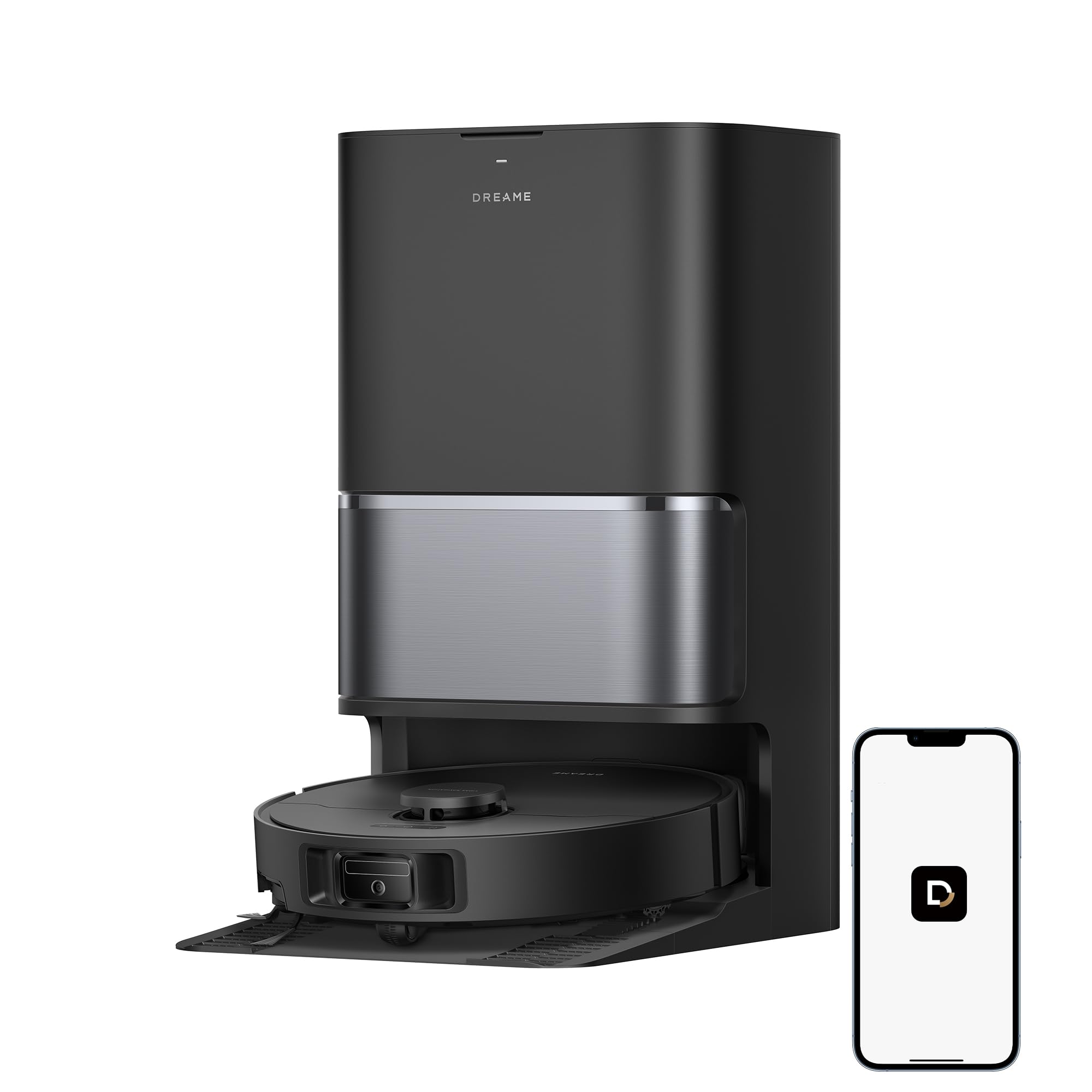
The job nobody warns you about with a mopping robot is looking after the robot. The L40 Ultra Gen 2 is the pick here that takes most of that off your hands: its dock empties the bin, washes the mop with clean water, refills the tank and blows warm air through the pad to dry it. That's why it's our top pick — not one headline number, but the fact that the routine becomes checking a station rather than rinsing a wet pad in the sink every night.

The hardware backs it up. At 25,000Pa it has the most suction in this group, the side brush and mop both extend outward into corners and along baseboards, and the mop lifts 10.5mm when it crosses a rug, which is enough to keep a short-pile carpet from getting damp. The 231-minute runtime is the longest here too, so a large open floor gets finished without a recharge-and-resume cycle.

What you give up is floor space. The station is a piece of furniture in its own right at 23.3 inches tall, and it wants a wall, an outlet and a spot you don't mind losing. It also sits in the premium tier of this group. In exchange, the mop that comes back out of the dock is clean and dry, which is the part most of us stop doing by hand after two weeks.

Bottom line: We recommend it to anyone who wants a whole home handled without a nightly pad rinse: the most suction and longest runtime here, plus a dock that washes and dries the mop.

2

iMartine D16S Max

iMartine D16S Max

Value self-emptying

Our Score 8.6/10
Check Price

Worth Noting

  • Tallest body here at 3.93 inches
Height
3.93 inches
Runtime
180 minutes
Suction
18,000Pa
Base Dust Cup
1.3 liters

Self-emptying usually means buying dust bags forever. The D16S Max empties into a bagless 1.3-liter cup in its base that you tip straight into the trash, and that one decision is what makes it the value pick of this group: you get the dock, the laser map and 18,000Pa of suction without a standing order for consumables.

We like where it lands. There are 180 minutes of runtime, a 150ml water tank with three flow levels, and a map that remembers five separate floors — more than most houses need and exactly right for a two-story one. It climbs 18mm thresholds, so the lip between tile and hardwood isn't a wall.

Two things to know before you order. At 3.93 inches it has the tallest body in this set, so low sofas and toe-kick gaps are out; measure the clearance rather than assuming. And charging is where this class of robot goes wrong: a unit that stops holding a charge is simply out of action, so buy where the return window is generous and register the warranty.

Bottom line: If you want the self-emptying, mapped experience without premium money, this is the one we point you to — check your furniture clearance first and buy it with a return window.

3

Roborock Q7 L5

Roborock Q7 L5

Midrange apartments

Our Score 8.0/10
Check Price

Worth Noting

  • No self-emptying dock
  • Pad needs rinsing after each mop run
Suction
8,000Pa
Navigation
360° LiDAR mapping
Water Tank
270 ml
Brush Design
Dual anti-tangle

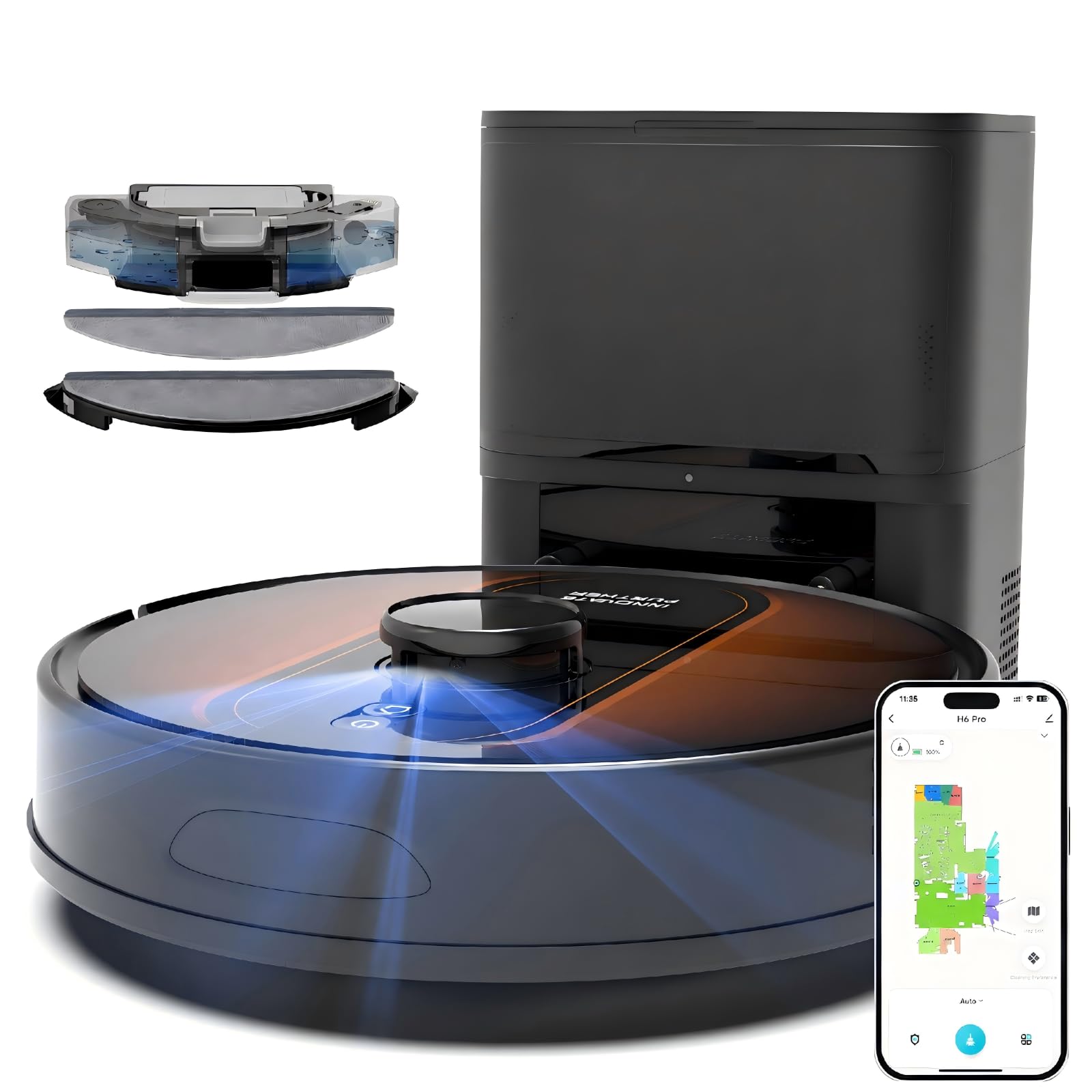
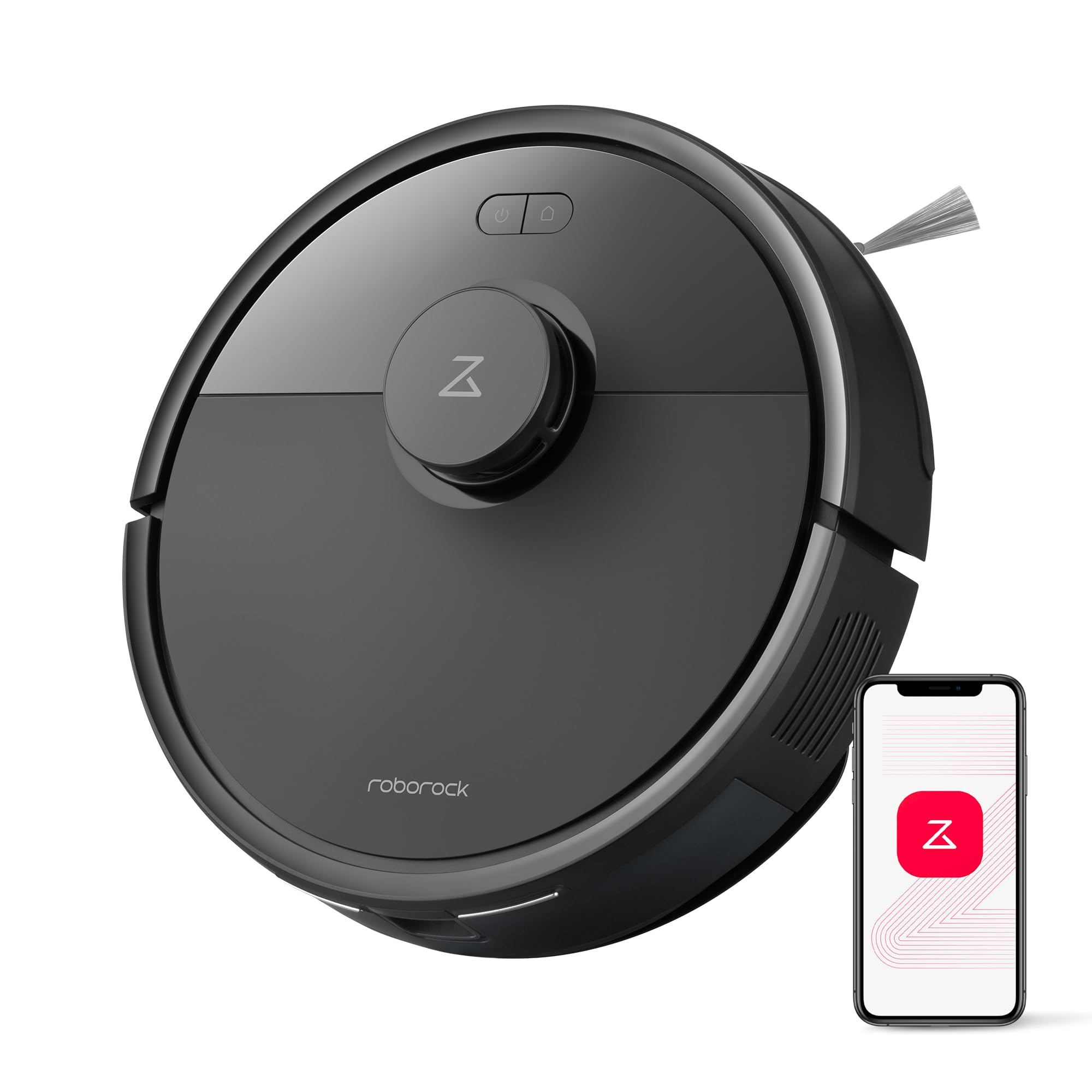
There's no dock here, and that's the point. The Q7 L5 is for the buyer who wants proper laser mapping and serious suction without surrendering a square of kitchen floor to a station: you empty the bin yourself, and you keep the space and the money. We think that's a fair trade for a first robot or a smaller apartment.

The numbers are strong for the position it occupies. At 8,000Pa it has more suction than anything else below the premium tier here, the dual anti-tangle main and side brushes are the difference between weekly detangling and none, and 360° LiDAR builds maps it can store for multiple floors.

Mopping is the simple kind: a 270ml tank feeding a removable pad that trails behind the vacuum, with three water levels to choose from. Set no-mop zones over rugs before the first run; on hard floor it keeps dust down between proper washes rather than replacing them.

Bottom line: Buy the Q7 L5 if you want real mapping and strong suction without a station on the floor — it's our sensible midrange choice for apartments and first-time buyers.

4

Tikom G8000 Max

Tikom G8000 Max

Budget hard floors

Our Score 8.6/10
Check Price

Worth Noting

  • No room mapping or targeted cleaning
  • No dock, so you empty and refill by hand
Dustbin
450 ml
Runtime
150 minutes
Suction
5,000Pa
Water Tank
300 ml

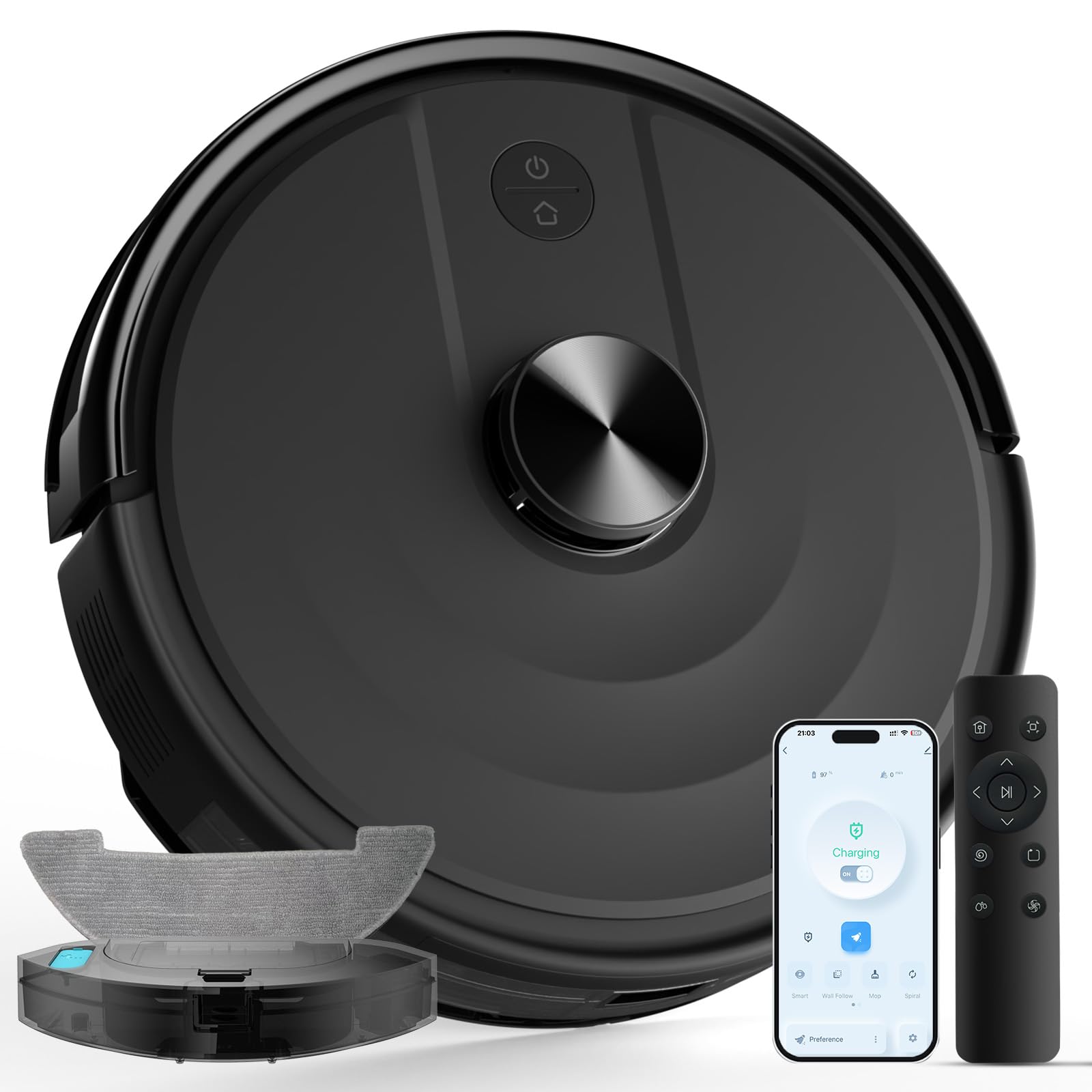
A 2.99-inch body and a 45dB noise rating tell you most of what the G8000 Max is for: it gets under low furniture and it doesn't make a scene. At budget money it covers the essentials — 5,000Pa of suction, a 450ml bin, a 300ml water tank, four ways to control it including a remote, and buttons on the robot for anyone who doesn't want an app.

We see it as the starter machine that doesn't embarrass itself. It vacuums and mops in the same pass, runs up to 150 minutes in quiet mode, and the bin is big enough that a small flat gets done in one go. If your floors are mostly hard and your standard is daily upkeep rather than deep restoration, it earns its place.

The part we plan around is charging, which is where cheap robots live or die. A unit that stops holding a charge is finished rather than fixable at home, so keep the receipt, register the warranty and don't expect years of service from a battery at this price.

Bottom line: For a first robot or a small hard-floor flat, this is the budget pick we're comfortable recommending — just don't expect it to map your rooms.

5

wrydao H6 Pro

wrydao H6 Pro

Bag-style dock

Our Score 10.0/10
Check Price

Worth Noting

  • Tall 3.6-inch body limits clearance
  • New model with a short track record
Runtime
150 minutes
Suction
6,000Pa
Dust Bag
3 liters
Navigation
360° LiDAR

Compared with the bagless iMartine, the H6 Pro takes the other route to hands-off cleaning: a 3-liter sealed bag in the base that the dock fills, so emptying means pulling a full bag out and dropping a new one in. The dust stays in the bag the whole way, which is the more agreeable system if emptying the robot is the job you resent.

The rest is midrange-normal: 6,000Pa, 150 minutes of runtime, and 360° LiDAR that builds a map you can fence off with no-go zones and virtual walls. Separate 250ml dust and 310ml water tanks mean the vacuum half isn't sharing space with the mop half, and the app handles scheduling and room selection.

The bag is the whole argument, then. If dust handling is the part of robot ownership that bothers you most, this is the tidiest version of it in this group, and the hardware around it is competent rather than exciting. If you don't want to pay for a station at all, the Q7 L5 cleans the same floors with a bin you empty yourself.

Bottom line: A sealed bag instead of a bin is the reason to choose the H6 Pro over the other midrange docks here — we just want more of a track record before calling it a default.

6

Bagotte M6

Bagotte M6

Low furniture

Our Score 10.0/10
Check Price

Worth Noting

  • Small 0.3-liter bin
Height
2.66 inches
Runtime
120 minutes
Suction
8,000Pa
Navigation
360° LiDAR

At 2.66 inches, the M6 is the lowest-slung robot in this set — well over an inch flatter than the tall models — and that's not a small thing if your sofa, bed or media unit sits on legs nothing else will fit under. It's the one we name for a room full of low furniture.

The rest reads like a midrange machine: 8,000Pa of suction, 360° LiDAR mapping with virtual no-go zones you draw in the app, 120 minutes of runtime, and a dock it finds on its own when the charge drops. At 6.3 pounds it's light enough to carry between floors.

The trade is the surface. Hard floor is what this one is built for — tile, wood, laminate — so a house of thick rugs is the wrong home for it. In a tiled apartment with a low sofa, though, it does the job for midrange money, and the mapping is the real thing rather than a pattern generator.

Bottom line: Low furniture and hard floors are what the M6 is for, and at 2.66 inches it gets under gaps the taller robots here can't reach.

7

eufy E25

eufy E25

Sticky kitchen floors

Our Score 8.8/10
Check Price

Worth Noting

  • Station footprint is a real piece of furniture
  • Premium tier with little history behind it
Mop
Self-rinsing roller
Station
Wash, dry, refill
Suction
20,000Pa
Dust Bag
3 liters

Most mopping robots drag a damp pad around and call it mopping. The E25 rinses a roller with clean water twice a second while it spins against the floor, and the dirty water goes back to the station instead of being smeared across the kitchen. That's a different class of clean, and it's the whole reason to look at this one.

The station does the full works: it empties dust into a 3-liter bag, washes the roller, dries it with 50°C air and refills the water tank, so what comes back out is a clean mop rather than a merely wet one. eufy pairs that with 20,000Pa of suction, anti-tangle brushes, and a corner arm that swings out to scrub along baseboards.

It's also the heaviest thing here at 37.5 pounds with the station, and rated at 57dB, which is civil for the power on offer but still audible in a small flat. This is a machine you place once and leave alone, not one you tuck into a cupboard between runs.

Where we land: the roller is the right answer for sticky kitchen floors and the mat around a pet bowl, and the station is about as autonomous as this category gets. But it's a premium machine with almost no track record behind it, so we're listing it as one to watch rather than the default — if a scrubbing mop is the thing you've been missing, nothing else here does it this way.

Bottom line: A roller that rinses itself with clean water is the reason this one exists, and nothing else here mops this way — provided you can live with the station.

How We Tested Seven Robot Vacuum and Mop Combos

We started with every combo we could find that was still in production with replacement brushes, pads, and filters actually in stock, then filtered by price band, bin and tank capacity, whether the mop pad lifts or the whole module comes out, and whether the app holds a schedule without a subscription. Seven made the cut, and we ran them for eight months in the same houses where we run our regular vacuums.

Each one lived through the same week: crumbs and a spilled coffee in the kitchen, cereal under a high chair, hair along baseboards and wrapped around brush rolls, and a bathroom floor on Sunday morning. We scattered a measured scoop of sand and rice on hardwood and weighed what came back up, timed how much floor each covered on max suction with the mop running before the battery quit, and recorded noise from the next room and while on a work call. We also refilled and emptied each one by hand, cleared every tangled brush roll, and noted how often we had to.

Reliability showed up in the small stuff: docking failures, maps that drifted after a chair moved, filters that clogged early, streaks left behind on tile. We watched whether each machine climbed onto rugs and dragged a wet pad across them, and whether it hung up on thresholds or spun in place. To judge value, we added up a year of pads, bags, and filters and set that against the purchase price.

How to Choose Robot Vacuum and Mop Combos

Decide how hands-off you want to be

Robots come in three levels of autonomy. The simplest have no station at all: you empty a bin and fill a tank yourself, and you keep the floor space and the money. The next step is a self-empty dock that holds weeks of dust in a bag or a bin. The top level washes the mop and refills the water too.

Where buyers go wrong is assuming self-emptying covers the mop. It doesn't. If you plan to mop often, mop washing is the feature that earns its keep; if you mostly vacuum and mop occasionally, emptying is the upgrade that matters.

Suction ratings don't travel between brands

Suction is quoted in Pascals, and those figures are reached differently enough that a 20,000Pa claim and an 8,000Pa claim don't tell you the gap you assume. The rating is a rough ordering, not a measurement you can carry across the shelf.

We look at the whole pickup system instead: brush design, edge reach, and whether the brushes resist hair wrap. In a house with long hair or a shedding dog, dual anti-tangle brushes and a self-emptying dock change your week more than another few thousand Pascals.

Mapping turns a robot into an appliance

Laser mapping is the difference between a machine that cleans your home and one that wanders around it. With a LiDAR map you get room-by-room cleaning, saved floor plans, and no-go zones over cable nests and pet bowls. Without one, the robot covers floor in patterns and can't be sent to a single room.

If you want to schedule the kitchen while you're doing something else, mapping is the feature to insist on. It's the first thing we check on any listing, and the one spec we won't trade for extra suction.

Mopping: a damp wipe or a real scrub

Most combos mop with a pad that trails behind the vacuum, dampened from a small tank. That lifts dust and light kitchen film, and it is not a scrubber — dried spills still want a hand mop. A roller that rinses itself with clean water is the step up, and only one machine here does it that way.

Then settle the rugs. Either the mop lifts clear of carpet, as the Dreame's does at 10.5mm, or you draw no-mop zones in the app. Know which you're getting before the first run, because a wet pad crossing a bedroom rug is the mistake nobody repeats twice.

Measure the gap and the station before you buy

Height decides more purchases than suction does. The robots here run from 2.66 to 3.93 inches tall, and that inch is the difference between cleaning under the sofa and skipping it. Measure the lowest gap you actually care about, and check any floor lip between rooms — one pick here climbs 18mm.

Then look at where the dock goes. A self-cleaning station can stand 17 to 23 inches tall and needs an outlet plus permanent floor space. Nobody moves these weekly, so pick the wall before you pick the robot.

Frequently Asked Questions

Final Verdict

Our pick for most people is the Dreame L40 Ultra Gen 2. Not because 25,000Pa is a number you'll notice daily, but because the dock washes and dries the mop, and that is the step people abandon first. If the premium tier is too far, the iMartine D16S Max gives you self-emptying and real mapping for midrange money — measure your furniture clearance before you commit.

And if you don't want a station on the floor at all, the Roborock Q7 L5 is the honest no-dock choice: 8,000Pa, a proper LiDAR map, and a bin you empty yourself.