TVs & Video

Best Small TV for a Bedroom of 2026

A bedroom TV has a different job than the living-room set. It needs to fit on a dresser without taking over the room, stay clear from the angle you actually watch from—half under the covers—and be simple enough to operate before coffee. I learned that the hard way with a bargain set that looked fine in the store and turned gray once the bedside lamp was on. Over the past six months, my team and I have lived with nine small TVs, setting them up solo and using them for morning news, late-night streaming, and local channels. The keepers had a picture that held up at bedroom distance, a remote you could work by feel in the dark, and a Wi-Fi connection that didn't need babysitting.

Resolution gets the headlines, but at six to eight feet, glare handling and viewing angle matter more. We also tracked value and reliability—whether a TV still opened apps quickly, held its connection, and pulled in local channels after a month of nightly use. The picks below are the ones that made bedroom life easier.

1

Roku 24-Inch Select Series

Top Pick
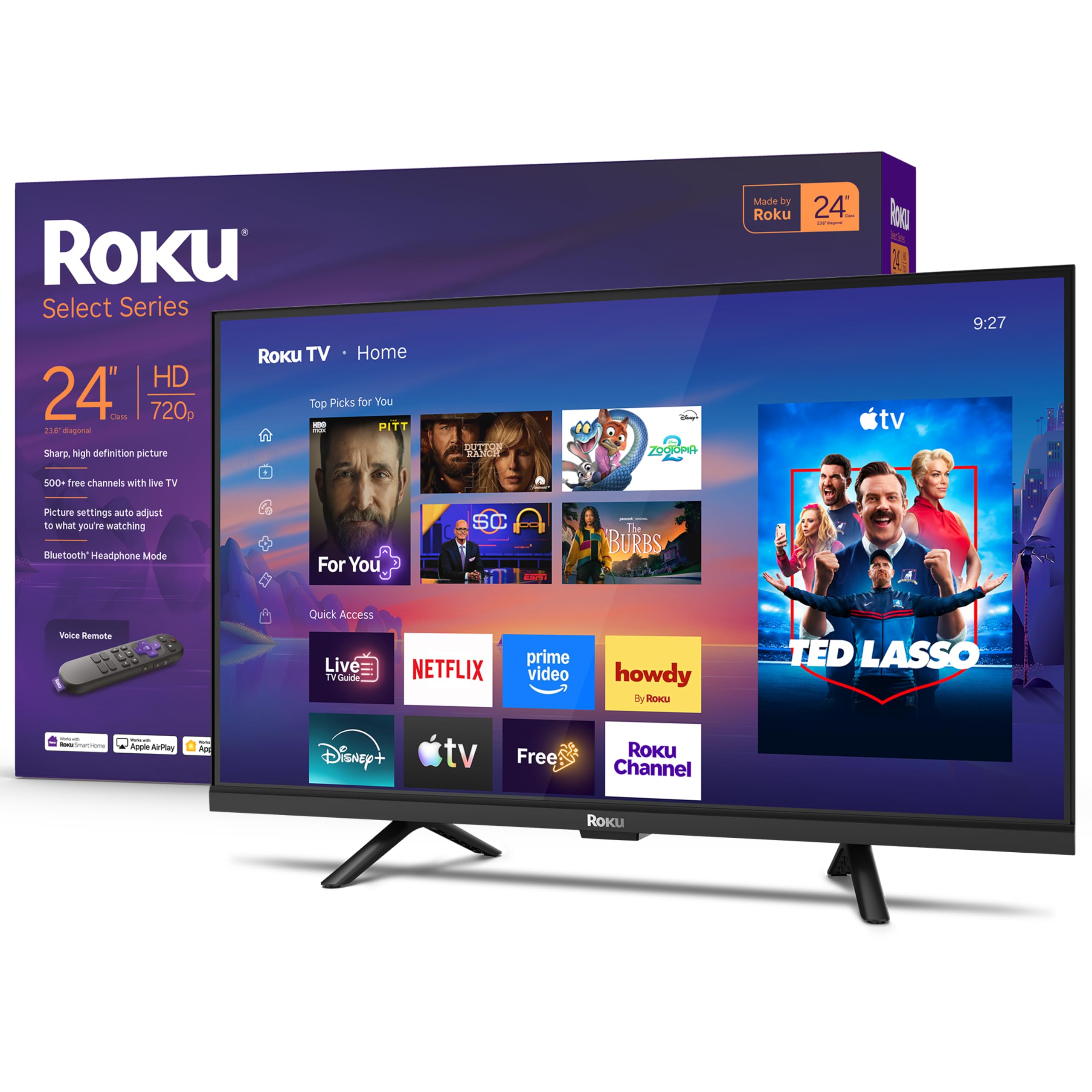
Roku 24-Inch Select Series

Bedrooms and dorms

Our Score 8.8/10
Check Price

Worth Noting

  • 720p panel keeps fine detail soft
  • Wi-Fi setup can be fussy in weak-signal rooms
Weight
4.9 lb
Resolution
720p
Screen Size
24 inches
Smart Platform
Roku OS

The feature that settles this one for a bedroom is buried in the spec list: Bluetooth headphone mode. Pair a set of wireless headphones and the room goes quiet while the audio stays with you, which is the whole game when someone next to you is asleep. We think that trick is worth more here than a brighter panel or another inch of glass, and it is why the 24-Inch Select Series is the set we recommend first.

Everything else is sized for a nightstand. At 21.1 inches wide and 4.9 pounds, one person can lift it onto a dresser and move it aside to dust, and the 200 x 200 mm VESA pattern matches the common wall brackets. Three HDMI inputs is generous at this price, so a console, a streaming stick and a cable box can all stay plugged in at once.

The picture is what a 24-inch 720p set should be: bright enough at 250 nits for a dark room, and sharp at the five or six feet you actually sit from it. It is not the set for a wall opposite a sunny window, and the glossy screen will mirror a bedside lamp if you sit square-on, so move the lamp behind the screen and neither matters. Roku's interface is still the one we point nervous buyers toward: one small remote, a voice button, a home screen that gets out of the way. Setup is a free Roku account and a Wi-Fi password.

Bottom line: For a bedroom where someone else is sleeping, we recommend the Roku Select: headphone mode, a light 24-inch frame and an interface that stays out of the way, all for budget money.

2

Amazon Ember 32-Inch 2-Series

Amazon Ember 32-Inch 2-Series

Larger rooms

Our Score 8.8/10
Check Price

Worth Noting

  • Freezing and Wi-Fi dropouts over time
  • HD resolution on a 32-inch screen
Wireless
Wi-Fi 6
Resolution
HD
Screen Size
32 inches
Smart Platform
Fire TV

The Ember does something no other set here does: built-in sensors notice when you walk into the room and wake the screen to artwork, or to whatever you were watching. It is a lovely bit of theater in a living room. In a bedroom it is the first setting to turn off, because a screen that lights up while you are getting into bed is exactly what you do not want at midnight.

Past that, this is the pick when the room is not tiny. Thirty-two inches is a real step up from 24 when you are watching from a bed rather than a chair, and Fire TV with Wi-Fi 6 and a quad-core processor loads apps without the wait that makes cheap smart TVs tiresome. The Alexa remote does the searching by voice, which matters more at night than it sounds: say the show, skip the on-screen keyboard.

We keep coming back to the screen size as the reason to choose it, but the risk sits underneath. Freezing, app lag and dropped Wi-Fi connections are what hold its record back, so buy from somewhere with an easy return and put it through a hard first week: a few hours of streaming, a standby cycle, and a check that it rejoins the network on its own.

Bottom line: We recommend the Ember for a bigger bedroom watched from across the room: 32 inches, a quick Fire TV interface and Alexa in the remote, with the motion sensing switched off.

3

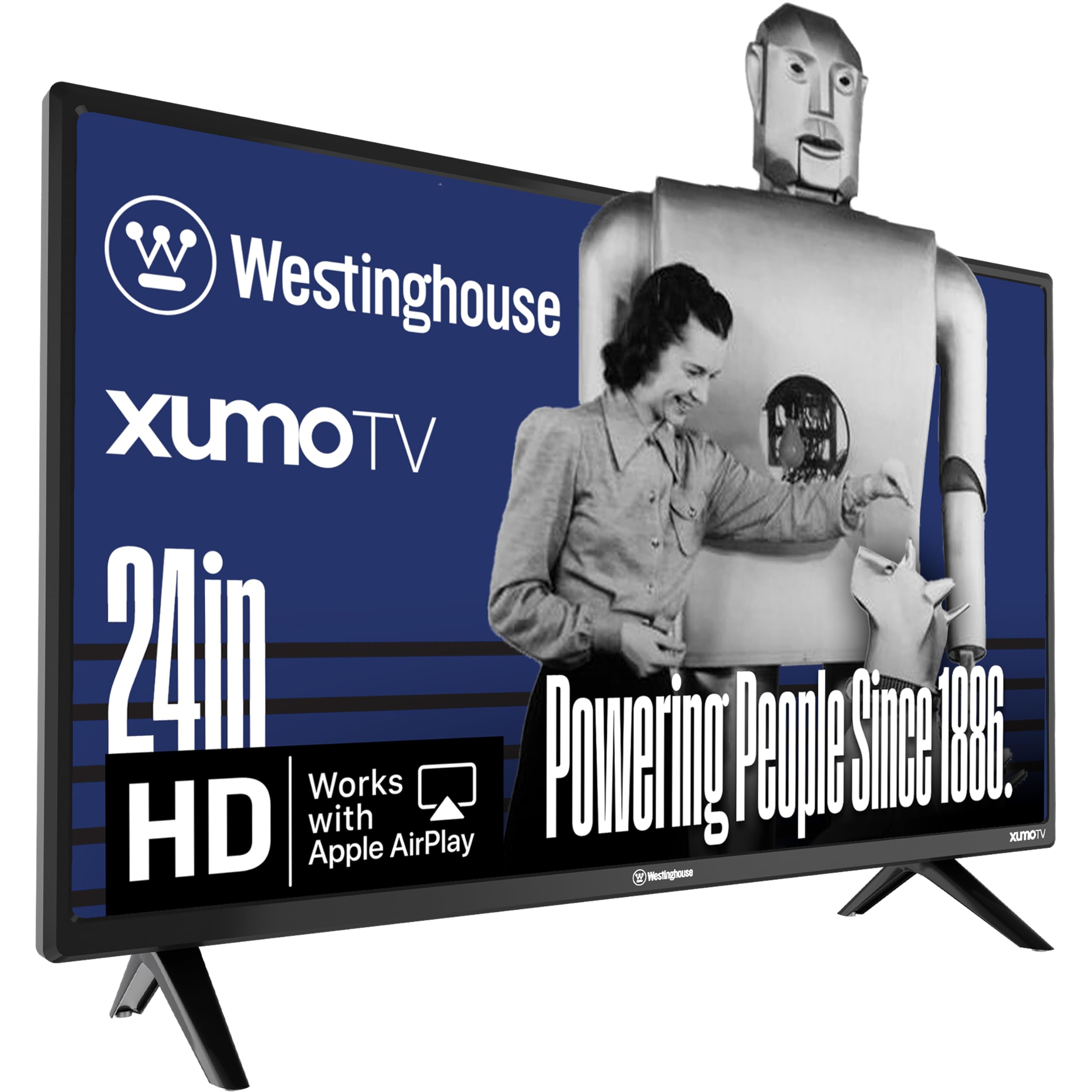
Westinghouse Xumo 24-Inch

Westinghouse Xumo 24-Inch

Tight budgets

Our Score 8.4/10
Check Price

Worth Noting

  • Dimmest panel here at 190 nits
  • Modest 6-watt speakers
Resolution
720p
HDMI Inputs
3
Screen Size
24 inches
Smart Platform
Xumo TV

The Westinghouse Xumo is the cheapest new set in this group, and it does not feel like a punishment: 24 inches of 720p, three HDMI inputs, Bluetooth 5.1 for headphones and AirPlay 2 for casting from an iPhone or iPad. Xumo TV keeps the app list to the majors and puts universal voice search up front, so you are not hunting through four apps for one show. For a guest room, a dorm or a first apartment, that covers most of what a small TV is asked to do.

The compromise is light and volume. At 190 nits it is the dimmest panel we are recommending, and the 6-watt speakers are modest even by small-TV standards: fine at low volume with the lights off, thin if you like a loud movie. We think that is the right trade for a dark bedroom and the wrong one for a bright room, where the Roku's extra brightness is worth the small step up in price. Check your bracket early, too, because the VESA pattern is 75 x 75 mm, smaller than the 200 x 200 on the Roku and the Samsung.

Bottom line: We recommend the Xumo for a dark bedroom on the tightest budget: the cheapest new set here, with Bluetooth, AirPlay and three HDMI ports still included.

4

Samsung 32-Inch H5000F

Samsung 32-Inch H5000F

Free-channel streaming

Our Score 8.4/10
Check Price

Worth Noting

  • Slow menus and remote response
  • Only two HDMI inputs
Resolution
768p
HDMI Inputs
2
Screen Size
32 inches
Smart Platform
Tizen

Samsung's 32-inch sits at the top of this group's price range, above the other 32-inch set here, and what you pay for is the platform rather than the panel: Tizen, 2,700+ free Samsung TV Plus channels, and Knox security around the apps you sign into. The picture holds up for an HD panel, bright and steady at bedroom distance, and setup is about as painless as this group gets.

Patience is the catch. This is the slowest set of the four to respond: menus take a beat, button presses lag behind your thumb, and once you have used a quicker streamer the difference is obvious. Two HDMI ports is the fewest here, so a console and a streaming stick use up the bank, and the bundled remote is the least pleasant of the group.

Where it earns a place: a bedroom where the TV is a Samsung TV Plus and Netflix machine, started from across the room and otherwise left alone, or a household already signed into Samsung's account on its phones and appliances. If you channel-surf or cast all evening, the lag and the two ports will wear on you. This is a set to buy for its platform, not for its reflexes.

Bottom line: We recommend the Samsung only when Tizen and Samsung's free channels are what you want; otherwise its slow menus and two ports make the cheaper 32-inch the better bedroom buy.

How We Tested Small Bedroom TVs

We started by narrowing the field to sets that could sit on a nightstand or dresser without swallowing the room, then filtered by price, input selection, smart features, and whether the remote looked usable without a manual. That left nine small TVs, which we ran through six months of ordinary bedroom use. We set each one up alone, timing the process from box to first picture: attaching the stand, joining the home Wi-Fi, signing into streaming apps, and scanning for local channels with an antenna.

To judge picture quality, we watched the same dimly lit drama, bright morning news, and a baseball game from bed at roughly six to eight feet, with a bedside lamp on and off. We noted whether faces looked natural, dark scenes turned to mud, motion smeared, and the screen still looked clear when viewed from a pillow rather than dead center. We also checked footprint on a dresser and on a wall mount, and whether a smaller set felt too small from that distance.

For remotes, we spent a week using each one in the dark, noting whether power, volume, and back were findable by feel and how many clicks it took to reach a streaming app. We logged every freeze, dropped Wi-Fi connection, and missed channel scan over the six months, and we switched between a streaming stick, a game console, and live TV to see how quickly each set responded. At the end, we compared what each TV delivered for the money—not just on day one, but after weeks of nightly use.

How to Choose the Right Small TV for a Bedroom

Match the Screen to the Room, Not the Wall

A bedroom TV is watched from a bed or a chair a few feet away, so bigger is not automatically better. Twenty-four inches is the safe default for a dresser or a nightstand; 32 inches earns its place only when the set sits at the foot of the bed or across the room. The 24-inch sets here run roughly 21 to 22 inches wide and about 6 inches deep on their stands, while the 32-inch Samsung needs 28.9 inches of width. Measure the furniture before you fall for a screen size.

Check the bracket at the same time. VESA patterns here run from 75 x 75 mm on the Westinghouse Xumo to 200 x 200 mm on the Roku and the Samsung, and a mount bought for the wrong pattern is a second trip to the store.

Plan for the Light in the Room

Bedrooms are dim rooms, which makes brightness less critical than in a living room, but not irrelevant. The Roku's 250 nits and the Xumo's 190 nits both look comfortable with the lights off; the gap appears when a window faces the screen in the morning. If you watch a lot in daylight, buy the brighter panel rather than the larger one.

Screen finish matters for the same reason. A glossy panel will show a bedside lamp as a bright rectangle, so move the lamp behind or beside the set and the reflection falls outside your view.

Decide How You Will Listen Before You Buy

The most useful bedroom feature is not a picture setting. Built-in speakers on these sets run from 6 to 14 watts, which is plenty at low volume and thin once you turn it up, and a bedroom is exactly where you turn it down. Headphones solve that, so confirm the pairing before you buy: the Roku connects wireless headphones straight from its settings, and the Westinghouse Xumo carries Bluetooth 5.1.

If you prefer a soundbar, check the outputs first, since optical is the common connection here, and budget for it. A small TV with a small speaker is the one place a cheap bar makes an obvious difference.

Pick a Platform You Can Live With Half-Asleep

Roku is the simplest of the four interfaces: a short home screen, a small remote, a voice button. Fire TV is the busiest and the most capable, with Alexa doing the searching. Xumo covers the major apps with universal search, and Tizen brings Samsung's free channels but the slowest response in this group.

Speed matters more here than on a living-room set, because you operate it half-asleep and a slow menu becomes a reason to reach for your phone instead. Choose the platform whose apps you already pay for, then weigh responsiveness against screen size. A quick 24-inch beats a sluggish 32-inch most nights.

Frequently Asked Questions

Final Verdict

The Roku 24-Inch Select Series is the set we point most people toward. Headphone mode solves the bedroom's actual problem, watching without waking anyone, and the rest of the package is right for the money: a 4.9-pound frame, three HDMI inputs and a 720p panel that looks sharp at bedroom distance.

Choose the Amazon Ember 32-inch if the room is big enough to watch from across it and you can live with its reliability risk. Choose the Westinghouse Xumo if budget is the binding constraint and the room stays dark.