Home Appliances & Robots

Best Smart Garage Door Openers of 2026

A smart garage door opener exists to kill one specific moment: the one where you're ten minutes down the road and can't remember whether the door came down behind you. The fix sounds almost too simple — a small controller wired to the motor you already own, plus an app that tells you the truth. What separates a good one from a frustrating one is everything around that promise: whether it installs without a second pair of hands, whether it stays connected through a concrete wall, and whether the alert reaches you before your neighbor does.

The mistake first-time buyers make is shopping the app instead of the wiring. Most of these are retrofit controllers that work alongside the motor already bolted to your ceiling, so compatibility decides whether you're done in twenty minutes or on hold with support. We installed 10 of them over eight months, in an attached garage under a bedroom and a detached one that sees every season, and the picks below are the ones I'd hand to a friend without a caveat.

1

Genie StealthDrive Connect 7155-TKV

Top Pick
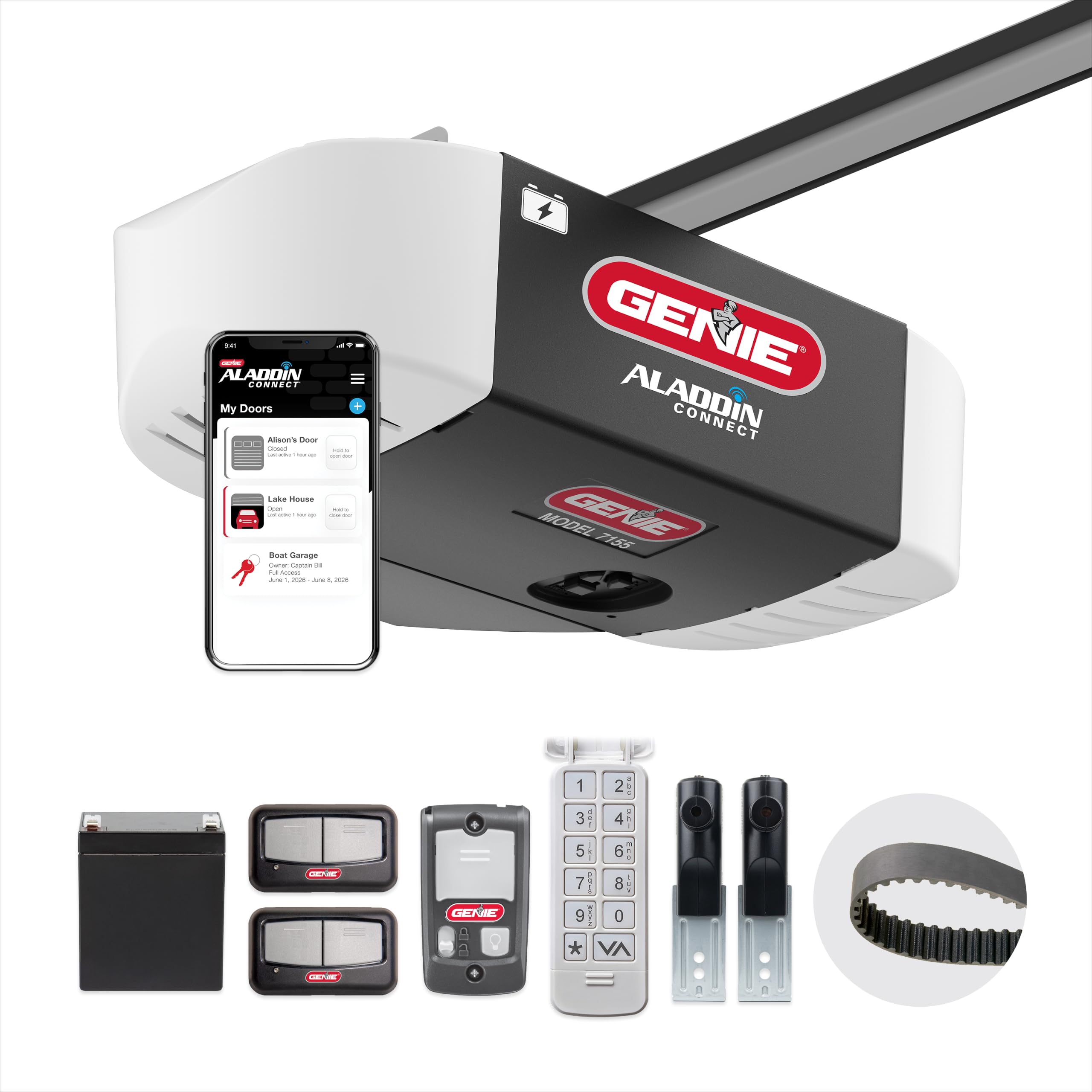
Genie StealthDrive Connect 7155-TKV

Most garages

Our Score 8.8/10
Check Price

Worth Noting

  • Wi-Fi setup can be stubborn on 2.4 GHz networks
  • No automatic door lock in the box
Motor
1.25 HPc belt drive
In The Box
Two remotes, keypad, wall console, safety sensors
Smart Control
Aladdin Connect Wi-Fi, Alexa and Google
Battery Backup
Included

A dead garage door during an outage is the kind of problem you only think about once it happens. The StealthDrive Connect has an integrated battery that keeps the door cycling when the grid doesn't, and that's the single biggest reason it's our default pick for most homes. Underneath it's a 1.25 HPc DC motor on a steel-reinforced belt — more motor than a typical single door needs, which means it lifts without sounding like it's straining.

Quiet is the other thing we kept noticing. A belt drive plus a DC motor takes most of the mechanical noise out of the cycle, and what's left comes from the door's own rollers and hinges. If the garage sits under a bedroom, this is the configuration to want. The box is also unusually complete: two pre-programmed remotes, a wireless keypad, a multi-function wall console and the Safe-T-Beam sensors.

Aladdin Connect is the smart half — phone control, open and closed status, and Alexa or Google Assistant for voice commands. It talks to 2.4 GHz networks only, so split the router bands before you begin; pairing is the step that asks for the most patience, and the remotes and keypad will run the door while you sort it out. Coverage is the most generous in this group: lifetime on the motor and belt, five years on parts.

Two practical notes from the install. The remotes arrive already matched, so test the door's travel and force settings before you touch Wi-Fi at all — a door that binds will trip the safety reverse and send you hunting for an app problem that isn't there. And the keypad is the accessory we ended up using most, which is easy to underestimate when you're comparing horsepower figures.

Bottom line: Our default for most garages: a quiet 1.25 HPc belt drive with Aladdin Connect app and voice control, plus battery backup that keeps the door working when the power doesn't.
2

Genie QuietLift Connect 3053-TKV

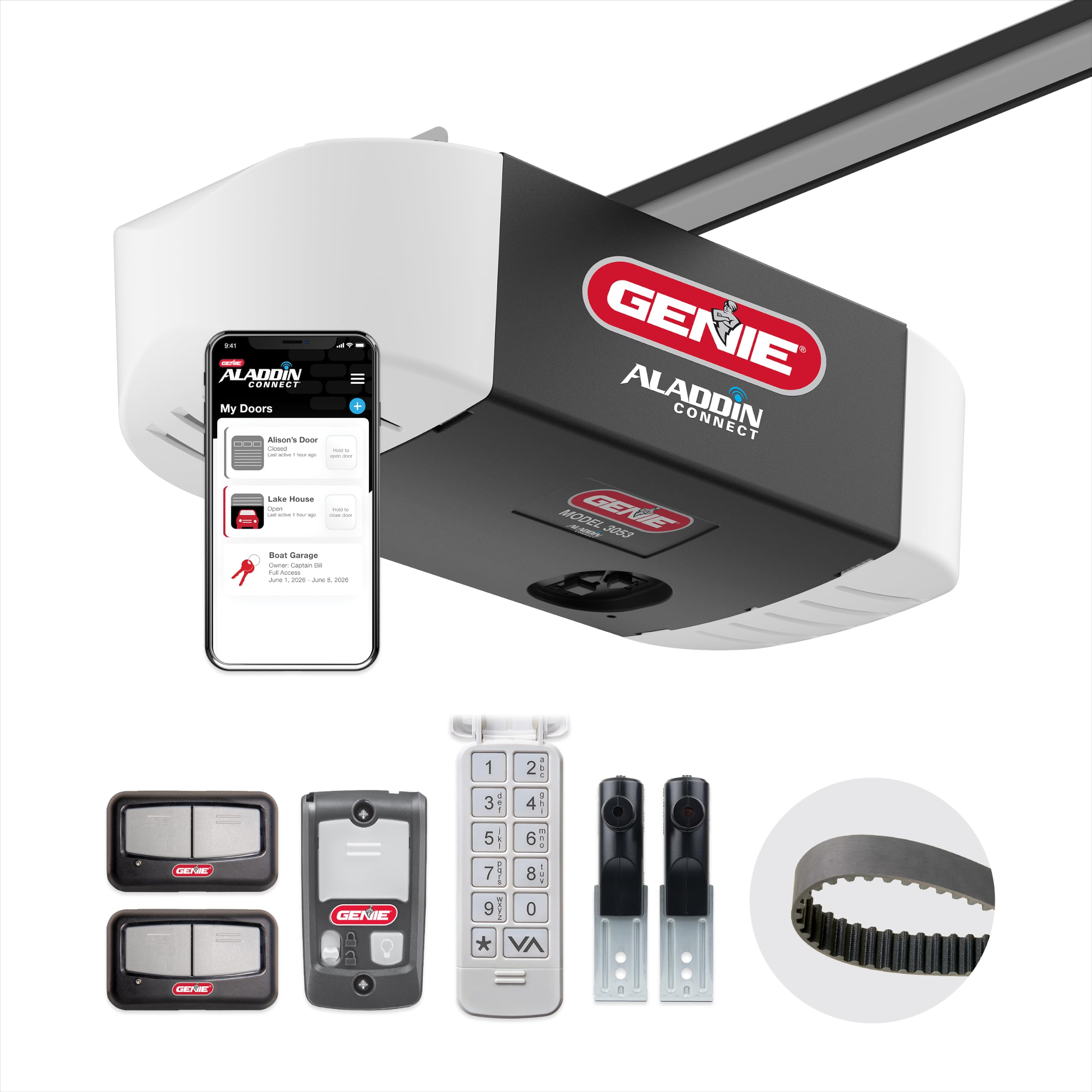
Genie QuietLift Connect 3053-TKV

Standard 7-foot doors

Our Score 8.8/10
Check Price

Worth Noting

  • No backup battery in the package
  • 8-foot doors need a separate extension kit
Motor
¾ HPc belt drive
Door Fit
7 ft, up to 500 lb
In The Box
Two remotes, keypad, vacation-lock wall console
Smart Control
Aladdin Connect Wi-Fi, Alexa and Google

Take the StealthDrive, fit a smaller motor, leave out the backup battery, and you have the QuietLift Connect — a blunt way of saying this is the Genie to buy when your door is a standard seven-footer and the budget is the tightest in this roundup. What survives the cost-cutting is the part you notice every day: a belt drive quiet enough to open under a sleeping kid's room, and the same Aladdin Connect app for phone and voice control.

Seven feet and 500 pounds is the rating, and ¾ HPc is enough motor for that door. We're comfortable with the trade: on a well-adjusted door the hardware makes more noise than the motor does, so the StealthDrive's extra horsepower buys margin more than it buys a different experience. This is also the least expensive smart opener on the page, and the gap is wide enough to notice.

Installation is one of the friendlier jobs in this group. The five-piece rail snaps together with no extra hardware, the remotes arrive pre-programmed, and the wall console adds a light button and a vacation lock that disables the remotes while you're away — a small feature we appreciated more than some of the app's extras.

A few things to plan for. Doors eight feet tall need the extension kit, sold separately, so measure floor to header before ordering. Coverage on the accessories runs a year against five on parts, worth knowing because keypads and remotes are what fail first. And there's no backup battery here, so if outages are routine where you live, that's the upgrade to make later.

Bottom line: We point standard seven-foot-door buyers to the QuietLift Connect: the same quiet belt-drive feel and app control, for the least money in this group.

3

Chamberlain RJO20

Chamberlain RJO20

Space-saving installs

Our Score 9.2/10
Check Price

Worth Noting

  • Only one remote included
  • Needs an outlet and a torsion shaft at the door
Mount
Wall-mounted, direct drive
Door Lock
Automatic deadbolt included
In The Box
One remote, keypad, wall control, remote light
Smart Control
myQ app

Wall-mounted openers are a different idea of a garage: the motor sits beside the door on the torsion shaft instead of riding a rail down the middle of the ceiling, so the space above the car comes back and there's no structure up there to carry vibration into the room above. The RJO20 is the version of that idea we recommend most often, and it's the pick here when quiet matters most, for the simple reason that nothing is bolted to the ceiling to broadcast the noise.

The included automatic lock is what changes how the door feels at night. Every close throws a deadbolt, so the door is physically locked rather than held shut by the opener's gearing, and the bolt engaging is audible confirmation that it's down. The myQ app covers open, close and status from anywhere, and the kit carries a three-button remote, a wireless keypad, a wall control and a remote light.

One remote in the box is thin for a two-driver household, and a second is an extra purchase — the sort of small miss that's easy to fix at order time and annoying to discover on a Monday morning when both cars are on the driveway.

It's the most expensive opener we recommend, and the money goes into the mounting system, the lock and the quiet rather than into extras. Expect a real install: just over thirty pounds to hang, an outlet at the wall beside the door, and a torsion shaft of the right type — check that before you order, because it's the one thing that can't be worked around. Warranty runs lifetime on the motor and belt, five years on parts, a year on accessories.

Bottom line: We reach for the RJO20 when ceiling space or overhead noise is the problem: it mounts on the wall, runs very quietly, and deadbolts the door on every close.

4

LiftMaster 98022

LiftMaster 98022

Torsion-bar garages

Our Score 9.0/10
Check Price

Worth Noting

  • Front-mount torsion bar required; no low-headroom track
  • Longest body here, at 21.5 in
Mount
Wall-mounted jackshaft
Smart Control
myQ Wi-Fi app
Body Dimensions
7.5 x 7.9 x 21.5 in
Door Requirement
Front-mount torsion bar only

Before anything else: this opener needs a front-mount torsion bar system, and it won't work with roll-up doors, low-headroom track or a Wayne Dalton Torquemaster. That's a narrow list of eligible garages, and it's the first thing to check — if your door doesn't match, nothing else in this review matters. If you're replacing an existing jackshaft unit on a standard torsion setup, the door it wants is probably the door you have.

Where it earns its place is build and motion. The P3 motor on a belt-driven jackshaft runs smoothly and quietly enough that the door hardware becomes the noise you hear, and the myQ app gives you phone control and status from anywhere. We think it's a sound choice for a workshop or a garage where the ceiling has to stay clear and the torsion hardware is already right — quality and quiet operation are the strongest parts of its record.

The one measurement to take first is wall space. At 21.5 inches the listed body is the longest in this group, so it needs more clear wall beside the door than the Chamberlain, plus an outlet within reach of where it hangs. Get those right and it's a quiet, solidly built operator with app control; get them wrong and no amount of app fiddling saves the install.

Bottom line: We rate the 98022 as a capable, quiet jackshaft operator, but the front-mount torsion requirement keeps it out of most garages and off our main recommendation.

How We Tested Smart Garage Door Openers

We started with roughly 30 smart controllers and full openers, then filtered by the questions that actually decide a purchase: whether it works with the motor you already own, whether it needs a separate hub or talks to Wi-Fi on its own, and what you get for the money. Ten made the cut. We installed them in two garages — one attached and directly under a bedroom, one detached and unheated — and lived with them for eight months.

Installation got the hardest look, because that's where these are won or lost. I timed every install solo with a ladder, a socket set, and my phone, and wrote down exactly where the instructions lost me; we also handed each manual to a neighbor who had never installed one and watched where he flipped back and forth. Before anything was powered up, we checked the bracket thickness, the wire gauge, and whether the housing felt like it belonged on a garage ceiling. For noise, we measured from the kitchen above and from the driveway, and noted the difference between a unit that clicks and one that grinds.

Connectivity was tested the way a real garage tests it: through drywall, a metal door, and a dead zone where my phone drops to one bar. We tracked how often each unit fell off the network, how fast it came back after a router reboot, and whether the app still answered with the 2.4GHz band switched off. Every door ran a dozen or more cycles a day — school runs, deliveries, a week of houseguests — and we logged false alerts, delayed remote commands, and anything that took a second tap. Power outages, dead batteries, and a jammed door got their own afternoon, since reliability only matters on the day it fails. Value came last: what you pay against what it adds to a door you already have.

How to Choose Smart Garage Door Openers

Mounting Type Decides More Than You Think

Two designs cover nearly every home. A ceiling-mounted belt-drive unit hangs a rail down the middle of the garage and pulls the door up it — the standard, fits almost any sectional door, and costs less. A wall-mounted jackshaft unit clamps to the torsion shaft beside the door, frees the ceiling and removes the vibration path that carries noise into the room above, but it needs a torsion bar in front of the door, clearance around it, and power where the unit hangs.

Check three things before you shop: is there a torsion shaft above the door, is there an outlet within reach of it, and does the door run on standard high-lift track rather than low-headroom hardware. A wall-mount that doesn't fit your garage isn't a worse product, it's the wrong one.

Smart Control Isn't One Thing

Every opener here has Wi-Fi and an app, but the ecosystems differ. Genie's Aladdin Connect works with Alexa and Google Assistant; Chamberlain and LiftMaster both use myQ, which keeps its best features inside its own app. If you want the door inside HomeKit, SmartThings or a wider automation, confirm the current integration path before you buy rather than after the unit is on the wall.

Decide which assistant you actually use, then check that the opener supports it natively. Voice control through a hub is not the same thing as voice control built in, and it's the difference you notice every morning.

Quiet Is Mechanical, and the Door Is Half of It

A belt drive is quieter than a chain, a DC motor smoother than an AC one, and a wall mount quieter still because there's no ceiling rail broadcasting vibration. But the loudest part of most garages is the door itself: steel rollers on a dry track, loose hinges, a door that's out of balance.

Nylon rollers and a properly tensioned door do more for noise than any motor upgrade. If the garage sits under a bedroom, buy the belt and then spend an afternoon on the door hardware — otherwise you're paying for silence the door won't deliver.

Battery Backup and What's Actually in the Box

An integrated battery keeps the door working in an outage, which matters most when the garage is your main entry. It's also the clearest line between our top pick and the cheaper Genie. Accessories matter just as much: count the drivers in the house and the doors you need to open, then check whether a second remote, a keypad or an automatic door lock is included or an extra purchase.

A deadbolt-style lock is the difference between a door held shut by gearing and one that's physically locked. If nobody in the household carries a remote, the keypad is the accessory that earns its place.

Fit, Safety and the Fine Print

Openers are rated by door height, door weight and horsepower: a ¾ HPc unit handles a typical seven-foot door, and eight-foot doors usually need an extension kit sold separately. The safety beam must be mounted, aligned and left alone — it's what reverses the door on an obstruction — and the installation has to follow the manual for the door to behave.

On warranty, read all three numbers: motor, belt and accessories. Accessory coverage is often a single year, and keypads and remotes are the parts that fail first.

Frequently Asked Questions

Final Verdict

The Genie StealthDrive Connect is the opener we recommend for most garages, and the deciding factor is the combination rather than any single figure: a quiet 1.25 HPc belt drive, a complete accessory bundle, and battery backup that keeps the door working when the power doesn't. The app is the weak spot, not the hardware — plan one patient evening on 2.4 GHz and you're set.

If your door is a standard seven-footer and budget matters more, the QuietLift Connect does the same quiet job without the battery. If the ceiling is storage space or the room above is a bedroom, pay the premium for the wall-mounted Chamberlain and its deadbolt.