Wearables & Health

Best Smartwatch of 2026

A smartwatch is supposed to disappear into your day—until it doesn't. The screen that's too dim in sunlight, the sleep score that looks suspicious, the call that drops halfway through a walk: those are the things you remember. What you actually want is a watch that tracks honestly, lasts through the week, and feels good enough to wear with everything from gym shorts to a blazer. The best ones earn their price by getting the basics right, not by piling on features you'll never open.

I've worn smartwatches that needed charging before dinner and ones I forgot about for days. Over the past six months, my team and I wore 12 models through morning runs, pool laps, back-to-back calls, and overnight sleep tracking—pairing each with both iPhones and Android phones. The difference between a good smartwatch and a frustrating one comes down to reliability: does it stay connected, do the buttons and menus make sense, and does it survive a bumped wrist against a doorframe? Below are the ones that held up.

1

Apple Watch SE 3

Top Pick
Apple Watch SE 3

Everyday iPhone use

Our Score 9.4/10
Check Price

Worth Noting

  • 18-hour battery needs nightly charging
GPS
GPS
Case Size
40 mm
Battery Life
Up to 18 hours
Safety Features
Fall and crash detection

The phone in your pocket decides whether this watch makes sense. For an iPhone, the Apple Watch SE 3 is the most complete everyday smartwatch in this set: it handles notifications, fitness, sleep, temperature, and cycle tracking through Apple's polished apps, and adds fall and crash detection that can contact emergency services. That combination is worth more than a longer battery for most people.

The 40mm case is the smaller of the two common sizes, and it sits neatly under a cuff. The screen is bright, and the interface is familiar if you already use an iPhone. Setup is quick on a current phone; if yours is several generations old, check compatibility before you commit, because pairing is the one place this watch can turn into a headache.

Battery life is the trade-off. Apple rates it at up to 18 hours, which means a nightly charge, and heavy days with GPS or constant notifications can cut that short. Fast charging helps, but it does not change the routine: this is a watch you charge while you sleep, not one you forget about for a week.

What keeps us coming back is the safety layer. Fall detection and crash detection are the kind of features you hope never to use, but they make the watch feel like more than a notification screen. Temperature sensing feeds the Vitals app and cycle tracking, a quieter benefit we appreciate over weeks rather than minutes.

Bottom line: For iPhone owners, the Apple Watch SE 3 is our default: safety tools, health tracking, and polished apps make the nightly charge worth accepting.
2

Kuizil T60

Kuizil T60

Tight budgets

Our Score 8.6/10
Check Price

Worth Noting

  • No built-in GPS for route tracking
Resolution
320 x 380
Screen Size
1.91 inches
Sports Modes
100+
Water Resistance
IP68

The Kuizil T60 looks like a much more expensive watch from across the room. Its 1.91-inch screen is the largest in this group, and the 320 x 380 resolution keeps text and notifications crisp. For a budget watch, that big display changes how you use it: you can actually read a message without squinting.

We rate the T60 as our budget pick because it covers the everyday jobs without fuss. Bluetooth calling works through the built-in speaker, IP68 water resistance handles sweat and rain, and the battery stretches several days between charges. The 100-plus sport modes are more than most people need, but having walking, cycling, and yoga ready is useful.

The catch is location. There is no built-in GPS, so outdoor walks and runs borrow your phone's signal, and you need to carry it for route tracking. The workout app also defaults to kilometers; switch it to miles before your first walk if that is how you think. Those are small adjustments for the money, and they do not stop the T60 from being a very easy first smartwatch.

Bottom line: We rate the Kuizil T60 as the budget pick to beat: a big screen, Bluetooth calls, and multi-day battery, with no built-in GPS.

3

Garmin Forerunner 165

Garmin Forerunner 165

Running and training

Our Score 9.2/10
Check Price

Worth Noting

  • Phone syncing can be inconsistent
  • GPS mode rated for 19 hours
Weight
1.38 oz
Display
1.2-inch AMOLED
GPS Life
Up to 19 hours
Battery Life
Up to 11 days

The Forerunner 165 is a running watch first, and that is exactly why it earns a place here. It pairs Garmin's pace and distance tracking with a bright AMOLED screen and training tools that tell you what to do next, rather than just logging what you did. We think it is the clear choice for anyone whose watch is mainly a training partner.

The 1.2-inch display is crisp in sunlight, and the 43mm case is light enough to forget about during a run. Built-in GPS means you can leave your phone at home, while the 11-day smartwatch rating covers most training weeks. Daily suggested workouts, Garmin Coach plans, and the morning report add structure you can follow.

It is not the most polished phone companion. Notifications arrive, but this is a Garmin first and a smartwatch second, and the sporty look does not dress up. For runners and gym-goers who want real training feedback, those are easy trade-offs. The morning report, with sleep, recovery, and training outlook, is the detail that makes it feel like a coach rather than a stopwatch.

Bottom line: Runners should start with the Forerunner 165; its built-in GPS, useful coaching, and light AMOLED body make it the training watch we recommend here.

4

Garmin Vivoactive 5

Garmin Vivoactive 5

Fitness tracking

Our Score 8.6/10
Check Price

Worth Noting

  • Phone syncing can be unreliable
GPS
Built-in GPS
Display
1.2-inch AMOLED
Case Size
42 mm
Battery Life
Up to 11 days

Eleven days is the number that makes the Vivoactive 5 interesting. Garmin rates the 42mm watch for up to 11 days in smartwatch mode, or five with the always-on display, and that changes the relationship you have with a charger. We like the round AMOLED body for everyday wear, and the fiber-reinforced polymer case keeps it light.

We think this is the cross-platform fitness watch to choose if you want more than steps. Body Battery, sleep coaching, HRV status, and 30-plus sports cover recovery as well as workouts, and the wheelchair mode tracks pushes instead of steps. That last feature is rare in this group and genuinely useful.

Sleep insights can be inconsistent; if sleep tracking is central to your day, the Forerunner 165 is the safer Garmin. Battery life also depends on how much GPS and always-on screen time you use. For a mixed week of gym classes, walks, and everyday notifications, the Vivoactive 5 is the more versatile Garmin.

It is the one we pick when we want health context without a daily charging ritual. We kept coming back to the round case, which slides under a sleeve in a way the square budget watches do not.

Bottom line: Our cross-platform pick for all-day health tracking is the Vivoactive 5, which pairs Body Battery and an 11-day battery with a useful wheelchair mode.

5

Fitpolo Smartwatch

Fitpolo Smartwatch

Dressier everyday wear

Our Score 8.8/10
Check Price

Worth Noting

  • No built-in GPS for routes
Display
1.85 inches
Bluetooth
5.3
Battery Life
Up to 7 days
Water Resistance
IP68

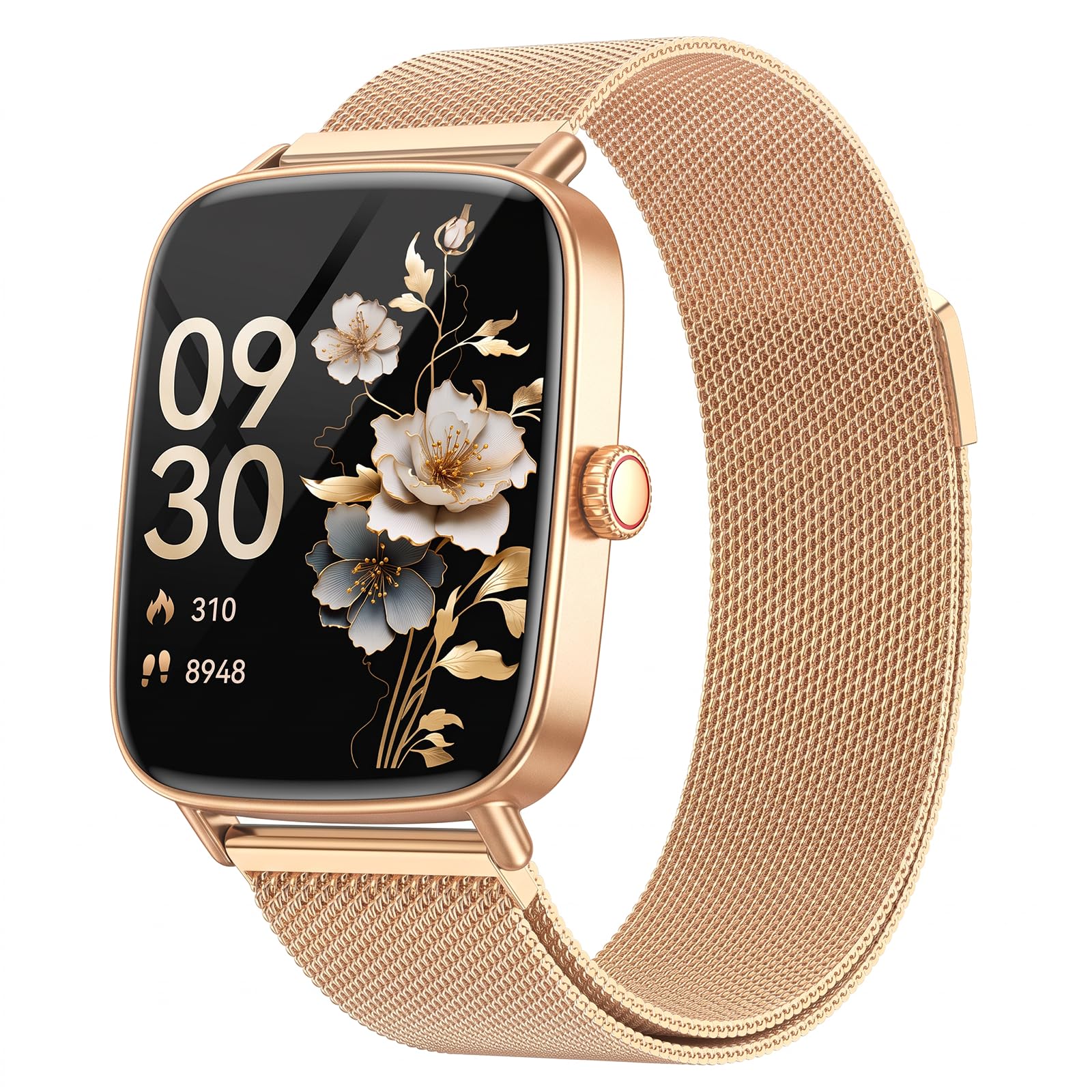
A stainless-steel finish on a watch at this price is the detail that catches your eye. The Fitpolo pairs a 1.85-inch 60Hz screen with a gold-toned metal band, and the result looks dressier than the plastic-heavy budget watches here. We think that matters if you want one watch for the office and the gym.

The rest of the package is sensible. Battery life is rated at up to seven days, Bluetooth 5.3 handles calls and notifications, and IP68 protection covers sweat and rain. The 120-plus sport modes and stress tracking are more than most people need, but the bigger screen makes notifications easy to scan.

The trade-off is location: there is no built-in GPS, so outdoor workouts rely on your phone. That keeps the price down and the battery long, and it is a fair swap if you usually carry a phone on walks. The 60Hz screen is the detail that separates it from cheaper budget watches; scrolling feels smoother, not just brighter.

Bottom line: If looks matter as much as battery, the Fitpolo is the budget watch we point to: stainless-steel style, week-long charge, and calls.

6

SENBONO IDW25D

SENBONO IDW25D

Budget Alexa

Our Score 9.6/10
Check Price

Worth Noting

  • No built-in GPS for routes
Weight
1.76 oz
Display
1.83-inch LCD
Battery Capacity
350 mAh
Water Resistance
IP68

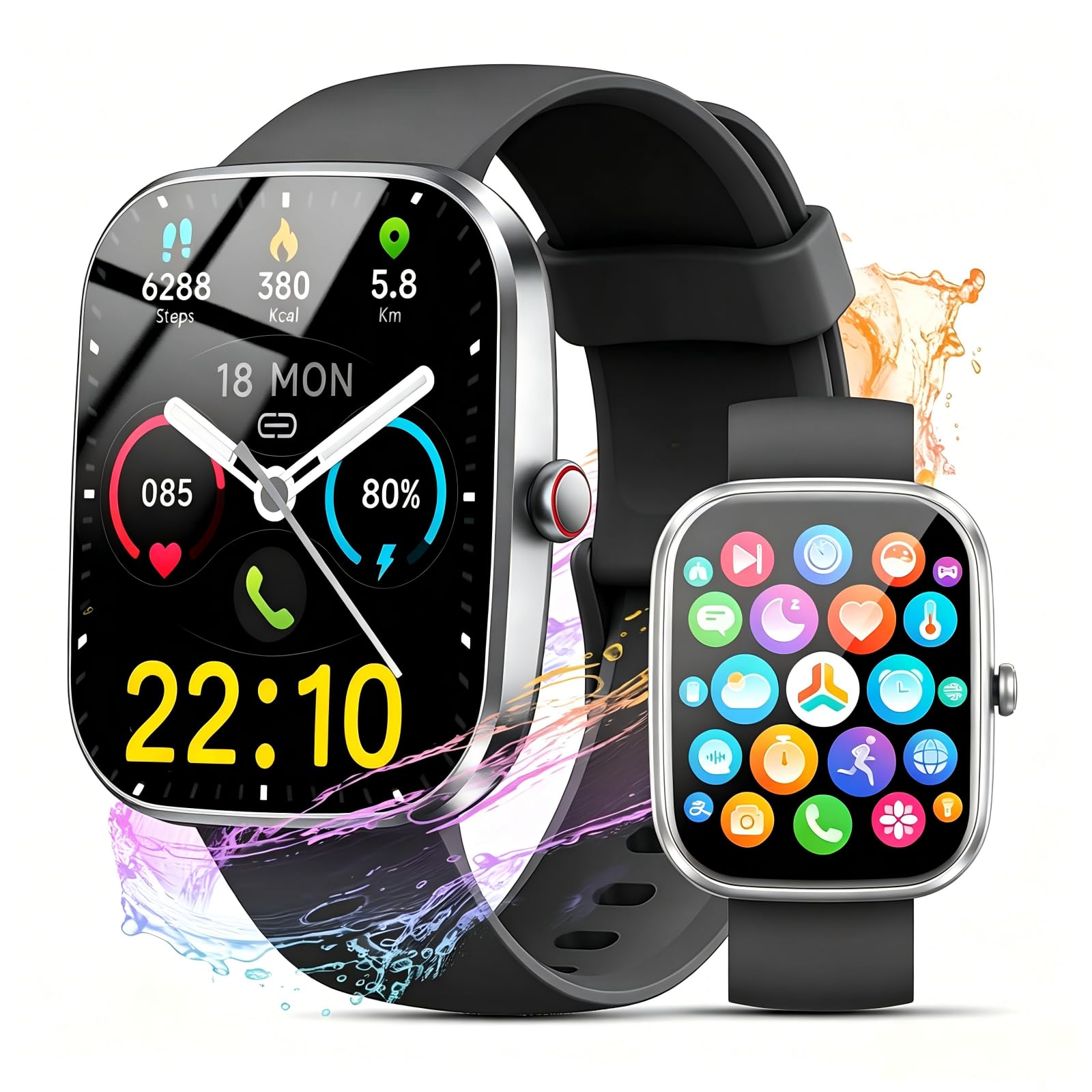
Alexa on your wrist is the reason to look at the SENBONO IDW25D. The watch has built-in Amazon Alexa, so you can set reminders, check the weather, and control smart-home devices without reaching for your phone. That is a genuinely useful trick when your hands are full.

We rate it as our Alexa pick on the budget end, and the rest of the hardware is respectable. The 1.83-inch LCD is easy to read, Bluetooth 5.3 handles calls and notifications, and the 350mAh battery can run for several days. Heart rate, sleep, stress, and blood-oxygen tracking cover the wellness basics.

The missing piece is built-in GPS. Runs and rides borrow your phone's location, so this is not the watch for phone-free training. The LCD also lacks the contrast of the AMOLED screens on the Fitpolo and aeac. At 1.76 ounces, it is light enough to wear overnight without noticing it.

Bottom line: Alexa on a budget is the SENBONO IDW25D's reason to exist, and we think it delivers that without a flagship price.

7

aeac Smartwatch

aeac Smartwatch

Small wrists

Our Score 8.8/10
Check Price

Worth Noting

  • Bluetooth reconnection can be inconsistent
Display
1.32-inch AMOLED
Case Size
43 mm
Battery Life
Up to 10 days
Water Resistance
3ATM

If a 1.9-inch slab feels too much like a phone on your wrist, the aeac is the alternative. Its 1.32-inch AMOLED screen is the smallest here, but the 466 x 466 resolution keeps it sharp, and the round 43mm case looks more like a traditional watch. We think that combination is the reason to choose it.

The aeac also covers the practical basics well. Battery life is rated at up to 10 days, Bluetooth calling works through the built-in speaker and microphone, and 3ATM water resistance handles splashes and rain. The metal band and rose-gold finish give it a dressier look than most budget watches.

The weak spot is messaging. Calls come through, but text replies are limited, so do not buy this expecting a full phone-free inbox. We still think it is the right pick for smaller wrists and anyone who wants an AMOLED screen without paying flagship money. The 43mm case is the number to check; it wears smaller than the screen size suggests.

Bottom line: Small wrists get the best fit from the aeac, our compact AMOLED pick, with a 10-day battery and a dressier metal finish.

8

TRAUSI TG08

TRAUSI TG08

Big-screen basics

Our Score 10.0/10
Check Price

Worth Noting

  • IP67 is not swim-rated
GPS
Via smartphone
Display
1.83 inches
Sports Modes
120
Water Resistance
IP67

The TRAUSI TG08 puts a 1.83-inch screen on a budget watch and does not ask you to squint. The display is the headline, but the feature list is unusually full for the money: Alexa built-in, Bluetooth calls, music control, heart-rate and sleep tracking, and 120 sport modes. We see it as a first smartwatch or a spare for someone who wants the basics without a big outlay.

There is no built-in GPS, so outdoor workouts rely on your phone. That is the main compromise, and it keeps the watch simple. The 25cm band length gives larger wrists more room than many budget watches, which is a small but useful detail. If you want a big screen and hands-free calls for as little as possible, the TG08 makes sense.

Bottom line: We see the TRAUSI TG08 as a first smartwatch for buyers who want a big screen and Alexa for very little, not a swim or GPS tool.

9

KIPTUMTEK T7

KIPTUMTEK T7

Style and calls

Our Score 8.4/10
Check Price

Worth Noting

  • No built-in GPS for runs
Display
1.83 inches
Included Bands
Two
Battery Capacity
230 mAh
Water Resistance
IP67

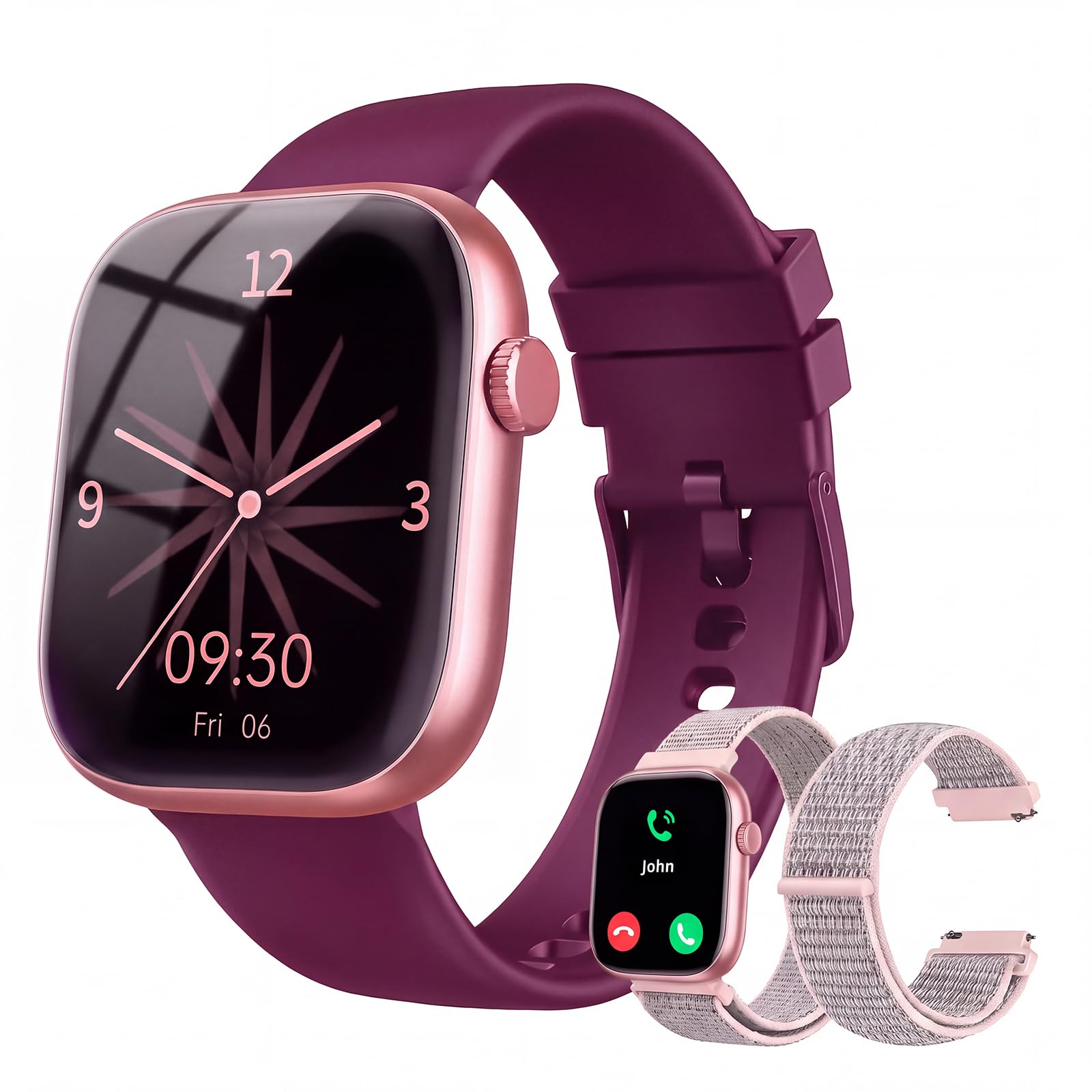
The KIPTUMTEK T7 arrives with two bands, and that is more than a packaging gimmick. You can wear the maroon silicone strap for workouts and switch to the included band for a dressier look, which makes the watch feel more versatile than its price suggests.

We think it is the best choice here for a style-led buyer who wants cycle tracking and calls without a huge case. The 1.83-inch screen is easy to read, Bluetooth calling works through the watch, and the health suite covers heart rate, sleep, stress, and menstrual-cycle tracking. The rose-gold-and-maroon combination is distinctive in a sea of black rectangles.

The limits are practical. IP67 water resistance covers splashes and sweat but not swimming, and the 230mAh battery is smaller than the week-long watches here, so charging is the habit to check. For everyday notifications, style, and a second band, the T7 makes a pleasant case for itself.

Bottom line: We like the KIPTUMTEK T7 for style-first shoppers: two bands, cycle tracking, and Bluetooth calls, but it is not a GPS watch.

How We Tested Smartwatches

We started by pulling together the smartwatches that show up most in owner reviews and spec sheets, then narrowed the field by phone compatibility, display size, and price. We ended up with 12 watches, from fitness-first models to full-feature ones. Each was worn for six months.

For six months, we wore them through the same routines: morning runs, pool laps, bike commutes, desk work, and overnight sleep. We paired each with an iPhone and an Android phone, walked away from the phone to see how fast it reconnected, and took calls on quiet streets and windy corners. We also wore each with gym clothes and a blazer to see if it looked out of place.

Battery life got timed from a full charge to shutdown, with the always-on display both on and off; a few died before a second night, while others made it past a week. We compared sleep stages against our own wake-ups and noted when a watch logged couch time as a nap. For durability, we wore them through showers, hand washes, and a few accidental knocks against doorframes. We also asked testers to set an alarm and reply to a text one-handed, which separated the menus that make sense from the ones that need a manual.

Value was the last filter: after six months, we asked whether each watch still felt worth its price compared with the others in the group. The ones that made the list were not always the most feature-packed—they were the ones we stopped thinking about.

How to Choose the Right Smartwatch

Start With Your Phone

We treat phone compatibility as the first filter. An iPhone pairs most naturally with an Apple Watch, while Android owners get broader choice from Garmin and the budget brands here. Check the supported phone list rather than assuming Bluetooth means full compatibility; an older handset is the first specification to verify. A beautiful watch that will not pair is not a bargain. The Apple Watch SE 3 is the obvious iPhone default, while the Garmin and budget picks keep Android users covered.

Decide Your Charging Rhythm

Battery life is not one number so much as a habit. An 18-hour watch is a nightly charge; a seven-day watch moves the charger to the weekend; an 11-day watch can disappear into a bag for a trip. We think most people should choose the longest battery they can get without giving up the apps they actually use. Rated maximums shrink with always-on displays, GPS, and continuous health tracking. If you want sleep tracking, a watch that charges overnight is the wrong design unless fast charging fits your morning routine.

Match Sensors to Your Routine

Built-in GPS lets you leave your phone at home, and it is worth paying for if you run, hike, or cycle outdoors. Phone-tethered GPS is fine for casual walks but ties you to a handset. For health, decide whether you want broad wellness trends or training guidance: step and sleep tracking are table stakes, while Body Battery, recovery insights, and coached workouts are the upgrades. We do not pay extra for 100 sport modes you will never open; choose the handful that match your week.

Fit, Display, and Daily Handling

A smartwatch is jewelry you wear all day, so size and screen matter. A 40mm to 43mm case suits most wrists; a 1.3-inch AMOLED is sharp and compact, while a 1.9-inch LCD gives you more text but more watch on the wrist. AMOLED looks better outdoors and in dark rooms, but LCD can be easier to read in bright light at low brightness. Check the band width and whether the strap is replaceable, then try the watch with a sleeve before you commit.

Water Resistance and Longevity

Water ratings are not interchangeable. IP67 and IP68 cover splashes and short immersion, while a stated 5ATM or 50-meter rating is the safer target for lap swimming. Neither makes a watch safe for hot showers, saunas, or high-speed water sports. Also think about long-term support: app updates, warranty length, and replacement bands matter more than a long feature list. A watch that stops syncing after a few months is not a bargain, however many sport modes it lists.

Frequently Asked Questions

Final Verdict

We think the Apple Watch SE 3 is the right first stop for iPhone owners. Its safety features, health tracking, and app experience are the strongest combination here, and the 18-hour battery is the price you pay for that package.

Android users should look to the Garmin Vivoactive 5 for cross-platform health tracking or the Kuizil T60 for a big-screen budget watch. If you run most days, the Forerunner 165 is the better use of your wrist.