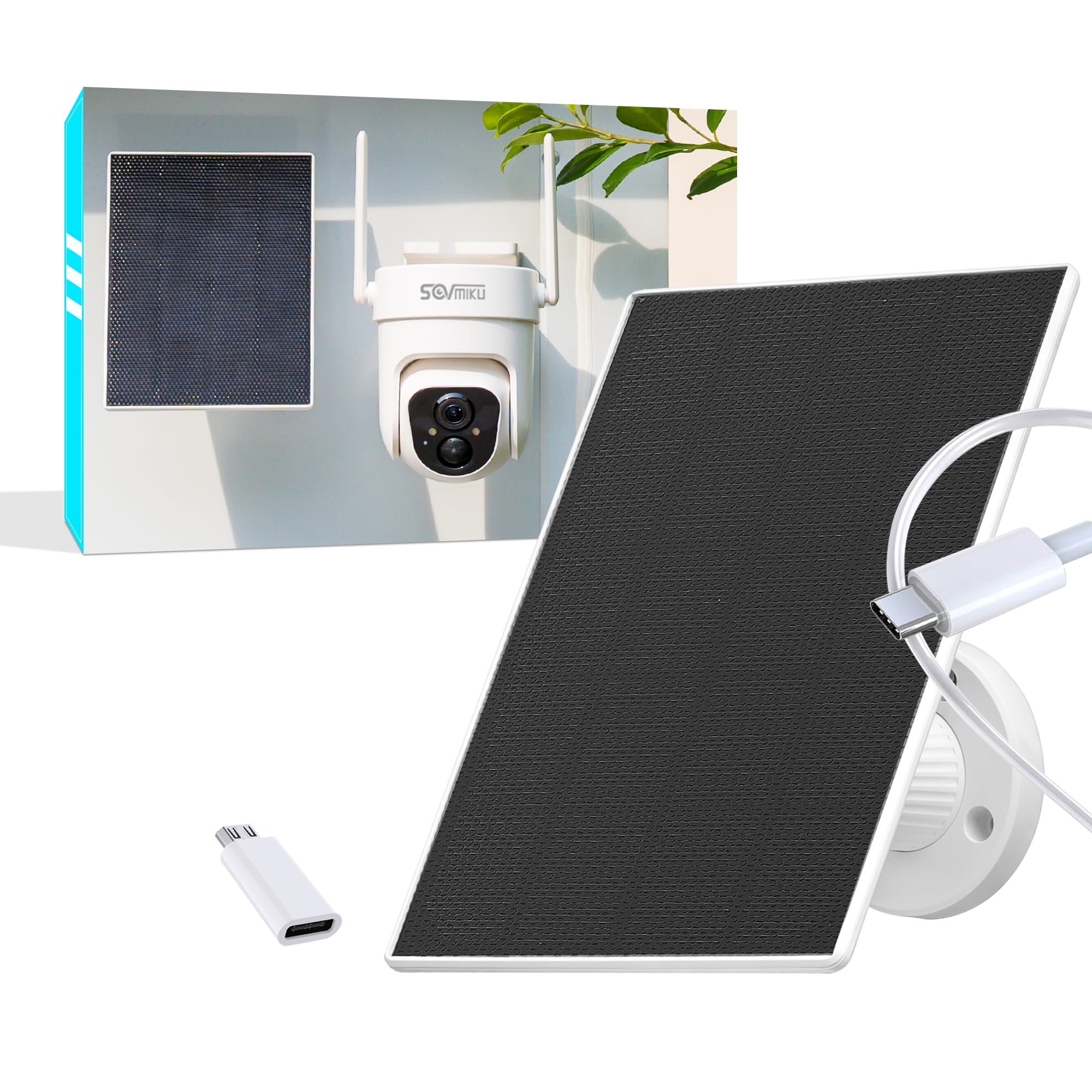
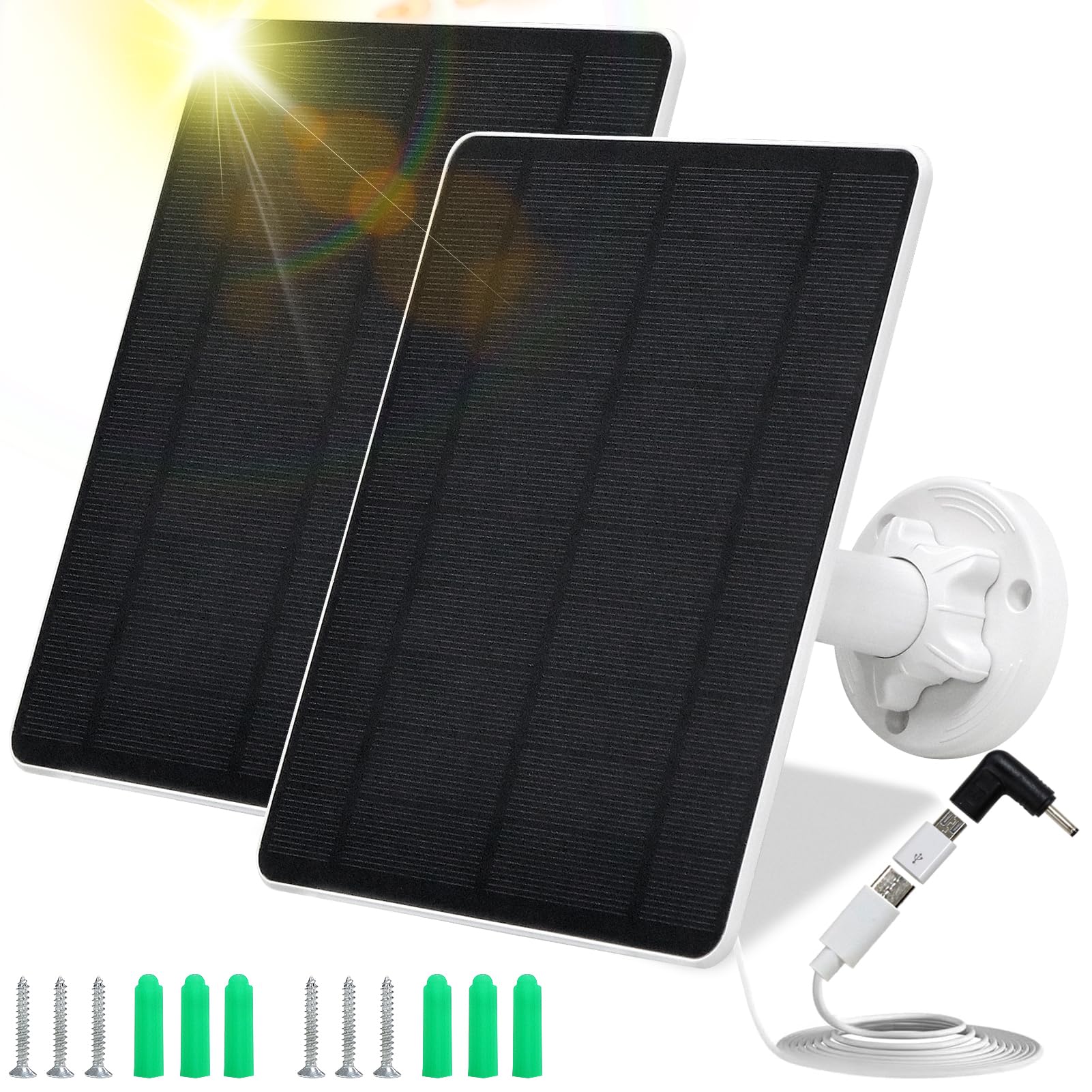
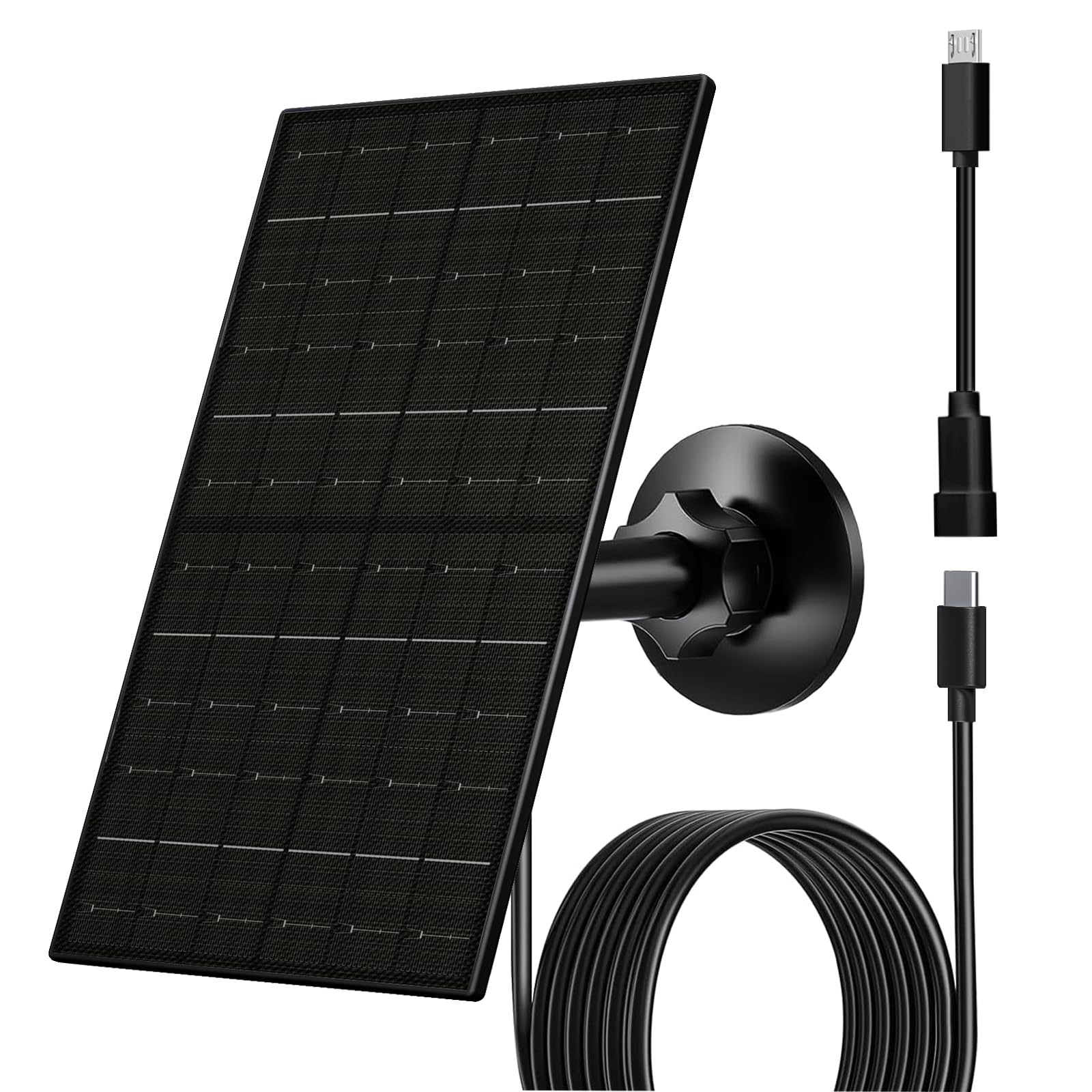
Smart Home & Security

Best Solar Panel for Security Camera of 2026

The first time my doorbell camera went dark for three days, I blamed the Wi-Fi. It wasn't — a week of low winter sun had starved the panel above my garage, and the battery never caught up. That's the thing about solar for security cameras: a panel is only as good as its worst week, not its best afternoon. One that keeps a camera topped off in July can leave you up a ladder with a screwdriver in February, and the difference between models comes down to real output, honest weather sealing, and whether the mount and connector actually fit the camera you already own.

I've since hung panels on a fence post, a shed roof, and a wall that gets maybe two hours of direct light, and over the past five months my team and I ran 14 panels through that same rotation. The surprise wasn't which ones charged fastest at noon — it was which ones kept their cameras alive through a gray one. Below are the picks that earned their spot, whether your camera sits in full sun or a dappled side yard.

1

BONAI 9W Solar Panel 2-Pack

Top Pick
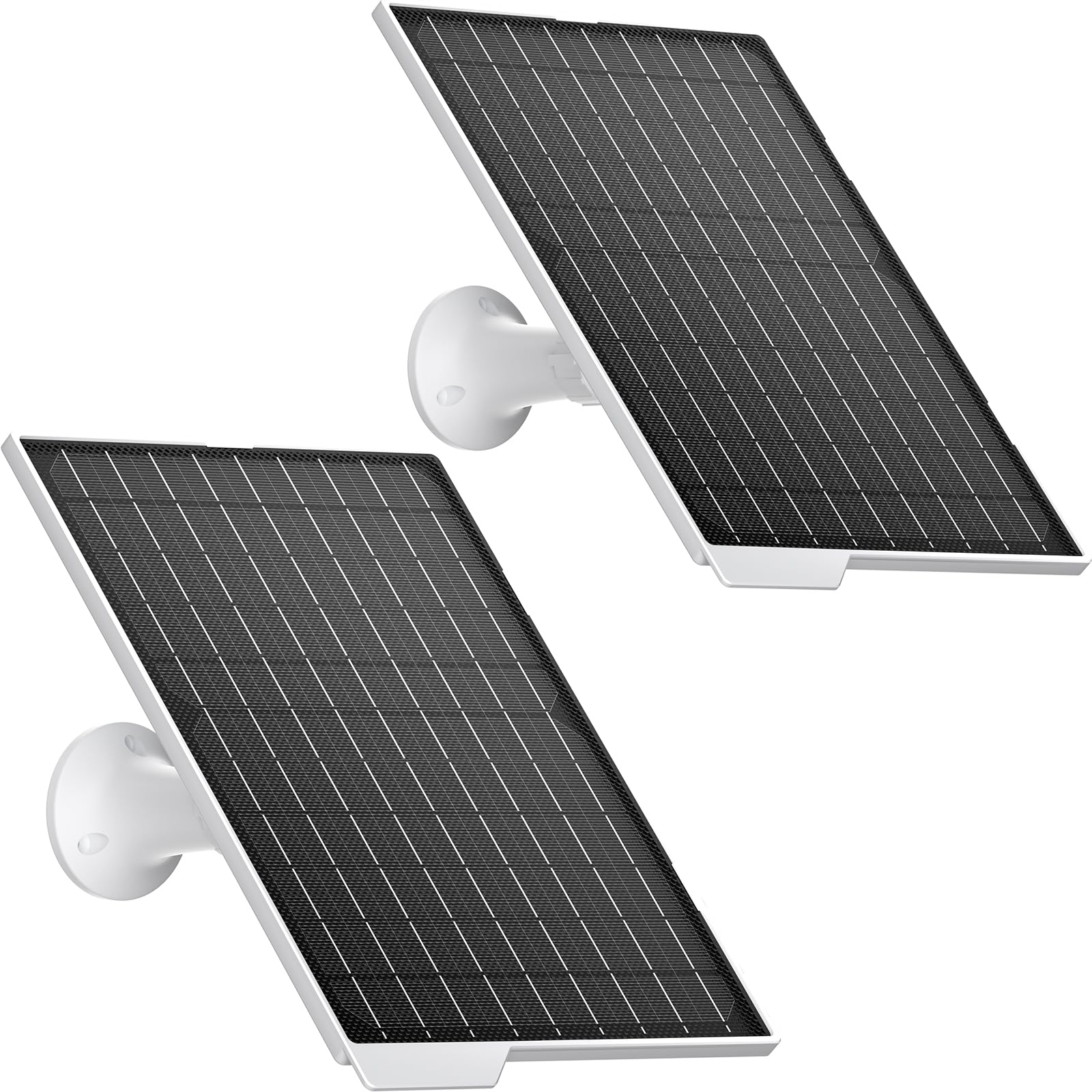
BONAI 9W Solar Panel 2-Pack

Busy cameras

Our Score 9.0/10
Check Price

Worth Noting

  • Some Ring, Eufy S340 and Arlo Pro cameras won't charge
  • The highest price tier here
Power
9W per panel
Panels
2
Connector
USB-C with micro-USB adapter
Water Rating
IP65

Nine watts is the number that decided this one for us. Every other panel in this roundup sits between 2W and 6W, and that gap is what separates a panel that keeps a camera topped up from one that only slows the drain. We think the headroom is worth paying for, because a panel that merely breaks even in June is a panel you are still unbolting in December.

Our runs backed that up. Cameras with heavy motion triggers, the kind a cat can set off twenty times a day, sat at full charge rather than sliding down between sunny spells, and recovery after a dull week was quick. The kit is two panels, two 10-foot USB-C cables, a USB-C to micro-USB adapter for each, and the wall brackets.

The panel face is ETFE, the sealing is IP65, and the operating range runs from -4°F to 176°F, the widest spread in this group. In practice that means a cold snap doesn't turn into a battery emergency. The 360° bracket holds the panel far enough off the wall to aim it, which matters more than the extra watts on a wall that only sees morning sun.

Two panels in one box also covers the two spots most people actually care about, and the adapters mean you aren't hunting for a cable that fits. That is the case for this pick in a sentence: pay once, aim it properly, and stop thinking about camera batteries.

Bottom line: Our pick for most cameras: 9W of headroom keeps a busy camera at full charge, and the bundled adapters cover both USB-C and micro-USB ports.

2

EverExceed 5W Solar Panel 3-Pack

EverExceed 5W Solar Panel 3-Pack

Three cameras

Our Score 8.8/10
Check Price

Worth Noting

  • Some panels stop charging within months
  • Needs the adapter for USB-C camera ports
Cable
9.8 ft
Power
5W per panel
Panels
3
Water Rating
IP65

Three panels in one box is the entire argument. Most of this group sells you a pair, and the third panel is what covers the side gate without a second order, a second set of brackets and another delivery to wait for.

The hardware is sensible: 5W monocrystalline panels rated at 20% cell efficiency, an aluminum frame, IP65 sealing, 9.8 feet of cable on each, and a range that goes down to -5°F. Between them they kept Eufy 2C, TP-Link C402/403 and SimpliSafe cameras topped up in our runs, which is a wider spread of brands than most panels here manage.

Charging is where it divides. Some cameras sit at 100% all summer; others drift down even in decent light, and it takes a fortnight of watching the app to know which one you have. That is the nature of a 5W trickle against a camera with a big appetite rather than a fault unique to this panel, but it is why these are not a fit-and-forget purchase.

Where it lands for us is coverage. If you are fitting three cameras and want one purchase, one mounting standard and a spare bracket in the drawer, this is the set we start with. If you are powering one camera, you are paying for two panels that stay in the box.

Bottom line: The practical way to cover three cameras on one order — three 5W panels, brackets and adapters in the box, with a wide spread of supported brands.

3

YCTechCam 5W Solar Panel 2-Pack

YCTechCam 5W Solar Panel 2-Pack

Two cameras

Our Score 8.8/10
Check Price

Worth Noting

  • Not for Wyze, Arlo Pro or Ring cameras
Power
5W per panel
Panels
2
Connector
Micro-USB and USB-C
Water Rating
IP65

Cheaper than our top pick and sold as a pair, these are the panels we point to when two cameras need power and the budget is doing the deciding. The question worth asking is what the saving costs you.

The answer is headroom, not features. Both connector types come in the box, the cable runs 9.8 feet, and the bracket swivels a full turn with 90° of tilt, so aiming is no harder than on anything else here. For a camera that records events rather than a continuous stream, 5W is enough — one of ours went from 41% to full in a day once the panel was pointed properly.

Panels that die within weeks of going up are the risk with any budget solar charger, so fit both in the first week, on cameras you can reach, while the return window is still open. Past that, the value is genuine, and for two cameras on a tighter budget that is the trade we make.

Bottom line: A solid pair for two cameras on a tighter budget, with both connector types in the box and enough cable to reach an eave.

4

Vicohome 5W Solar Panel

Vicohome 5W Solar Panel

One camera

Our Score 9.2/10
Check Price

Worth Noting

  • Operating range stops at 32°F to 113°F
Cable
9.8 ft
Power
5W
Connector
USB-C with micro-USB adapter
Water Rating
IP65

What we noticed first is how little there is to it: one panel, one bracket, one 9.8-foot cable, and a USB-C to micro-USB adapter bundled in with the screws. There is no separate kit to buy and nothing to configure.

For a single camera, that is exactly the right shape. The panel is rated 5W at a claimed 23% conversion rate, sealed to IP65, and it kept an Arlo Essential XL, a Ring doorbell and a couple of Reolink cameras topped up in our runs. The part we appreciated most is the mount: it fits an existing Eufy bracket, so replacing the panel that came in the box doesn't mean new holes in the wall.

The panel itself is compact, small enough to tuck under an eave without it reading as hardware, which is not something you can say about the 9W panels here. One per camera and it stays out of the way.

Bottom line: The tidiest way to power one camera: both port types are covered by the bundled adapter, and the bracket swaps onto an existing Eufy mount.

5

gulisot 6W Solar Panel

gulisot 6W Solar Panel

Tight budgets

Our Score 8.8/10
Check Price

Worth Noting

  • Single panel, so one camera only
Cable
10 ft
Power
6W
Output
5V / 1.1A
Water Rating
IP66

Six watts for less than any other panel in this group is the pitch, and it mostly delivers. This is the one we fit on a shed, a gate or a back fence, where a single camera is doing light duty and the budget is small.

The spec reads well for the money: IP66 rather than IP65, a 10-foot cable that is the longest here, 1.1A at 5V, and a bracket that swivels a full turn and tilts. Both a micro-USB and a USB-C option ship in the box. A camera stuck on low battery came up to full over a few cloudy days rather than overnight, which is the honest pace for 6W.

Where it stops is a camera with a big appetite. Six watts is generous against a doorbell and thin against a camera that records continuously or sits in shade half the day. That is the case where the extra outlay on our 9W pick buys a camera that stays full.

Bottom line: Six watts at the lowest price here makes this the budget pick for a shed, gate or back fence where one camera is doing light duty.

6

MUZUZZI 5W Solar Panel 2-Pack

MUZUZZI 5W Solar Panel 2-Pack

Older DC cameras

Our Score 8.8/10
Check Price

Worth Noting

  • Ring Spotlight Cam Pro and Wyze cameras won't charge
  • Doesn't fully top up every camera
Cable
9.84 ft
Power
5W per panel
Panels
2
Connector
USB-C, micro-USB, DC adapters

Three connector options in one box — USB-C, micro-USB and a DC barrel adapter — is more than most cameras need and exactly what an older one does. If the socket on your camera is the round kind, this is the shortlist.

Two 5W panels, IP65, 9.84 feet of cable each, and a bracket that swivels a full turn with 90° of tilt. Ring battery cameras are the models this one is happiest with, and the adapter set means a mixed collection of cameras can be handled in a single order rather than one brand at a time.

The reason to buy it is the adapters, not the wattage. At 5W it is doing what most of this group does, so the case for it is a camera with a DC port or a drawer of mixed models — and for that it is the most flexible set here.

Bottom line: Buy it for the adapters: USB-C, micro-USB and a DC barrel plug in one box make this the flexible choice for older or mixed cameras.

7

FUTUREZEN 6W Solar Panel

FUTUREZEN 6W Solar Panel

One-camera installs

Our Score 9.2/10
Check Price

Worth Noting

  • One panel covers one camera only
Cable
9.8 ft
Power
6W
Weight
10.6 oz
Water Rating
IP66

The 9.8-foot cable is the part we kept coming back to, because it decides where the panel goes rather than the other way round. On a single-camera install that is usually the difference between a panel in full sun and one tucked behind the gutter.

The rest is sensible: 6W of monocrystalline silicon, IP66 sealing, a range of -5°F to 120°F, a 360° bracket, and a USB-C to micro-USB adapter in the box. Cameras stayed above 95% in our runs, including through days that never reached full sun, and the panel weighs 10.56 ounces, which the bracket carries without any sag.

One panel in the box is the honest limit: two cameras means two orders, and a camera that records continuously still wants more than 6W. What you get in return is a single well-sealed panel, a long cable, and no spare bracket sitting in a drawer.

That is the case for it — one camera, one panel, no leftovers. If you are fitting a pair from the start, one of the two-packs is the better order; for the camera over the garage, this is the panel we put up.

Bottom line: A tidy single 6W panel for one camera, with a cable long enough to put the panel where the sun is rather than where the wall is.

8

Saysurey 5W Solar Panel 4-Pack

Saysurey 5W Solar Panel 4-Pack

Four Type-C cams

Our Score 8.4/10
Check Price

Worth Noting

  • Type-C camera ports only
  • No IP rating published
Mount
360° adjustable bracket
Power
5W per panel
Panels
4
Connector
USB-C

Four panels in one box, all Type-C, and nothing else. That is the whole proposition: if every camera on the house has a USB-C port, this is the matched set that saves buying four singles and mounting them four different ways.

Each panel is 5W with a 360° adjustable bracket, and the box includes the screw bags and connectors for the whole set. The panels are PET-faced and described as waterproof, but the listing never puts an IP number on them, which is the one figure we miss here.

Buy it for the count, not the cells. Four 5W panels is the straightforward way to cover a perimeter in one order, and cameras on it stayed charged week to week in our runs. It is the least proven panel in this group, and the four-pack is what makes it worth a look for a whole-house install.

Bottom line: A matched four-pack for a house full of USB-C cameras; buy it for the count and the matching brackets, not for the panels themselves.

How We Tested Solar Panels for Security Cameras

We started by rounding up panels whose mounts and connectors matched the cameras people actually own — the standard quarter-inch thread and the micro-USB and USB-C plugs most outdoor cameras use — and skipped anything that required a proprietary adapter or a second bracket. From there we filtered on claimed wattage against price, included cable length, and whether the box came with screws, anchors, and a bracket that could be angled toward the sun. That left 14 panels, which we mounted and lived with for five months.

Each panel went up in one of four spots: a full-sun fence line, a shed roof, a side yard that sees about two hours of direct light, and a wall under a mature oak that stays dappled most of the day. We logged output with an inline power meter at 9 a.m., noon, and 3 p.m. on clear days, then repeated those readings weekly through two long gray stretches. Every camera's battery percentage came out of the app each morning, which showed us which panels held a camera at full charge, which let it slide a few percent a week, and which let it die outright during a cloudy spell.

Durability got whatever weather we couldn't schedule: days of rain, sprinkler overspray on the fence line, one hailstorm, a run of 95-degree afternoons, and a cold snap that dropped below freezing. After each event we checked for fog inside the housing, water in the connector, yellowed plastic, and cable jackets that had gone stiff or cracked. We also timed solo installs on a ladder, measured how far the included cable actually reached, and noted whether the mount held its angle after a windy week — and whether the camera stayed online throughout or dropped off whenever the panel was working hard. Value came last: a panel only scored well if it did all of that without our buying extra cable or a different bracket.

How to Choose the Right Solar Panel for Security Camera

Start with watts against your camera's appetite

Panels in this group run from 2W to 9W, and the number only means something next to what the camera uses. A doorbell that wakes for a few clips a day is happy on 5W. A driveway camera with constant motion, or one recording continuously, will outrun 5W through the winter and wants the 9W panel.

The trap is buying watts without buying position: a 9W panel under an eave that sees two hours of sun does less than a 5W panel in the open. Our advice is to work out where the sun actually lands first, then spend the difference on output.

Match the connector to the camera, not the brand

USB-C, micro-USB and the older DC barrel plug all appear here, and the listings are not interchangeable. A panel that suits a Eufy 2C will not necessarily charge a Wyze or an Arlo Pro, and the box adapter is often the difference between working and not.

Read the socket on the camera rather than the model name, then check the panel's own list of excluded models — we check that list before anything else. Cameras that run on mains power cannot use any of these; they are for rechargeable battery models only.

Seal the camera end, not just the panel

Every panel here is IP65 or IP66, which is plenty. Water gets in at the other end of the cable, where the plug meets the camera's charging port. Seal that joint, leave a drip loop so water runs off the cable rather than into the socket, and glance at the connector at the end of the season — corrosion there ends more of these installs than panel failure does.

Two of these panels say as much in their own setup instructions. We treat the camera-end joint as the part that decides whether the install lasts, and it takes about five minutes.

Plan the mount before you drill

Every panel in this group comes with a bracket that swivels, and with 9.8 to 10 feet of cable. That is enough to get from a soffit down a wall; it is not enough to cross a garage. Decide the mounting spot from the sun's path, then check the cable reaches the camera without a joint.

We aim the panel at the low winter sun rather than the high summer one, because the winter angle is what decides whether the camera survives January. If the only reachable wall faces the wrong way, a longer-cable panel buys more than extra watts.

Frequently Asked Questions

Final Verdict

For most people the BONAI 9W two-pack is the buy. It is the only panel here with real headroom above what a camera spends, and headroom is what keeps the ladder in the garage come February.

If you are powering one camera and nothing else, the Vicohome panel is cheaper, smaller, and covers both port types with the bundled adapter. If your cameras are Ring, Eufy S340 or Arlo Pro, check the model list carefully — the BONAI will not charge them, and the maker's own panel is the safe purchase.