Tools & DIY

Best Stud Finders of 2026

The worst thing a stud finder can do is lie to you. You calibrate, slide it across the wall, drill a neat hole, and hit nothing but drywall and regret. A good one turns that guesswork into a two-minute job: it finds the stud, you hang the shelf, and the only thing left to worry about is whether the bracket is level. Over the past six months, my team and I have put 14 stud finders through the kind of projects that actually send people looking for one—mounting a TV, hanging a heavy mirror, installing curtain rods, and adding garage shelving.

The difference between a helpful tool and an expensive paperweight comes down to accuracy and consistency, not extra modes. We compared magnetic and electronic models side by side, paid attention to how each one felt in the hand, and noted which ones made us want to double-check every mark with a nail. The picks below are the ones that earned our trust—and the ones we would reach for before drilling into a wall we actually care about.

1

ProSensor M210

Top Pick
ProSensor M210

Accuracy first

Our Score 9.2/10
Check Price

Worth Noting

  • Runs on two AA batteries, not included
Weight
11.4 oz
Sensors
13
Sensing Depth
1.7 in
Live Wire Alert
Yes

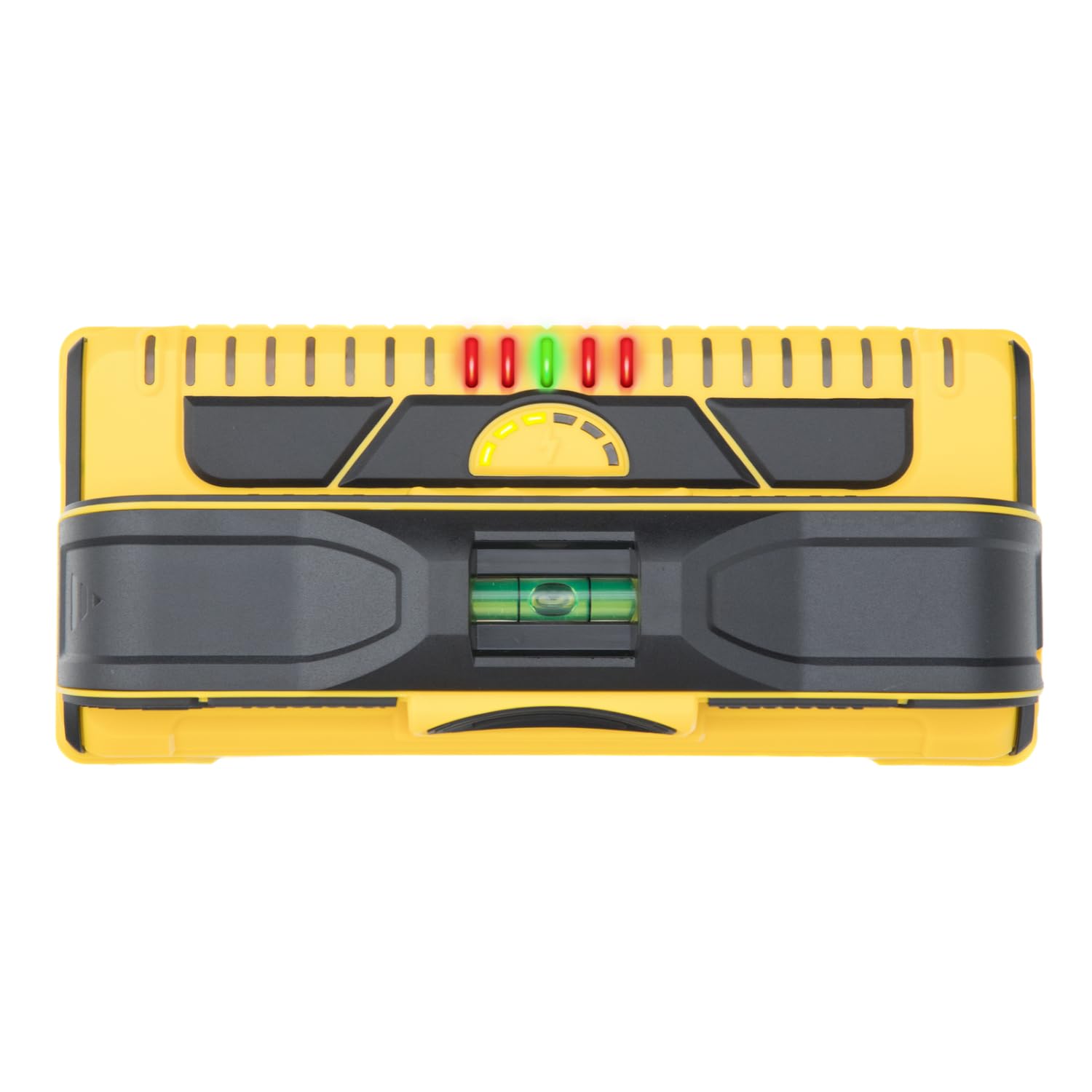
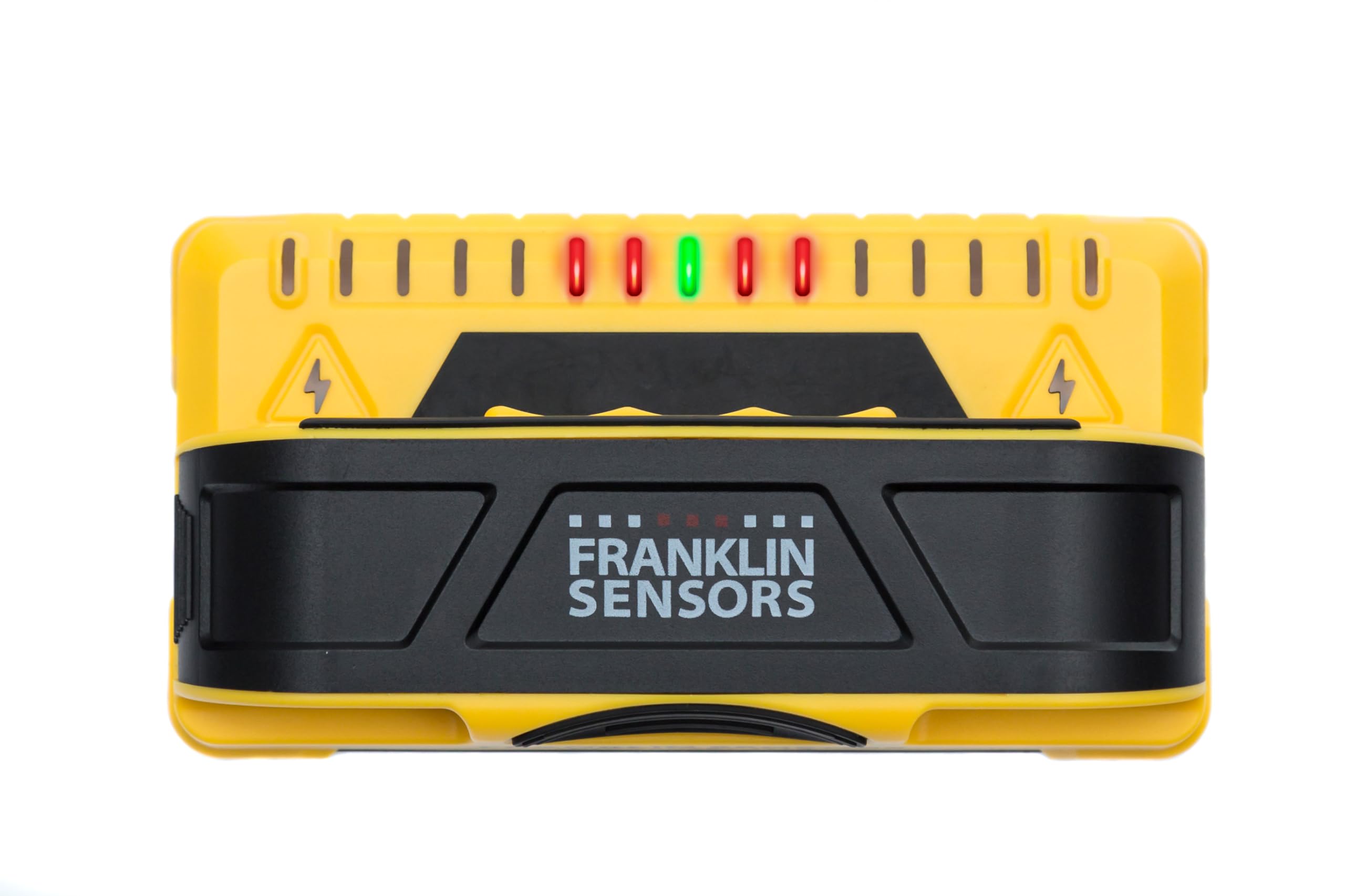
Press the M210 flat against the wall, hold the button, and a row of LEDs lights up across the full width of whatever is behind the drywall — not a single blip you have to interpret. Thirteen sensors spread along the body do that, and they are why the display can draw one stud, a pair of studs where two meet, or a joist sitting off-center, as shapes rather than a beep.

That picture is what won it the top spot here. The expensive mistake when you're mounting a television or a floating shelf isn't finding no stud, it's finding the edge of one and drilling as if it were the middle. We mark from the green center light with the edge lights confirmed either side, and that habit came straight out of using this scanner; on the walls we worked through, the center light and the pencil mark agreed.

The extras are the ones you touch every time. A bubble level runs along the top for keeping a run of shelves true, there's a pencil caddy molded into the body, and the deep scan is always on, reaching 1.7 inches through drywall to find wood or metal studs without switching settings. Live AC detection rides along, which matters most the first time you drill above a light switch.

Two things to know before you buy. At 11.36 ounces with a button you have to hold down, overhead work wants both hands — one on the button, one on the pencil — and that's the price of the bigger housing. The plastic shell also prefers a case to a loose bucket; a drop onto concrete is the one way this kind of scanner stops being a scanner.

Bottom line: We recommend the M210 to anyone whose next hole has to be right: it draws the whole stud on its LED row, warns about live wires, and skips calibration entirely.
2

ProSensor M150

ProSensor M150

Everyday drywall

Our Score 8.8/10
Check Price

Worth Noting

  • Takes two AAA batteries, not included
  • Not compatible with rechargeable batteries
Sensors
9
Dimensions
5.51 x 2.99 x 2.01 in
Sensing Depth
1.5 in
Live Wire Alert
Yes

Nine sensors instead of thirteen, 1.5 inches of depth instead of 1.7, and a body around 5.5 by 3 inches: the M150 is the top pick with the margins trimmed. What survives is the part that matters. It still draws the whole stud, edges and center, on a row of LEDs, and it still asks for no calibration at all.

For shelves in a modern house, that is plenty, and the smaller shell is easier to keep flat against the wall with one hand while the other marks. It keeps live wire detection too, which is the one feature we refuse to give up in a house with old wiring — the AC indicator lights before you commit a bit to the wall.

The trade-offs are honest. At 1.5 inches it reads through standard drywall comfortably but has less margin on a double-layer ceiling or a plaster-and-lath assembly, and it runs on AAA cells rather than the AA size in the bigger model. If you're opening up a wall you have never touched before, the M210's extra depth is worth the jump; for everything else, this is the Franklin we point most people to.

Bottom line: If you want Franklin's full-width display without the top-pick bulk, the M150 is our pick — live wire warning included, a shallower scan left behind.

3

StudBuddy Magnetic Stud Finder

StudBuddy Magnetic Stud Finder

Picture hanging

Our Score 9.0/10
Check Price

Worth Noting

  • Gives a point, not the stud's width
  • Not intended for lath and plaster
Type
Neodymium magnet
Walls
Drywall and wood
Weight
1.6 oz
Batteries
None required

A magnet doesn't find studs. It finds the screws holding the drywall to them, which is a narrower promise and, on a lot of walls, a more dependable one: sweep the StudBuddy down the wall and it snaps onto a screw head and stays there, and a screw that is holding up drywall has to be driven into framing.

For a mirror, a curtain rod or a shelf, that is the whole answer, and it arrives without batteries, calibration or a screen to misread. This is the least expensive pick here and the one we hand someone who owns no other tools. It weighs 1.6 ounces, it lives in a drawer, and it works the same on the hundredth use as on the first — there is no dead-battery morning with this thing.

What it can't do is tell you where the stud ends. It gives you a point, not a center, which is fine for a hook and not fine for a four-hole bracket. The maker also rules out lath and plaster, and that is honest: the magnet has to reach a fastener, and old walls with deep mud and metal lath swallow it. On heavily skimmed drywall we have had to sweep slowly and in both directions before it grabbed.

Bottom line: For picture hooks and quick jobs we keep coming back to the StudBuddy: no batteries, no calibration, and it sticks to the wall exactly where the framing is.

4

CH Hanson 03040 2-Pack

CH Hanson 03040 2-Pack

Holding a mark

Our Score 9.6/10
Check Price

Worth Noting

  • No stud width or live wire detection
Type
Magnetic
Batteries
None required
Pack Size
2
Dimensions
3.5 x 1.5 in

Two magnets instead of one is the pitch, and the second one turns out to be the useful part. One can sit stuck to the wall holding the mark while you measure, drill and hold a bracket with both hands; the other stays in a pocket until the first is misplaced, which it will be.

These are the strongest magnets among the magnetic picks here. They hold through joint compound and tape, and they will stick to a ceiling as readily as a wall — the difference between a magnet that grabs and one that slides past a mudded seam is the entire game with this design. The body is 3.5 by 1.5 inches with a soft grip around the edge, small enough to forget about until you need it, and there is nothing to charge or calibrate.

The limits are the limits of the idea. You get fastener points, not a stud's width, and there is no wire warning anywhere on these — if the hole is going in near a switch or an outlet, this is not the tool to trust. But for a mid-range price you get two magnets with no batteries to leak and no screen to scratch, and one of them will live in your pocket for years.

Bottom line: Our pick for a magnet that has to hold: this pair grips through mud and tape, and having two means one marks the spot while the other stays in your pocket.

5

Rack-A-Tiers Stud Ball

Rack-A-Tiers Stud Ball

Tile and paneling

Our Score 9.6/10
Check Price

Worth Noting

  • Grabs fasteners only, with no wire alert
Type
Rare-earth magnet
Weight
1.6 oz
Batteries
None required
Pull Force
27 lb

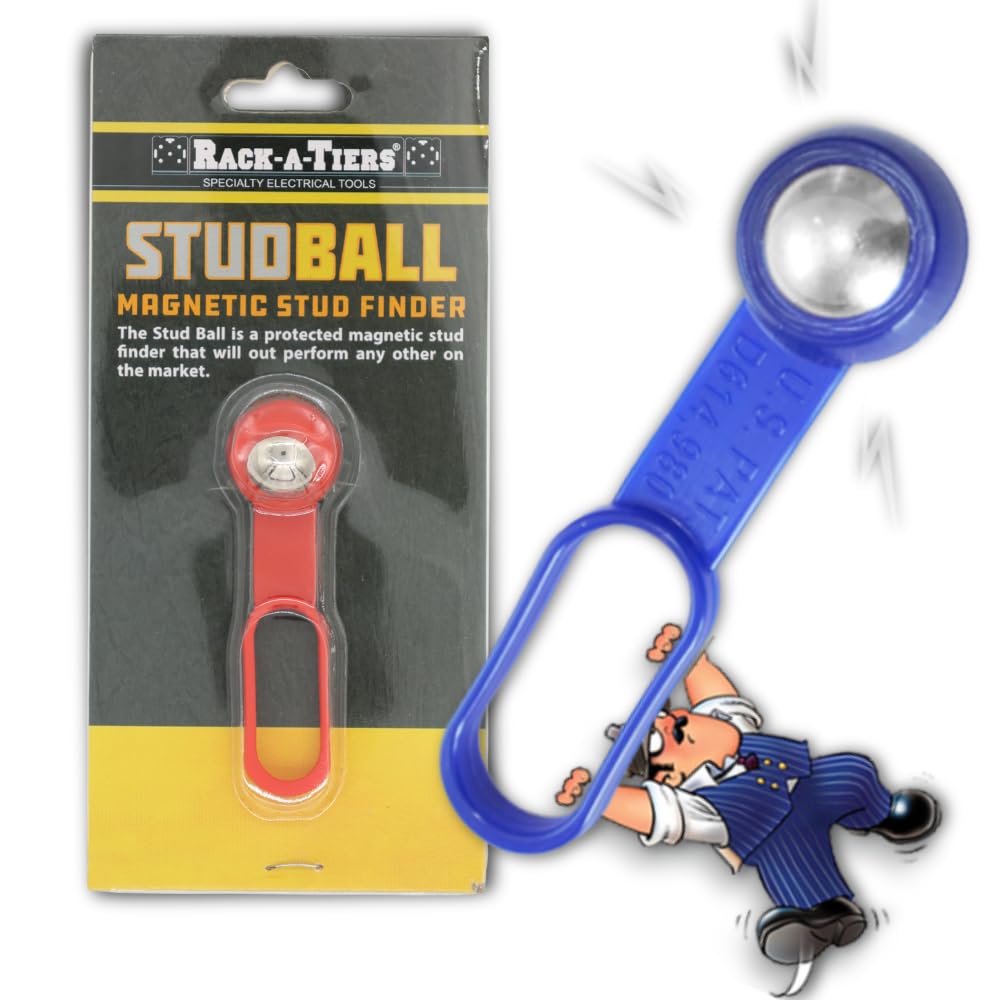
A 27-pound pull force is what separates this small sphere from the flat magnets in this group. That is enough to reach a screw head through ceramic tile, plywood paneling or a thick skim coat — the surfaces where a flat magnetic disc gives up and where an electronic scan starts to get noisy.

We like it most for tile. The ball rolls across a backsplash, grabs where a fastener sits behind the adhesive, and doesn't need a painted or perfectly flat face to behave, and the finger loop makes sweeping a whole run quick. At 1.6 ounces it disappears into a pocket, and there is a one-year manufacturer warranty behind it. On an older wall with mud and gypsum it kept finding screws when the cheap flat magnet lost the thread.

Magnetic limits still apply. It needs a fastener to grab, so a sheet with screws only along the top and bottom can be swept end to end with nothing to show for it, and there is no wire alert and no width reading. For tile, thick paneling and old walls with heavy mud, it keeps working where the electronics get confused.

Bottom line: We reach for the Stud Ball on tile, paneling and thick old walls, where its 27-pound pull finds fasteners the flat magnets slide right past.

6

Jurgen K 5-in-1 Scanner

Jurgen K 5-in-1 Scanner

First-time buyers

Our Score 8.6/10
Check Price

Worth Noting

  • Needs a calibration pass each session
  • Loud alarm in a quiet house
Weight
9.6 oz
Display
LCD
Scan Modes
5
Max Stud Depth
1.5 in

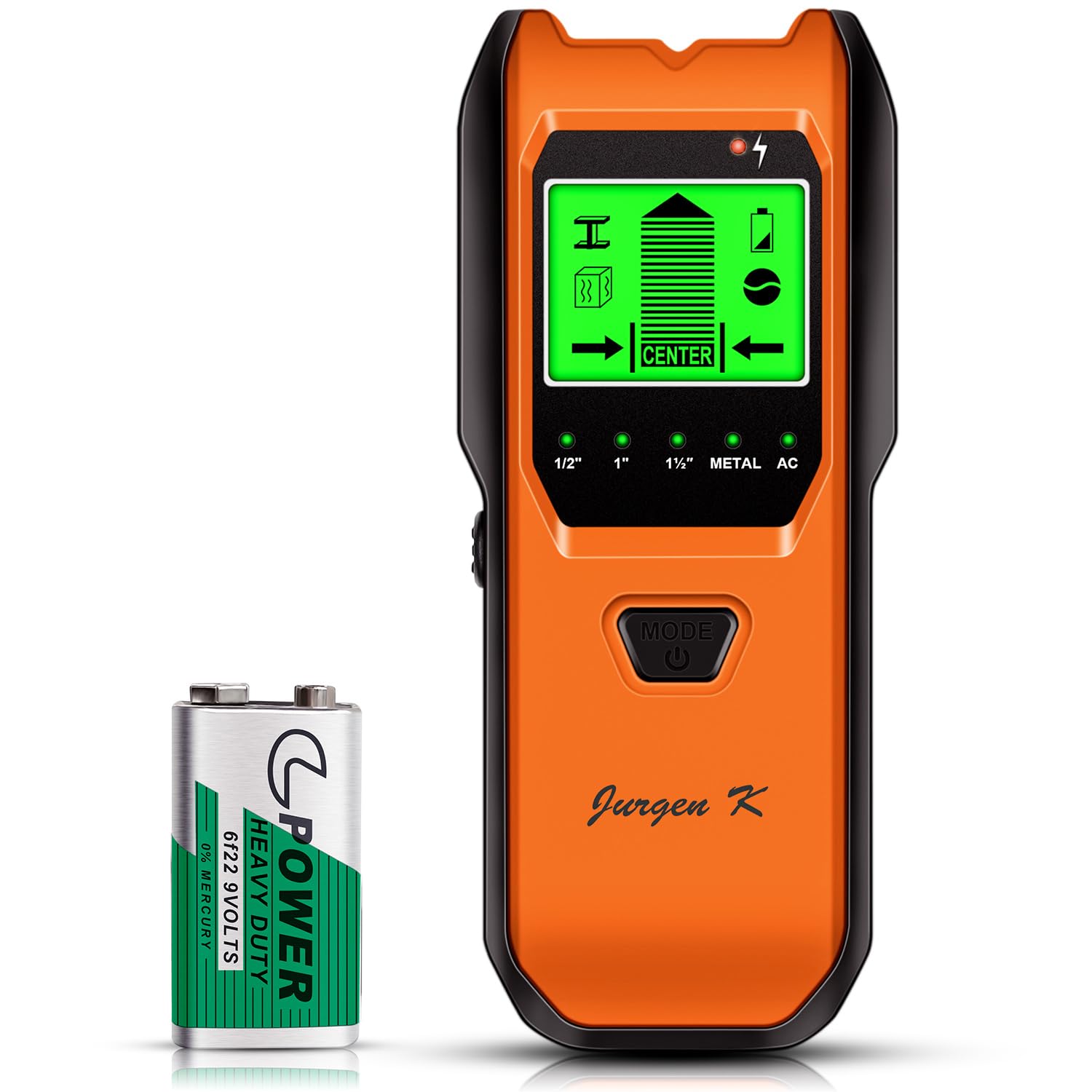
Five modes on one button cycle is the reason to look at this scanner: half-inch, one-inch and 1.5-inch stud depths plus AC wire and metal, with a screen that names the mode and shows the reading at the same time. For a first house and a list of small jobs, that is a lot of tool at the budget end of this group.

What the box doesn't dwell on is that the calibration routine does the heavy lifting. Press to calibrate over an empty stretch of wall, wait for the tone, then scan; skip that and the readings wander. Once we settled into that order — calibrate, sweep, mark, sweep back from the other direction — the results held, and the display made it obvious which mode we were in.

It is the pick for someone who wants wire and pipe detection without paying top-pick money. The compromise is depth and polish: 1.5 inches of stud scan is ordinary rather than exceptional, the alarm is loud enough to be a nuisance in a quiet house, and the first session will involve the instructions. None of that undoes the value.

Bottom line: We see the Jurgen K as the value pick for a first house: five modes, a readable screen and wire detection, as long as you calibrate it every time.

7

JAXWQ Stud Finder

JAXWQ Stud Finder

Occasional jobs

Our Score 8.4/10
Check Price

Worth Noting

  • Readings drift on textured walls
Power
Battery
Weight
8.1 oz
Display
Backlit LCD
Scan Modes
3

A backlit LCD is the sort of thing you don't think about until you are scanning a closet or a dim hallway and can't read the screen without a flashlight. This one shows stud edges and center, the current mode and a battery gauge, and it does it across three modes — stud, deep and metal — without a menu to learn.

The deep scan is the mode we used most on a wall with paneling over old drywall, where the standard setting got vague and the deeper read steadied it. At 8.1 ounces it is comfortable to hold flat with one hand, and the AC alert is there for the moment you are working near a switch.

It isn't a precision instrument, and it doesn't pretend to be. On textured walls a single sweep can drift, so read the edges, mark the center, and confirm with a second pass from the opposite direction. If you want the full-width confidence of a Franklin display, this isn't that scanner; if you want a competent one for occasional jobs at the lowest electronic tier here, it earns the drawer space.

Bottom line: A spare scanner for ordinary jobs, and one we are comfortable recommending to anyone who wants a screen and a wire alert without paying for precision.

8

HANMATEK SF1

HANMATEK SF1

Pipes and conduit

Our Score 8.6/10
Check Price

Worth Noting

  • Stud scan stops at 1.5 inches
  • Auto-calibration needed on every use
Rating
IP66
Weight
7.05 oz
Scan Modes
5
Metal Scan Depth
4.7 in

IP66 on a stud finder sounds like spec-sheet padding until the wall in question is a damp basement or a bathroom mid-tile. This is the only pick here rated against dust and water jets, and its ferrous-metal mode reaches 4.7 inches — far past any stud scan in this group — which makes it the one for hunting a pipe or conduit behind tile backer.

The five modes are easy to live with: stud exact at 0.8 inches, deep stud at 1.5, AC wires at 2, and the metal mode. Three color lights and an alarm you can switch off mean you can work quietly once the household is asleep, and the auto-calibration button is a single press rather than a sequence.

Depth and routine are the trade-off. Stud scan stops at 1.5 inches, so a double-layer wall or lath and plaster sits outside its comfort zone, and the auto-calibration has to happen on a clear patch every time or the readings wander. Buy it for the metal reach and the sealed body; read the stud scan as ordinary.

Bottom line: We point people to the SF1 when pipes, conduit or a damp wall are the problem; its metal reach and sealed body are the reason, not its stud scan.

9

StudBuddy Pro

StudBuddy Pro

Frames and shelves

Our Score 9.0/10
Check Price

Worth Noting

  • Needs drywall fasteners to work
  • Heavier body loads the same magnets
Type
Magnet with levels
Levels
Built-in
Weight
3.53 oz
Batteries
None required

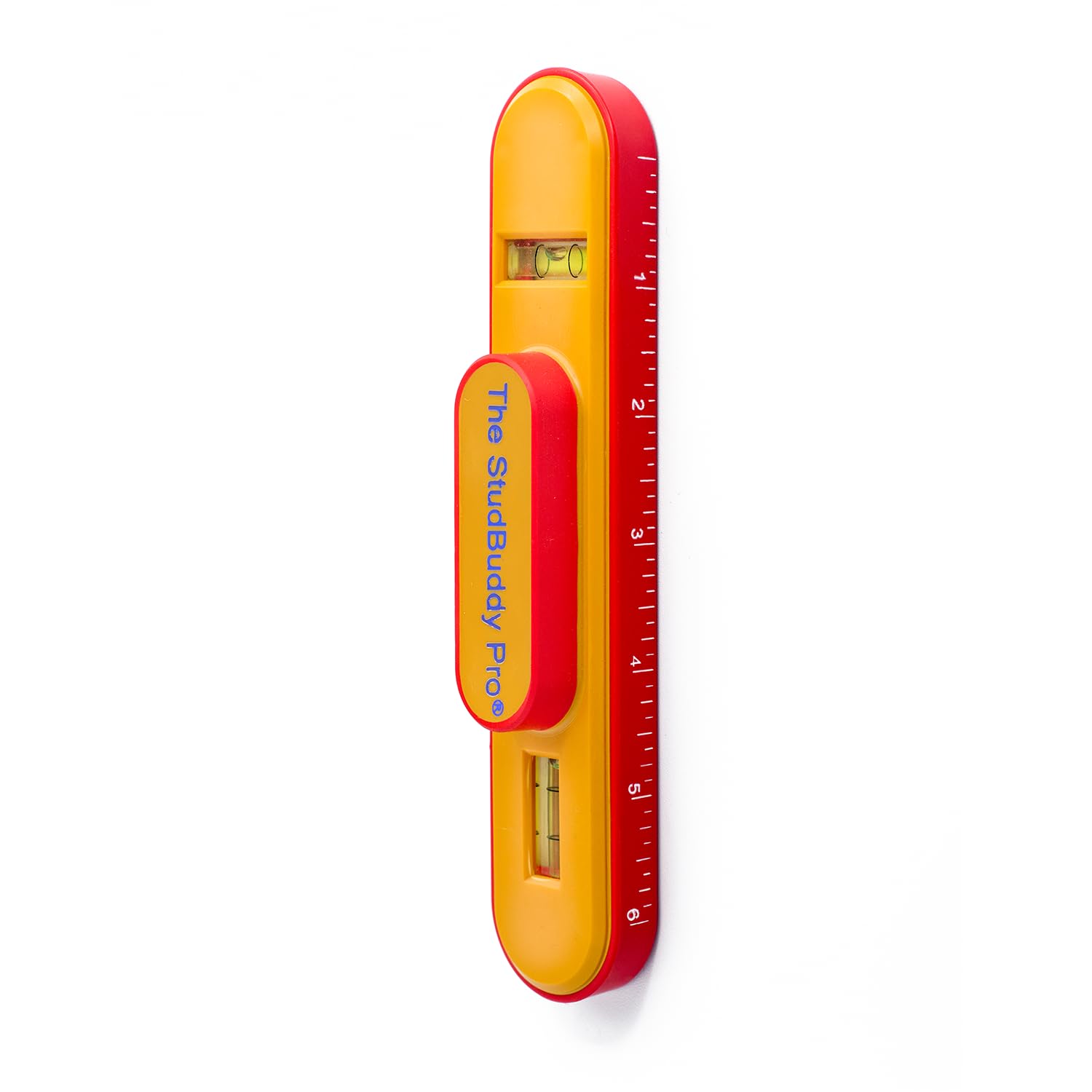
Two bubble levels and a ruler edge, built into a magnet that stays stuck to the wall where it found the screw — that is the whole case for the Pro over the plain StudBuddy. You find the fastener, the tool holds its own position, and you can check that the frame or shelf line is actually level before the first hole goes in.

That small addition earns its place more often than it sounds. Hanging three frames in a row, the magnet keeps the position and the levels give you the line, so you are not setting the tool down and hunting for a torpedo level. We noticed the extra 100 grams the moment it went onto a vertical wall, though: the same magnets have more body to hold, and a weak grab shows up sooner than it does with the featherweight original.

The old limits come with it — fasteners only, drywall and wood, nothing doing on lath and plaster. For picture rails, gallery walls and anything that has to come out straight, the levels are the reason to take the small step up in price over the plain magnet.

Bottom line: We like the Pro for frame-hanging jobs where a level saves a trip up the ladder; it is the magnetic pick with a built-in square.

How We Tested Stud Finders (and What We Looked For)

We started by surveying the market for both magnetic and electronic stud finders, reading through owner feedback, and narrowing the field to models that could handle drywall, plaster, and the occasional lath-and-plaster wall. We ruled out anything with a flimsy clip or a screen we could not read at arm’s length, then bought 14 units ourselves. Testing ran for six months across everyday projects: mounting a 55-inch TV in a bedroom, hanging floating shelves in a living room, installing curtain rods, and adding pegboard in a garage.

Accuracy was the first filter. We scanned each wall three times with every unit, marked the stud centers with painter’s tape, and then checked our marks against a verified stud line before drilling. We noted false positives near plumbing and wiring, whether the tool drifted after a battery change, and how often it needed recalibration between rooms. A finder that gave a different answer on the second pass did not make the cut, no matter how many modes it offered.

Ease of use separated the field quickly. We noted how each unit sat against the wall, whether it slid smoothly over knockdown texture, and if the buttons made sense with one hand while the other held a pencil. Size mattered more than we expected—pocketable models got carried from room to room, while bulky ones stayed in the toolbox. On magnetic versions, we checked magnet strength by seeing whether the magnet would grab and hold a screw through half-inch drywall; on electronic ones, we ran the deep-scan mode near pipes and wiring to see how much it chattered.

Durability and value came last, but they changed the rankings. We dropped each finder from waist height onto a concrete floor, carried them loose in a tool bag for six months, and kept a running note on which ones felt worth their price. The best ones were the tools we stopped thinking about—they calibrated fast, marked the same spot twice, and did not make us second-guess the drill.

How to Choose Stud Finders

Magnets and scanners answer different questions

A magnet chases the screws and nails holding the drywall up, which makes it fast, dumb and hard to fool: if it grabs, there's framing behind it. What it cannot do is show you where the stud starts and ends. The trap is assuming the fastener sits at the stud's center — a screw can land anywhere across the face, so the mark you get is a point on the framing, not the middle of it.

Electronic scanners read density and draw the stud's body, both edges and the center, which is what a bracket with four holes needs. If the job is a picture hook, a magnet is enough; the moment the hole has to be exact, pay for the display.

Match the tool to the wall you actually have

Plain drywall is the easy case and almost anything here handles it. Lath and plaster is the hard one: a magnet may never reach a fastener through the mud and metal lath, and scanners need depth and a calm calibration to read a wall that dense. Tile over backer board and paneling over something older sit in between, and that's where a strong magnet earns its place — the Stud Ball's 27-pound pull is the one we trust on a backsplash.

Before you buy, name your wall out loud: drywall, plaster, tile, or paneling over who-knows-what. It changes the right answer more than the budget does.

Live wire and metal detection: worth paying for?

An AC indicator is a proximity warning, not a wiring diagram. It lights when the sensor nears an energized conductor, which is exactly the reassurance you want before drilling above a switch, beside an outlet, or anywhere in an older house. We treat it as the feature worth paying for, because the alternative is guessing.

Metal mode is a different purchase. On a wood-frame wall it is mostly hunting pipes, conduit and ducting, and the deeper ferrous ratings — 4.7 inches on the HANMATEK — are what make that useful. If you're hanging shelves on interior drywall, skip both and spend the difference on depth and accuracy.

Calibration, batteries and one-handed handling

Franklin's scanners skip calibration: press and hold and the sensors do the work. The LCD models generally want a calibration pass over an empty patch of wall first, and skipping that ritual is where most wandering readings come from. Batteries are the other small trap — most of these take AA or AAA cells that aren't in the box, and Franklin warns against rechargeables in these models.

Weight matters when you're working overhead. Eleven ounces with a button you have to hold down is a two-handed job, while a magnet that sticks to the ceiling leaves a hand free for the pencil.

Frequently Asked Questions

Final Verdict

The Franklin ProSensor M210 is the stud finder we recommend without a qualifier: full stud width on the LED row, live wire warning, no calibration, and enough depth for double-layer drywall. It is the one that makes the next hole predictable.

If your walls are tile, paneling or thick old plaster, the Rack-A-Tiers Stud Ball reaches fasteners the electronics miss. And if you're hanging pictures rather than mounting a television, the plain StudBuddy does the honest version of the job with no batteries to fail.