Home Appliances & Robots

Best Sunrise Alarm Clocks of 2026

Waking to a phone alarm in a dark bedroom is a small shock you learn to dread, especially in winter. A sunrise alarm replaces that jolt with a gradual glow, then adds a gentle sound once your body has had a chance to surface. It doesn't make the morning longer, but it can make the first five minutes less hostile. I started using one because I kept snoozing my phone into oblivion; the right clock needs to be bright enough to notice through closed eyelids and simple enough to set before bed.

We've spent six months living with 12 sunrise alarms, not comparing specs on a shelf. We cared whether the dawn simulation woke us, how the alarm behaved when we ignored it, and whether the glow was soothing or just dim. The best models stayed reliable night after night, sounded decent at low volume, and looked like something you'd leave out. Value mattered, too: a clock that needs an app for every basic function quickly lost its shine. The picks are the ones we'd keep on our nightstands.

1

Odokee Sunrise Alarm Clock

Top Pick
Odokee Sunrise Alarm Clock

Most bedrooms

Our Score 9.0/10
Check Price

Worth Noting

  • No FM radio
  • The button menu takes a first-evening session
Display
0-100% dimmable
Footprint
7 x 3.81 x 7 in
Wake Sounds
25 sounds, 7 alarm tones
Sunrise Window
5 to 60 minutes

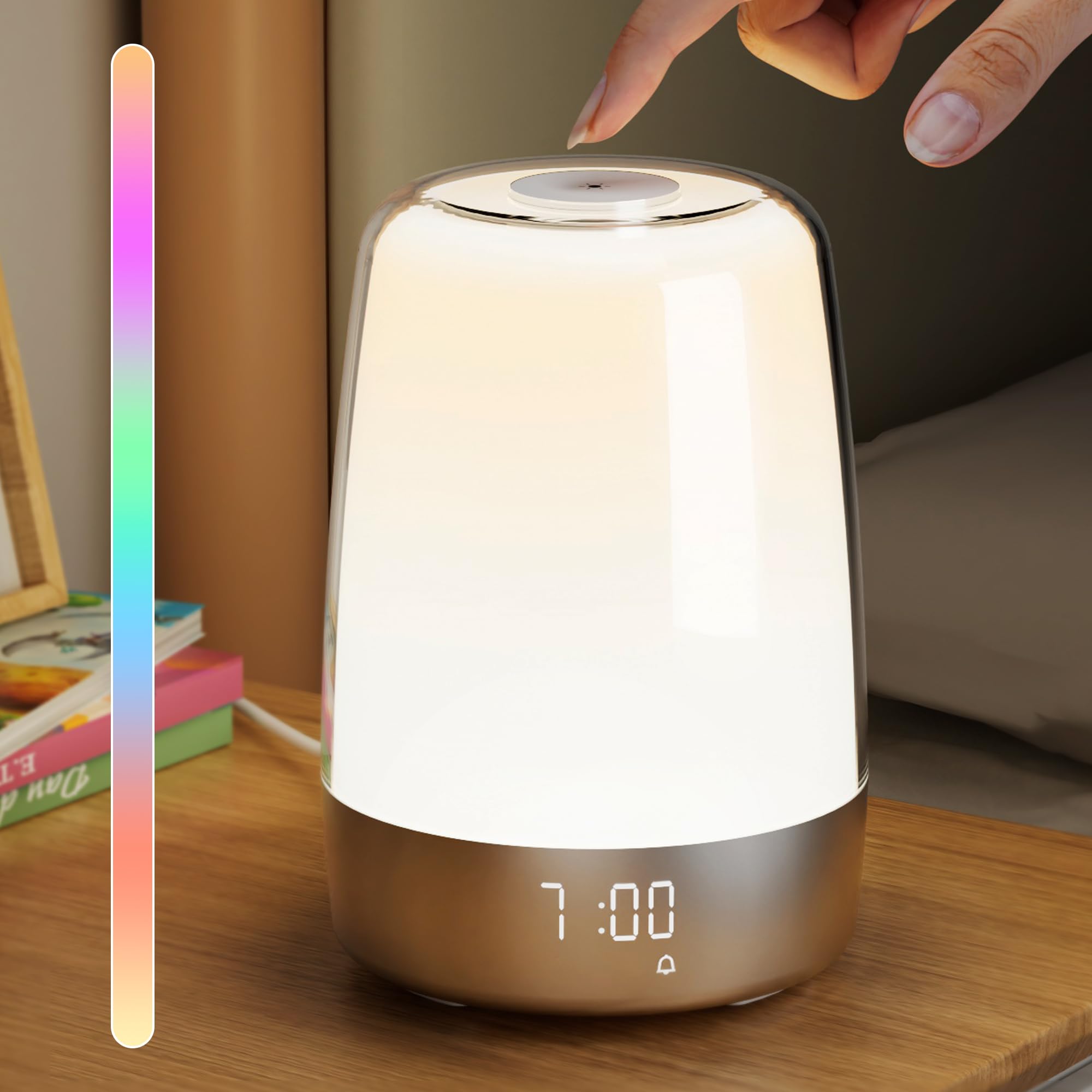
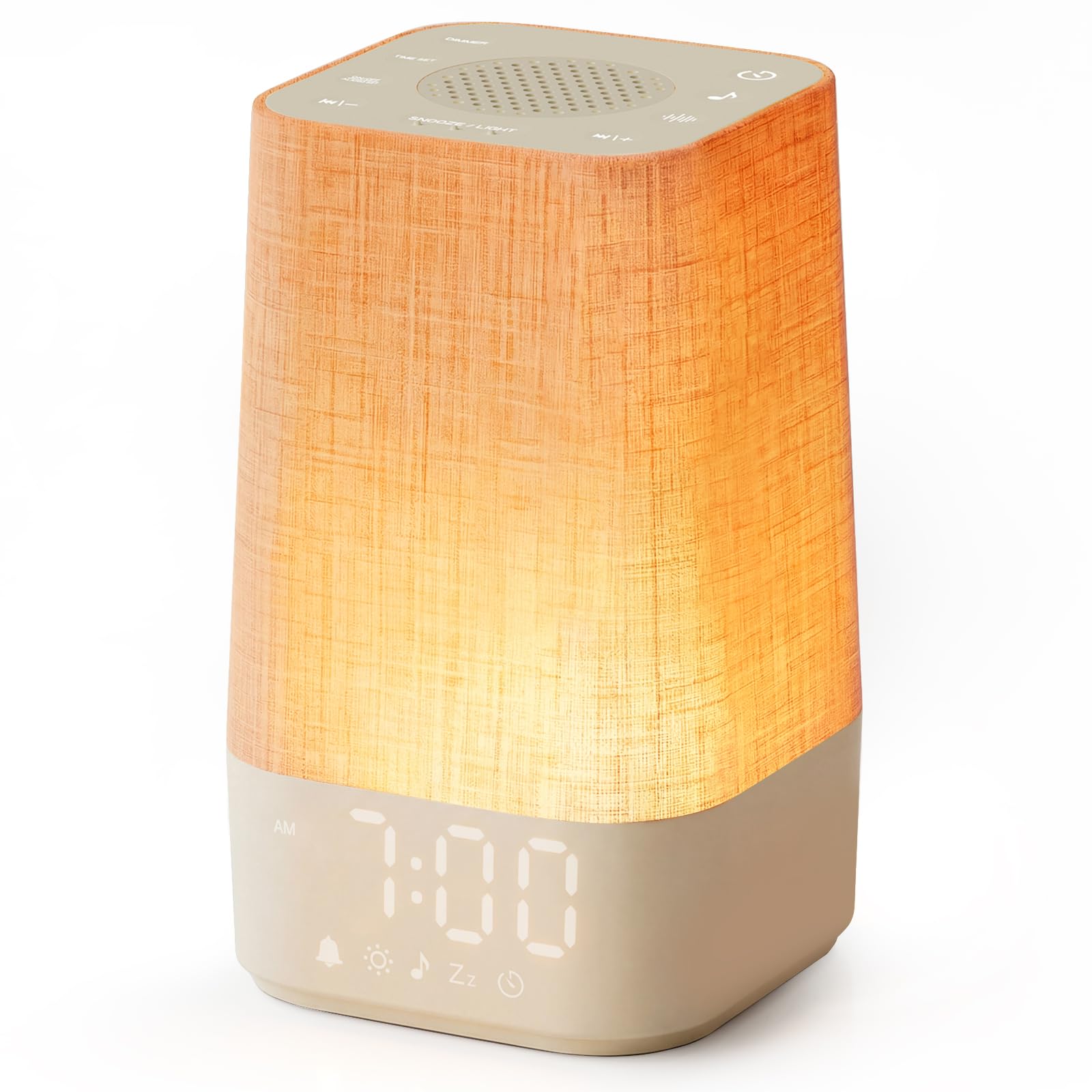
The sunrise window is what won it for us. The Odokee fades from dark to full over anything from 5 to 60 minutes, which covers both the light sleeper who needs a ten-minute nudge and the heavy sleeper who wants the room bright before any sound starts. Several clocks here lock that fade at 30 minutes, and living with the wrong fixed window is a small compromise you make every single morning. Three wake modes — light and sound, light only, sound only — give the same clock a gentle Sunday setting and a hard deadline setting. It is our top pick because the mechanism is right and it asks nothing of your phone.

The rest of the package is generous without being fussy. Twenty-five sounds cover white, pink, brown and blue noise plus waves and rain, a sleep timer fades them out, and the 5W speaker takes Bluetooth if a podcast is more your bedtime thing. Seven alarm tones is a shorter list than the sleep library, and they are the calm kind rather than a smoke-alarm beep.

The detail we kept coming back to is the display. A 0-100% dimmer sounds like a bullet point until you have slept beside a clock that glows; here the numbers go all the way off, and the 12-color night light is there for nights when you want a little light without a whole sunrise. The seven-inch body sits on a nightstand without crowding it. If your bedroom gets no morning light at all, set the fade long and the final brightness high — that pairing is what turns a bedside glow into something that actually gets you up.

Bottom line: This is the sunrise clock we point most people to: a 5-60 minute fade, three wake modes, 25 sounds and a display that dims to nothing, all set on the device itself.
2

Philips SmartSleep Wake-Up Light

Philips SmartSleep Wake-Up Light

Lamp-first buyers

Our Score 8.6/10
Check Price

Worth Noting

  • Alarm volume tops out modestly
  • Highest price in this group
Warranty
2 years
Wake Sounds
5 natural sounds plus FM radio
Sunrise And Sunset
Both simulated
Brightness Settings
20 levels

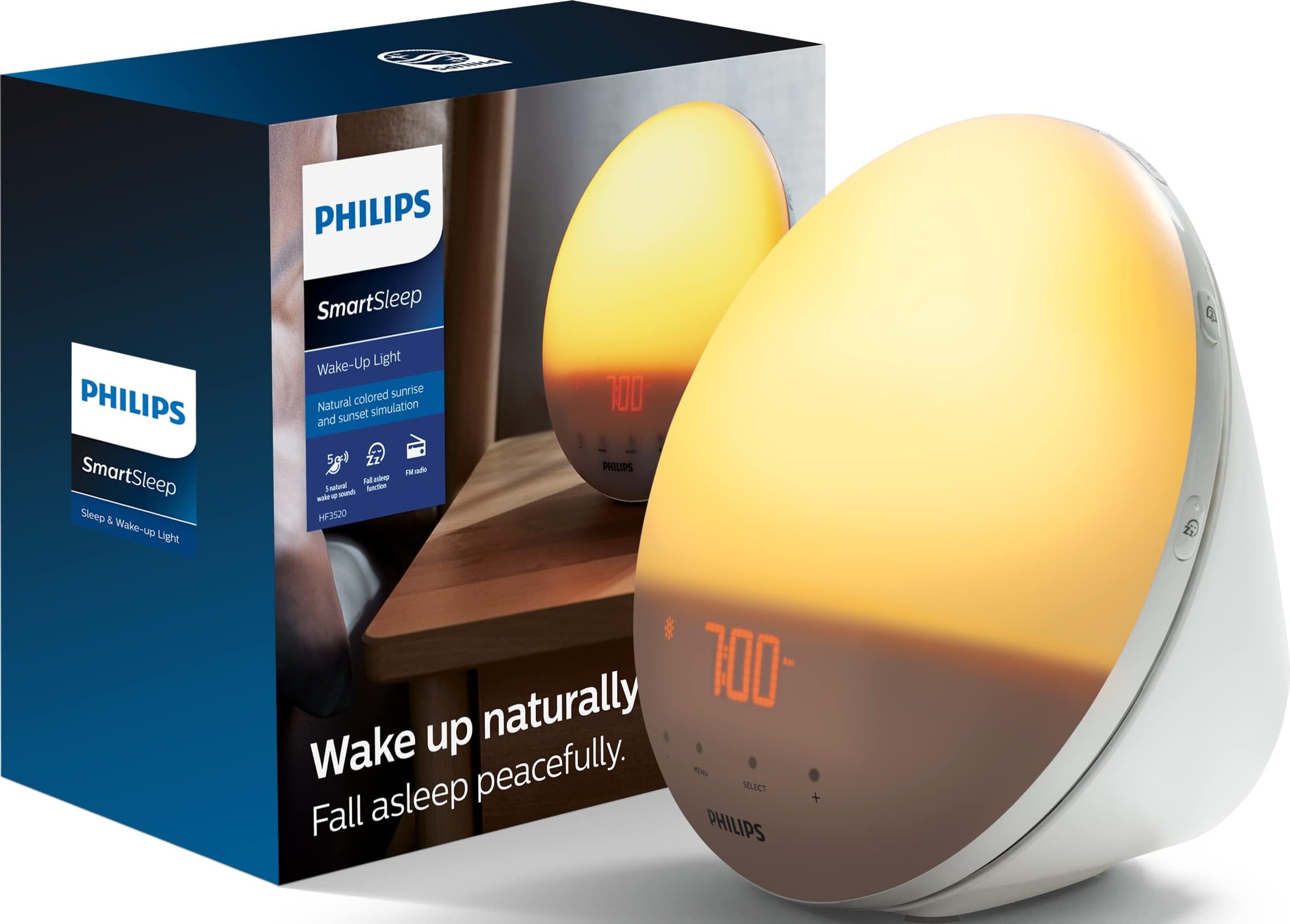
Twenty brightness settings and a reading lamp are the parts of the Philips that do not sound like alarm-clock features, and they are why it earns a place here. This is the one clock in the group you can leave on all evening as a lamp, then let it dim itself down as a sunset while you read in bed. The sunrise starts warm and amber rather than white, which is easier on half-open eyes than a screen ramping up.

Five natural sounds plus FM radio cover the audio, and a tap on the top handles snooze. We think it is the right buy for someone who wants fewer objects on the nightstand, not more: one thing that lights the room, plays the radio and gets you up. The cost is in the controls. Programming the alarm is a session with the manual, and the button combinations did not stick in our heads the first time through.

The alarm tones are pleasant rather than loud, which is lovely if you wake easily and close to useless if you do not — this is not the clock for someone who sleeps through a phone alarm. Where the money goes instead is the lamp, the sunset routine and a two-year warranty. If your bedroom is small and the clock doubles as your reading light, that trade makes more sense than it does on paper.

Bottom line: Buy this one if you want a bedside lamp that also wakes you: 20 brightness settings, sunset simulation and FM radio, at the highest price here.

3

Wkzay Sunrise Alarm Clock

Wkzay Sunrise Alarm Clock

Sound-led sleepers

Our Score 8.8/10
Check Price

Worth Noting

  • No radio or Bluetooth streaming
Dimensions
3.74 x 3.74 x 7.08 in
Sleep Sounds
30, including 10 white noise
Sunrise Window
10 to 60 minutes
Brightness Levels
13

Thirty sounds is a lot for a bedside box this size, and the Wkzay earns its place on the breadth of that library — ten white-noise options for masking traffic or a snoring partner, twenty nature recordings for the morning. Thirteen brightness levels give finer control over the ramp than the three- and four-step lights here, and you can choose a 10-60 minute fade or a fixed half-hour one.

The display is the detail we appreciated most. It dims all the way off, so the clock disappears at night, and the light itself is diffused rather than a hard point source — it warms the corner of a room instead of throwing a beam. At 3.7 inches across and seven inches tall it stands beside a lamp without taking over the tabletop, and the volume covers everything from barely audible to properly loud.

Where it gives ground is outright brightness. This is a bedside glow, not a lamp, and in a big room with blackout curtains the sunrise reads more as a mood shift than a wake-up call. For a light-to-average sleeper who wants the sound machine doing half the work, though, it is the best balance of those two jobs in this group.

Bottom line: The sound machine that wakes you: 30 sleep sounds, 13 brightness levels and a display that goes completely dark, for less than the top pick.

4

Vicsoon Sunrise Alarm Clock

Vicsoon Sunrise Alarm Clock

Tiny nightstands

Our Score 9.0/10
Check Price

Worth Noting

  • Fixed 30-minute sunrise window
Colors
6 RGB
Warranty
2 years limited
Sunrise Window
30 minutes, fixed
Brightness Levels
3 warm white

Under ten ounces and a little over four inches across, the Vicsoon is the one here that genuinely disappears on a crowded nightstand. That is the whole argument for it: a lamp, a clock and an alarm small enough to sit beside a water glass and a phone charger without a reshuffle. We think it is the right first sunrise clock for a child's room or a guest bedroom, where nobody wants to learn a menu system before bed.

The sound side is simple and covers the bases: seven wake-up options running from a beep and birdsong through stream, rain and ocean to sound-only and light-only, plus a sleep timer at 10, 30 or 60 minutes. The six RGB colors are mood lighting rather than wake-up light, and the warm white has three brightness steps.

Brightness is the thing to think about before you buy. The panel gets bright at the top of its range and the time display is faint in daylight, so it is happiest on a nightstand you do not stare at directly from the pillow and in a room that is not relying on it as the main clock face. Two years of warranty is generous at this end of the price range.

Bottom line: For a small nightstand, a kid's room or a first sunrise clock, this compact cylinder covers the basics at the budget end of this group.

5

Hatch Restore 3

Hatch Restore 3

Routine builders

Our Score 8.4/10
Check Price

Worth Noting

  • Routines are set through a phone app
  • Full sound library needs a subscription
Control
Phone app
Dimensions
7.23 x 1.5 x 5.69 in
Subscription
30-day trial included
Sound Library
80+ sounds with Hatch+

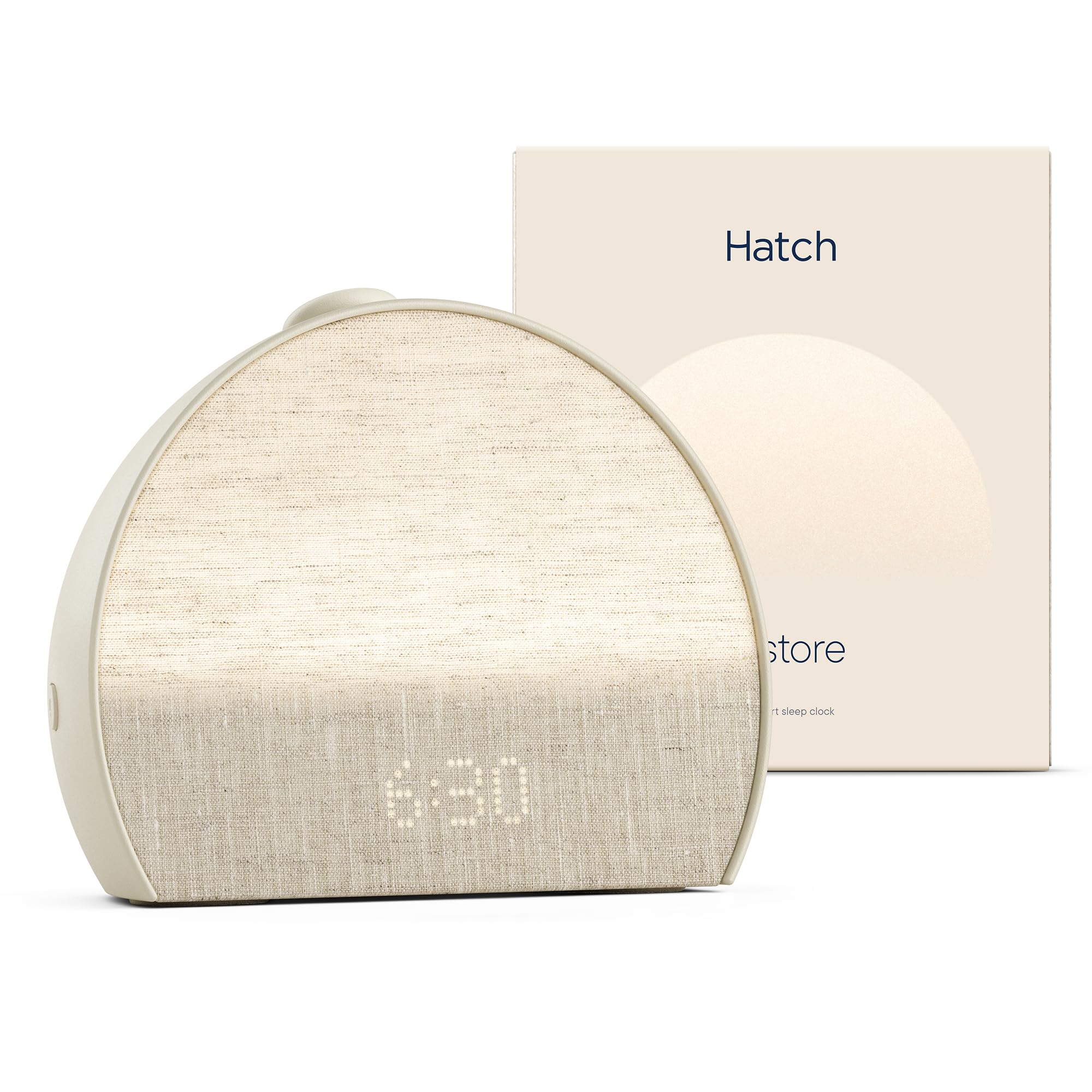
The Restore 3 asks you to run it from your phone, and that single fact decides whether it is for you. Build a routine in the app — a light that winds down, a sound that fades out, a sunrise that comes up gradually — and the device follows it every night without you touching anything. None of the others here build the evening and the morning into one scheduled routine.

The hardware is the nicest in this group. It is a slim, low-profile panel that looks like bedroom furniture rather than a gadget, the sounds are full rather than tinny, and there is a reading light plus warm dimming that makes a wind-down feel like something. The sunrise is gentle. If you need to be hauled out of deep sleep at five in the morning, gentle is not the quality you are shopping for.

Then there is the bill. The fuller sound library and routine options sit behind Hatch+, which arrives as a 30-day trial and continues as a subscription; without it you are using a thinner version of the device you paid for. Reliability is the other caveat: some units stop working in the first week or two, so buying somewhere with an easy return window is sensible.

For the right person it is worth the money — someone who wants a bedtime routine with a beginning, a middle and an end, and who will actually open the app. If you want an alarm you can set with three buttons and never think about again, this is more machine than you need, and the Odokee or the Wkzay does that job for a fraction of the outlay.

Bottom line: For anyone who wants their evenings and mornings automated, this is the best sleep-routine device here — a wind-down and a gradual sunrise, set once on your phone.

6

ANTDALIS Sunrise Alarm Clock

ANTDALIS Sunrise Alarm Clock

Kids' rooms

Our Score 8.6/10
Check Price

Worth Noting

  • Alarm can miss or lose its set time
  • Sunrise window is fixed at 30 minutes
Alarms
Dual with tap snooze
Brightness
500 lux at 35 cm
Wake Sounds
7 nature sounds plus FM radio
Sunrise Window
30 minutes

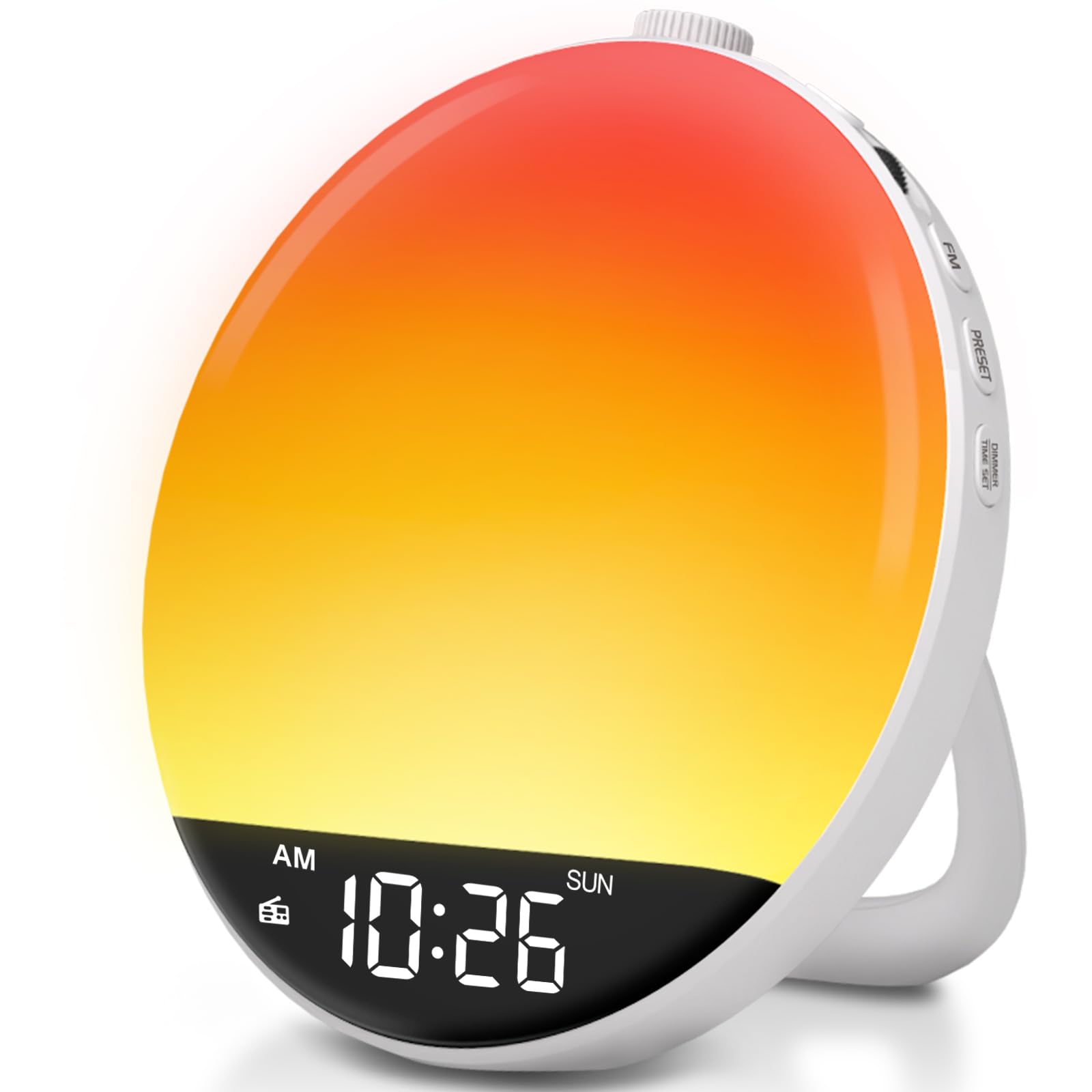
Two alarms, a sunrise that runs from red through orange to white over half an hour, and a night light in eight colors: the ANTDALIS is aimed squarely at families, where one clock has to cover a school morning and a weekend lie-in. It is also the only clock here that puts a number on its light — 500 lux at 35 cm — which is the sort of figure that matters in a room with thick curtains.

The rest is family-friendly. Seven nature sounds with ten volume steps, a sleep-aid timer running from 30 minutes to 12 hours, stepless dimming, FM radio and a tap-to-snooze top. The buttons sit on a visible front panel rather than hidden around the back, which is the small thing that decides whether a child can set it alone.

Our hesitation is the alarm itself. Units that do not fire at the set time, or that lose the setting entirely, are the failure to watch for, and it is the last thing a school morning needs. That is why this one sits in also-consider rather than higher up: we like everything around the alarm more than we trust the alarm. Use it as the night light and gentle light it is, keep a phone alarm as the backstop, and the price makes that an easy trade.

Bottom line: A bright 500-lux panel, dual alarms and eight colors for a child's room or a shared schedule, with the alarm's dependability the open question.

7

DreamSky Sunrise Clock Radio

DreamSky Sunrise Clock Radio

Clock radio fans

Our Score 8.6/10
Check Price

Worth Noting

  • Alarm can fail to fire at the set time
Radio
FM with Bluetooth
Alarm Tones
8
Sunrise Window
0 to 60 minutes
Brightness Levels
20

Where most of the clocks here are lamps that happen to tell time, the DreamSky is a bedside clock radio with a sunrise added on, and that is exactly why some people will prefer it. The display is the star: large digits that dim right down, room temperature on screen, a USB port for charging a phone, and FM radio with an external antenna for pulling in a weak station.

As a sunrise clock it is the least convincing of the group. The light has 20 brightness levels and a 0-60 minute fade, so the mechanics are all there, but it reads as a brightening screen rather than a dawn filling a room. If the priority is a readable clock with a radio and the light is a bonus, that is a fair trade at the bottom of the price range here.

The alarm is the part to weigh. Alarms that do not fire at the set time, or settings that cannot be re-entered afterwards, are the failure to watch for, which is why this sits in also-consider rather than among the picks above. For a guest room or a kitchen counter, where a missed alarm costs nothing, it is an easy buy.

Bottom line: A clock radio first and a sunrise light second: big readable numbers, FM radio and Bluetooth for the least money in this group.

How We Tested Sunrise Alarm Clocks

We began by pulling together more than 40 sunrise alarms from brands we've tested before, then narrowed the list by dawn simulation length, maximum brightness, sound options, display dimming, footprint, and price. We ended up with 12 clocks, each used on a bedside table for six months through early starts, dark winter mornings, and weekend lie-ins.

For brightness and wake-up time, we placed every clock at the same distance on a nightstand and checked whether the glow was visible through closed eyelids at half and full brightness. We noted how long it took from first light to us actually getting out of bed, and whether we were awake before the sound alarm. We also timed how quickly each clock reached its full glow and whether the dawn simulation could be shortened when we needed to be up sooner.

Alarm functionality and usability got the same scrutiny: we set weekday and weekend alarms without the manual, tried snooze in the dark, and noted whether buttons, dials, or an app made middle-of-the-night changes easy. Sound quality was judged at low volume across birdsong, radio, and chimes, with notes on harshness and volume steps. Appearance and quality came down to living with each clock: did the display light up the room, did the build feel solid, and did it look like a bedside lamp rather than a gadget? Reliability and value were tracked over the full six months—missed alarms, settings that reset after unplugging, and whether basic functions required a phone.

How to Choose Sunrise Alarm Clocks

Start With the Fade, Not the Feature List

An adjustable sunrise window is the most useful thing to look for, because it is the one part you cannot change later. A 5-60 minute ramp, as on the Odokee and the Wkzay, lets you stretch the fade in a dark January and shorten it in June; a fixed 30-minute light like the Vicsoon's is fine if you already wake easily.

The trap is assuming a long fade makes up for a dim panel. A 60-minute ramp to a bedside glow is still a glow at seven in the morning. Pair the longest fade available with the highest final brightness you can find, and if you sleep through phone alarms, treat light output as the priority over every other feature.

Brightness Decides Whether You Actually Wake

Most of these lights are bedside-scale: they warm a corner of a dark room rather than lighting it. That is enough for a light sleeper and nowhere near enough for someone who needs a proper shove. Only one clock here states an output figure, the ANTDALIS at 500 lux at 35 cm, which makes it the safest bet for a bedroom with blackout curtains.

If you share a bed, check the other end of the range too. A panel that cannot dim low is a problem at two in the morning, and the night light is often the setting you use most — not the sunrise.

Check the Display Dimmer Before You Buy

Dimmable covers everything from three preset steps to a display that goes completely dark, and that difference decides whether the clock actually lives on your nightstand. A display glowing all night undoes the point of a gentle wake-up.

Look at the range rather than the word: the Odokee runs 0-100% and the Wkzay dims to off, while some cheaper panels are faint by day and still bright at night. If you read in bed, make sure the numbers are legible at the low setting you sleep on.

Decide Whether You Want an App in the Bedroom

There are two philosophies here. On-device controls, as on the Odokee, the Wkzay, the Vicsoon and the Philips, mean the alarm works without your phone, your network or an account — which is exactly what you want at six in the morning on a bad day. App-controlled routines, as on the Hatch, buy a genuinely nicer wind-down and a scheduled sunrise, at the cost of a subscription for the full library and one more thing that can be unplugged.

Pick the routine you will actually keep. A clock with six buttons you never learn is worse than a plain alarm, and an app you stop opening is worse than both.

Sounds, Volume and Snooze

Thirty nature recordings are worth less than a volume range that goes from a whisper to genuinely loud. Five good sounds can be plenty; the question is whether the alarm reaches you through a closed door and a duvet.

Check the snooze control, too. A tap on the top is far easier half asleep than a button hunt around the back, and a snooze you cannot find turns a gentle wake-up into a missed train.

Frequently Asked Questions

Final Verdict

Buy the Odokee. It gets the two things that matter right — a sunrise you can stretch from 5 to 60 minutes and a display that goes completely dark — and it does the job without an app, an account or a subscription.

If the clock is also going to be your reading lamp and you want a sunset wind-down, the Philips is worth the step up. If sound is what puts you to sleep, the Wkzay's 30-sound library beats both on that one job.