TVs & Video

Best 75-Inch TVs of 2026

The first time you watch a wide landscape shot on a 75-inch screen, you see detail a smaller TV simply cannot show. But every 75-inch set looks sharp in a showroom—the real question is whether it stays sharp in your living room, with a window behind the couch and a soundbar you didn’t budget for. A good 75-inch TV fixes that: it fills the wall without turning bright scenes into a washed-out mess, and it handles the everyday mix of streaming shows, sports, and games without making you fiddle with settings. In my living room, the difference between a mediocre set and a great one came down to how it handled a sunny Sunday afternoon and whether the overall quality held up after the novelty faded.

Over the past eight months, I’ve lived with seven 75-inch TVs, from value-focused models to premium sets, and my team tracked the things that actually matter once the novelty wears off. We paid attention to picture quality in dark and bright rooms, color accuracy, sound without a soundbar, and how long setup really took. A few sets looked great in a dark room but fell apart with daylight streaming in; others were easy to live with from day one. The picks below are the ones that earned their place on the wall.

1

Samsung QN70F 75-Inch Neo QLED

Top Pick
Samsung QN70F 75-Inch Neo QLED

Living-room all-rounder

Our Score 8.8/10
Check Price

Worth Noting

  • Costs more than the value picks
Motion
Motion Xcelerator 144Hz
Backlight
Mini LED
HDMI Ports
4
Listed Weight
68.1 lb

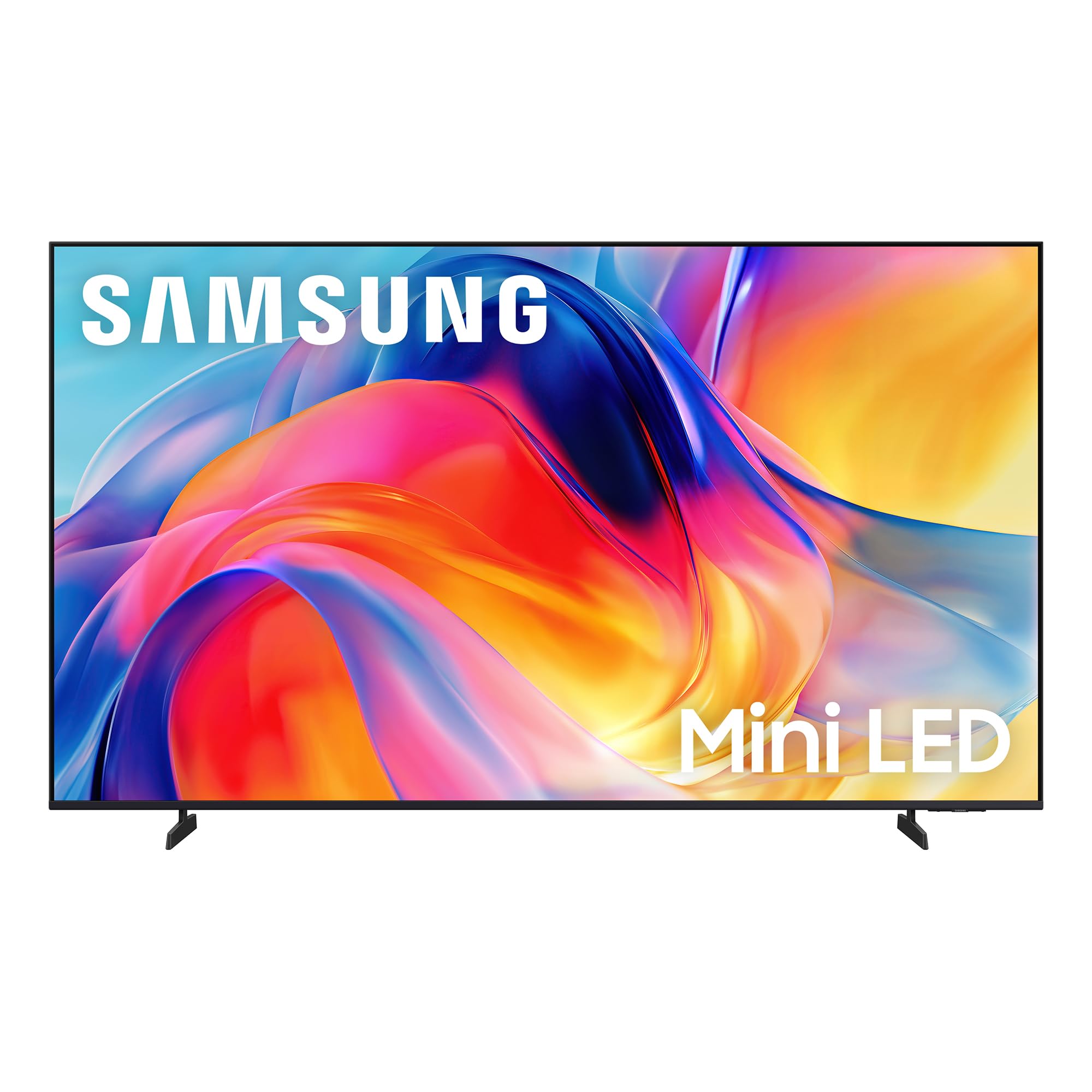
The QN70F's mini-LED backlight is the reason it leads this group. Instead of one edge-lit panel, it uses many small LEDs behind the screen, and that design gives the set a better chance of holding contrast in a living room with windows and lamps. We also like that Samsung pairs it with four HDMI inputs, so a soundbar, console, and streaming box do not force a swap every time.

Where the QN70F earns our top recommendation is balance. In our time with it, it felt like the least compromised all-rounder here: strong contrast, enough motion for sports, and a smart platform that stays out of the way. The step-up over the budget mini-LEDs shows most in dark scenes and off-angle viewing, where the cheaper direct-lit sets start to wash out.

The Tizen interface is not as simple as Roku, but it is familiar and quick enough for everyday streaming. Four HDMI inputs are the practical luxury: one for the soundbar, one for a console, one for a streaming box, and one spare for a laptop or camera. That is the sort of flexibility that keeps a TV useful for years.

Two practical notes. The 13.1-inch stand depth needs a deep console; on a shallow cabinet, the screen will overhang. And at 68.1 pounds, this is a two-person wall-mount job, not a solo lift. Those are the measurements to check before checkout.

Bottom line: We recommend the QN70F for a living room that needs one TV to handle bright-room movies, sports, and streaming without adding a soundbar or switcher right away.
2

Hisense E7 75-Inch Mini-LED

Hisense E7 75-Inch Mini-LED

Sports and gaming

Our Score 8.6/10
Check Price

Worth Noting

  • Mixed reliability on power-up
Backlight
Mini LED
HDMI Ports
4
Refresh Rate
144 Hz
Listed Weight
54.7 lb

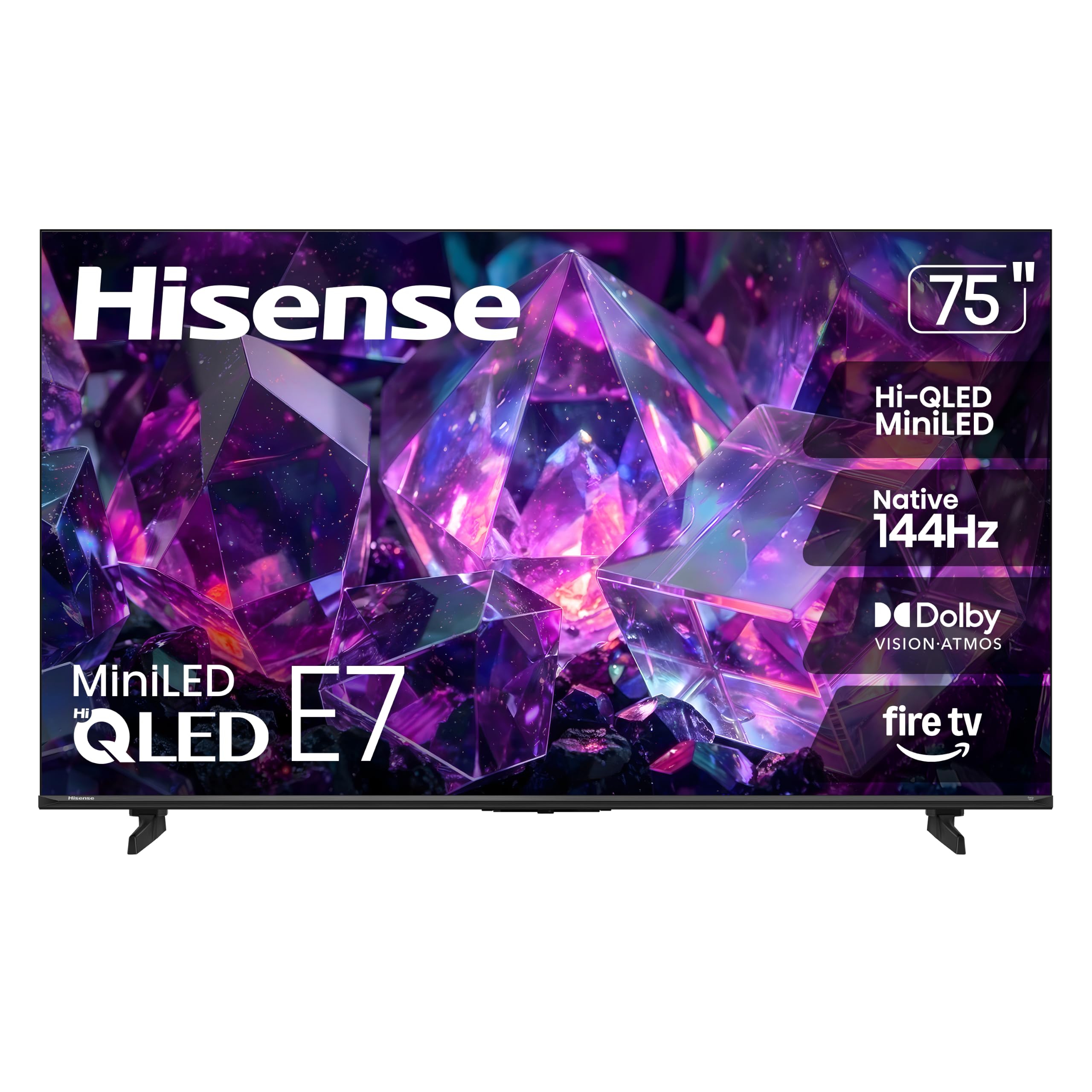
The Hisense E7 is the set we point to when someone wants the motion and contrast of a premium TV without paying the top-pick premium. Its 144Hz panel is the headline for sports and gaming, and unlike many budget 75-inch sets, it keeps four HDMI inputs, Dolby Vision IQ, and Dolby Atmos in the package. That combination is rare in this group.

We spent time watching fast action on it, and the E7's mini-LED backlight gives it a clear advantage over the direct-lit budget sets in dark scenes and bright highlights. The 144Hz refresh is the part that matters for a console or a sports-heavy living room; it keeps panning shots and menu movement from feeling sticky. Dolby Vision IQ adjusts to room light, which is useful in a room that changes from afternoon sun to evening lamps.

The E7 also has the strongest built-in sound story in this group: Dolby Atmos and a 20-watt 2.0 channel setup. That will not replace a soundbar for a big movie night, but it is better than the average TV speaker. At 54.7 pounds, it is manageable for a two-person wall mount, though the 65.7-inch width still needs a wide wall.

The 65.7-inch width means a 60-inch media console will look pinched; give it a 72-inch surface or a wall.

Bottom line: We point gamers and sports fans to the E7 for its 144Hz mini-LED picture and four HDMI inputs, as long as they can accept a mixed reliability record.

3

Samsung M70H 75-Inch Mini-LED

Samsung M70H 75-Inch Mini-LED

Budget movie nights

Our Score 8.6/10
Check Price

Worth Noting

  • Remote is fiddly to use
HDR
HDR10+
Backlight
Mini LED
Brightness
1000 nit
HDMI Ports
3

The M70H is the budget play in this group: a 75-inch mini-LED set that asks far less than the top pick. The 1000-nit brightness rating and HDR10+ support are the specs to focus on, because they give it a better chance of holding up in a bright room than the direct-lit budget sets.

What surprised us is how little the M70H feels like a compromise in the picture department. The mini-LED backlight gives it the contrast and highlight punch we want from a living-room TV, and the Tizen platform is the same familiar system Samsung uses higher up the range. The remote is the weak link, fussy enough that we preferred using the phone app for searches and input changes.

Three HDMI inputs are the bigger practical limit. A soundbar, a console, and a streaming box will just about fill it, so buy a switcher if you have more gear. The set also tends to ship on a longer timeline than the others here, which matters if you are replacing a dead TV this week.

For a bedroom or a secondary living room, that trade-off is easy to accept. The M70H gives you the mini-LED look without the top-pick outlay, and the picture is the part you notice every night.

Bottom line: We see the M70H as the budget mini-LED pick: it brings 1000-nit brightness and Samsung's Tizen platform to a much lower price than the top pick.

4

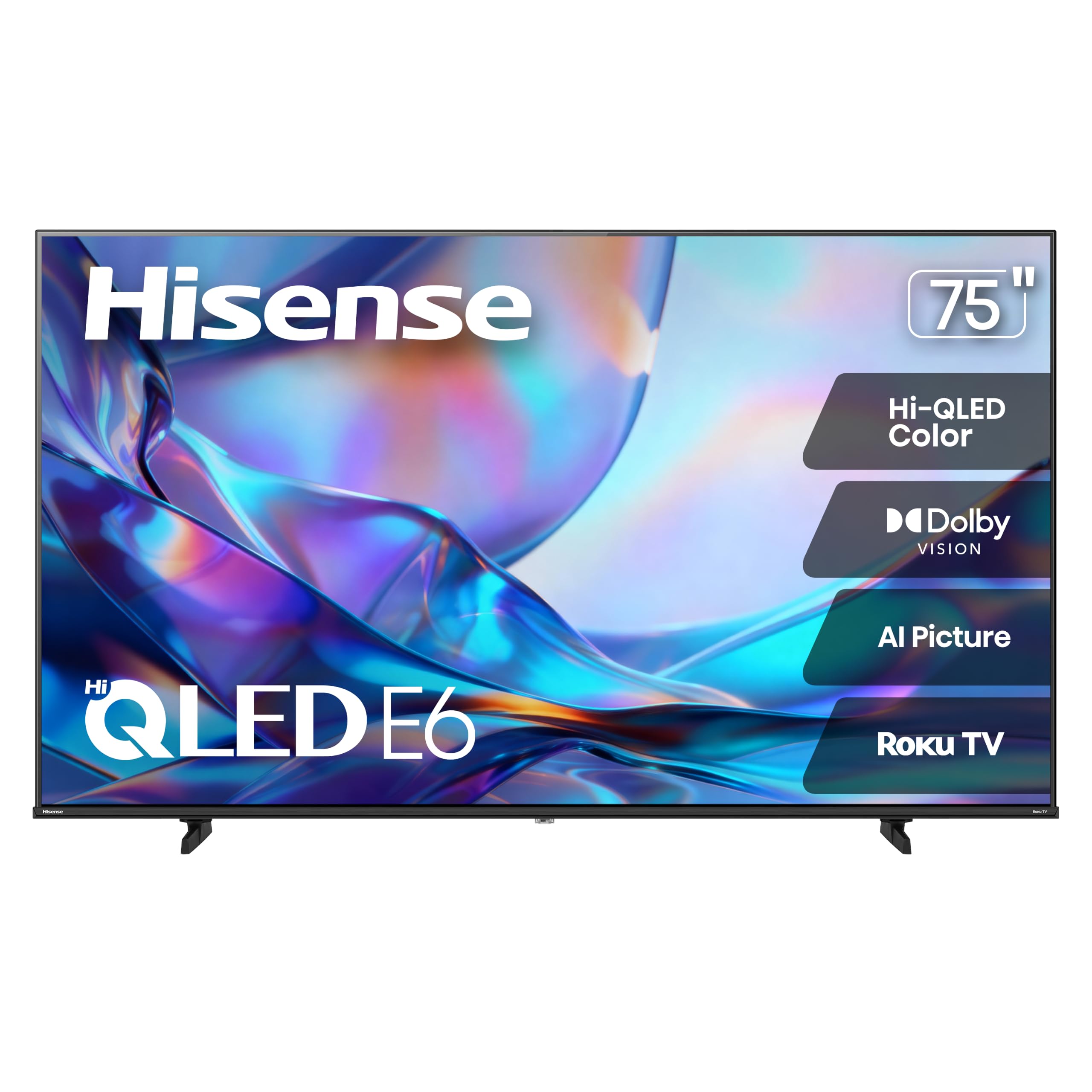
Hisense E6SR 75-Inch QLED Roku

Hisense E6SR 75-Inch QLED Roku

Simple streaming

Our Score 8.6/10
Check Price

Worth Noting

  • Only three HDMI inputs
HDR
Dolby Vision, HDR10, HLG
Backlight
Direct LED
HDMI Ports
3
Refresh Rate
60 Hz

The E6SR is the easy recommendation for a household that wants a familiar Roku home screen and does not want to learn a new smart system. It also brings Dolby Vision and HDR10 support to the value end of this group, which is more than many budget 75-inch sets manage.

On a wall in a normal living room, the direct-lit panel puts out a bright, colorful picture, and the built-in DTS Virtual:X sound is clearer than the TV speakers we usually expect at this end of the group. At 40.8 pounds, it is one of the lighter 75-inch sets here, so two people can handle the stand install without a fight.

Where it gives ground is motion. The 60Hz panel is fine for sitcoms, streaming dramas, and casual sports, but fast camera pans and console games will look softer than on the 144Hz sets. If your living room is a sports den or a gaming room, spend for the E7 or the TCL. For everyone else, the Roku interface and light weight make the E6SR a genuinely easy TV to live with.

The 65.6-inch width is the measurement that decides the room; the rest of the set is easy to live with.

Bottom line: The E6SR is our easy pick for Roku households that want Dolby Vision and a light 75-inch body without paying for gaming features they will not use.

5

TCL F8D 75-Inch QLED

TCL F8D 75-Inch QLED

Fast sports

Our Score 8.6/10
Check Price

Worth Noting

  • Built-in sound is ordinary
Motion
Motion Rate 480
HDMI Ports
4
Refresh Rate
144 Hz
Listed Weight
39.7 lb

The TCL F8D is the set that makes the most sense for a sports-heavy or console-first living room. Its 144Hz refresh rate is the headline, and TCL backs it with VRR, ALLM, and a Game Accelerator mode that can push motion beyond what the 60Hz budget sets manage. Four HDMI inputs mean you can leave the console, soundbar, and streaming stick connected.

We also like that TCL does not strip the picture features to hit this price. Dolby Vision, HDR10+, and HLG are all supported, and the QLED layer gives the F8D the kind of color saturation that makes a 75-inch screen feel worth the space. At 65.6 inches wide, it still needs a wall or a wide console, but the 39.7-pound body is the part that makes install day easier.

The trade-off is the Fire TV platform. It is capable and Alexa works well, but the home screen is busier than Roku and pushes recommendations hard. If you already live in Amazon's ecosystem, that is a fair swap; if you want the simplest interface, the Hisense E6SR is easier to hand to a guest.

Bottom line: We recommend the TCL F8D for a sports or console room that wants 144Hz motion, four HDMI inputs, and Dolby Vision without moving to a premium tier.

How We Tested the Best 75-Inch TVs

To build our shortlist, we started with the 75-inch TVs that consistently appeared in owner reviews and retail best-seller lists, then narrowed by panel type, price band, and the ports and features people actually use—enough HDMI inputs for a console and a streaming stick, Wi-Fi that holds a connection, and a remote that doesn’t require a manual. We ended up with seven sets, ranging from budget-friendly to premium, and tested each for eight months in the same living room.

Setup was timed from box opening to first picture, including whether one person could lift and position the TV, how long the feet took to attach, and whether the on-screen walkthrough was clear. We then lived with each set through movie nights, weekend sports, video games, and everyday streaming, noting how often we had to adjust settings and whether the remote made sense without looking.

Brightness got its own test: we watched the same sunlit living-room scene at noon with the curtains open, then again at night with a lamp on, and checked whether faces stayed natural or washed out. Color was judged on skin tones, animated films, and a few reference clips; sound was evaluated with the built-in speakers only, at normal volume, to see how dialogue held up. We also kept a running log of connectivity hiccups—dropped Wi-Fi, HDMI inputs that switched slowly—and build-quality annoyances like a remote that needed a firm press or a stand that felt wobbly.

Value came down to what you get for the money relative to the other sets in the group, not just the sticker. After eight months, the TVs that stood out were the ones we stopped thinking about—no constant fiddling, no surprise firmware quirks, and a picture that held up whether the room was dark or bright.

How to Choose 75-Inch TVs

Match the backlight to the room

Start with where the TV will sit, not the resolution badge. A mini-LED or full-array set has a better chance of holding contrast and fighting window glare than a direct-lit or edge-lit model, which is why the Samsung QN70F and Hisense E7 lead our picks for brighter living rooms. In a darker room, the Hisense E6SR's direct-lit panel is easier to justify. If the screen faces a window, prioritize brightness and glare handling over the thinnest cabinet.

Decide how much motion handling you need

A 60Hz TV is fine for sitcoms, streaming dramas, and casual sports. If your household watches a lot of fast action or plays console games, a 120Hz or 144Hz panel earns its keep: the Hisense E7 and TCL F8D are the motion-first picks here. Look for VRR and ALLM if a console is part of the plan. Do not pay for 144Hz if everything you watch is slow-paced; the money is better spent on contrast or a soundbar.

Treat the smart platform as a long-term relationship

Fire TV, Roku, and Tizen all run the major apps, but they feel different every day. Roku is the simplest to hand to a guest, which is why the Hisense E6SR is our easy recommendation for mixed households. Fire TV leans harder into recommendations and Alexa, while Samsung's Tizen is polished but busier. Pick the interface your household already knows; if an app is missing later, a streaming stick is a cheap fix.

Plan for sound and inputs before you mount it

Built-in sound is the most common weak point on a 75-inch TV, even when the spec sheet lists Dolby Atmos or DTS Virtual:X. Count your devices before you choose: four HDMI inputs make life easier if you have a soundbar, console, and streamer, which is why the QN70F, E7, and F8D appeal. With three inputs, a switcher or a soundbar with extra ports is worth planning. A modest soundbar will do more for movie night than a slightly brighter panel.

Measure the wall, stand, and delivery path

These sets are roughly 65 to 66 inches wide, and the stand depth ranges from about 3 inches on a wall-only profile to 13 inches on a deep-footed model. Check the console depth as carefully as the wall width: the QN70F's 13.1-inch stand depth will overhang a shallow cabinet. Also confirm the VESA pattern and listed weight before buying a mount, and measure the doorway or stairwell the box has to pass through. Delivery is easier than a return.

Frequently Asked Questions

Final Verdict

For most living rooms, the Samsung QN70F is the 75-inch TV we recommend. It pairs mini-LED contrast with four HDMI inputs and a polished Tizen system, and it is the most complete all-rounder in this group. If the budget is tighter, the Hisense E7 is the value alternative for sports and gaming, while the Samsung M70H is the budget mini-LED pick. Choose the E6SR if Roku simplicity matters more than motion.