Tools & DIY

Best Cordless Soldering Irons of 2026

The repair that sold me on going cordless was a brake-light splice under a rear bumper, three feet past the last outlet and one very stretched extension cord away. A corded iron in that spot means dragging an orange cord through the yard and hoping nobody kicks it while you hold a joint steady — and a cord tugging at the tip is how you get a cold, blobby solder joint. A cordless iron puts the heat where the work actually is, whether that's under a dashboard, up a ladder, or at the far end of a workbench. What it asks in return is that everything the wall used to handle — heating speed, temperature control, battery — now lives in the handle.

Over the past four months my team and I have run 12 cordless irons through real repairs, and the pattern is that the spec sheet tells you much less than the recovery time does. Plenty of these tools will hit a rated temperature on a cold tip and then stall the instant they touch a ground plane. The picks below are the ones that kept heat when it counted, and they hold up whether you solder twice a year or every weekend.

1

Milwaukee M12 Soldering Iron

Top Pick
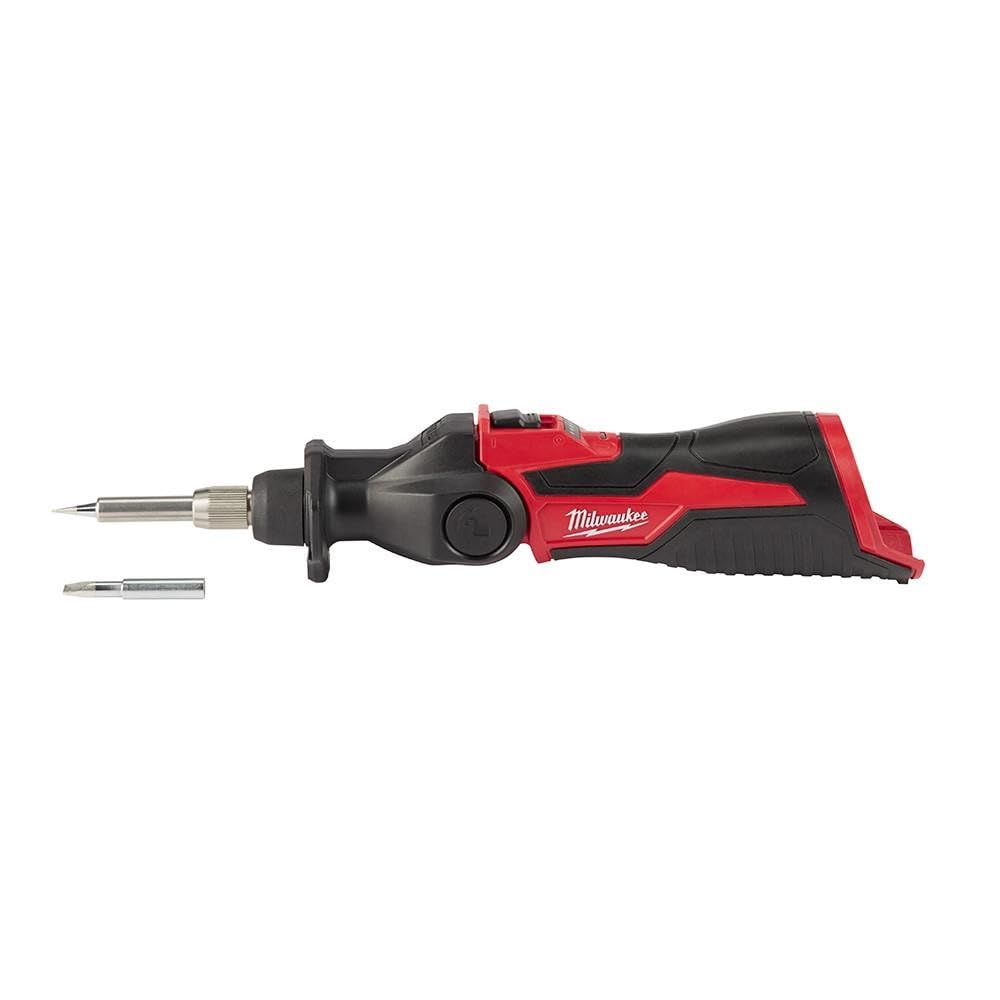
Milwaukee M12 Soldering Iron

Electronics and wiring

Our Score 9.2/10
Check Price

Worth Noting

  • Bare tool; M12 battery and charger not included
Power
90 W
Heat-up Time
18 seconds
Max Temperature
750 °F
Battery Platform
Milwaukee M12 (not included)

The three-stop pivoting head is the first thing we noticed, and it is the reason this iron stays on the bench. You can angle the tip into a connector or around a board without twisting your wrist, which matters in a tight engine bay or a crowded chassis. The 18-second heat-up and 90-watt output give it enough reserve for wire splices, not just tiny pads.

At 750°F, it is not the hottest iron here, but the temperature holds steady and the tool-free tip change makes switching between a chisel and a point quick. The M12 battery sits under the handle and gives the tool a compact, balanced feel; we found it easier to place than a corded pencil iron with a stiff cable pulling at the back.

This is a tool for someone already in the M12 system. The build feels like the rest of the M12 line, and the balance is right for bench work. The tool-free tip change is the small convenience we appreciate most when a job runs long. It is the iron we reach for when a joint has to be right.

Bottom line: For M12 users, this is the cordless iron we recommend first: 18-second heat, 90 watts, and a pivoting head that reaches awkward joints.
2

ANBES Cordless Soldering Iron Kit

ANBES Cordless Soldering Iron Kit

All-in-one electronics

Our Score 9.0/10
Check Price

Worth Noting

  • Kit accessories may not hold up to daily use
Tips
Three C210 tips
Battery
18,000 mAh built-in
Heat-up Time
3 seconds
Max Temperature
896 °F

The ANBES kit lands with the items you otherwise buy separately: three C210 tips, a stand, solder wire, tweezers, and a USB-C cable. The built-in 18,000mAh battery is the headline, and the LCD shows both temperature and charge so you are not guessing.

We think this is the right shape for someone who does not want to buy into a tool-battery platform. The 3-second heat-up is quick enough to make a joint before the tip cools, the auto-sleep wakes on movement, and the silicone grip stays comfortable through a batch of connections. The 75-watt PD mode gives it more headroom when you plug into a charger, which is useful for heavier wire.

In wireless mode, the iron is a 30-watt tool, so it is happiest on circuit boards, small connectors, and light wire. The 75-watt PD mode is there when you need more, but it requires a charger and cable. We like the kit for beginners and occasional repairs because everything is in one case, and the case keeps it all together.

Bottom line: For a first cordless iron, we recommend this kit: it arrives with three tips, a stand, wire, and a built-in battery that heats in about three seconds.

3

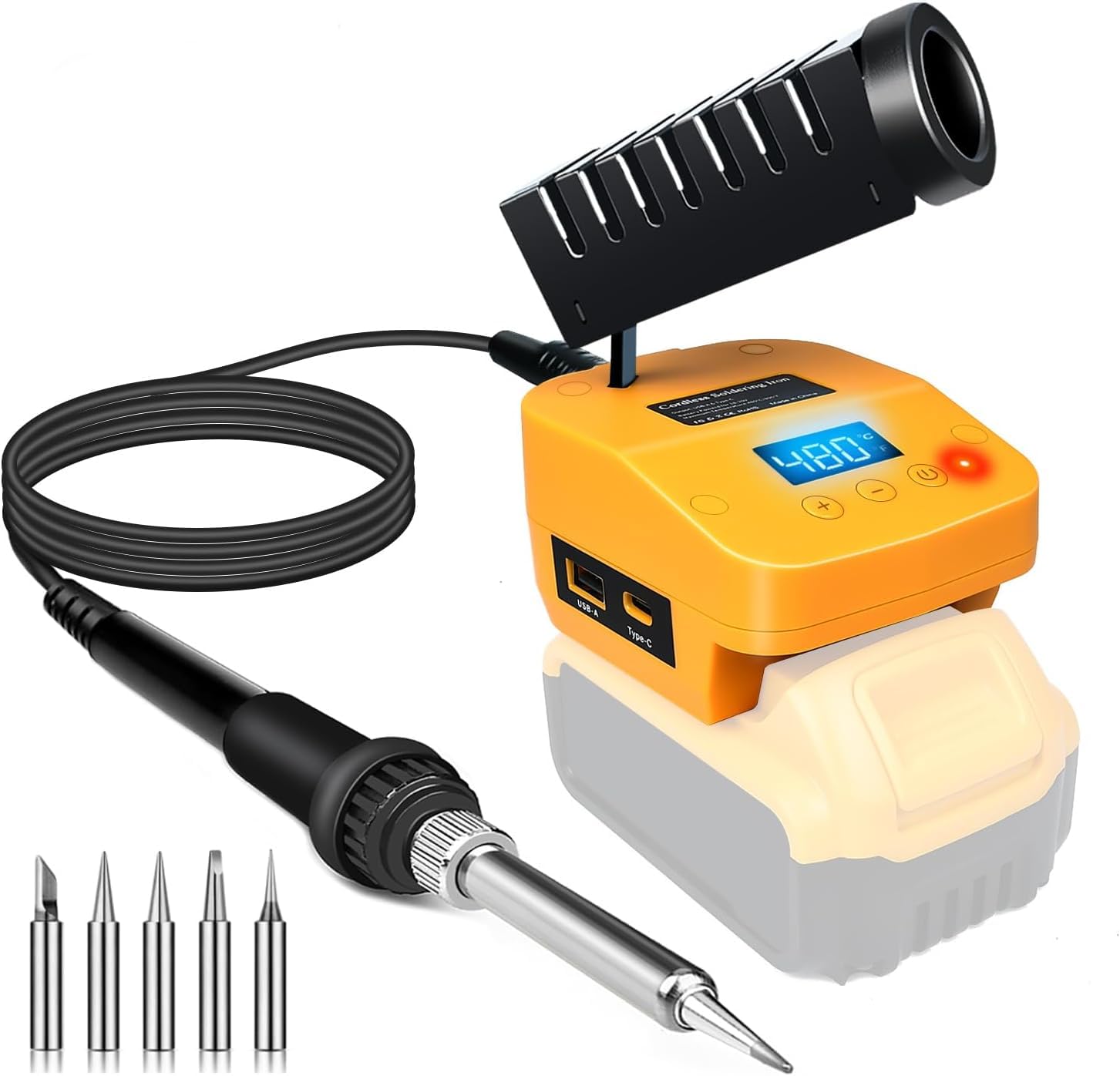
QSDXNYDC DeWalt Soldering Station

QSDXNYDC DeWalt Soldering Station

DeWalt battery users

Our Score 9.4/10
Check Price

Worth Noting

  • Bare tool; battery and charger not included
Power
60 W
Heat-up Time
8 seconds to 350 °C
Max Temperature
480 °C
Battery Compatibility
DeWalt 20V Max

The DeWalt battery slot is the whole idea here: it turns a pack into a cordless station with a temperature display and a knob. The 60-watt element heats to 350°C in about eight seconds, and the iron sits in an integrated holder that keeps the hot end away from the bench.

For a DeWalt user, we think this is the value pick of the group. It has enough power for auto wiring and appliance repairs, the temperature is easy to adjust, and the memory function returns to your last setting. The battery also gives the base some weight, so it does not skate around when you set the iron down.

The 480°C ceiling is higher than you need for most electronics, but it gives you room for heavier joints. The display is simple, and the Type-C/USB ports are a handy extra for charging a phone on a job. We like that it does not pretend to be a precision bench station; it is a portable workhorse for heavier jobs. The USB ports are the unexpected bonus we use more than the temperature memory.

Bottom line: The QSDXNYDC turns a DeWalt 20V pack into a 60-watt soldering station with an 8-second heat-up and a stable base; we think it is the value pick.

4

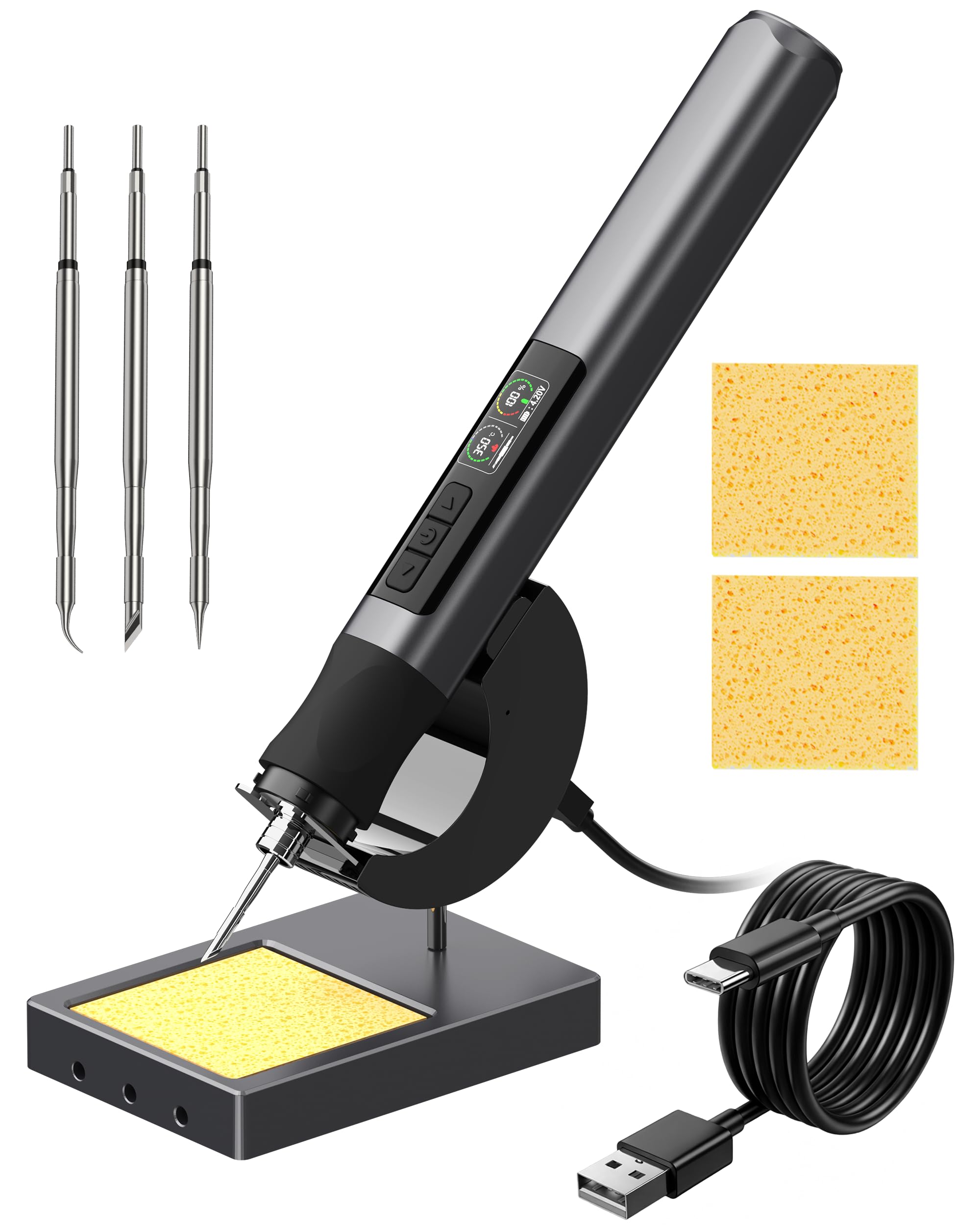
Fanttik T1 Max Soldering Iron

Fanttik T1 Max Soldering Iron

Small electronics

Our Score 8.8/10
Check Price

Worth Noting

  • Lowest setting is 390 °F
  • 12W battery output is modest
Tips
Four C210 tips
Weight
1.04 lb
Battery
2600 mAh built-in
Temperature Range
390-840 °F

The T1 Max is small enough to hold like a pen, and the four C210 tips are genuinely fine, good for crowding into a connector or touching a single pad. We like it for bench electronics because the tip goes where a bigger iron will not.

The six-step dial is simple, and the 360-degree swivel stand is more useful than it sounds: you can rotate the iron to the angle you need without unclipping anything. The aluminum base also gives the hot tip somewhere to go between joints.

In wireless mode, the built-in 2600mAh battery is rated for up to 60 minutes at 840°F. That is enough for a repair session if you are not soldering continuously, and the USB-C charging means you can top it up between jobs. The compact body is the reason it stays on the bench.

Bottom line: For small electronics and tight spaces, we like the T1 Max: four fine tips, a compact body, and a clever swivel stand.

5

Weller PSI100K Butane Iron

Weller PSI100K Butane Iron

Field repairs

Our Score 9.2/10
Check Price

Worth Noting

Kit
Six-piece
Fuel
Butane
Weight
7.2 oz
Max Temperature
580 °C

The PSI100K is a butane iron, which means no battery, no charging, and no cord. You fill the tank, click the ignition, and wait for the tip to come up to temperature. The 125-watt equivalent output and 580°C ceiling give it enough punch for automotive wire and heavier connectors.

At 7.2 ounces, it is light enough to use one-handed, and the six-piece kit includes the tips and case you need to keep it organized. We like that it does not care about cold weather; a butane iron keeps working when a battery pack is sluggish.

This is the one we pack for field repairs, especially when the job is a wire splice rather than a circuit board. The heat is adjustable, the tip changes are straightforward, and the case keeps the hot parts contained. The case is small enough to live in a tool bag, which is where ours stays.

Bottom line: For wire repairs where there is no outlet, we trust the PSI100K: it heats fast, runs hot, and packs into a small kit.

6

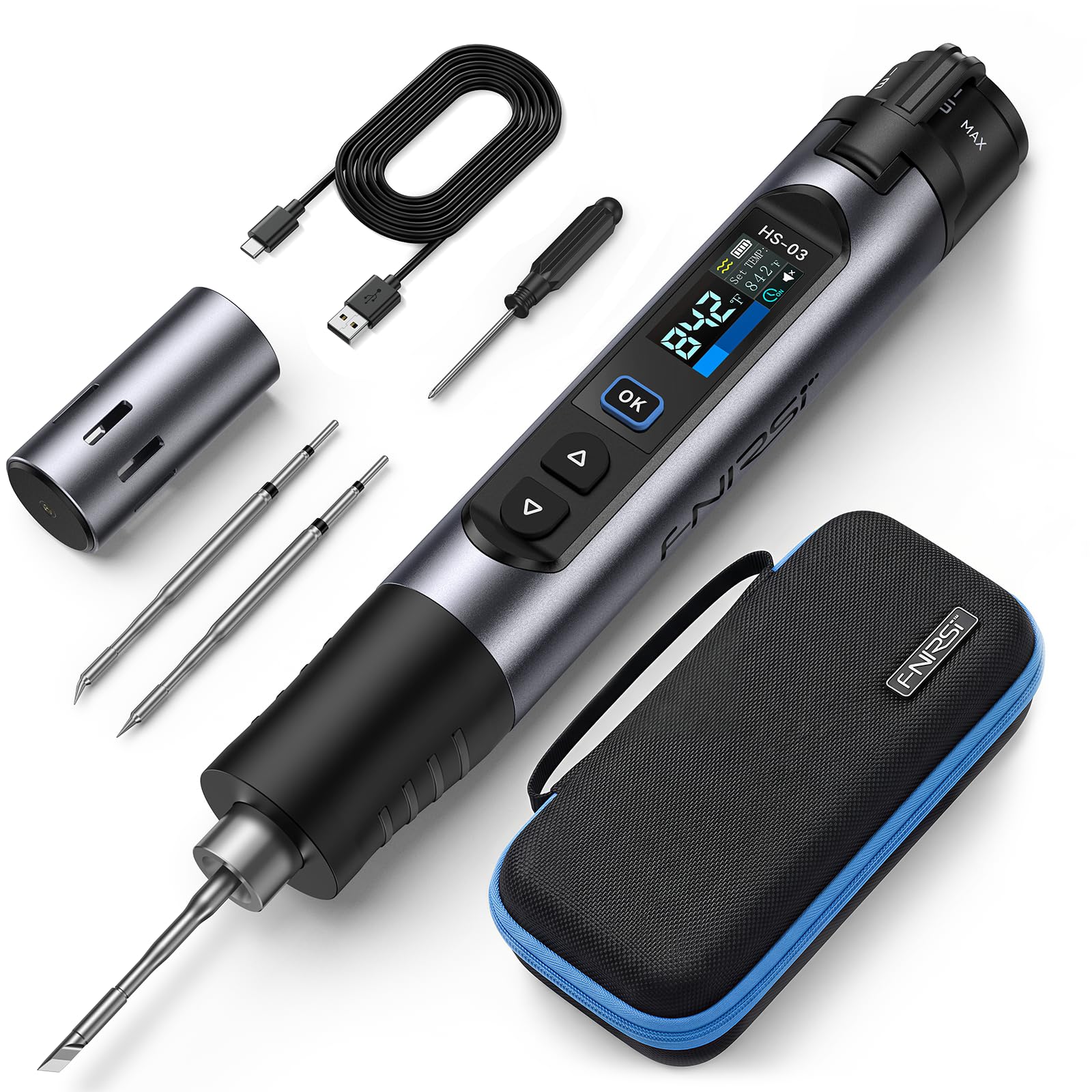
FNIRSI HS-03 Soldering Iron

FNIRSI HS-03 Soldering Iron

Tight electronics

Our Score 9.0/10
Check Price

Worth Noting

  • 10W output limits heavier wire
Power
10 W
Battery
2600 mAh built-in
Heat-up Time
3 seconds
Temperature Range
212-842 °F

The HS-03's lowest setting is 212°F, which is lower than most cordless irons here and useful for delicate components. The 0.96-inch IPS screen is bright, and the left/right hand mode flips the display so you can read it without tilting the iron.

The 3-second heat-up and five preset temperature levels make it quick to move between jobs. The auto-sleep is adjustable, which matters when you are working on a crowded board and do not want the iron cooling down every time you pause.

The 2600mAh battery, USB-C charging, and three tips (K, I, and IS) cover a lot of small-electronics work. The carrying case is a nice touch, and the silicone handle stays comfortable during a long session.

We keep this one for precision work: board repairs, small connectors, and anything where a fine tip matters more than raw power. The Fanttik T1 Max has a nicer stand, but the FNIRSI goes lower on temperature and feels easier to read in tight spots. The display flip is the detail that makes it a keeper.

Bottom line: For tight board work and left-handed users, we like the HS-03: a 212°F low end and an ambidextrous display.

7

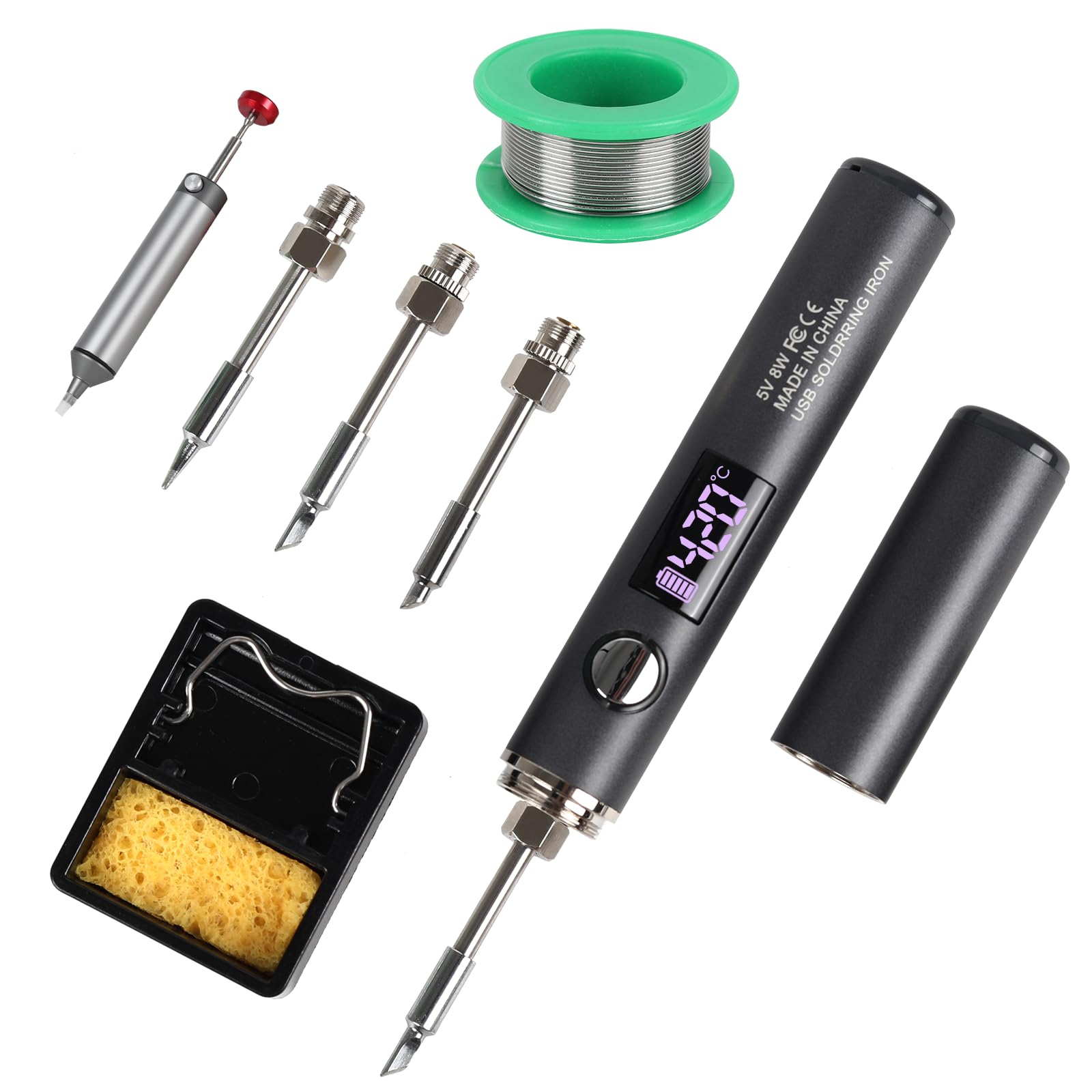
Larlarsa USB-C Soldering Pen

Larlarsa USB-C Soldering Pen

Occasional fixes

Our Score 8.6/10
Check Price

Worth Noting

  • 8W output is for light-duty work
  • 1400mAh battery is small
Battery
1400 mAh built-in
Display
OLED
Charging
USB-C
Temperature Range
260-420 °C

The Larlarsa looks like a thick pen, and that is the appeal: it is small enough to keep in a drawer and easy to top up between jobs. It heats quickly for small pads and thin wire, and the pen-style grip is comfortable for short sessions.

The OLED screen shows temperature in Celsius or Fahrenheit, and the 260-420°C range covers most hobby work. The included three tips and lead-free solder wire mean you can start a repair without ordering extra consumables.

The auto-sleep after 10 minutes is a sensible safety feature, and the USB-C charging is convenient from a laptop or power bank. The kit is small enough to live in an electronics drawer, which is where ours stays.

We reach for this one when the job is a quick fix rather than a marathon: a loose wire, a small connector, a repair on a device that does not justify dragging out the bench station. The ANBES kit has a much bigger battery and more power for heavier work, but the Larlarsa is easier to keep close by. The small kit is the reason it gets used; the big station stays in the closet.

Bottom line: We see the Larlarsa as a budget USB-C pen for occasional fixes, with an OLED screen, three tips, and solder wire in the box.

How We Chose and Tested Cordless Soldering Irons

We built the shortlist by pulling together roughly 30 cordless irons — battery-in-handle models, USB-C rechargeable pens, and a few butane-powered options — then filtered on the things a buyer actually runs into: whether replacement tips are sold separately, whether the battery is built in or swappable, whether a case holds the tips, and whether the price makes sense for occasional repairs versus daily bench work. That narrowed it to 12, which we tested over four months alongside our regular repair work.

Testing happened where soldering happens. I rewired a lamp on a kitchen table, replaced leads on an RC truck, spliced 16-gauge wire on a trailer harness in a cold driveway, and did close work on 22-gauge wire at a bench. For heating speed, we timed each iron from a cold start to the moment solder actually flowed on a 20-gauge joint rather than to whatever the display claimed. To judge heat under load, we soldered a grounded connector on a scrap board and watched how long the tip took to recover between joints, then repeated it on a heavier 14-gauge splice to see which irons sagged. For battery life, we drained cells dead to see real runtime and noted whether an iron cut out or tapered off mid-joint.

Auto shut-off got its own check: we set each iron down mid-repair, timed how long until it powered down, and then measured how quickly it came back to working temperature. Temperature control we judged by running three joints back to back and seeing whether the second and third behaved like the first. Durability meant riding in a tool bag for a month and a knock off the bench onto concrete. Portability we scored by whether the thing fit a jacket pocket or a toolbox drawer with the tips stowed, and value by adding up the iron plus spare tips and any battery replacement. The picks that survived all of it are the ones below.

How to Choose Cordless Soldering Irons

Match the heat source to the work

Battery irons are the better fit for electronics and indoor repairs: they start instantly, run quiet, and do not fill a room with exhaust. Butane irons make more sense in a truck, on a job site, or anywhere a battery pack is a liability. The trap is thinking butane is just a cordless battery; it needs ventilation, a stable flame, and a refill routine. If most of your work happens at a bench, choose a battery iron. If you splice trailer wire in the cold, a butane model like the Weller PSI100K is the more dependable choice.

Look at power and heat recovery, not just peak temperature

Fast heat-up numbers are easy to advertise, but they do not tell you how an iron behaves once it touches a ground plane or a thick wire. A 30-watt battery mode can handle small pads, while a 60-watt tool or a butane iron has more reserve for automotive splices. The trap is buying a high-temperature iron that still stalls under load. Match the power to the joint: fine electronics reward a low minimum temperature, and heavier wire rewards wattage and thermal mass. The ANBES kit's 75-watt PD mode is a useful middle ground; the QSDXNYDC's 60 watts is the budget route for DeWalt users.

Decide whether you are buying a tool or a platform

Bare-tool irons are a good deal only if you already own the battery and charger. The Milwaukee M12 and the QSDXNYDC DeWalt station both assume a pack you may not have, and the total cost changes once you add one. The trap is comparing the bare-tool price with a complete kit. If you are starting from nothing, a self-contained kit like the ANBES is simpler; if you are already in a platform, the bare tool is often the better long-term buy. Price the battery and charger before you commit.

Tips, controls, and handling decide daily frustration

A soldering iron is a hand tool, so the small things matter: a stand that does not tip, a display you can read at an angle, and tips you can replace without hunting. The trap is a kit with many tips but no easy replacement source. C210 tips are common on the Fanttik, ANBES, and FNIRSI models; proprietary tips can be harder to find. Check the tip style before you buy, and handle the iron if you can. The Larlarsa's OLED screen and the FNIRSI's ambidextrous display are examples of controls that make a small tool easier to live with.

Frequently Asked Questions

Final Verdict

The Milwaukee M12 is the cordless iron we recommend first if you already own M12 batteries; its 90-watt output, 18-second heat-up, and pivoting head make it the most capable tool here for wiring and board work. If you are starting from zero, the ANBES kit is the better first buy because the battery, tips, stand, and wire are all in the box. DeWalt users should look at the QSDXNYDC, and for butane field work, the Weller PSI100K is the one to pack.