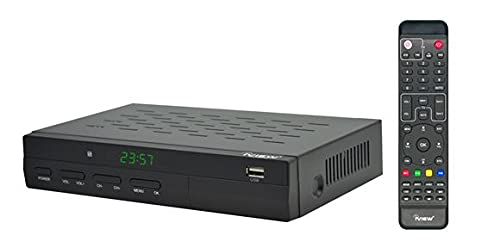
Zenith DTT901
Top Pick
What We Like
- Steadiest reception of the boxes here
- Analog pass-through for low-power stations
- Manual channel add with a signal meter
- Setup measured in minutes
Worth Noting
- Coaxial output only, no HDMI or A/V jacks
- The most expensive pick in this group
- Parental Control
- Yes
- Closed Captioning
- Advanced
- Output Connection
- Coaxial (F-type)
- Analog Pass-Through
- Yes
Analog pass-through is the line item that justifies its place at the top of this group. If a low-power station near you still broadcasts in analog, pass-through lets that signal travel through the box to the TV without your pulling cables out of the back — a small thing until the night you want the local ballgame and the box is standing between you and it.
Reception is the bigger reason we keep this one in front. Through an evening of weather that had our antenna feed wobbling, it held the picture together with only brief break-up, and the on-screen signal meter gave us something to aim with instead of guesswork. Setup is short and shallow: the menu looks dated, small gray text and plain lists, but there are only a handful of decisions in it — language, screen shape, scan, done. Manual channel add, one level deeper, is the feature we used most. An auto-scan is only as good as where the antenna is standing when you run it, so when a station failed to appear, adding it by hand while watching the level indicator beat rescanning the whole band again.
The remote is where it comes up short. It's light, the buttons are small and close together, and you'll aim it deliberately rather than jab at it from across the room; a cheap universal remote fixes most of that, and the box itself has never been the problem. Coax is the only way out of the back panel, so this is a box for an analog set, not a way to add a tuner to a monitor. What you get in return is the least dramatic piece of equipment in this guide — it does the boring part, holding a channel, more dependably than anything else here.
Bottom line: Our default pick. It holds a channel when the signal is marginal, adds analog pass-through, and sets up in about the time it takes to run a scan.