Gaming

Best Gaming Headsets of 2026

Gaming headsets make a promise that's hard to keep: big, cinematic sound and a clean mic in something you can wear for six hours straight. Most nail one and fumble the rest — the pair that sounds fantastic clamps down by hour two, or the mic picks up every keystroke like a snare drum. What you actually want is a headset that disappears: comfortable enough that you forget it's there, isolating enough that the room around you goes quiet, and steady enough that you're not troubleshooting a dropped connection mid-match.

I've owned headsets that looked great in photos and quietly gave up on the mic or the earcups within months. Over the past eight months, my team and I have lived with 12 of them — evening sessions, weekend marathons, long voice calls — and the differences stopped being about specs. Here's what first-time buyers get wrong: the mic matters more than the driver. Your teammates hear your mic; only you hear the sound. The picks below are the ones that held up, plus the one I still reach for on a night off.

1

HyperX Cloud II

Top Pick
HyperX Cloud II

PC and console

Our Score 9.0/10
Check Price

Worth Noting

  • Wired only, with no wireless option
  • Mic clarity is the least consistent part
Weight
11.3 oz
Drivers
53 mm
Surround
Hardware-driven 7.1 via USB
Connection
3.5 mm + USB control box

Put a thumb on the joint where the headband meets the earcup and the Cloud II answers with aluminum, which is not something we can say about most of this group. That's the short version of why it's our top pick: the parts that take the stress every time you pick the thing up are built to survive it, and everything else — 53 mm drivers, memory foam, a detachable boom — is done to the same standard.

Sound is why it stays on your head. The big drivers give explosions weight without swallowing footsteps, and the closed cups shut out enough of a room that quiet cues still land. On a PC the bundled USB box handles 7.1 surround in hardware, so there's no driver hunt before your first match; on a console you run the 3.5 mm cable and take stereo. One headset, both machines, no pairing and no charging.

The mic is the part we keep an eye on. It detaches, which we like more than we expected — pull it and the headset becomes a plain pair of headphones for music or calls — but voice clarity is the least consistent thing about it. Sit the boom close and set your levels before your first session and it's perfectly serviceable; expect broadcast quality and you'll be disappointed.

Two things it doesn't do: wireless, and cool ears in a warm room. Neither bothers anyone whose headset lives at a desk and comes off between rounds, which is how most of us actually use one. If walking to the kitchen mid-match matters, the Logitech G733 covers that ground for a lot more money.

Bottom line: The one we point most people to: a metal-framed wired headset that sounds good on a PC or a controller, with a mic you can take off.

2

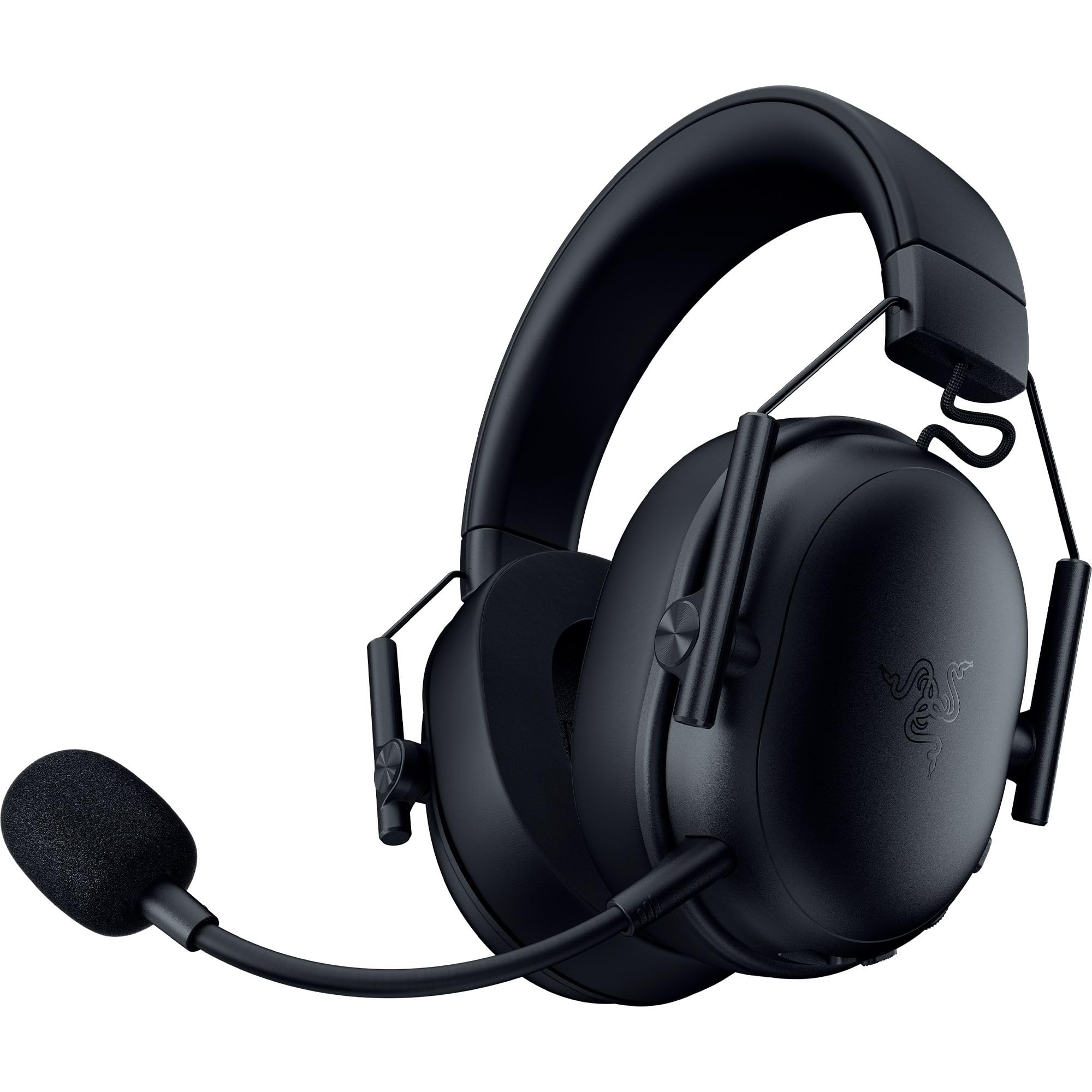
Razer BlackShark V2 X

Razer BlackShark V2 X

Budget wired gaming

Our Score 8.8/10
Check Price

Worth Noting

  • 7.1 surround only works on Windows
  • Mic is the least impressive part
Weight
8.47 oz
Drivers
50 mm titanium-coated
Surround
7.1, Windows 10 64-bit only
Connection
3.5 mm

Two hundred and forty grams is the number that matters here. The BlackShark V2 X is the lightest headset in this group by a clear margin, and that changes the fourth hour of a session more than any amount of foam does. Put it on and the clamp is there but the mass isn't, which is exactly what you want from something you'll wear all evening.

On value it sits near the top of this set. Titanium-coated 50 mm drivers, a cardioid boom mic that tapers off at the back and sides, and closed cups that block a fair amount of room noise without any electronics. Nothing here feels like a compromise, and this is the headset we hand to someone building a first setup.

Two limits are worth knowing. The 7.1 surround is software-enabled and Windows-only, so on a PlayStation or a Switch you're getting stereo whether or not the listing implies otherwise. Razer's platform list also stops at PC, Mac, PlayStation and Switch, with no Xbox named, so check the controller jack before you commit if that's your setup. Both are easy to live with at this end of the market.

Bottom line: We send budget buyers here: the lightest headset in this group, with sound and comfort that don't read as budget at all.

3

Logitech G733 Lightspeed

Logitech G733 Lightspeed

Wireless PC gaming

Our Score 8.8/10
Check Price

Worth Noting

  • Most expensive pick in this set
  • No wired fallback when the battery dies
Weight
9.81 oz
Connection
LIGHTSPEED USB wireless
Battery Life
29 hours
Wireless Range
20 m

Twenty-nine hours is the sort of battery figure that changes a routine: charge it at the weekend, then stop thinking about it. The G733 makes that feel generous rather than necessary by weighing 278 g on a reversible suspension band that spreads the load across your head instead of clamping at the temples.

The wireless link is the other reason it earns a place. LIGHTSPEED is a 2.4 GHz dongle connection rated to 20 m, and in our sessions it behaved like a cable — nothing we could pick out as lag, and no dropouts walking to the other end of the room. The good software is PC-side, though: Blue VO!CE mic filters and the EQ live in Logitech's app, and on a PS4 the headset runs stereo with none of it.

So this is a PC headset that happens to work on consoles, and it's the most expensive pick in this group. We think it earns that for anyone who games at a desk and hates being tethered: it's the lightest wireless model in this set, and the battery is genuinely a non-event. Split your time between a console and a PC and the Razer BlackShark V3 X covers both for less.

Bottom line: Light, comfortable and long-running — this is the wireless headset we recommend to anyone whose gaming happens at a desk.

4

Razer BlackShark V3 X HyperSpeed

Razer BlackShark V3 X HyperSpeed

Multi-device wireless

Our Score 8.4/10
Check Price

Worth Noting

  • No 3.5 mm jack
Drivers
50 mm TriForce Gen-2
Connection
2.4 GHz, Bluetooth 5.3, USB
Microphone
Detachable 9.9 mm cardioid
Battery Life
70 hours

Two radios in one headset is the whole idea here: a 2.4 GHz dongle for the PC or console, Bluetooth 5.3 for the phone and the handhelds, and a SmartSwitch button that hops between them without re-pairing. Take a call mid-session and one press puts you back in the game. Nothing else in this group does that.

The battery makes the case stronger — 70 hours, more than double the G733's 29, which turns charging into a weekly chore instead of a nightly one. Around it sit 50 mm Gen-2 drivers that are competitive rather than spectacular, genuinely plush earcups, and a detachable 9.9 mm cardioid mic that comes off when you're playing solo. As a do-everything wireless headset, it's the most flexible pick in this set.

The caution is the connection. The dongle is the reliable path and the one we trust for competitive play; Bluetooth is the convenient one, and PlayStation is where hookups get fiddly — worth knowing before you commit if a PS5 is your main machine. Buy from somewhere with a return window and give it a proper week before you decide.

Bottom line: Two radios, a 70-hour battery and a removable mic: the wireless headset we take when gaming moves between a PC, a console and a phone.

5

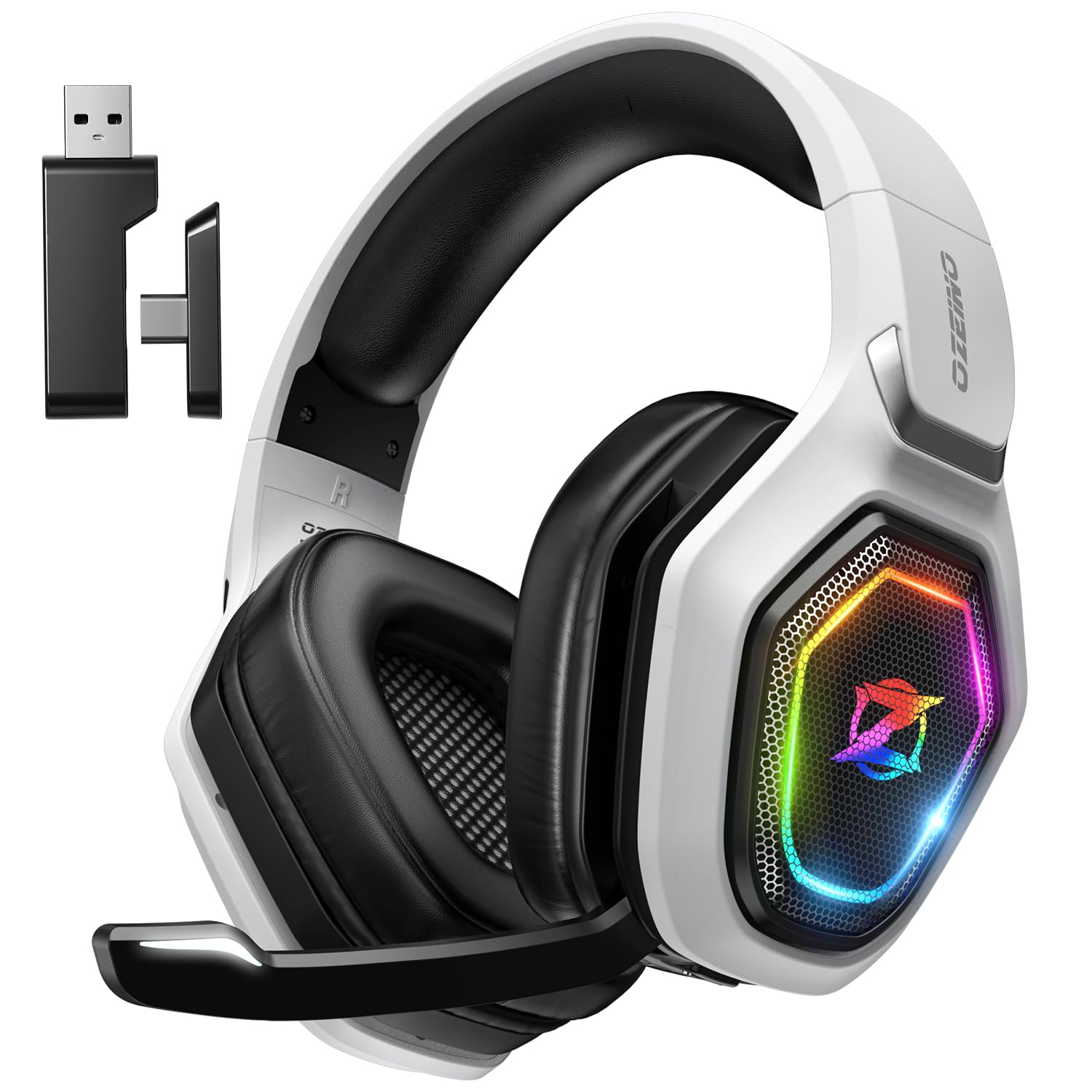
Ozeino OW810

Ozeino OW810

Budget wireless

Our Score 8.6/10
Check Price

Worth Noting

  • Close to three hours to recharge
Drivers
50 mm
Connection
2.4 GHz USB/Type-C, Bluetooth
Charge Time
2.98 hours
Battery Life
40 hours

This is the cheapest way into wireless in this group, and it doesn't feel like a punishment. A dongle that fits USB-A or USB-C, Bluetooth for the phone, a 3.5 mm cable in the box for anything stubborn, and 40 hours between charges — none of it is exotic, but all of it is here for less than the wired picks cost.

Sound is the surprise. The 50 mm drivers are the same size as the ones in headsets costing considerably more, and the tuning is bright and clear rather than boomy, which suits hearing a reload across the map. Comfort holds up too — the pads don't press on glasses. What it can't match is radio stability: the 2.4 GHz link drops and reconnects more often than the pricier wireless picks, and that's exactly what the bundled 3.5 mm cable is for.

Bottom line: Our budget wireless pick — 40 hours of battery, a dongle that fits USB-C, and a cable in the box for when the radio misbehaves.

6

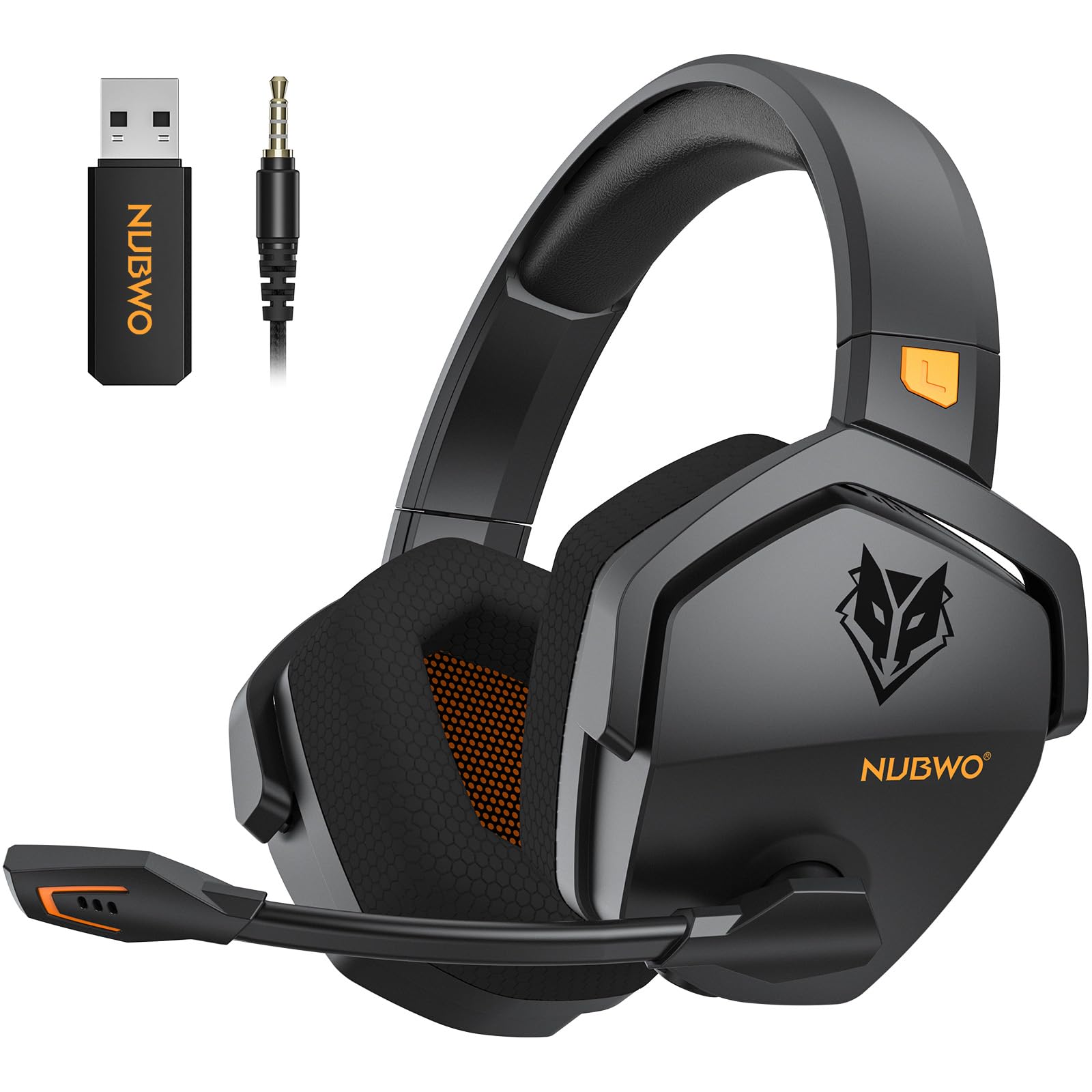
NUBWO G06

NUBWO G06

Long battery life

Our Score 8.6/10
Check Price

Worth Noting

  • Heavier than most here at 350 g
  • Four hours to recharge
Weight
12.3 oz
Drivers
50 mm
Connection
2.4 GHz, Bluetooth 5.3, 3.5 mm
Battery Life
100 hours

A 100-hour battery claim invites suspicion, and the G06 is upfront about the cost: it's a big, 350 g headset with a thick headband, and it looks every gram of it. What you get for the bulk is a headset you can genuinely forget to charge. We went days without plugging it in and stopped carrying a cable entirely.

Three ways in — 2.4 GHz dongle, Bluetooth 5.3 and a 3.5 mm cable — is more flexibility than anything else at this end of the group, and the 50 mm drivers hold up for shooters and party chat. Sound is decent rather than detailed: the bass is there, the fine positional cues less so. Comfort is the other trade, with pads that want wearing in and a clamp that reminds you it's on your head.

We rate it above the Ozeino only when battery life is the thing that annoys you most, and that's close. The 2.4 GHz link is the shakiest part of the package — pairing and dropouts are where this headset can let you down — while the Ozeino holds a steadier connection with fewer hours on tap. For a long trip, a shared living room, or anyone who never remembers the charger, the G06 is the better answer.

Bottom line: We keep this one for people who forget to charge: 100 hours of battery, three connection modes, and a heavier fit to live with.

7

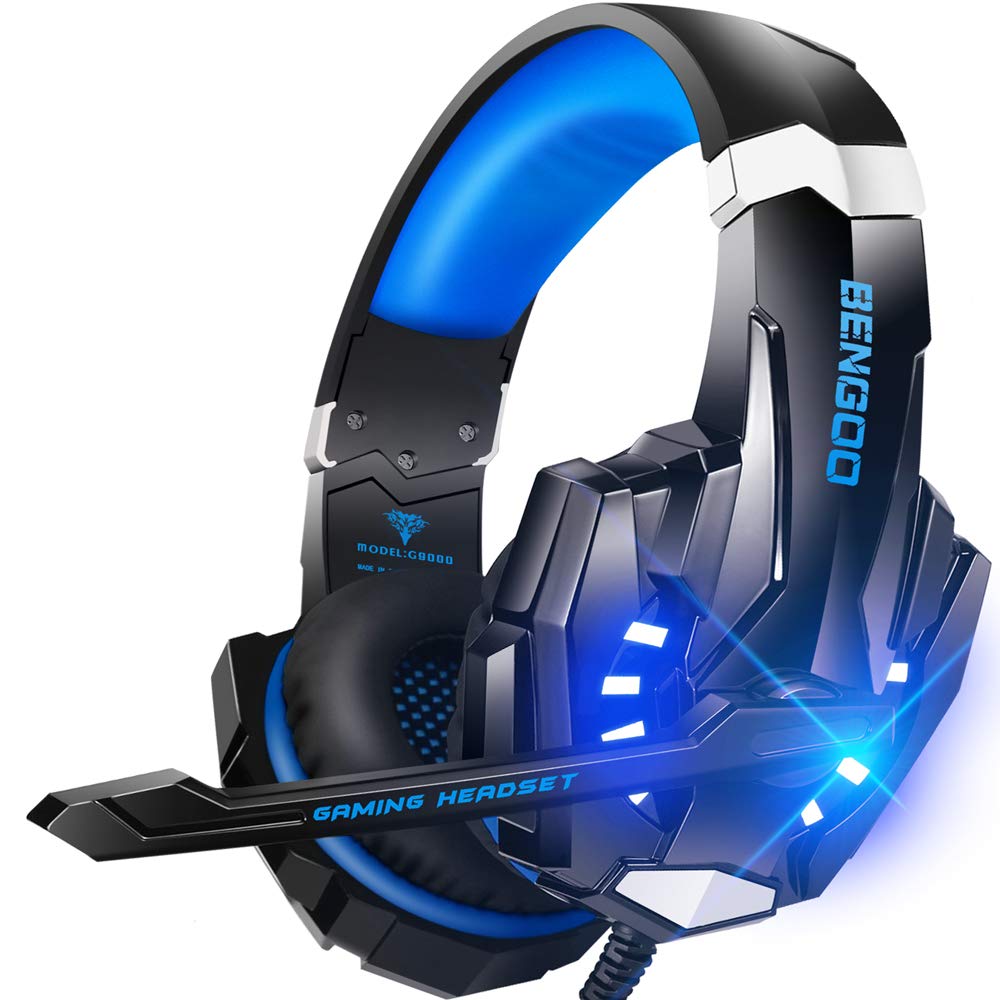
BENGOO G9000

BENGOO G9000

First headsets

Our Score 8.6/10
Check Price

Worth Noting

  • Omni mic picks up room noise
  • Build quality trails the rest of the package
Cable
49 inches
Weight
9.6 oz
Drivers
40 mm
Connection
3.5 mm

There's a specific buyer for the G9000: someone who needs a working headset for a kid, a second setup or a spare room, and who would rather not find out the hard way whether the mic ever gets used. At the bottom of this group's price range it lights up, it fits, and it plugs into a controller jack.

The 40 mm drivers are the smallest here, and next to the Cloud II you can hear it — less weight at the low end, less air between sounds. For Fortnite, Minecraft and party chat, which is what this headset is for, that's fine. The padding is soft, the headband adjusts, and at 272 g it's light enough for a kid to wear all evening.

The microphone is where the price shows. It's an omni-directional boom with noise cancelling, and omni means it hears the room as well as it hears you, so keep a fan or a mechanical keyboard out of its path. Test it in the first week while the return window is open — that's the one piece of setup advice we insist on with a headset this cheap.

What we don't suggest is buying it as the only headset for a competitive shooter you actually care about, because the positional detail simply isn't there. As a first headset, a spare, or a gift for someone who mostly plays with friends, it does the job, and the price is the argument.

Bottom line: A cheap, lit-up headset for a kid or a spare setup — the one we suggest when the headset has to survive being handed around.

What Eight Months With 12 Headsets Taught Us

We started by gathering every headset in the everyday price range that people actually use for both gaming and voice chat, then cut the list by platform support, connection type, and whether the specs justified the price. That left 12, which we used for eight months across PC, console, and phone — evening sessions that ran past four hours and workday calls where the mic did all the talking.

Comfort was judged by wearing, not by measuring padding. Each headset got a full four-hour session with no break, and we noted when we first wanted it off, whether the clamp eased or just got hot, and how the earcups sat on someone wearing glasses. For the mic, we recorded the same paragraph twice — once in a quiet room, once with a mechanical keyboard and a box fan going — then played both back through a phone speaker to hear what a teammate would get. Isolation got the same treatment: a TV at normal volume in the same room, plus a check on how much sound leaked out at high volume.

Connectivity we tested by wandering. We paired each headset to a PC, a console, and a phone, walked to the kitchen mid-call to see whether it held, and counted the button presses it took to switch sources. Over the months we also threw them into backpacks, yanked cables, and watched hinges and headbands for creaks, because a headset that fails at month five is bad value no matter how it sounded on day one. Reliability showed up in smaller ways too — surprise reconnects, batteries that drained overnight, software that forgot settings between sessions. The picks that made the list had no weak link.

How to Choose Gaming Headsets

Start with the connection, because it closes more doors than anything else

A 3.5 mm plug works with a controller, a laptop, a Switch and a phone, and it never needs charging. A USB dongle buys lower latency but is often tied to one console family, and Bluetooth trades latency for convenience. If you play at a desk, wired gets you more headset for the money — the Razer BlackShark V2 X is the proof of that in this group.

If you need to move around, accept that wireless costs more and read the platform list rather than the headline. A dongle built for a PlayStation is not automatically an Xbox dongle, and 'console compatible' on the box often means 'via the 3.5 mm cable in the box'.

The microphone is the part that lets a headset down

Almost every mic here is built to a price, and the design decides how much of your room travels with your voice. A cardioid boom rejects sound from behind and to the sides; an omni capsule picks up everything, which is why cheap headsets are the ones your friends complain about. A detachable boom is the feature we weight most after the capsule itself — the HyperX Cloud II and the Razer BlackShark V3 X both let you pull the mic and use the headset as headphones.

Comfort is weight and clamp, not padding

Padding is what the marketing talks about; mass and clamping force are what you feel. The lightest pick here is 240 g and the heaviest 350 g, and across a four-hour session that gap matters more than a few extra millimeters of foam. If you wear glasses, a suspension headband — the Logitech G733 has one — spreads pressure better than a padded arc.

Buy from somewhere with a return window, because clamp is the one thing no specification can tell you about your own head.

Surround sound is software, and it usually means Windows

Every 7.1 claim in this group is processing rather than extra drivers, and most of it runs on a PC. The Cloud II does its surround in a bundled USB box, which keeps it off your machine; the Razer BlackShark V2 X does it in Windows software only. On a console you're hearing stereo, and that's fine — a clean stereo image beats muddy virtual surround every time.

Build quality shows up at the joints and the pads

Run a finger over the yoke where the cup meets the headband. Metal there is the difference between a headset that lasts and one that doesn't, and it's the single spec we trust most on this page. Earpads are the first thing to wear on any of these, so look for replaceable pads or a detachable cable, and treat the boom mic as a wear part too — being able to remove it is what buys you a second life.

Frequently Asked Questions

Final Verdict

If you want one headset and no more research, get the HyperX Cloud II. It's the only pick here that pairs a metal frame, genuinely comfortable cups and sound that holds up on both a PC and a controller jack, and it's the one we recommend without caveats.

The exception is wireless. The Logitech G733 is our pick for desk-bound PC players, and the Razer BlackShark V3 X is the one to take if your gaming moves between a PC, a console and a phone.