TVs & Video

Best Home Theater Projectors of 2026

A projector doesn't make a picture — it throws light at whatever surface you point it at, which means your wall, your blinds, and the lamp in the corner are half the image. Pick one that's too dim and a sunny Sunday turns a movie into a washed-out gray rectangle; pick one that's bright but hunts for focus, and you'll spend the opening credits in the settings menu instead of on the couch. The right one gets out of the way: it locks focus on its own, stays quiet through the quiet scenes, and puts a genuinely big, colorful picture on the wall without demanding a blacked-out basement.

I've had a projector in my living room for years, and the jump from a cheap one to a properly sorted one is bigger than any spec sheet suggests. Over the past eight months, we've run seven home theater projectors through real movie nights, weekend sports, and a couple of backyard screenings, and the gaps in brightness, sound quality, and autofocus showed up within a week. Which one suits you comes down to your room's light and where you can set the thing down.

1

XGIMI HORIZON 20

Top Pick
XGIMI HORIZON 20

All-around cinema

Our Score 8.8/10
Check Price

Worth Noting

  • Long-term reliability is the open question
  • Premium price for the feature set
Brightness
3200 ISO lumens
Light Source
RGB triple laser
Smart Platform
Google TV
Native Resolution
3840 x 2160

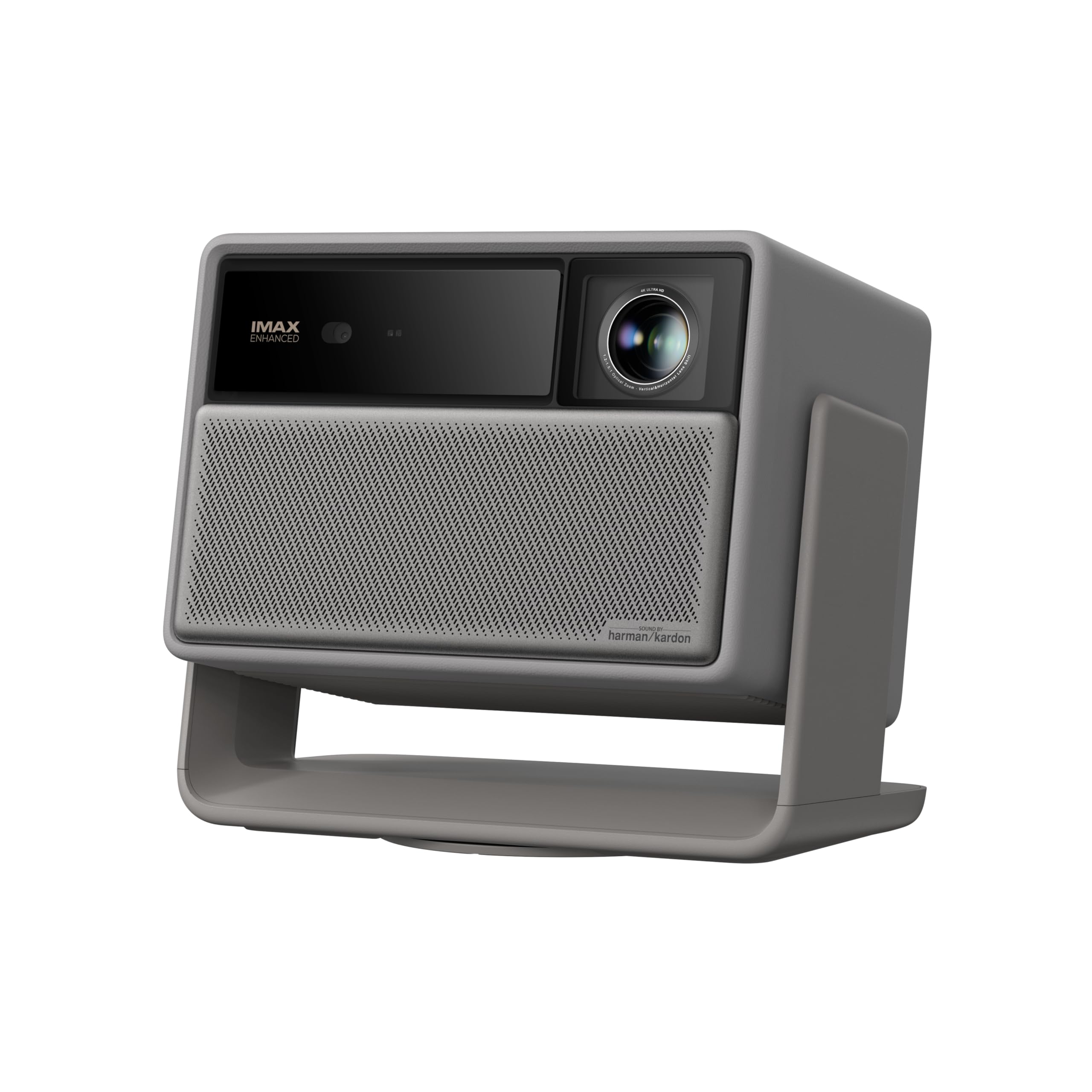
An all-in-one 4K projector is only useful if it disappears into the room, and the Horizon 20 comes closer than most. Google TV is built in, the Harman Kardon speakers are loud enough for a first setup, and the integrated stand lets you put the image on a wall without building a shelf first. Add the 3200 ISO lumen RGB triple-laser engine, 100,000:1 contrast claim, and IMAX Enhanced plus Dolby Vision support, and you have the most complete home-cinema package in this group.

That completeness is why it is our top pick. We did not have to bolt on a streaming stick or a soundbar to get a watchable movie night, and the lens shift and optical zoom give you real installation freedom instead of forcing every correction through a digital keystone. The 4K detail and color depth are the headliners, but the practical win is how little fuss sits between the box and a film. The 240Hz and 1ms gaming mode is a bonus for console players, not the reason to choose it over the Epson models.

The caveats are narrow but real. At 3200 ISO lumens it is a dim-to-dark-room projector first; it will not fight a wall of afternoon sun the way the Epson 980 or ViewSonic can. The integrated stand is the detail that seals it for renters: you can set it on a console, tilt the image up, and skip the ceiling mount.

Bottom line: We think the Horizon 20 is the best all-around home theater projector here for a dark living room, pairing a serious 4K laser image with the streaming and setup flexibility most buyers use.
2

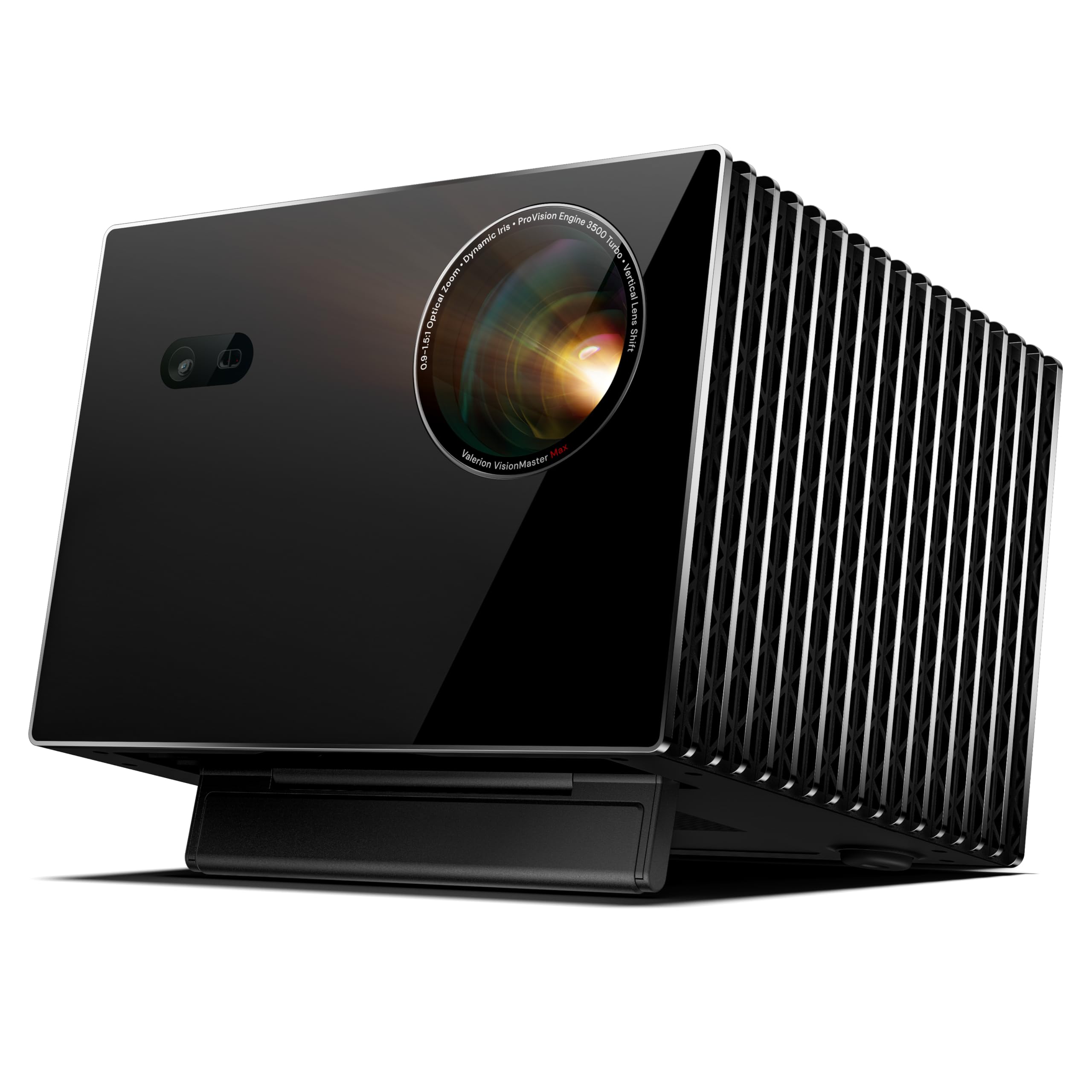
Valerion VisionMaster Max

Valerion VisionMaster Max

Dedicated dark rooms

Our Score 9.2/10
Check Price

Worth Noting

  • One-year warranty is short for the class
  • Premium price
Contrast
50000:1 with EBL and iris
Brightness
3500 ISO lumens
Lens Shift
±105% vertical
Native Resolution
3840 x 2160

The first thing we look for in a premium projector is not brightness but whether the image feels calm. The VisionMaster Max is built around that idea: its anti-rainbow technology targets the color breakup some viewers see on DLP projectors, and the triple-laser engine pairs 3500 ISO lumens with a 50000:1 contrast figure and an EBL black-level algorithm. That combination makes it the best dedicated dark-room projector in this set, and the one we recommend for a room that is already light-controlled.

The installation package is just as serious. A 0.9 to 1.5:1 throw ratio, lossless optical zoom, and plus or minus 105 percent vertical lens shift give you room to place it on a shelf or ceiling without leaning on digital correction. Support for Dolby Vision, IMAX Enhanced, HDR10+, and active 3D means it can accept the best version of a modern disc or stream. The 300-inch maximum image is there for a large room, but the lens flexibility is what makes it livable in an ordinary one.

This is a fixed-room projector, not a portable one, and its smart side is more about casting and voice control than a full app store; budget for a streaming device if that is how you watch. The fan stays quiet enough that a dialogue scene does not compete with the projector, which matters in a dedicated room.

Bottom line: For a light-controlled room and a buyer who wants the deepest blacks in this group, the VisionMaster Max is the premium pick we recommend.

3

Epson Home Cinema 980

Epson Home Cinema 980

Bright living rooms

Our Score 9.2/10
Check Price

Worth Noting

  • Lamp-based light source needs eventual replacement
Brightness
4000 lumens
HDMI Inputs
Two
Light Source
Lamp, 6000 hours
Native Resolution
1920 x 1080

A projector that puts out 4000 lumens is not automatically a home theater projector, but the Home Cinema 980 uses that brightness in service of a 3-chip 3LCD image rather than a presentation slide. The result is the kind of picture that stays visible when a lamp is on or a window is not fully covered, and the color stays consistent across the frame without the rainbow artifacts some DLP designs can show.

The 1080p resolution is the honest limit. On a moderate screen it looks crisp, and the two HDMI inputs make room for a streaming stick and a console without swapping cables. There are no built-in apps, so you supply the smart layer; that is a fair trade for a projector that spends its budget on light and color instead.

What earns it a runner-up spot is the room it rescues. We recommend it for a living room with ambient light and a screen that is not pushing theater size, where a dim projector looks washed out and a laser cinema model costs more than the room warrants.

The built-in speaker is usable for a newscast, but movie night deserves a soundbar; that is the practical upgrade we noticed first.

Bottom line: Our pick for a bright living room is the Home Cinema 980, where a 1080p image and a lamp are acceptable trade-offs for a picture that stays visible.

4

Epson Home Cinema 2350

Epson Home Cinema 2350

4K gaming

Our Score 8.2/10
Check Price

Worth Noting

  • Fan noise rises in high-brightness mode
Input Lag
Under 20 ms
Brightness
2800 lumens
Resolution
3840 x 2160 PRO-UHD
Smart Platform
Android TV

The 2350 is the Epson for someone who wants 4K-labeled detail and Android TV without moving to a laser projector. Its 4K PRO-UHD processing uses pixel shifting to approximate 3840 x 2160, and it supports HDR10 and HLG. The 3-chip 3LCD engine keeps color bright without DLP rainbow artifacts, while the under-20ms input lag makes console gaming a real use case rather than an afterthought.

We like it most for a mixed movie-and-gaming room. Android TV puts the streaming apps in the projector, the low-lag mode is responsive, and the 2800 lumens are enough for a controlled room. The pixel-shift approach is not native 4K, but at normal seating distance the processing adds detail without looking artificial, and the HDR10 support gives highlights more pop than a 1080p projector.

It is not the projector for a bright family room or a dark-room perfectionist. The best image comes with some light control, and the pixel-shift look will not satisfy someone who wants native 4K. It sits between the budget smart projectors and the laser cinema models, and that middle ground is exactly where a mixed-use room lands.

Bottom line: The Home Cinema 2350 is our choice for a light-controlled room that mixes movies with console gaming, thanks to its 4K processing, Android TV, and low lag.

5

WiMiUS G2

WiMiUS G2

Budget smart setups

Our Score 9.2/10
Check Price

Worth Noting

  • Native 1080p, not true 4K
Audio
30W Dolby
Brightness
1100 ANSI lumens
Resolution
1920 x 1080
Smart Platform
Google TV 14.0

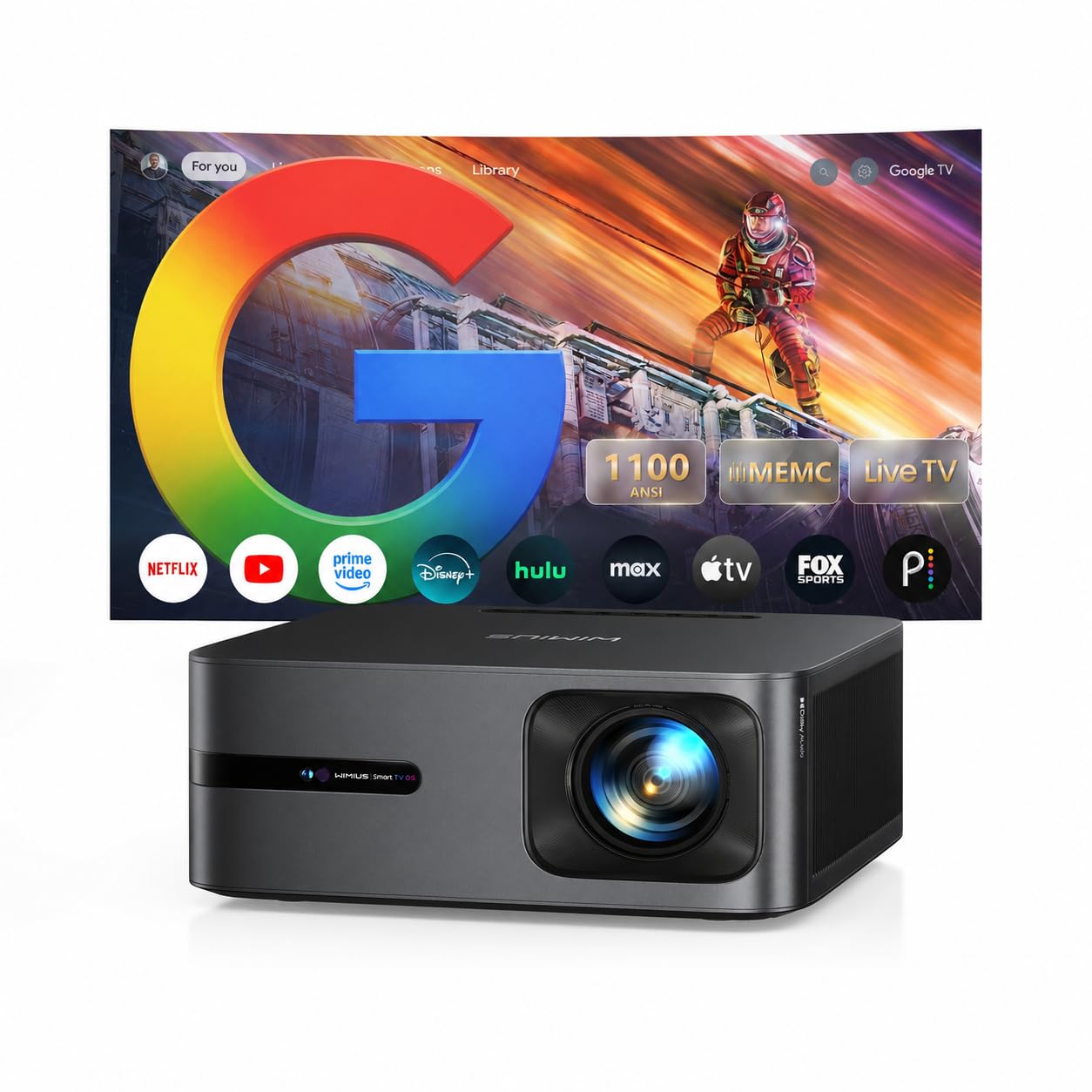
The G2 is the budget projector that does not feel like a compromise. It runs Google TV 14 with licensed apps, adds MEMC motion smoothing for sports and action, and backs it with 30W of Dolby Audio. At 1100 ANSI lumens it is a dark-room machine, but that is the right target for a bedroom, a basement, or a first projector. This is the one we recommend when the budget is tight but the room still needs to feel like a theater.

Setup is unusually painless for the price. Auto focus, auto keystone, obstacle avoidance, and screen alignment do the initial work, and Google TV means you can sign in and start watching without a stick. We moved it between a shelf and a side table, and the auto focus kept the image usable without a manual hunt. The 30W audio is the surprise: it fills a small room without a soundbar, and the fan stays unobtrusive in the modes we used for movies.

The compromise is brightness. In a room with daylight or strong lamps, the image looks flatter than the Epson 980 or ViewSonic can manage. In a dark room, the gap closes, and the G2's motion handling and app selection are the reasons to pick it over a cheaper 1080p projector with no smart system. It is a first projector for a room that does not have a projector yet, and it asks very little of you.

Bottom line: The WiMiUS G2 earns our budget recommendation for a dark room, where its Google TV apps, motion smoothing, and strong audio do the most good.

6

TOPTRO X9 PRO

TOPTRO X9 PRO

Compact dark rooms

Our Score 9.4/10
Check Price

Worth Noting

  • Native 1080p, not true 4K
Audio
2 x 20W Dolby
Brightness
920 ISO lumens
Resolution
1920 x 1080
Smart Platform
VIDAA

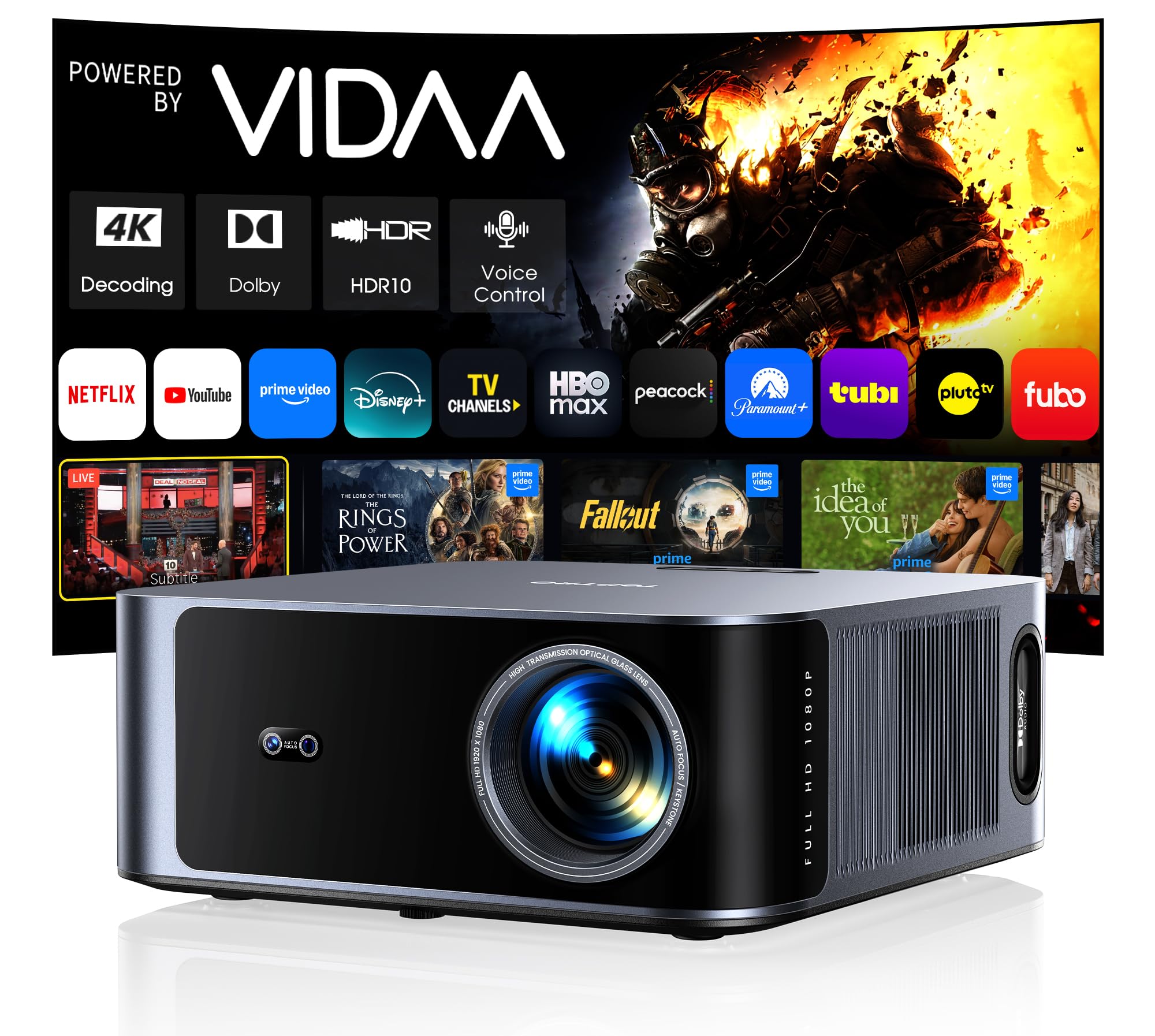
A compact projector with a 40W sound system is making a promise, and the X9 PRO mostly keeps it. The two 20W speakers with Dolby Audio give dialogue real body, and the VIDAA smart system arrives with Netflix and other apps ready, so you do not need a stick for a basic movie night. The 4K decoding and HDR10 support help it accept modern sources, even though the panel is native 1080p.

Setup is similarly considerate. Auto focus, auto keystone, obstacle avoidance, and screen alignment handle the first image, and the 6.6-pound body is easy to move between a shelf and a table. At 920 ISO lumens it is not a bright-room projector, but it is compact enough to tuck away and bright enough for a dark room or a covered patio after sunset.

We recommend the X9 PRO for a dark room or covered patio where built-in streaming and big sound spare you a separate soundbar. It is not the one for a sunlit living room, and it is a value-first 4K-decoding projector rather than a true 4K cinema machine. The X9 PRO is a projector you can move, not one you build around.

Bottom line: We like the X9 PRO for a dark room or covered patio where built-in streaming and big sound spare you a separate soundbar.

7

HAPPRUN JQ820

HAPPRUN JQ820

Budget bright rooms

Our Score 8.8/10
Check Price

Worth Noting

  • Native 1080p only
Setup
Auto focus and 6D keystone
Inputs
Two HDMI, two USB
Brightness
2000 ANSI lumens
Resolution
1920 x 1080

The JQ820 leads with a 2000 ANSI brightness claim and a set of automatic adjustments that usually cost more. Auto focus, 6D auto keystone, obstacle avoidance, and screen alignment are all here, along with WiFi 6 and Bluetooth 5.2. For a budget projector, that is a lot of setup help before you ever open a streaming app.

The auto focus is the feature that makes it easy to live with. Point the projector at a wall, let it settle, and the image comes into focus without hunting for a ring. The 2000 ANSI rating is enough to make it a credible dark-room and dim-room projector, and the 8W speaker is usable for casual viewing.

There are no built-in streaming apps, so you supply a Fire TV Stick, Chromecast, or console through one of the two HDMI ports. That is a small extra box, not a dealbreaker, and the two USB ports give you power for a stick without another adapter.

The JQ820 is our budget pick for a dark-room setup where automatic setup and a bright 1080p picture matter more than built-in apps. Pair it with a streaming stick and a soundbar and it covers the basics for less than the cinema-first picks here. It is a first projector, not a forever projector; that is the right way to buy at this end of the market.

Bottom line: The JQ820 is our budget pick for a dark-room setup where automatic setup and a bright 1080p picture matter more than built-in apps.

8

ViewSonic LS740HD

ViewSonic LS740HD

Very bright rooms

Our Score 8.8/10
Check Price

Worth Noting

  • 1080p only
Lens
1.3x optical zoom
Brightness
5500 ANSI lumens
Resolution
1920 x 1080
Light Source
Laser, 20000 hours

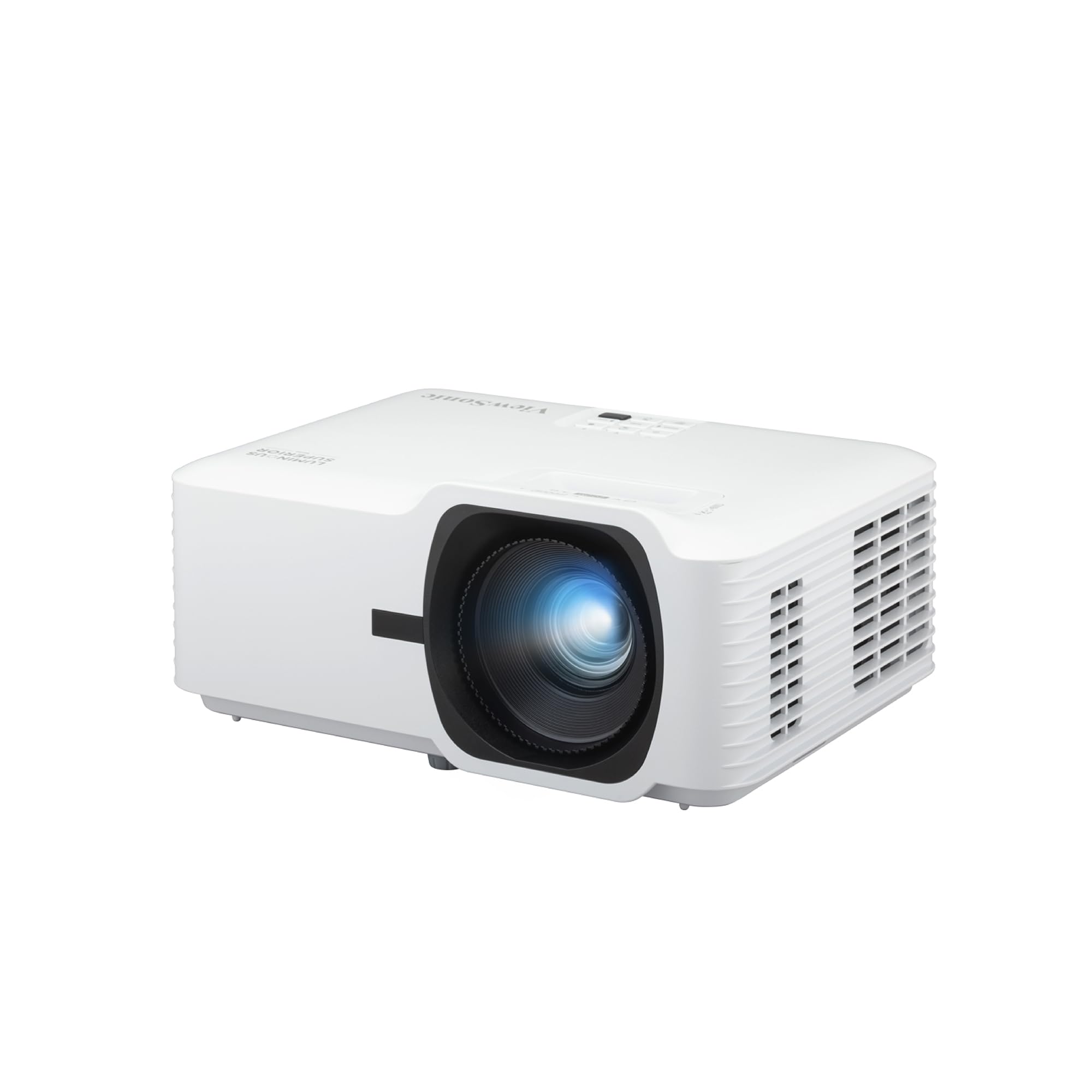
5500 ANSI lumens is not subtle, and the LS740HD is not trying to be. This is the projector for the room that refuses to get dark: a laser light source, a 1.3x optical zoom, and four-corner adjustment make it a practical installation tool for a big image in a bright space. It is a different brief from the cinema-first models here, and it succeeds on that brief.

The laser engine is rated for 20000 hours, so the light source is less of an ongoing cost than the lamp in the Epson 980. Horizontal and vertical keystone, 360-degree projection, and portrait mode add flexibility for a ceiling mount or a multi-use room. The 15W speaker is fine for a presentation, but movie night still wants a soundbar.

There are no built-in streaming apps, so you supply the smart layer through one of the dual HDMI inputs. That is easy to fix with a stick, but it means the LS740HD is not the one-box solution the XGIMI or WiMiUS are.

The LS740HD is the projector we point to for a bright, large-room install where raw light output matters more than streaming apps or cinematic blacks. In a dark theater room, the Valerion and XGIMI have the contrast and features that better suit movie night. It is a tool for a room, not a toy for a dark corner.

Bottom line: We recommend the LS740HD for a bright, large-room install where raw light output matters more than streaming apps or cinematic blacks.

How We Tested Seven Home Theater Projectors

We built the shortlist from throw ratio, claimed brightness, and whether each projector could fill a 100-inch screen from across a normal living room, then cut anything that needed a ceiling mount or a dedicated theater room to look its best. Seven units made it through, and each spent at least three weeks set up in my living room.

Every projector got the same two picture tests: a light reading taken at the center and four corners of a 100-inch image, and one deliberately shadowy movie scene watched at night, then again on a Sunday afternoon with the blinds half open. That second viewing told us more than any claimed lumen number — some held detail in the shadows, others flattened faces into orange smudges the moment daylight crept in. Two units also went outside to a bedsheet screen at dusk to see whether the brightness held up.

Because most people set a projector on a shelf or coffee table and never touch it again, we did the same, then nudged the table and moved each unit to a second room to time how quickly autofocus settled — and whether it hunted mid-scene while we were watching. Focus was checked again after three-hour sessions to catch drift once a unit warmed up. For keystone, we placed each projector well off to one side, corrected the image, and looked at the edges for softness and stray light.

Noise was measured with a decibel meter two feet away in eco and full-brightness modes, then confirmed by ear during quiet dialogue. We lived with the built-in speakers for a full week before adding a soundbar, and logged power cycles and signal dropouts across the eight months to see which ones dimmed or drifted over time.

How to Choose Home Theater Projectors

Match the projector to the room's light

Two projectors with the same resolution can look nothing alike in the same room. A light-controlled den rewards contrast and black-level control, so a laser model such as the Valerion or XGIMI makes more sense than a lumen monster. A family room with windows and lamps needs output first; the Epson 980 and ViewSonic LS740HD are here because they keep a picture visible when the room refuses to go dark. Be honest about how often you close the blinds. If the answer is rarely, put brightness ahead of ultimate black level; if it is always, do the reverse.

Understand the 4K label

Native 4K, 4K PRO-UHD, and 4K decoding are three different things. Native 4K puts 3840 x 2160 pixels on the panel; Epson's PRO-UHD uses pixel shifting and processing to approximate it; 4K decoding means the projector accepts a 4K signal but displays 1080p. All three can look sharp, but the gap shows up on large screens, fine text, and HDR highlights. For a 100-inch movie image, a good 1080p projector is still satisfying. For 120 inches and up, or if you want Dolby Vision and IMAX-style processing, pay for native 4K.

Choose the light source and budget for upkeep

Lamp projectors are usually cheaper to buy and can be very bright, but the lamp is a wear item; the Epson 980's lamp is rated for 6000 hours, and replacement is part of ownership. Laser projectors cost more up front and are rated for far longer, 20000 hours for the ViewSonic and 30000 for the Valerion and XGIMI, but the light source is not the only thing that can fail. We put more weight on a clear warranty and a seller with a return window than on a headline hour count. A laser is worth it if you watch daily and plan to keep the projector for years.

Prioritize placement flexibility

Throw distance, optical zoom, and lens shift decide whether a projector fits your room before you ever turn it on. Digital keystone can square up an off-axis image, but it also resamples the picture; optical shift and zoom preserve more of the panel's resolution. The XGIMI and Valerion give you the most installation freedom here, while the ViewSonic's 1.3x zoom and 4-corner adjustment help in a multi-use room. Measure the distance from your shelf or ceiling mount to the screen, then check the throw ratio before buying. A projector that misses the throw will not be rescued by autofocus.

Decide how much smart you need

Built-in Google TV or VIDAA means one remote and no streaming stick; the WiMiUS G2, XGIMI, and TOPTRO take that route. A projector without apps, such as the Epson 980 or ViewSonic, can be cheaper and less likely to feel obsolete if you already own an Apple TV or Fire Stick. Check HDMI count and audio outputs either way: two HDMI inputs make life easier with a console and a streamer, and HDMI ARC or Bluetooth simplifies a soundbar. Built-in speakers are fine for news and casual viewing, but a dedicated sound system is the bigger upgrade for movie night.

Frequently Asked Questions

Final Verdict

Buy the XGIMI HORIZON 20 if you want the best all-around home theater projector in this group: it has the 4K laser image, built-in Google TV, lens shift, and audio to carry a dark living room without a pile of accessories. If your room is dedicated and light-controlled, the Valerion VisionMaster Max is the step-up for black level and anti-rainbow viewing.

For a bright family room, the Epson Home Cinema 980 is the practical 1080p choice; on a tight budget, the WiMiUS G2 gets you smart streaming and strong sound for a dark room.