Power & Charging

Best Level 2 EV Home Chargers of 2026

The first week with my EV, I plugged into a wall outlet and watched the range creep up by four miles an hour. That's when a level 2 charger stops being a nice-to-have and starts feeling like the missing piece of the car. It turns an overnight stop into a full battery by morning — usually 25 to 40 miles of range per hour, depending on the circuit. The catch is that the charger itself is only half the purchase; the breaker, wiring, and installation can change what you actually get. Over the past nine months, my team and I installed and lived with seven level 2 chargers, and the differences were not subtle.

The daily experience hinges on small things: how the cable behaves in cold weather, whether the holster catches the connector, and whether the app schedule sticks. We paid attention to charging speed, ease of installation, value, functionality, and long-term durability, because a home charger is a long-term purchase. The picks below are the ones that made charging feel like a routine instead of a chore.

1

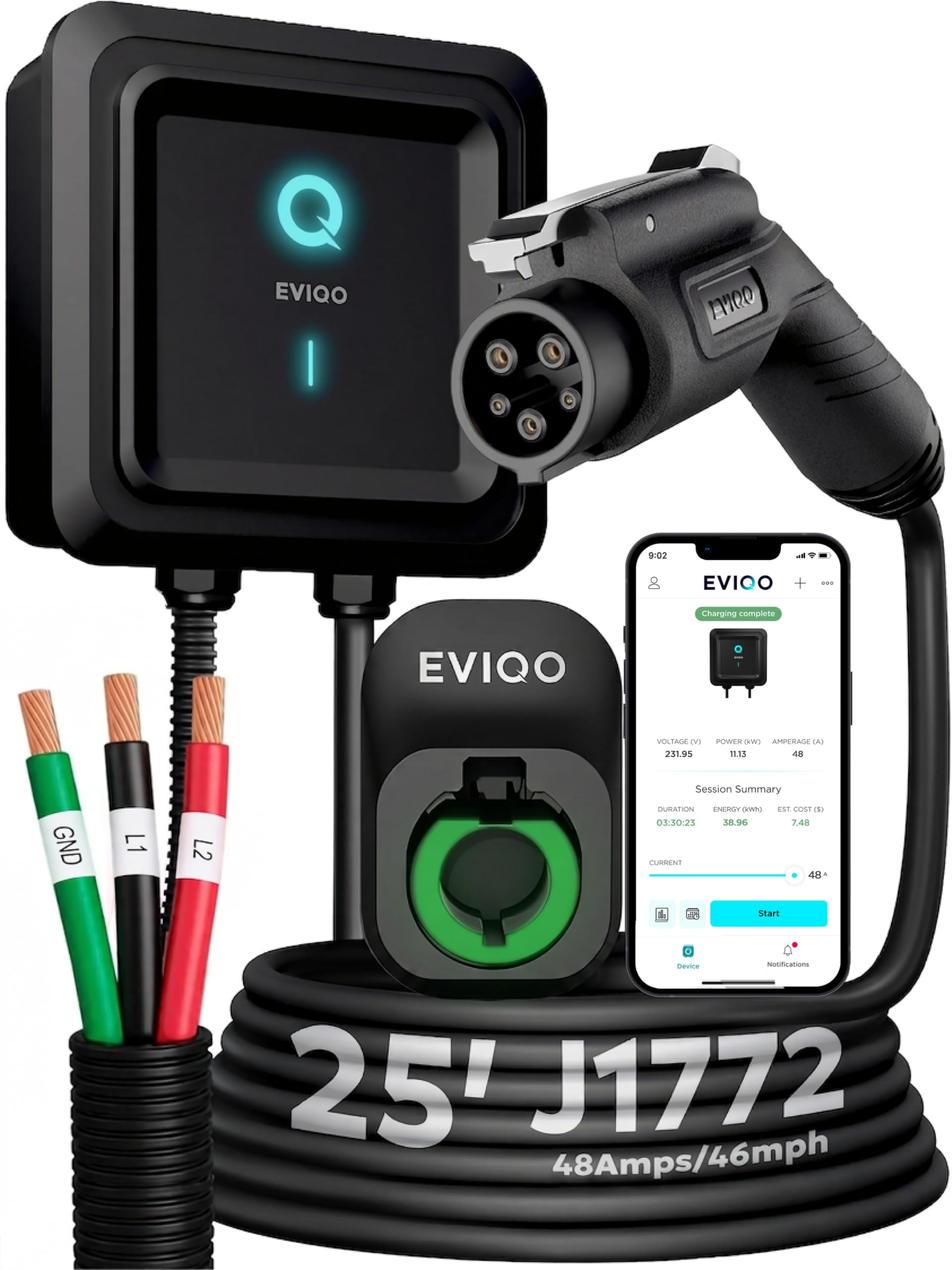
EVIQO 48A Hardwired Charger

Top Pick
EVIQO 48A Hardwired Charger

Whole-home default

Our Score 9.4/10
Check Price

Worth Noting

  • Wi-Fi pairing is fussy on weak garage signals
  • Hardwired only
Cable
25 ft
Connector
J1772
Enclosure
IP66 / NEMA 4
Max Output
48 A hardwired

The 6–48 A current range is what puts this charger at the top of our list. Maximum output is a spec-sheet number until the electrician tells you the panel can't spare a 60 A breaker; being able to run the same unit at 24 A on a smaller circuit means one purchase survives a move or a load calculation that comes up short. Several chargers here offer four or five preset steps. This one slides across the whole range from the app.

The hardware matches the flexibility. A sealed IP66, NEMA 4 housing is rated for a post at the end of a driveway as much as for a garage wall, the 25 ft cable covers most layouts, and the body is a compact 9.45 in square that fits between studs without a fight. It's hardwired, so there's no 14-50 plug to fall back on, and you'll want a 60 A circuit to see the full 48 A — an electrician's job, not a weekend one.

Where it stumbles is the radio. A stronger antenna helps in a basement or a detached garage, but Wi-Fi at the far corner of a property is where connected chargers usually go wrong, and this one isn't immune. Sort the signal before you buy, because a mesh node is cheaper than a second electrician visit. Once it's online, scheduling an off-peak window and reading what each session cost is refreshingly simple.

Against the Emporia, the choice is mostly about what you want to look at. Both are 48 A hardwired units at about the same money with the same 25 ft reach; we give the EVIQO the edge for current range and outdoor housing, and the Emporia the win on energy data and warranty length. Whichever you pick, buy the version with the plug your car actually takes.

Bottom line: We recommend it for anyone who can spare a 60 A circuit: 48 A hardwired charging, an unusually wide current range, and a housing built for a driveway post.
2

Emporia 48A Level 2 Charger

Emporia 48A Level 2 Charger

Energy tracking

Our Score 9.6/10
Check Price

Worth Noting

  • 2.4 GHz Wi-Fi only
Cable
25 ft
Warranty
3 years
Connector
J1772
Max Output
48 A hardwired

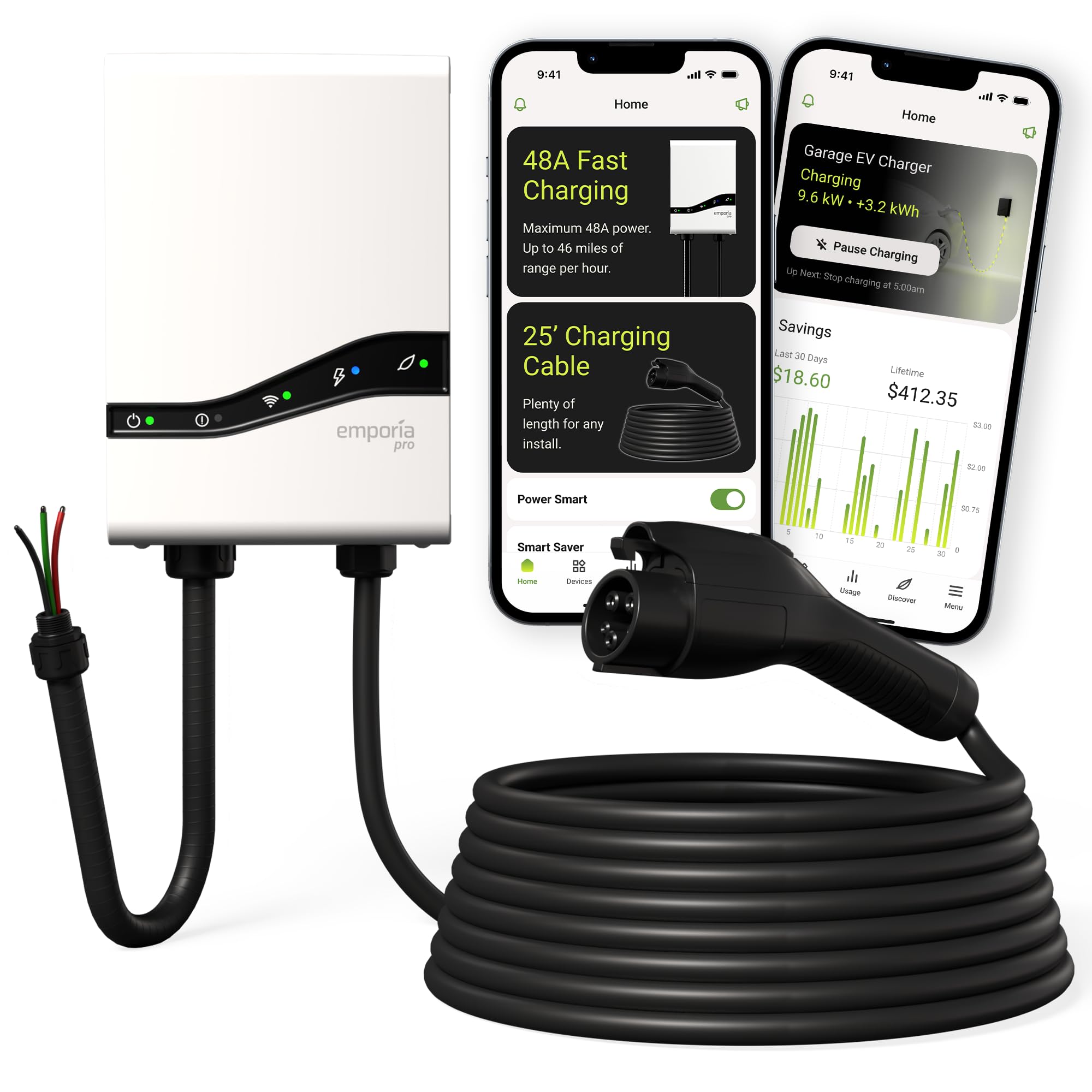
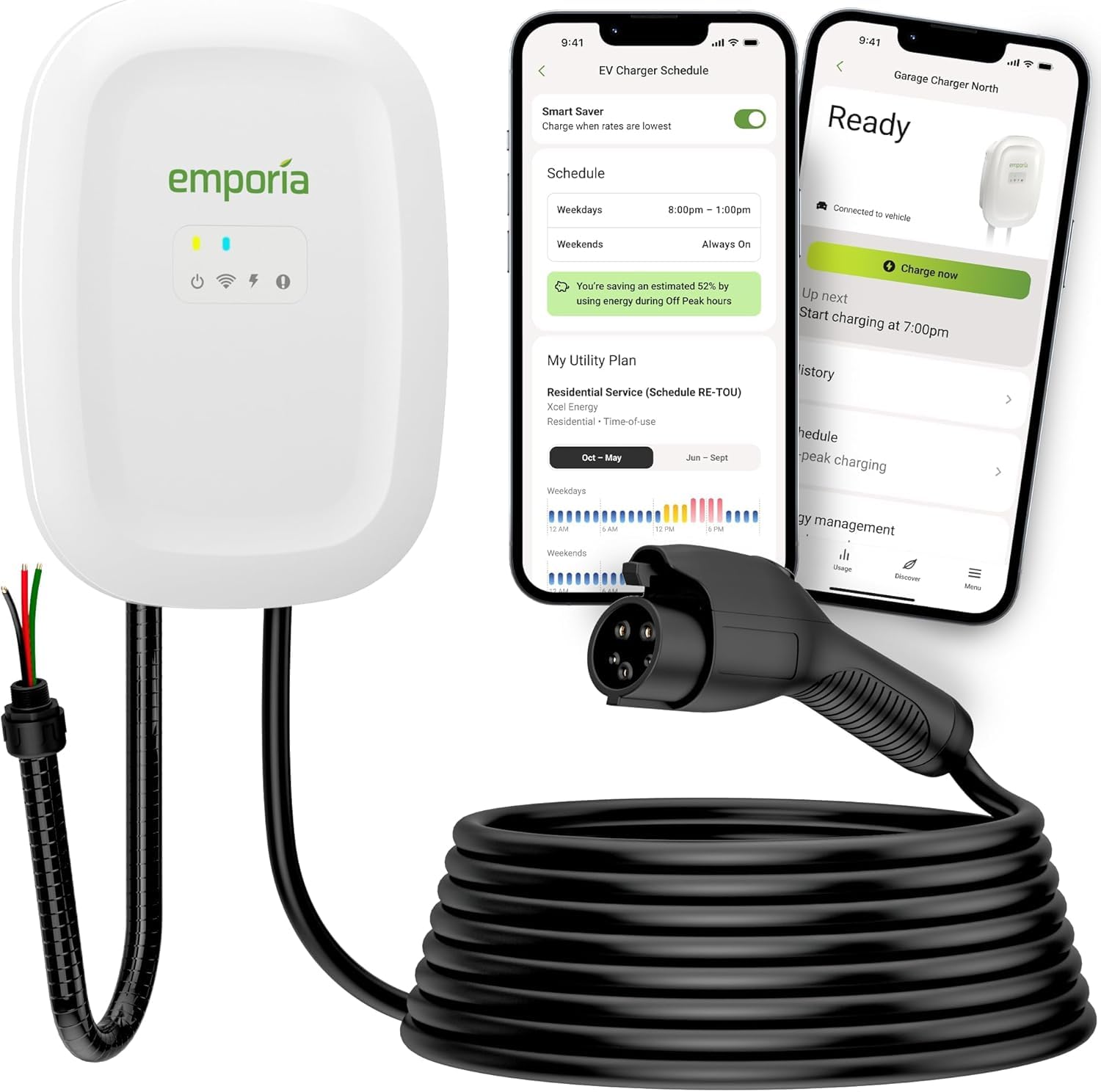
Emporia asks about the same money as our top pick and answers most of the same questions: 48 A hardwired, UL listed, Energy Star certified, 25 ft of cable, and an app that schedules a session and tells you what it cost. The differences sit at the edges, which is where these decisions usually get settled.

The hardwired whip makes for the tidiest connection in this group — the unit arrives preconfigured for a hardwired install, which is how you get the full 48 A rather than the 40 A a 14-50 plug will give you. It also talks to Emporia's Vue home energy monitor if you already run one, putting the car on the same dashboard as the rest of the house. Budget for your own lugs and better mounting screws; the fasteners in the box are the weak link on an otherwise straightforward install.

Three years of warranty is more coverage than anything else here except the ApexCharger, and the energy data is the best of the connected units: real-time draw, per-session cost, and a history you can use to shift charging to cheaper hours. What we don't love is that it's 2.4 GHz Wi-Fi only — fine in most houses, a nuisance if your router has moved on. For a driver who wants to see where the electrons go, this is the better of the two 48 A units; for everyone else the wider range on the EVIQO is worth more.

Bottom line: We rate it the better 48 A pick for anyone who wants the numbers: real-time energy tracking, per-session costs, and three years of warranty.

3

EVIQO NACS 48A Charger

EVIQO NACS 48A Charger

Tesla and NACS EVs

Our Score 9.4/10
Check Price

Worth Noting

  • NACS only
Cable
25 ft
Connector
NACS
Enclosure
IP66 / NEMA 4
Max Output
48 A hardwired

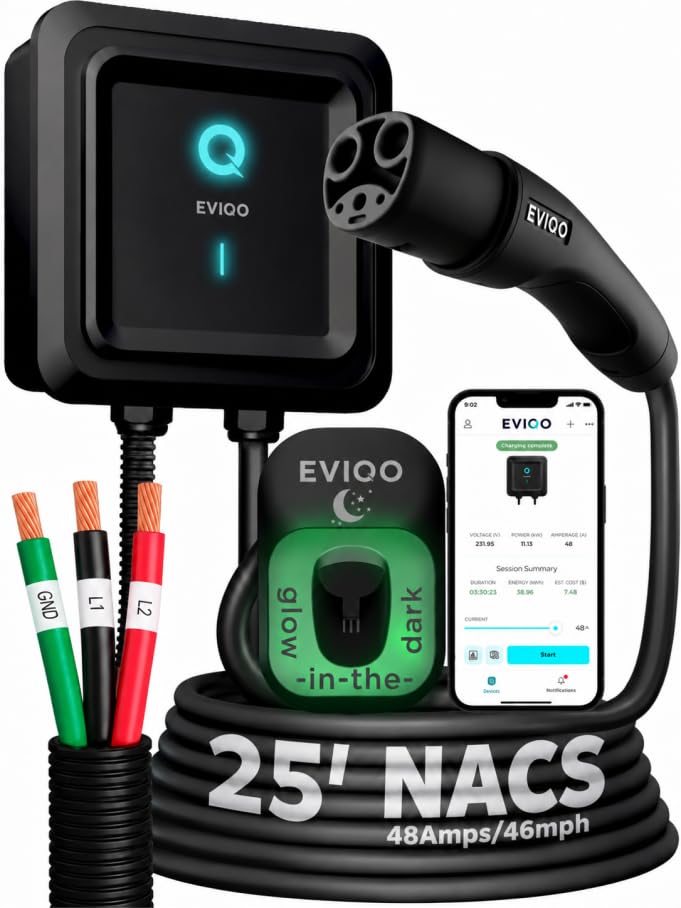
The only thing separating this from our top pick is the handle: a NACS plug built into the unit rather than bolted on with an adapter. Everything behind it is identical — 48 A hardwired, the same sealed IP66 housing, the same app with the 6–48 A slider, the same 25 ft cable, and a holster you can find at 2 a.m.

For a Tesla household, this is the version to buy. Adapters work and plenty of people live with them, but an adapter puts a joint at the end of the cable you're shoving into the car every night, in the rain, in the dark, and it's one more thing to leave on the garage floor. Paying slightly more for the native plug is the better long-term call, and the handle sits properly in the holster instead of dangling from a dongle.

The limit is obvious but worth saying out loud: the plug is part of the unit, so this charges NACS cars only. A second EV with a J1772 port needs the other version or an adapter going the reverse direction. In a two-car house with one of each, buy the J1772 charger and one good adapter rather than the other way round.

Bottom line: We recommend it for Tesla and other NACS drivers: identical hardware to our top pick, with the connector built in and no adapter to lose.

4

Emporia Pro with PowerSmart

Emporia Pro with PowerSmart

Full electrical panels

Our Score 9.6/10
Check Price

Worth Noting

  • Premium price; the sensors only pay off with a tight panel
Warranty
3 years
Connector
J1772
Max Output
48 A
Load Management
PowerSmart

This is the charger for the house where the electrician says there's no room for another 60 A circuit. PowerSmart watches what the whole service is drawing and turns the car down when the oven and the dryer are running, so you keep the full 48 A through most of the night and never trip the main.

Underneath it's the standard Emporia: 48 A, hardwired or on a 14-50 plug, 25 ft cable, three-year warranty, and the same app for scheduling and cost tracking. What you're paying for is the Vue energy monitor in the box — the sensor package that makes load management possible, and a whole-home usage display in its own right, so you can see what the car costs against everything else.

The price of that is install complexity. Clamping current sensors around the mains is more work than a plain hardwire, and it's worth hiring an electrician who has commissioned one of these before rather than one learning on your panel. The app takes over scheduling and the live view from there.

We recommend it narrowly and with enthusiasm: if the panel constraint is real, this is the only product here that solves it without a service upgrade, and the extra cost is small next to what an upgrade involves. If you have capacity to spare, the standard Emporia gives you the same charging for less and there's no reason to pay for sensors you don't need.

Bottom line: We point to it when the panel is full: PowerSmart throttles charging to match the house's load, so 48 A doesn't require a service upgrade.

5

ApexCharger MACH 1

ApexCharger MACH 1

Long cable runs

Our Score 9.2/10
Check Price

Worth Noting

  • 40 A cap when running from a 14-50 plug
  • App trails the Emporia's for data and polish
Cable
30 ft
Warranty
5 years
Connectors
J1772 + NACS adapter
Max Output
48 A hardwired

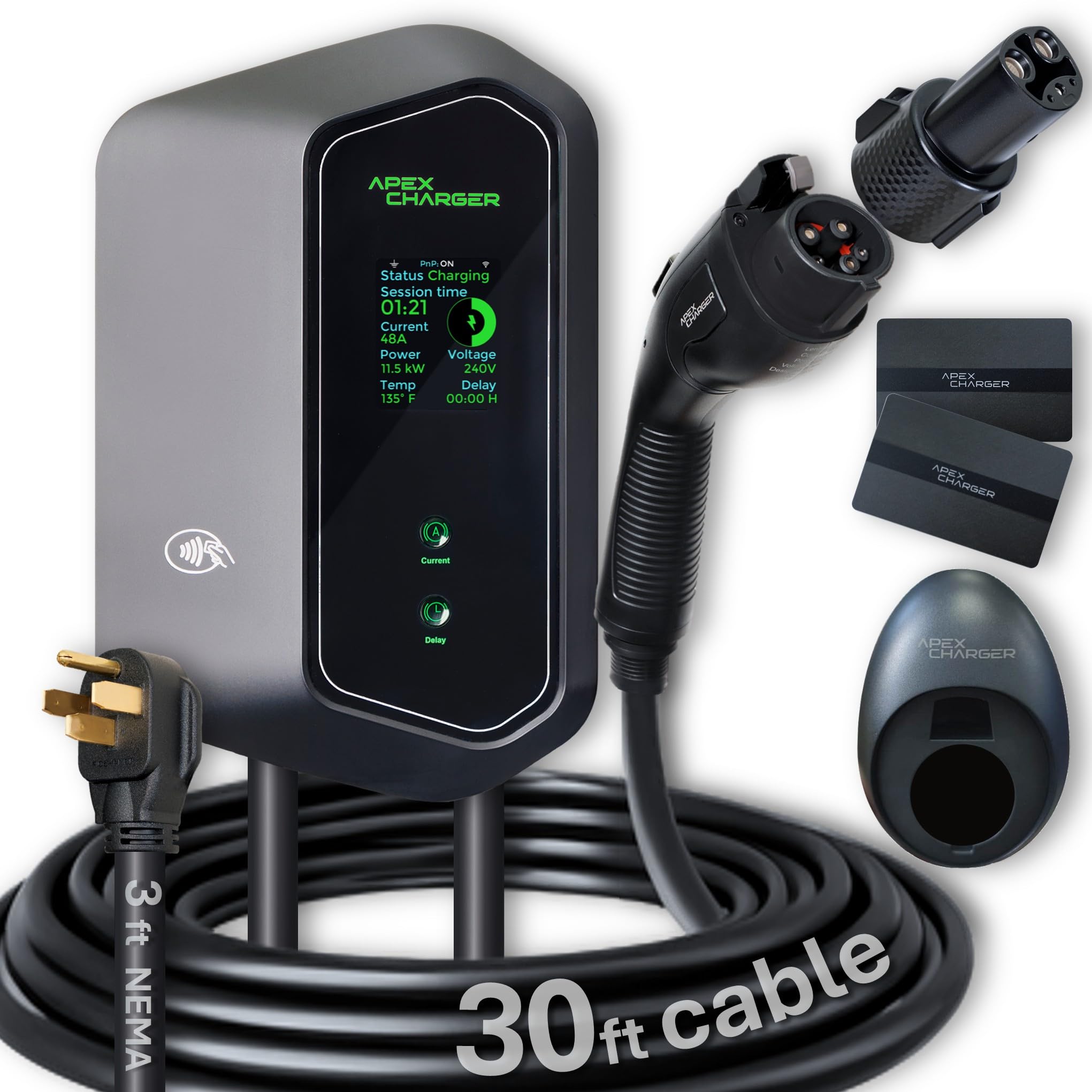
Thirty feet of cable is the reason to look at this one. Every other charger here stops at 25 or less, and five feet is the difference between a unit that reaches the second bay and one that makes you back in every night. If the only sensible spot for a charger is the far wall, the decision is close to made for you.

The rest of the package is generous for the money: 48 A hardwired, a J1772 handle plus a NACS adapter in its own bag, two RFID cards for locking the unit if it's mounted outdoors, and a five-year warranty that beats everything else here. The vertical housing is narrow enough to fit a pier between garage doors.

What holds it below the top picks is the outlet ceiling: plug it into a 14-50 instead of hardwiring and you get 40 A rather than 48, which takes some of the shine off the price. Hardwired, the hardware is the best value in this group — the cable, the adapter and the warranty together come to less than either of the 48 A units we rate highest.

Bottom line: We like it for awkward parking: 30 ft of cable, both connector types, and a five-year warranty for less than the 48 A leaders.

6

Grizzl-E Classic

Grizzl-E Classic

Simple plug-in setup

Our Score 9.2/10
Check Price

Worth Noting

  • Longevity is the gamble; the case outlives the electronics
Plug
NEMA 14-50
Cable
24 ft
Enclosure
IP67 metal
Max Output
40 A

No app, no Wi-Fi, no account, no firmware updates. The Classic is a metal box with a contactor inside, and for a lot of drivers that's the appeal rather than a compromise: you plug in, it charges, and there's nothing to re-pair after your router reboots itself at 2 a.m.

We recommend it to two kinds of buyers. The first has a car that schedules its own charging, which covers most modern EVs — a smart charger just becomes a second scheduler arguing with the first. The second has a NEMA 14-50 already in the garage, because the Classic plugs straight into one and 40 A needs no electrician at all. The cast metal case is rated IP67 and it's the most solidly built unit in this group, the kind of thing that feels like part of the house.

Setup is a one-time job: four DIP switches inside the case set the current to 40, 32, 24 or 16 A to match your breaker, and then you close it up and forget it. The risk is what's inside. The housing will outlast the electronics, and a unit that dies at year three costs more than the app you didn't pay for. That's the trade — the simplest, toughest charger here, with the shortest odds on a decade of trouble-free service.

Bottom line: We recommend it for a no-nonsense garage: 40 A from an existing 14-50, a cast metal case, and no app to babysit.

7

AIMILER 32A Portable

AIMILER 32A Portable

Budget and renters

Our Score 9.2/10
Check Price

Worth Noting

  • 32 A max
Plug
NEMA 14-50
Cable
25 ft
Listed
ETL
Max Output
32 A

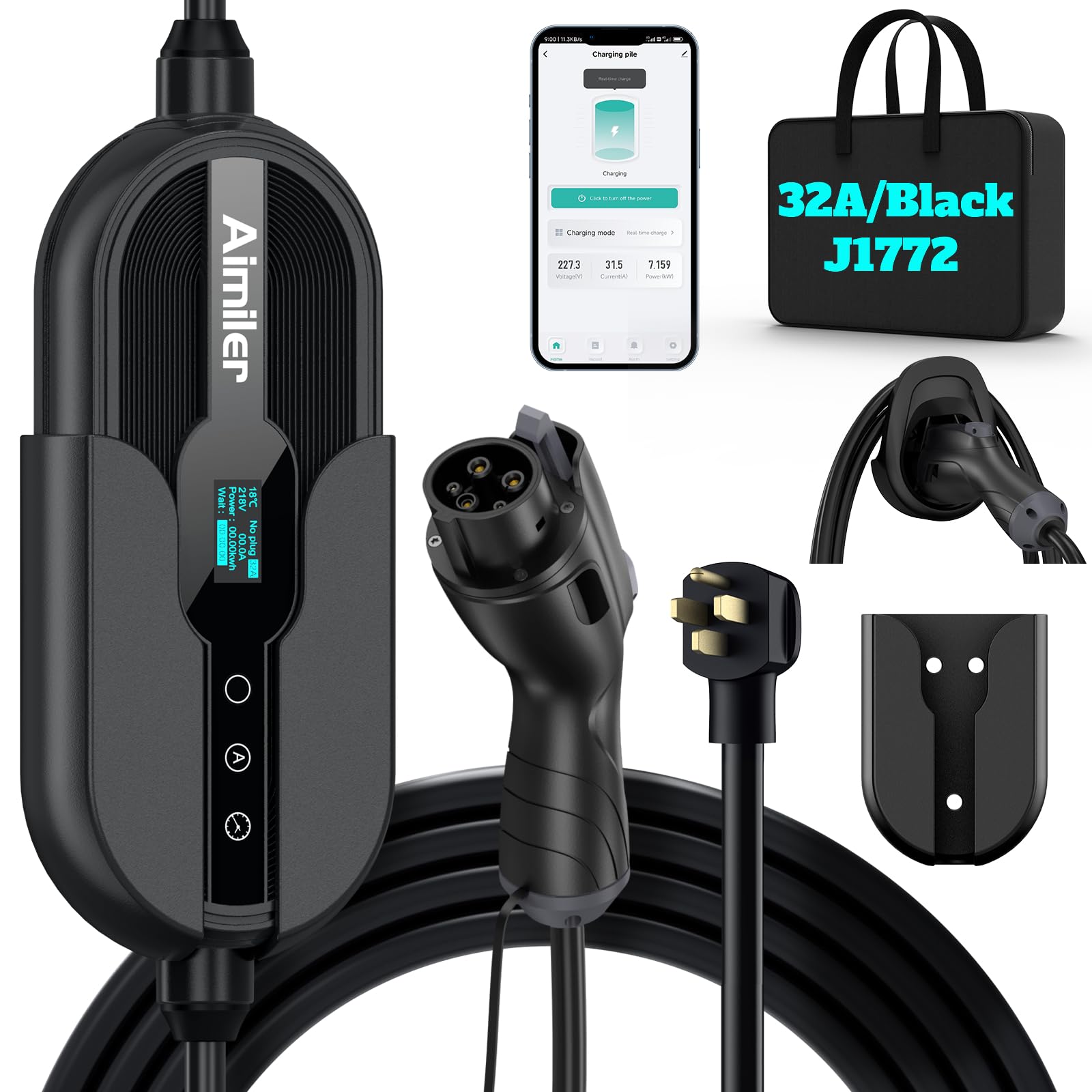
This is the cheapest way into Level 2 charging in this group, and it isn't a stripped-down toy: 32 A from a NEMA 14-50, ETL listed, a 25 ft cable, a touchscreen showing amps and voltage without opening an app, and a three-year warranty. For a plug-in hybrid or a short commute, that's as much charger as anyone needs.

Portability is the real differentiator. The unit lifts off its wall holder and goes in the included bag, so it can ride in the trunk to a house with an RV outlet or move with you when the lease ends. Amperage adjusts from 16 to 32 A, which means it can run at 24 A on a 30 A dryer circuit instead of demanding new wiring.

What you give up is speed and feel. 32 A is roughly two-thirds the charging rate of the 48 A units here, so recovering from near-empty takes a longer night, and the fit and finish is a step below the metal-cased models. At this price neither bothers us much — this is a charger you buy because the outlet is already on the wall.

Bottom line: We point budget buyers and renters here: 32 A from an existing 14-50, ETL listed, with a bag to take to the next house.

8

EVDANCE 40A Portable

EVDANCE 40A Portable

Low-cost 40 A charging

Our Score 9.0/10
Check Price

Worth Noting

  • 40 A is the ceiling; no 48 A option
Plug
NEMA 14-50
Cable
25 ft
Display
2.4 in TFT
Max Output
40 A

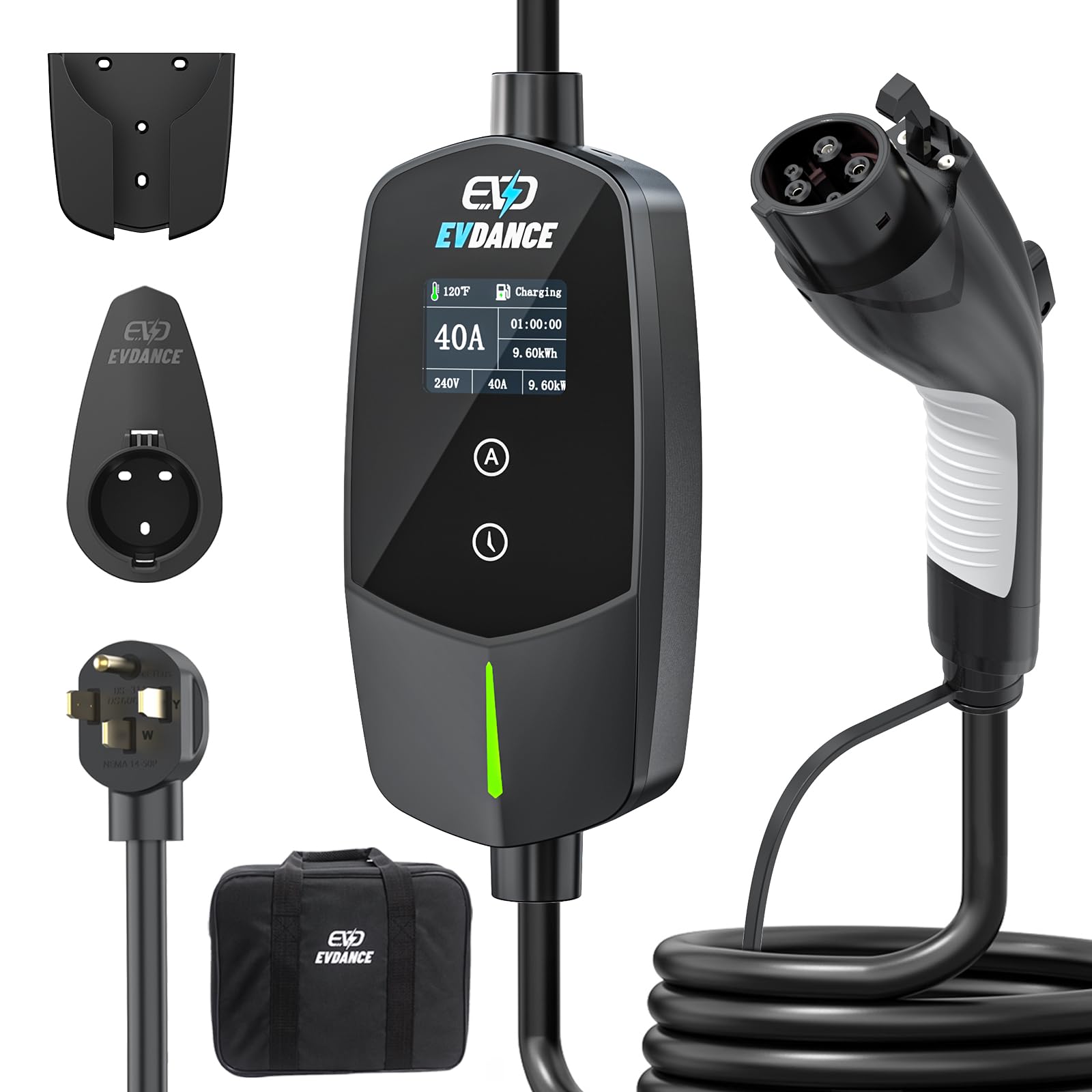
Eight more amps than the AIMILER for about the same money. That's the pitch: 40 A from a NEMA 14-50, 9.6 kW, and a 25 ft cable, with no hardwired install and no electrician involved.

It's a portable, so it lifts off the wall mount and travels, and everything is set on the unit itself: a 2.4 in screen, current in six steps from 10 to 40 A, live voltage, and a delay timer you can set one to twelve hours out for cheaper overnight rates. Nothing about the controls requires a phone.

Two caveats come with the price. The listing carries CE and FCC marks rather than the UL or ETL listing most inspectors look for on an EV charger, so if you're pulling a permit, confirm what your jurisdiction accepts before ordering. And 40 A is the ceiling no matter what circuit you have — there's no path to 48 here.

For a garage that already has a 14-50, it's a sensible buy: 40 A, a readable screen, and a delay timer, for less than any hardwired unit in this group. Settle the certification question first; after that it's an easy yes as a second charger, a rental setup, or a stopgap while you plan a hardwired install.

Bottom line: We recommend it where a 14-50 is already on the wall: 40 A, a readable screen and a delay timer for less than any hardwired pick.

How We Tested Seven Level 2 EV Chargers

We started by narrowing a list of two dozen models down to seven based on safety certifications, amperage options, plug-in versus hardwired design, warranty length, and price. Each unit was installed by the same licensed electrician in a home garage on a dedicated 60-amp circuit, and we noted how long the install took, what extra parts were needed, and whether the manufacturer's instructions held up in practice. Over nine months, we used each charger as our primary way to top up a long-range EV, logging miles added per hour at both 40 and 48 amps, and comparing the results with the car's own energy screen.

Daily use told us more than the spec sheets. We plugged and unplugged each connector at least twice a day, sometimes in the dark, and noted whether the latch engaged cleanly or felt loose after a few weeks. We coiled and uncoiled cables in cold morning temperatures, left them hanging in summer sun, and checked for stiffness or cracking at the strain relief. We scheduled charging through every app during off-peak hours and tracked how often a schedule failed to start or stopped early. We also watched how each unit handled a full battery, an interrupted session, and a power dip — the kind of small events that reveal whether the firmware is stable.

For durability, we cycled the connector 50 times, checked the holster for wobble, and inspected the enclosure seams after rain and dust. We compared what each charger added to the electrician's bill — extra conduit, a subpanel, a GFCI breaker — because ease of installation is rarely just the box on the wall. And we kept a running note on value: what the unit included, what cost extra, and whether the app or load-management features worked without a subscription. The chargers that rose to the top stayed boring — no error lights, no fuss, just a full battery every morning.

How to Choose Level 2 EV Home Chargers

Start with the circuit, not the charger

Every model here is limited by the breaker feeding it. A 48 A charger needs a 60 A circuit, 40 A needs 50 A, and 32 A needs 40 A — the listings state these pairings, and no amount of charger shopping changes them. The other half of the trap is the car: charging speed is capped by the vehicle's onboard charger, so a 48 A unit won't beat a 40 A one on a car that can only accept 32 A. Check the panel and the car's own limit before you read another spec sheet.

Hardwired or a NEMA 14-50 plug

Hardwiring is how you reach 48 A, and it makes for a tidier install — one cable into a junction box, no outlet, no plug. A 14-50 plug tops out at 40 A on every unit here that offers one, but it has two real advantages: it can use an outlet you already have, and it unplugs. If you rent, expect to move in a few years, or want the charger at a vacation place too, the plug-in is worth the lost 8 A. If you're staying put, hardwire it and take the full output.

Match the connector to the car

J1772 is the port on most non-Tesla EVs in North America, while NACS is Tesla's and increasingly everyone else's on newer models. Adapters work in both directions, but they put a joint at the end of the cable you handle every night, and they're easy to leave on the garage floor. A one-car household should buy the native plug. A two-car household with one of each should buy J1772 and one good adapter, since that covers everything with a single unit.

Measure the cable run, not the garage

Cables here run from 24 to 30 ft, and five feet is the difference between charging in your own bay and backing in every night. Measure from where the unit will mount, around the car rather than over it, to the charge port, then add a couple of feet for the loop that keeps the cable off the floor. Holster placement matters as much: mount it on the port side of the car and you save a walk every single time you plug in.

Decide what you want the app to do

Scheduling is the feature that pays for itself — setting a car to charge after midnight on a time-of-use rate is worth more than any dashboard. But the app is also the part of a connected charger most likely to annoy you, and Wi-Fi at the end of a garage or on a driveway post is where it goes wrong. If your car schedules its own charging and your rate is flat, a basic charger is genuinely the better buy. If you want per-session costs, buy connected and put a mesh node near it.

Frequently Asked Questions

Final Verdict

Buy the EVIQO 48 A hardwired charger if your panel can spare a 60 A circuit. It earns the top spot with a current range wide enough to survive a shortfall, a housing that is genuinely rated for outdoors, and app control that mostly stays out of the way.

If the electrician says the service is full, the Emporia Pro is the one product here that solves that without an upgrade. And if you rent, or already have a 14-50 on the garage wall, the Grizzl-E does the job for less with nothing to configure.