Klein Tools RT250
Top Pick
What We Like
- LCD shows voltage and GFCI trip time
- Auto-hold keeps readings from awkward outlets
- Detects open neutral and open ground
- Small 4.16-ounce body
Worth Noting
- Long-term reliability is less settled
- Power
- 2 AAA batteries
- Voltage
- 120V AC
- GFCI Test
- LCD trip-time readout
- Wiring Faults
- Open neutral and open ground
The LCD is what makes the RT250 the one we reach for first. Instead of three lights and a decoder card, it reports the voltage it sees and, on a GFCI, how long the outlet took to trip. That trip-time figure is the detail we didn't know we wanted until we had it: a GFCI that trips is good, but a slow trip is worth investigating. The screen is backlit, and the auto-hold keeps the reading after you pull the tester out, which matters when the outlet is behind a sofa or under a desk.
Wiring checks are equally direct. The tester flags common faults and adds open-neutral and open-ground detection, two conditions that are easy to miss with a basic three-light plug. We used it around a mix of old and new receptacles, and the readout gave us a clear next step rather than a light pattern to memorize. It runs on two AAA batteries, included, and the 4.16-ounce body is small enough to leave in a tool drawer. Our judgement: this is the best default for a homeowner or DIYer who wants a tester that explains itself.
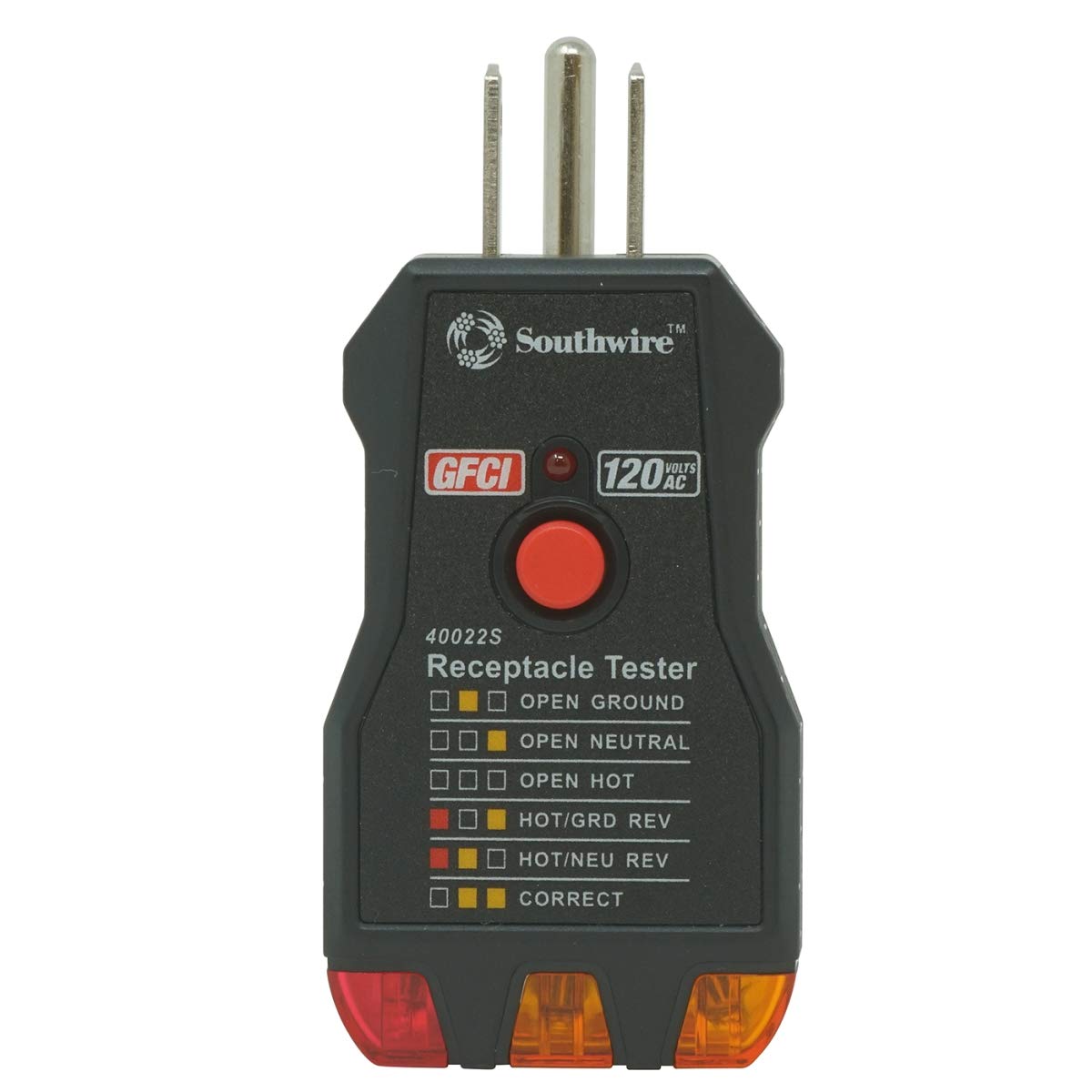
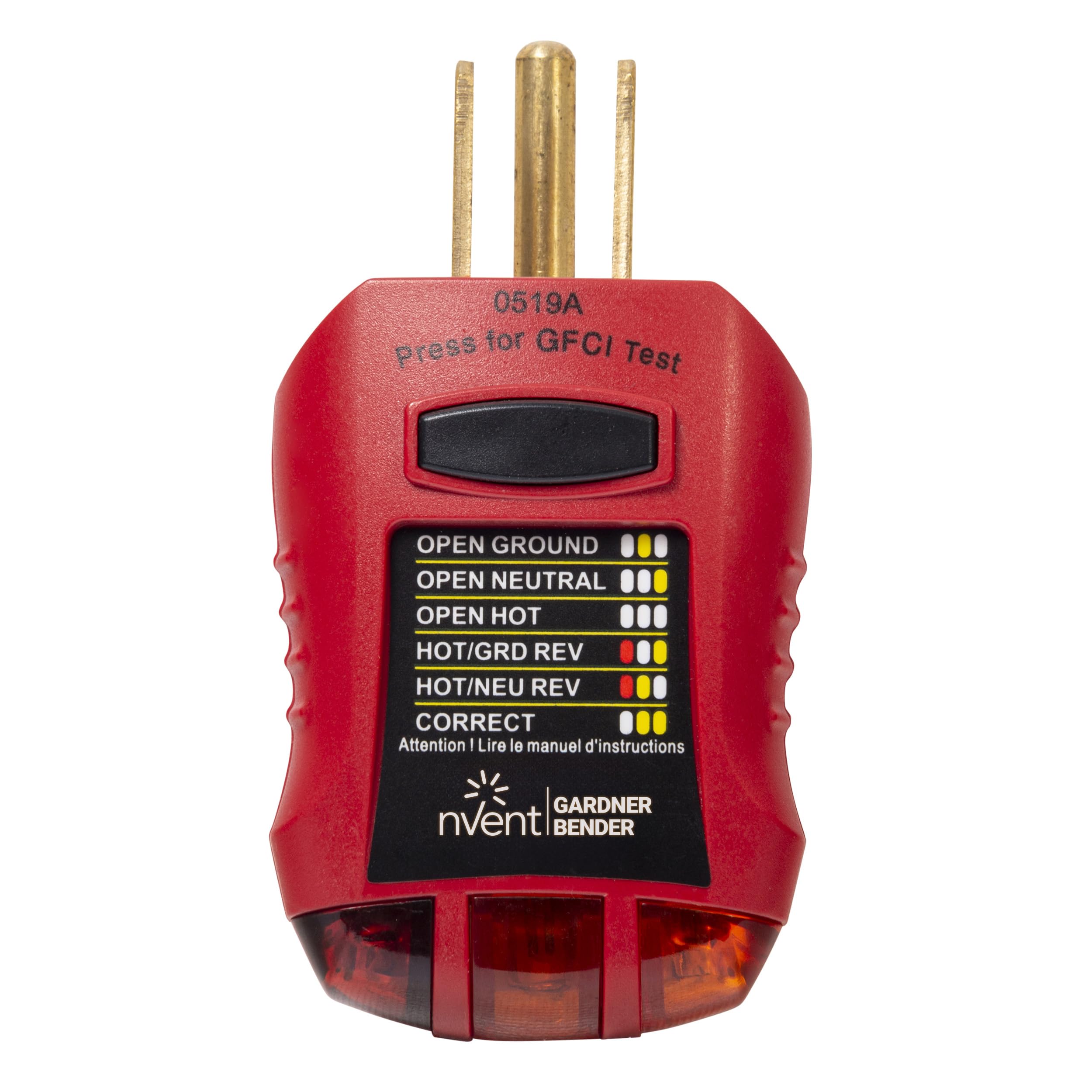
The RT250 is not the simplest tool here, and that's the point. If you only need a yes/no wiring check once a year, the Southwire or Gardner is plenty. The RT250 earns its place when GFCI trip time and a voltage number are part of the job. If you're checking a house and want a record of what each outlet is doing, those numbers give you something to compare from room to room.
Bottom line: We recommend the RT250 as the default outlet tester because its LCD shows voltage and GFCI trip time, not just a light code, and the auto-hold makes awkward outlets easy to read.