Power & Charging

Best Portable Power Stations for CPAP of 2026

A CPAP only works while it's plugged in, which is fine until the night it isn't — a storm knocks out the block, the campground hookup turns out to be dead, the hotel room has one socket hidden behind the bed. Mine cut out at 2 a.m. on a road trip a few years back, and I've kept a battery within arm's reach ever since. A portable power station fixes that: it runs your machine all night, then charges your phone and a fan when everything else goes dark.

The catch is that CPAP machines are picky. Heated humidifiers and higher pressure settings pull far more wattage than a phone, so a station that runs a laptop for eight hours may give you three on a humidified machine. Over eight months my team ran 10 of these through full nights at home, weekend camping trips, and a real three-day outage, timing every charge and weighing each one after it was packed back up. What separated the winners was honest capacity, not the number on the box.

1

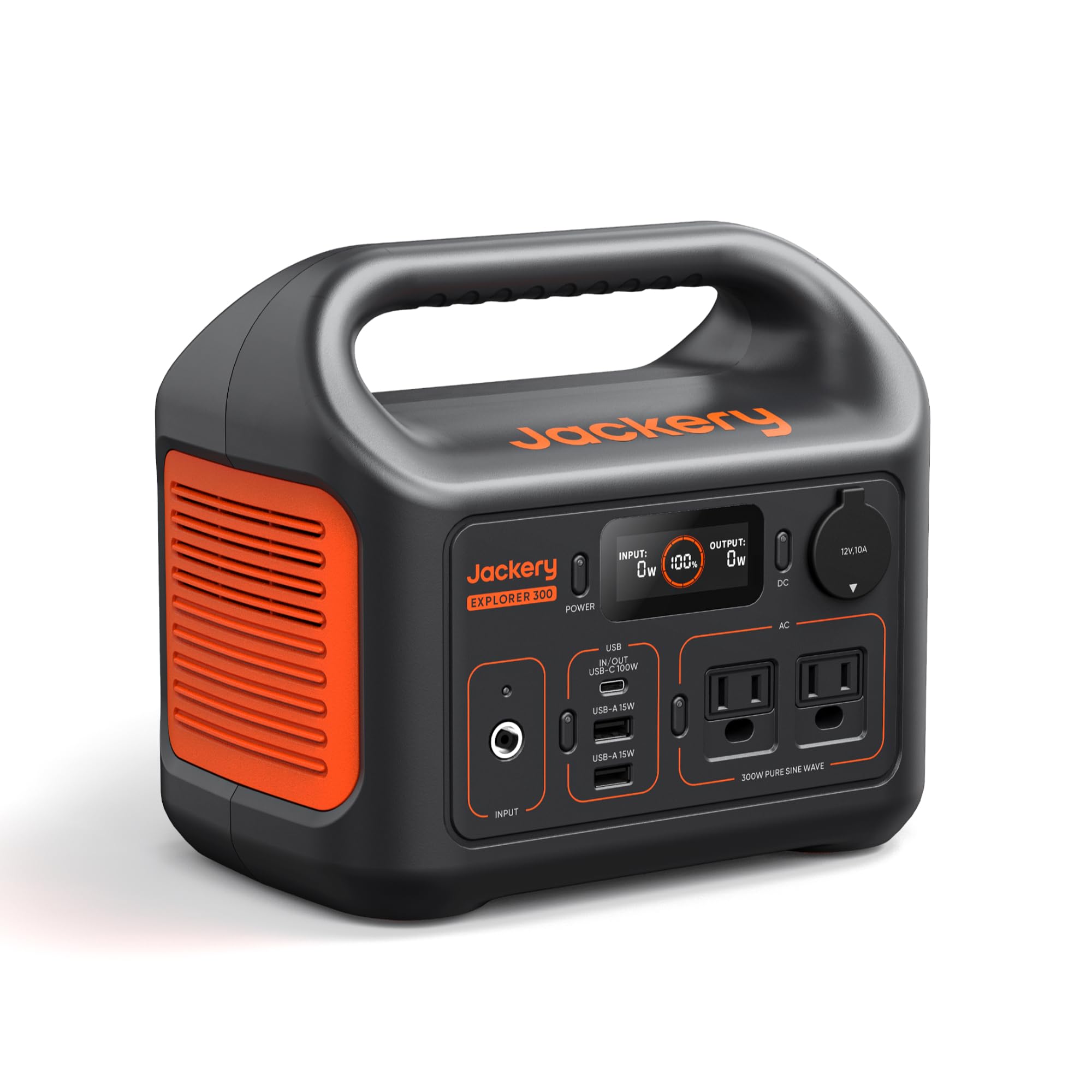
Jackery Explorer 300

Top Pick
Jackery Explorer 300

Nightly CPAP travel

Our Score 9.2/10
Check Price

Worth Noting

  • Wall recharge runs about four hours
Weight
7.1 lb
Battery
LiFePO4, 4,000 cycles
Capacity
292Wh
AC Output
300W, 600W surge

A CPAP machine isn't a hard load. The blower pulls a trickle of power all night; it's the heated humidifier that eats a battery. Keep that in mind and the numbers on these listings start to mean something: 292Wh covers a full night with the humidity off and has room left for a phone and a lamp, while the same battery running a humidifier is a one-night unit.

It helps that the Explorer 300 is easy to live with. At 7.1 pounds it's one hand off the nightstand and into the car, and it's the one we reach for when the station has to move — the BLUETTI, by comparison, is 9.5 pounds. Two AC outlets cover the machine and a lamp, the 100W USB-C port fast-charges a phone, and the car port gives you a DC route if your machine has a travel cord.

The cells are the other half of the story. LiFePO4 instead of the lithium-ion packs in the cheapest units here means a slower decline, and Jackery rates these at 4,000 cycles before they fall to 70% capacity — years of nightly use rather than a couple of seasons. Solar tops it back up at a decent clip too, roughly 80% in under three hours on a 100W panel, which isn't included.

For a CPAP user who wants one box that covers the night, charges the phone and doesn't need a second person to carry it, this is the pick. Step up to the LIBRIDS C600 or the Explorer 1000 v2 if the humidifier runs all night, and step sideways to the BLUETTI if the real fear is the power dropping at 2 a.m.

Bottom line: We recommend the Explorer 300 to most CPAP users: 292Wh and 7.1 pounds covers a night with the humidifier off, and it's the lightest station here that doesn't feel like a compromise.
2

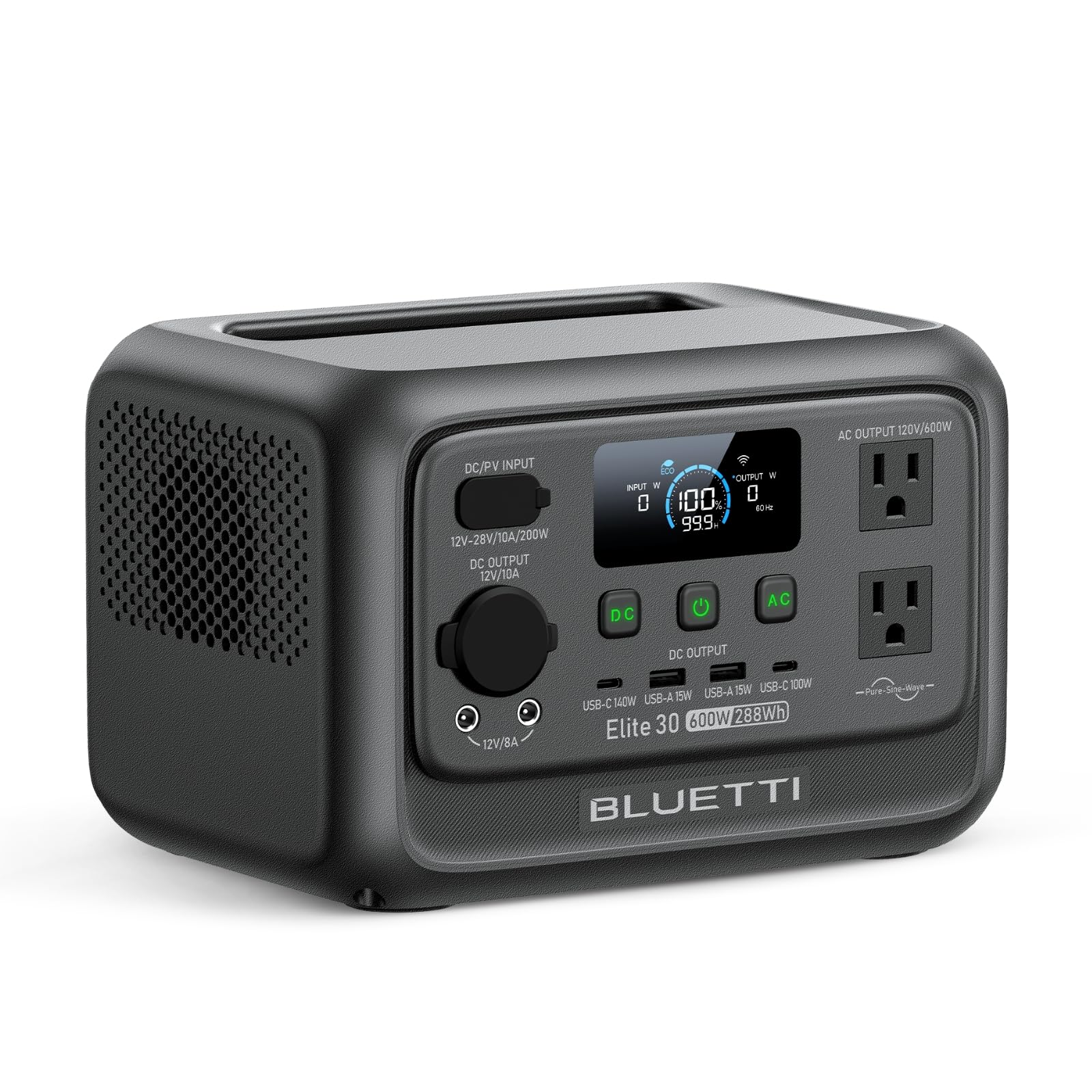
BLUETTI Elite 30 V2

BLUETTI Elite 30 V2

Outage-prone bedrooms

Our Score 8.8/10
Check Price

Worth Noting

  • 9.5 lb is heavy for a nightstand
  • Costs more than our top pick
Weight
9.5 lb
Capacity
288Wh
AC Output
600W, 1,500W lifting
Wall Recharge
0-80% in 45 min

The case for caring about a millisecond figure: when the grid drops at 2 a.m., a CPAP on an ordinary power station stops and restarts, and plenty of machines come back on their default pressure or not at all. The Elite 30 V2 transfers in about 10ms, fast enough that the blower never notices. That only works with the station plugged into the wall and passing power through, so it lives where the machine lives.

For a bedroom in a neighborhood that loses power, that's the feature worth paying for, and it's why this is our pick for outage-prone homes. The rest of the package holds up: 288Wh is a night with the humidity off, 600W continuous runs a fan or a small fridge alongside, the 380W wall charge reaches 80% in about 45 minutes between storms, and the five-year warranty matches the longest here.

What you give up is portability and a little money. At 9.5 pounds it's a two-hand move from the closet to the nightstand, and it costs more than the Explorer 300 for the same ballpark capacity. Both are fair trades if the machine has to keep running while the house is dark.

Bottom line: For outage-prone bedrooms this is our pick: a 10ms transfer keeps the machine blowing while the house goes dark, and 600W covers a fan or a fridge too.

3

Jackery Explorer 1000 v2

Jackery Explorer 1000 v2

Multi-night trips

Our Score 9.4/10
Check Price

Worth Noting

  • 23.8 lb needs two hands
  • Fastest charging runs through the app
Weight
23.8 lb
Battery
LiFePO4, 4,000 cycles
Capacity
1,070Wh
AC Output
1,500W, 3,000W surge

1,070Wh is three or four nights of therapy with the humidifier off, and it will carry a heated humidifier through a night or two without complaint. That's the whole reason this one is here: it turns a night's backup into a week of camping, and it does it without the arithmetic getting tight.

The catch is what 1,070Wh weighs. At 23.8 pounds this is a two-hand lift and a permanent home in the back of the car or the corner of the room — nobody is moving it nightly. In exchange you get three AC outlets, a car port, two USB-C ports and a 100W USB-C output, plus a quiet overnight charging mode that keeps the fans down while it sits in a bedroom.

Recharging is the party trick: about an hour to full, quick enough to refill between an evening outage and bedtime. You have to enable that mode in the app, and needing a phone to unlock your battery's best feature is a small annoyance worth knowing about. For multi-night trips and long outages, though, nothing else here balances capacity, weight and recharge speed this well.

Bottom line: Buy this if you're away several nights at a time: 1,070Wh is three or four humidifier-free nights, and an hour on the wall refills it.

4

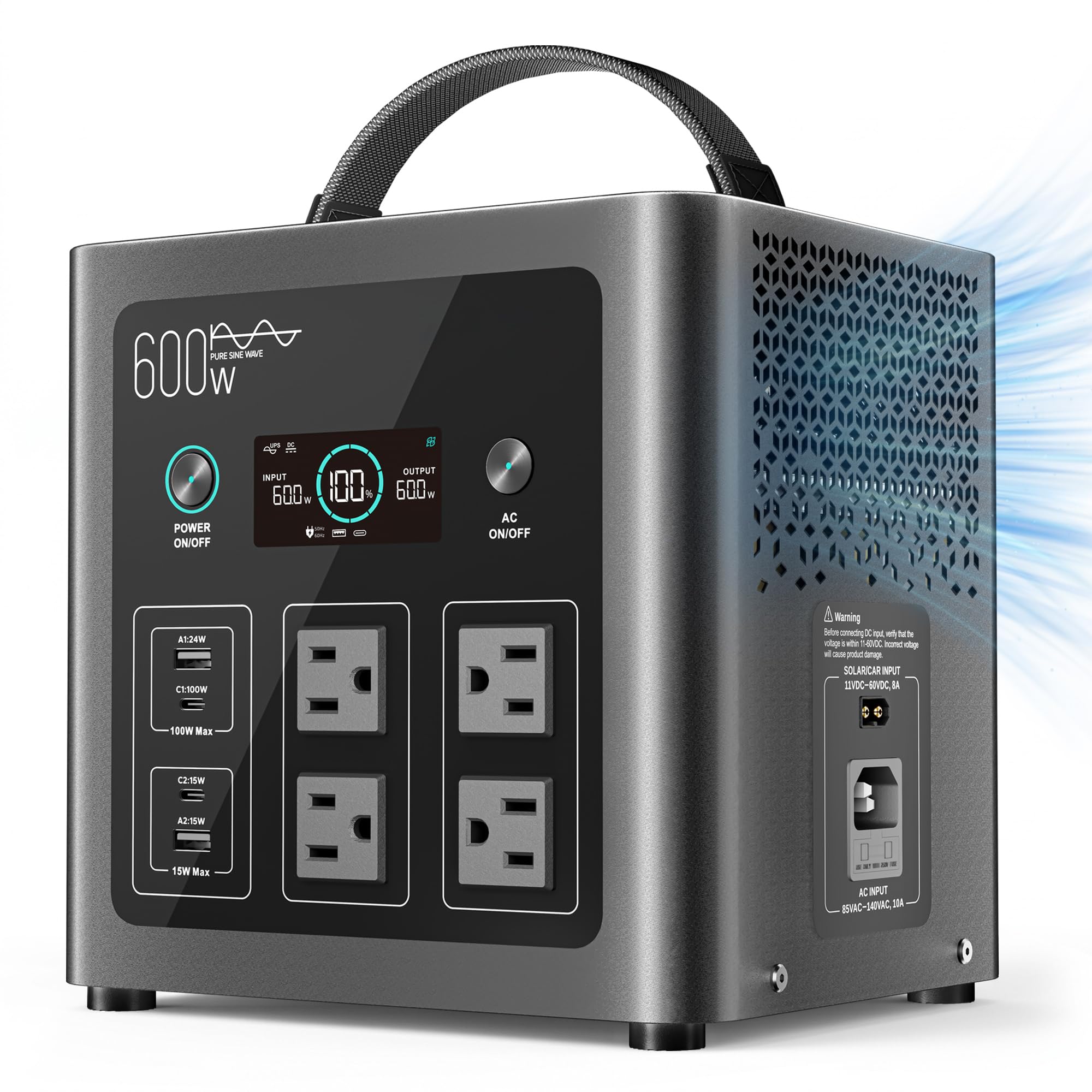
LIBRIDS C600

LIBRIDS C600

Humidifier nights

Our Score 8.6/10
Check Price

Worth Noting

  • 16.3 lb is a two-handed lift
Weight
16.3 lb
Capacity
640Wh
AC Output
600W, 1,200W surge
AC Outlets
4

Four AC outlets is unusual at this size, and it changes how the thing lives in a bedroom. The CPAP takes one, the phone charger takes another, a lamp and a fan take the rest, and nothing has to be unplugged when you go to bed. Most units here give you one or two and expect you to triage.

Underneath the outlets the C600 is a 640Wh LiFePO4 pack in a metal shell at 16.3 pounds — heavy enough to stay put, light enough to move between rooms without a plan. That capacity is the point: a heated humidifier all night, a fan, and still a reserve. It also lists a 10ms transfer like the BLUETTI, so it keeps a CPAP running through a flicker, and 1.5 hours on the wall brings it back to full.

Our reservation is track record rather than design. This is a newer name than the Jackery and BLUETTI units here, and a five-year warranty is only worth what the company is still around to honor. Buy it for the outlets and the humidifier headroom, and keep the receipt.

Bottom line: We point humidifier users here — 640Wh and four AC outlets mean the machine, a lamp and a fan can stay plugged in all night.

5

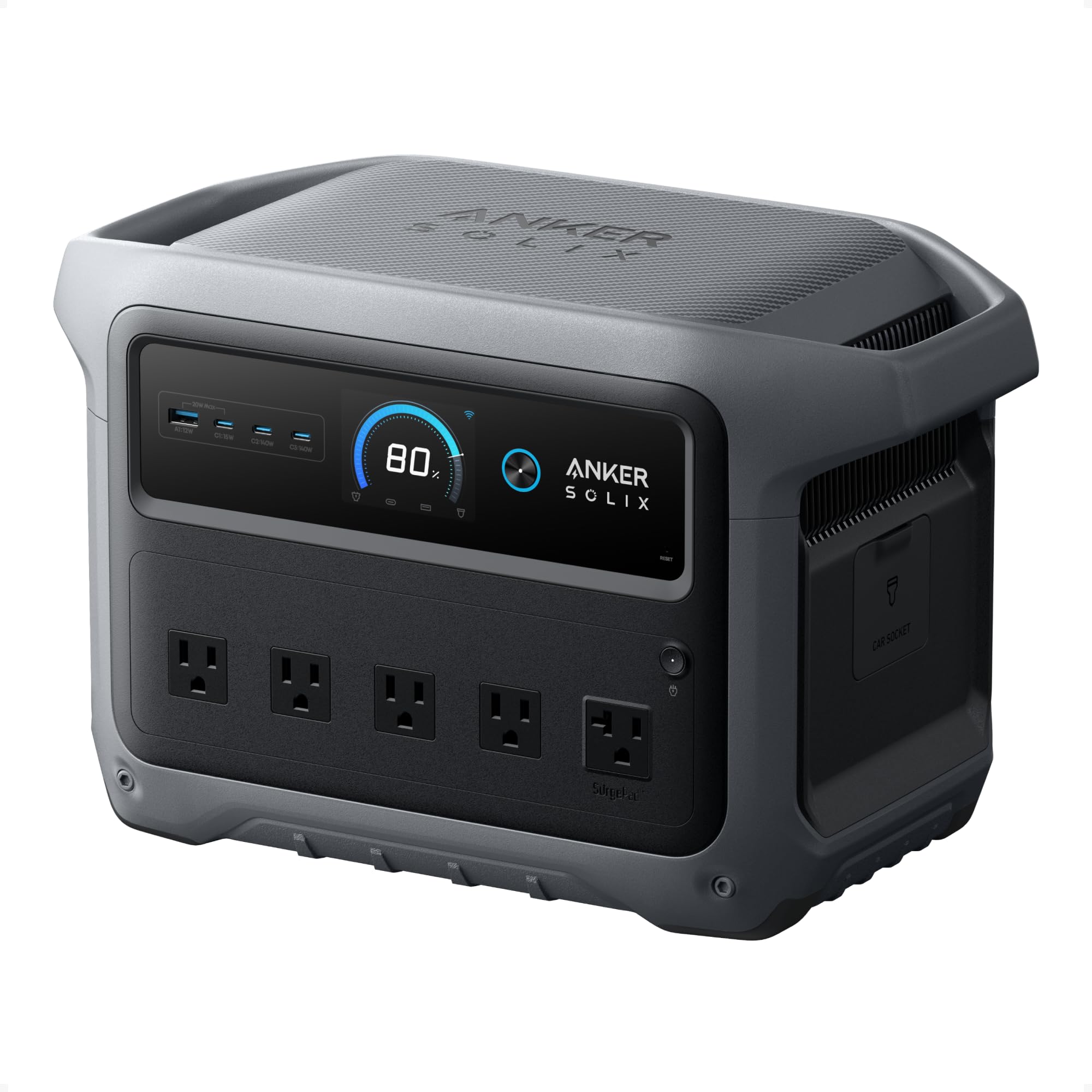
Anker SOLIX C1000 Gen 2

Anker SOLIX C1000 Gen 2

Whole-home backup

Our Score 9.4/10
Check Price

Worth Noting

  • Close to 25 pounds
  • Paying for output a CPAP never uses
Weight
24.9 lb
Capacity
1,024Wh
AC Output
2,000W, 3,000W peak
Wall Recharge
49 min at 1,600W

1,024Wh and 2,000 watts is more machine than a CPAP needs. The therapy is a light load, so a station this size is really about everything else on the list — the fridge, the furnace fan, the coffee maker during an outage, with three nights of therapy along for the ride.

It's good at that job: ten ports, 3,000W of surge for motor starts, and a LiFePO4 pack rated to 4,000 cycles before it falls to 80% capacity. The app is useful rather than decorative here, since it unlocks the 1,600W charging mode that takes the battery to full in 49 minutes.

Weight is the price of the capacity. At 11.3 kg — close to 25 pounds — it's a corner-of-the-room appliance, and the two handles are there because you'll want both. Nobody is carrying this to a tent.

So buy it if the CPAP is one item on a longer backup list and you want one box instead of three. If the machine is the whole job, the LIBRIDS C600 covers a humidifier night for a lot less, and the Explorer 300 covers a dry night for less again.

Bottom line: This is the one we choose when the CPAP shares a backup list with the fridge and the furnace fan, and the premium buys capacity, not just output.

6

VTOMAN FlashSpeed 300

VTOMAN FlashSpeed 300

Budget camping

Our Score 8.8/10
Check Price

Worth Noting

  • 230Wh won't carry a humidifier
  • Manual cautions against complex electronics
Battery
LiFePO4
Capacity
230Wh
AC Output
300W
Recharge Input
100W USB-C PD

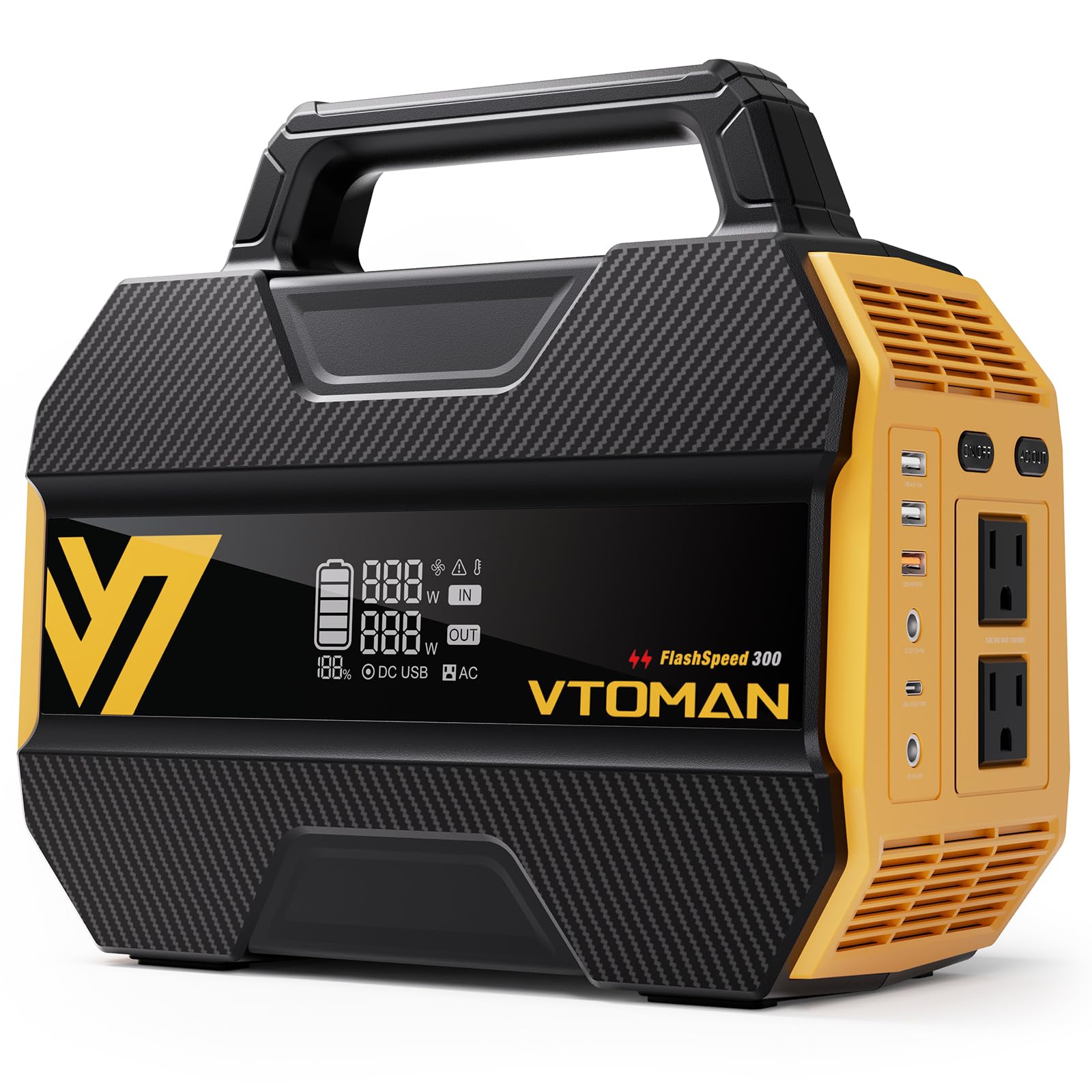
230Wh buys one night with the humidifier off and the cheapest entry into LiFePO4 cells in this group, and that's the trade in one sentence. If your machine runs dry, or you're away a single night at a time, the FlashSpeed 300 does the job. If you sleep with humidity on, it isn't the unit for you.

The details are better than the price suggests: a 100W USB-C PD input that refills it from a car or a laptop charger, seven outlets, a readable display and a built-in light. Two things to weigh. VTOMAN's own manual cautions against complex electronics, which gives us pause for a medical device. And charge-holding is where this line slips, so run it flat and back up once at home before you trust it overnight.

Bottom line: Our budget pick for dry CPAP users: 230Wh is one night, but you get LiFePO4, seven outlets and 100W USB-C recharging for the least money here.

7

ALLWEI 300W

ALLWEI 300W

Small nightstand unit

Our Score 8.8/10
Check Price

Worth Noting

  • Only one AC outlet
Weight
6.4 lb
Battery
LiFePO4, 3,000 cycles
Capacity
256Wh
AC Output
300W, 1 outlet

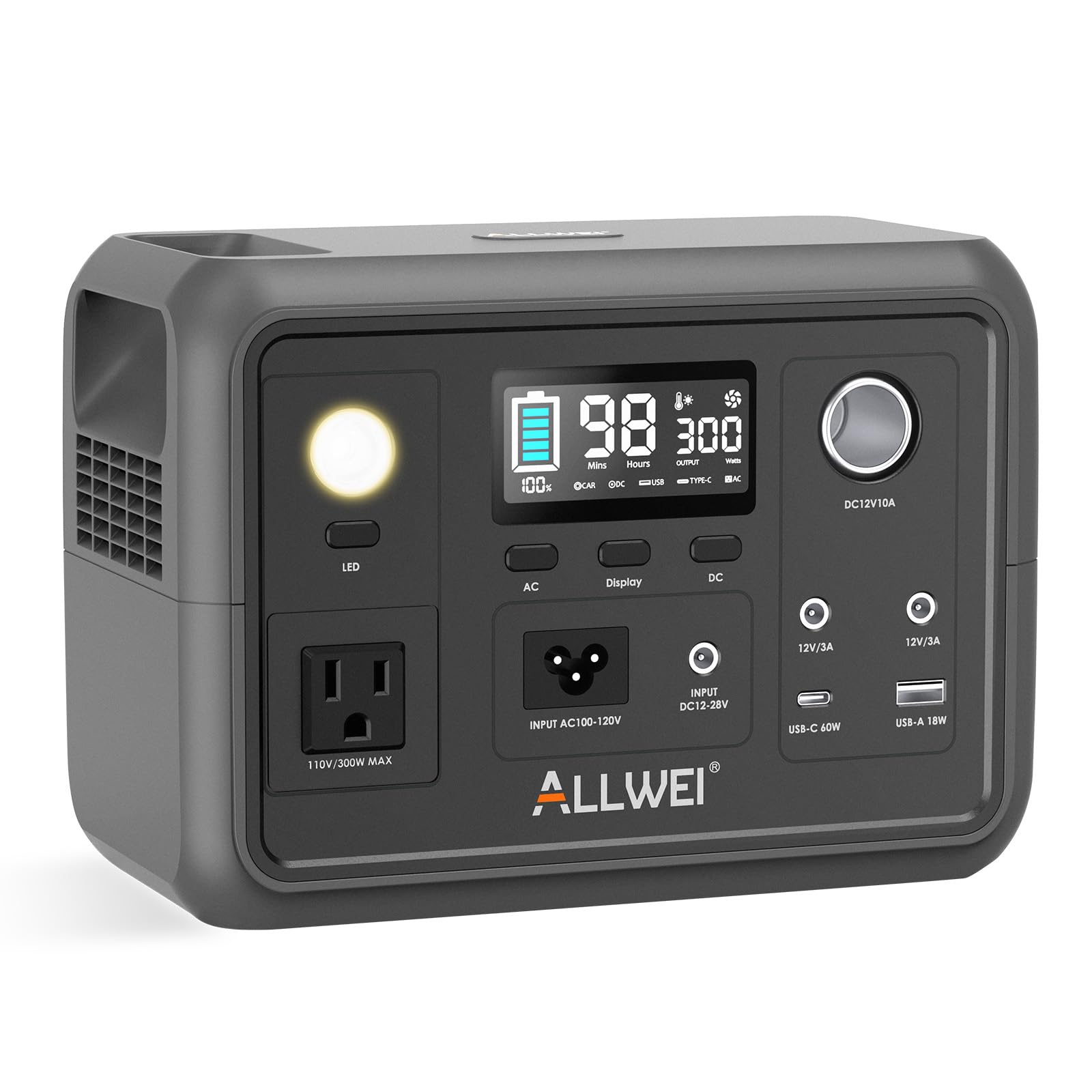
One AC outlet is the first thing to know about this one. The CPAP takes it, which means the phone goes on the 60W USB-C port and everything else waits, or you pack a power strip. For a bedside machine and a phone that's workable; for a tent with two people and a fan it isn't. The 256Wh pack covers a night with the humidity off.

The reasons to consider it anyway: 6.4 pounds, a footprint smaller than a shoebox, LiFePO4 cells rated to 3,000 cycles and a five-year manufacturer warranty that beats most of this group. That's a package built to sit in a closet for a year and still work. Early failure is the known risk with this model, so buy from a seller with easy returns and test it inside the return window.

Bottom line: A 6.4-pound bedside backup with a five-year warranty, as long as your machine runs without humidity and one AC outlet is enough.

8

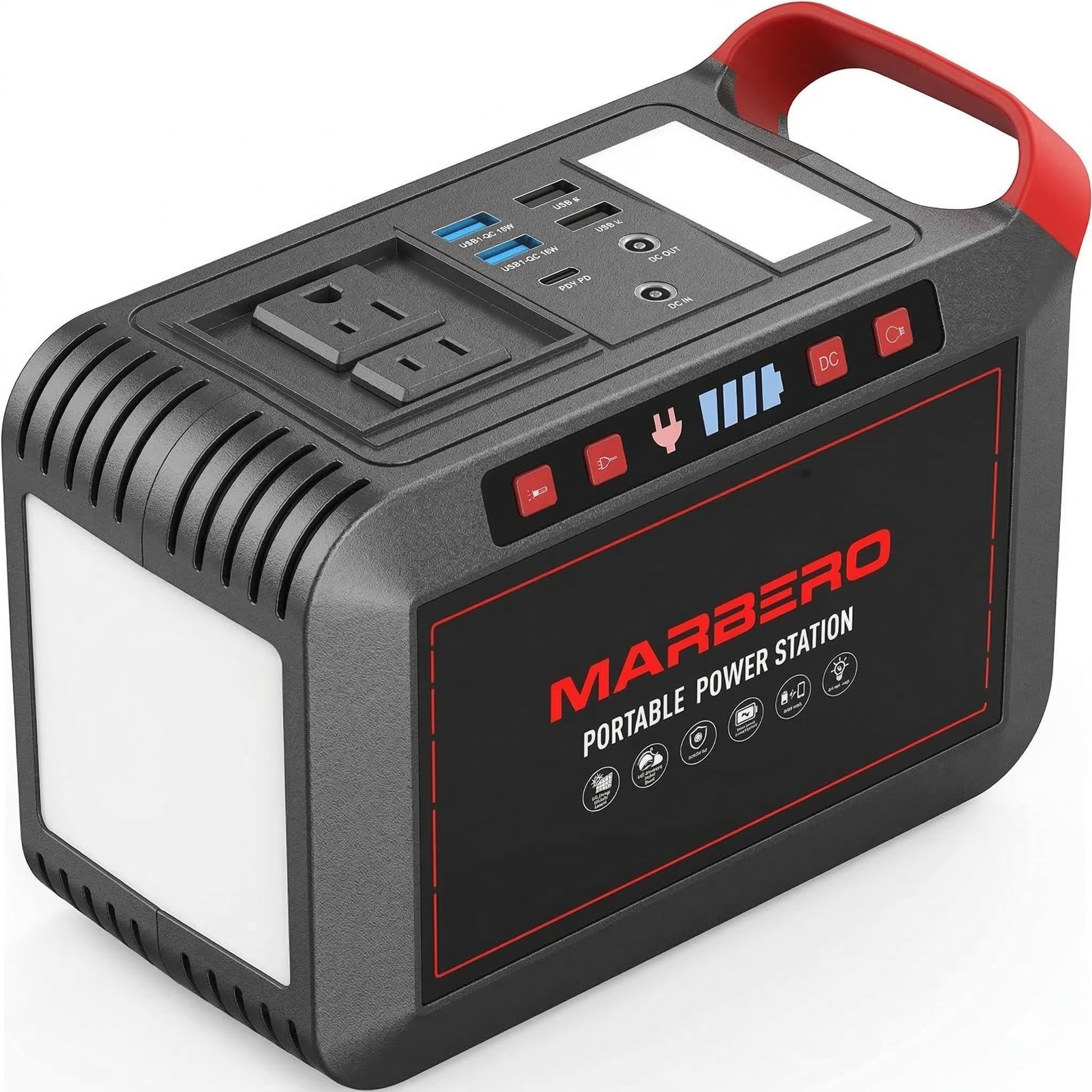
MARBERO M823

MARBERO M823

Carry-on travel

Our Score 8.4/10
Check Price

Worth Noting

  • 237Wh only covers a night without humidity
Weight
4.6 lb
Battery
Lithium-ion
Capacity
237Wh
AC Output
300W, 375W peak

At 4.6 pounds this is the only station here that counts as a packing item rather than a piece of luggage, and that's the whole case for it. It fits in a carry-on backpack, it has a lantern on the top and another on the side for a tent, and 237Wh will get a dry CPAP through a night with a little to spare. As a second unit that lives in the travel bag, it earns its place.

Two AC outlets, USB-A and USB-C ports, a DC port and a wall charge of about six hours round out a package that behaves like a bigger station until you ask too much of it. The thing to check is charge-holding: whether it still takes and keeps a full charge is where this model is least consistent, and for a machine you wear while asleep that matters more than the port count. Run it down and back up once at home, and keep the return window open.

Bottom line: The travel spare we reach for: 4.6 pounds and carry-on sized, with one dry night of therapy in it and lanterns for the tent.

How We Tested Portable Power Stations for CPAP Machines

We started by pulling every model we could find with a regulated 12V DC output or a pure sine wave AC outlet, since CPAP machines are fussy about both, then filtered by capacity, weight, and price so the shortlist covered a genuine spread instead of a dozen near-identical boxes. That left 10 stations, which we lived with for eight months.

Each one went into the bedroom first. We ran it through three consecutive nights on a single charge, once with the humidifier on and once with it off, and wrote down the hour each machine's low-battery alarm sounded. We listened for fan noise from two feet away on a pillow, checked whether the display could be dimmed or shut off entirely, and noted which stations needed a separate DC adapter cord before they would talk to our machines at all — a small detail that's easy to discover too late.

Then we took them camping and on the road. Recharge time got timed three ways: from a wall outlet, from a car's 12V socket, and from a folding solar panel on a clear afternoon. Every station went on a kitchen scale and got carried one-handed from bedroom to trunk to see whether the handle was usable at 20-plus pounds. For reliability, we ran each unit through repeated full drain-and-recharge cycles and re-measured usable capacity afterward, which is where the gap between advertised and delivered watt-hours showed up — and why a couple of tempting bargains didn't survive the cut.

How to Choose Portable Power Stations for CPAP

Start with the humidifier, not the machine

A CPAP blower is a light load: with the humidity off, most machines will get through a night on a couple of hundred watt-hours, which is why a 230Wh unit can carry you. A heated humidifier is a different job — it's a heating element running for hours, and it can roughly double the energy a night costs. Plan around 300Wh a night without humidity and 500 to 600Wh with it.

Treat the watt-hour figure on a listing as a ceiling rather than a promise; the inverter takes a share and the humidifier cycles on and off. If you never use humidity, the Jackery Explorer 300 is plenty. If you do, start at the LIBRIDS C600 and work upward.

Run it on DC if your machine has a cord for it

Every station here makes 110V AC, and turning battery DC into AC so the machine's power brick can turn it back into DC wastes capacity as heat. Most CPAP makers sell a 12-volt travel cord that plugs into a car outlet, and every unit here with a car or DC port can use one — which can add hours to a night from the same battery.

Check the cord's plug against the station's port before you buy it. It's a smaller purchase than a bigger battery and it does more for runtime, though a DC cord skips the humidifier on most machines.

Weight decides where it lives

Below about eight pounds a station can live on the nightstand and go into a bag for a trip; our top pick and the MARBERO sit there. Above fifteen pounds it has a home — the corner by the fridge, the back of the car — and you stop moving it.

There's no virtue in buying capacity you'll resent carrying. If the plan is a flight and a tent, five to seven pounds and one dry night beats a 25-pound unit with four. If the plan is a bedside backup that never moves, weight barely matters and capacity should win.

What a seamless switch is worth

A station doesn't automatically keep a CPAP running when the grid drops — it has to be plugged in, passing power through, and quick enough to transfer. Two units here list a 10ms switch, the BLUETTI Elite 30 V2 and the LIBRIDS C600, which is fast enough that the machine never notices.

If you're buying for storm season rather than for camping, that's the line to look for on a listing, and it's worth testing once at home while you're awake instead of discovering it at three in the morning.

Charging it back up

Wall charging is the fast lane: an hour for the Explorer 1000 v2, about 45 minutes to 80% for the BLUETTI, and a couple of hours for most of the small units — though the cheapest ones can still take six.

Solar is the slow lane, and a panel's wattage is a best-case figure. Expect to harvest noticeably less across a real day of angle, haze and shade, and plan on two or three days of sun to refill a mid-size station. Off grid for a week, buy capacity first and panels second.

Frequently Asked Questions

Final Verdict

The Jackery Explorer 300 is the one we point most CPAP users to: 292Wh, 7.1 pounds and LiFePO4 cells, at a price that doesn't punish you for buying a second one for the car. It covers a night with the humidifier off and still has room for a phone.

Two situations change the answer. If your bedroom loses power often enough that a 2 a.m. restart is a real worry, the BLUETTI Elite 30 V2 and its 10ms transfer justify the extra weight and money. If you sleep with the humidifier on, or you're away three nights at a stretch, buy the LIBRIDS C600 or the Explorer 1000 v2 and stop doing arithmetic in your head at bedtime.