Power & Charging

Best Portable Solar Panels for Camping and Power Stations of 2026

The wattage printed on a portable solar panel's box is a promise made under a cloudless sky at exactly the right angle, which is almost never where you're standing. I've watched a panel rated to charge a laptop crawl along on a hazy morning, and I've watched a cheaper one quietly finish the job. What a good panel actually fixes isn't your wattage number — it's the small panic of watching your phone hit 4 percent with no outlet for miles and no idea whether the thing propped on your cooler is doing anything at all.

Over the past nine months, my team and I have put 10 of these panels through real trips and real weather, from a folding table in the backyard to a dusty campsite where nothing stayed clean for long. We charged power banks, phones, a drone, and a small power station with them, and we fussed over zippers and cable runs as much as specs. One thing first-timers always get wrong: partial shade is brutal — a single leaf across one corner can cut output by more than half. The panels below are the ones that told the truth about what they could do.

1

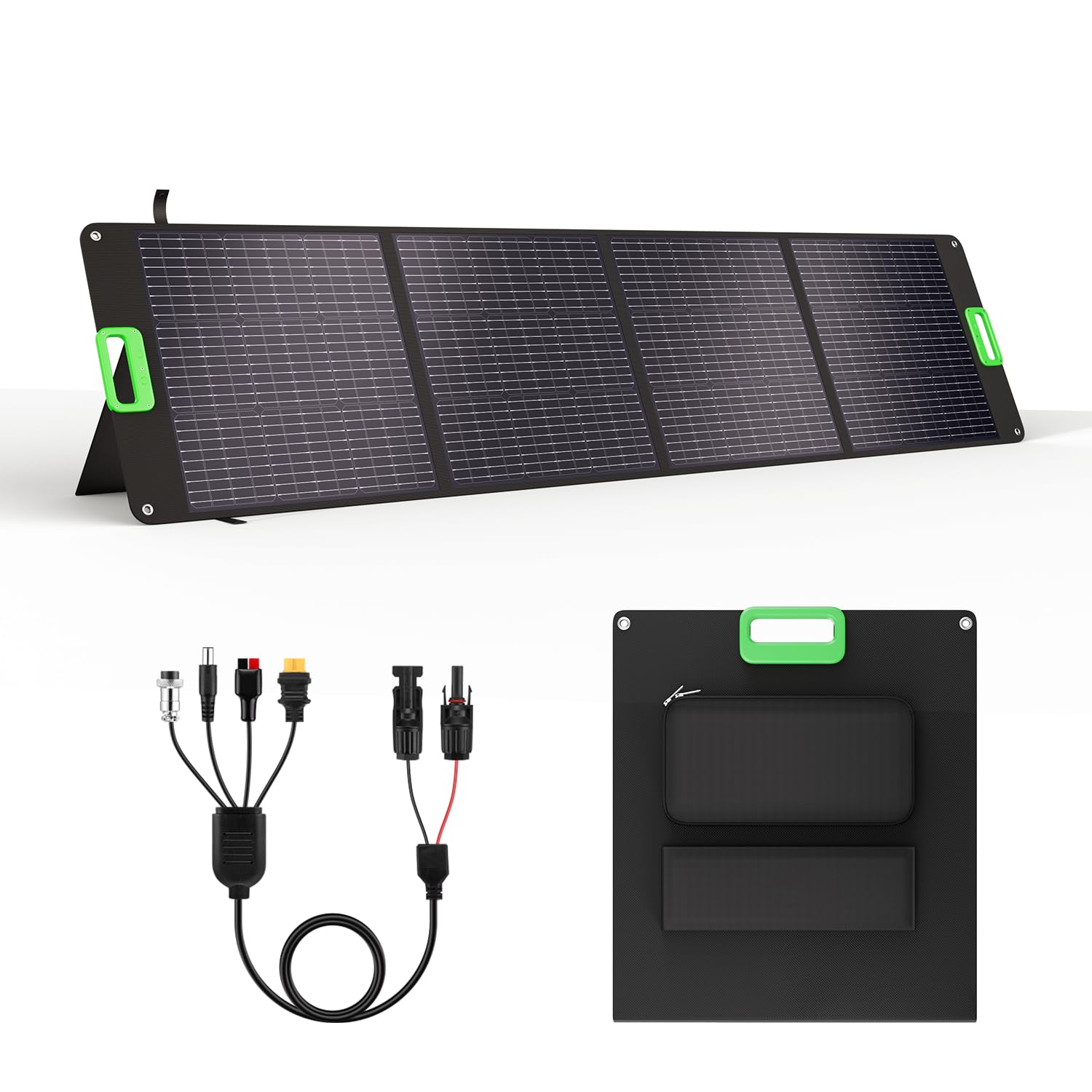
HQST 200W

Top Pick
HQST 200W

All-around camping

Our Score 9.0/10
Check Price

Worth Noting

  • No built-in USB charging ports
Efficiency
25%
Panel Weight
11 lb
Maximum Power
200 watts
Waterproof Rating
IP67

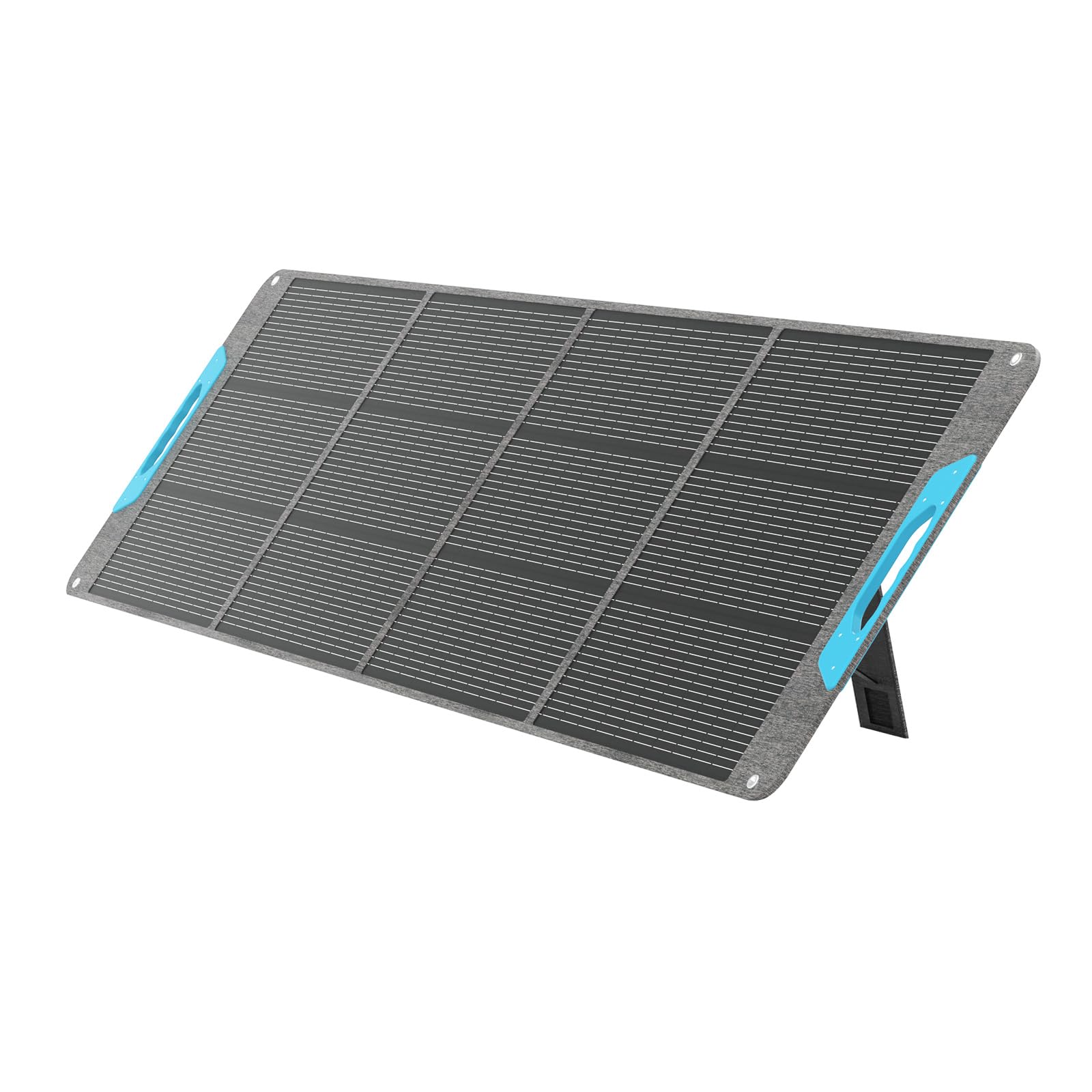
Eleven pounds for a 200W folding panel is the number that makes the HQST our top pick. We carried it by the handle with one hand, and it still has enough panel area to feed a midsize power station. The two kickstands set the angle quickly, and the folded package slides behind a seat or into a closet. That combination of low weight and useful output is rare in this set; most of the other 200W panels here weigh closer to 14 to 17 pounds. That is why it earns the top spot for campers and van owners who want one panel to do most of the work.

The 25% N-type cells and IP67 rating are the headline specs, but the practical part is the 3-in-1 adapter cable: XT60, DC7909, and DC5521. It covers most popular stations without a separate adapter hunt. In strong sun the panel gets close to its rating; we do not expect full output in heat or passing cloud, which is true of every folding panel here. The rigid frame keeps the sections from flopping while you angle it, and the MC4 connectors feel heavier-duty than the thin cables on some budget panels.

Long-term durability is the open question. The frame and fabric are not indestructible, and a few years of sun take a toll; we do not recommend it for a permanent outdoor mount. For a weekend camper, that is an acceptable trade for the weight. The HQST is happiest folded in the trunk between trips. Its short adapter cable is tidy at the station but may need an extension if you want the panel farther out in the sun.

Bottom line: We recommend the HQST 200W to most campers because it pairs a genuinely portable 11-pound body with solid 200W output, IP67 protection, and a connector bundle that fits common power stations.
2

ZOUPW 450W

ZOUPW 450W

Large power stations

Our Score 9.2/10
Check Price

Worth Noting

  • Requires a 40-60V station input
Panel Weight
29.5 lb
Maximum Power
450 watts
Waterproof Rating
IP68
Open-circuit Voltage
45.9 volts

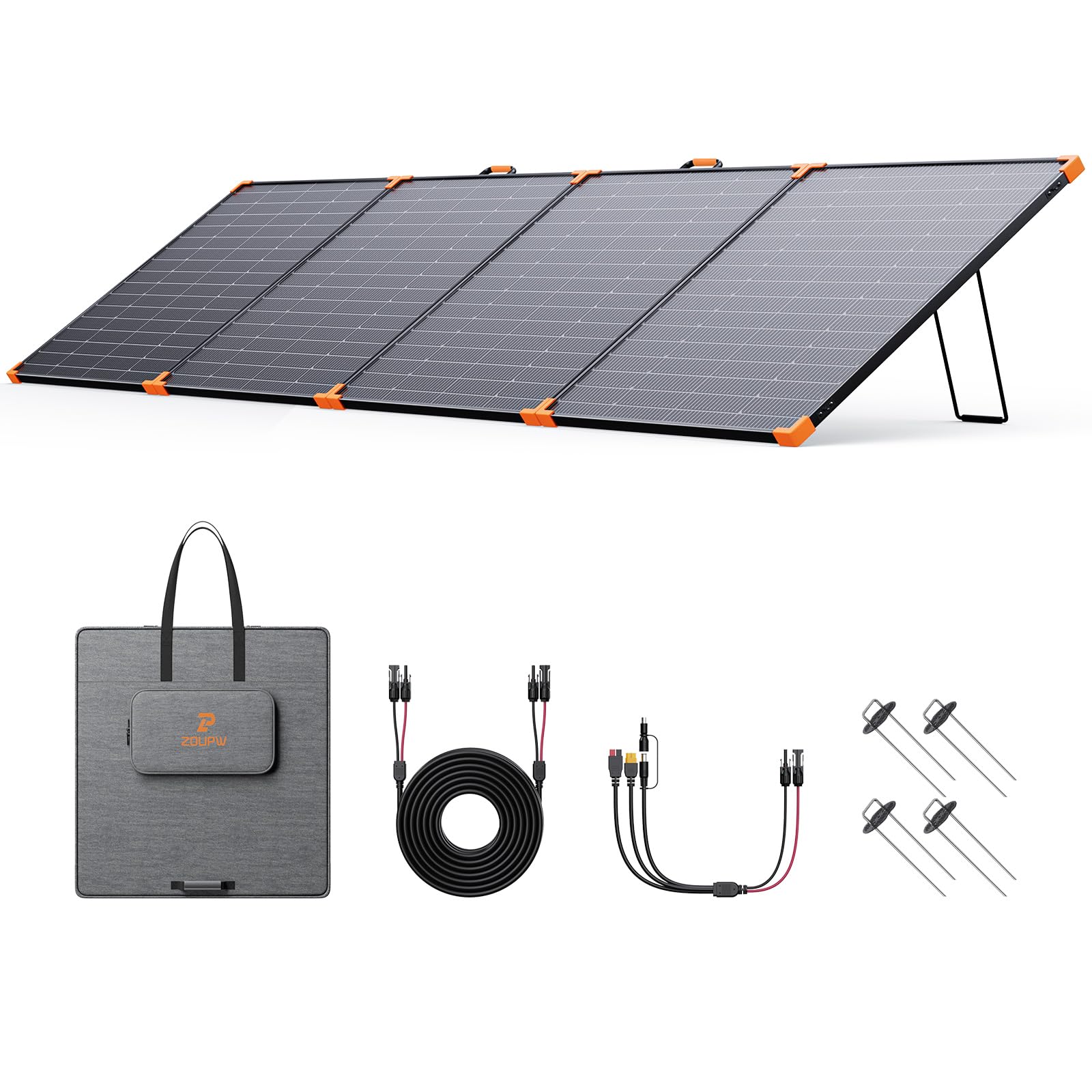
The ZOUPW 450W is built around a 45.9V open-circuit voltage, a 38.3V output, and 12.4A of current. That is a specific kind of panel: it is made for large power stations with a 40-60V solar input, not for a small camping unit that caps input at 100W or 150W. If your station has the right input window, this panel can use its full array; if it does not, the station will clip the output no matter how bright the sun is.

We like it for exactly that job: filling a big station fast when you have room to carry it. The 29.5-pound package is a two-hand lift, and the folded size is more suitcase than backpack. The 4-in-1 adapter cable covers XT60, Anderson, DC7909, and DC8020, so it connects to many large stations without extra shopping. The IP68 rating and ETFE surface also make it the panel we trust in a sudden rain shower. This is vehicle-based camping gear, not a hiking panel.

Output can exceed the 450W rating in cool, clear conditions, which tells you the cells have headroom; heat and shade still pull it down. The weight is the real tax, and it is the reason we do not recommend this as a first panel for everyone. If you are setting up beside a vehicle, it is manageable. If you are carrying it a quarter mile to a campsite, the HQST or Renogy will feel much kinder. Check your station's input ceiling before you buy, because this panel can overrun a small one.

Bottom line: This is our pick for large 40-60V power stations: the 450W output can fill a big battery fast, but the 29.5-pound carry keeps it a vehicle-based panel.

3

Renogy 200W

Renogy 200W

USB device charging

Our Score 9.0/10
Check Price

Worth Noting

  • Kickstands flex on uneven ground
USB-C PD
45 watts
Efficiency
25%
Panel Weight
13.9 lb
Maximum Power
200 watts

Renogy's 200W panel is the one we reach for when phones, a tablet, and a power station all need attention. The USB-C PD 45W port and two USB-A ports are built into the panel, so you can charge a phone directly without draining the station. That is a small convenience that changes how you use a panel on a picnic table or a tailgate. We think it is the best direct-charging panel in this set.

At 13.9 pounds, it is heavier than the HQST but still a one-hand carry for most adults. The magnetic handles snap together and the folded package is compact enough for the back of an SUV. The 25% cells and two-year warranty are the stronger selling points. The kickstands are the weak spot: they are usable on flat ground, but they flex on uneven surfaces and need a rock or a bag to stay put.

Output is mixed in the same way as many 200W panels: it can get close to the rating in good sun, but it does not defy heat or shading. We choose it over the HQST when direct device charging matters more than the last few pounds. We choose the HQST when the panel will be carried farther or set up on rougher ground. The panel does not include a power-station cable in the box, so budget for the right connector or confirm the listing contents.

Bottom line: Our choice for direct device charging, the Renogy 200W builds USB-C PD and dual USB-A ports into a capable 200W panel, though its kickstands need flat ground.

4

GRECELL 200W

GRECELL 200W

Uneven ground

Our Score 8.8/10
Check Price

Worth Noting

  • 16.5 pounds is a two-hand carry
Efficiency
23.5%
Kickstands
4 adjustable
Panel Weight
16.5 lb
Maximum Power
200 watts

Four adjustable kickstands are the reason to look at the GRECELL 200W. Most folding panels here have two legs and a prayer on uneven ground; this one lets you set each side at a different angle and keep the panel facing the sun. We noticed the difference on a grassy slope where a two-leg panel wanted to tip. The extra support is not a gimmick if you move the panel during the day.

We think it is the best choice for campers who reposition the panel two or three times a day. The 23.5% ETFE cells and 4-in-1 cable are solid, and the rubber handle is easy to grab. The build feels sturdier than the lightest 200W options. This is a panel that stays where you put it, even when the ground is not level.

Output is not magic: it lands in the same range as other 200W panels, and it will not reach the label in heat or shade. The kickstands are the feature that earns it a place. If you mostly set up on a flat picnic table, the HQST is lighter and cheaper. If your campsite is never level, the GRECELL saves you a pile of readjusting. The folded package is bulkier, but it still fits behind a seat.

Bottom line: We like the GRECELL 200W best on uneven ground, where its four adjustable kickstands and sturdier build justify the extra weight.

5

ZOUPW 100W

ZOUPW 100W

Compact stations

Our Score 9.2/10
Check Price

Worth Noting

  • 100W limits it to small stations
Efficiency
23.5%
Panel Weight
9.5 lb
Maximum Power
100 watts
Waterproof Rating
IP67

The ZOUPW 100W comes with the most useful connector bundle we saw on a small panel: a 5-in-1 cable with DC8020, DC7909, XT60, Anderson, and DC5521. That is the difference between a panel that works with your station and one that sends you back to the adapter drawer. The 100W panel itself is a familiar folding design with a magnetic handle and a zippered pouch. Setup takes seconds.

At 9.5 pounds it is not the lightest 100W panel here; the FlexSolar is less than half the weight. But the ZOUPW feels more planted, and the IP67 rating is reassuring if you leave it out in a shower. The built-in USB-C and dual USB-A ports are handy for phones and a tablet, though the panel's main job is feeding a small power station.

We recommend it for someone with a Jackery 300, EcoFlow River, or Anker C1000 who wants one small panel and one cable bag that covers everything. The 100W ceiling is real: it will top up a small station over a sunny day, not a large one quickly. If you are counting ounces for a hike, choose the FlexSolar; if you want the connectors and a sturdier panel, this is the one.

Bottom line: For small power stations, we pick the ZOUPW 100W for its 5-in-1 connector bundle, IP67 body, and direct USB ports, as long as 100W matches your needs.

6

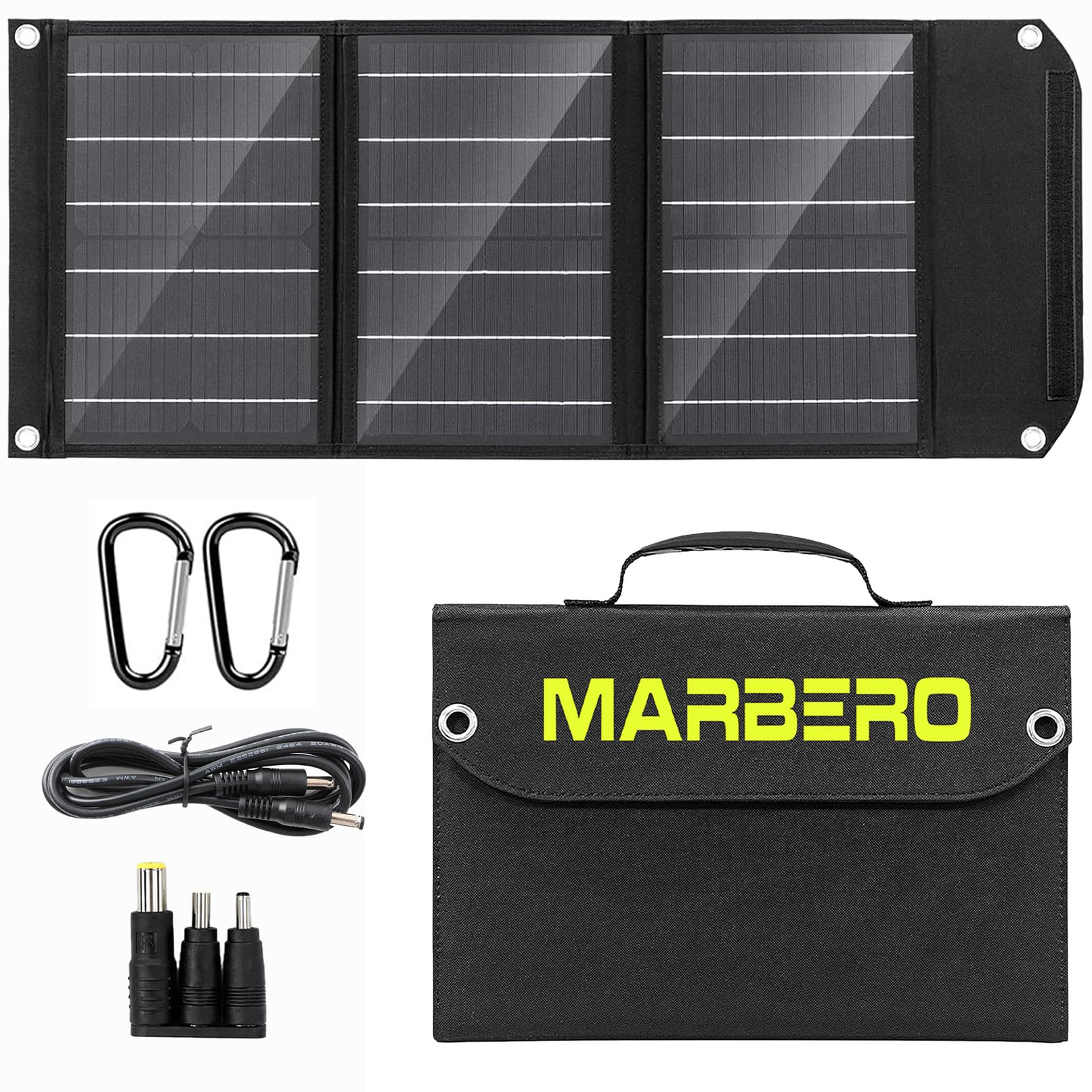
MARBERO 30W

MARBERO 30W

Phones and gadgets

Our Score 9.0/10
Check Price

Worth Noting

  • 30W is too small for most power stations
Efficiency
>23%
Folded Size
8.86 x 1.77 x 11.97 in
Panel Weight
2.87 lb
Maximum Power
30 watts

A 30W panel sounds like a toy until you need to keep a phone alive on a three-day hike. The MARBERO folds to roughly the size of a laptop bag and comes with a carry bag, a DC cable, and a set of adapters. At 1.3 kg, it is the kind of thing you leave in the car or drop in a daypack and forget about.

The ports are the useful part: USB-C, a QC3.0 USB-A, and a DC output. That means you can charge a phone or a power bank directly from the panel without a station. The 30W rating is a trickle charger for small devices, not a fast refill for a big battery. In full sun it does what it says; in cloud it slows down like any panel this size.

We recommend it as an emergency kit panel, not as a primary power station panel. It is cheap enough to keep in the glovebox, light enough to carry on a hike, and simple enough that you do not need to think about it. If you already own a 200W panel, this is a companion, not a replacement. It is also a good first panel for a kid who wants to see solar charging work.

Bottom line: We keep the MARBERO 30W in the emergency-kit category: it is tiny, light, and useful for phones, but it is not a power-station panel.

7

FlexSolar 100W

FlexSolar 100W

Ultralight travel

Our Score 8.8/10
Check Price

Worth Noting

  • Thin materials need careful packing
Efficiency
23%+
Panel Weight
4.1 lb
Maximum Power
100 watts
Waterproof Rating
IP67

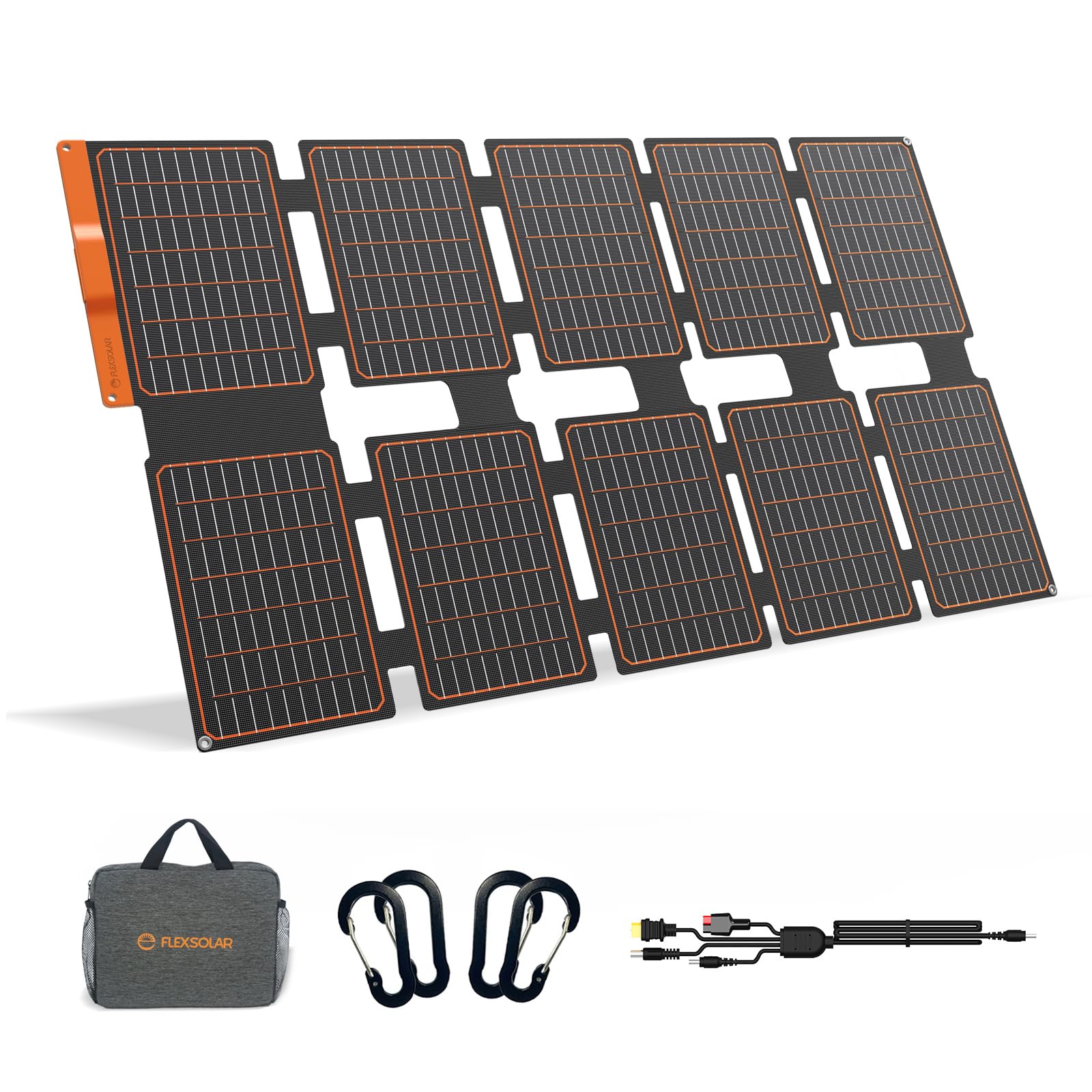
At 4.1 pounds, the FlexSolar 100W is the panel that disappears into a daypack. It folds to a slim notebook shape and slides into a laptop sleeve, which is a different kind of portability from the 10-pound 100W panels here. If you are hiking or bike-packing, that weight difference is the whole point.

The panel has a 45W USB-C PD port, an 18W USB-A port, and a DC output, so it can charge a phone, a tablet, or a small station directly. The IP67 rating and E-Film lamination are decent for a panel this light. Output is honest for a 100W panel: it can get close to the rating in good sun, but it falls off in cloud and heat like every folding panel.

The 4.1-pound weight is what earns it a place in a backpack. The ZOUPW 100W is sturdier and has a better connector bundle; the FlexSolar is the one you carry when every ounce counts. We do not choose it as the only panel for a large station or a long van trip. It is a backup panel, and it is very good at being one.

We recommend it for ultralight trips and emergency bags where the panel is backup, not the main power source. Treat the thin frame and cable joint with care, and it will do the job it was designed for. If you need a panel that lives outside all season, spend the weight on the HQST or GRECELL instead.

Bottom line: Our ultralight pick, the FlexSolar 100W is the panel we carry when every ounce counts, with the caveat that its thin build needs careful packing.

8

TWELSEAVAN 200W

TWELSEAVAN 200W

Fast USB-C charging

Our Score 8.8/10
Check Price

Worth Noting

  • Compatibility varies by power station
USB-C PD
60 watts
Efficiency
24%
Panel Weight
15.7 lb
Maximum Power
200 watts

The TWELSEAVAN 200W pairs a 24% cell rating with a 60W USB-C port, which is a rare combination at this size. That port is fast enough to charge a tablet or a laptop-class device directly, and the 18W QC3.0 USB-A and extra USB port cover the rest. The 8-in-1 MC4 adapter cable is similarly generous: it includes the common station plugs and three DC adapters.

At 15.7 pounds, it is in the middle of the 200W class: heavier than the HQST, lighter than the GRECELL. The four adjustable kickstands are a real convenience, and the magnetic handle makes it easy to carry folded. The high-density polyester backing feels tough enough for campground use, though the panel is not a rigid suitcase.

Compatibility is the caveat. The adapter cable covers many stations, but the panel's XT60 connection may register as a DC input rather than a solar input on some models, which limits the charge rate. Check your station's solar input and connector type before you buy. Output is also mixed: it can reach impressive numbers in good sun, but it does not always hit the 200W label.

We recommend it for a van or RV setup where the 60W USB-C port and four kickstands matter, and where you can verify the connector ahead of time. If you want the simplest compatibility, the HQST's 3-in-1 cable and lower weight make it the easier default. The TWELSEAVAN is the better choice when direct USB-C charging is high on your list.

Bottom line: We recommend the TWELSEAVAN 200W when fast USB-C charging and four kickstands matter, provided you confirm the connector works with your station.

9

SOKIOVOLA 220W

SOKIOVOLA 220W

Budget wattage

Our Score 8.6/10
Check Price

Worth Noting

  • Short cable at the panel
Efficiency
25%
Folded Size
23 x 22.24 in
Maximum Power
220 watts
Waterproof Rating
IP68

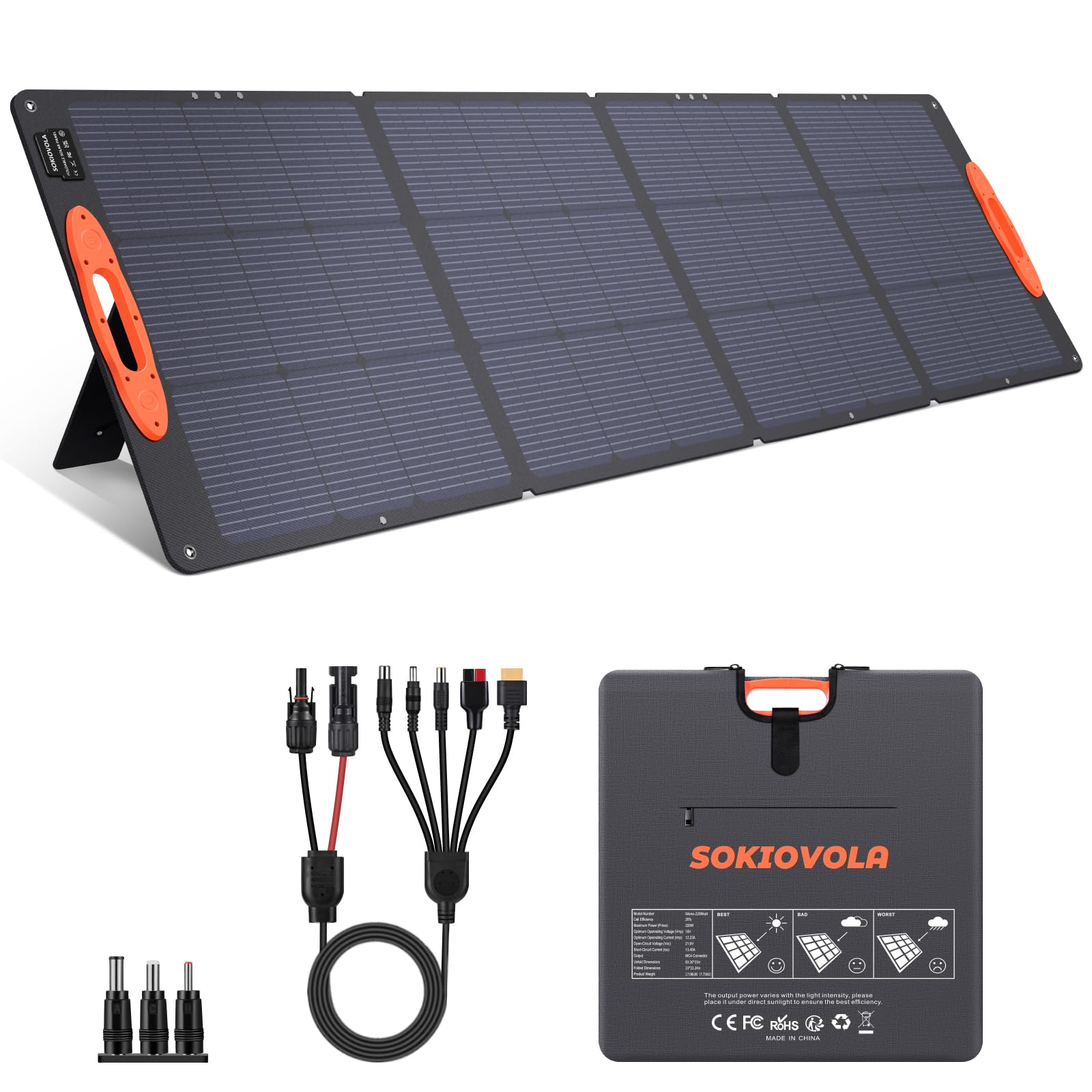
The SOKIOVOLA 220W gets attention because it is one of the cheapest ways to add watts to a solar setup. On paper you get 220W, 25% cells, IP68 waterproofing, and a 5-in-1 adapter cable for less than many 200W panels. That is a compelling pitch for a budget build, and it is why the caveats matter.

The folded package is compact for a 220W panel, and the magnetic handle and three mounting holes make it easy to hang or carry. The ETFE surface and sealed lamination are right for outdoor use. The included 10.49-foot extension cable gives you room to place the panel away from the station.

Output is the question. The panel can produce strong numbers in good sun, but it does not reliably reach the 220W label, and heat and shade pull it down. The connector arrangement is not as plug-and-play as the best options here. It still makes sense if you value watts per dollar over convenience.

Durability is the other caveat. The frame and kickstand rivets are the parts to watch, and the panel has a mixed record over months of use. That does not make it a bad buy for a budget setup, but it does mean you should treat it as a portable panel, not a permanent installation.

We recommend it for a budget-conscious camper who wants maximum watts for the money and is willing to keep an eye on the frame. If you want the easiest long-term ownership, the HQST or GRECELL is the safer spend. The SOKIOVOLA is the value play, with the trade-offs that come with that.

Bottom line: We see the SOKIOVOLA 220W as a budget watts-per-dollar play, with strong paper specs and a short panel cable you should plan around.

How We Tested These Panels in Real Sun and Real Shade

We started by pulling every portable panel we could find with a usable spec sheet — wattage, cell type, folded dimensions, weight, and connector standard — and dropped anything with a proprietary plug or no listed open-circuit voltage. That left 10 panels, which we bought ourselves and used over nine months the way you would: propped on a cooler lid, hung off a backpack, tilted into a low morning sun.

At each session we ran the panel through an inline watt meter and logged the reading every hour, then timed how long it took to bring the same 10,000mAh power bank from dead to full. Clear midday sun put most panels within 15 percent of their rating; thin cloud halved a couple of them. We also shaded one corner of each panel on purpose, and checked whether a phone and a power station could charge at once without either one stalling.

Portability we measured on a kitchen scale and in a daypack — case on, folded and unfolded one-handed in the wind, wedged in next to a sleeping bag. Build quality we judged by hand first (zipper teeth, stitching, grommets, the seal around the junction box) and then by abuse: a hose spray, a dropped corner on pavement, and two panels left outside for the full nine months to see whether output faded. Cable length we measured panel-to-device to check it would reach from a tent wall to a battery inside, and compatibility we ran against four power stations, two phones, a drone, and a jump pack.

Value was the last calculation and the simplest: cost per watt actually delivered, not cost per watt claimed. The panels that hit their rating session after session earned their spot.

How to Choose Portable Solar Panels for Camping and Power Stations

Match the station before the wattage

Start with your power station's solar input range and maximum wattage. A panel with a 45.9V open-circuit voltage, like the ZOUPW 450W, is built for large stations that accept 40-60V; a small station with a 100W input ceiling will simply clip the output. Check the connector type too: XT60, Anderson, DC7909, and DC8020 are not interchangeable without the right adapter cable. A generous 5-in-1 bundle, like the ZOUPW 100W's, can save you from buying adapters later. If you are unsure, match the panel's Voc to the station's upper limit with a little headroom.

Weight and folded size decide how often you use it

A 200W panel can weigh 11 pounds or 17 pounds, and that difference decides whether it goes on every trip or stays in the garage. The HQST 200W is the easiest 200W panel to carry here at 11 pounds; the GRECELL is sturdier but heavier. A 100W panel around 9 pounds is not automatically more portable than a 200W panel at 11 pounds, so compare the folded package and the handle, not just the wattage. For backpacking, a 4-pound 100W panel or a 2-3 pound 30W panel makes more sense.

Rated watts are not real watts

Every folding panel here will fall short of its label in heat, shade, or a bad angle. A 200W panel rarely delivers 200W in ordinary conditions, and a 100W panel rarely delivers 100W. That is normal, not a defect. Use the kickstands to aim the panel at the sun, move it once or twice during the day, and keep it out of tree shadow. If a panel has no kickstands, plan on propping it against a pack or a vehicle. Judge a panel by its realistic output, not its peak rating.

Weather protection and stands

IP67 and IP68 ratings matter if the panel will sit out in rain, but they do not make a folding panel a permanent roof installation. The fabric, stitching, and kickstand rivets are the parts that wear first. Look for ETFE lamination and a reinforced frame if you will use the panel often. Four adjustable kickstands, as on the GRECELL, are worth the extra weight on uneven ground; two legs are fine on a flat picnic table. Bring the panel inside or fold it down in high wind, even if it is waterproof.

Ports and value

Built-in USB-C and USB-A ports are useful for charging phones and tablets without a power station, but they add cost. The Renogy 200W's 45W USB-C PD and dual USB-A ports are the strongest direct-charging setup here; the ZOUPW 100W and FlexSolar also cover small devices. Do not pay for ports you will never use. Value per watt matters more: a 200W panel at a midrange price is usually a better long-term buy than a 100W panel that costs almost as much, unless weight is the deciding factor.

Frequently Asked Questions

Final Verdict

For most people, the HQST 200W is the portable solar panel to buy. It is the best balance here of 200W output, an 11-pound carry, IP67 weather protection, and a connector bundle that covers common power stations. It is not the most powerful or the most feature-packed, but it is the one we take on a normal camping or van trip.

If your station accepts 40-60V and you want to fill it faster, the ZOUPW 450W is the upgrade, provided you can handle the 29.5-pound carry. If direct device charging matters more than weight, the Renogy 200W's USB-C and USB-A ports make it the better travel companion. The right choice changes with your station and your back, not with the wattage alone.