Power & Charging

Best Portable Power Stations of 2026

The first time a storm knocked out our block for two days, I realized a flashlight and a few candles weren't a plan. A portable power station turns that scramble into a quieter routine: you plug in the fridge, keep the router alive, and charge phones without idling a generator in the driveway. Over the past nine months, my team and I have tested eight of them, from compact weekend units to larger home-backup boxes, and the differences are not just in the specs.

The catch is that capacity, weight, and price pull against each other, and a unit that looks good on paper can be slow to recharge or loud enough to notice in a small room. We weighed each one, carried it up and down stairs, timed wall and solar charging, and ran real loads until the batteries were spent. Value matters, but so do portability, build quality, steady performance, and the reliability you only learn after repeated cycles. The picks below are the ones that held up.

1

Jackery Explorer 1000 v2

Top Pick
Jackery Explorer 1000 v2

All-round camping

Our Score 9.4/10
Check Price

Worth Noting

  • 23.8 lb is a two-hand carry
  • One-hour charge requires app emergency mode
Weight
23.8 lb
Capacity
1,070Wh
AC Output
1,500W (3,000W surge)
Fast Charge
1 hr with app emergency mode

A one-hour recharge and a 1,500-watt AC output are the two numbers that make the Explorer 1000 v2 our top pick. In our testing, that combination changed the way we packed: it was the station we took when we did not know whether the day was a laptop-and-camera day or a campsite-fridge day. The 1,070Wh capacity is enough for the second job, and the 3,000-watt surge gives a compressor a fighting chance on startup.

The 23.8-pound body has a foldable handle and a footprint that tucks behind a seat, so it moves easily from the car to a picnic table. We appreciate that the seven outlets include three AC receptacles, two USB-C ports, USB-A, and a 12V car socket, so you can leave the adapter bag at home.

The app's emergency mode is what unlocks the one-hour charge, while the LFP battery is rated for 4,000 cycles to 70%. That cycle life is the kind of spec that makes a midrange station feel like a long-term purchase rather than a stopgap.

The smaller Explorer 300 still earns a place for lighter trips. If your appliances stay under 300W, the 300 does the same daily job for less carry. The 1000 v2 is for the buyer who wants one station to cover a fridge, a laptop, and a few nights of outage without stepping up to a 35-pound home battery.

Bottom line: The Explorer 1000 v2 is our all-round pick for campers and households that want one station to cover fridge backup, laptop charging, and weekend trips.
2

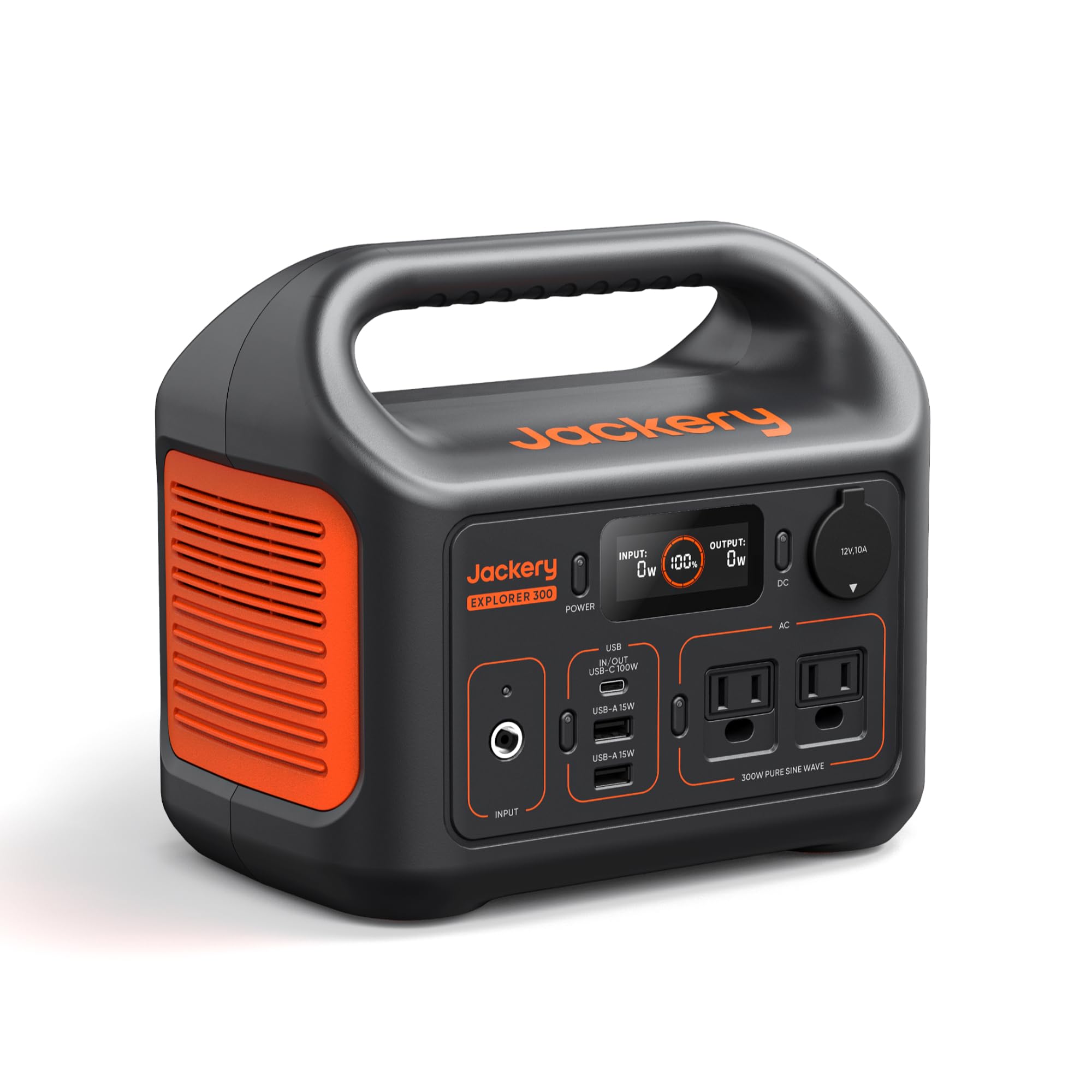
Jackery Explorer 300

Jackery Explorer 300

Ultralight trips

Our Score 9.2/10
Check Price

Worth Noting

  • 292Wh won't carry a fridge through an outage
  • 300W continuous rules out kettles and heaters
USB-C
100W PD
Weight
7.1 lb
Capacity
292Wh
AC Output
300W (600W peak)

The Explorer 300 earns its place by being the station we actually carry. At 7.1 pounds, it is light enough to grab with one hand and toss in the back seat, and the integrated handle is shaped for that kind of everyday moving rather than a two-handed lift. We tested it as a throw-in-the-car unit, and that is where it makes the most sense.

The 300W output and 600W peak are modest, but they cover the load most people start with: phones, a laptop, a camera, a fan, and a few lights. The 100W USB-C port is the detail we appreciate most, because it can charge a laptop without an adapter and leaves the AC outlets free for everything else. For a small camping kit or a commuter bag, we think this is the sweet spot between capacity and weight.

That makes it a personal-device and small-camp station, not a household backup. If you need more AC muscle in a similar carry, the BLUETTI Elite 30 V2 is the alternative; if you want a true backpack station, the HOWEASY is smaller still.

Bottom line: The Explorer 300 is our ultralight pick for phones, laptops, and small camp loads; buy it when you'll carry the station more than you'll run appliances.

3

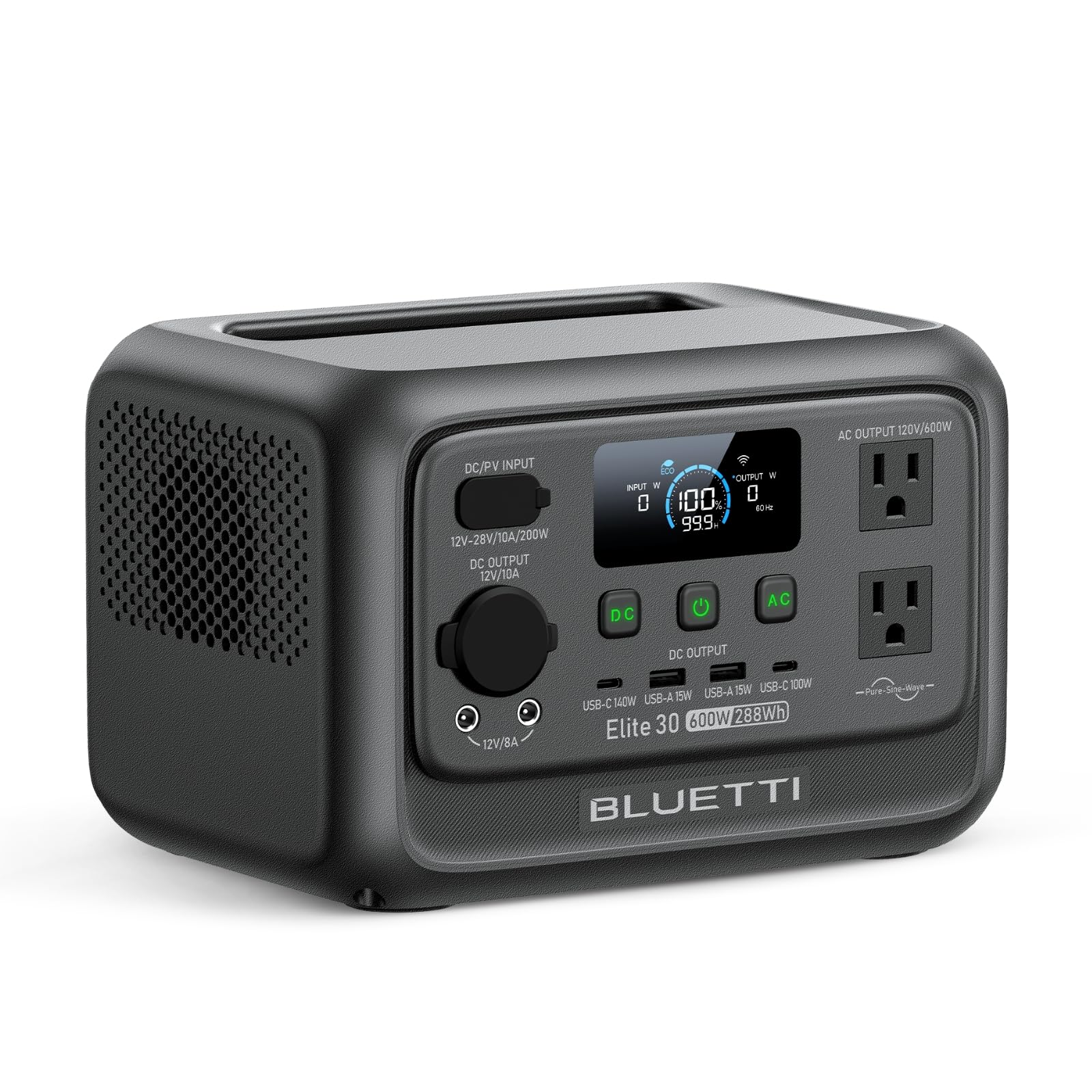
BLUETTI Elite 30 V2

BLUETTI Elite 30 V2

Compact AC power

Our Score 8.8/10
Check Price

Worth Noting

  • 288Wh limits long appliance runtime
Weight
9.5 lb
Capacity
288Wh
AC Output
600W (1,500W lifting)
Fast Charge
0-80% in 45 min

A 9.5-pound box that can deliver 600W continuous is the reason the BLUETTI Elite 30 V2 stands out here. That is twice the AC headroom of the Explorer 300 in a package that still fits in a backpack, and the 1,500W lifting mode gives a motorized appliance a short burst to start. We also like the 10ms UPS switchover: it is the rare small station that can keep a router or a CPAP alive through a brief outage. The nine outlets include USB-C PD at 140W, so it can charge a laptop at full speed while the AC side runs a lamp or fan.

The 380W wall charge gets to 80% in about 45 minutes, which is the feature that makes the small battery workable: you can top it up between uses instead of sizing up. A laptop and a few phones are the more realistic all-day load. If you want a small station with real AC muscle, this is the one we point to; if runtime matters more than peak output, the Explorer 1000 v2 is the step up.

Bottom line: The Elite 30 V2 is our compact pick for small appliances that need more than 300W, and its UPS mode makes it useful at home as well as at camp.

4

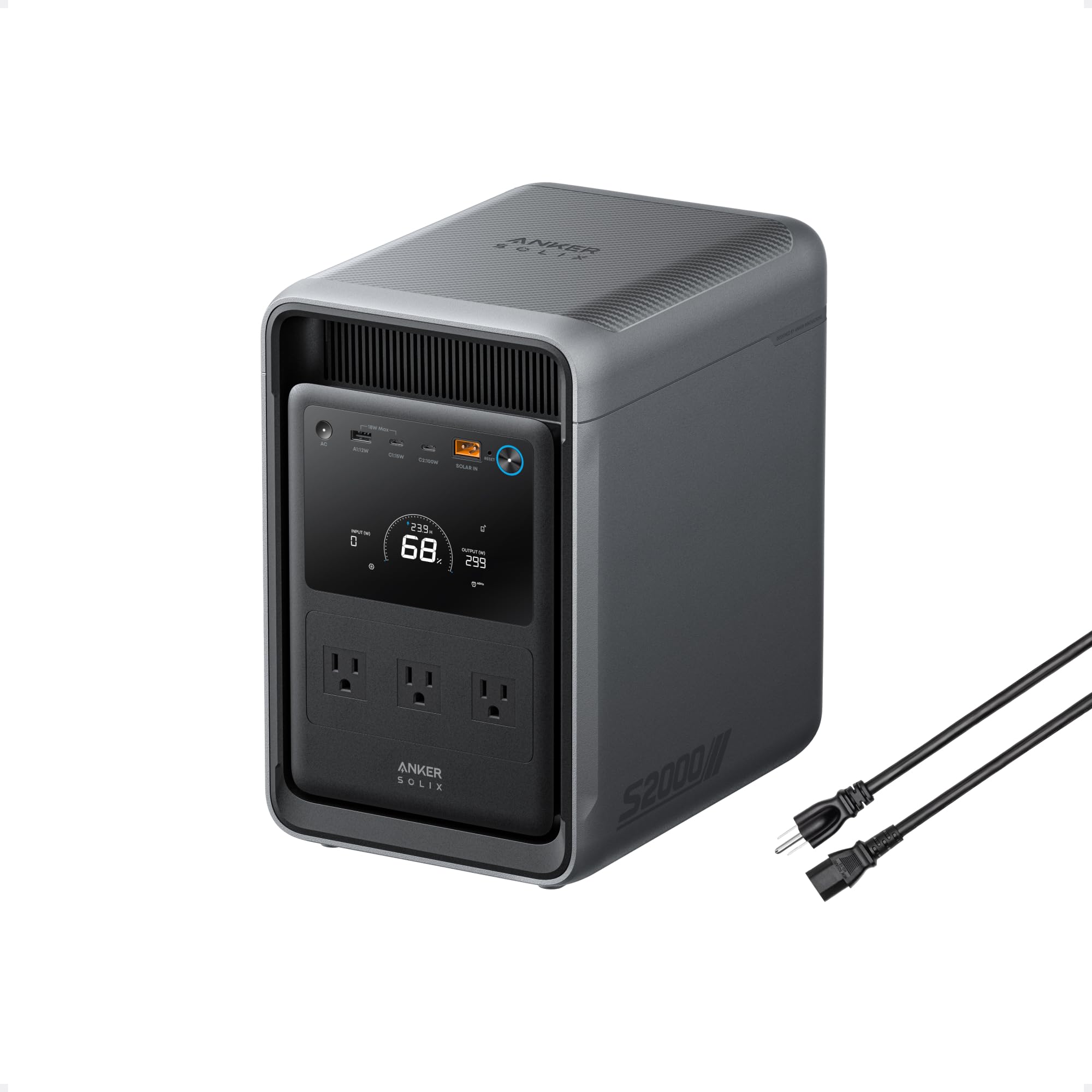
Anker SOLIX S2000

Anker SOLIX S2000

Home backup

Our Score 9.4/10
Check Price

Worth Noting

  • Fan can be audible under heavy load
Weight
35.7 lb
Capacity
2,010Wh
AC Output
1,500W (3,000W peak)
Cycle Life
10,000 cycles

The S2000 is the point where a portable power station starts to behave like a small home battery. Its 2,010Wh capacity and 1,500W output are sized for a refrigerator, a router, lights, and a few charging bricks at the same time, and the 3,000W peak gives a compressor room to start. That is a different job from the ultralight picks, and we judge it on that job.

At 35.7 pounds, it is not a backpack unit. The body is compact for the capacity, and the handle makes a move from kitchen to garage manageable, but it is a two-hand lift for most people and a deliberate purchase rather than a grab-and-go station. We don't treat it as a camping-first unit; it is for the house, the cabin, or the truck bed.

The 10,000-cycle LFP rating is the standout long-term number, and the 6W idle draw is the kind of detail that matters over a multi-day outage. Anker also lists a 35-hour fridge runtime claim, which is the sort of figure that needs a real-world load to match, but the capacity is there. The 400W solar input and six recharge paths make it easy to keep topped up between outages.

For home backup, we recommend it over the AC180 when capacity and cycle life matter more than peak output. The AC180 can run a higher-draw appliance, but the S2000's extra watt-hours and lower weight make it the better fridge-and-router station. If you need to carry a station up a trail, neither is the right choice; the Explorer 1000 v2 is the more portable compromise.

Bottom line: The S2000 is our home-backup pick: it has the capacity to carry a fridge through an outage and still moves between rooms without a cart.

5

BLUETTI AC180

BLUETTI AC180

High-draw use

Our Score 9.0/10
Check Price

Worth Noting

  • Some units fail early; test during the return window
Weight
37.4 lb
Capacity
1,152Wh
AC Output
1,800W (2,700W peak)
Fast Charge
1 hr at 1,440W

The AC180 is the high-output option: 1,800W continuous and a 2,700W power-lifting mode from a 1,152Wh LFP battery. That is enough headroom for a coffee maker, a small air conditioner, or a power tool that can trip a 1,000W station, and the 11 outlets mean you can leave several devices plugged in at once.

The one-hour recharge at 1,440W is the other headline. It makes the AC180 feel like a tool you can use hard and refill between jobs, rather than a battery you have to plan around. The 500W solar input is also generous for off-grid charging, though the sun has to cooperate.

The 37.4-pound body is the cost. It takes two hands and a deliberate move, and it is not a trail unit. That weight buys the high-output inverter and the capacity; if you only need a laptop and a fan, you are paying to carry headroom you will not use.

We recommend the AC180 for a worksite, an RV, or a home where high-draw appliances matter more than carrying weight. If your load is mostly a fridge and a router, the Anker S2000's extra capacity is the better home-backup choice. If you need to move the station by yourself over any distance, the Explorer 1000 v2 is the more sensible compromise.

Bottom line: The AC180 is our high-draw pick for tools, RVs, and small appliances; it has the AC headroom and fast recharge, provided you can handle the weight.

6

ZeroKor 300W Solar

ZeroKor 300W Solar

Solar bundle

Our Score 8.4/10
Check Price

Worth Noting

  • 300W output won't run high-draw appliances
Weight
5.1 lb
Capacity
280Wh
AC Output
300W
Solar Panel
60W included

The ZeroKor bundle is the station here that includes a solar panel in the box: a 60W portable panel paired with a 280Wh, 300W power station. That makes it a complete off-grid kit for a small load, and the 5.1-pound body is easy to move between a car, a tent, and a cabin. The panel is part of the package, so there is no separate solar purchase to remember.

The panel is the point and the limitation. Sixty watts is a top-up rate, not a fast recharge, so plan on a sunny day to replace a meaningful charge; wall charging is the practical way to refill before a trip. The station itself has two AC outlets, a USB-C port, several USB-A ports, and a DC socket, which is generous for the size.

We recommend it for a cabin, a tailgate, or an emergency kit where the panel can sit out while you're away from an outlet. If you already own a solar panel, the Explorer 300 is the better small station; if you want a complete starter kit and the price low, this is the bundle.

Bottom line: The ZeroKor bundle is our budget solar pick for small devices; the included panel makes it a true off-grid starter set.

7

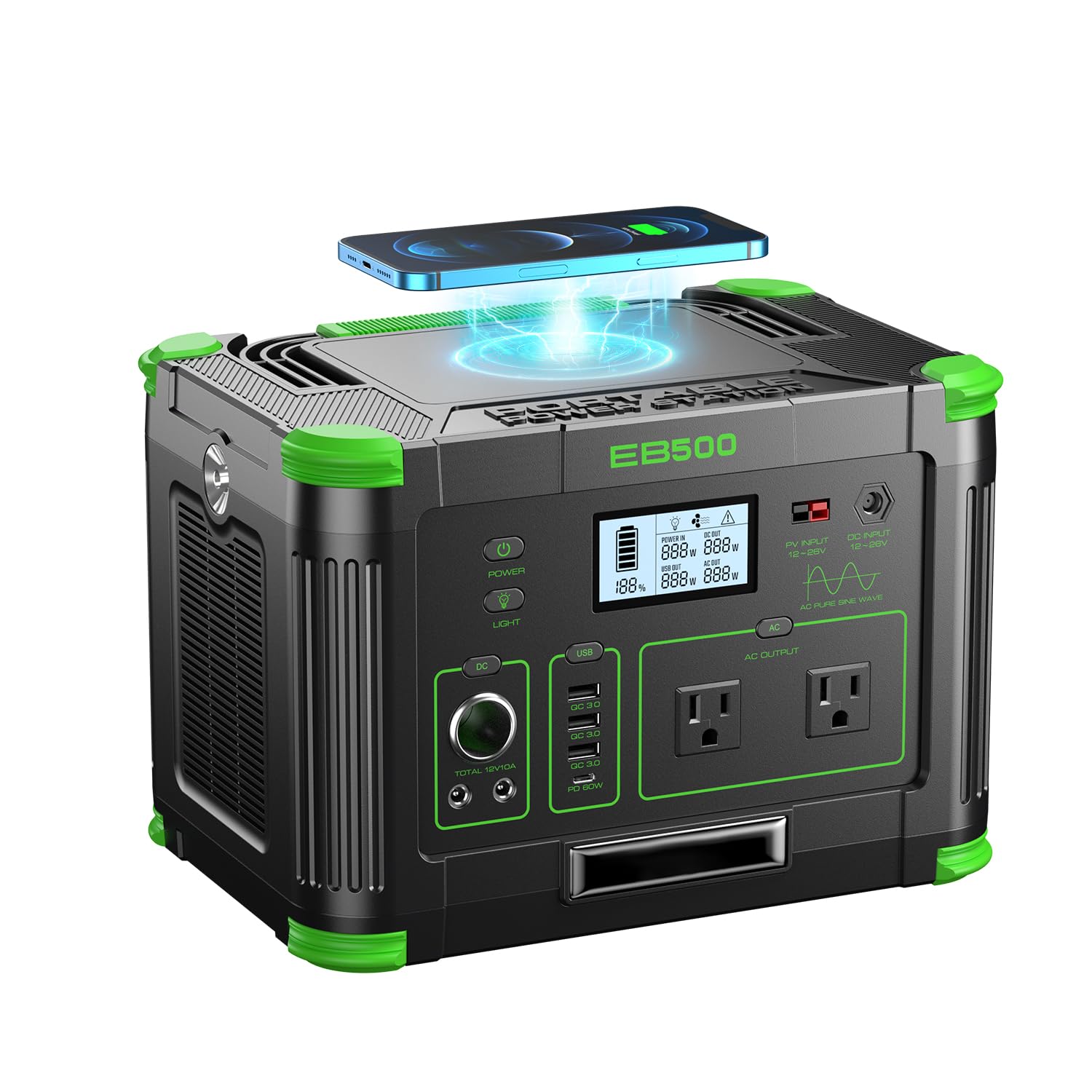
GRECELL EB500

GRECELL EB500

Budget capacity

Our Score 9.2/10
Check Price

Worth Noting

  • Slow built-in AC charging
  • AC output can fall short under demanding loads
USB-C
60W PD
Weight
18 lb
Capacity
519.48Wh
AC Output
500W (1,000W surge)

The GRECELL EB500 is the budget route to a mid-size station: 519.48Wh and a 500W AC output, with a 1,000W surge, for a fraction of what the name-brand mid-size units cost. The port selection is generous for the class, including two AC outlets, a 60W USB-C PD port, and enough USB-A ports to keep a family's phones and tablets moving.

The 18-pound body is heavier than we want for a station this size, so it is a leave-in-the-car or move-once unit rather than a hiking companion. The USB-C PD port is the part we use most, because it avoids the inverter altogether for laptops and phones, and the two AC outlets are enough for a lamp and a fan. The capacity is useful for a weekend or a short outage, not for a whole-house backup.

We recommend it for a tight budget and a modest load. It earns its place by giving you real mid-size capacity without the name-brand premium, and the port selection covers the basics without dongles. We recommend it with eyes open: test your biggest appliance early and buy where returns are easy. If you need guaranteed high-draw performance, the AC180 is the step up; if you want a lighter station, the Explorer 300 is the carry-first choice.

Bottom line: The EB500 is our budget-capacity pick for weekend camping and light outages, as long as your appliances stay well under its AC rating.

8

HOWEASY H120

HOWEASY H120

Backpack backup

Our Score 8.6/10
Check Price

Worth Noting

  • Battery life can fall short of expectations
Weight
2.3 lb
Outlets
8
Capacity
88Wh
AC Output
120W (240W peak)

The HOWEASY is barely bigger than a thick paperback: 2.3 pounds, with a hidden handle, two AC outlets, USB-C, two QC 3.0 USB-A ports, a standard USB port, DC, and a three-mode LED light. That is a lot of connectivity for a station you can drop in a daypack and forget about until you need it. We carried it in a backpack without noticing the weight, which is not something we can say about any other station here.

We recommend it for the glovebox, a day hike, or a small emergency kit, not for a blackout or a camping fridge. The 88Wh capacity is enough to top up phones, a laptop, and a camera, but it will not run an appliance for long. The 120W AC output is for small adapters and chargers, not motors or heaters. If you need a station for actual appliances, the Explorer 300 is the smallest one here we recommend; the HOWEASY is for personal electronics.

Bottom line: The HOWEASY is our backpack backup for personal electronics; it will keep phones and a laptop alive, not a fridge.

How We Tested Portable Power Stations

We started by scanning the most-reviewed and best-value models in the 300–2,000Wh range, comparing published capacity, weight, outlet types, and recharge options. We cut anything with vague capacity claims or no clear support path. That left eight units, which we lived with for nine months.

In the house, we ran a full-size fridge, a Wi-Fi router, a fan, and a laptop through a planned outage drill; outside, we took the same units camping and tailgating to see how they handled dust, trunk space, and repeated plugging. We weighed each one on a luggage scale and carried it up a flight of stairs one-handed, a useful test for anyone who has to move it alone.

To measure charging speed, we drained each battery to zero with a controlled load, then timed a full wall recharge, a car recharge, and a solar recharge on a clear afternoon. We noted whether fans kicked into a whine during fast charging or heavy load, using a decibel meter and our ears. We also tracked usable battery life by running the same load until shutdown, and inspected ports, handles, and casing after each cycle for looseness or heat. Value came last: we compared what each unit could actually run against its weight, recharge time, and build, not just its stated capacity.

How to Choose Portable Power Stations

Start with watts, then watt-hours

The wattage rating tells you what the station can run at once; the watt-hour capacity tells you for how long. Add the running watts of everything you plan to plug in, then leave headroom for startup surges. A 300W station is fine for phones, a laptop, lights, and a fan; a 1,500W unit is where fridges and small appliances enter the picture.

The trap is buying capacity without checking output. A 500Wh battery cannot make up for a 300W inverter if your appliance needs 600W. We prioritize enough continuous output for the biggest appliance, then buy the capacity that covers the hours you need. If the appliance has a motor or compressor, check its startup draw too.

Weight is the real portability test

Every extra watt-hour adds cells and pounds. A 7-pound station goes in a daypack; a 24-pound unit is a two-hand carry from the truck to the campsite; a 35- to 37-pound unit is furniture with a handle, best moved between rooms or loaded once. Measure the walk from car to campsite, not just the shelf.

If you will carry it more than a few hundred feet, the Explorer 300 or Elite 30 V2 makes more sense than a 1kWh model. If it lives in a garage and only moves during an outage, the S2000's capacity is worth the weight.

Recharge speed changes how you use it

Fast AC charging is the feature you feel: the Explorer 1000 v2 and AC180 can refill in about an hour under the right conditions, which makes them usable between errands or before a storm. Solar is slower. A 60W panel included with the ZeroKor is a top-up tool, not a fast recovery system; expect to spend a sunny day replacing a meaningful charge.

Match the input to your trip: wall power for short notice, solar for off-grid stays, and a car socket for the road. If a station takes six to nine hours on AC, it is a plan-ahead purchase, not an emergency reflex.

Battery chemistry and cycle life

LFP batteries are the ones we look for now: they handle frequent partial charging and are rated for thousands of cycles. Several picks here list LFP and 4,000-cycle ratings; the S2000 goes further with a 10,000-cycle claim. Cycle life is not the same as warranty, so check both.

A long cycle rating matters if the station will sit on a shelf for years or be recharged daily. For occasional camping, a lower-cycle battery can still be fine if the price and weight are right; just do not pay a premium for a chemistry you will not use.

Ports, UPS, and home backup

Count the ports you actually use: USB-C PD for laptops, USB-A for phones, a 12V car port for camping accessories, and enough AC outlets for a lamp and a fridge at once. For home backup, a UPS mode with automatic switchover keeps a router or CPAP alive. Plug essentials into the station with extension cords; do not connect it to a home circuit without a transfer switch installed for that purpose.

A 10ms UPS like the Elite 30 V2's is enough to ride out a brief outage for a router; a 20ms unit like the AC180's is similar. That is not whole-home backup, but it keeps the internet and a CPAP running while you decide what to unplug.

Frequently Asked Questions

Final Verdict

The Jackery Explorer 1000 v2 is the station we recommend to most people: 1,500W of output, 1,070Wh of capacity, and a one-hour recharge in a 23.8-pound body that still goes in the truck. If you mostly charge phones and laptops, the 7.1-pound Explorer 300 is the smarter carry. If you are protecting a fridge at home, the Anker S2000's 2kWh capacity is worth the extra weight.