Phone & Tablet Accessories

Best Small Power Banks of 2026

A small power bank has one job: keep your phone alive when you're nowhere near an outlet, but "small" can also mean slow, flimsy, or barely enough charge to get you home. I've carried compact banks for years, and the useful ones aren't just tiny—they hold a charge, stay cool, and survive being tossed around. Over the past four months, our team tested 14 small power banks to find that balance. The right one should disappear into a pocket and still deliver a real charge at 5 percent.

The differences show up fast: some are impressively slim and light but take forever to top up a phone, while others are heavier than they look and run warm under load. I noticed size, weight, and portability each time I moved one from jeans pocket to tote, but I also watched charging speed, battery life, heat, reliability, build quality, and durability. A bank that loses capacity after a few weeks or feels loose at the port isn't worth the space. The picks below kept earning a spot in my bag.

1

AIFENG CP2 10,000mAh

Top Pick
AIFENG CP2 10,000mAh

Everyday carry

Our Score 9.2/10
Check Price

Worth Noting

  • Roughly four hours to refill from empty
  • Too thick for a front jeans pocket
Weight
7.05 oz
Max Output
22.5W
Battery Capacity
10,000 mAh
Built-in Charging
USB-C and Lightning cables, AC plug

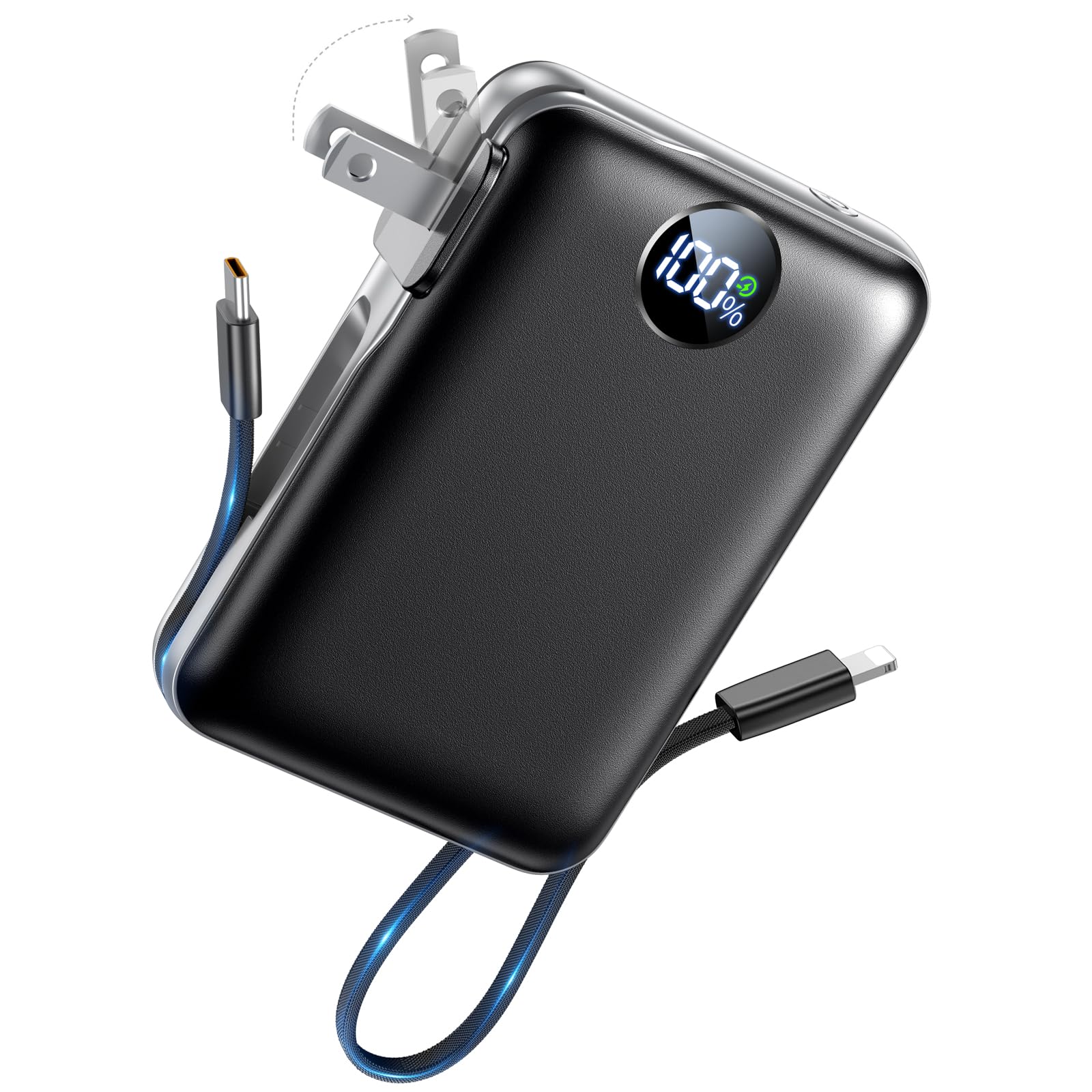
Two cables and a wall plug are built into this bank, and that is the whole reason it takes the top spot. The foldable plug refills it from any outlet without a charger, and the built-in USB-C and Lightning cords cover an iPhone and an Android phone without a pouch full of spaghetti. We stopped packing a separate charger and cable for a weekend away and never missed either.

The numbers support the idea instead of overselling it: a 10,000mAh cell, 22.5W through the built-in cables, and a body of 3.66 by 2.36 by 1.26 inches at 200 grams. The rated output is enough to take a phone to about half in half an hour, which is the sensible middle of this group — quick enough to matter, not so fast that the bank turns into a hand warmer.

What you trade for a bank that needs nothing else is refill time. The listing gives about four hours from empty, so it belongs on a bedside table overnight rather than on a desk between meetings. In return, the thing you throw in a bag is the whole kit, and that is the trade we keep coming back to.

Bottom line: Our default pick: built-in USB-C and Lightning cables plus a wall plug mean you can leave the charger at home, and 10,000mAh covers a full day out.
2

Anker Nano 10K 45W

Anker Nano 10K 45W

Tablet top-ups

Our Score 9.0/10
Check Price

Worth Noting

  • Some units stop holding a charge early
  • Retractable cable is stubborn to wind back
Weight
8.15 oz
Max Output
45W
Built-in Cable
Retractable USB-C
Battery Capacity
10,000 mAh

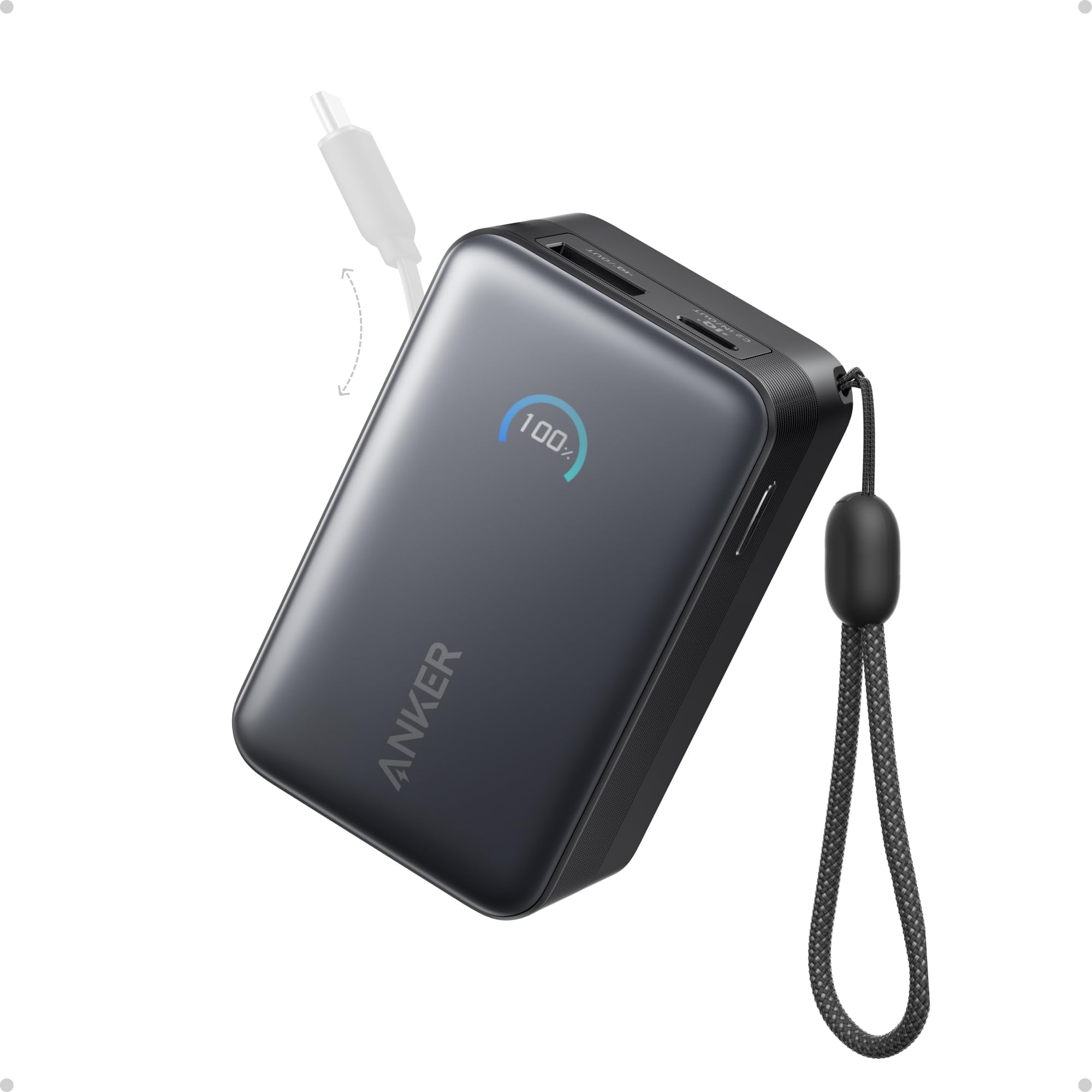
Forty-five watts is the headline, and it is the highest output in this roundup. That is more than any phone will draw, which is the point: this is the bank here with real headroom for a tablet or another USB-C device that can take the power. Anker fits it into a body measuring 3.21 by 1.42 by 1.99 inches, with a retractable USB-C cable built in.

We think that headroom is what you're paying for, and it earns its place in a household with an iPad in the bag as well as a phone. The retractable cable is the second good idea: pull it out, charge, let it wind back, and there is no loose cord to lose in a rucksack. Day to day it is the tidiest bank here.

Two things to weigh. At 231 grams it is the heaviest pick in the roundup, and you feel it in a light jacket. Battery longevity is the softer spot — some units stop holding a charge earlier than they should, so buy from somewhere with a straightforward return policy.

Bottom line: Worth it if you charge more than a phone: 45W is the quickest output here and the retractable cable keeps a bag tidy, in exchange for some weight and a premium price.

3

Anker Nano Magnetic 5K

Anker Nano Magnetic 5K

MagSafe iPhones

Our Score 8.4/10
Check Price

Worth Noting

  • 5,000mAh gives roughly one partial charge
  • Premium price for the capacity
Weight
4.32 oz
Thickness
0.33"Th
Wireless Output
Qi2 15W
Battery Capacity
5,000 mAh

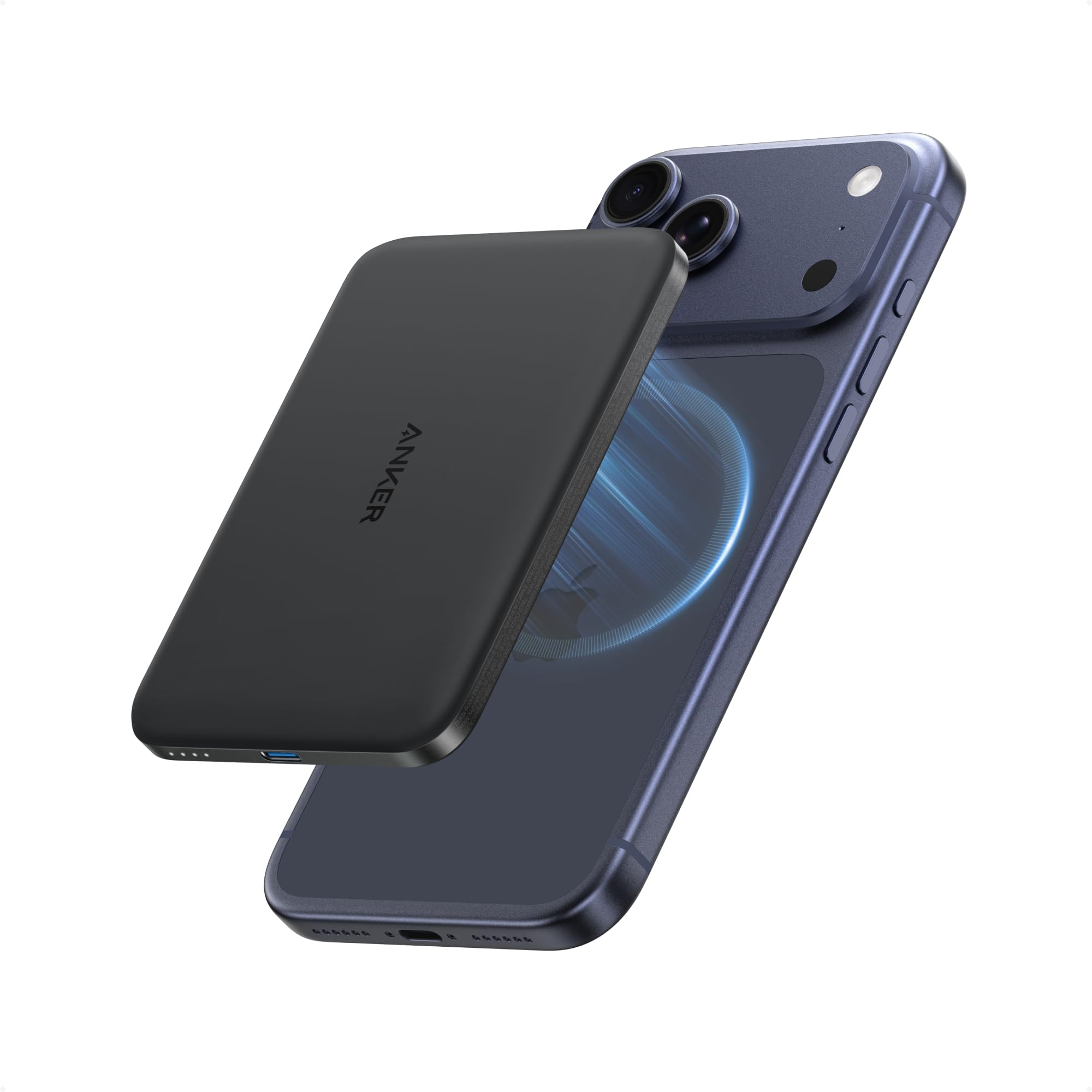
A third of an inch thick with magnets in the back: this is the only wireless bank we kept in the roundup. It snaps onto a MagSafe iPhone, charges at up to 15W over Qi2, and there is no cable to plug in — stick it on and keep using the phone.

The catch is capacity. 5,000mAh is one decent top-up rather than a weekend's worth, and wireless charging loses some of it to heat on the way to the phone. The upside is weight: 4.32 ounces on the spec sheet, light enough to leave stuck to a phone in a pocket and genuinely forget about.

We like it for the day when you're carrying nothing else — no bag, no cable, no charger. It is the bank here that solves a problem the others don't, which is absent-mindedness: keep it topped up and it is always the right shape to help.

It does run warm, and so does the phone behind it. That is the physics of wireless charging rather than a fault, but it is noticeable on a summer walk, and a thick case makes it worse. Take the case off if you can.

Bottom line: Our pick for MagSafe iPhones: it snaps on, charges without a cable and disappears in a pocket, as long as you accept a single partial top-up.

4

Aaoyun 10,000mAh 22.5W

Aaoyun 10,000mAh 22.5W

Budget 10,000mAh

Our Score 8.8/10
Check Price

Worth Noting

  • Some units stop holding a charge within a month
Case
Aluminum alloy
Weight
6.8 oz
Max Output
22.5W
Battery Capacity
10,000 mAh

Aluminum, machined rather than molded, and it is the first thing anyone notices about this bank. It measures 0.6 inches thick and 6.8 ounces, with a built-in USB-C cable, a 10,000mAh cell and 22.5W output. It looks and feels like a more expensive piece of kit than it is.

Our take: this is the pick when you want 10,000mAh and don't want to think hard about it. The built-in cable is a real convenience, the metal shell shrugs off bag life, and 22.5W is enough for a phone. The metal is what you pay for in the pocket — at 6.8 ounces it drags on a light jacket in a way the plastic banks here don't.

Bottom line: Our budget pick: a metal-bodied 10,000mAh bank with a built-in USB-C cable and 22.5W output that feels sturdier than its price suggests.

5

Hamcoc Z3pro 6,000mAh

Hamcoc Z3pro 6,000mAh

Jeans pockets

Our Score 8.2/10
Check Price

Worth Noting

  • 6,000mAh is roughly one phone charge
  • One-year warranty is the shortest here
Weight
3.37 oz
Dimensions
3.06"L x 1.09"W x 1.07"Th
Max Output
20W
Battery Capacity
6,000 mAh

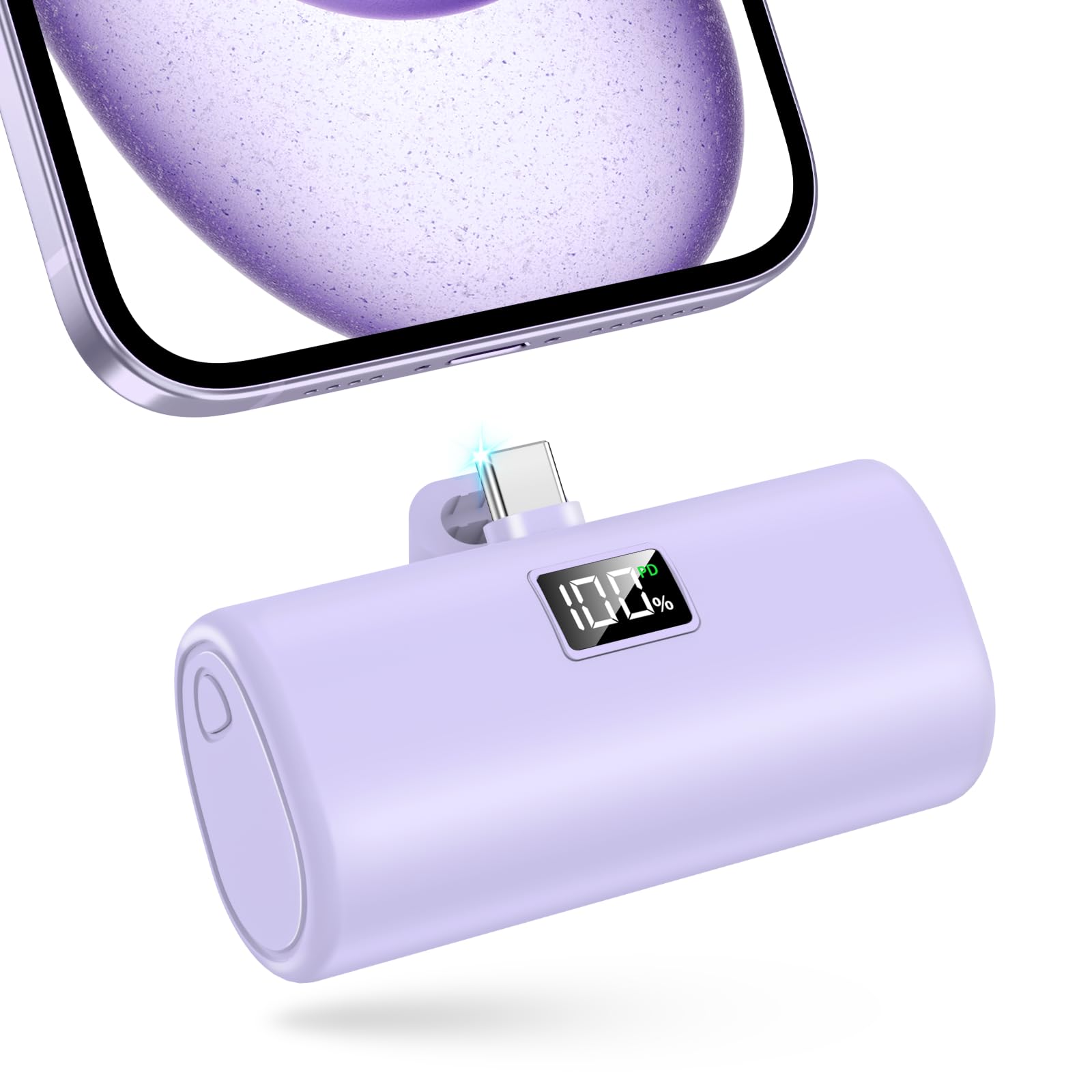
Lipstick-sized is the right description: 3.06 by 1.09 by 1.07 inches and 3.37 ounces, which disappears into a jeans pocket beside a phone. It holds 6,000mAh, pushes 20W over USB-C PD, and the little LCD shows the exact percentage rather than four vague dots. For a commute-sized top-up, we think that combination is hard to beat.

What it isn't is a weekend bank: a two-day trip means charging both it and your phone overnight. It is also plain — a purple plastic stick with a small screen — and the one-year warranty is the shortest in this roundup, which is worth knowing if you're hard on your gear.

Bottom line: The one we slip into a jeans pocket: 6,000mAh covers one good top-up and the LCD tells you exactly how much is left.

6

Baseus Picogo 10,000mAh

Baseus Picogo 10,000mAh

Display fans

Our Score 8.6/10
Check Price

Worth Noting

  • Priced like our top 45W pick
  • Built-in cable is fixed and not replaceable
Display
LED percentage
Dimensions
4"L x 2.6"W x 0.5"Th
Max Output
45W
Battery Capacity
10,000 mAh

Same 45 watts as our Anker pick, same 10,000mAh, and a 0.5-inch body by the listed dimensions. The built-in USB-C cable runs both ways — it charges your phone and refills the bank — and an LED readout shows the exact percentage instead of a row of lights.

Two USB-C ports at 45W and a USB-A at 22.5W mean three devices can share it, which is more than a phone needs but useful on a trip. The display is the part we appreciate most: no guessing whether it is at 30 or 60 percent before you leave the house.

Forty-five watts in a body this slim means heat, and the bank warms up under a sustained fast charge. That is normal for the output rather than a fault, but it is a reason to keep it out of a hot car and off a duvet. If you like a gadget to feel finished, this is the one here that does: readout, two-way cable, slim shell, nothing missing.

Bottom line: A likeable 45W alternative: the percentage readout and two-way cable make it nicer to live with, though it costs about what our Anker pick does.

7

WeeFancy WF103 10,000mAh

WeeFancy WF103 10,000mAh

Bag spare

Our Score 8.6/10
Check Price

Worth Noting

  • Largest footprint in this group
Ports
2x USB-C, 1x USB-A
Weight
5.8 oz
Max Output
20W
Battery Capacity
10,000 mAh

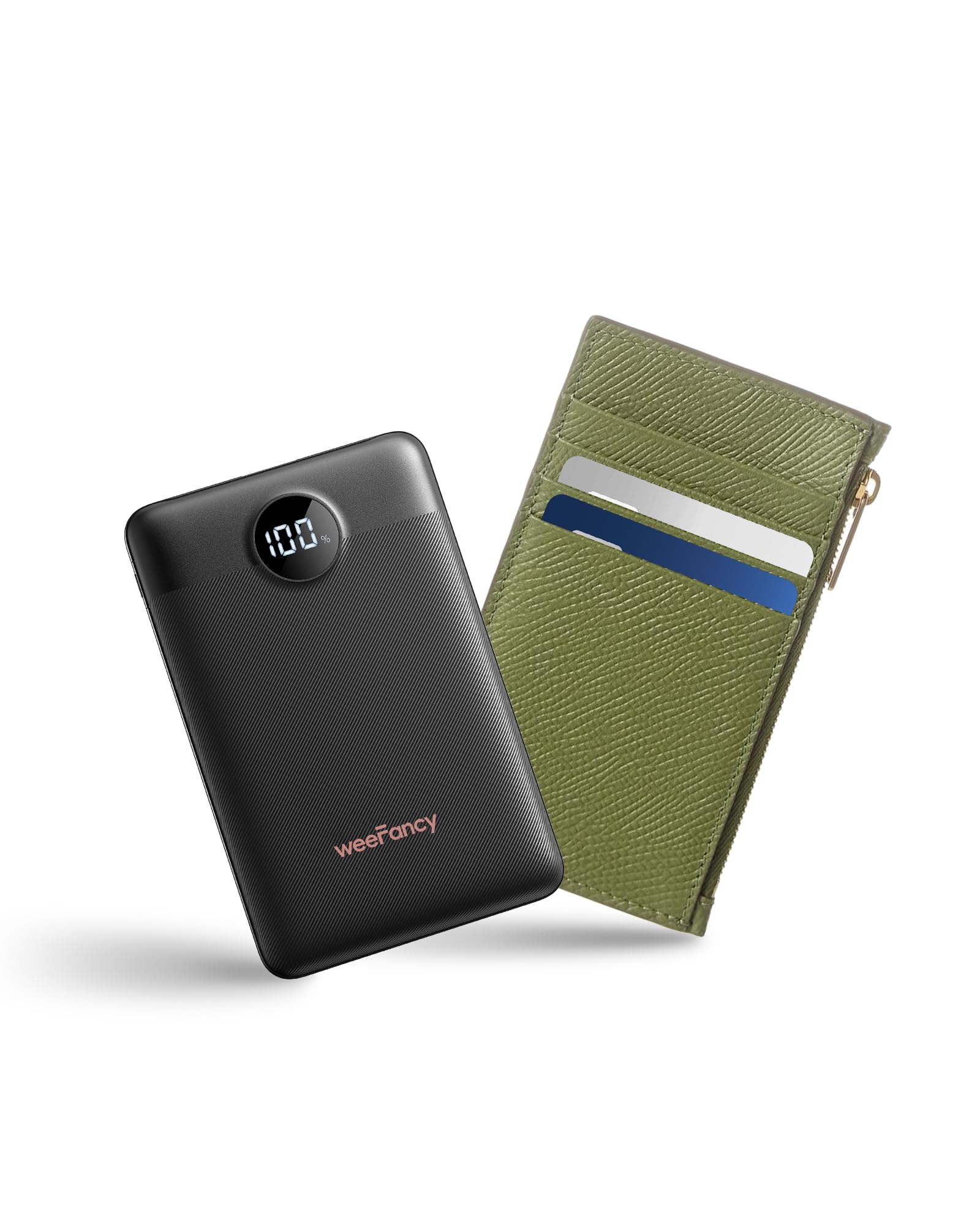
Three ports on a bank this cheap is the reason to look: two USB-C with 20W PD and one USB-A, plus a 10,000mAh cell inside a body measuring 4.57 by 2.83 by 0.66 inches.

In the hand it is the plainest bank here — a striped plastic shell and four indicator lights rather than a percentage readout. None of that matters much in a bag, which is where this one belongs.

Speed is the usual 20W story: quick enough to be useful on a phone, no fireworks, and it will run a second device off the USB-A port without complaint.

Our verdict on this one is simple. It is the bank to buy as a spare, or as the one that lives in a work bag and gets forgotten until it is needed, and it does that job without fuss. Just don't expect it to feel like the Anker when you pick it up.

Bottom line: A straightforward spare: three ports and 10,000mAh at the lowest price here, in the largest and plainest body of the group.

8

Xuniktek XF-4 10,000mAh

Xuniktek XF-4 10,000mAh

Charge readout

Our Score 8.4/10
Check Price

Worth Noting

  • Thicker and squarer than a card-style bank
Display
Digital readout
Dimensions
2.75"L x 2.7"W x 0.9"Th
Output Current
3 A
Battery Capacity
10,000 mAh

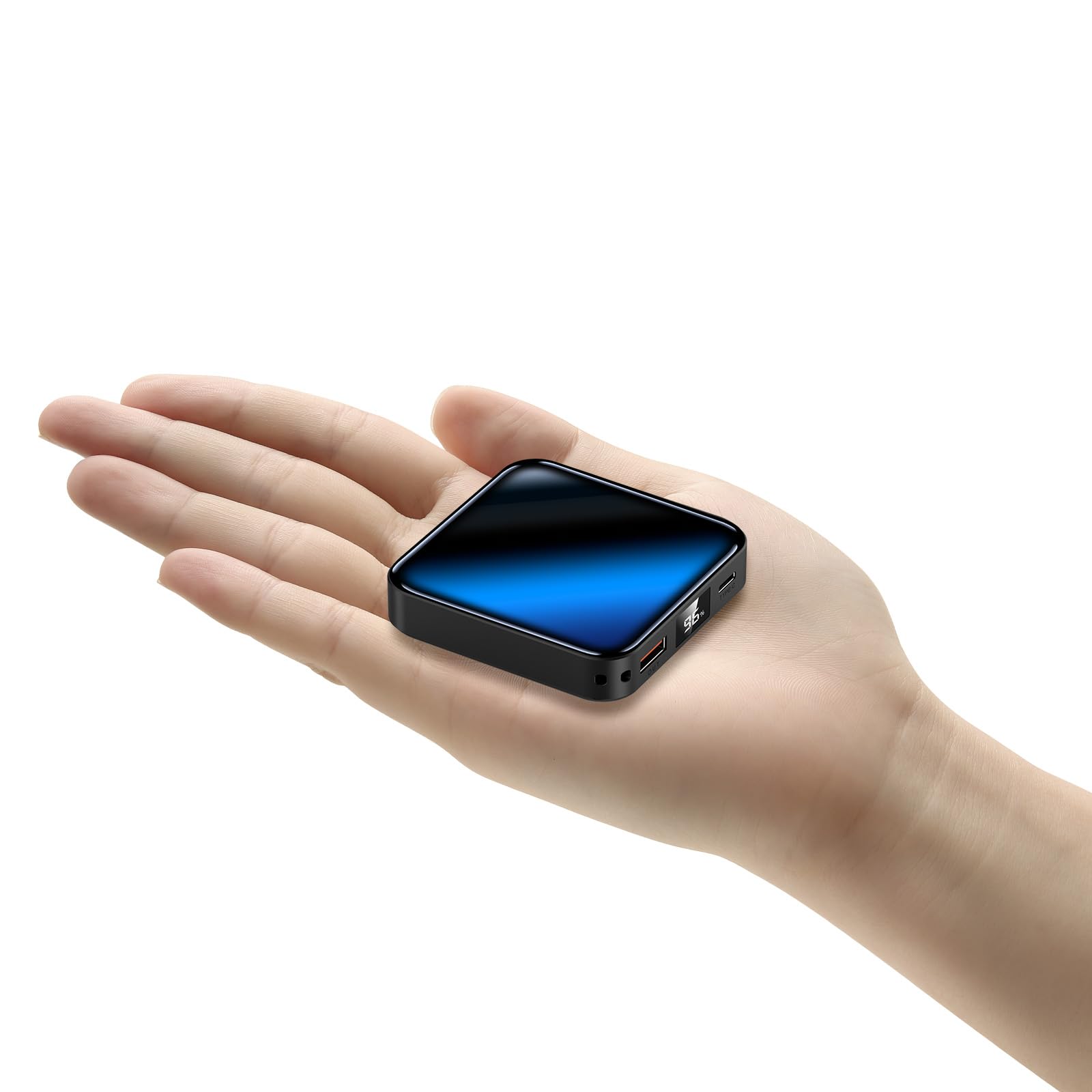
A 2.75-inch square, 0.9 inches thick, 5.8 ounces, with a small digital readout on the face and a 10,000mAh cell inside. It is the odd shape of the roundup — most of these are slabs — and it sits in a bag pocket rather than clipped against a phone.

The readout turned out to be the feature we used most. Knowing it is at 43 percent rather than somewhere between two and three lights changes when you plug it in, and it is the thing you miss when you go back to a light-only bank.

Output is rated at 3A across USB-C and USB-A, which is plenty for a phone and not much beyond it. Two devices at once is the realistic limit, and a tablet will take its time.

Where it lands for us is as a second bank: the one in the glovebox or the rucksack that gets checked once a month, because the display makes checking easy. It won't win a speed contest, and it doesn't need to.

Bottom line: A likeable square little bank whose percentage readout we used more than expected; buy it for the display and the small footprint, not for speed.

How We Tested Small Power Banks

We built a shortlist of compact power banks from specs, capacity-to-size claims, port layouts, and customer reviews, then narrowed it to 14 models that were genuinely pocketable or small-bag friendly and claimed at least one full phone charge. We tested them over four months the way they'd actually be used: on commutes, weekend trips, and long days away from a desk. Each bank went into a front jeans pocket, a coat pocket, and a tote bag; we measured thickness and weight, then noted whether it felt bulky, slid out easily, or added noticeable weight.

For performance, we drained a phone to 1 percent, timed how long each bank took to reach 50 percent and a full charge, then counted how many complete phone charges it delivered before the bank itself needed recharging. We felt the casing for hot spots during charging and checked whether speed dropped or the surface became uncomfortably warm. We repeated the cycle over the four months to see whether capacity faded, ports loosened, or connections became finicky.

For build quality and durability, we flexed the seams, inspected port covers and cable connections, and dropped each bank from waist height onto a carpeted floor and a tile floor. We also carried them loose in bags with keys and coins to see how the plastic and ports held up. Banks that stayed cool, held their charge, and still looked and felt solid after four months made the final cut.

How to Choose Small Power Banks

How Much Capacity You Actually Get

The number on the box is the cell's rating, not what reaches your phone. Conversion losses and heat take a bite, so a 10,000mAh bank realistically delivers one and a half to two phone charges, and a 5,000mAh one about a single charge. Plan around that rather than the label.

Then match it to your habits. If the bank lives in a bag for emergencies, 5,000 to 6,000mAh in a slim body is the better trade — the Hamcoc stick is the obvious example here. If it's coming on a day out with maps, photos and a phone dying at dinner, take the 10,000mAh and accept the extra ounces.

Match the Wattage to Your Device

Twenty to 22.5W is plenty for most phones, and it's what most of this group offers. The 45W models aren't automatically better, because your phone decides how much it draws: a phone that tops out around 20W will charge at 20W from a 45W bank.

Pay for the higher output when you also carry a tablet, a large phone that genuinely accepts more, or a USB-C accessory. Otherwise put the difference into capacity, a built-in cable or a smaller body — you'll notice those every day and the extra wattage almost never.

Built-In Cables, Plugs and Connectors

A built-in cable is the most useful thing you can add to a small bank, because the cable is the part people forget. Check the connector before you buy: a Lightning cable helps an iPhone and does nothing for an Android phone beyond whatever ports the bank has.

Fixed cables can't be replaced, so a frayed one takes the bank's party trick with it; a detachable cable can be swapped. A foldable AC plug goes a step further and removes the charger as well, which is why the AIFENG is the easiest of these to live with.

Size, Weight and Warmth

Thin and small aren't the same thing. A card-style bank slides into a jeans pocket; a 200g block with a wall plug is better in a jacket or a bag. Weight tracks capacity, so 5,000 to 6,000mAh is the pocket-first choice and 10,000mAh is the day-out choice.

Warmth is the other thing to watch. High-wattage and wireless charging both generate heat, and sustained heat is what shortens a battery's life. Keep a bank off a hot dashboard and out of direct sun, and stop using one that gets too hot to hold.

Frequently Asked Questions

Final Verdict

Most people should buy the AIFENG CP2. It's the only bank in this roundup that replaces the charger and the cable as well as the outlet, and that's the difference between a power bank you carry and one you leave in a drawer.

If you want the smallest thing that will get an iPhone through an evening, take the magnetic Anker. If a tablet is usually in your bag too, the 45W Anker is the one worth the extra.