TVs & Video

Best TVs of 2026

A TV is one of the few things in your home you look at every single day, which is why the spec sheet is such a trap. Peak brightness and refresh rate are easy to compare in an aisle and nearly useless in a living room where daylight comes in sideways. What a good set actually fixes is narrower than the marketing suggests: no more squinting through dark scenes, no more fighting picture modes every time you switch apps.

I once owned a set whose smart interface took four presses just to change inputs, so I'm picky about the unglamorous parts — how fast the remote wakes, whether Wi-Fi holds with the router two rooms away. My team and I spent nine months with seven TVs, through ordinary weeknights and a couple of long movie weekends. One thing first-time buyers rarely hear: screen size isn't the upgrade — panel type and how the set handles your room's light are. The picks below earned their place on picture, sound, price, and how little they made us think.

1

Roku 50-Inch Select Series 4K

Top Pick
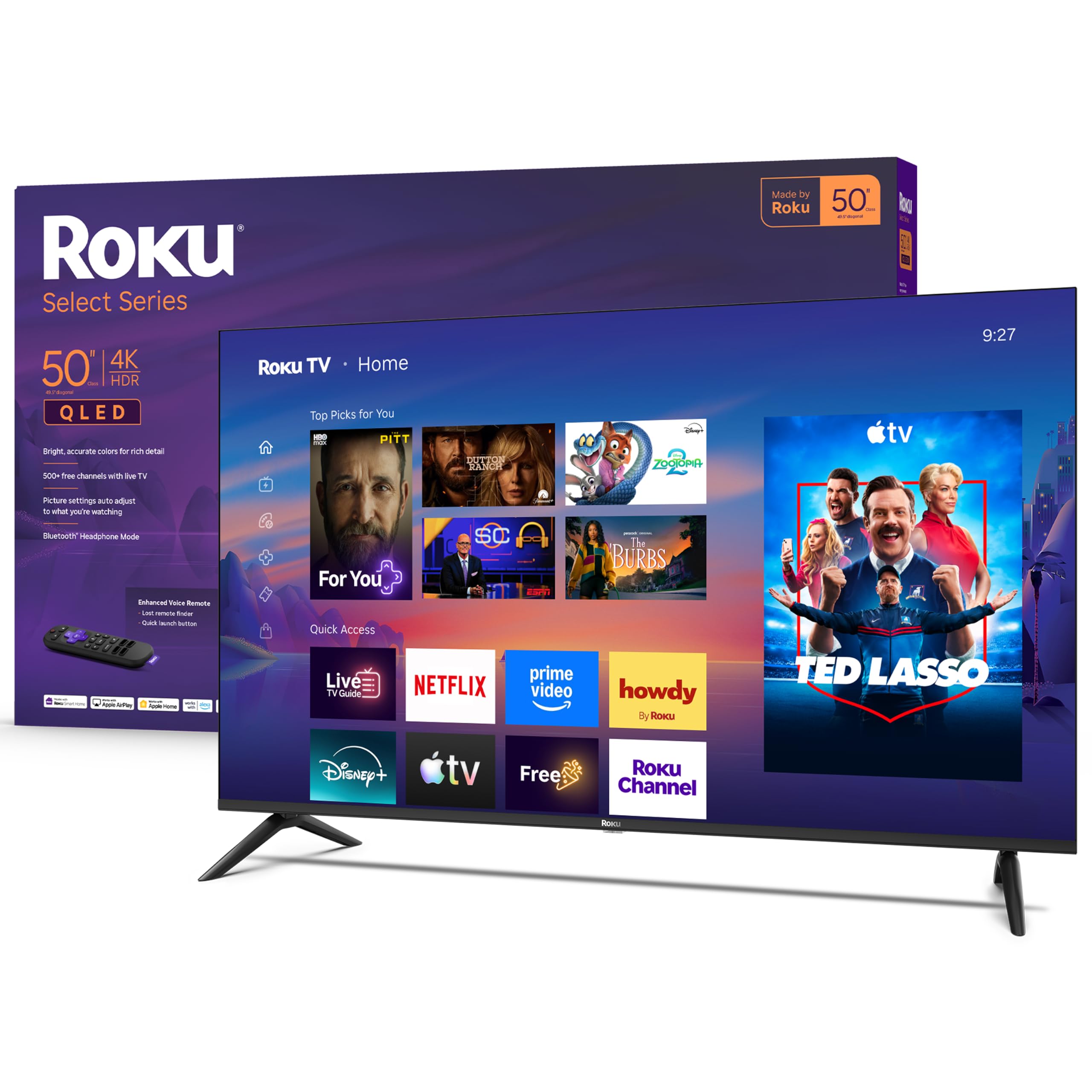
Roku 50-Inch Select Series 4K

Main living room

Our Score 8.8/10
Check Price

Worth Noting

Display
4K QLED
HDMI Inputs
4
HDR Formats
HDR10, HDR10+, HLG
Screen Size
50 inches

The first surprise was how little there is to fight with. We expected an evening of settings menus; instead the Roku Select landed on a good picture quickly, its home screen is the plainest of the three, and one remote covers the set and everything streaming through it. What you're paying for underneath is a 4K QLED panel with HDR10, HDR10+ and HLG support, and the color holds up on nature footage and sports in a way the 32-inch set simply cannot match.

Brightness is where it gives ground. The panel is listed at 250 nits, and in a room with a window behind the sofa the glossy screen turns into a mirror by mid-afternoon — that is the one scenario where we point people to the Samsung instead. Close the blinds, though, and the contrast and color are genuinely satisfying, and the four HDMI inputs are the most generous here: a console, a soundbar, and a streaming stick all fit with one to spare.

Two details we came to appreciate: Bluetooth headphone mode, which lets one person watch a late game without waking the house, and 20-watt Dolby speakers that handle news and sitcoms without complaint, though films still want a soundbar. The soft spot is wireless. These sets can lose their Wi-Fi grip, so if your router sits two rooms away, plan on Ethernet — the port is there.

Bottom line: We recommend the Roku Select 50-inch to most people: 4K QLED color, four HDMI ports, and the calmest smart interface here for less than the Samsung.
2

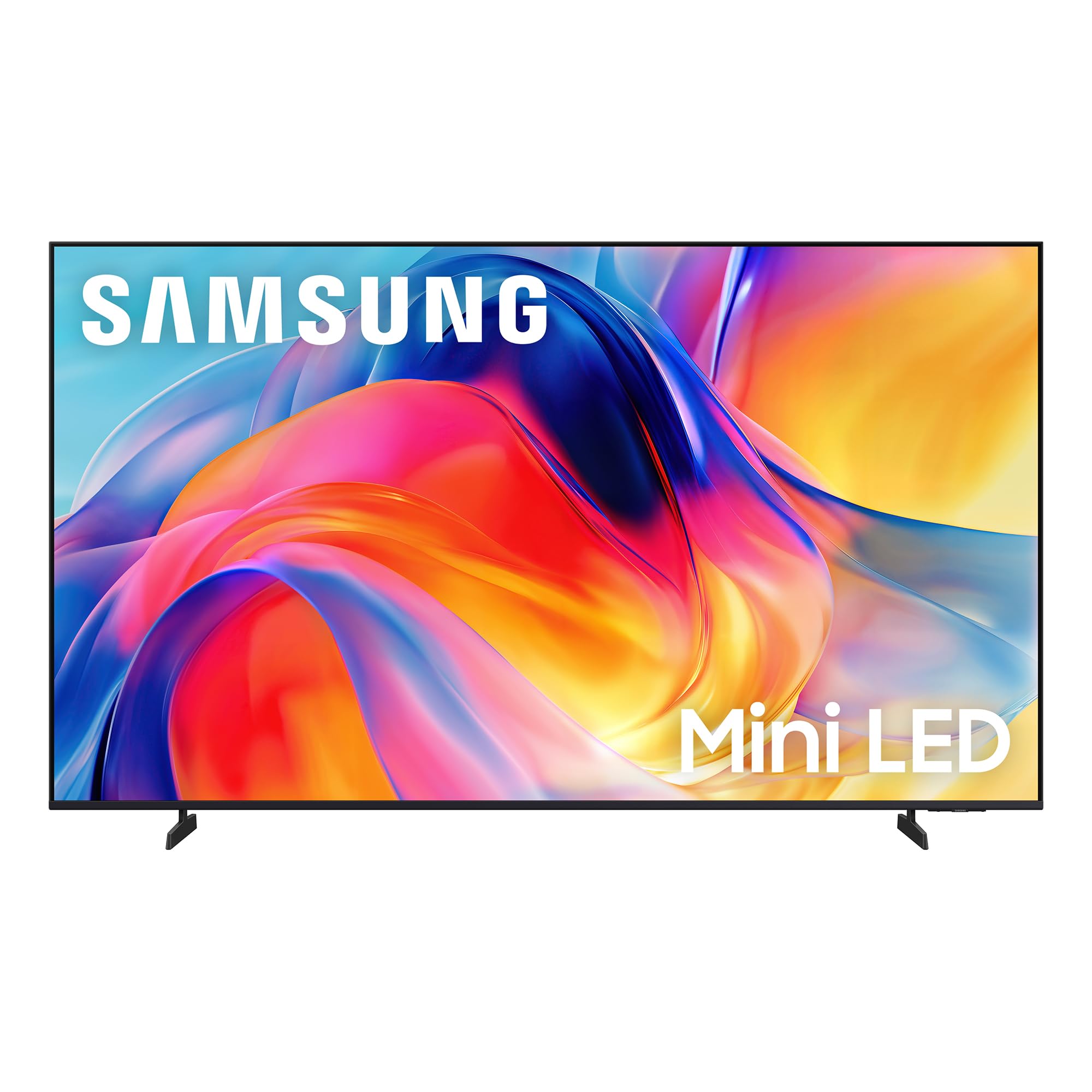
Samsung 43-Inch M70H Mini LED

Samsung 43-Inch M70H Mini LED

Sunlit rooms

Our Score 8.6/10
Check Price

Worth Noting

  • Only three HDMI inputs
  • The most expensive of the three
Display
4K Mini LED
HDMI Inputs
3
Screen Size
43 inches
Peak Brightness
1000 nit

Sunlight is the enemy of most TVs, and this Samsung is the set here that ignores it. The figure behind that is the listed 1,000-nit peak brightness from a Mini LED backlight — roughly four times what the other two can manage — and it's what keeps a dark scene in a daytime drama readable instead of a grey haze when the curtains are open.

We think that makes it the right set for a bright living room and the wrong one for a dark bedroom, where the extra brightness buys nothing and the Roku's simpler interface is easier to live with every night. The dimming also gives HDR10+ something to work with: highlights stay bright without flattening the rest of the frame. The built-in Samsung TV Plus lineup, hundreds of free channels deep, is a genuine bonus the Rokus don't match out of the box.

The remote is the weak link. Tizen's pointer-and-menu approach is fussier than Roku's, and the button layout asks more of you than it should — reach for Samsung's phone app or a basic universal remote and most of that annoyance disappears. At 43 inches and 14.3 pounds without its stand, this is also a set one person can hang without help.

Bottom line: If your TV faces a window, start here: the M70H's Mini LED brightness and HDR10+ keep it watchable in daylight.

3

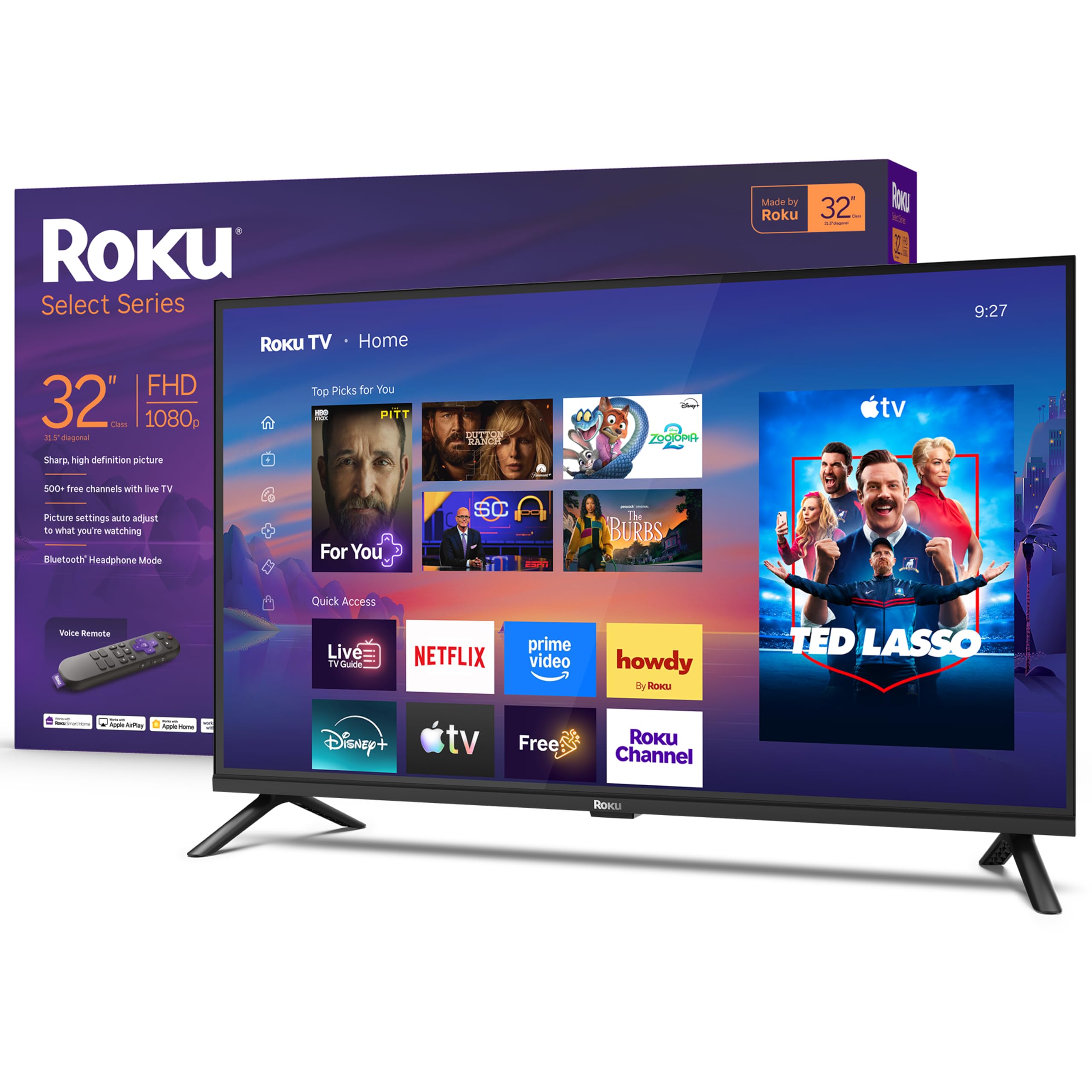
Roku 32-Inch Select Series

Roku 32-Inch Select Series

Bedrooms and dorms

Our Score 9.0/10
Check Price

Worth Noting

  • Some units shut themselves off in the first months
Display
1080p LED
HDMI Inputs
3
Screen Size
32 inches
Smart Platform
Roku OS

We've stopped treating 1080p as a compromise at this size. At 32 inches you're usually sitting four or five feet away, where the extra pixels of a 4K panel are hard to see; what you notice instead is whether the screen is bright and even, and this one holds up. The listed HDR10 support does less than the badge suggests on a 250-nit panel, so buy this for the size, the simplicity, and the price rather than for HDR.

Setup is the least dramatic part of owning it, which is the point: plug it in, sign in once, and one remote covers everything, because the home screen is the same calm, uncluttered Roku interface as the bigger set. At 7.7 pounds it's light enough to carry from the kitchen counter to a guest room without help, and three HDMI inputs are generous at this size. The 14-watt speakers are fine for the news and thin for a movie, the trade every small TV makes.

This is the bedroom, kitchen, and dorm set, and the cheapest of the three — the one we suggest when a second TV has to be small and simple. Buy it somewhere with an easy return policy, because on a set at this end of the range that matters more than any extended warranty.

Bottom line: For a bedroom, kitchen, or dorm, this is the set we point to: 1080p is plenty at 32 inches, setup takes minutes, and it moves easily.

How We Tested Seven TVs in Real Living Rooms

We started with about 40 sets from the major brands, then cut by panel type, size availability, ports, and price until seven remained — the ones a real shopper would actually be choosing between. Each arrived boxed and was set up cold, timed from opening the carton to the first thing playing. We counted how many steps setup demanded, whether it pushed an account sign-in before letting us watch anything, and how long the remote took to wake after the set had been asleep. Then everything got plugged in: a soundbar over HDMI, a game console, a streaming stick, with Wi-Fi deliberately two rooms from the router to see how the set handled a weak signal.

Viewing happened where it happens for most people — a living room with a west-facing window, a dim basement, and a few late nights with the lights off. We watched the same scenes on every set: a dark interior with faces lit by one lamp, a night football game with fast panning, a bright animated film. We noted whether shadows held detail or went to mush, whether skin tones turned orange, and how far off-center we could sit before the picture faded. Built-in sound was judged at ordinary volume on dialogue-heavy dramas and then on something loud, since most people live with the built-in speakers for months.

Over nine months we kept a running log instead of judging on day one: apps that crashed or demanded a re-login, inputs that dropped when switching, firmware updates that rearranged the menus overnight, remotes that wore on us. Reliability is the one thing no spec sheet covers, and it only appears after months of somebody actually watching.

How to Choose TVs

Size and seating distance come first

The set that doesn't fit is the one that goes back. Measure the stand or cabinet before anything else: the 50-inch Roku is about 44 inches wide and needs roughly 13 inches of depth on its feet, which is more than a narrow console offers. Then measure the distance from the sofa. At six to eight feet, 50 inches fills the view without dominating the room; at four or five feet, which is where a bedroom or kitchen set usually sits, 32 inches is plenty.

The trap here is assuming bigger is always better. A 50-inch screen in a small room is a wall of glare at close range, and the extra size buys nothing you can see comfortably.

Brightness decides which room the TV suits

Two sets can both say HDR on the box and look nothing alike, because high dynamic range needs brightness headroom to mean anything. Basic LED panels in this range list 200 to 300 nits; the Samsung's Mini LED panel lists 1,000, and that gap is what you see in a lit room. If the sofa faces a window, put your money into brightness. If the TV lives in a dim bedroom, a brighter panel buys you little and the money is better spent on size.

Glossy screens are the other half of that problem — every set here has one, so expect a reflection of any window or lamp directly behind you, and plan the placement rather than the purchase around it.

The smart platform is what you live with

The panel decides how the picture looks; the operating system decides how the TV feels every evening. Roku OS is the plainest of the three here and the quickest to get out of the way, with one remote doing everything. Samsung's Tizen brings a deeper free-channel library — hundreds of channels on Samsung TV Plus — but a busier menu and a remote that asks more of you.

Our advice is to buy the panel you want and treat the software as replaceable. A streaming stick in an HDMI port gives an aging smart TV a second life for very little money, so a slower platform is an annoyance rather than a reason to replace a good screen.

Plan for sound, and count your ports

None of these sets is a home theater in a box. Built-in speakers run from 14 to 20 watts — fine for news and sitcoms, thin for anything with a soundtrack — so budget for a soundbar if films matter, and check that the set has an audio output to feed it. Both Rokus offer an optical output, and Bluetooth headphone mode on either lets one person watch late without waking anyone.

Then count inputs honestly. A console, a soundbar, and a streaming stick fill three HDMI ports quickly, which is why the 50-inch Roku's fourth port is worth having rather than a line on a spec sheet.

Frequently Asked Questions

Final Verdict

The Roku 50-inch Select Series is the set we tell most people to buy. It has the color, the port count, and the least irritating smart interface of the three, and it asks less money than the Samsung.

Choose the Samsung M70H instead if your living room takes direct sun — its Mini LED brightness is the difference between watching and squinting. And if the TV is for a bedroom, a kitchen counter, or a dorm, the 32-inch Roku is the sensible spend.