Smart Home & Security

Best Video Doorbells of 2026

A video doorbell should answer one question quickly: who is at the door, and did they leave a package? The wrong one answers with a blurry clip, a delayed notification, and a subscription prompt just as someone walks away. The right one feels solid on the porch, gives you a clear look at the visitor, and sends alerts you can act on without paying monthly for the basics.

I have used these at my own front door, from quiet mornings to delivery-heavy afternoons, and the differences show up fast. Over six months, we installed 12 video doorbells and lived with their apps, alerts, and battery warnings. The biggest lesson for first-time buyers is that easy setup is only half the story—the doorbell also has to stay connected, detect the right things, and keep working when the novelty wears off. The picks below are the ones that did.

1

Tapo D225

Top Pick
Tapo D225

Most front doors

Our Score 8.8/10
Check Price

Worth Noting

  • Battery alone means regular recharging on busy doorways
Chime
Indoor chime included
Power
Battery or hardwired 8–24V
Resolution
2K QHD
Field Of View
180° head-to-toe

The plug-in chime is in the box, and that tells you most of what the Tapo D225 gets right: it assumes nothing extra. The same package includes a 10,000mAh battery, an 8–24V hardwire option, 2K video with a 180° head-to-toe view, and a microSD slot that keeps your clips without a subscription. We make it the top pick because it fits the widest range of front doors here — wired, wireless, rented or owned.

The 180° view is the part you notice daily. Deliveries left against the door and faces under a cap both land in frame, and the lens is tall enough that you aren't looking at the top of a box wondering what's underneath it. Person, package, and vehicle detection come free, and a press turns into a phone call rather than an app banner you might sleep through.

If your door has wiring, use it. The D225 trickle-charges from the same circuit the old chime used, so there's no removal tool, no ladder, and no battery percentage to watch. Local recording takes one setup step: buy a microSD card, format it in the app, and the subscription becomes genuinely optional rather than a slow upgrade you give in to.

The nits are small. The app is busier than it needs to be, and the chime wants an outlet near the hallway. Against the Ring and Blink picks, the difference that matters is that nothing here is fenced off behind a monthly fee.

Bottom line: We make this the default because it ships with its own chime, runs on wiring or a battery, and keeps clips on a card instead of a monthly plan.
2

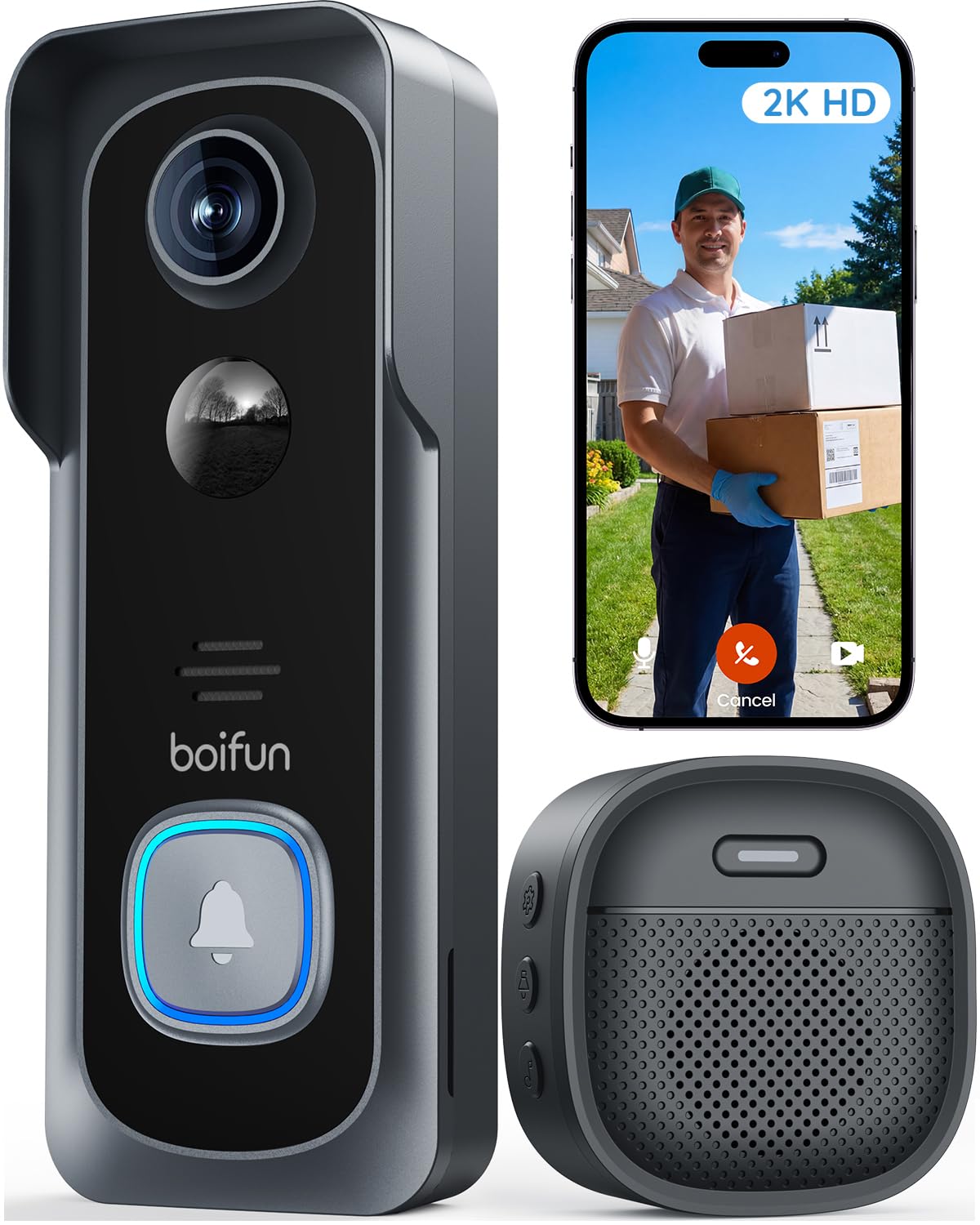
BOIFUN 2K Doorbell

BOIFUN 2K Doorbell

Tight budgets

Our Score 8.6/10
Check Price

Worth Noting

  • 2.4GHz Wi-Fi only
Battery
5,200 mAh, up to 60 days
Storage
microSD up to 128GB
Resolution
2K
Field Of View
166°

The BOIFUN arrives with its own indoor chime, a 5,200mAh battery, a microSD slot, and no subscription anywhere in the setup. For a buyer who wants the whole job done without a second monthly bill, that's an unusually complete package at the low end of this group.

We rate it the best value here because the compromises are ones most porches never notice. The 166° view is a little narrower than the Tapo's 180° and the app is plainer, but the 2K picture is crisp in daylight, and the invisible 940nm infrared keeps night footage usable without the red glow that announces a camera to the whole street.

Charge it before you mount it. The first setup session, with pairing and firmware catching up, is the heaviest drain this doorbell will see, and starting from a full battery saves a second trip up the ladder. Once it's up, the mount is a standard screw plate and the chime pairs itself from the app.

The battery figure deserves a second read. BOIFUN's 60 days assumes 30 activations and 10-second recordings a day in laboratory conditions; a busy sidewalk pulls that in, and the honest version is that you'll recharge on your own schedule rather than the box's. Nothing else about it asks for patience.

Bottom line: Our value pick: a chime, a 2K picture, and free local recording, with compromises most porches will never notice.

3

eufy E340

eufy E340

Package watching

Our Score 8.0/10
Check Price

Worth Noting

  • Short battery life between charges
Power
Battery or wired
Cameras
Dual, front and package
Storage
8GB built-in, no subscription
Resolution
2K

The E340's second camera points down at the doormat. That's the idea in one sentence: while the front camera frames the person, the lower one frames what they put on your step, so you're never squinting at the top of a box in a wide shot.

Together the two cameras deliver the head-to-toe coverage that otherwise takes a 180° lens, and in daily use the downward view is the more useful half. A parcel tucked behind a planter reads clearly; a fisheye of the whole porch does not.

8GB of built-in storage is what earns it a place on this list. Clips live on the doorbell, no plan is required, and the app can show you yesterday without a monthly charge — a real advantage over the Ring and Blink approach. Colour night vision, a 160° front view, and dual battery-or-wired mounting fill out a strong specification.

Setup runs through the app on 2.4GHz Wi-Fi, and the mount is a screw-in plate with a 15-degree adapter in the box for angling the view along a wall. Test your phone's signal at the mounting spot first: everything this doorbell does depends on a stable connection, and a porch at the edge of the network is the one place it will disappoint.

Bottom line: Buy it if you want to see the doormat — the second camera and built-in storage justify the step up.

4

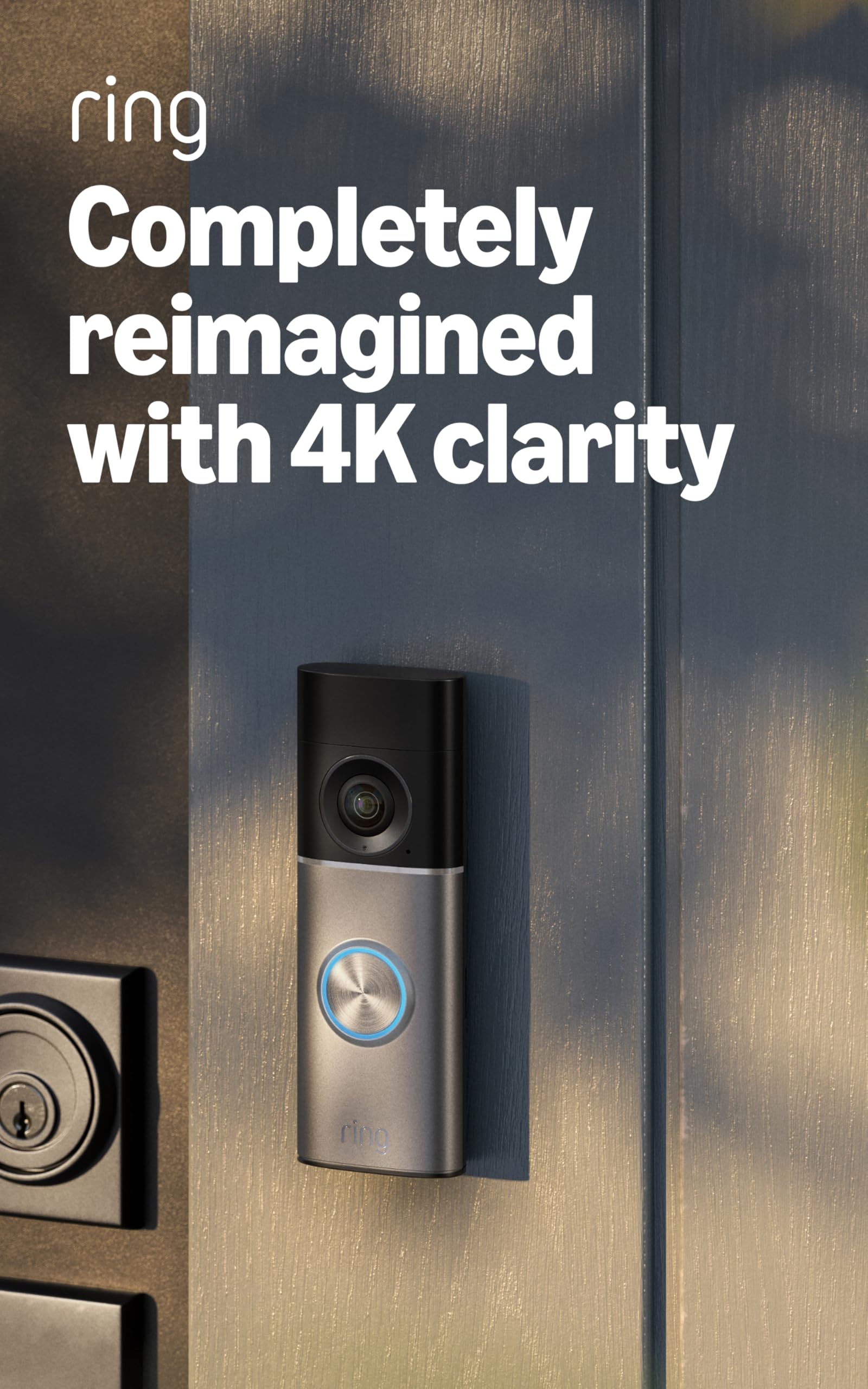
Ring Wired Doorbell 4K Pro

Ring Wired Doorbell 4K Pro

Sharpest footage

Our Score 8.6/10
Check Price

Worth Noting

  • Won't ring an existing mechanical chime
Zoom
Up to 10x Enhanced Zoom
Power
Hardwired
Detection
3D Motion Detection
Resolution
Retinal 4K

4K, plus a 10x enhanced zoom that does something real: the Ring Wired Doorbell 4K Pro is the sharpest camera in this group, and the difference shows at distance — a face at the far edge of a driveway, a courier's van, the number on a house across the street.

3D Motion Detection is the second thing you're paying for. Rather than a flat zone, the doorbell maps where movement starts and where it goes, so a car passing on the road and a person walking up your path don't produce the same alert. Fewer alerts isn't the point; the point is alerts you actually look at instead of swiping away.

Low-Light Sight holds colour with only ambient light and falls back to black-and-white in total darkness, which reads better on a phone screen than the flat grey of plain infrared. The view is wide and the installation is a wiring job on the scale of swapping a light fixture, with a mounting footprint that may not match the doorbell you're replacing.

The transformer is the unglamorous part. A 4K unit draws more than an old chime circuit sometimes supplies, and older homes occasionally need a new transformer before it behaves. If the wiring is there and you want the best picture in this group, this is the pick; if it isn't, the Tapo D225 does the same job on a battery and brings its own chime.

Bottom line: The sharpest picture here, worth the premium if your door is already wired and you want detail at a distance.

5

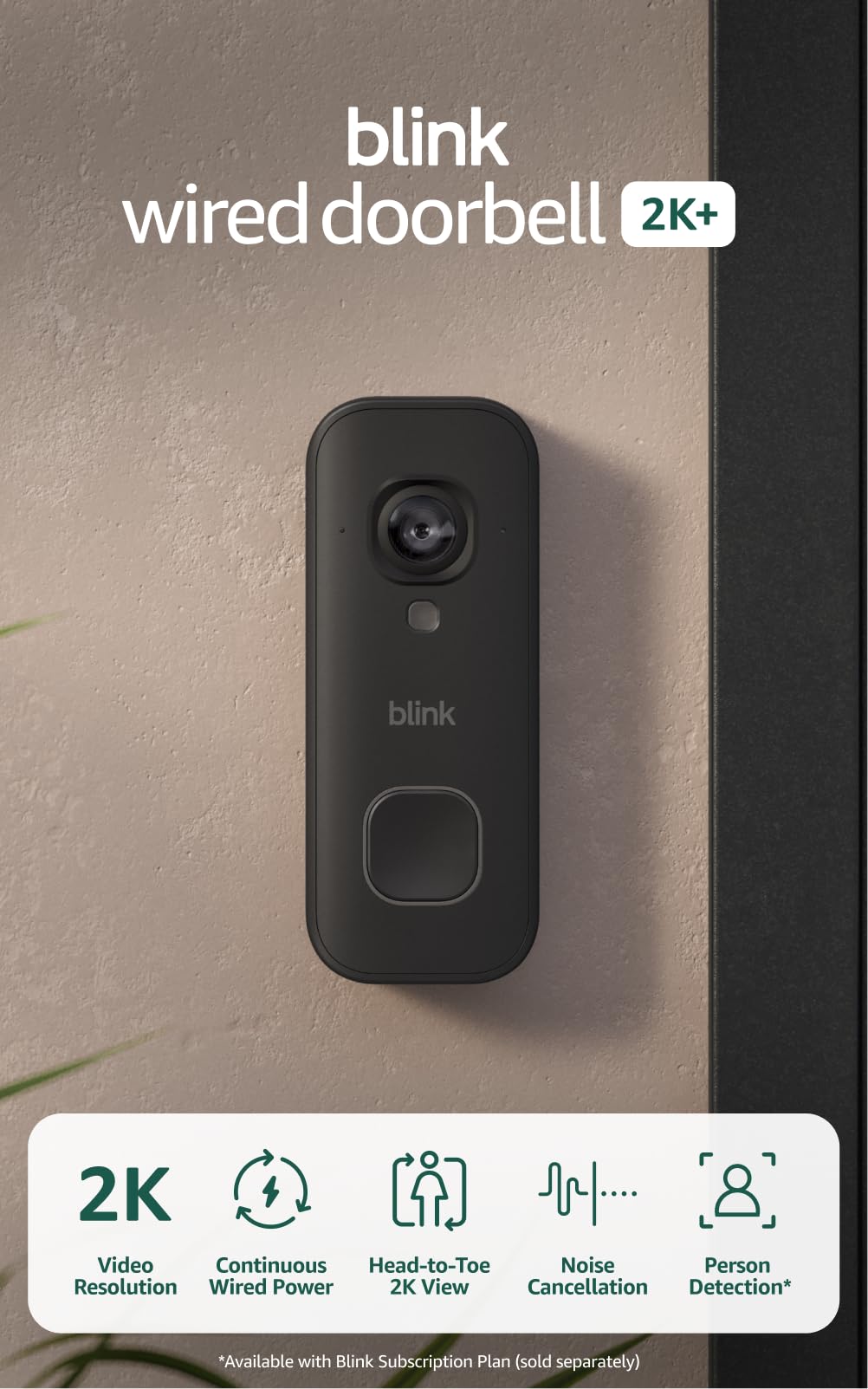
Blink Wired Doorbell 2K+

Blink Wired Doorbell 2K+

Cheap wired setup

Our Score 8.2/10
Check Price

Worth Noting

  • In-home alerts need a Blink Chime or Alexa
Power
Hardwired, continuous
Resolution
2K
Field Of View
Head-to-toe
In-home Alerts
Blink Chime or Alexa

No battery, no recharging, no ladder in February: the Blink Wired Doorbell 2K+ takes continuous power from the doorbell wiring you already have, and it's the least expensive way into this group. If your door is wired and you never want to think about a battery again, this is the pick.

The 2K head-to-toe view matches doorbells that cost several times as much, and it holds up: faces at the door and boxes on the mat are both legible. Two-way audio with noise cancellation is clear enough for a delivery conversation, and the framing catches the parcel and the person standing over it.

Installation is a screwdriver job. Connect the two low-voltage wires, fix the bracket, and the doorbell is live with no charging cycle to wait out — a genuine advantage over every battery pick here on the day you fit it. If you already run Blink cameras, the doorbell folds into the same timeline and the same app.

The thing to sort out before you buy is the indoor ring. This unit alerts your phone, and without a Blink Chime or an Alexa speaker nearby the hallway stays silent — a real gap if there are people at home who don't carry a phone. Factor that in and the value argument still holds; ignore it and you'll be standing in the hall wondering why nobody heard the door.

Bottom line: For a wired door and a small budget, this is the sensible buy — continuous power and 2K video, with no recharging ever.

6

aosu 2K Doorbell

aosu 2K Doorbell

Weak Wi-Fi spots

Our Score 8.6/10
Check Price

Worth Noting

  • microSD card not included
Hub
aosuBase Mini: Wi-Fi, storage, chime
Storage
microSD, card not included
Resolution
2K
Field Of View
166°

aosuBase Mini is the small box that comes with this doorbell, and it does three jobs at once: it rings indoors, it holds your recordings on a microSD card, and it repeats the 2.4GHz Wi-Fi the doorbell talks over.

That third job is why it stays in this group. If the porch sits at the edge of the router's reach — the usual reason a doorbell catches the postman arriving but not the parcel being left — the base is a simpler fix than a mesh system, and this is the one we point to when signal rather than features is the problem.

The rest is competent rather than exciting. A 2K sensor behind a 166° lens in a 4:3 frame shows more of the doorway floor than a widescreen crop does, AI person detection trims alerts from passing traffic, and two-way talk adds quick replies and a voice changer for when you don't want to answer as yourself.

We also like that the card lives indoors rather than in a camera screwed to the porch, which keeps your footage out of reach of anyone standing at the door. The 5,200mAh battery is the same cell most of this group uses, so a busy doorway will ask more of it than a quiet one.

Bottom line: Choose it when the porch signal is the problem: the included base extends Wi-Fi, stores clips, and rings indoors.

7

Tapo D205

Tapo D205

Rentals

Our Score 8.6/10
Check Price

Worth Noting

  • Indoor chime not included
Chime
Sold separately
Battery
5,200 mAh, up to 180 days
Resolution
2K
Field Of View
160°

At 7.5 ounces the Tapo D205 is the lightest doorbell here, and it ships with an adhesive pad and a horizontal wedge — which is the difference between a doorbell you can fit in a rental and one you can't.

Inside it's the same formula as its bigger sibling: 2K video, a 5,200mAh battery with an up-to-180-day claim under light use, free person detection, a phone-call ringer when someone presses, and recording to a microSD card instead of a plan. Infrared night vision reaches about 25 feet, which covers a standard path.

What it gives up is width: the 160° lens crops a little more of the doorframe than the D225's 180°. For a rental, though, the no-drill mount and the subscription-free recording matter more, and this is the one we point people to when the door isn't theirs to drill into.

It also makes a sensible second doorbell. It's light enough for adhesive, simple enough to hand to someone who has never set one up, and the app is the same one the rest of the Tapo range uses, so a back gate doesn't mean learning a second interface.

Bottom line: The rental-friendly one: light, adhesive-mountable, subscription-free, and small enough not to dominate a door.

8

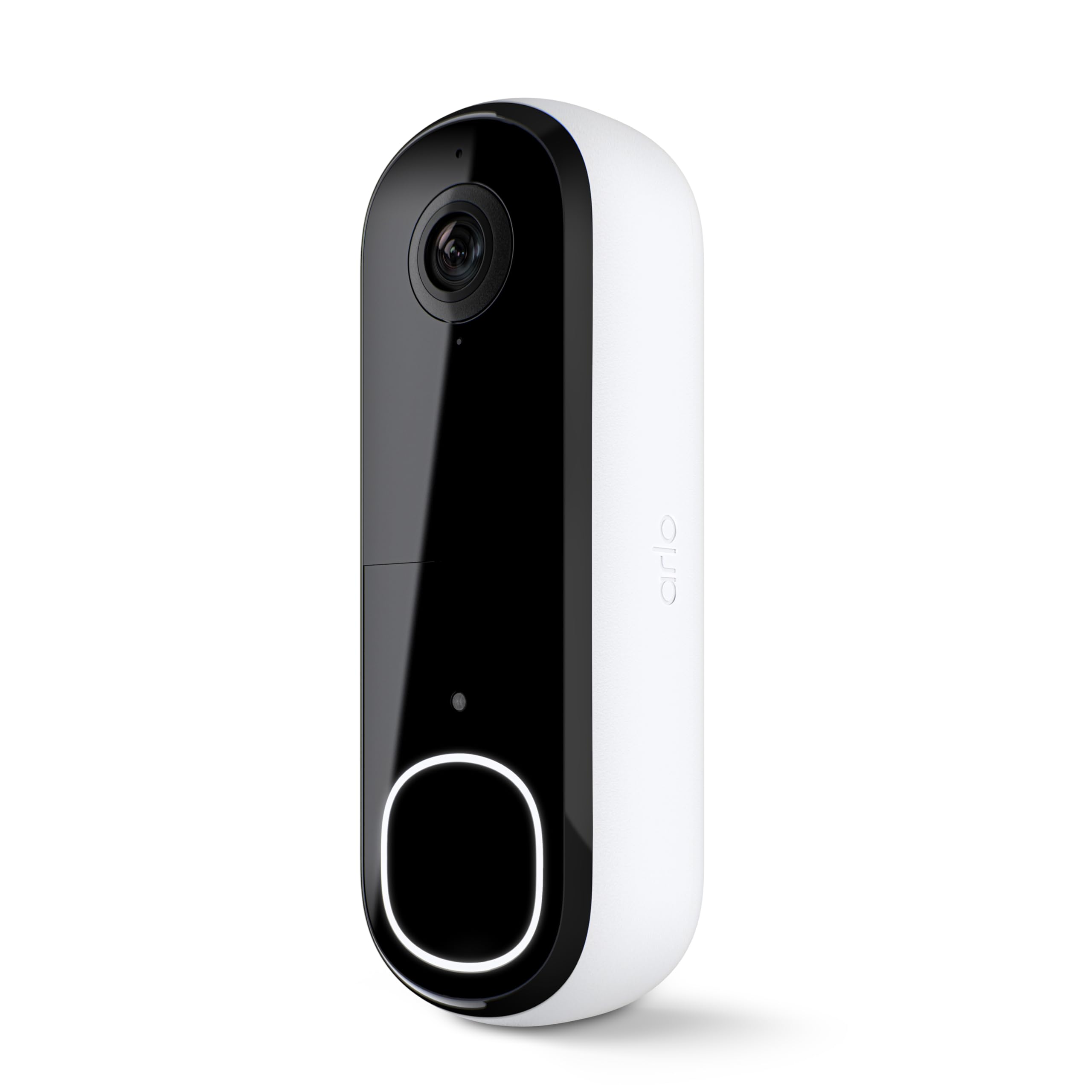
Arlo Video Doorbell 2K

Arlo Video Doorbell 2K

Wide coverage

Our Score 8.0/10
Check Price

Worth Noting

  • Paid plan needed for AI detection and history
Power
Battery or hardwired
Resolution
2K HDR
Subscription
Arlo Secure required after trial
Field Of View
180°

Arlo includes a month of its Secure plan with this doorbell, and that's the honest way to read the box: person, package, pet, and vehicle detection, 60-day video history, activity zones, and emergency response all sit behind the subscription once the trial ends.

What you're buying is a wide, well-exposed picture. 180 degrees of 2K HDR covers head to toe, matching the widest view in this group, and the framing catches both a face and the box at its feet without needing an angled wedge. Night vision reaches about 25 feet, enough for most front paths.

It runs on battery or on existing wiring, and the box includes an angled bracket and a wire extension kit for either route. Person, package, and vehicle labels are readable at a glance when the plan is active, and package detection is the sort of thing you stop noticing because it quietly works.

Where it lands is a good camera with a running cost attached, and that's why it sits in the lower tier rather than beside the Tapo. If you already pay for Arlo Secure to cover other cameras, this doorbell slots into the same account and the sums work out; if you don't, the plan is an expense the local-storage picks never impose.

Bottom line: A wide, well-exposed 2K view with a subscription attached — worth it if you already pay for Arlo Secure.

How We Chose and Tested the Best Video Doorbells

We built the shortlist by comparing power options, storage, and smart-home support, then narrowed it to 12 models that covered wired, battery, and dual-power designs. Each model spent time at my front door over a six-month testing window, through weekday deliveries, evening visitors, and cold rain. I handled the brackets and buttons to note loose parts or flimsy seals, and I timed setup from unboxing to first live view, including app pairing and mounting.

During the day I checked whether faces were recognizable at the door and whether package labels were legible; after dark I looked for glare from the porch light and whether the night image washed out. I walked up straight, at an angle, and with a box in my arms, then logged how often the doorbell caught me, how often it alerted on cars or leaves, and how long my phone buzzed after a real press. For notifications, I counted nuisance alerts during a normal afternoon and checked whether motion zones could quiet the noise without disabling the doorbell’s main job.

Connectivity got its own stress test: I watched live view from the far side of the house and noted freezes, dropped feeds, and how quickly each unit reconnected after Wi-Fi hiccups. Battery models ran with motion detection at their default setting, and I tracked days between charges instead of trusting the spec sheet. To judge value, I mapped what worked without a paid plan—live view, alerts, saved clips—and compared that with what disappeared behind a subscription; reliability meant checking whether the app, chime, and recordings still worked after a week of ordinary use.

How to Choose Video Doorbells

Start with power, not resolution

Battery or wire is the first fork, and it changes everything downstream. A hardwired doorbell takes continuous power from an existing transformer, never needs a recharge, and has to live where the old chime was — and an older home may need a new transformer before a 4K unit behaves. A battery doorbell goes anywhere within Wi-Fi range and comes down for a recharge.

Our preference is simple: if there are two low-voltage wires at the door, use them. If there aren't, buy a unit that accepts both — the Tapo D225, eufy E340, and Arlo all do — so that wiring the porch later doesn't mean replacing the doorbell.

Work out the monthly bill before you buy

The shelf price is the start of the cost, not the end. Person detection, package alerts, and video history are the features most often held behind a plan, and a doorbell without one can end up as a live viewer with no record of what happened. There are two ways out: local storage on a microSD card, or built-in memory like the eufy's 8GB.

Read the listing for the words subscription required and decide whether the free tier covers you. If you want to watch a delivery three days later, local storage is the cheaper route over a couple of years. If you want cloud backup and rich AI labels, budget for the plan from the start.

The chime is the trap

This is the one that catches people on installation day: a wired doorbell does not necessarily ring the chime you already own. Several wired models, Ring's and Blink's among them, send alerts to your phone and need a separate plug-in chime or a smart speaker to make a sound in the hallway. Wired describes how the doorbell gets power, not what it does to your old bell.

Check the box contents before ordering, and if no chime is listed, price one in. A household with someone who doesn't carry a phone should treat the indoor chime as essential rather than nice to have.

Field of view and where you mount it

A 160° to 180° lens in a tall or square frame shows the doorstep floor and the visitor's face; a wide 16:9 crop tends to show the street instead. Mount it at roughly chest height, or use the angled wedge most kits include, and check the live view on your phone before you commit to the screws — the difference between a useful picture and a fisheye of the road is usually a few inches of height. If the pavement is clearer than the doormat, you're mounted too high.

Night vision and the Wi-Fi at your door

Infrared gives you black-and-white after dark; colour night vision holds on with whatever ambient light the porch already has, which is often enough if there's a streetlight nearby. Neither matters if the signal is weak. Most doorbells here run on 2.4GHz only, and a porch at the edge of the router's range produces missed events rather than bad pictures. Walk to the door with your phone and check the signal before you order; if it's thin, a hub like aosu's or a mesh node near the front of the house fixes it.

Frequently Asked Questions

Final Verdict

The Tapo D225 is the doorbell we recommend to most people: a chime in the box, a 180° head-to-toe view, and recording that doesn't need a subscription, with the choice of battery or wiring on the same unit.

Spend more only for a reason — the Ring Wired Doorbell 4K Pro if your door is already wired and you want detail at distance, or the eufy E340 if the doormat matters most. Buying on a tight budget, the BOIFUN does the same job without the polish.